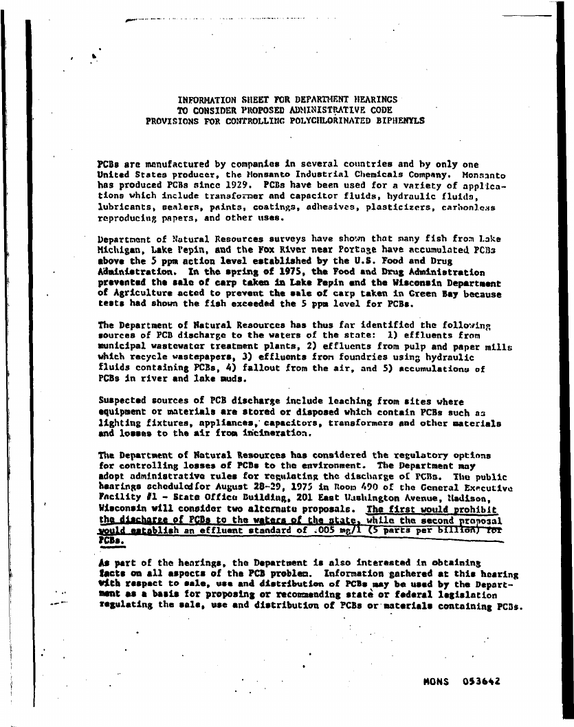
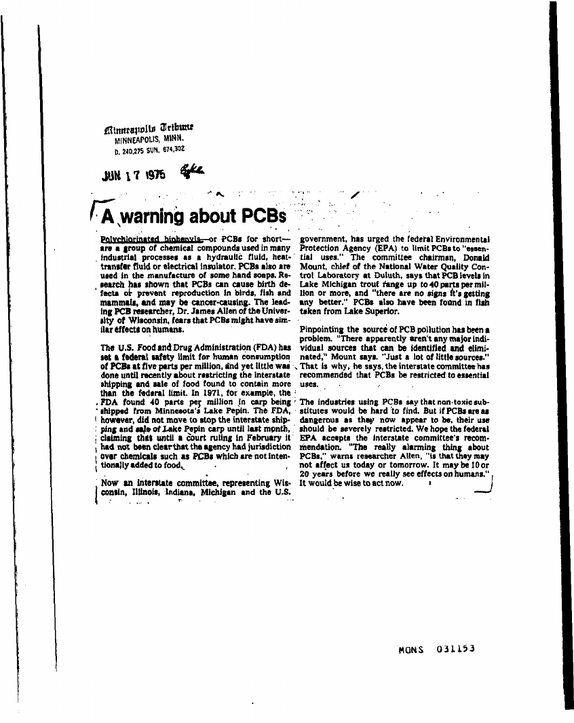
Department of Natural Resources surveys have shown that many fish from Lake Michigan, Lake Pepin, and the Fox River near Portage have accumulated PC))3 above the 5 ppm action level established by the U.S.
refid# Z428QL6ZZnN1KewBqRpm2eQyO1 page
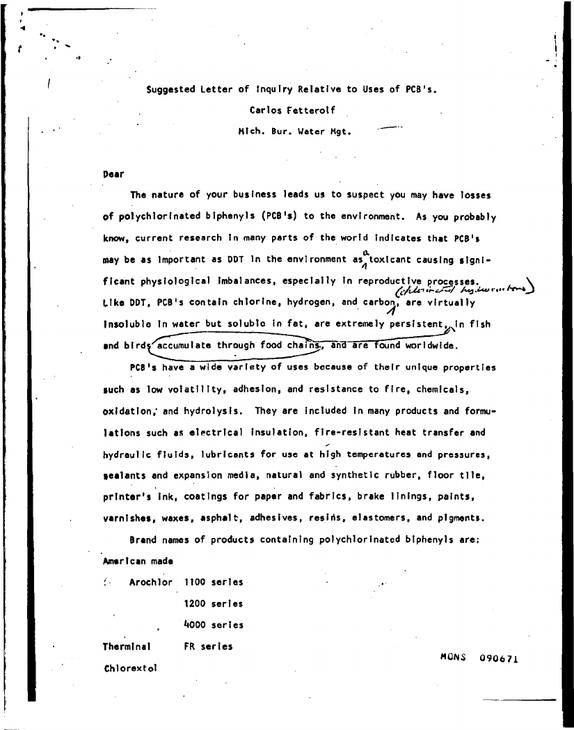
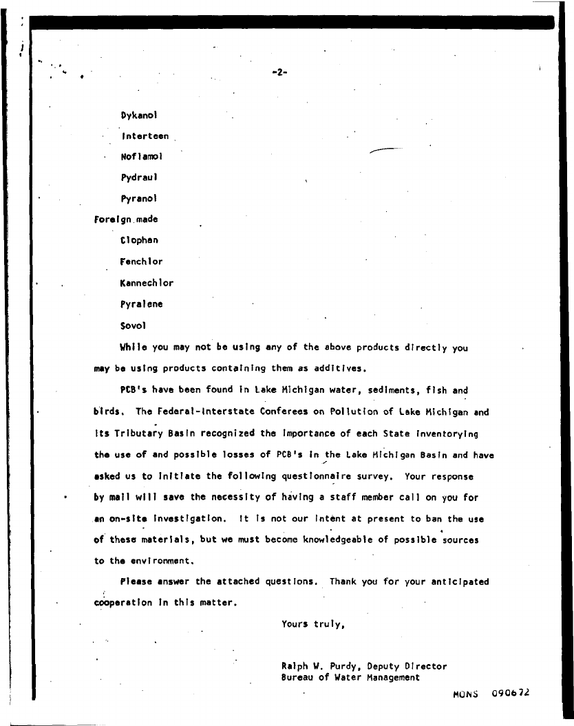
PCB's have been found In Lake Michigan water, sediments, fish and birds.
refid# 44K377Nd8dwy0re4wOJRdpb712 pages
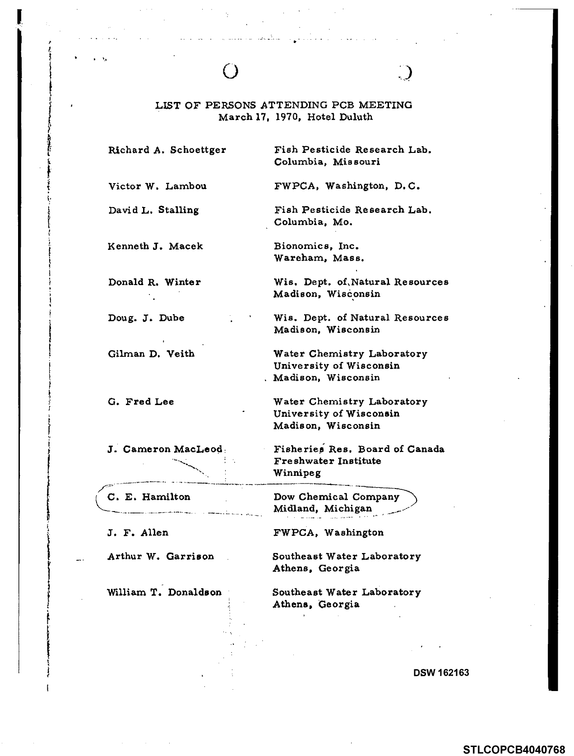
Fish Pesticide Research Lab.
refid# K6eMY6og7ZayrEzMJMymRjMdw3 pages
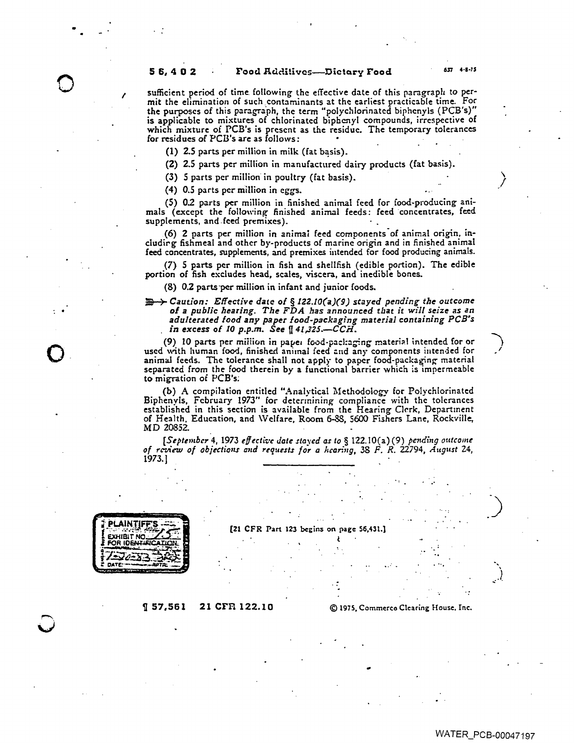
(7) 5 parts per million in fish and shellfish (edible portion).
refid# RpN6vEpVzvbbKnmQDgrdXQ2MV1 page
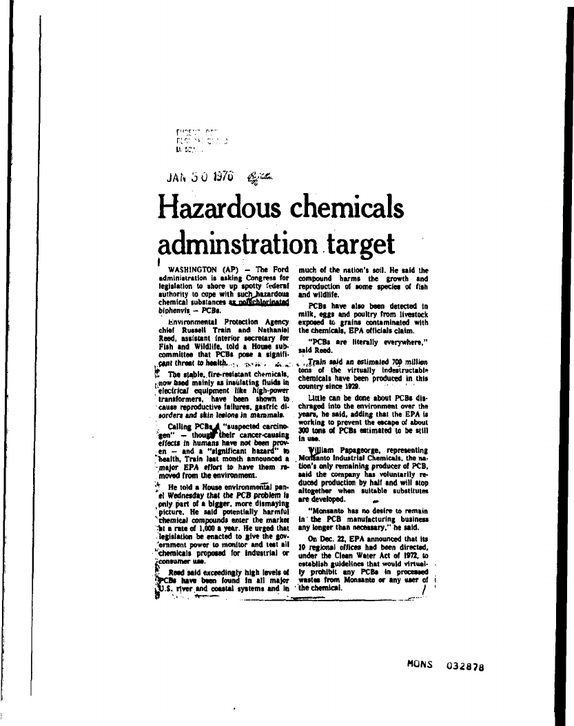
Reed, assistant interior secretary for Fish and Wildlife, told a House sub committee that PCBs poee a signifi "PCBs are literally everywhere," said Read.
refid# JjvMBDEDDzX5wVJKXy0K6zX21 page
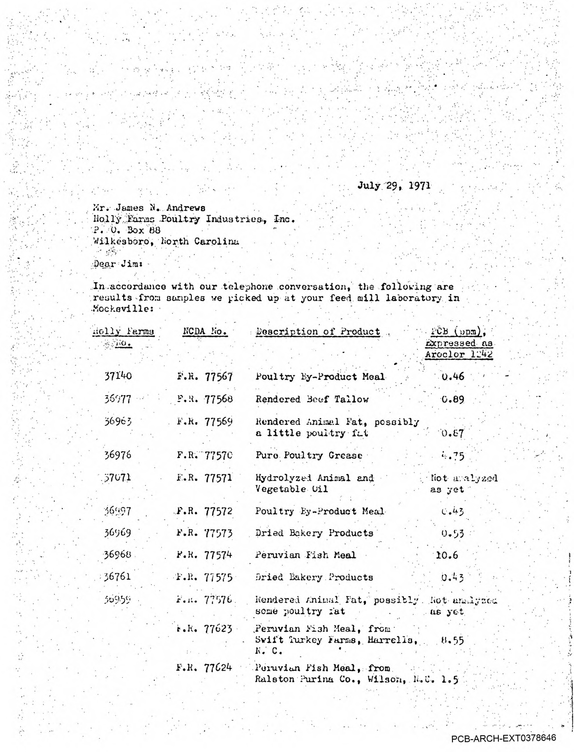
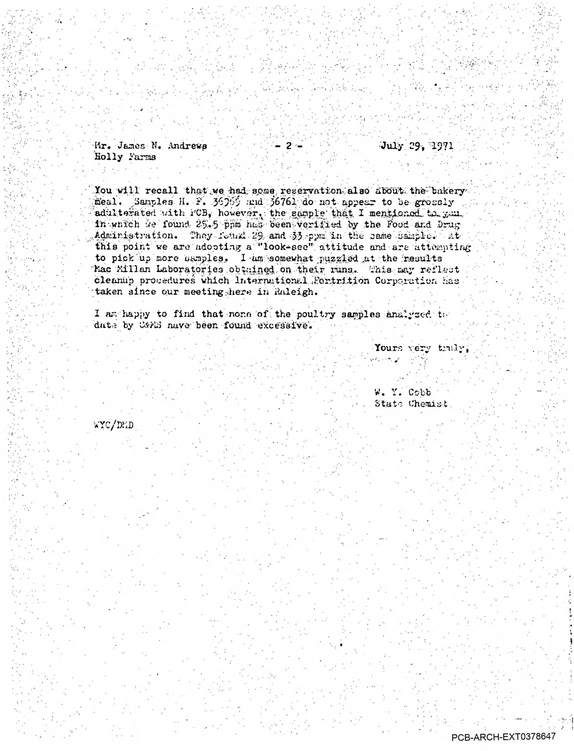
* .7 M.55 F.R. 77624 Peruvian Fish Meal, from Ralston Purina Co., Wilson, 1..C. 1.5 PCB-ARCH-EXT0378646 Hr* Janos N.
refid# MGXda5JNNBpaYm50mbJKDzy3k2 pages
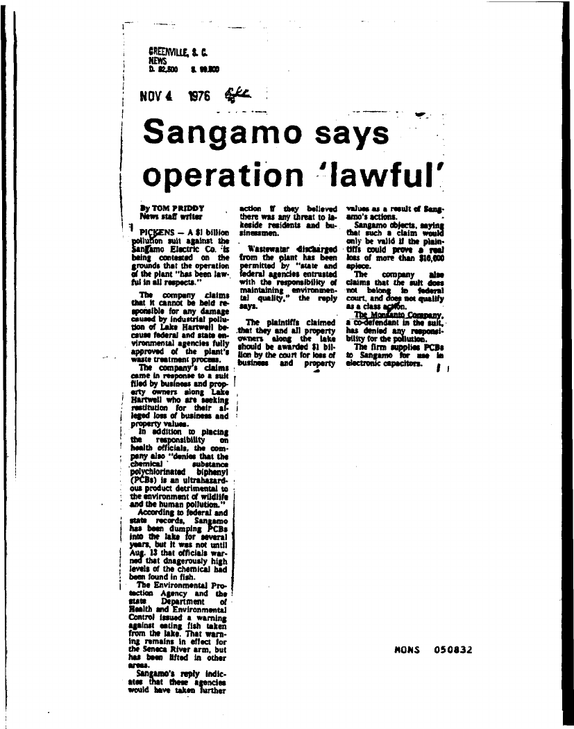
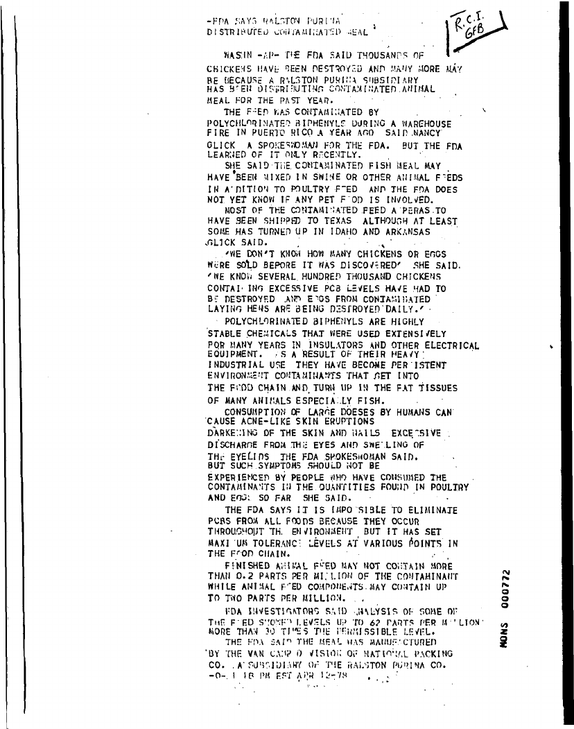
IS that officials war- i nod tbtt dnageroutly high levels of the chemical bad ) been found In fish.
refid# bLXVbK0XQXvREvOXBempVn7o1 page
PCBs also have been found in fish Ing PCB researcher, Dr.
refid# KJNwEjy2L6O8zJNN686qxVknr1 page
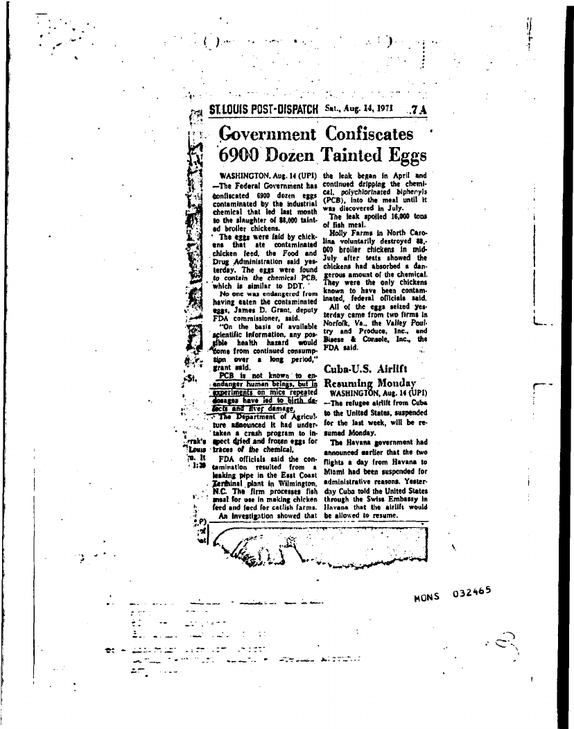
. * The eggs were laid by chick ens that ate contaminated The leak spoiled 16.000 tons of fish meal.
refid# 2qErp5VpVzRJEOmgZ1bypZ3nr1 page
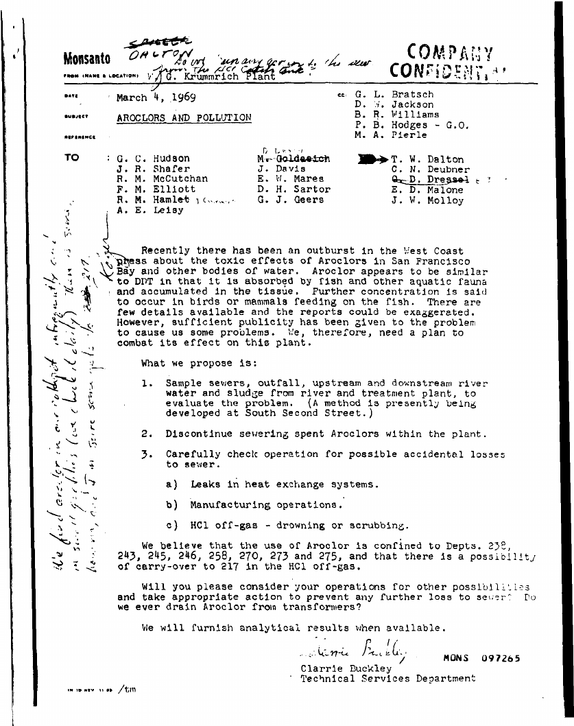
Further concentration is said t to occur in birds or mammals feeding on the fish.
refid# MGLgrN3okMNdVZQaR8BmjwyyM2 pages
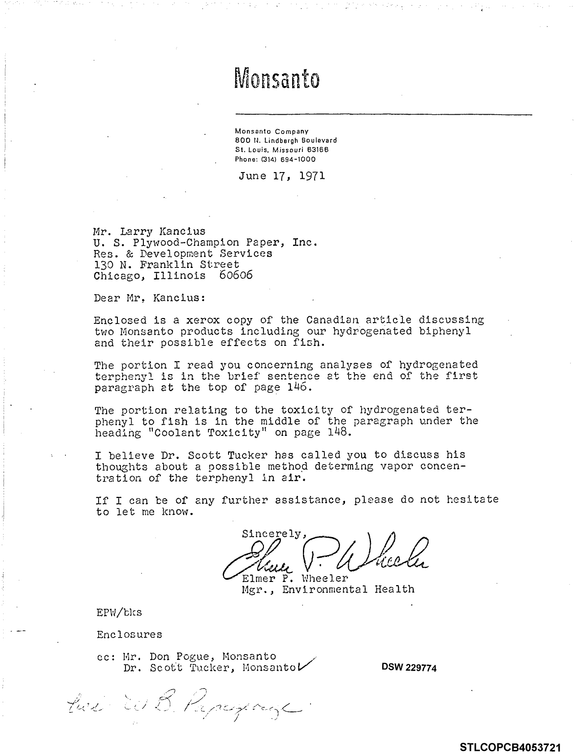
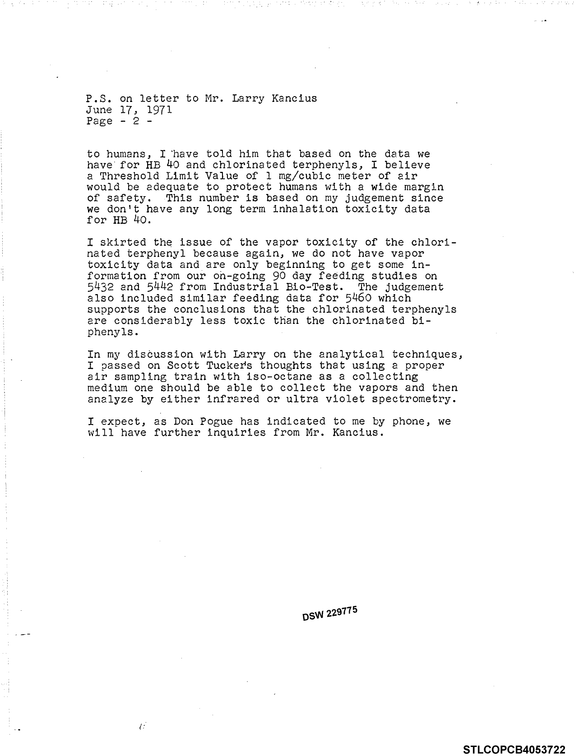
Enclosed is a xerox copy of the Canadian article discussing two Monsanto products including our hydrogenated biphenyl and their possible effects on fish.
refid# gaLJOzgQow6QKdDMo1Mzj1L7G2 pages
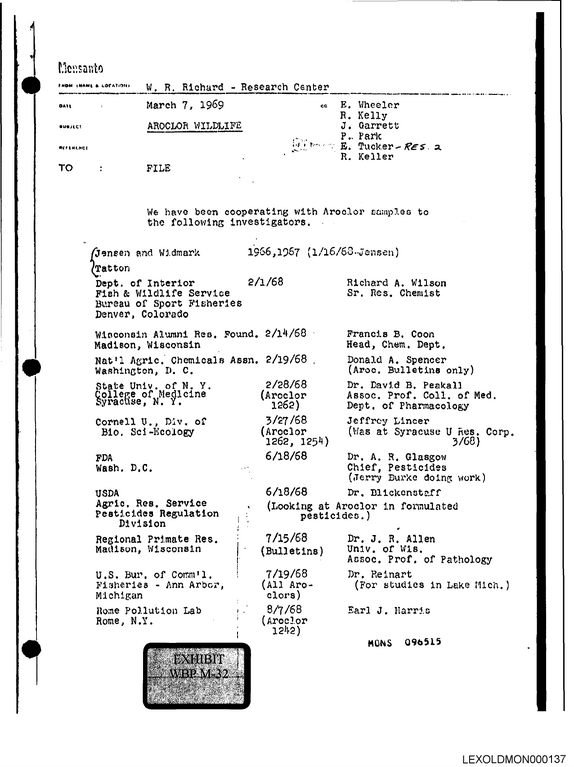
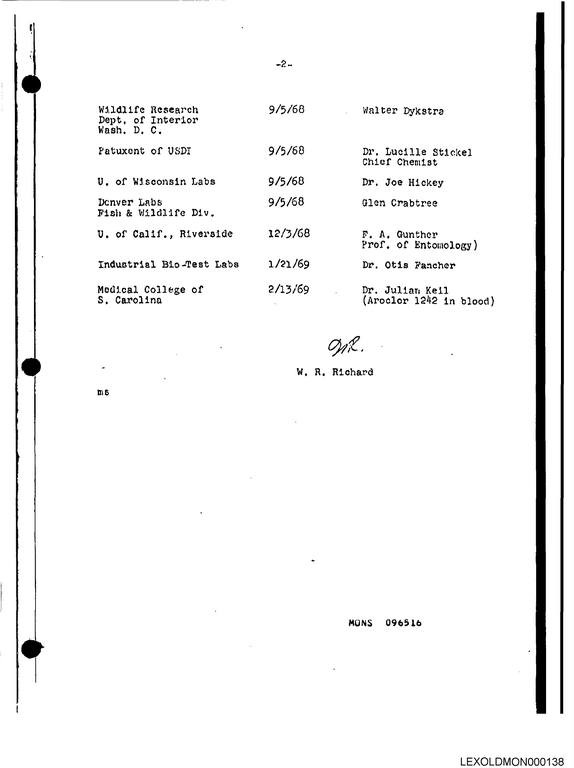
Patuxent of USDI U. of Wisconsin Labs Denver Labs Fish & Wildlife Dlv.
refid# r6qQVe00RZ62V6Kpq0NZvjOgv2 pages
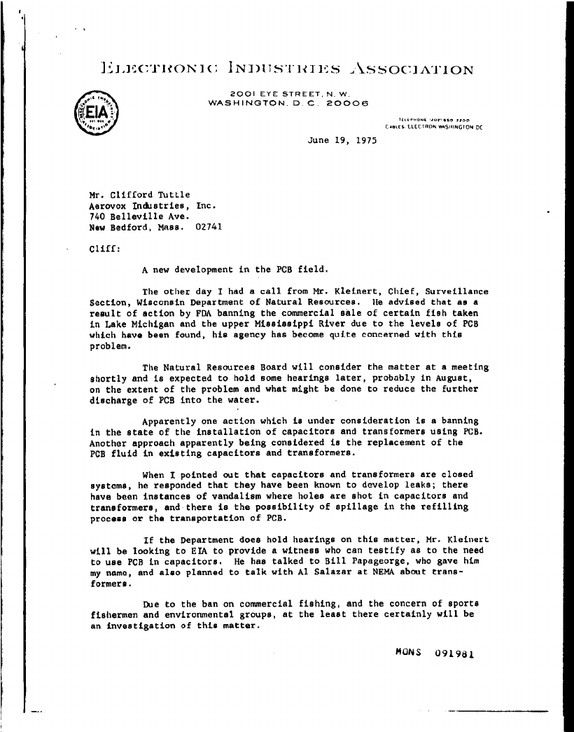
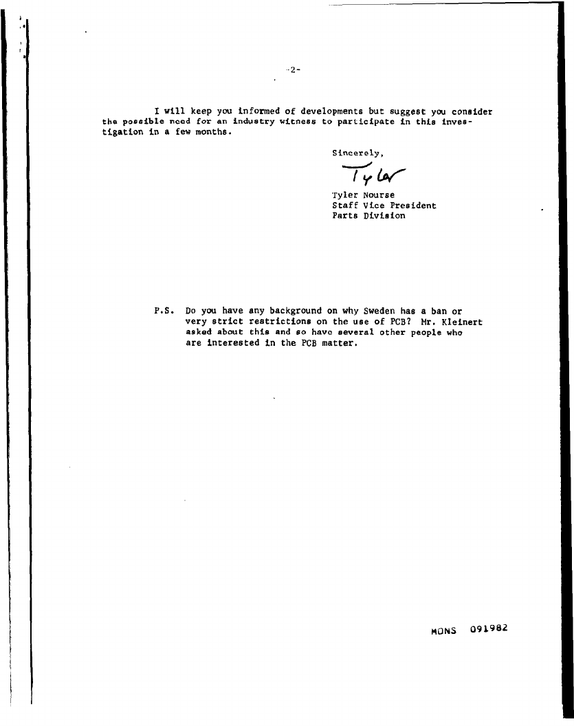
Due to the ban on commercial fishing, and the concern of sports fishermen and environmental groups, at the least there certainly will be an investigation of this matter.
refid# JDge4Q84EXkOr3od7XE5xE2v2 pages
TURN UP IN THE FAT TISSUES OF MANY ANIMALS ESPECIALLY FISH.
refid# DGGnwEjJeVdokmwykgyY3jmn41 page
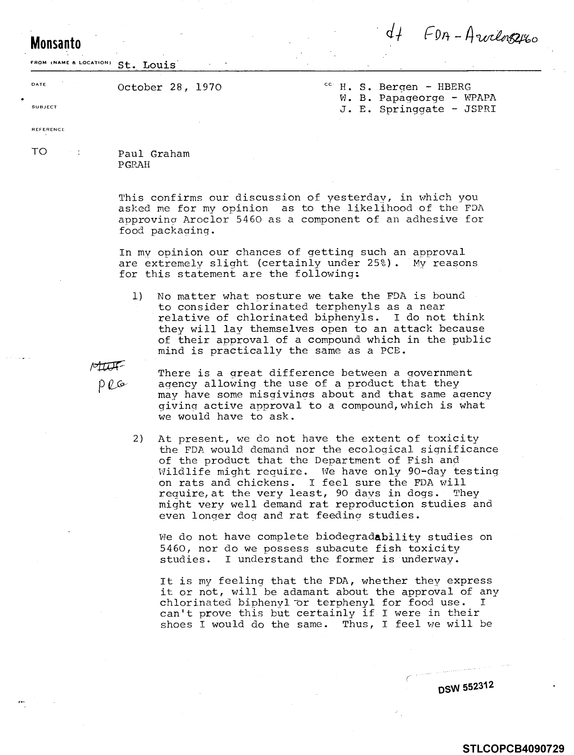
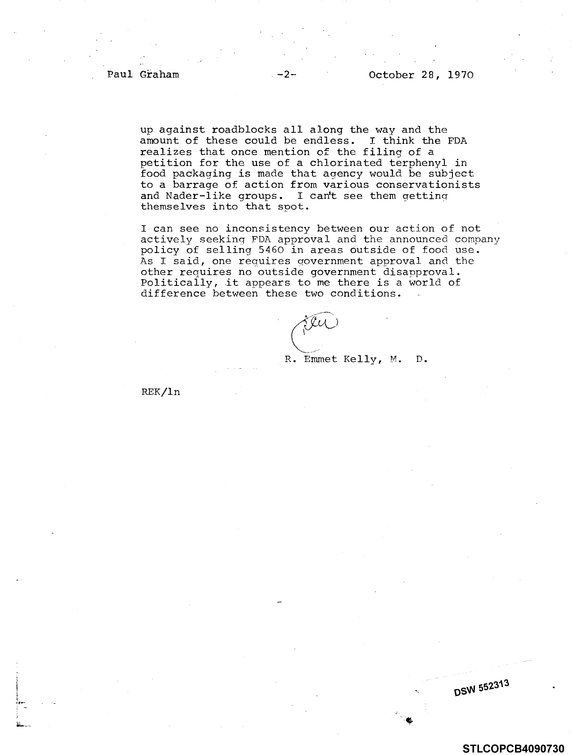
We do not have complete biodegradability studies on 5460, nor do we possess subacute fish toxicity studies.
refid# dnM4kokypL5a7dJzooyz9d2jq2 pages