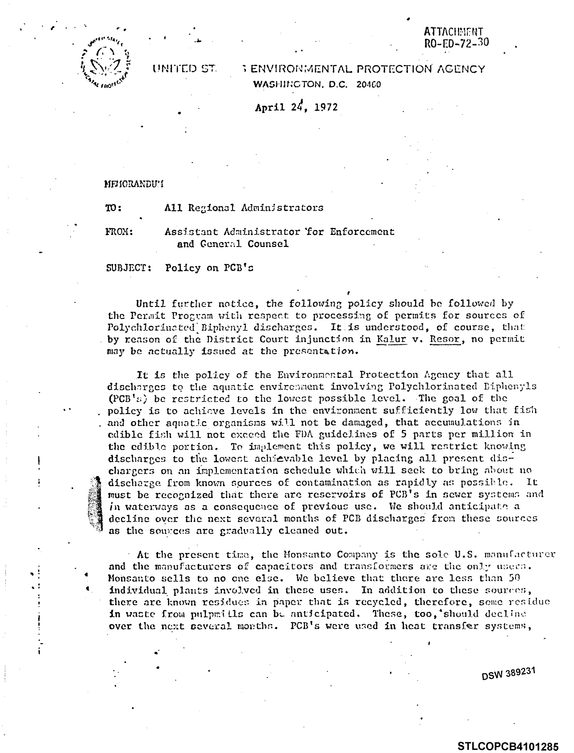
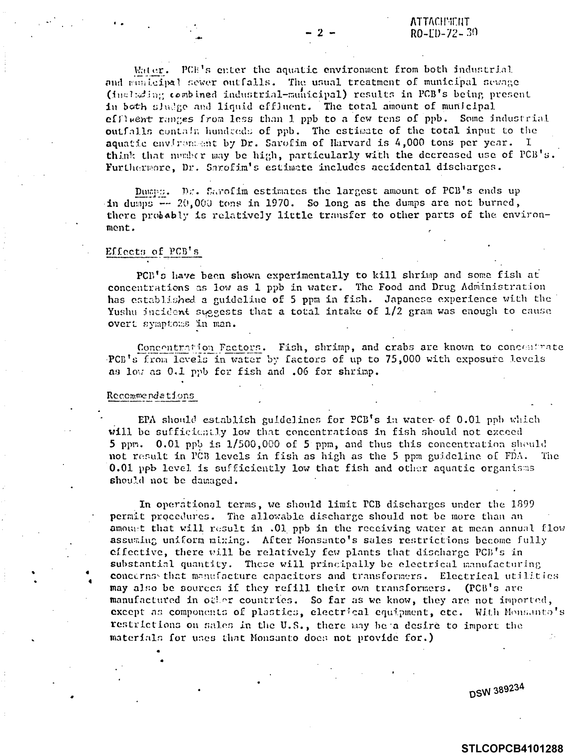
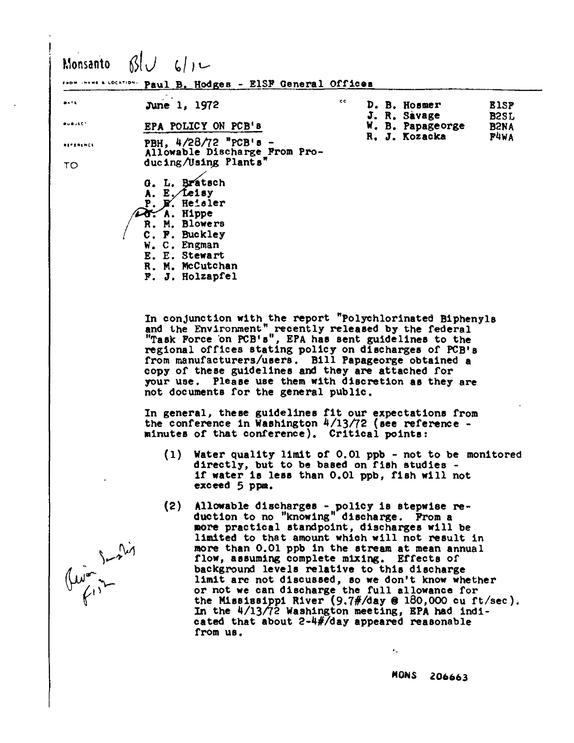
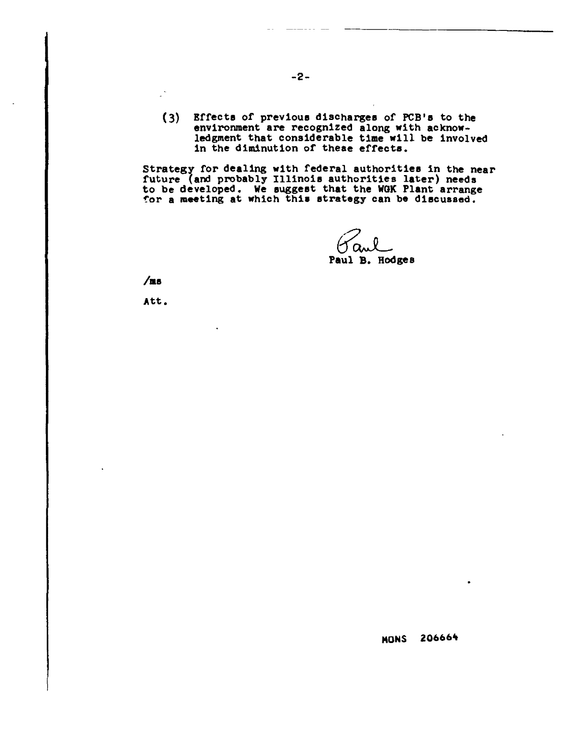
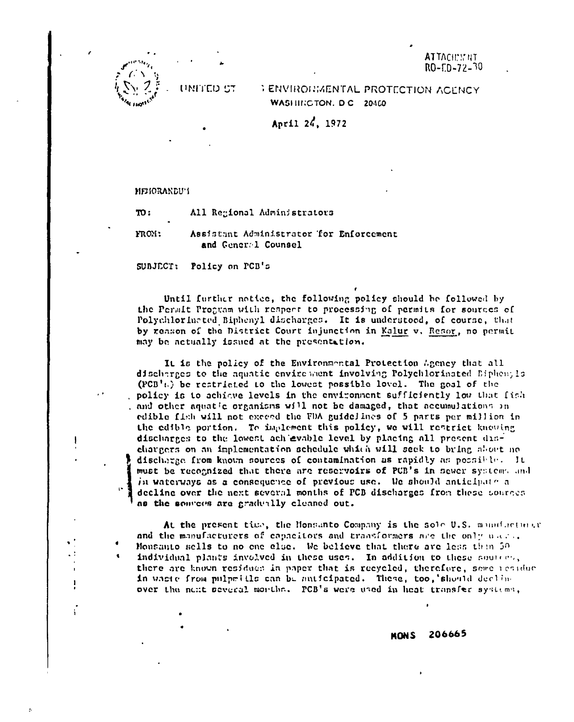
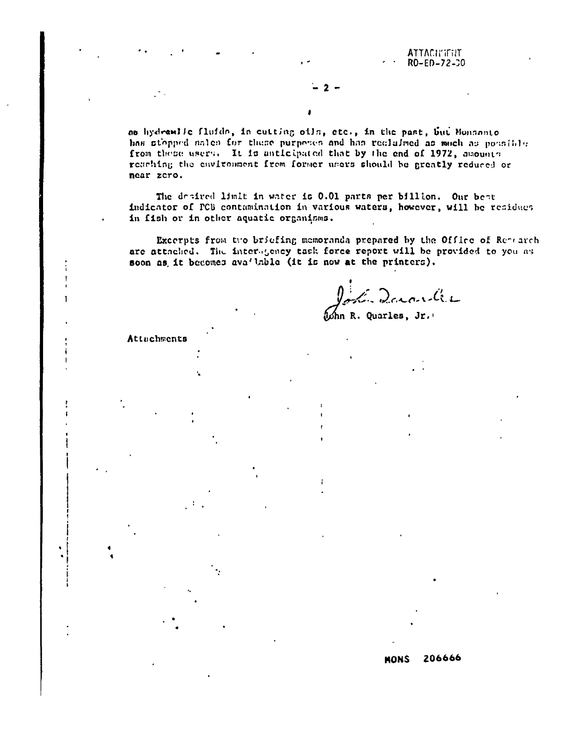
Fish, shrimp, and crabs are known to concentrate PCB's from ieveis in water by factors of up to 75,000 with exposure levels as low as 0.1 ppb for fish and .06 for shrimp.
refid# XRB2q2Y9NYzdkXZpp6OgwDKYd9 pages
Modes and rates of absorption for fish and wildlife F.
refid# OabV5xqyo6EeJBzOYRE1JjoX10 pages
oc. eit.) suggest that thc,lhrcshold of toxicity of the PCBs to fish lies around I ppb.
refid# gO7kx0ebqR37303gqLpENvj95 pages
Fish, shrimp, and crabs arc known to cone' r^ate PCE'ii frni.i levels in water by factors of up to 75,000 with exposure levels as lo*; as 0.1 ppb for fish and ,0<3 for shrimp.
refid# EmY5eG7yXx8YBdYp1aJ4Lj6Jn11 pages
Endrin, BHC group pesticides, and heptachlor were also identified in some fish samples.
refid# M4m9rjpz8n7jj63E59DYYeBja11 pages
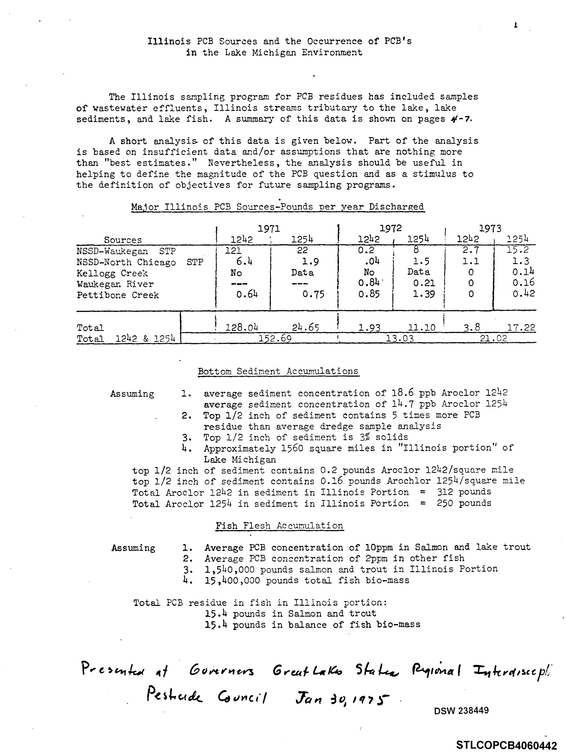
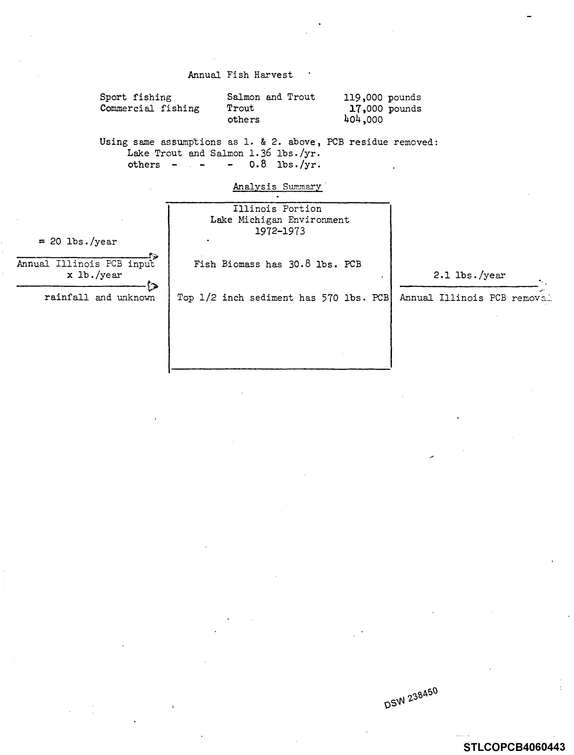
Average PCB concentration of 2ppm in other fish 3. 1,540,000 pounds salmon and trout in Illinois Portion 4. 15,400,000 pounds total fish bio-mass Total PCB residue in fish in Illinois portion: 15.4 pounds in Salmon and trout 15*4 pounds in balance of fish bio-mass P & o r* G rutl UtC*o 5 Ulc^ (Zytcma I Icrt(/ucpL CdtSvrCt'f \Fa n i DSW 238449 STLCOPCB4060442 Annual Fish Harvest Sport fishing Commercial fishing Salmon and Trout Trout others 119,000 pounds 17,000 pounds 1*04,000 Using same assumptions as 1. & 2. above, PCB residue removed: Lake Trout and Salmon 1.36 lbs.
refid# jyVOz1o3QjRVv96DNky5Do06Q7 pages
V sipnificant^Jir^fish frem- water* pear inrliin-r --1 1--rtr -**-- "p-j-s-y ly high^in some species of fish-eating birds.
refid# byOrK8XOQzqzkq11eo24y2dKD15 pages
The Board of Fish Commissioners had an income of more than $1,600,000.
refid# wgyn9J89aK3weEna46kVVebVd6 pages
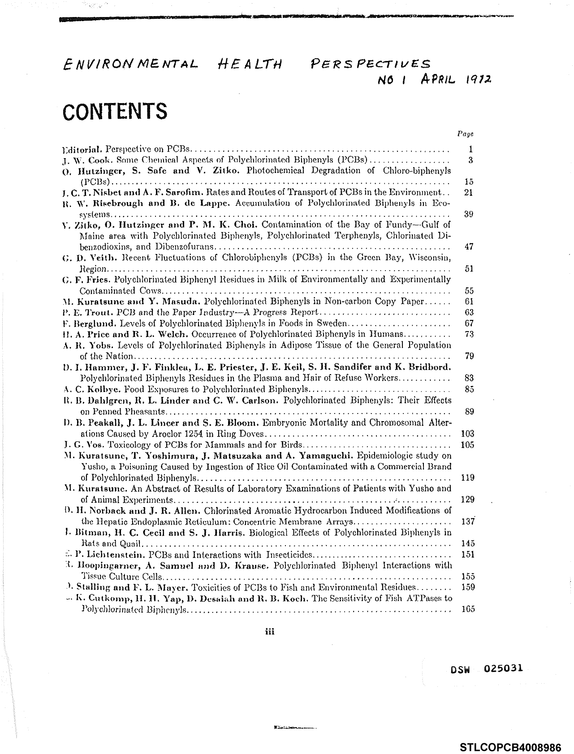
Toxicities of PCBs to Fish and Environmental Residues.............. -- K.
refid# omqyBDm744ZYwKow8b2V3w7L3172 pages
REPORT OF THE DOT ADVISORY COMMITTEE* TO WILLIAM D.
refid# B5ZmxQL8L8DLYL6VVd008nNL461 pages
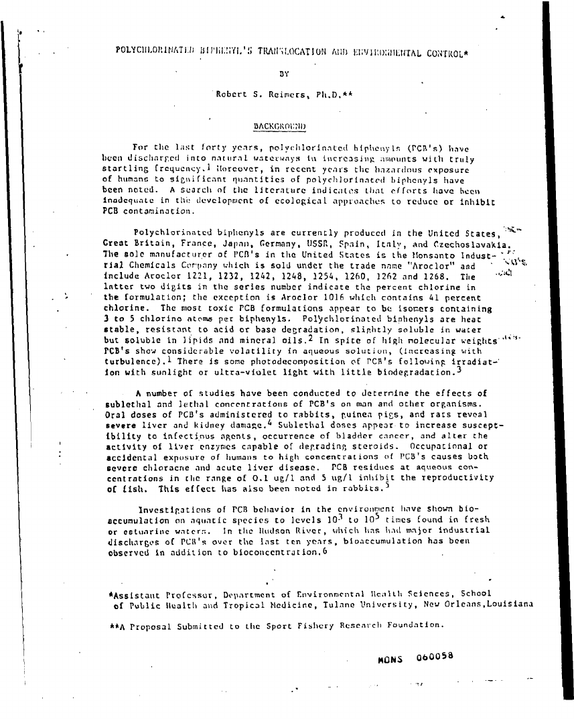
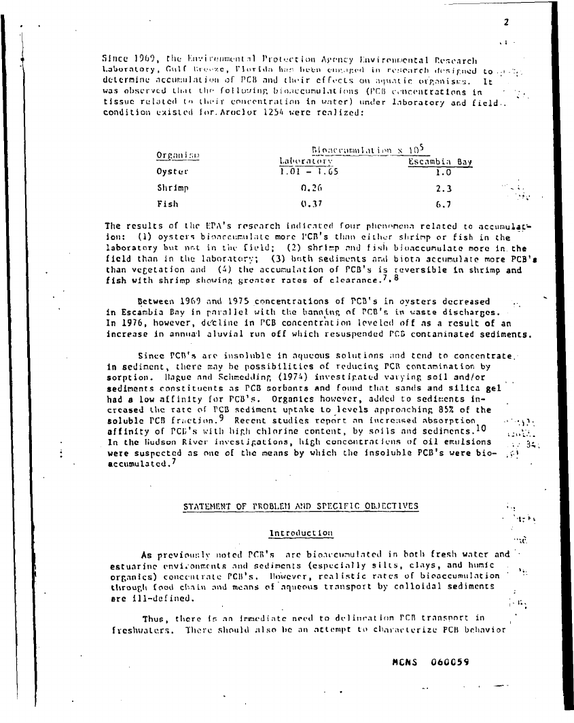
PCB residues at aqueous con centrations in the range of O.l ug/1 and 5 ug/1 inhibit the Teproductivity of fish.
refid# rBXE9krNv7kGbNYv5Xazbrr5G19 pages
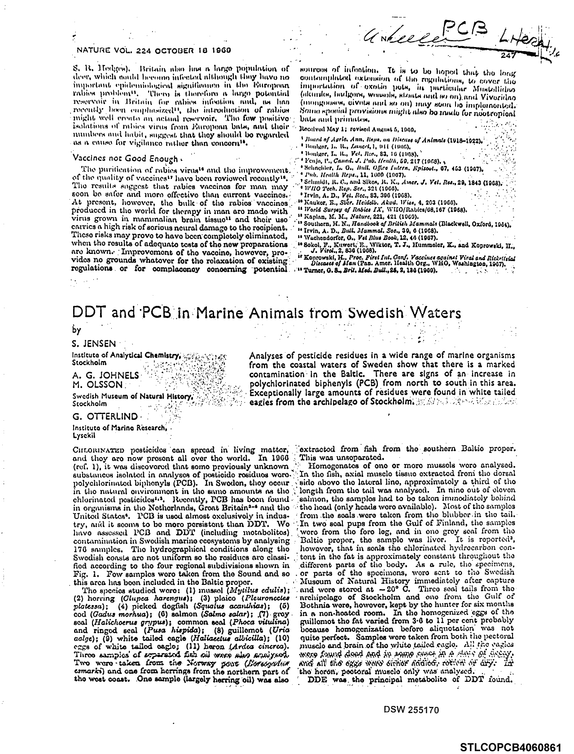
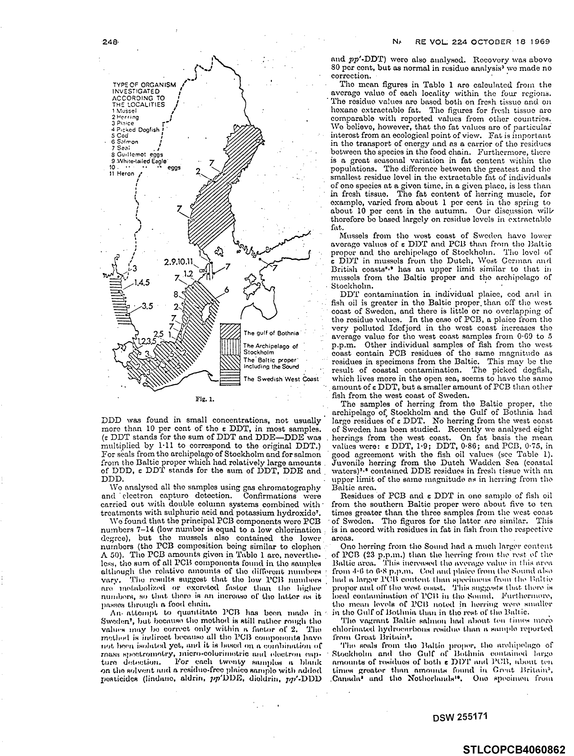
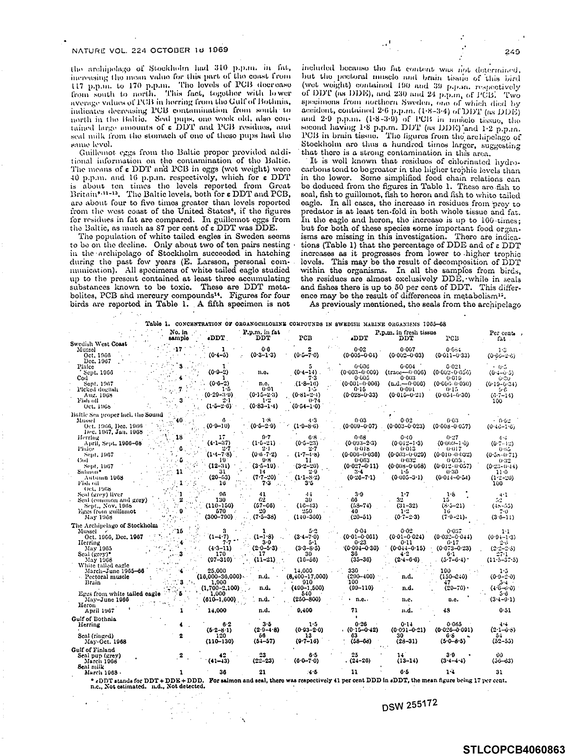
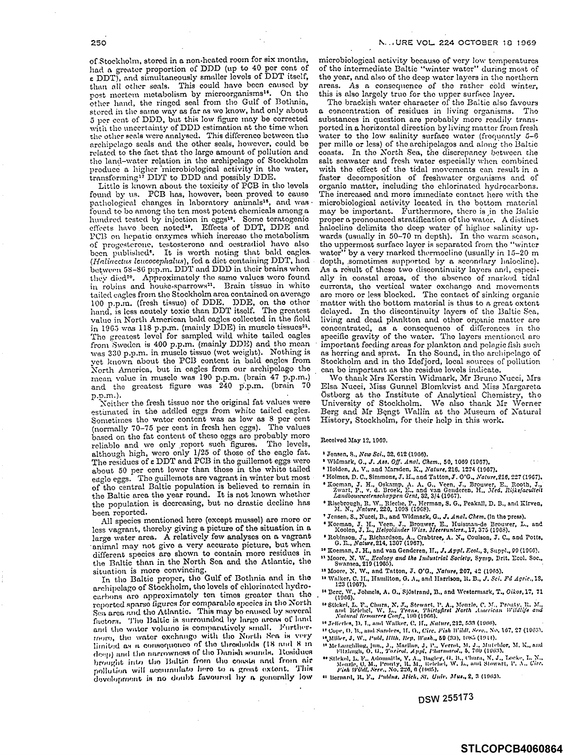
fish from the west coast of Sweden.
refid# npRB5a8YZww3Z86N4kQb2VoLz4 pages
If i fish from the Great Lakes, while some PCBs (32-54% chlorine) adversely affect . hatchability in chicks.
refid# xzw5gmeg5VyG4Rg3pkO9xJGMQ11 pages
o \ PHYSIOLOGICAL CONSSC-'EsCnS OF roOLLYV\i\i.ilO!
refid# VjDaG0aD212w0NZn5mQ0z2xXo33 pages
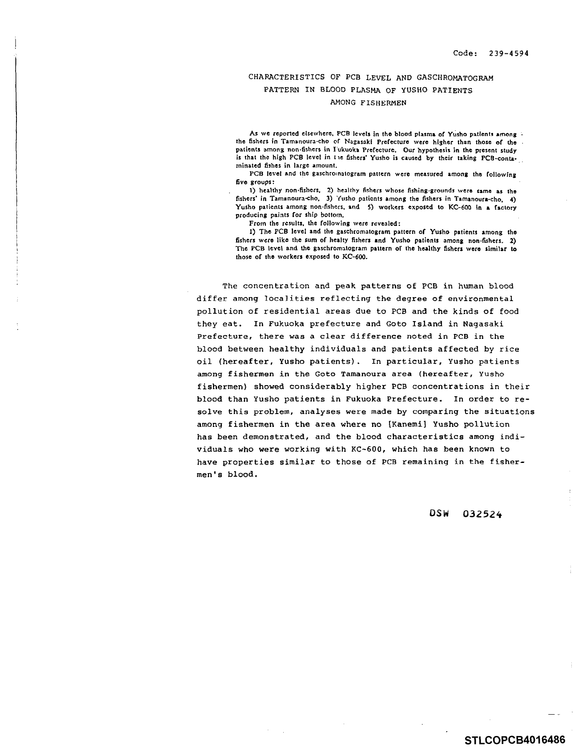
Our hypothesis in the present study is that the high PCB level in t te fishers' Yusho is caused by their taking PCB-conta minated fishes in large amount.
refid# KO1yoLpd0J1Bj3rQvKNqDdBx15 pages