Refine
Estimated Years UndatedClear
34,161 results foundRefine Search
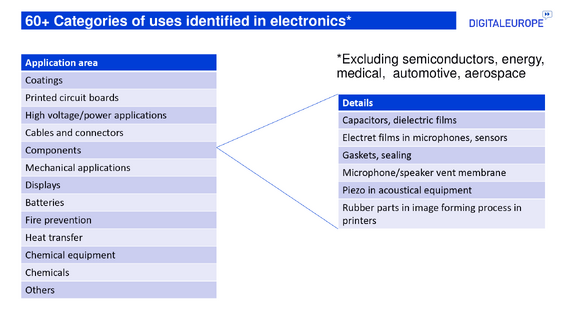
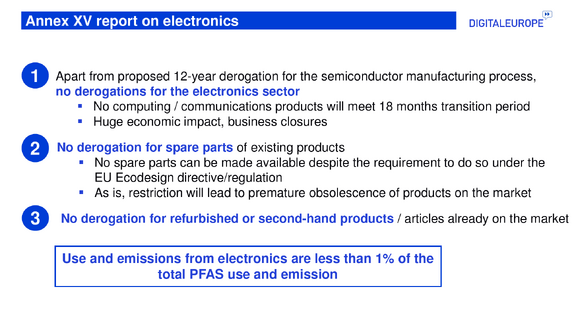
PFAS derogations requests for spare parts and pre-owned products We represent over 45,000 businesses across Europe The voice of digitally transforming industries platform services data analytics software & hardware cybersecurity telecoms semiconductors cloud technology Healthcare Manufacturing Finance Buildings Mobility 41 NATIONAL ASSOCIATIONS 100 COMPANIES 60+ Categories of uses identified in electronics* Application area Coatings Printed circuit boards High voltage/power applications Cables and connectors Components Mechanical applications Displays Batteries Fire prevention Heat transfer Chemical equipment Chemicals Others *Excluding semiconductors, energy, medical, automotive, aerospace Details Capacitors, dielectric films Electret films in microphones, sensors Gaskets, sealing Microphone/speaker vent membrane Piezo in acoustical equipment Rubber parts in image forming process in printers Annex XV report on electronics 1 Apart from proposed 12-year derogation for the semiconductor manufacturing process, no derogations for the electronics sector No computing / communications products will meet 18 months transition period Huge economic impact, business closures 2 No derogation for spare parts of existing products No spare parts can be made available despite the requirement to do so under the EU Ecodesign directive/regulation As is, restriction will lead to premature obsolescence of products on the market 3 No derogation for refurbished or second-hand products / articles already on the market Use and emissions from electronics are less than 1% of the total PFAS use and emission Derogation needed | Spare parts to repair consumer electronic products 7 years derogation needed to avoid premature obsolescence of existing consumer electronic products Impractical to design, qualify & produce PFAS-free spare parts for consumer products manufactured before PFAS restriction Precedents in other REACH substance restrictions REACH restriction 68 on C9-C14 PFCAs (belong to PFAS family) Compliance with other EU legislation EcoDesign regulation mandates spare parts for electronic displays until at least 7 years after placing the last unit on the market Guarantee obligations in proposed Right to Repair Directive Impact of no exemption 77% of EU prefer to repair a consumer product than buy new one 30% of EU have repaired a product within past six months EU consumer electronics repair sector employs 104,000 people and generates 14.5 billion Euros revenues Derogation needed | Spare parts to repair professional B2B products 15 years derogation needed to avoid premature obsolescence of existing professional b2b electronic products Additional considerations apply for equipment with long lifetimes (e.g. telecommunication networks, industrial HVAC, industrial printing,...) lifetimes and contracted maintenance periods usually extends to 10 to 15 years in the product's first application (up to 25 years in some cases) The availability of spare parts is essential to realize the lifetime potential of such products In many cases spare parts for professional users have already been manufactured and are commercially available for customers at short notice, which is often contracted No drop-in replacements (especially for fluoropolymers) PFAS-free spare parts are not drop-in alternatives as dimensional changes from alternative materials generally necessitate product re-design For products that are no longer commercially available it is unrealistic to design PFAS-free spare parts Extended `repair as produced' provisions in EU legislation RoHS Directive Art. 4(4) + 4(5) provide that restrictions do not apply to spare parts for products that were placed on the market before an exemption expired, or spare parts recovered from products placed on the market before restrictions applied Derogation needed | Re-supply of pre-owned products Impractical to expect products manufactured before PFAS restriction to comply Without an exemption, resale of pre-owned products will be banned Functional products would be discarded as waste No additional PFAS emissions (products already on market) Normal practice in EU regulations and directives REACH restrictions 68, 51, 45, 20, 19, 18a, etc Persistent Organic Pollutants (POPs) Regulation All CE Marking directives and regulations Compliance with ESPR Requires products to be easier to refurbish and reuse products Impact of no exemption No EU second-hand car sales (20% of components contain PFAS) Global support from 25 leading industry associations around the world Questions for discussion 7 years derogation for spare parts to repair consumer electronic products What additional information is needed to substantiate this derogation?


refid# mB20BL3NNZK3VQEoRYNBXdB2b10 pages
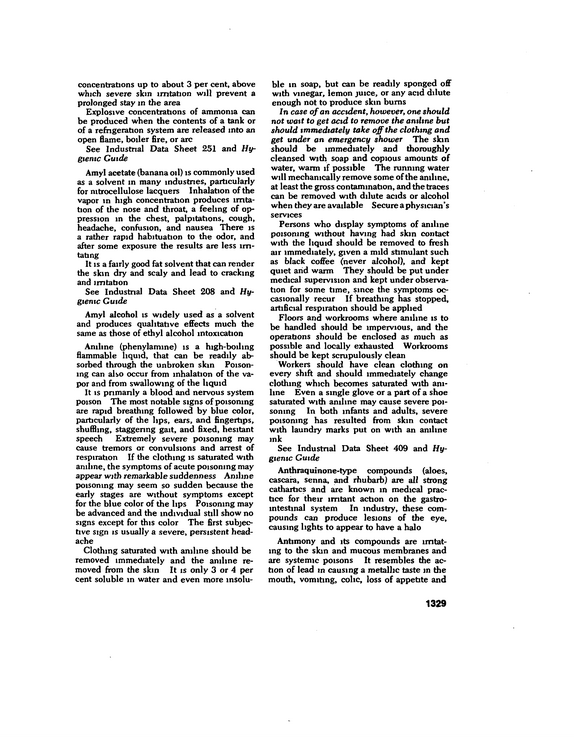
concentrations up to about 3 per cent, above which severe skin irritation will prevent a prolonged stay in the area Explosive concentrations of ammonia can be produced when the contents of a tank or of a refrigeration system are released into an open flame, boiler fire, or arc See Industrial Data Sheet 251 and Hy gienic Guide Amyl acetate (banana oil) is commonly used as a solvent m many industries, particularly for nitrocellulose lacquers Inhalation of the vapor m high concentration produces irrita tion of the nose and throat, a feeling of op pression in the chest, palpitations, cough, headache, confusion, and nausea There is a rather rapid habituation to the odor, and after some exposure the results are less irri tating It is a fairly good fat solvent that can render the skin dry and scaly and lead to cracking and irritation See Industrial Data Sheet 208 and Hy gienic Guide Amyl alcohol is widely used as a solvent and produces qualitative effects much the same as those of ethyl alcohol intoxication Aniline (phenylamine) is a high-boiling flammable liquid, that can be readily ab sorbed through the unbroken skin Poison ing can also occur from inhalation of the va por and from swallowing of the liquid It is pnmanly a blood and nervous system poison The most notable signs of poisoning are rapid breathing followed by blue color, particularly of the lips, ears, and fingertips, shuffling, staggering gait, and fixed, hesitant speech Extremely severe poisoning may cause tremors or convulsions and arrest of respiration If the clothing is saturated with aniline, the symptoms of acute poisoning may appear with remarkable suddenness Aniline poisoning may seem so sudden because the early stages are without symptoms except for the blue color of the lips Poisoning may be advanced and the individual still show no signs except for this color The first subjec tive sign is usually a severe, persistent head ache Clothing saturated with aniline should be removed immediately and the aniline re moved from the skin It is only 3 or 4 per cent soluble m water and even more insolu ble in soap, but can be readily sponged off with vinegar, lemon juice, or any acid dilute enough not to produce skin bums In case of an accident, however, one should not wait to get acid to remove the aniline but should immediately take off the clothing and get under an emergency shower The skm should be immediately and thoroughly cleansed with soap and copious amounts of water, warm if possible The running water will mechanically remove some of the aniline, at least the gross contamination, and the traces can be removed with dilute acids or alcohol when they are available Secure a physician's services Persons who display symptoms of aniline poisoning without having had skin contact with the liquid should be removed to fresh air immediately, given a mild stimulant such as black coffee (never alcohol), and kept quiet arid warm They should be put under medical supervision and kept under observa tion for some time, since the symptoms oc casionally recur If breathing has stopped, artificial respiration should be applied Floors and workrooms where aniline is to be handled should be impervious, and the operations should be enclosed as much as possible and locally exhausted Workrooms should be kept scrupulously clean Workers should have clean clothing on every shift and should immediately change clothing which becomes saturated with ani line Even a single glove or a part of a shoe saturated with aniline may cause severe poi soning In both infants and adults, severe poisoning has resulted from skin contact with laundry marks put on with an aniline ink See Industrial Data Sheet 409 and Hy gienic Guide Anthraquinone-type compounds (aloes, cascara, senna, and rhubarb) are a11 strong cathartics and are known in medical prac tice for their irritant action on the gastro intestinal system In industry, these com pounds can produce lesions of the eye, causing lights to appear to have a halo Antimony and its compounds are irritat ing to the skm and mucous membranes and are systemic poisons It resembles the ac tion of lead m causing a metallic taste in the mouth, vomiting, colic, loss of appetite and 1329
refid# 44p8pOa0e56OxDV8MVmedgm3N1 page
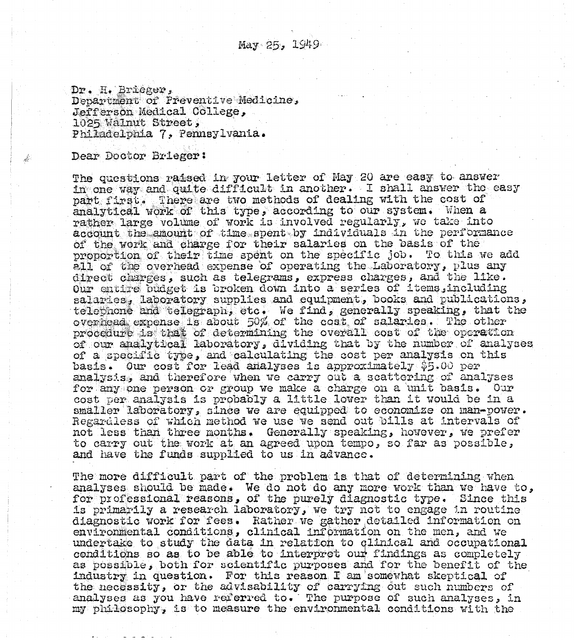
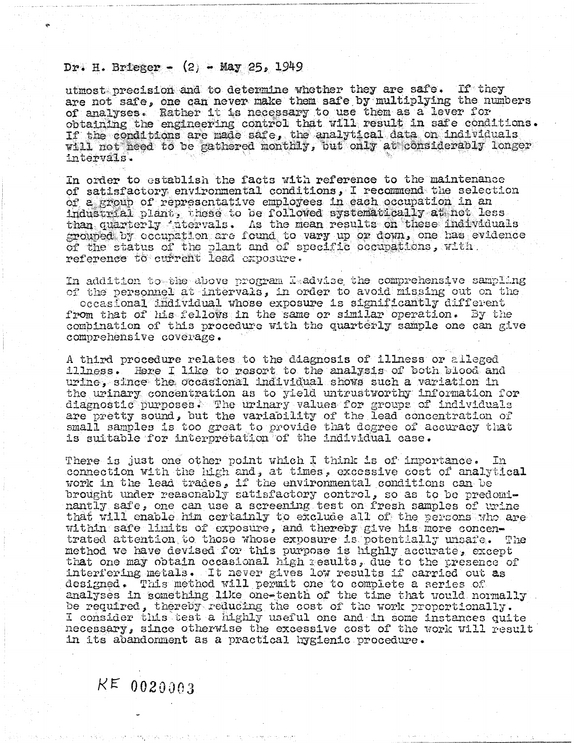
Our cost for lead analyses is approximately-$3*00 per analysis, and therefore when we carry out a, scattering of analyses for any one person or group we make a charge on a unit basis.
refid# RayMrvD33nazNzb55pqzv7MR73 pages
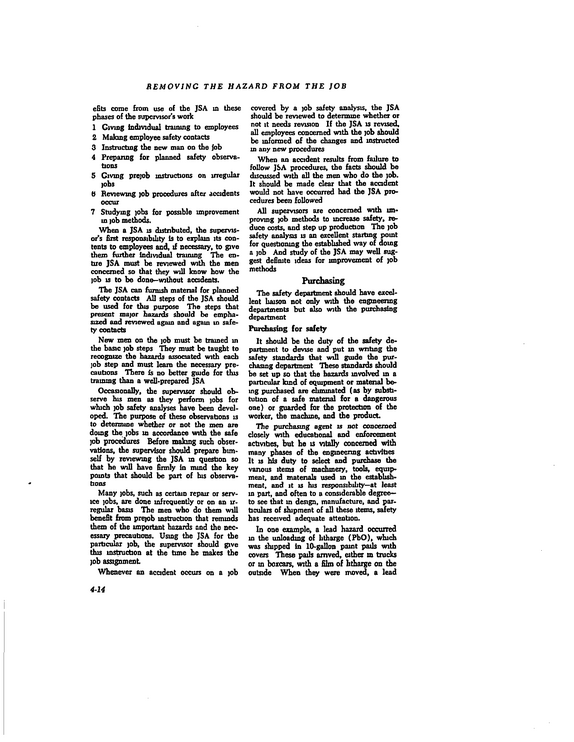
In one example, a lead hazard occurred in the unloading of litharge (PbO), which was shipped in 10-gallon paint pads with covers These pads arrived, either m trucks or in boxcars, with a film of litharge on the outside When they were moved, a lead 4-14
refid# rpMxgYz7YjZZN7G1mevMaom5r1 page
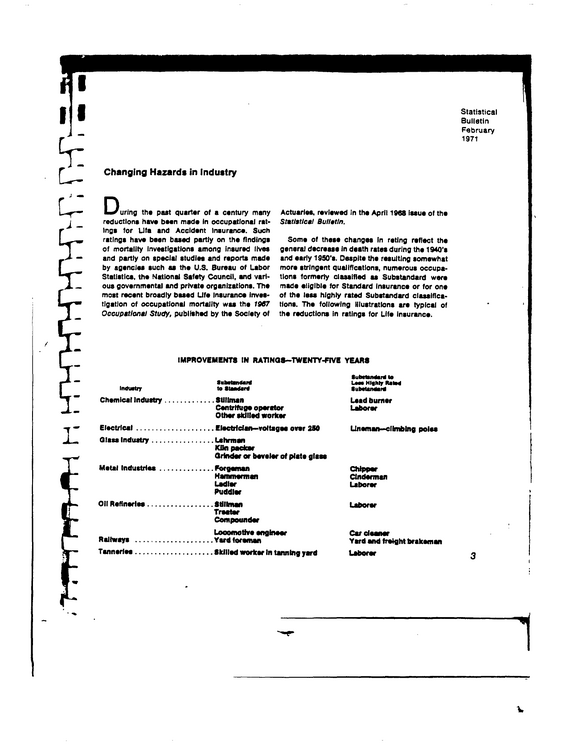
New materials such as plastics, metals for which new uses are found, and new processes utilizing radiant energy may lead to physiologi cal disorders that do not become clinically evi dent until some years have elapsed.
refid# RaNdB84nz07wgVbKq4Bo6M11E4 pages
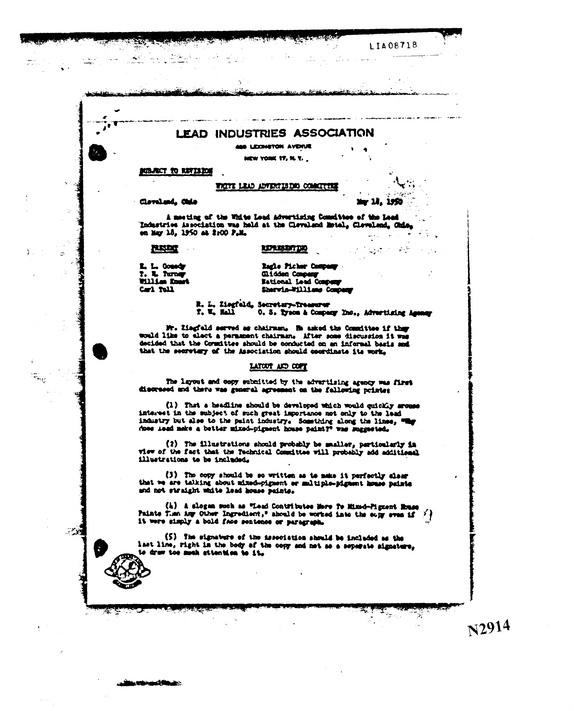
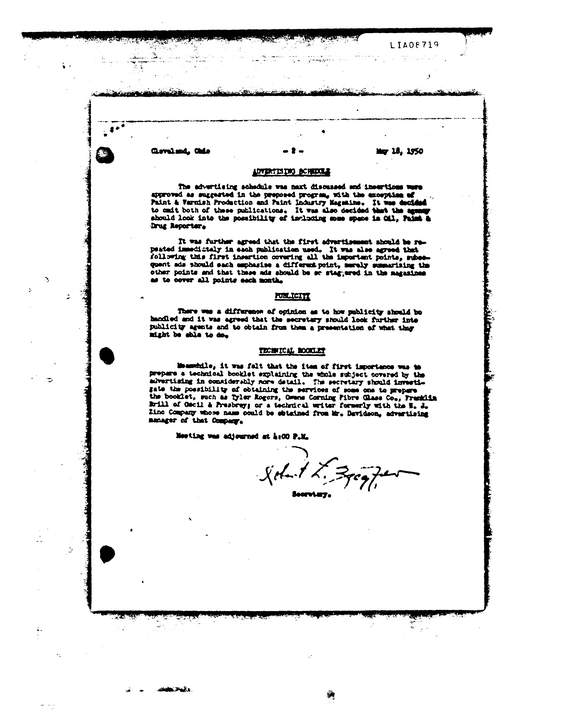
-^^'iBr-iiii -iiWritoilte^^ "r'" trirYilr,n ~ LEAD INDUSTRIES ASSOCIATION Avtmm majKi to kotstor won lead Aprcffisno otMcrrai V- Oml4 CM* H i> 4 MMtlf of the Wdto Ued 4dverti*ig Ccnaittoo of tte WoI ladhetrlee iaaoclatloa ni bald at tho Cleveland bttl| Cleveland. ^*1 on Mqr 18, 1>50 M ttOO fJL K.
refid# qaEo0L1qYZwOqm2oJqdJDbn6n2 pages
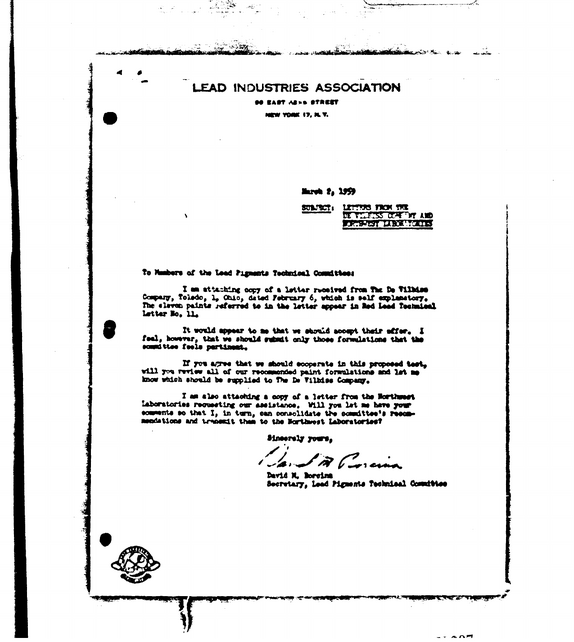
&' *# ->*SKr- iBw tteaveii LEAD INDUSTRIES ASSOCIATION OO BOOT A* eraerr NOW VOW IV, N.
refid# gbqL0x73jEDjGXDRadbO7dMpe3 pages
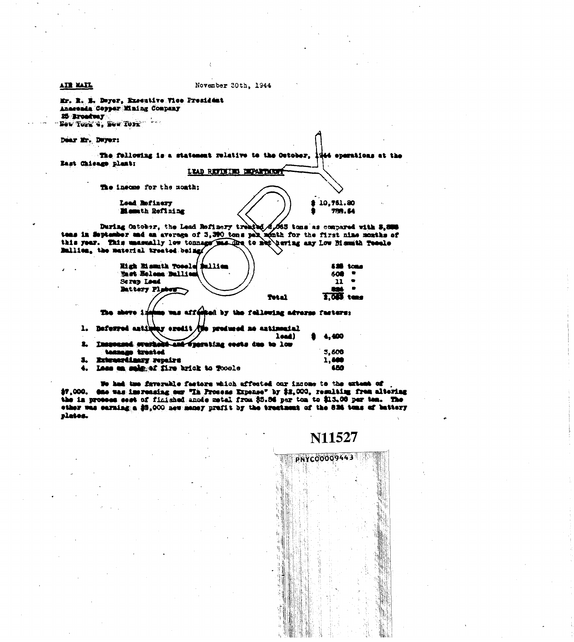
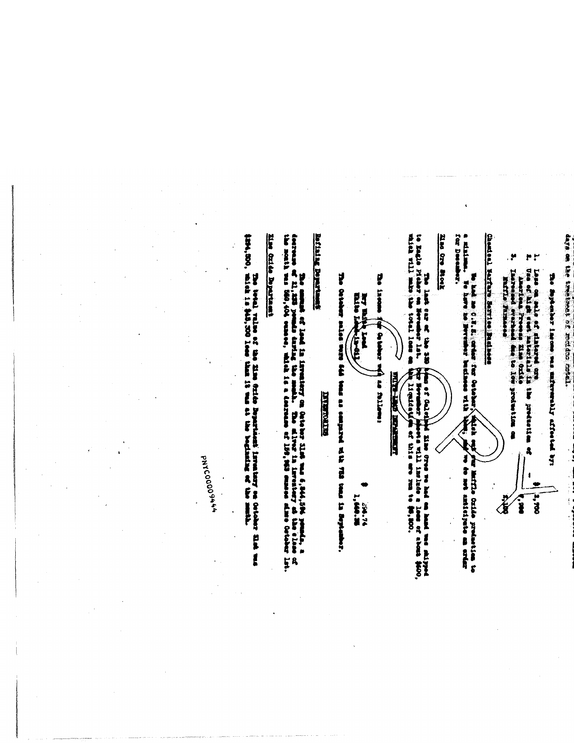
Dvyar: A* flUHlii la a etat< t relative ta tha October, Saet Ohianaa plaatt h ad Ktrarm apaaatleaa at tha Tha laaooa for the aoath: lead Bflaexy Maaath aeflnia* # io.TSi.ao I mM Durlhf Ostoher, tha Laad Bsflaery t: taaa la laptanber sad aa tnngi of 3.3*0 ton a thla year.
refid# M47Ya5O45pzVdwwRxd40L2Zbk4 pages
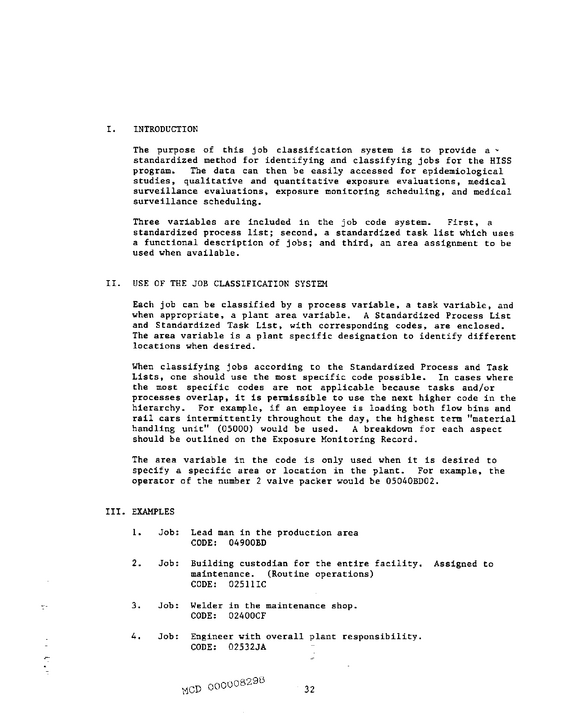
Job: Lead man in the production area CODE: 04900BD 2.
refid# pp846xX7njDEp5mM2Ok1nd03D7 pages
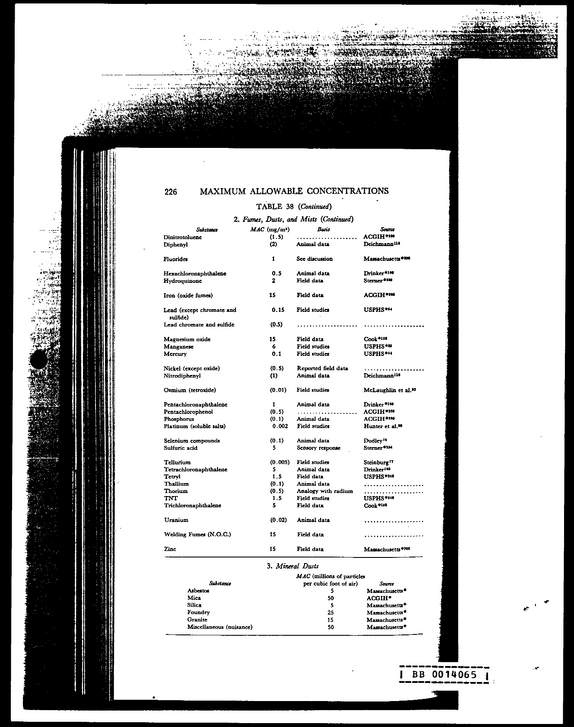
t . t-c3SiJ -'.Hsrl 226 MAXIMUM ALLOWABLE CONCENTRATIONS TABLE 38 (Continued) Substanc* Dinitrotoluene Diphenyl 2, Fumes, Dusts, and Mists {Continued) MAC (mg/m*) (i.s) (2) Basis Animal data Sousa ACGIH*1** Deichmann11* Fluorides 1 See discussion Massachusetts **** Hexachloronaphthalene Hydroquinone 0.5 Animal data 2 field data Drinker**1* Sterner*11* Iron (oxide fumes) 15 Field data ACGIH** Lead (except chromate and sulfide) Lead chromate and sulfide 0.15 (0J) Field studies USPHS**1 Magnesium oxide Manganese Mercury 15 6 0.1 Field data Field studies Field studies Cook*111 USPHS*" USPHS*1* Nickel (except oxide) Nitrodiphenyl Osmium (tetroxide) (0.S) (1) (o.oi) Reported field data Animal data Field studies Deichmann11* McLaughlin et al.*1 PcAtachloronaphthalene Pentachlorophenol Phosphorus Platinum (soluble salts) 1 (0.5) (0.1) 0.002 Animal data Animal data Field studies Drinker*1*0 ACGIH** ACGIH*11* Hunter et al.* Selenium compounds Sulfuric acid (0.1) 5 Animal data Sensory response Dudley" Sterner*114 Tellurium Tetrachloronaphthalene Tetryl Thallium Thorium TNT Trichloronaphthalene (0.005) 5 1.5 (0.1) (0.5) 1.5 5 Field studies Animal data Field data Animal data Analogy with radium Field studies Field data Stdnburg77 Drinker110 USPHS*441 USPHS*14* Cook*11* Uranium (0.02) Animal data Welding Fumes (N.O.C.)
refid# G5BOkDbNQ5KDnywvgZV5NQ52q3 pages
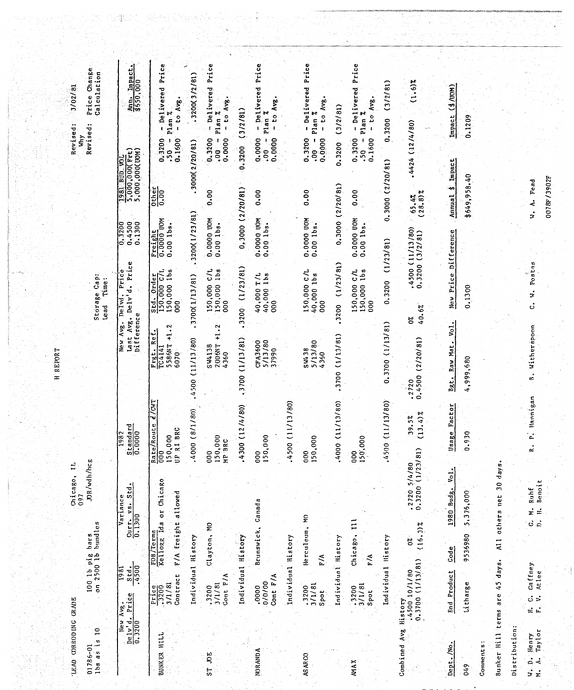
OO'' JJ to O' Mf u o 01 60 co co O' in o -o to Gl < fre-. 3 cr jj cn PO 3 L3 C CO cC to CL. 02 Storage Cap: Lead tim e : .
refid# DMjEOMjxpGaZNBrk65YG8Y2ZO1 page
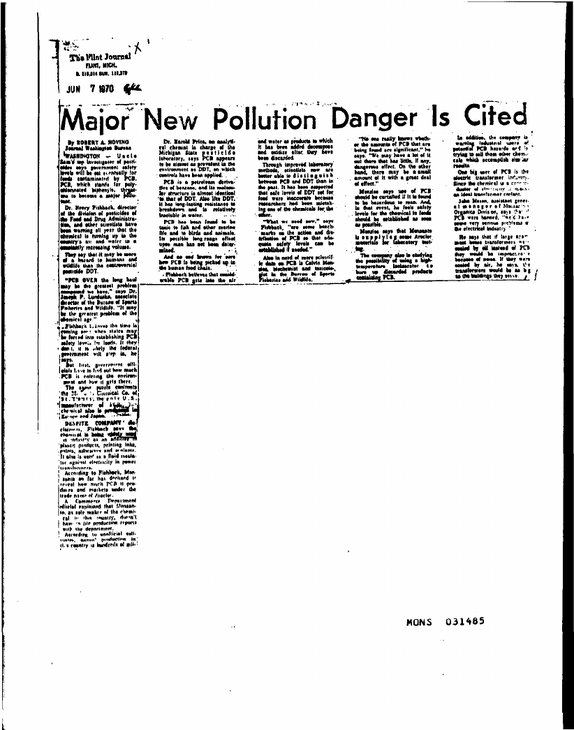
- PCI Km bean lewd la be taste to ftoh and other marina Wo and to btrdo and aoimals. trt pmlbt* tang raog* tt*et upaa man baa eat baaa deter- bow PCI lo Win* picked up la Me humen lead <Mta. ,' .
refid# 1Qa18y1453vYvYyRD9YJoVGgm1 page
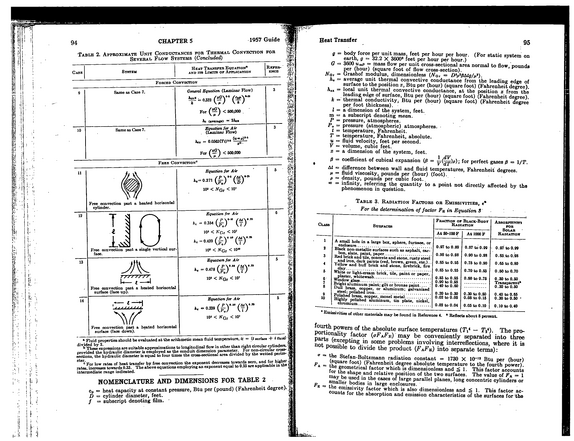
. = average unit thermal convective conductance from the leading edge of surface to the position x, Btu per (hour) (square foot) (Fahrenheit degree). tx ' local unit thermal convective conductance, at the position x from the leading edge of surface, Btu per (hour) (square foot) (Fahrenheit degree). k = thermal conductivity, Btu per (hour) (square foot) (Fahrenheit degree per foot thickness). l = a dimension of the system, feet. m = a subscript denoting mean.
refid# VGQkrnLMNMn0R0g5JpOY2okGN1 page
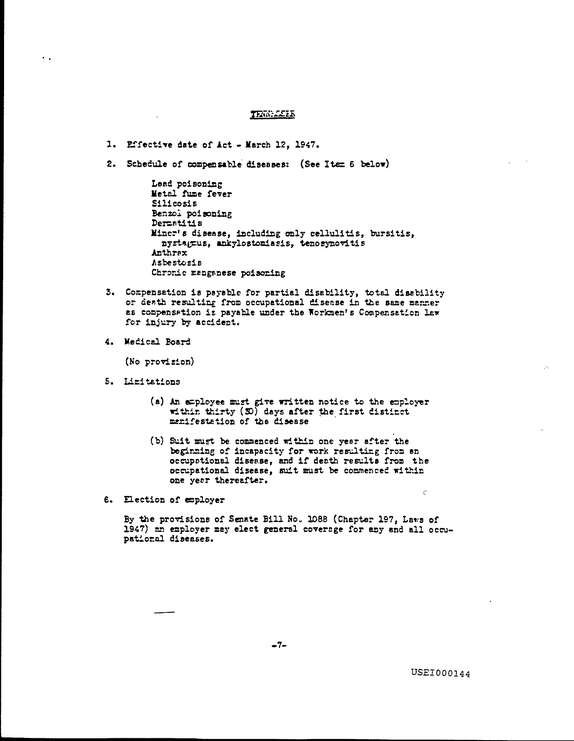
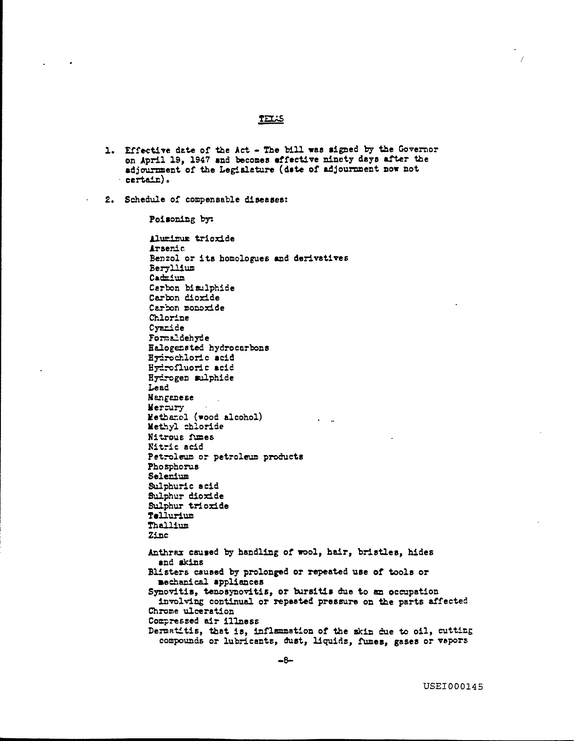
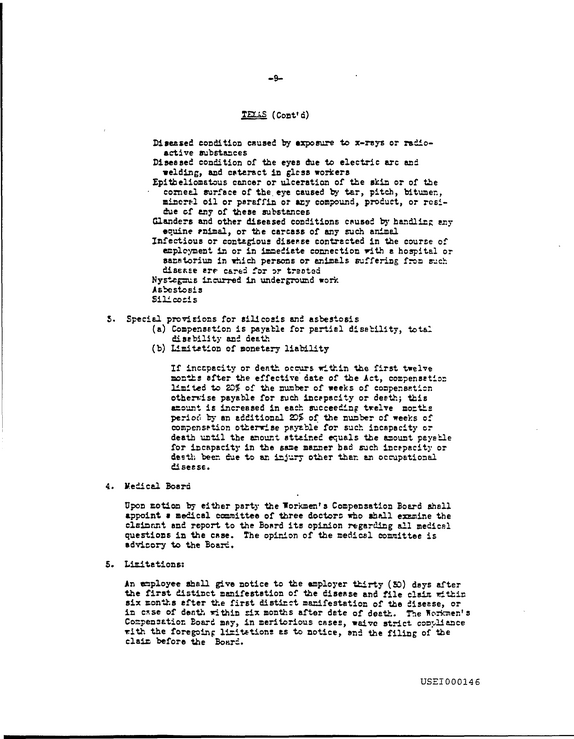
Schedule of compensable diseases: (See Item 6 below) Lead poisoning Metal fume fever Silicosis Benzol poisoning Dermatitis Miner's disease, including only cellulitis, bursitis, nystagmus, ankylostomiasis, tenosynovitis Anthrax Asbestosis Chronic manganese poisoning 3.
refid# x58NVjV5GpDonQq94O4b3m1VE4 pages
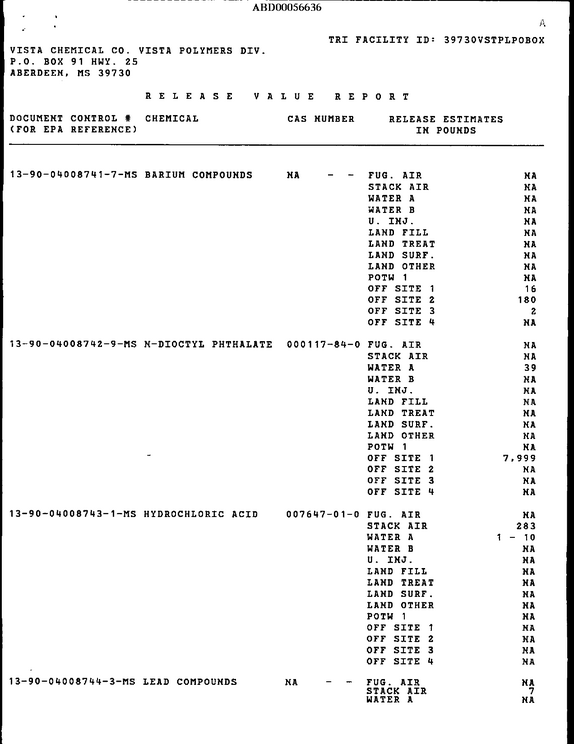
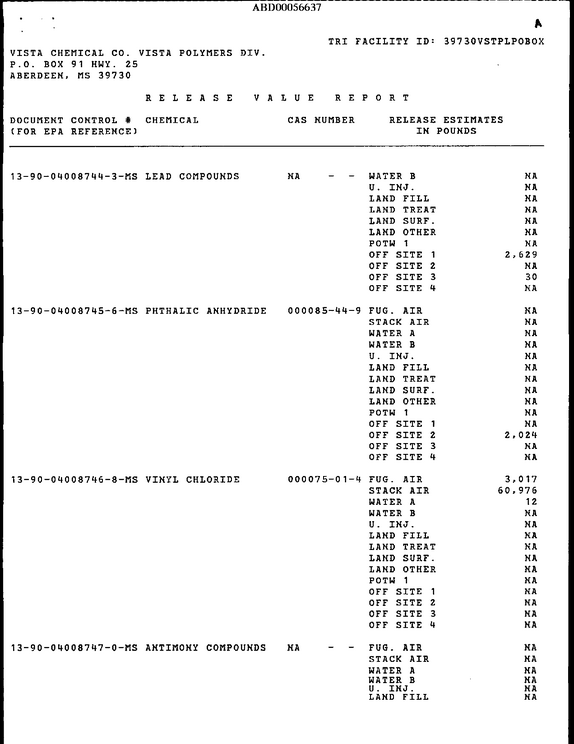
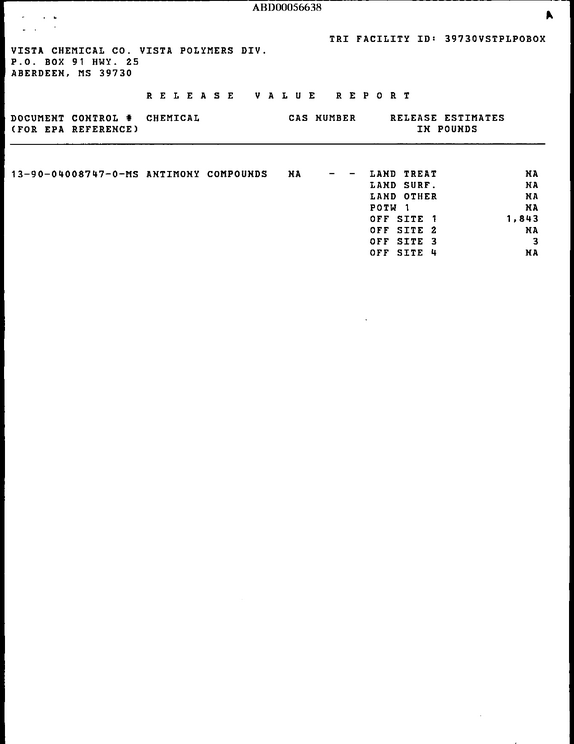
LAND OTHER POTM 1 OFF SITE 1 OFF SITE 2 OFF SITE 3 OFF SITE 4 13-90-04008743-1-MS HYDROCHLORIC ACID 13-90-04008744-3-MS LEAD COMPOUNDS 007647-01-0 FUG.
refid# 3JBvK2J14XpKDN4b4X6VDVNoD3 pages