Refine
Estimated Years UndatedClear
92,592 results foundRefine Search
2893 --I PLAINTIFF'S EXHIBIT KRC-330b mBuBWiftWiMi o .
refid# 4vd55MOdRYR5LeO6g8K4yEk3V34 pages
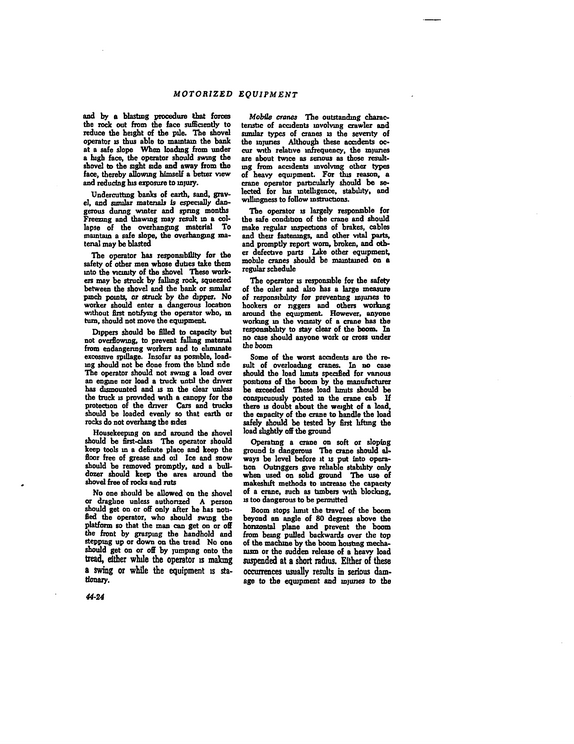
MOTORIZED EQUIPMENT and by a blasting procedure that forces the rock out from the face sufficiently to reduce the height of the pile.
refid# mB9dyBq5bK2mMb9NBybrydpq01 page
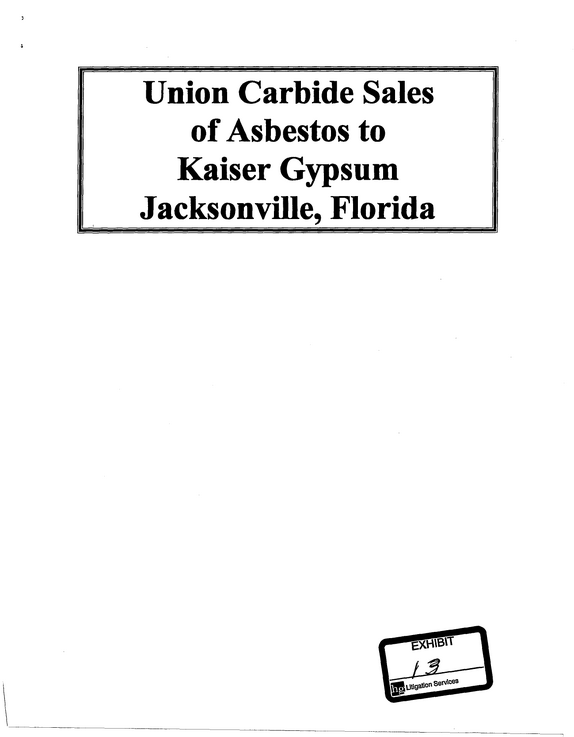
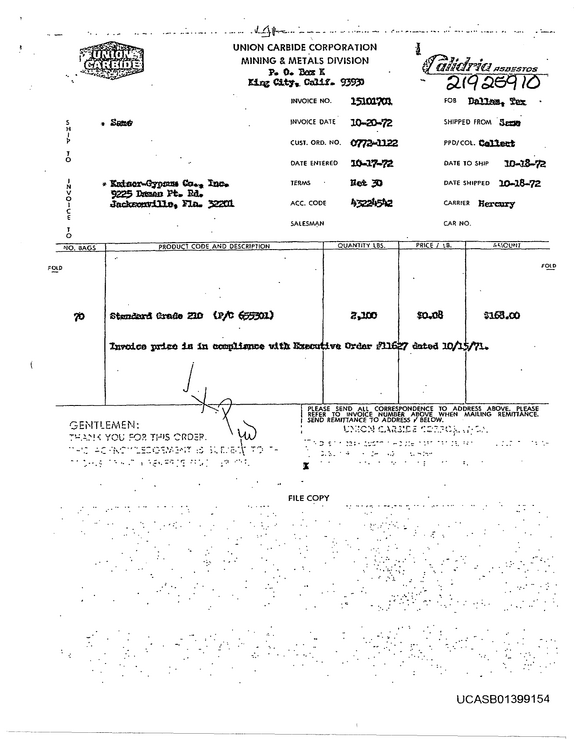
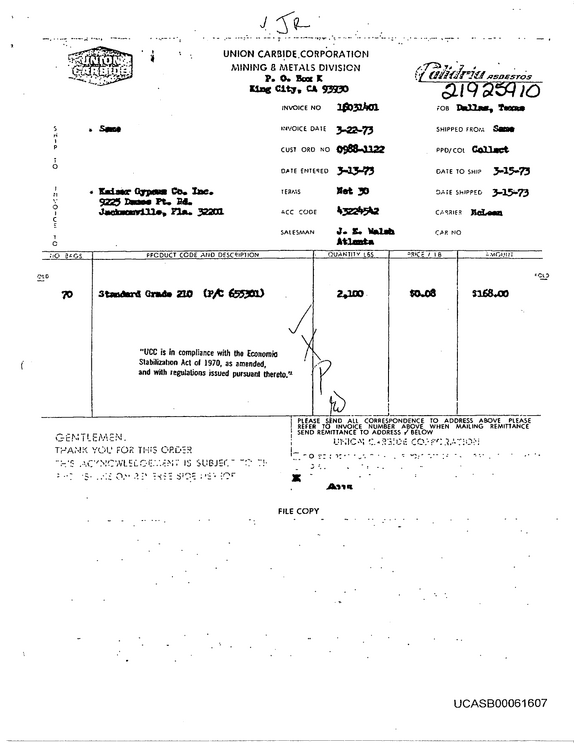
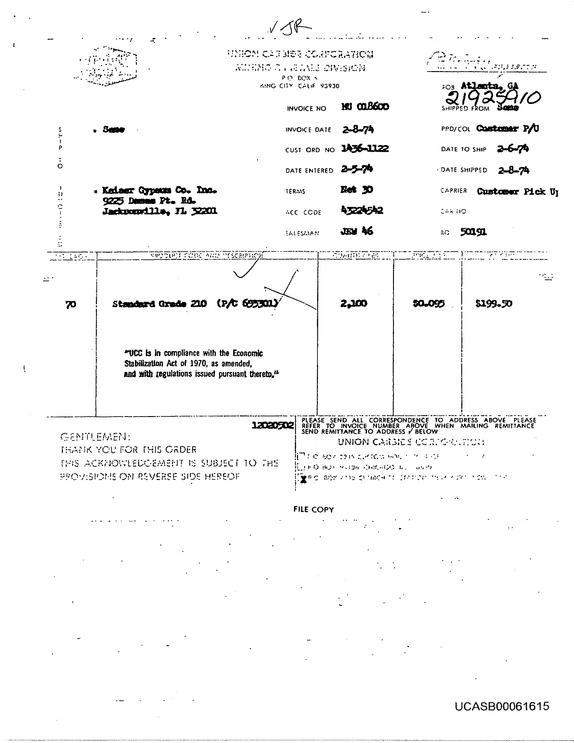
Union Carbide Sales of Asbestos to Kaiser Gypsum Jacksonville, Florida .......... ...................................
refid# oDX4q3n7dmRoEwaDyyYR2zwo74 pages
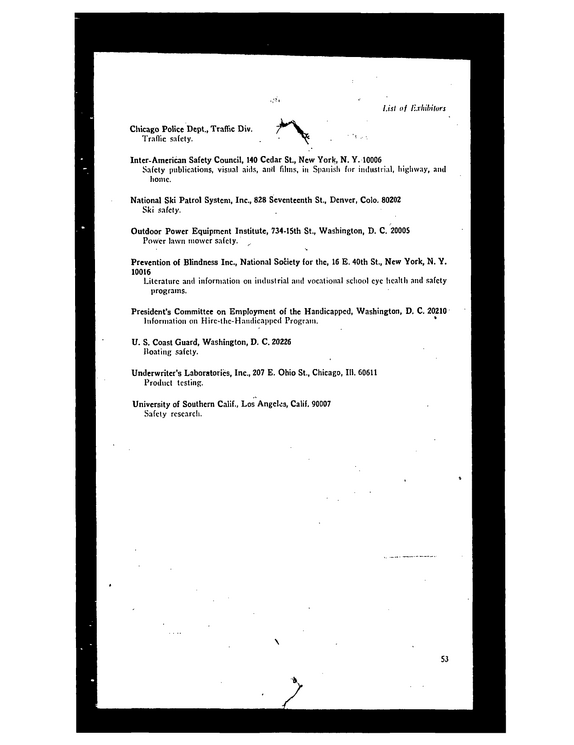
l.isl of Exhibitors Chicago Police Dept., Traffic Div.
refid# wgYryzKb3LOp0rB5eg0erG4ME1 page
* Occupational Health Nursing--Muiuei.
refid# M352BJO1Q2dng2rr98njvjoL1 page
Volume 9 < NATIONAL SAFETY CONGRESS TRANSACTIONS ELECTRONICS and ELECTRICAL EQUIPMENT NATIONAL SAFETY COUNCIL 425 North Michigan Avenue Chicago, Illinois 60611 SCF-ALLF-02930 Joint Session with Electronic end Electrical Equipment Section OCCUPATIONAL MEDICINE IN THE ELECTRONIC AND ELECTRICAL INDUSTRY By HARRY B.
refid# KR2vBOzjevmVymrEbrRo0G5kX7 pages
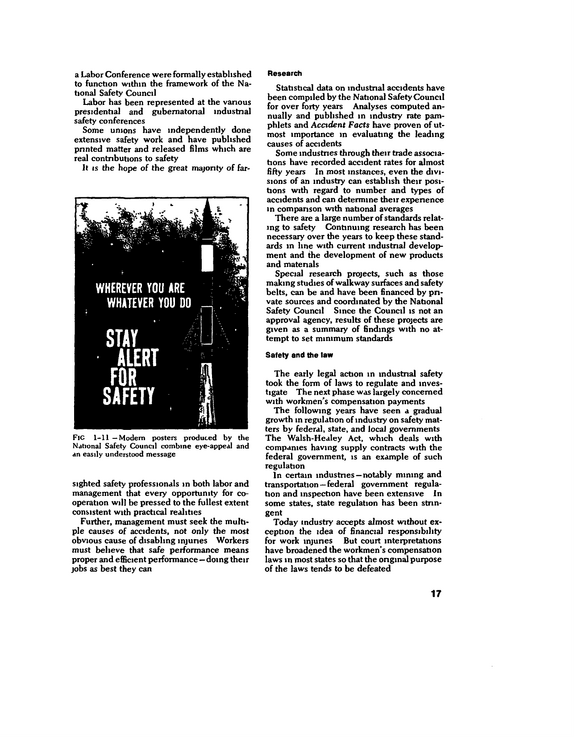
a Labor Conference were formally established to function within the framework of the Na tional Safety Council Labor has been represented at the various presidential and gubernatorial industrial safety conferences Some unions have independently done extensive safety work and have published printed matter and released films which are real contributions to safety It is the hope of the great majority of far- Research Statistical data on industrial accidents have been compiled by the National Safety Council for over forty years Analyses computed an nually and published in industry rate pam phlets and Accident Facts have proven of ut most importance in evaluating the leading causes of accidents Some industries through their trade associa tions have recorded accident rates for almost fifty years In most instances, even the divi sions of an industry can establish their posi tions with regard to number and types of accidents and can determine their experience in comparison with national averages There are a large number of standards relat ing to safety Continuing research has been necessary over the years to keep these stand ards in line with current industrial develop ment and the development of new products and materials Special research projects, such as those making studies of walkway surfaces and safety belts, can be and have been financed by pri vate sources and coordinated by the National Safety Council Since the Council is not an approval agency, results of these projects are given as a summary of findings with no at tempt to set minimum standards Safety and the law FlG 1-11 -- Modem posters produced by the National Safety Council combine eye-appeal and an easily understood message sighted safety professionals in both labor and management that every opportunity for co operation will be pressed to the fullest extent consistent with practical realities Further, management must seek the multi ple causes of accidents, not only the most obvious cause of disabling injuries Workers must believe that safe performance means proper and efficient performance--doing their jobs as best they can The early legal action in industrial safety took the form of laws to regulate and inves tigate The next phase was largely concerned with workmen's compensation payments The following years have seen a gradual growth in regulation of industry on safety mat ters by federal, state, and local governments The Walsh-Healey Act, which deals with companies having supply contracts with the federal government, is an example of such regulation In certain industries--notably mining and transportation -- federal government regula tion and inspection have been extensive In some states, state regulation has been strin gent Today industry accepts almost without ex ception the idea of financial responsibility for work injuries But court interpretations have broadened the workmen's compensation laws in most states so that the original purpose of the laws tends to be defeated 17
refid# dYVO9L5aQZ06bjV0L9d79E7gR1 page
It is the policv of this company to 1 Apply the principles of safety engineer ing to product design --to facilitate sale manufacture and safe use 2 Develop operating instructions embody ing principles of safe operation --to assist the customer in the safe use of equipment 3 Embody safety research m product re search and development to improve the product--from both manufacturing and customer safety standpoints There is no question that machinery manu facturers should be interested in product safety Ever-increasing legislative and legal awareness makes it imperative that voluntary action be taken to avoid the inevitable result of legislation that will force industry to follow specific requirements that mav often not be workable The product designed (and labeled) svith safety in mind is probably also better able to fulfill its intended function more efficiently and more economically It should also be easier to market The designer should anticipate the use -- and misuse--of a product Standards and consumer safety Consumer safety can be advanced through the voluntary standards The USA Stand ards Institute is studying the best ways to assemble the best thoughts available on the handling of major national safety issues --how to best coordinate and improve the prompt exchange of information about accidents of all kinds through a centralized agency Underwriters' Laboratories sets standards for consumer safety Voluntary standards grow out of the com mercial needs of the marketplace and the legal responsibilities in the seller-consumer relationship Standards must be feasible, both from the standpoints of cost and engi neering Industry must help determine that feasibility Standards can best be written to include the products or quality of products, rather than excluding certain products or qualities The good inclusive standard defines all levels of quality, leaving the preferred level to the user The marketplace then selects pref erences among the products meeting each performance level --except when a particular level of performance is unacceptable to society because it is considered unsafe Then, through a public process, the commun ity can act to bar that level In other words, adequate standards will be based upon per formance, not the specifications of qualities, and all levels of performance must be in cluded Products must be adequately labeled to inform the user of the level of performance they meet In this wav, competition based on product quality would be encouraged Why product safety is important The prevention of accidents to customers using mechanical products is important 1 To protect others from needless injury 2 Repeat sales are needed to stay in business 3 Third-party suits are increasing Through reports of injuries or near-injunes, it is known that electrically or mechanically dangerous products have been sold There are instances in which sweaters and thermal underclothing have caught fire or melted, resulting in serious burns to the wearer Hair-set sprays have caused serious skin bums to the user Product containers have even proven unsafe For nearly every quality hand or powered tool manufactured, some manufacturers have sold low quality and often weak or dangerous competitive tools at a lower cost The plastic frames of many eye glasses bum -- some even flash There have been many instances of injury reported Legal action against manufacturers exists and undoubtedly will increase No manu factured product is immune Certain types of manufactured products are more suscepti ble than others While to-date few safety professionals have had any responsibility for product safety, there definitely is a trend beyond the preven tion of work injuries In many companies, including insurance companies, safety per sonnel are called "loss prevention engineers" or "specialists" or the name of the department or division in which they are employed is known as the "loss prevention department" or "engineering and loss prevention depart ment " The safety professional usually has com- 79
refid# bOO73V3X5OaemowqNax991n8D1 page
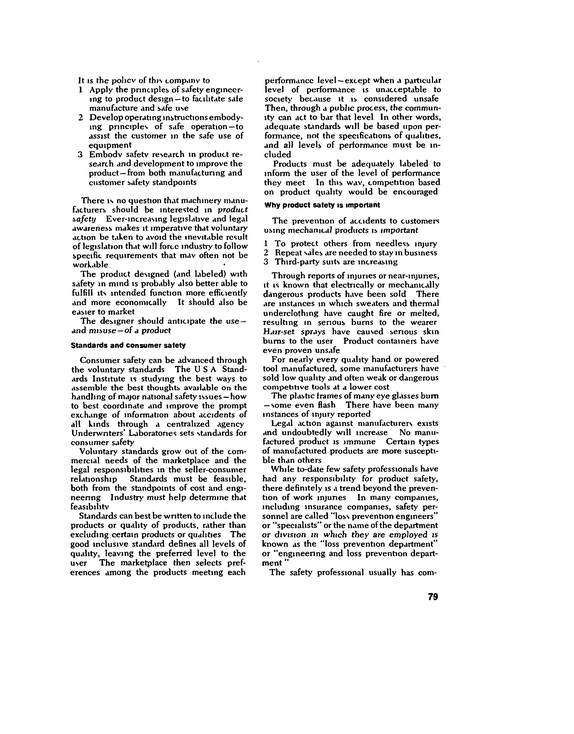
CHECKLIST HUMAN FACTORS ENGINEERING EVALUATION Task: CONTROL DESIGN Compatibility of movement with display Movement required (push, pull, turn, move left, move nght, move up, move down, combination) Cntical controls coded Critical controls labeled Controls coded Controls labeled Coding used (size, color, shape, movement) Location of controls (accessibility to operator, frequency of use, critical to the system) Control resistance Anthropometric requirements DISPLAY DESIGN Type of displays (visual, auditory, other) Control/display ratio Control/display movement compatible TASK DESIGN Monitoring (vigilance) Information processing Decision making Relay information Transmit communications Receive communications Memory Recording Overload Underload Anthropometnc requirements SIZE DESIGN Operator (seated, standing, both) Control size Display size Accessibility for movement Accessibility for maintenance Work space allocation ENVIRONMENTAL FACTORS Atmospheric pressure Heat Cold Acceleration Deceleration Space limitation Noise Vibration Light Glare NOTE This is not intended to be a comprehensive checklist for all svstems Other items, equally important, should be added depending on the system FlC 5-7 109
refid# 7Rj9j18KyXVObXwLqmK2O90D81 page
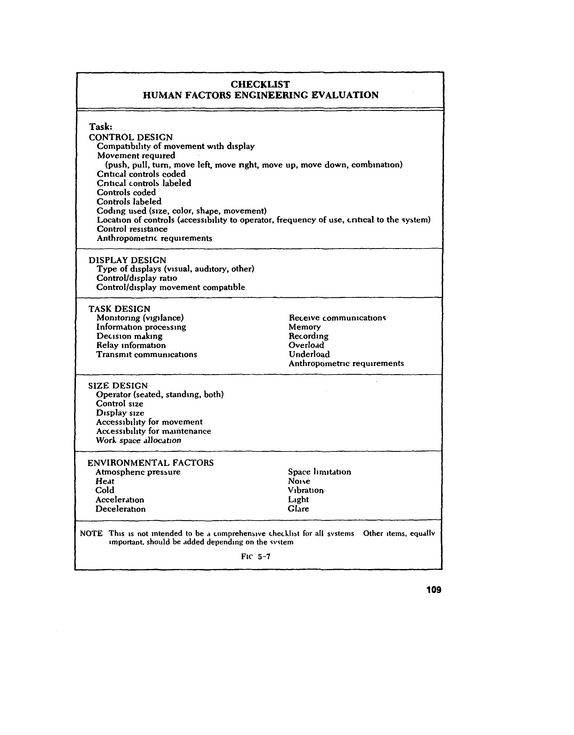
t FlC 8-4 --The conclusion of another injury-free year calls for celebration* Here, employees, families, and community VIP's enjoy a family safety picnic --complete with balloons, refreshments, and special souvenirs to commemorate the event Courtesy Carling Brewing Company safety picnic In companies with plants in different cities, a top executive may call a meeting of em ployees when he visits a plant His talk may cover safety as well as other subjects One company president makes an annual round of plants with the safety director and speaks at a safety rally of all employees at each plant Under certain conditions, particularly in smaller communities, large meetings can be held m a local theater or public hall It then is necessary to make fairly elaborate arrange ments and to give the meetings considerable publicity to assure good attendance A mass meeting in a public hall naturally has one advantage over a plant meeting It makes possible the attendance not only of employees, but also of their wives or hus bands, families, and friends "Family safety nights" of this sort are very popular m the railroad industry A consider able number may be held at several different points on the railroad during the year In addition to the address or two around which the program is centered, there should be some worthwhile entertainment Often good talent can be found nght in the plant or shop This type of meeting affords an excellent opportunity for using an outside speaker who can talk authoritatively and convincingly on general accident prevention work Such a speaker can be obtained from a nearby plant, an insurance company, the city administra tion, an automobile club, or a community safety council If movies relating to accident prevention are desired, a suitable selection can be made from films available through the National Safety Council, or through regional film serv ice organizations, whose locations may be obtained from the Council 173
refid# ppOvRZjxed2vLr9JD7pq4bJk61 page
Available U S Government Printing Office Washington, D C 20402 Safety Standards (bimonthly) U S Dept of Labor, Bureau of Labor Statis tics Washington, D C 20210 BritishJournal ofIndustrial Safety (quarterly) Royal Society for the Prevention of Acci dents 52 Grosvenor Gardens London S W 1, England Industnal hygiene and medicine AM A Archives of Environmental Health (monthly) American Medical Association 535 North Dearborn St Chicago, 111 60610 American Industrial Hygiene Association Journal (bimonthly) American Industnal Hygiene Association 25711 Southfield Rd Southfield, Mich 48075 American Journal of Nurstng (monthly) 10 Columbus Circle New York, NY 10019 Chemical Abstracts, "Toxicology, Air Pollu tion, and Industrial Hygiene" Section (monthly) Amencan Chemical Society 1155 Sixteenth St NW Washington, D C 20036 Industnal Hygiene Digest (monthly) Industrial Hygiene Foundation 5231 Centre Ave Pittsburgh, Pa 15232 Industnal Hygiene News Report (monthly) Flournoy & Associates 1845 W Morse Ave Chicago, 111 60626 Industnal Nurses Journal (monthly) Amencan Association of Industnal Nurses 170 East 61st St New York, NY 10021 Journal of Occupational Medicine (monthly) Industnal Medical Association 55 East Washington St Chicago, 111 60605 Bntish Journal of Industrial Medicine (quar terly) British Medical Association Tavistock Square London W C 1, England "Occupational Safety and Health Abstracts" (monthly bulletins and cards) International Occupational Safety and Health Information Centre (CIS) International Labor Office Geneva 22, Switzerland Fire Fire Engineering (monthly) Rueben H Donelley 466 Lexington Ave New York City 10017 Fire Journal (bimonthly) Fire News (monthly) Fire Technology (quarterly) Firemen (monthly) National Fire Protection Association 60 Batterymarch St Boston, Mass 02110 FPA Journal (quarterly) Fire Protection Association 31/45 Gresham St London E C 2, England Many of the state departments of labor and federal agencies publish periodicals which are available upon request With the excep tion of the state agencies, most of the others are mentioned under the subject headings in this section A number of trade journals have sections devoted to industnal safety The safety engi neer should become acquainted with those servicing the industry in which he is pnmanly interested Industnal accident prevention books The "classic" and standard books of the safety movement are listed in the "Ref erences" section of Chapter 1, "Indus tnal Safety--Yesterday, Today, Tomorrow " Handbooks of engineenng tables and for mulas are listed in "References to Useful Handbooks" section of Chapter 47, "Safety Engineering Tables' " 371
refid# 5be1axy10RQ17zVx2zNYD0JMV1 page
Industrial Buildings and Plant Layout Design for Safety Building*, equipment, and processes Planning checklist Codes and standards Site Planning Location, climate, and terrain Space requirements Outside Facilities Enclosures Shipping and receiving Railroad sidings Roadways and walkways Parking lots Landscaping Waste disposal Air pollution Use of waterways Trestles Bins Pits and openings Outside lighting Docks and wharves Plant Layout Location of buildings and structures equipment Electrical equipment air conditioning Inside storage Flow sheet Layout of Ventilation, heating, and Lighting Electric lighting Quantity of illumination Quality of illumination Glare Safety Luminaires Hazardous location Protective lighting Maintenance Electrical distribution systems Light sources Use of Color Interiors and equipment signs Color-coding Accident prevention Building Structures Runways and ramps Stairs and walkways Exits Windows Flooring matenals Special flooring Floor loads References 390 Chapter 16 391 392 393 398 403 410 411 417
refid# ppygVzRGpm8anoa0DgkZ8k1ma1 page
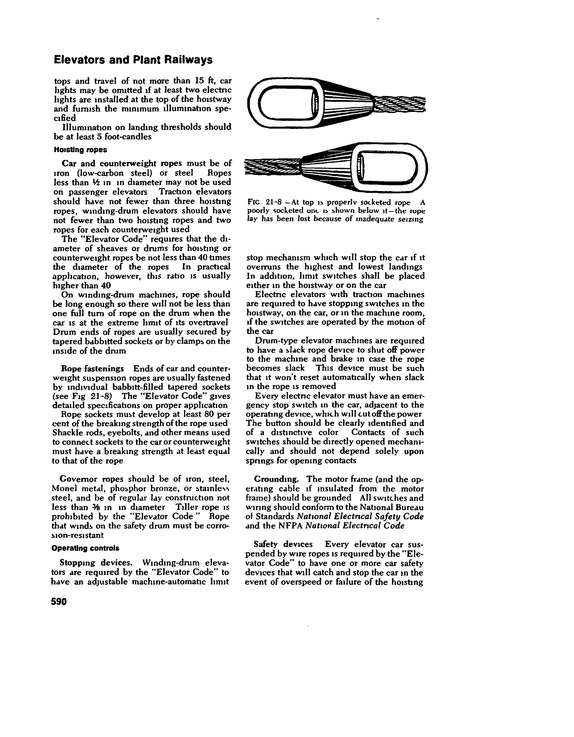
Elevators and Plant Railways tops and travel of not more than 15 ft, car lights may be omitted if at least two electric lights are installed at the top of the hoistway and furnish the minimum illumination spe cified Illumination on landing thresholds should be at least 5 foot-candles Hoisting ropes Car and counterweight ropes must be of iron (low-carbon steel) or steel Ropes less than Vz in in diameter may not be used on passenger elevators Traction elevators should have not fewer than three hoisting ropes, winding-drum elevators should have not fewer than two hoisting ropes and two ropes for each counterweight used The "Elevator Code" requires that the di ameter of sheaves or drums for hoisting or counterweight ropes be not less than 40 times the diameter of the ropes In practical application, however, this ratio is usually higher than 40 On winding-drum machines, rope should be long enough so there will not be less than one full turn of rope on the drum when the car is at the extreme limit of its overtravel Drum ends of ropes are usually secured by tapered babbitted sockets or by clamps on the inside of the drum Rope fastenings Ends of car and counter weight suspension ropes are usually fastened by individual babbitt-filled tapered sockets (see Fig 21-8) The "Elevator Code" gives detailed specifications on proper application Rope sockets must develop at least 80 per cent of the breaking strength of the rope used Shackle rods, eyebolts, and other means used to connect sockets to the car or counterweight must have a breaking strength at least equal to that of the rope FlC 21-8 -- At top is properlv socketed rope A poorly socketed one is shown below it --the rope lay has been lost because of inadequate seizing stop mechanism which will stop the car if it overruns the highest and lowest landings In addition, limit switches shall be placed either m the hoistway or on the car Electric elevators with traction machines are required to have stopping switches m the hoistway, on the car, or in the machine room, if the switches are operated by the motion of the car Drum-type elevator machines are required to have a slack rope device to shut off power to the machine and brake in case the rope becomes slack This device must be such that it won't reset automatically when slack m the rope is removed Every electric elevator must have an emer gency stop switch in the car, adjacent to the operating device, which will cut offthe power The button should be clearly identified and of a distinctive color Contacts of such switches should be directly opened mechani cally and should not depend solely upon spnngs for opening contacts Governor ropes should be of iron, steel.
refid# v125o5RdodRLKZX12n9EqMeMZ1 page
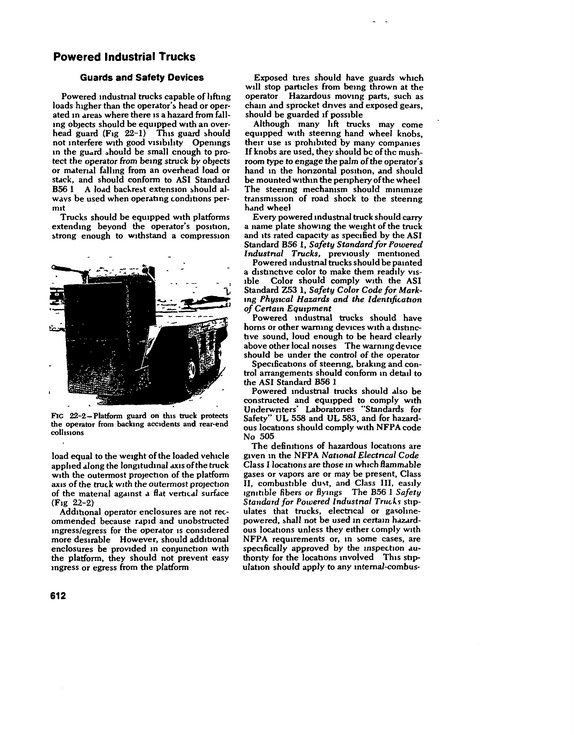
Powered Industrial Trucks Guards and Safety Devices Powered industrial trucks capable of lifting loads higher than the operator's head or oper ated in areas where there is a hazard from fall ing objects should be equipped with an over head guard (Fig 22-1) This guard should not interfere with good visibility Openings m the guard should be small enough to pro tect the operator from being struck by objects or material falling from an overhead load or stack, and should conform to ASI Standard B56 1 A load backrest extension should al ways be used when operating conditions per mit Trucks should be equipped with platforms extending beyond the operator's position, strong enough to withstand a compression FlC 22-2--Platform guard on this truck protects the operator from backing accidents and rear-end collisions load equal to the weight of the loaded vehicle applied along the longitudinal axis ofthe truck with the outermost projection of the platform axis of the truck with the outermost projection of the material against a flat vertical surface (Fig 22-2) Additional operator enclosures are not rec ommended because rapid and unobstructed ingress/egress for the operator is considered more desirable However, should additional enclosures be provided in conjunction with the platform, they should not prevent easy ingress or egress from the platform Exposed tires should have guards which will stop particles from being thrown at the operator Hazardous moving parts, such as chain and sprocket drives and exposed gears, should be guarded if possible Although many lift trucks may come equipped with steering hand wheel knobs, their use is prohibited by many companies If knobs are used, they should be of the mush room type to engage the palm of the operator's hand m the horizontal position, and should be mounted within the periphery ofthe wheel The steering mechanism should minimize transmission of road shock to the steering hand wheel Every powered industrial truck should carry a name plate showing the weight of the truck and its rated capacity as specified by the ASI Standard B56 I, Safety Standardfor Powered Industrial Trucks, previously mentioned Powered industrial trucks should be painted a distinctive color to make them readily vis ible Color should comply with the ASI Standard Z53 1, Safety Color Code for Mark ing Physical Hazards and the Identification of Certain Equipment Powered industrial trucks should have horns or other warning devices with a distinc tive sound, loud enough to be heard clearly above other local noises The warning device should be under the control of the operator Specifications of steering, braking and con trol arrangements should conform m detail to the ASI Standard B56 1 Powered industrial trucks should also be constructed and equipped to comply with Underwriters' Laboratories "Standards for Safety" UL 558 and UL 583, and for hazard ous locations should comply with NFPA code No 505 The definitions of hazardous locations are given in the NFPA National Electrical Code Class I locations are those m which flammable gases or vapors are or may be present.
refid# 2j6YGgVJ3aBDg966Jk243a4Er1 page
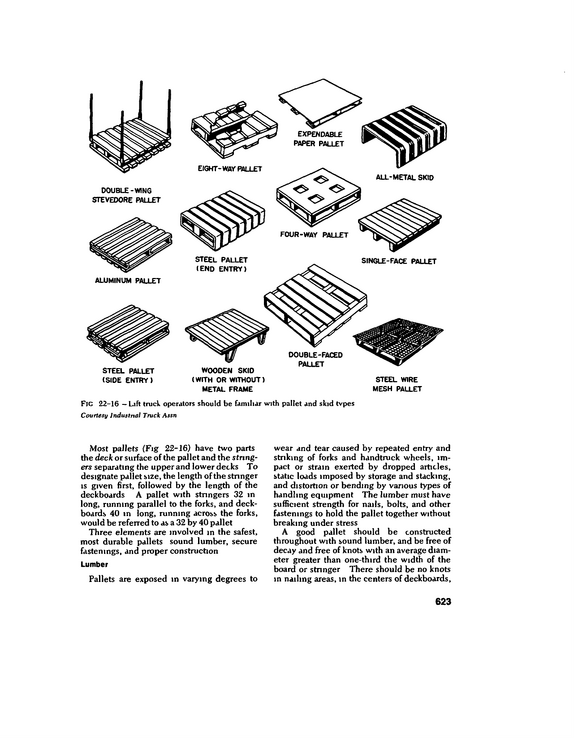
STEEL PALLET (SIDE ENTRY) WOODEN SKID (WITH OR WITHOUT) METAL FRAME FlC 22-16 -- Lift truck operators should be familiar with pallet and skid tvpes Courtesy Industrial Truck Assn STEEL WIRE MESH PALLET Most pallets (Fig 22-16) have two parts the deck or surface of the pallet and the string ers separating the upper and lower decks To designate pallet size, the length of the stringer is given first, followed by the length of the deckboards A pallet with stringers 32 in long, running parallel to the forks, and deckboards 40 m long, running across the forks, would be referred to as a 32 by 40 pallet Three elements are involved in the safest, most durable pallets sound lumber, secure fastenings, and proper construction Lumber Pallets are exposed in varying degrees to wear and tear caused by repeated entry and striking of forks and handtruck wheels, im pact or strain exerted by dropped articles, static loads imposed by storage and stacking, and distortion or bending by various types of handling equipment The lumber must have sufficient strength for nails, bolts, and other fastenings to hold the pallet together without breaking under stress A good pallet should be constructed throughout with sound lumber, and be free of decay and free of knots with an average diam eter greater than one-third the width of the board or stringer There should be no knots m nailing areas, in the centers of deckboards. 623
refid# G5DRBpLNaED3g0VqYV72G8ay41 page