Refine
Estimated Years UndatedClear
92,592 results foundRefine Search
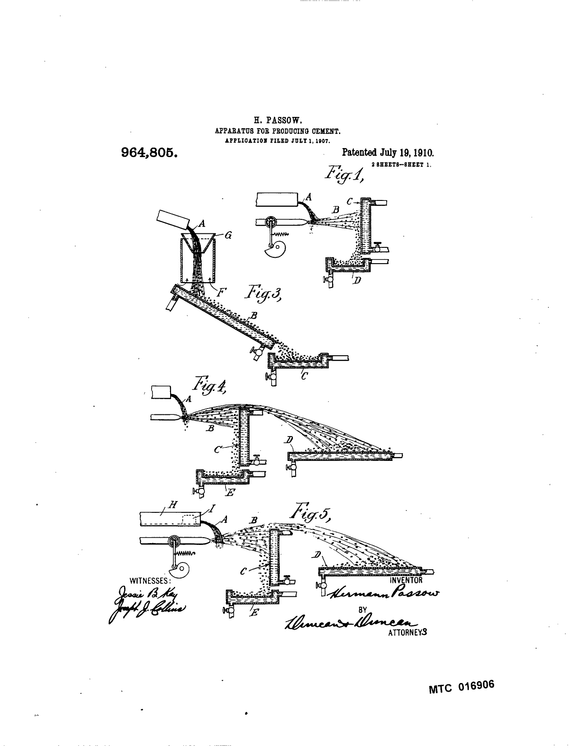
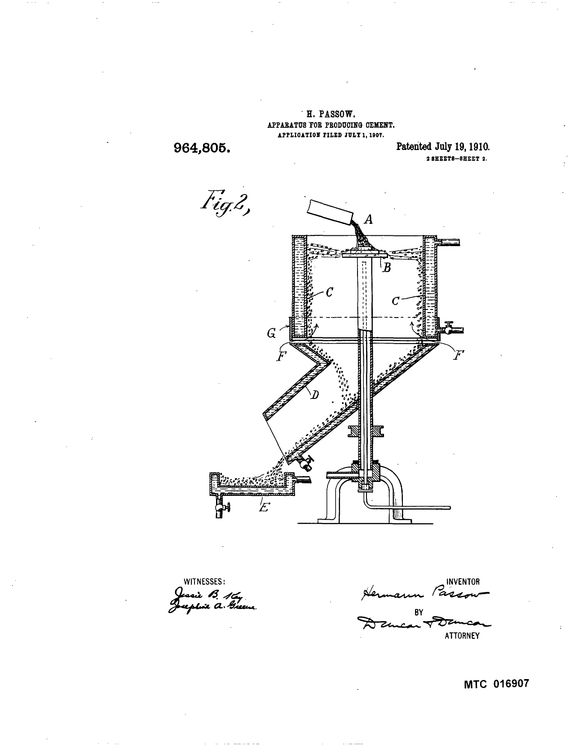
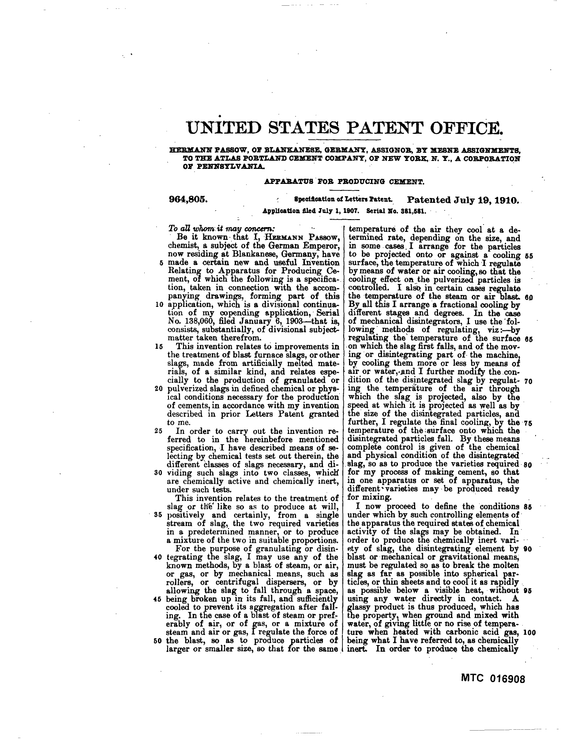
ATTACHMENT 5 MTC 016905 I 964,806.

refid# 15VYGrB1gk4Go6E2x05brB1vE8 pages
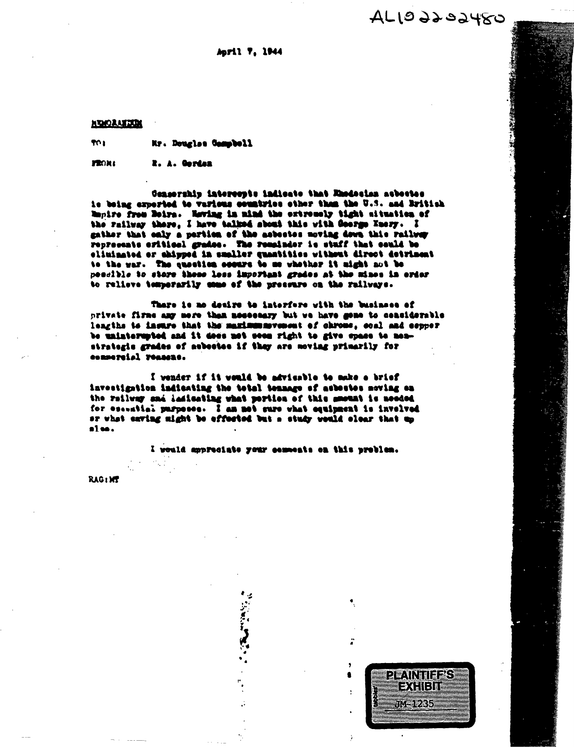
April ?
refid# vBQ8gyp85Q9OoG46JwBd4rNmZ1 page
* 44 Bank 0!
refid# 9LLDM9DnKXVmzgnrDpwY8n0B52 pages
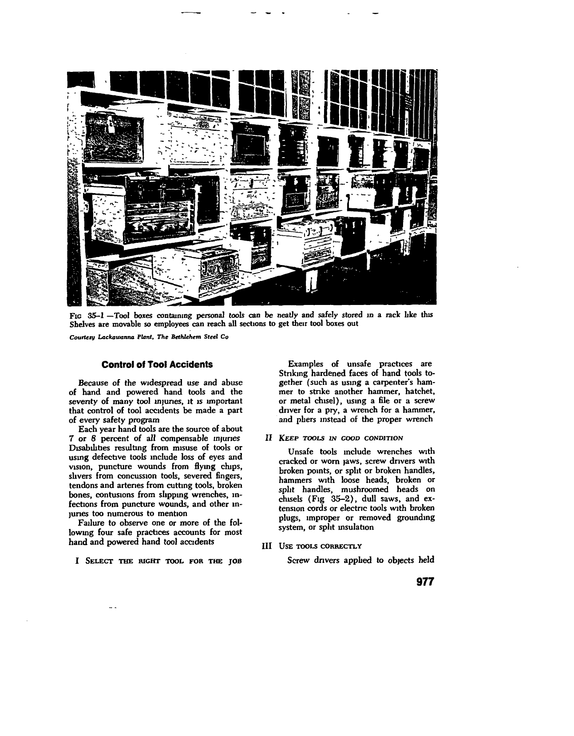
Fic 35-1 --Tool boxes containing personal tools can be neatly and safely stored in a rack bke this Shelves are movable so employees can reach all sections to get their tool boxes out Courtesy Lackaxoanna Plant, The Bethlehem Steel Co Control of Tool Accidents Because of the widespread use and abuse of hand and powered hand tools and the seventy of many tool injunes, it is important that control of tool accidents be made a part of every safety program Each year hand tools are the source of about 7 or 8 percent of all compensable injuries Disabilities resulting from misuse of tools or using defective tools include loss of eyes and vision, puncture wounds from flying chips, slivers from concussion tools, severed fingers, tendons and artenes from cutting tools, broken bones, contusions from slipping wrenches, in fections from puncture wounds, and other in juries too numerous to mention Failure to observe one or more of the fol lowing four safe practices accounts for most hand and powered hand tool accidents I Select the right tool for the job Examples of unsafe practices are Striking hardened faces of hand tools to gether (such as using a carpenter's ham mer to strike another hammer, hatchet, or metal chisel), using a file or a screw driver for a pry, a wrench for a hammer, and pliers instead of the proper wrench II Keep tools in cood condition Unsafe tools include wrenches with cracked or worn jaws, screw drivers with broken points, or split or broken handles, hammers with loose heads, broken or split handles, mushroomed heads on chisels (Fig 35-2), dull saws, and ex tension cords or electric tools with broken plugs, improper or removed grounding system, or split insulation III Use tools correctly Screw drivers applied to objects held 977
refid# O3QQNQZJv30mmQOBEoK4QBQnj1 page
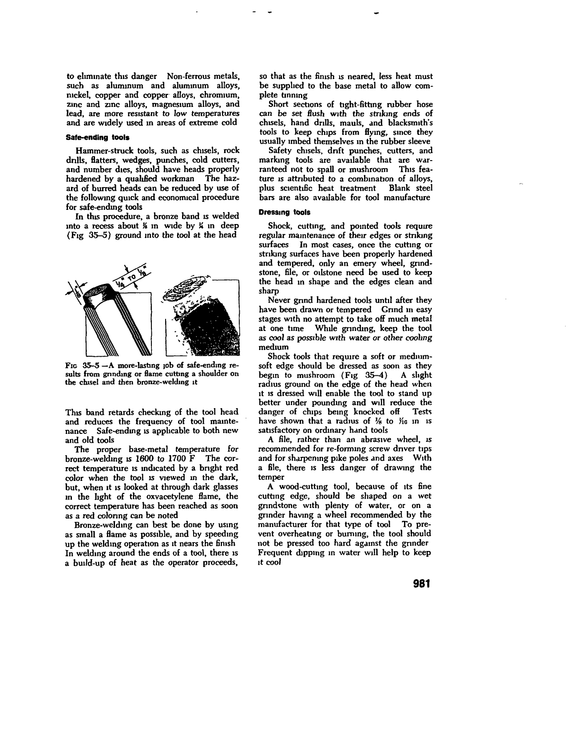
to eliminate this danger Non-ferrous metals, such as aluminum and aluminum alloys, nickel, copper and copper alloys, chromium, zinc and zinc alloys, magnesium alloys, and lead, are more resistant to low temperatures and are widely used in areas of extreme cold Safe-ending tools Hammer-struck tools, such as chisels, rock drills, flatters, wedges, punches, cold cutters, and number dies, should have heads properly hardened by a qualified workman The haz ard of burred heads can be reduced by use of the following quick and economical procedure for safe-ending tools In this procedure, a bronze band is welded into a recess about & in wide by It in deep (Fig 35-5) ground into the tool at the head Fic 35-5 --A more-lasting job of safe-ending re sults from grinding or flame cutting a shoulder on the chisel and then bronze-welding it This band retards checking of the tool head and reduces the frequency of tool mainte nance Safe-ending is applicable to both new and old tools The proper base-metal temperature for bronze-welding is 1600 to 1700 F The cor rect temperature is indicated by a bright red color when the tool is viewed in the dark, but, when it is looked at through dark glasses in the light of the oxvacetylene flame, the correct temperature has been reached as soon as a red coloring can be noted Bronze-welding can best be done by using as small a flame as possible, and by speeding up the welding operation as it nears the finish In welding around the ends of a tool, there is a build-up of heat as the operator proceeds.
refid# xzrjbMBzNMqakRpxbMgmJN0v61 page
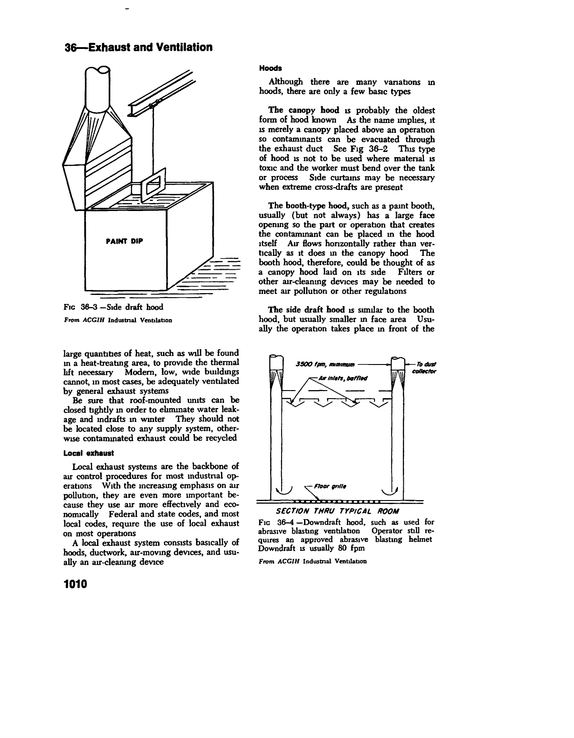
36--Exhaust and Ventilation Fic 36-3 --Side draft hood From ACGlll Industrial Ventilation Hoods Although there are many variations in hoods, there are only a few basic types The canopy hood is probably the oldest form of hood known As the name implies, it is merely a canopy placed above an operation so contaminants can be evacuated through the exhaust duct See Fig 36-2 This type of hood is not to be used where material is toxic and the worker must bend over the tank or process Side curtains may be necessary when extreme cross-drafts are present The booth-type hood, such as a paint booth, usually (but not always) has a large face opening so the part or operation that creates the contaminant can be placed in the hood itself Air flows horizontally rather than ver tically as it does m the canopy hood The booth hood, therefore, could be thought of as a canopy hood laid on its side Filters or other air-cleaning devices may be needed to meet air pollution or other regulations The side draft hood is similar to the booth hood, but usually smaller in face area Usu ally the operation takes place in front of the large quantities of heat, such as will be found in a heat-treating area, to provide the thermal lift necessary Modem, low, wide buildings cannot, m most cases, be adequately ventilated by general exhaust systems Be sure that roof-mounted units can be closed tightly in order to eliminate water leak age and indrafts in winter They should not be located close to any supply system, other wise contaminated exhaust could be recycled Local exhaust Local exhaust systems are the backbone of air control procedures for most industrial op erations With the increasing emphasis on air pollution, they are even more important be cause they use air more effectively and eco nomically Federal and state codes, and most local codes, require the use of local exhaust on most operations A local exhaust system consists basically of hoods, ductwork, air-moving devices, and usu ally an air-cleaning device 1010 Fic 36-4 --Downdraft hood, such as used for abrasive blasting ventilation Operator stall re quires an approved abrasive blasting helmet Downdraft is usually 80 fpm From ACGIH Industrial Ventilation
refid# rpg5m1QxOLDpB3aV4KvnxB0jr1 page
ating the quality and safety of water supplies in industry It is highly advisable that the documented justification for the various limits or values be consulted for detailed information concerning mode of action and effect of exposure to a particular toxic material Such information is given in References at the end of this chapter Thus far, the fundamentals of industrial tox icology, toxicity, routes of entry, modes of acbon, classification of harmful effects, in tensity of acbon, contnbubons from experi mental toxicology, and hygienic air quality standards have been reviewed The safety professional may well ask how he can apply this knowledge to his work A hazardous chemicals information sheet could be prepared to elicit toxicological informahon from the supplier The informabon in this questionnaire would be useful to the medical, purchasing, managenal, engineering, and safety departments m setting guidelines for safe use of these materials in industry This informabon would be very helpful in the event of an emergency Catalog of Toxic Substances No attempt has been made to give detailed direcbons for handling each substance in the following list, since such directions would be repehtious Instead, enough informabon is given to alert the safety professional to the primary hazard This information should be used in conjunction with the pi ocedures for recognition, evaluabon, and control of health hazards discussed m the main body of this Manual Some of the signs of excessive exposure to toxic substances are indicated in the following list, but these should not be taken as con clusive evidence, particularly in cases of pos sible chrome exposure To definitely impli cate a specific substance requires evidence of both the degree and length of exposure to it and the absence of other causative agents The following selechon is a representative sampling of the toxic substances encountered m industry, but it does not describe each of the substances for which threshold limit values have been established The Documentation of Threshold Limit Values, published by the American Conference of Governmental Indus trial Hygienists, should be consulted for this type of detailed informabon Flammable and explosive hazards of many of the following substances are also given in Chapter 39, "Chemical Hazards " A Acetaldehyde (acebc aldehyde) is a flam mable hquid with a low flash point and a boil ing point just at normal room temperature It is, consequently, a fire hazard comparable to ether in intensity If kept in any large quanbty, it should be stored with the precauhons appropnate for ether Acetaldehyde processes should be well en closed and isolated because of its intense irri tant properties It affects primarily the skin and the upper respiratory passages because of its relabvely high solubility in water A high concentration may produce sudden death from spasm of the throat Lower concentrabons produce coughing and inflammabon of the nose, throat, and eyes Paraldehyde, the solid form to which acetaldehyde polymerizes, has long been used in medicine as a narcobc and soporific In this form, its irritant properties are greatly re duced and the narcotic effect can be observed Paraldehyde can cause chronic poisoning in volving fatty degeneration of the liver and cardiac muscles, psychic disturbances, and lrntahon and edema of the respiratory system Acetanilide is more likely to be seen as a medication, used as an analgesic and antipy retic, than as an industrial material It is an aromabc amine and can affect the blood hemoglobin and so interfere with respirabon if it is absorbed m large quantity, particularly if the exposure is chronic Those suffering from chronic overdoses are apt to show severe anemia, reduced white blood cell counts, pro gressive weakness, and severe headaches Acetic acid, glacial (concentrated), can readily penetrate the skin, producing blisters, dermatihs, and ulcers Even at room tem perature, the vapor is highly lrntahng to the eyes, nose, and throat If acebc acid is swal lowed, it produces a burning taste in the mouth and esophagus, followed by pain in the stomach which may extend rapidly over 1123
refid# emRLO93nxBp3Ex77zLxy4xDjG1 page
substances such as wood or paper since its concentrated solutions may cause explosion or combustion on contact In the oxidation of most organic materials, concentrated mtnc acid will produce dense clouds of red or brown oxides of nitrogen Since inhalation of these oxides m dangerous quantities produces only a mild irritation of the respiratory organs, it is possible to inhale a dangerous concentration without much dis comfort or apparent injury Symptoms from the affected lungs will ap pear after a lapse of several hours The result of the exposure may be extremely grave Any one known to have inhaled nitrogen oxide fumes should be kept under medical observa tion for at least 24 hr whether or not he shows symptoms The effects of mtnc acid on the skin are not different from those of other strong acids except for the charactenstic, and apparently harmless, yellow stains produced by minor bums Nitroanilme occurs as three isomers, ortho, meta, and para, but their physiological effects are essentially the same They all are readily absorbed through the respiratory system or through the intact slan They are powerful methemoglobm formers and cause hemolysis of red blood cells They are comparable m all respects to nitrobenzene and should be used with the same precautions Nitrobenzene is a light yellow liquid with the odor of almonds and a high boiling point so that the probability of poisoning by inhala tion of vapor from the cold liquid is not great A highly toxic substance, it will produce either acute poisoning by absorption of a large amount m a short time or chronic poisoning by continued exposure to small amounts It can be absorbed by inhalation and inges tion, but, m industry, the major hazard is absorption through the skm Absorption by inhalation can also occur and produce senous poisoning, it is especially likely where vapor escapes from a hot process or during the cleaning of tanks and bnes by steam or hot water Nitrobenzene is primarily a blood and nervous system poison It combines with the hemoglobin to produce methemoglobm, which will not transport oxygen and consequently leads to asphyxiation of the tissue It also generally depresses or paralyzes the central nervous system Acute poisoning, which rapidly follows con tact, is marked by the deep blue color of the lips, fingernails, and ears and by labored breathing In a milder case the signs are drowsiness, headache, and unsteady gait sug gesting drunkenness Recovery is likely to be slow, partly because of the slowness with which nitrobenzene is eliminated from the system and partly because of the time required to replace the red blood cells which have been destroyed Repeated skm contact or inhalation over a long time may produce chronic nitrobenzene poisoning with fatigue, headache, loss of ap petite, and mild anemia Exposure to levels of 40 to 80 ppm will produce slight symptoms after a few hours After acute exposure to nitrobenzene, the first step is to remove all contaminated clothing immediately and to wash the slan liberally with soap and water The only other meas ures to take pending medical care are to keep the individual at complete rest and to ad minister oxygen if breathing is labored To minimize the possibility of skm contact, men working with nitrobenzene should have two lockers and should be required to keep work clothing separated from street clothing Work clothing should preferably be issued by the plant management and laundered on the premises A complete bath with warm water and soap and a complete change of clothing, from the skm outward, should be required at the end of each shift No food or tobacco should be permitted in the work area Nitroetbane is typical of the mtroparaffins in that it acts as a mild irritant to the lungs, upper respiratory tract and central nervous sys tem Nitroparaffins do not seem to be absorbed through the skm In animal experiments, all animals fatally poisoned by nitroethane also showed some liver damage Rabbits, guinea pigs, and monkeys were not affected by ex posure for 140 hr to 500 ppm of nitroethane, but rabbits and guinea pigs were affected by a single 6-hr exposure to 1000 ppm Nitrogen dioxide is the toxic constituent of 1159
refid# gDb4jqoLR5jZN4yvryKMvQQ091 page
Tests, see Inspection Tetrabromoethane, 1172 Tetrachioroethane, 1147,1172 Tetrachloroethylene, 1147, 1172 Tetraethyl lead, 1152 Tetrahydrofuran, 1173 Tetryl, 1175 Texture of control, 232-233 Thallium, 1173 Theory X and Y of motivation, 248-249 Thermal environment, 1053-1054 Thermometers, 1053 Thermoplastic, definition, 1239 Thermosetting, definition, 1239 THERP, 100 Thiocyanates, 1173 Third party liability, 192 Three E's of safety, 6-7, 151 Threshold limit values, 1041, 1075-1076, 1118 calculations, 1079-1080, 1195-1197, 1200 chemical substances, 1112, 1182-1198 excretory, 1112-1113 physical agents, 1095-1107, 1248-1251 sinusoidal vibration, 1471 Tiles, floor, 578 Tilt table saws, 814-815 Timbers, stresses (table), 1450-1452 Time-weighted average, 1079-1080, 1119, 1121, 1197 Tin snips, 984 Tires, vehicle, inflation, 1428 Tissue damage, 1060 Titanium dioxide, 1173 Titanium tetrachloride, 1173 Titanium, toxicity, 1173 Toeboards, see Raibngs and toeboards Toilet facibhes, 541-542 Toluene, 1174, 1239 Toluene 2,4-dusocyanate, 1174 Toluidine, 1174 Tongs, 991-992 pipe, 991 Tools, hand, see Hand tools Tools, machine, see Machine tools Tools, power, see Power tools, portable Torches blow, 408, 1321, 1335 welding and cutting, 956-957 Tornados, planning for, 445 Torsion tools, 888-993 Tort, 572 Total disability, definitions, 137-139 'Total safety" concept, 51 Towers, dimensions, 426 Towing of vehicles, 1437, 1443 Toxaphene, 1174 Toxicity chemical, 1109-1117, 1202-1204, 1212-1231 flammable liquids, 1296 Toxicity--Continued younger people, 1115 see also specific chemicals Toxicology, experimental, 1115-1117 hygienic air quality standards, 1118-1123 literature, 1094 NIOSH criteria documents, 1118 sources of help, 463, 1176-1177 substances, hst of, 1117, 1123-1176 threshold limit values, 1182-1198 Toxline, 463 Track, railroad, 788-789 Tractors and trailers, safety devices for, 743, 1425-1426 emergency equipment, 1427 Trade associations, 608-618 Training, see Education Tramp metal as cause of fire, 1334 Tramway, aenal, 705-706 Transfer of training, 260-261 Transportation during emergencies, 461-462, 586 Transportation, U S Dept, of, labels, 117, 655 Trauma, committee on, 604 Treads, stair, 387-388 Trench excavation, 413 Trenches, utility, 433--434 Trestles, 372 Tnboelectnc inspection, 926 Tnchlomacetonitnle, 1174 Trichloroethylene, 1174, 1200 Trigonometric functions, table of, 1466-1467 Trinitrotoluene, 1174-1175 Tnorthocresylphosphate, 1175 Trolley conveyors, 701-702 Trucks, electric, see Industrial trucks Trucks, hand, see Handtrucks Trucks, motor, see Motor vehicles Tuberculosis, 1065-1066 Tungsten arc welding, 964 Tunnels, utility maintenance, 433-434 Turning machines, 1030-1032 Turpentine, 1175 u Ultrasonic tests, 926 Ultraviolet radiation, 970, 1057 TLV's, 1105-1106 Underwriters Laboratories Inc, 600 Unfired pressure vessels, see Pressure vessels, unfired United States Government agencies, 618 Unsafe acts, 107, 154, 156-157 reducing, 83-84, 214-215 Unsafe conditions, reducing, 105-110, 154, 155 Unstable materials, NFPA definition, 1206 Upsetters, forging, 940-942 Uranium and compounds, 1175 1521

refid# 2NmzRe29EaakmL60Meg5NJRoa1 page
'< ' J J> .' --, M..V 20. l'JC-6 Mr.
refid# JNMGZxqOrGxjzKEn3QR9Dq0Gr1 page
ooo'i 14% 3visa i ssiisr.s ^:.is sisravi cotan Washington, S.C.
refid# jmg2ob67wEgpr2Lbmx5zGyBBy4 pages
.1 , ,1 LI 4 _________ i-1 .
refid# o91E0Xqp65R8QE5bzGZRKaEL81 page
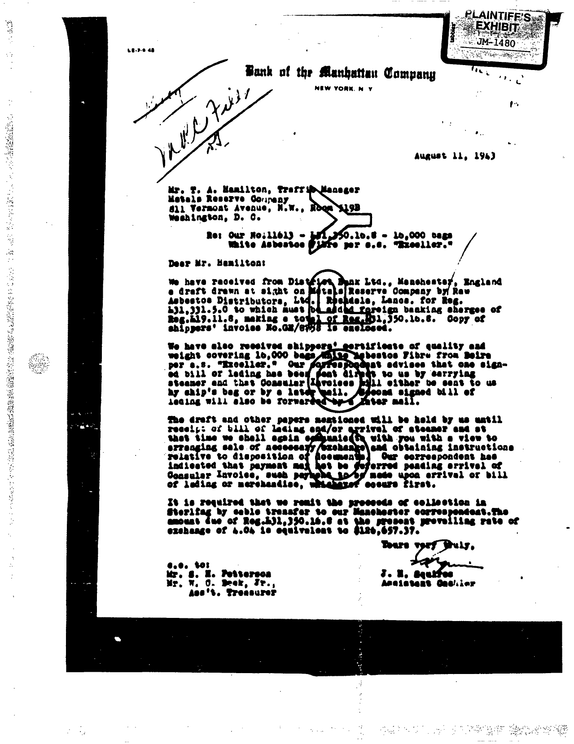
S.t f 41 Butk nf t|r BUnipdliit Sampany }' NIW VONN.
refid# 655y42Kk7Q39baa5Zj25B8Zod1 page
"`/'''CiXi.
refid# vBOxRm391w6e7NkKnp8JzoDm1 page
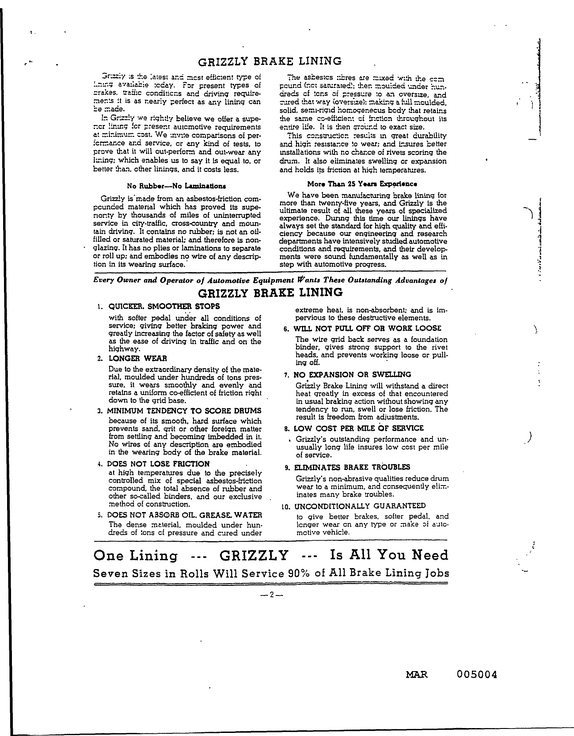
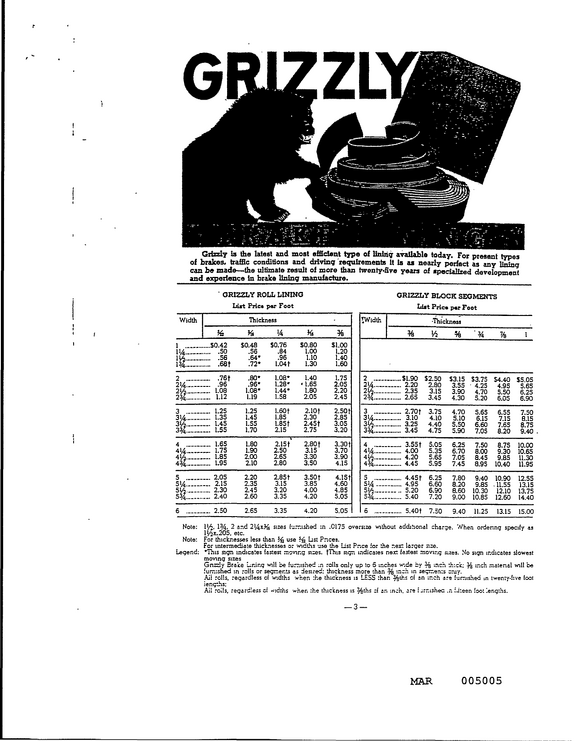
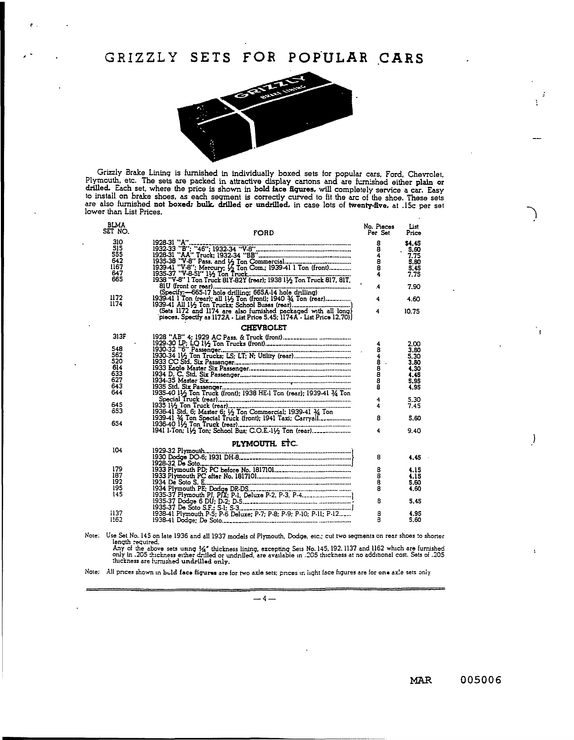
MAR 005003 grizzly brake lining Grizzly is is latest and most efficient type oi Lr.mg available iccay.

refid# 2Nj5JwKgMyzLZanKRyoxvBN2R44 pages