Refine
Estimated Years UndatedClear
92,592 results foundRefine Search
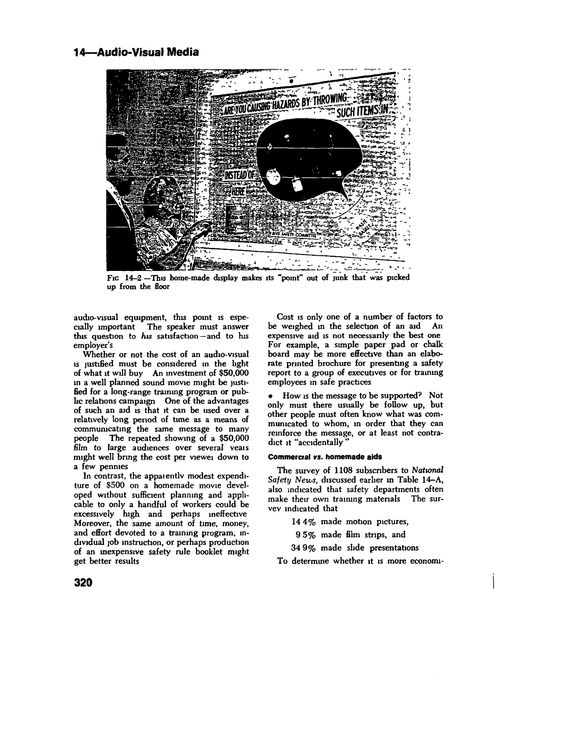
14--Audio-Visual Media Fig 14-2 --This home-made display makes its "point" out of junk that was picked up from the floor audio-visual equipment, this point is espe cially important The speaker must answer this question to his satisfaction--and to his employer's Whether or not the cost of an audio-visual is justified must be considered m the light of what it will buy An investment of $50,000 in a well planned sound movie might be justi fied for a long-range training program or pub lic relations campaign One of the advantages of such an aid is that it can be used over a relatively long period of time as a means of communicating the same message to many people The repeated showing of a $50,000 film to large audiences over several veais might well bring the cost per viewei down to a few pennies In contrast, the appaientlv modest expendi ture of $500 on a homemade movie devel oped without sufficient planning and appli cable to only a handful of workers could be excessively high and perhaps ineffective Moreover, the same amount of time, money, and effort devoted to a training program, in dividual job instruction, or perhaps production of an mexpensive safety rule booklet might get better results 320 Cost is only one of a number of factors to be weighed in the selection of an aid An expensive aid is not necessarily the best one For example, a simple paper pad or chalk board may be more effective than an elabo rate printed brochure for presenting a safety report to a group of executives or for training employees in safe practices How is the message to be supported?
refid# yrGd4xLLoXEdMLe4YmjBgboV1 page
Requirements for fire extinguishing equip ment and fire protection standards and codes for flammable liquids and gases, combustible solids, dusts, chemicals, and explosives are provided m the National Fire Codes, de veloped by the National Fire Protection As sociation See Chapter 43, "Fire Protection " Be sure to check the latest editions of the standards and codes It must be remembered that "design by the code" is no substitute for intelligent en gineering, and that codes only establish a minimum requirement which in many situa tions must be exceeded Planning checklist The following important features should be investigated, checked, and approved in plan ning a new plant or building Site planning Transportation facilities docks and wharves, railroad, and roadways Exits and other wall openings Floors, walkways, stairs, ramps, platforms Storage facilities, including those for explo sives and flammable materials, for harmful substances, for finished products, and yard storage Electric wiring and installation Illumination Mechanical handling equipment cranes, con veyors, industrial trucks Elevators Boilers and other pressure equipment Ventilation, heating, and air conditioning Fire control Health and safety water, waste disposal, first aid, personal protective equipment, distribu tion and repair facilities, isolation of ex cessively noisy operations Water supply adequate for fire fighting Personal service facilities parking, restaurants, rest rooms, employment, and training Site Planning Selection of a site involves consideration of a number of factors possible hazards to the community and their relationship to cli mate and terrain, space requirements, type and size of buddings, necessary facdities, transportation, market, and labor supply Of the factors listed, those of direct concern to the safety professional are discussed next Whde the safety professional is not directly responsible for speciahzed plant and process engineering and design, still it is his duty to keep the engineers and architects as safety conscious as possible, and to anticipate poten tial safety hazards and try to have them "de signed out" of the system before the construc tion stage begins Location, climate, and terrain Plants producing or using highly flammable or toxic substances in bulk should be located so as not to cause damage to a city or town, either generally or m case of a disaster or some unexpected happening Study of the climate of the area may be re quired It may reveal that, if a certain site is selected, the prevailing winds will cause noxious fumes or dusts to settle on a neighbor ing community or plant, thereby doing severe harm to people or property or creating a nuisance Plants, adjacent to roads and high ways, and which emit large volumes of steam must be certain that when certain winds pre vail the steam is not blown across the highway causing poor visibility The prevailing winds may also determine the best location for proc essing equipment in relation to administration offices--especially their air conditioning air in takes Drainage and waste disposal problems must also be anticipated In a hurricane, tornado, or flood area, plans and specifications should include suitable pro tective measures, and safety factors must be designed into the operation (See Chapter 18, "Planning for Emergencies ") If site plans call for bridges over streams, ditches, and other hazards, be sure they are adequately protected by a fence or by hand rails 42 m high and intermediate rails (Fig 16-1) Space requirements Size of a site is determined by both present space requirements and possible future ex pansion In the past the growth of business and population has resulted m serious crowd ing, and the resulting congestion of buildings and other facilities has increased fire, accident. 367
refid# 3Qg7B2MJD4GqqawgGZmm3YvX01 page
18--Planning for Emergencies bees ) Installation of protechve wire mesh over windows along public thoroughfares is recommended Floodlighbng of cntacal parts of plants at night is necessary for good proteebon First aid and medical A helpful pubheabon in establishing a dis aster medical service is the Gutde to Develop ing an Industrial Disaster Medical Service compiled by the American Medical Associabon's Council on Occupabonal Health This guide can also assist a company in evaluabng its readiness and will reveal weak areas Ex amples of forms and casualty tags are in cluded Although the guide is designed to combat peacetime disasters, it provides a basis on which to expand the medical services to meet the devastabon following a nuclear at tack First aid and medical service should be headed by the company doctor, if available, as discussed in Chapter 21, "Occupabonal Health Services " In the orgamzabon of the medical phase of the emergency plan, those responsible must select and bam personnel, decide what measures, equipment, and supplies are needed, and establish first aid stabons and a treatment center All employees should be encouraged to en roll m a first aid course People assigned to first aid and medical units should pass stand ard and advanced first aid courses Local chapters of the American Nabonal Red Cross provide excellent training in this regard If a major disaster occurs, there may not be enough trained doctors and nurses available In such an eventuality, care beyond the first aid level wdl have to be provided by non medical people who have received additional training Such a medical team can be de veloped by recruiting volunteer medical aides, preferably with some experience In addihon to first aid training, more advanced mstruebon by regular medical personnel or local hospitals should be provided A major considerabon to keep in mind when establishing an emergency medical pro gram, is that while most of the medical aid will be given in a central medical stabon, some of it may be given on the job site, pos sibly under hazardous condibons 460 Plans should be made for representabves of the medical team to check all personnel at the disaster scene for trauma and to provide a written clearance for them to leave the plant when they are able to leave In this duty, representabves of the invesbgabon team may interview personnel before they leave to be sure that any needed eyewitness information is recorded Welfare and medical service includes the invesbgabon of needs for prevenbon of epi demics, food inspechon, and sanitabon inspec tion In the planning stages, company trucks, if any, should be designated as ambulances and the necessary equipment for them sup plied Two-way radio communication for such ambulance service is essenbal Provi sion should be made for nonpenshable food and water rabons There should be close coordinabon of plant first aid measures with the local civil defense, health, and medical services The chemical service responsibility of this unit requires that gas masks be provided m case tear gas is used as part of the sabotage effort and that trained personnel, equipment, and supplies for chemical defense and decontamination be on hand There should be a plan for priority sequence in decontammabon of the plant--that is, water supply, power plant, machinery areas, warehouse areas, etc Medical team personnel will also be respon sible for any radiological monitoring thought to be necessary after a nuclear attack The mere knowledge that such monitoring equip ment is available is a morale-builder After disaster, no one should be permitted to drmk water until it has been examined Warden service and evacuation The warden service is responsible for main taining employee control during emergencies, including (a) guiding employees to shelter, (b) directang employees away from hazardous areas, and (c) averting panic In smaller companies, the wardens could also have the responsibility of taking charge of shelters In some cases, the warden service may be re sponsible for seeing that shutdown of proc esses and equipment is carried out smoothly This type of service was devised primarily for areas of high populabon densibes, such as commercial structures and factones with
refid# YDpJ6rjKp3RnvjN9x1o2Xv59V1 page
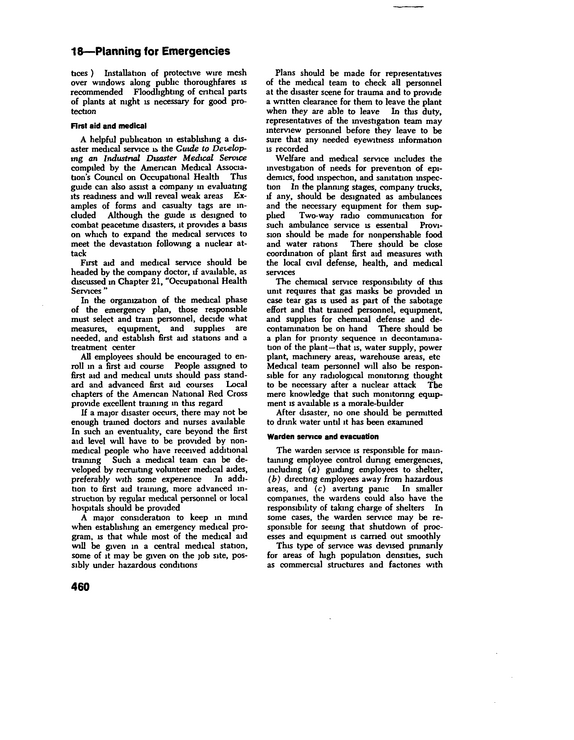
Fic 19-7 --Bump caps have limited application to protect against low head clearances chinstrap affords full protection (Fig 19--4b) A nape strap (provided with most helmets) helps keep the headgear from falling off dur ing normal use Bump caps Another form of protective headgear is the bump cap, a thin-shelled, light-weight plastic affair (Fig 19-7) It was originally con ceived for use by aircraft workers, laboring in the close quarters of a fuselage--where a bnm might get in the way Although some industries have adopted them, there are no specifications covering them Authorities warn that, although they are fine for some applications, they are not a substitute for helmets Use of such caps should be strictly limited Hair protection It is important that women and men with long hair who work around chains, belts, or other machines protect their hair from con tact with moving parts (Fig 19-8) Besides the danger of direct contact with the machine, which may occur when they lean over, they are exposed to the hazard of having their hair lifted into moving belts or rolls that develop heavy charges of electricity Since it is dif ficult to remove this hazard completely by mechanical means, people with long hair should be required to wear protective hair covering Hair nets, bandannas, and turbans are fre- Fic 19-8 --Cap protects hair of women in general factory work The visor serves as a feeler guard to prevent injunes from contact with machines and objects The netting construction on the top provides adequate comfort ventilation Fic 19-9 --Periodic inspection of safety hats and suspensions is part of a maintenance program 473
refid# gaXMzR3qZ6RGQoG78MZJVvEd91 page
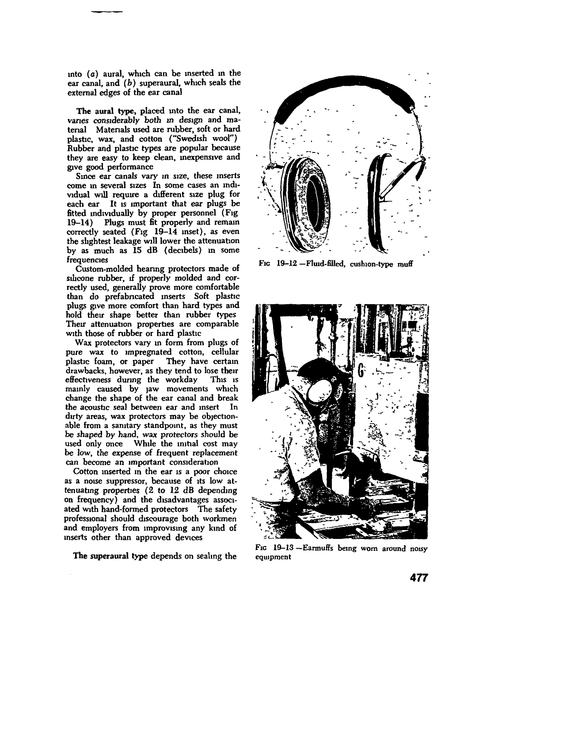
into (a) aural, which can be inserted in the ear canal, and (b) superaural, which seals the external edges of the ear canal The aural type, placed into the ear canal, vanes considerably both in design and ma terial Matenals used are rubber, soft or hard plastic, wax, and cotton ("Swedish wool") Rubber and plastic types are popular because they are easy to keep clean, inexpensive and give good performance Since ear canals vary in size, these inserts come in several sizes In some cases an indi vidual will require a different size plug for each ear It is important that ear plugs be fitted individually by proper personnel (Fig 19-14) Plugs must fit properly and remain correctly seated (Fig 19-14 inset), as even the slightest leakage will lower the attenuation by as much as 15 dB (decibels) m some frequencies Custom-molded hearing protectors made of silicone rubber, if properly molded and cor rectly used, generally prove more comfortable than do prefabncated inserts Soft plastic plugs give more comfort than hard types and hold their shape better than rubber types Their attenuation properties are comparable with those of rubber or hard plastic Wax protectors vary m form from plugs of pure wax to impregnated cotton, cellular plastic foam, or paper They have certain drawbacks, however, as they tend to lose their effectiveness during the workday This is mainly caused by jaw movements which change the shape of the ear canal and break the acoustic seal between ear and insert In dirty areas, wax protectors may be objection able from a sanitary standpoint, as they must be shaped by hand, wax protectors should be used only once While the initial cost may be low, the expense of frequent replacement can become an important consideration Cotton inserted in the ear is a poor choice as a noise suppressor, because of its low at tenuating properties (2 to 12 dB depending on frequency) and the disadvantages associ ated with hand-formed protectors The safety professional should discourage both workmen and employers from improvising any kind of inserts other than approved devices The superaural type depends on sealing the Fic 19-12 -Fluid-filled, cushion-type muff Fic 19-13 --Earmuffs being worn around noisy equipment 477
refid# ZDj93oBRbGz41YLE0K1p4Y2V1 page
20--Industrial Sanitation and Personnel Facilities infecting agent Small-capacity chlonnators which inject gaseous chlorine into a water system are avail able and easy to operate Injection pumps which supply high concentration chlorine so lutions to the system at a proper rate are preferable because of the ease and safety of operation Standby equipment should be maintained at all chlorinating stations, together with an adequate supply of spare parts Cas masks which are effective against chlorine and a small bottle of ammonia to test for leaks should be kept just outside of areas in which chlorine is stored oi used Masks should be inspected at regular intervals, and authorized employees should be trained in emeigency procedures The chlonnator should be adjusted to leave a chlorine residue of about 0 2 mg/L in the water after 20 minutes of contact between chlorine and the untreated water Test kits are available which will measure residual chlorine rapidly Small quantities of water for emergency use may be disinfected in one of several ways Commercial preparations should be used ac cording to the manufacturer's instructions Boiling water for five minutes, or adding four drops of household bleach (hypochlorite solu tion, 4 percent available chlorine) or two or three drops of common tincture of iodine to a quart of water and allowing it to stand for 30 minutes will also produce safe drinking water Its flatness and medicinal taste can be partially removed if it is aerated after dis infection by being poured from one container to another Water storage Reservoirs or standpipes for treated water should be completely enclosed and located so that accidental contamination is impos sible The reservoir should be large enough to hold a 48-hr reserve supply of treated water Vents should be fitted with screened downspouts well above flood level Entrance manholes should be enclosed by watertight fiames at least 6 in higher than the sur rounding surface and fitted with watei tight covers extending at least 2 in down the out side of the frames When not in use, the cover should be closed and locked A reservoir permits full utilization of a smaller well and pump and still provides a buildup for peak demand Quality of water is generally improved by aeration Sewage and Garbage Disposal In some outlying districts and rural areas, industrial plants must provide their own sewage disposal systems If there are state or local ordinances governing disposal, they must be adhered to In addition, the recom mendations given in the USPHS Individual Sewage Disposal Systems can be used as a guide for providing safe disposal of sanitary sewage from toilets, washrooms, showers, and kitchens The disposal of process waste re quires separate facilities Many states and health departments require prior examination of all plans concerning disposal treatment Provisions should also be made for the storage and collection or disposal of garbage and refuse Building drains and sewers The m-plant sanitary sewage collection sys tem should conform to local codes, and the recommendations of American Standard and Sanitary Corporation's "National Plumbing Code" should also be considered Every fixture should be properly trapped and vented by means of drain(s) and stack(s) serving it, to prevent the discharge of sewer gases into the building and to assure proper draining Traps and especially grease inter ceptors (such as those placed in waste pipes serving the plant cafeteria and kitchen) and interceptors designed to collect other particu lar foreign materials should be of adequate size, located for easy access, and should be cleaned periodically Be sure not to (a) in stall a type trap that is prohibited by the local code, or (b) place a trap in a prohibited location The building drain and sewer should be constructed of extra-heavy cast iron, bell-andspigot pipe with drainage fittings This ma terial is less susceptible to clogging and much easier to clean than other matenals, and it provides good "insurance" when installed un der floors which would be expensive to tear up Lead or other suitable material should be used for joints The sewer should be tight 534
refid# N2RwyMQJjLvqX9oZLBQBRb4LR1 page
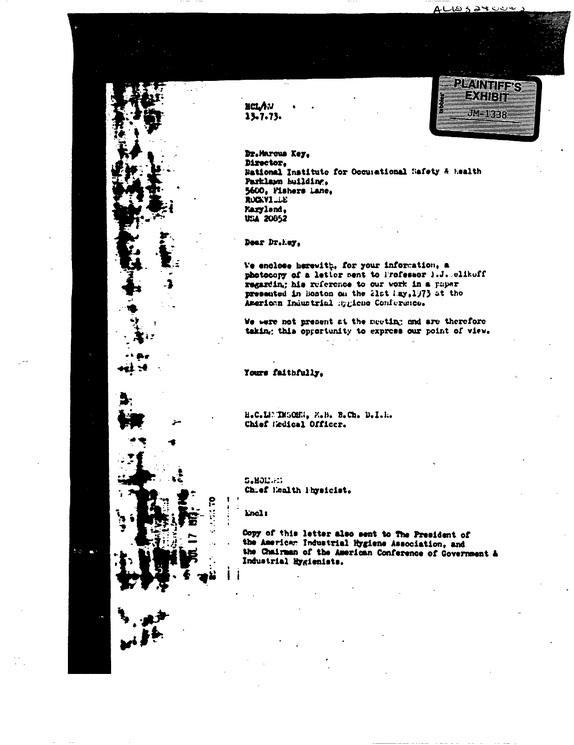
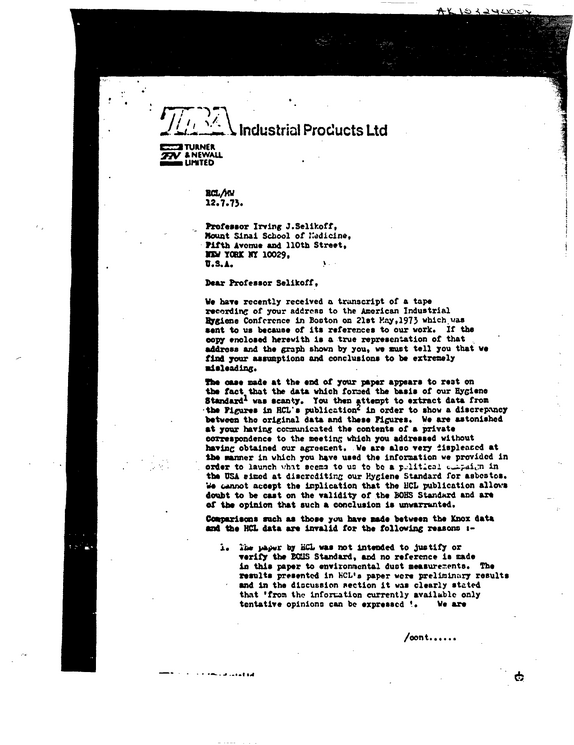
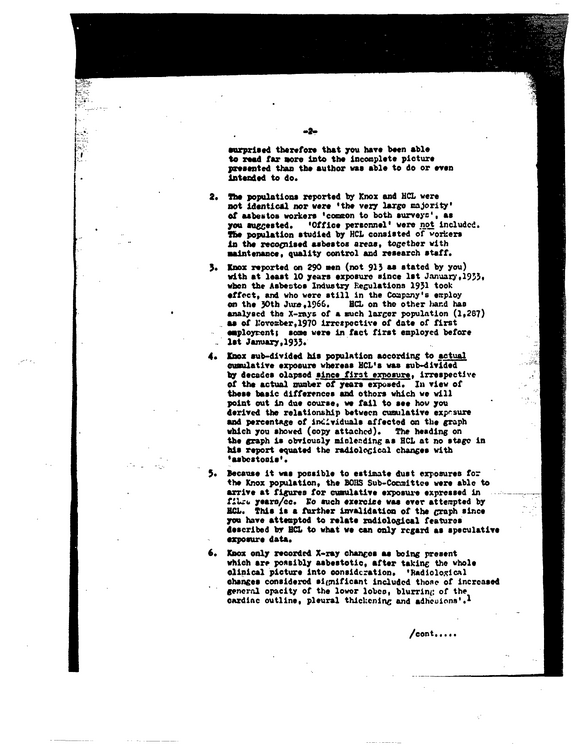
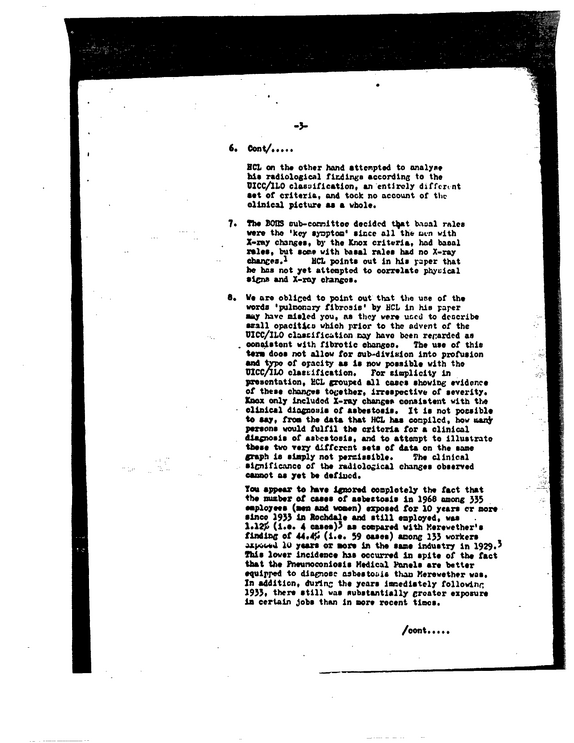
V* encloee berevit^, for your Information, a photocopy of ft letter sent to irofeeeor J.J. elihuff xeoftrdln,; hit reference to our work In a paper preeeuted In boaton on the 11ct fay,1J73 at tho Aserlor.n Indue trial :t;xlcue Conference.
refid# 3O7JX7XQGjy4KEBkbd3pdrE66 pages
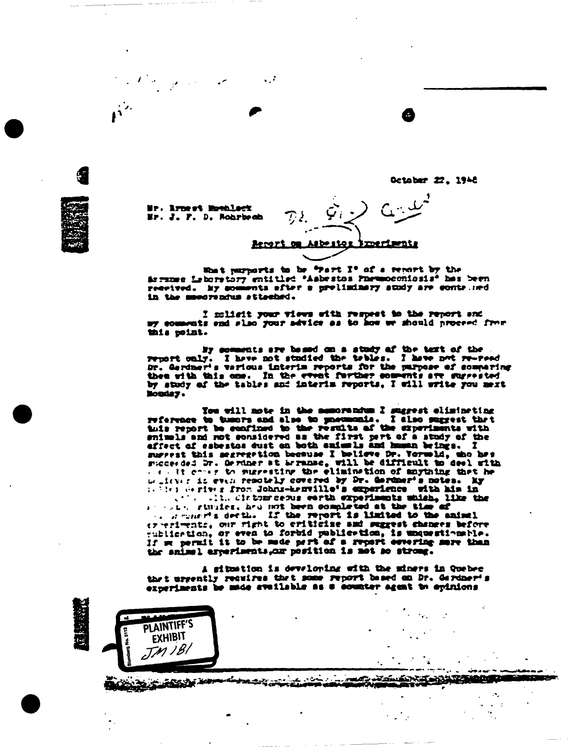
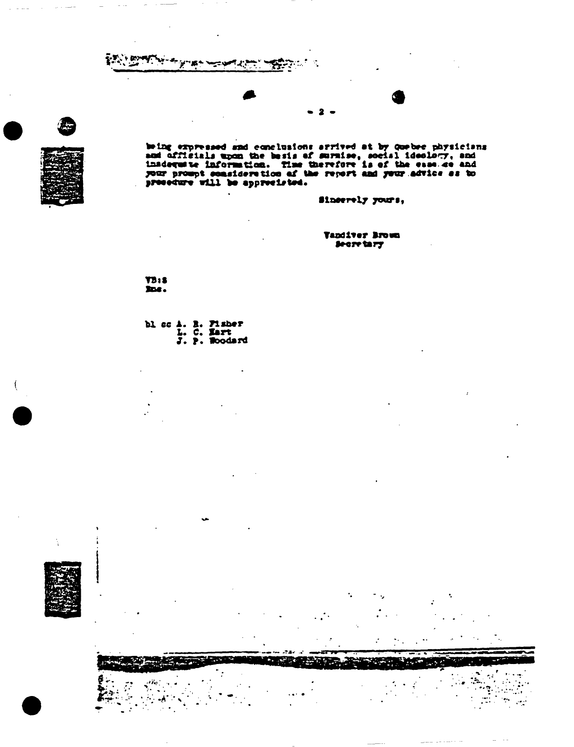
October 22. 19*4 r.
refid# G695eLyQzE1K8XOZB0nRbrKdq2 pages
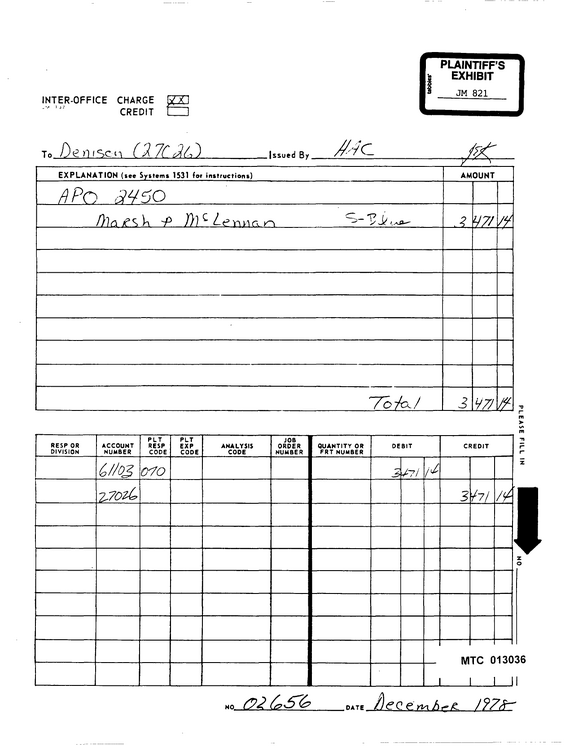
INTER-OFFICE CHARGE EX3 CREDIT in To Pen ISC n (27C3L') _.Issued By EXPLANATION (see Systems 1531 for instructions) ftPo m$o fh& %Vi 'P J)]^ Ley\rtc^v-\ /^/C AMOUNT 7 V7l /Y P LE A S E F IL L IN 7ro'h^/ 3 77/ / RESP OR DIVISION ACCOUNT NUMBER PLT RESP CODE C//03 070 PLT EXP CODE 270ZC ANALYSIS CODE JOB ORDER NUMBER QUANTITY OR FRT NUMBER DEBIT 3 /7/ // CREDIT 3 /7/ M TO C 130 _______ 1 1J NO.
refid# 3NZm9zv0vaXN28Ey8Mea47K433 pages
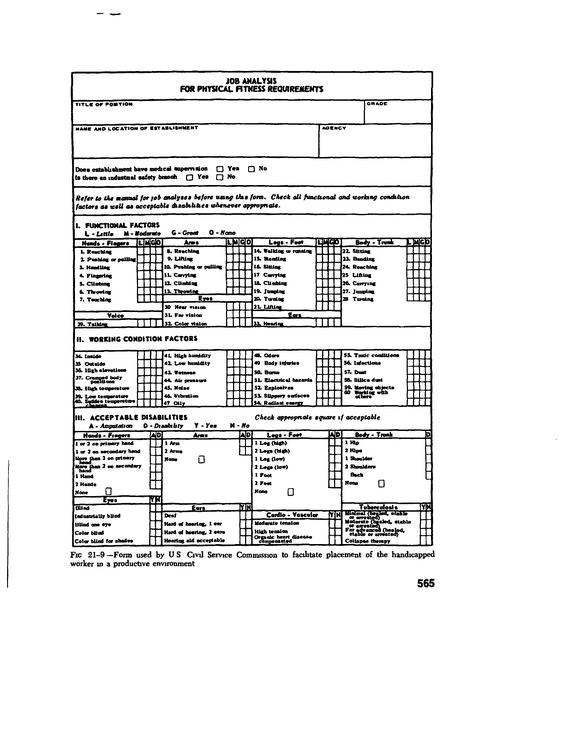
1 JOB ANALYSIS FOR PHYSICAL FITNESS REQUIREMENTS r --" NAME AMO LOCATION OF ESTABLISHMENT AOCNCY GRADE Does establishment have medical uipemiica to thefe aa indostnil safety bnad) Q Yes Yes Q No Q No gefer to the manual for /eb analytet before uung tbit fora.
refid# zbLJVjOD7y30b4dpGn3ZR3ga31 page
23--Sources of Help Protection (monthly) Institution of Industrial Safety Officers of Great Britain 113 Blackheath Park London S E 3, England Safety (quarterly) Greater New York Safety Council 302 Fifth Ave New York, N Y 10001 Job Safety and Health (monthly) U S Department of Labor, Occupational Safety and Health Administration Available fiom US Government Printing Office, Washington, D C 20402 Occupational Safety and Health (monthly) Royal Society foi the Prevention of Acci dents 6 Buckingham Place London S W 1, England Industrial hygiene and medicine AM A Archives of Environmental Health (monthly) American Medical Association 535 North Dearborn St Chicago, 111 60610 American Industrial Hygiene Association Jour nal (monthly) American Industrial Hygiene Association 66 S Miller Rd Akron, Ohio 44313 American Journal of Nursing (monthly) American Nurses Association 2420 Pershing Rd Kansas City, Mo 64108 Industrial Hygiene Digest (monthly) Industrial Health Foundation 5231 Centre Ave Pittsbuigh, Pa 15232 Industrial Hygiene News Report (monthly) Flournoy & Associates 1845 W Morse Ave Chicago, 111 60626 Journal of Occupational Medicine (monthly) Industrial Medical Association 630 150 N Wacker Dr Chicago, 111 60606 Occupational Health Nursing (monthly) American Association of Industrial Nurses 79 Madison Ave New York, N Y 10016 British Journal of Industrial Medicine (quar terly) British Medical Association Tavistock Square London W C 1, England CIS Abstracts (8 a year) International Occupational Safety Health Information Centre (CIS) International Labor Office 1211 Geneva 22, Switzerland and Fire Fire Engineering (monthly) Dun-Donnelley Publishing Corporation 666 Fifth Ave New York, N Y 10019 Fire Command1 (monthly) Ftre Journal (bimonthly) Fire News (monthly) Ftre Technology (quarterly) National Fire Protection Association 470 Atlantic Ave Boston, Mass 02210 Fire Prevention (quarterly) Fire Protection Association Aldermary House Queen St London E C 4, England Many of the state departments of labor and federal agencies publish periodicals which are available upon request With the exception of the state agencies, most of the others are mentioned under the subject headings in this section A number of trade journals have sections devoted to industiial safety The safety pro fessional should become acquainted with those servicing the industry in which he is primarily interested
refid# wqEa78BKgDkJ95KYRYJvYw1631 page
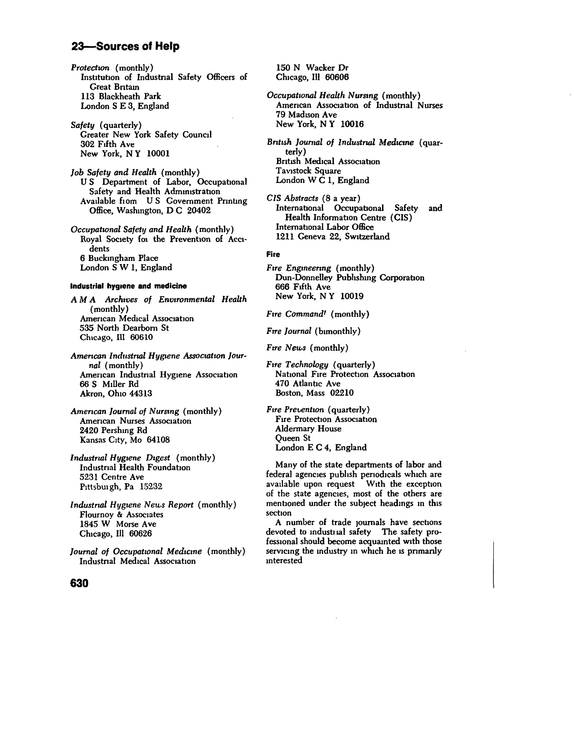
the crane has more than one hoisting unit, each hoist should have its rated load marked on it or its load block, and this marking should be clearly legible from the ground or floor The crane should not be loaded beyond its rated capacity, except for testing The general arrangement of the cab and the location of control and protective equipment should be such that all operating handles are within convenient reach of the operator, when facing the area to be served by the load hook or when facing the direction of travel of the cab The arrangement should allow the oper ator a full view of the load hook in all posi tions Each controller and operating lever should be marked with the motion it controls and its direction These levers should have spring returns, so that they will move automatically into the Off position and latch themselves there if the operator releases the handle Other factors that should be considered 1 Platforms, footwalks, steps, handholds, guardrails, and toeboards should be pro vided for safe footing and accessways 2 All machinery, equipment, and material hoists operating on rails, tracks, or trolleys should have positive stops or limiting de vices on the equipment, rails, tracks, or trolleys to prevent overrunning safe limits and should be equipped with overspeed devices 3 All joints requiring lubrication during oper ation should have fittings so located or guarded as to be accessible without hazard ous exposuie 4 Platforms, footwalks, steps, handholds, guardrails with intermediate rails, and toeboards should be provided on machinery and equipment to provide safe footing and accessways Platforms and steps should be of nonskid material 5 Access to the cab and/or bridge walkway should be provided by conveniently placed fixed ladders, stairs, or platforms whose steps leave no gap exceeding 12 inches Fixed ladders should be in conformance with the American National Standard A14 3, Safety Code for Fixed Ladders 6 A cai bon-dioxide, dry-chemical, or equiva- Fic 25--4 --Load blocks are safer when guarded lent fire extinguisher should be kept in the cab Cranes--guards and limit devices Gears and other moving parts should be totally enclosed, covered by screen guards, or out of reach No overhung gears should be used, unless means are provided to prevent their falling if they should break or work loose The bolts m shaft couplings should be re cessed, so that the tops of the nuts do not project To prevent fingers from being crushed, load hooks on cranes should have handles, so that the men can hold or guide the hooks when slings are being placed on them Also, on small cranes, the pinch points where ca bles pass over sheaves in the load block should be guaided (Fig 25-4) 669
refid# wgvYZ9y03zBpGZQLY8amMb1VD1 page
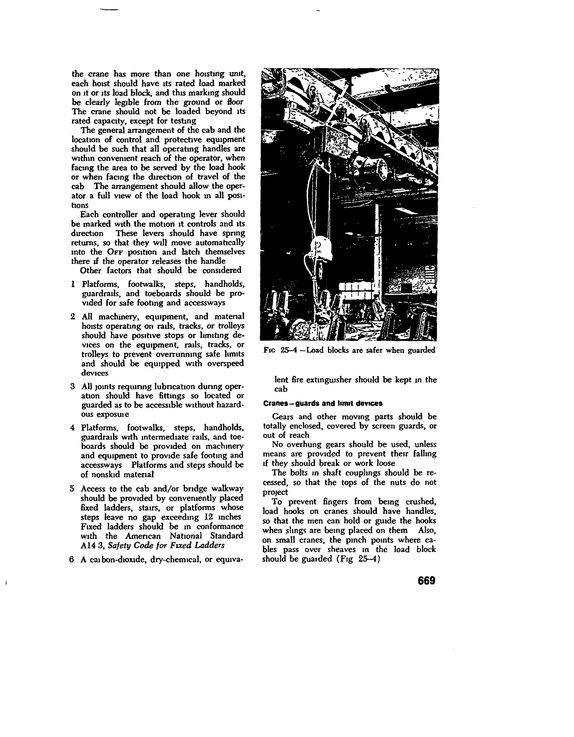
32--Cold Forming of Metals ---oevewp iBnem Of HANDLE TO SUIT sppims tenon on eno or bap MAKES IT IMPOSSIBLE ID LEAVE BAP m BAP mole rrrrSMim sppms WELDED TO COLLAPS Fic 32-20 --Spnng-acbon safety bar for turning power press flywheels during setups Courtesy Liberty Mutual Insurance Co noid-controDed air valves should be incor porated into the system to prevent accidental clutch release resulting from air leakage and pressure build-up in the air cylinder.
refid# 1Qn3qDRO8wY3wjno6GNg2v8gd1 page
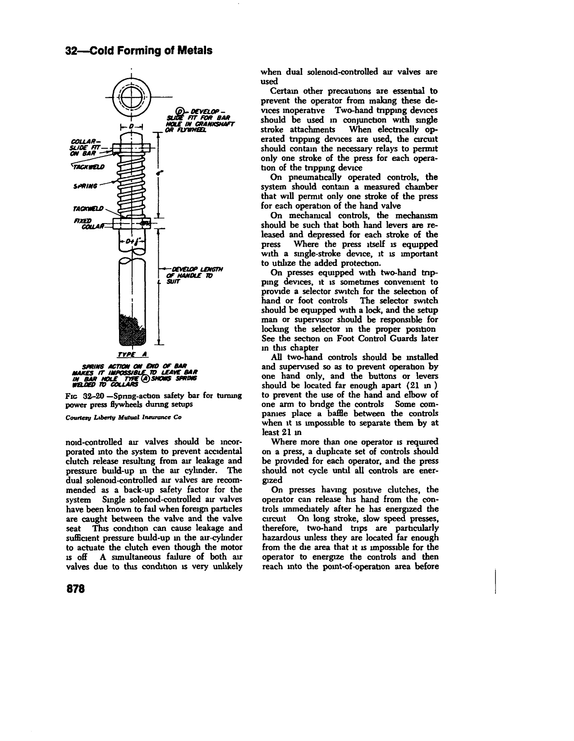
IN RE: ALL ASBESTOS-RELATED S IN THE SUPERIOR COURT PERSONAL INJURY OR DEATH CASES 5 FILED BY BARON & BUDD, P.C.
refid# 85eB8O7RGd1j4RvKK29j8EVGa80 pages
*:'*&-V'S-i4i.?

refid# rBeX8oMG2G2BE47nMJ41vmkw76 pages