Refine
Estimated Years UndatedClear
92,592 results foundRefine Search
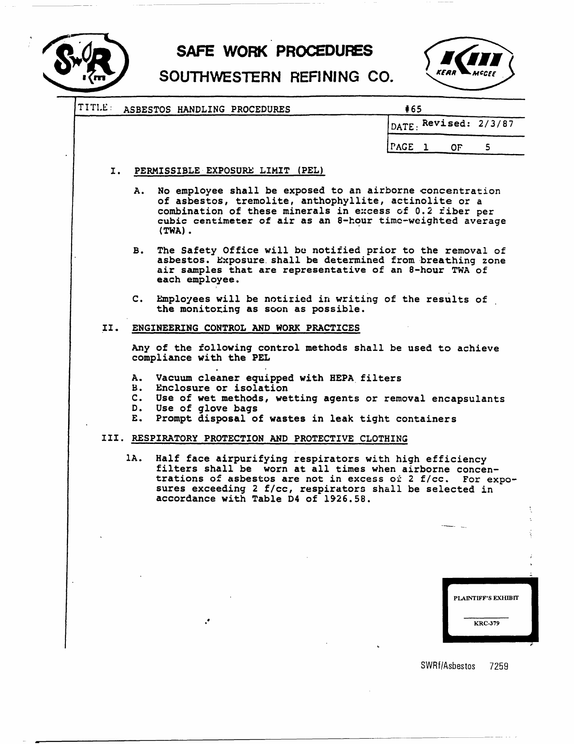
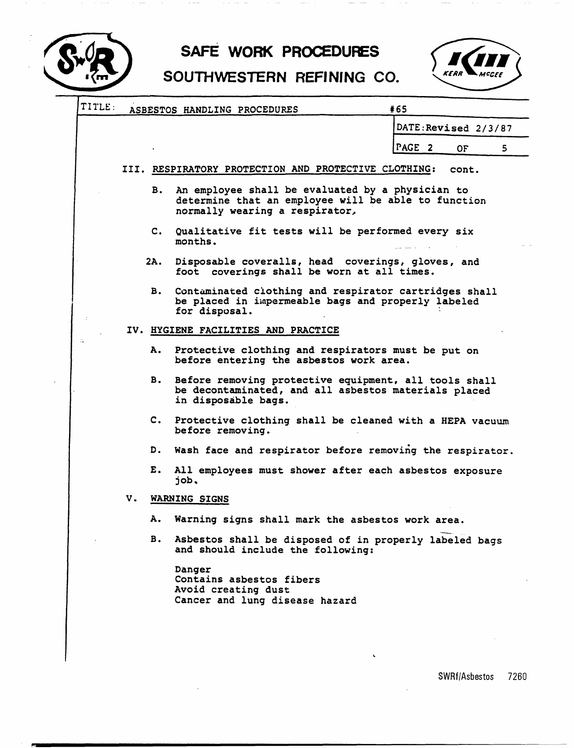
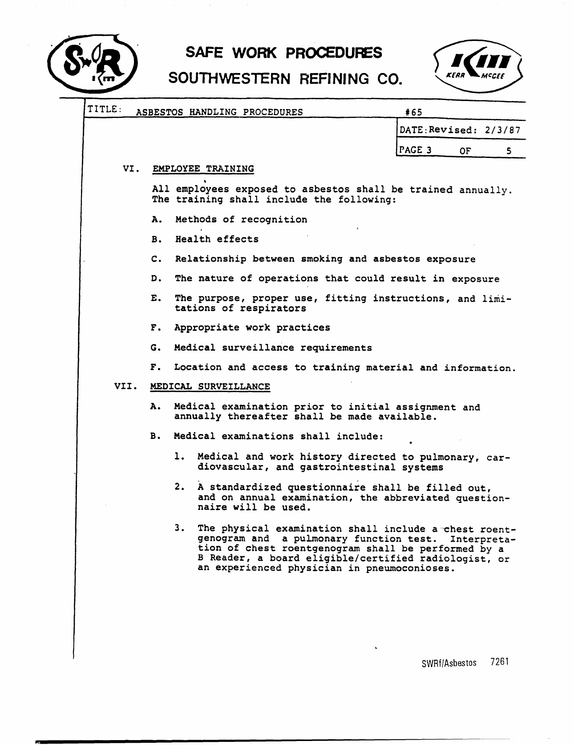
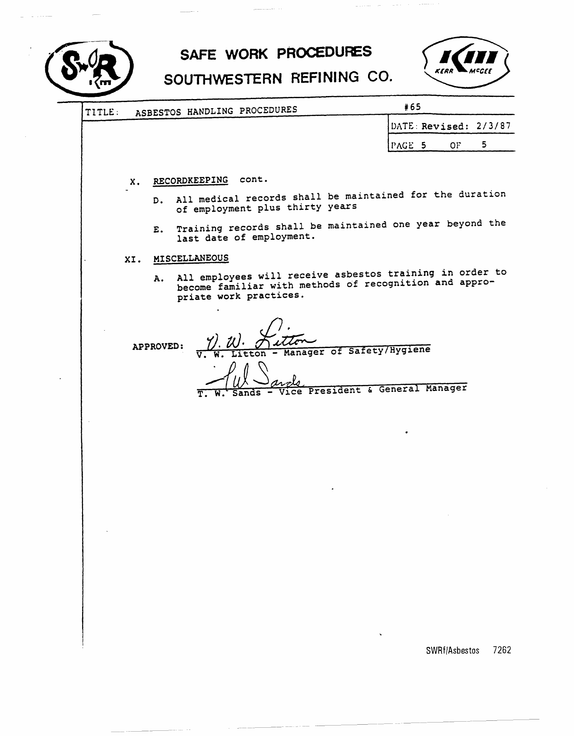
SAFE WORK PROCEDURES SOUTHWESTERN REFINING CO TITLE: ASBESTOS HANDLING PROCEDURES 65__________________________________ DATE1 Revised: 2/3/87 PACE 1 OF 5 I.
refid# 8QXeNj93ymJ7pXQxZ7JaLXgy4 pages
<o CO & <X if) uj .o TO 2 .2 CLX3 is i r co w o 3?

refid# Oz0v0G5geEB2bryYeqdbmNYyL9 pages
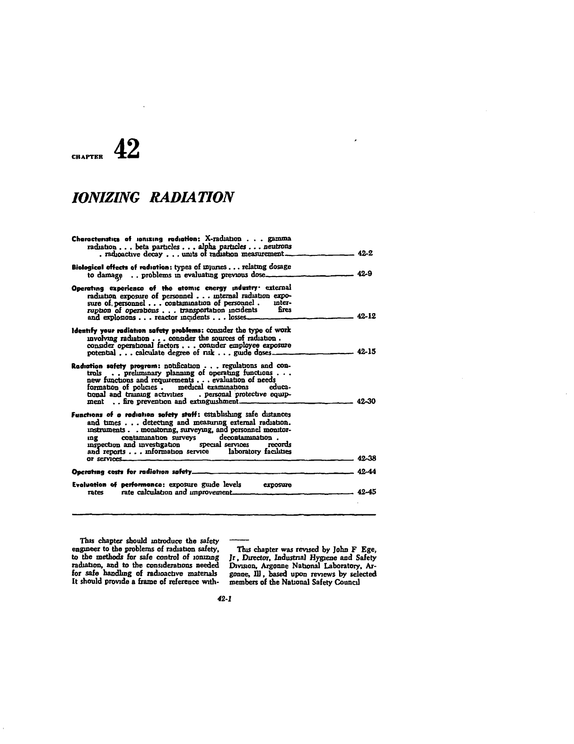
IONIZING RADIATION Characteristics of ionizing radiation: X-radiation . . . gamma radiation . . . beta particles . . . alpha particles ... neutrons . radioactive decay . . . units of radiation measurement-.------- ------------------- 42-2 Biological effects of radiation: types of injuries . .. relating dosage to dama^ . . problems in evaluating previous dose_______________ 42-9 Operating experience of the atomic energy industry- external radiation exposure of personnel . . . internal radiation expo sure of, personnel . . . contamination of personnel . inter ruption of operations , . . transportation incidents fires and explosions . . - reactor incidents . . . losses.. -------- ----------------42-12 Identify your radiation safety problems: consider the type of work involving radiation . .. consider the sources of radiation . consider operational factors . . . consider employee exposure potential . . . calculate degree of nsk . . . guide doses----------------------------- ------ 42-15 Radiation safety program: notification . . . regulations and con trols . . preliminary planning of operating functions . . .
refid# gD7Q6ZpG5p6mw8qed33e0GGpV1 page
IONIZING RADIATION TABLE 42-A CLASSIFICATION OF ISOTOPES ACCORDING TO RELATIVE RADlOTOXICmr PER UNIT ACTIVTY (The isotopes in each class are listed m order of increasing atomic nnmber) Class 1 (very high toxicity) Sr-80 + Y-90, 'Pb-210 + Bi-210 (Ra D + E), Po-210, At-211, Ra-226 + 55 per cent 'daughter products, Ac-227, U-233, Pu-239, Am-241, Cm-242 Class 2 (high toxiaty) Ca-45, 'Fe-59, Sr-89, Y-91, Ru-106 + #Rb-lO0, M31, "Ba-140 + La-140, Ce-144 + 'Pr-144, Sm-151, Eu-154, Tm-170, 'Th-234 + *Pa-234, 'natural uranium Class 3 (moderate toxiaty) Na-22, "Na-24, P-32, S-35, a-38, 'K-42, 'Sc-48, Sc-47, Sc-48, 'V-48, Mn-52, Mo-54, Mn-5fl, Fe-55.

refid# 3QzjyByXdrD8ebNo3vqykyKvO1 page
MOTORIZED EQUIPMENT be set on a firm foundation and be exactly perpendicular to the load.

refid# 1gv0ERR7aXmy9J8VjgELOZMr51 page
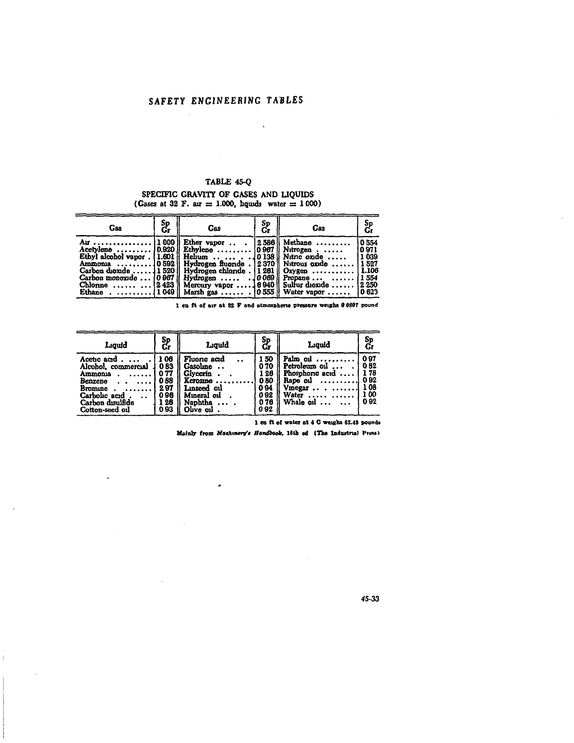
SAFETY ENGINEERING TABLES TABLE 45-Q SPECIFIC GRAVITY OF GASES AND LIQUIDS (Gases at 32 F. air = 1.000, liquids water = 1 000) Gas C*r Air......................... 1000 Acetylene............... 0.020 Ethyl alcohol vapor . 1.601 Ammonia ............... 0 592 Carbon dioxide....... . 1520 Carbon monoxide ... 0 067 Chlorine ................ 2423 Ethane .................. 1040 Gas SP Cr Ether vapor .. . 2586 Ethylene....... . 0 967 Helium.................. 0138 Hydrogen fiuonde . 2370 Hydrogen chloride . 1261 Hydrogen.............. 0069 Mercury vapor....... 6040 Marsh gas............. 0555 Cas Methane...............
refid# x1e9Gkvoxwk7zjVpQwJOr3Qm01 page
Kaiser Gypsum: Gypsum Quarry Locations KG-0120

refid# zQY600GELN759rJ7kja7zR4xa1 page
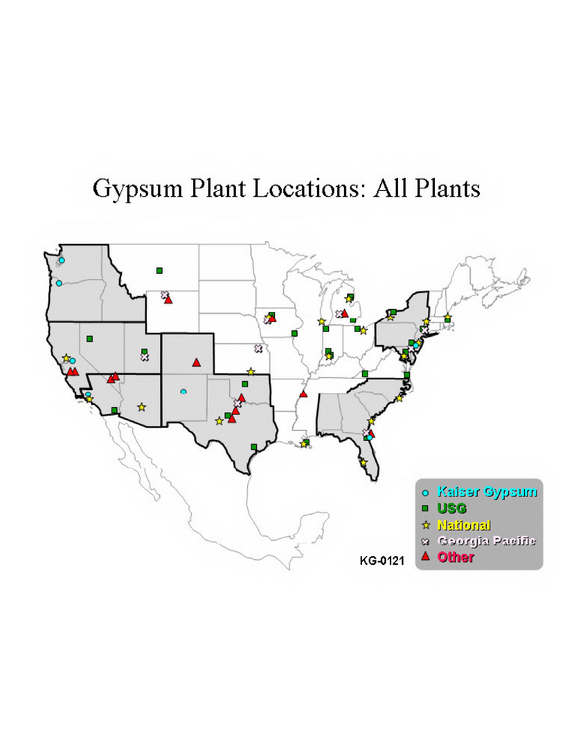
Gypsum Plant Locations: All Plants
refid# oD90QrbEKkvveGNE96LR6NDpw1 page
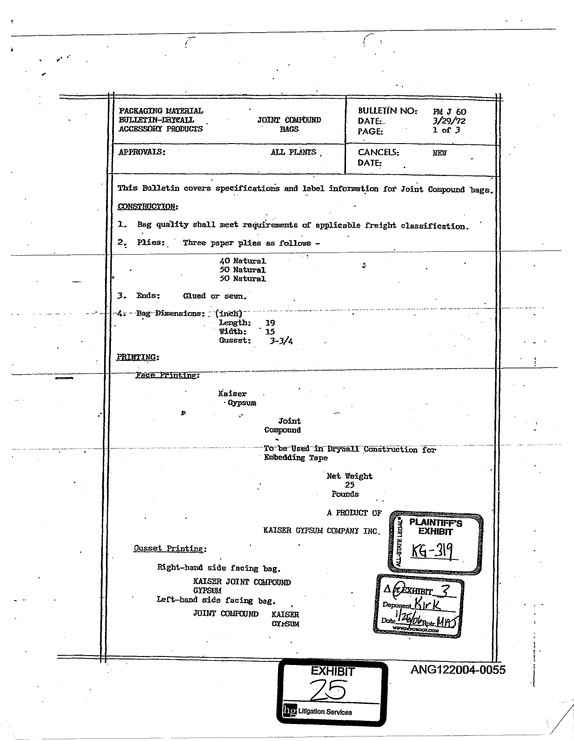
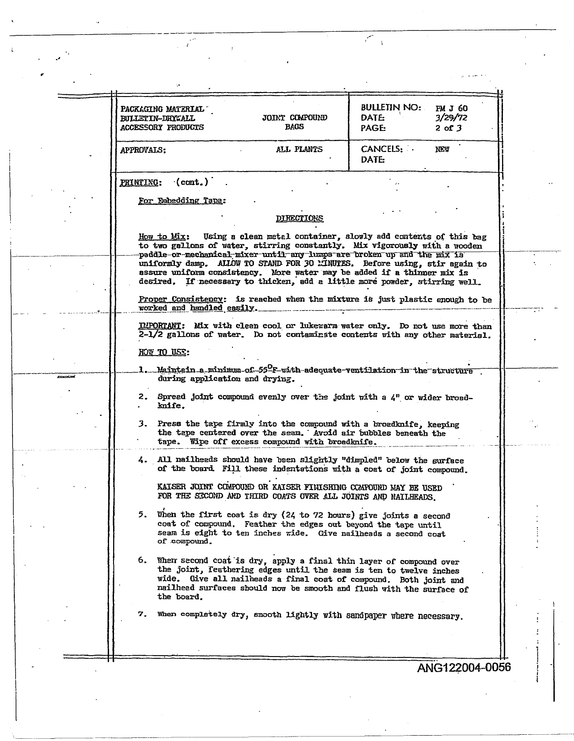
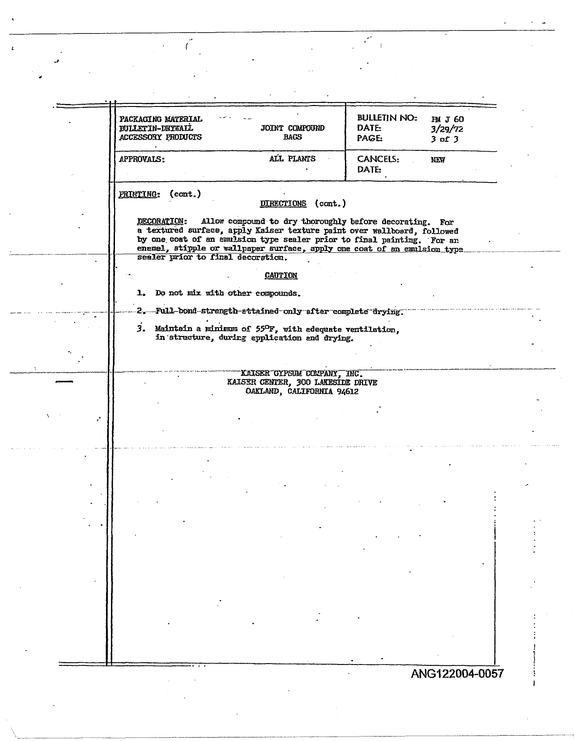
PACKAGING MATERIAL KJIXETIN-iaiWAIl ACCESSOHY PRODUCTS .
refid# 6b0XDVQdM8LGqoEnxE74Lkv533 pages
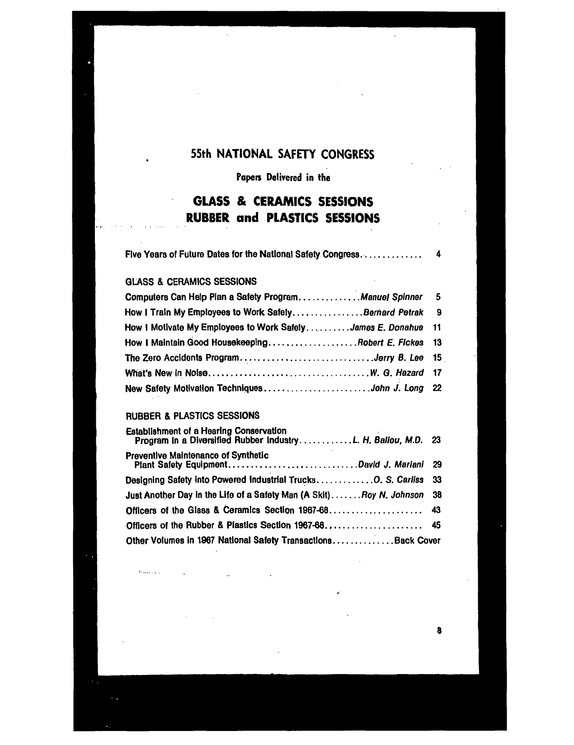
55th NATIONAL SAFETY CONGRESS Papers Delivered in the GLASS & CERAMICS SESSIONS RUBBER and PLASTICS SESSIONS Five Years of Future Dates for the National Safety Congress........................ 4 GLASS & CERAMICS SESSIONS Computers Can Help Plan a Safety Program.........................

refid# bawy2v9Bmn4Dm23BkRDzqGyEy8 pages
INDUSTRIAL HYCICNC FOUNDATION OF AMERICA.INC. 1.
refid# rKYxy96VryQvN4ay0RgaeaOe1 page
Inspection and Control Procedures THERP, and cost-effectiveness Each has a number of variations and more than one may be combined in a single analysis Failure mode and effect.
refid# oe3qQ9nzVmjaaeYqa6p0b1n2o1 page
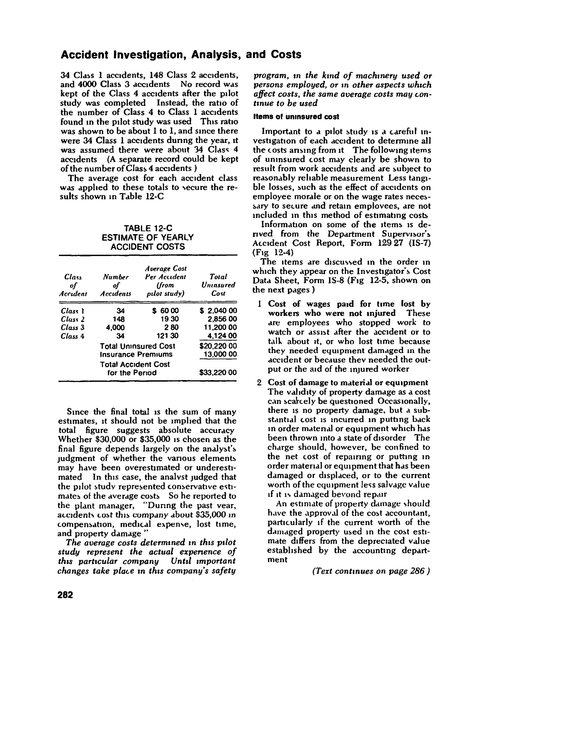
Accident Investigation, Analysis, and Costs 34 Class 1 accidents, 148 Class 2 accidents, and 4000 Class 3 accidents No record was kept of the Class 4 accidents after the pilot study was completed Instead, the ratio of the number of Class 4 to Class 1 accidents found in the pilot study was used This ratio was shown to be about 1 to 1, and since there were 34 Class 1 accidents during the year, it was assumed there were about 34 Class 4 accidents (A separate record could be kept of the number ofClass 4 accidents ) The average cost for each accident class was applied to these totals to secure the re sults shown in Table 12-C TABLE 12-C ESTIMATE OF YEARLY ACCIDENT COSTS Class of Accident Clast 1 Clast 2 Class 3 Class 4 Number of Accidents Average Cost Per Accident (from pilot study) 34 148 4,000 34 $ 60 00 19 30 280 121 30 Total Uninsured Cost Insurance Premiums Total Accident Cost for the Period Total Uninsured Cost $ 2,040 00 2.856 00 11,200 00 4,124 00 $20,220 00 13,000 00 $33,220 00 Since the final total is the sum of many estimates, it should not be implied that the total figure suggests absolute accuracy Whether $30,000 or $35,000 is chosen as the final figure depends largely on the analyst's judgment of whether the various elements may have been overestimated or underesti mated In this case, the analyst judged that the pilot study represented conservative esti mates of the average costs So he reported to the plant manager, "During the past vear, accidents cost this company about $35,000 m compensation, medical expense, lost time, and property damage " The average costs determined, tn this pilot study represent the actual experience of this particular company Until important changes take place in this company's safety program, tn the kind of machinery used or persons employed, or m other aspects which affect costs, the same average costs may con tinue to be used Items of uninsured cost Important to a pilot study is a careful in vestigation of each accident to determine all the costs arising from it The following items of uninsured cost may clearly be shown to result from work accidents and are subject to reasonably reliable measurement Less tangi ble losses, such as the effect of accidents on employee morale or on the wage rates neces sary to secure and retain employees, are not included in this method of estimating costs Information on some of the items is de rived from the Department Supervisor's Accident Cost Report, Form 129 27 (IS-7) (Fig 12-4) The items are discussed in the order in which they appear on the Investigator's Cost Data Sheet, Form IS-8 (Fig 12-5, shown on the next pages) 1 Cost of wages paid for time lost by workers who were not injured These are employees who stopped work to watch or assist after the accident or to talk about it, or who lost time because they needed equipment damaged in the accident or because thev needed the out put or the aid of the injured worker 2 Cost of damage to material or equipment The validity of property damage as a cost can scarcely be questioned Occasionally, there is no property damage, but a sub stantial cost is incurred in putting back in order material or equipment which has been thrown into a state of disorder The charge should, however, be confined to the net cost of repairing or putting in order material or equipment that has been damaged or displaced, or to the current worth of the equipment less salvage value if it is damaged bevond repair An estimate of property damage should have the approval of the cost accountant, particularly if the current worth of the damaged property used in the cost esti mate differs from the depreciated value established by the accounting depart ment (Text continues on page 286 ) 282
refid# jgKmX8yojnZwabYgENqkBwy6O1 page
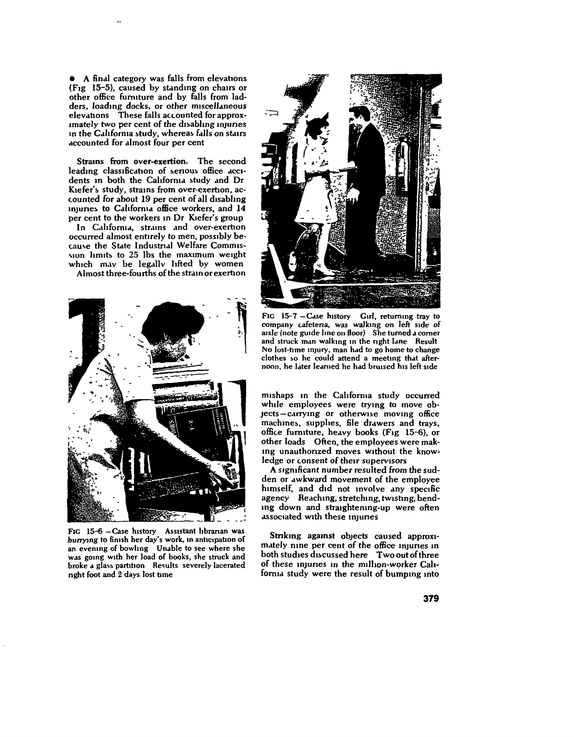
A final category was falls from elevations (Fig 15-5), caused by standing on chairs or other office furniture and by falls from lad ders, loading docks, or other miscellaneous elevations These falls accounted for approx imately two per cent of the disabling injuries m the California study, whereas falls on stairs accounted for almost four per cent Strains from over-exertion.
refid# 2jDo5dbo2ewJ6zQRDXqVa2NLr1 page
Detailed engineering specifications should be acquired for each machine or structure For machinery, these give dimensions, weights, sizes of plant service connections, lubncation requirements, details on bearings, and power transmission or motor drive data For buildings they include data on general layout, services available, floor load capa cities, ceiling clearances, column spacing, and many other features After a supervisor has made an analysis of his maintenance responsibilities, an organi zation chart should be formulated for the selection and safe assignment of workers The safety man helps in this Such a chart gives the supervisor a comprehensive picture of his force, pointing out the status of trained keymen and reserves Outside specialists who can be called in for unusual or very hazardous jobs should be listed In layoff periods or m emergencies when men are needed in a hurry, this information is quite valuable Work control is necessary for efficient and safe maintenance operation and involves planning, scheduling, and follow-up of the job A smooth-flowing paper work system will help to control each job all the way Work plans should indicate the nature of each job, how it is to be done, the material needed, and the safety precautions required The type of records that should be kept will depend on plant operations, operating time of machines, number of maintenance crews, and schedules A work schedule is successful only if there is a follow-up system to see that it is being adhered to and to determine reasons for de lay Delays may be an indication of faulty materials or wrong procedures Where work schedules are rigid, it is better to hire ad ditional help than to increase the work tempo of the crew Equipment inspections An inspection schedule based on the po tential trouble points listed on maintenance records is essential to preventive mainten ance The schedule can be determined by the number of inspection reports turned m by regular full-time inspectors or by the men of the maintenance crews An inspector must know what to look for He must be something of an expert on, or at least thoroughly familiar with, the equipment under his care This knowledge is partic ularly important for electrical equipment inspectors Electrical equipment usually gives few obvious indications of impending trouble, and is likely to stop altogether with little advance warning Mechanical equip ment often warns of deterioration by such easily recognized signs as noise, unusual appearances, or substandard output But there are some warnings that are more subtle It is important that inspectors be equipped with suitable instruments for making their observations While there is no difficulty in recognizing burned contacts on a motor starter or in hearing the pounding of a worn gear, checking insulation resistance of a motor or measuring the wear on a shaft re quires the correct instruments Personal protective equipment Maintenance men should dress properly for their specific job Garments should be snug-fitting, with a few small pockets Breast pockets are often sewn closed to prevent items from dropping into machinery or in accessible places when the wearer leans over Rings, watch chains, wnstwatches, and other jewelry should not be wom Neckties and loose clothing should not be worn by maintenance men Loose rags must be kept clear of moving machinery If a man carries so few tools that he does not need a tool bag, he should wear a special belt fitted with tool earners To prevent back and spine injuries in case the worker should fall, tools should be earned at the side instead of m the back portion of the belt Gloves or hand leathers should be worn by a man handling rough or sharp objects Welding gloves, rubber gloves for electrical insulation, and rubber gloves for handling acids should be used as needed, but never worn around moving machinery Goggles should be m every maintenance tool kit Moreover, unless the repairman knows the exact conditions he is to work under, his equipment should include several tvpes of goggles to provide protection against flying objects and molten metal, injurious heat and light rays, dust and wind, and acid splashes When a man needs to work in high places or to enter a manhole, bin, or tank, he should wear a life belt, with the lifeline either at- 463
refid# q4oLpn5wMKDyojDqd21mkXxn1 page