Refine
Estimated Years UndatedClear
34,161 results foundRefine Search
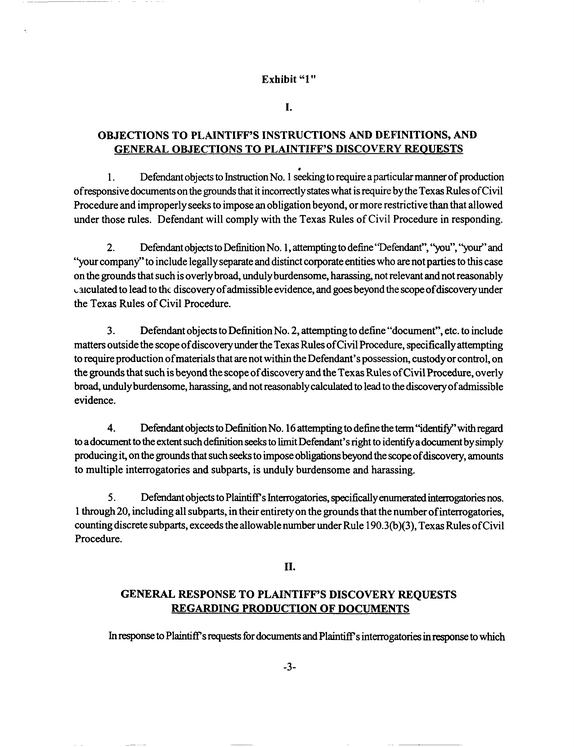
Defendant further objects to the definition of these terms as calling for the production ofmaterial or information which is not relevant nor reasonably calculated to lead to the discovery ofadmissible evidence.
refid# b5NV7dgeGO53EkkZjaMnzdano51 pages
002457 86th ANNUAL MEETING OF THE NATIONAL PAINT AND COATINGS ASSOCIATION, INC.

refid# YjDxOonVe1KnEQ4vo59dDX3Ln43 pages
H-Z&o^ - &>'7 N46193 j % 0007-SWP-000193131 0007-SWP-000193133 ` lOMf Catalog and Price List 1895 \ \ " \ 0007-SWP-000193135 0007-SWP-000193136 /O a G


refid# LKYLQa97DvxEQNoYdypjKq57d82 pages
Although some of these 52 53 metabolic processes lead to activation to reactive electrophiles, many actually lead to 54 55 56 inactivation of the chemicals, by increasing aqueous solubility and leading to their increased 57 58 59 60 5 Toxicological Sciences Page 6 of 59 Downloaded from toxsci.oxfordjournals.org by guest on December 14, 2010 1 2 3 excretion either in the urine or the feces (Figure 1).
refid# mqGN1J2GGrkrjN4630kxp5mzJ59 pages
Defendant further objects to the definition of these terms as calling for the production ofmaterial or information which is not relevant nor reasonably calculated to lead to the discovery ofadmissible evidence.
refid# NkZX5vDBwYgaLLgNa0J026kg51 pages
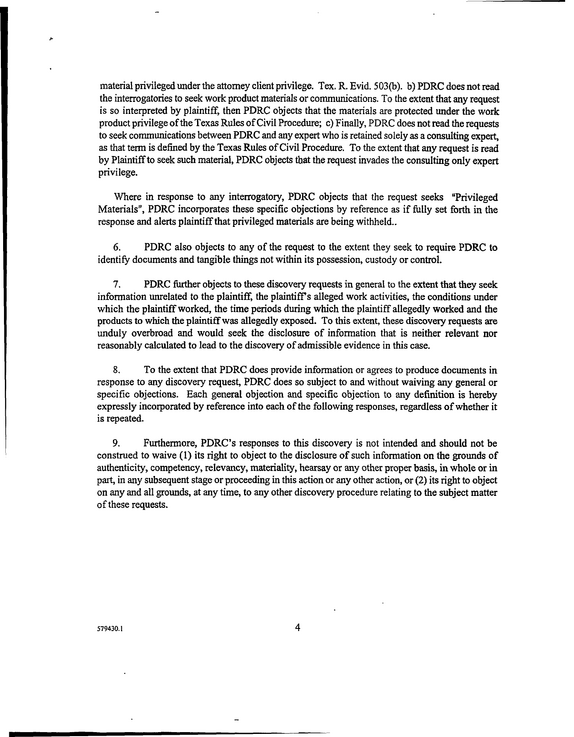
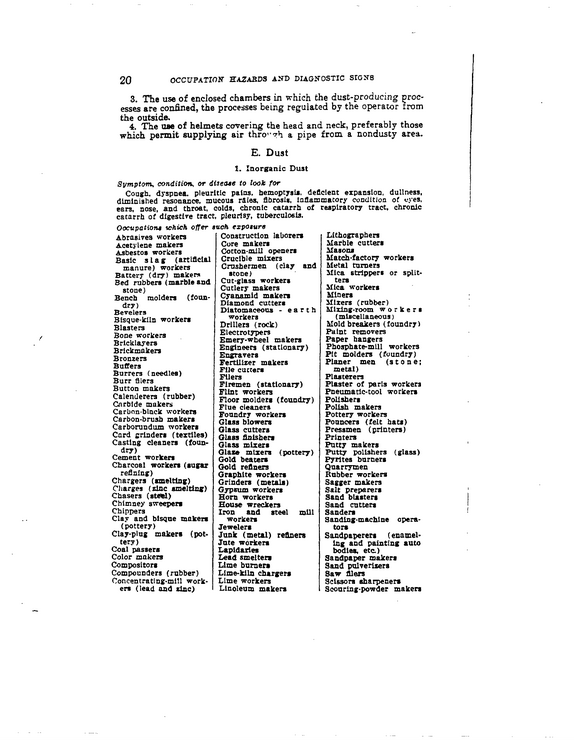
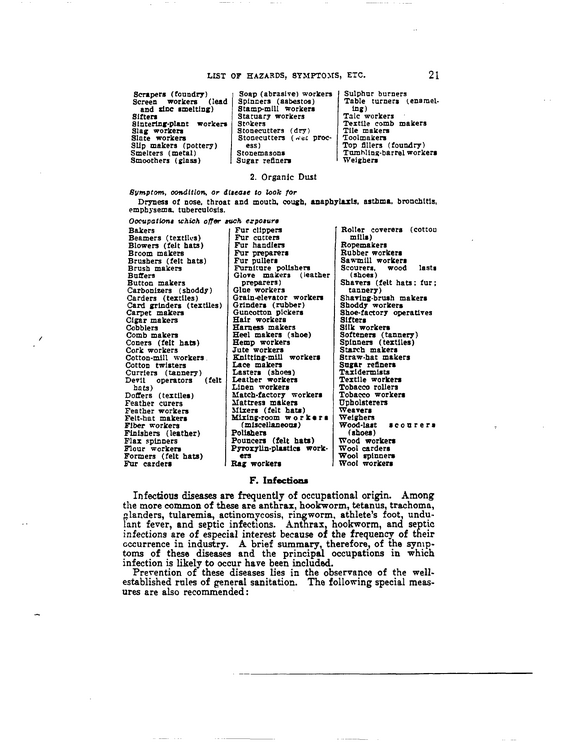
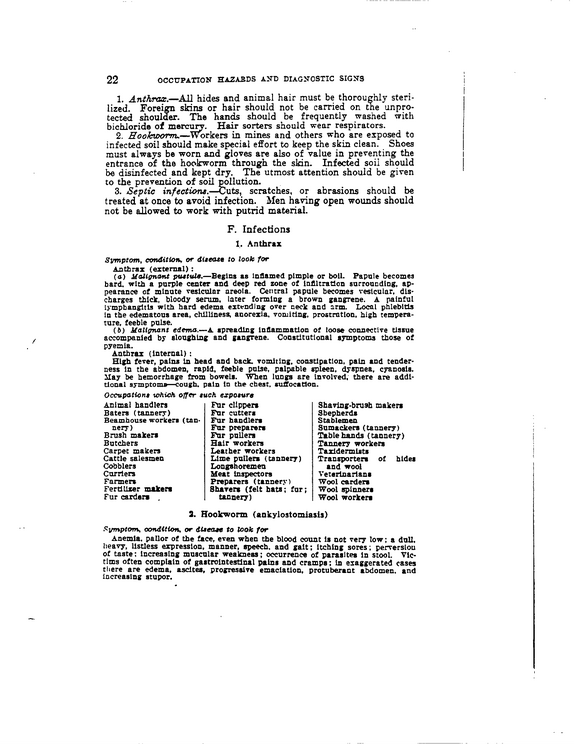
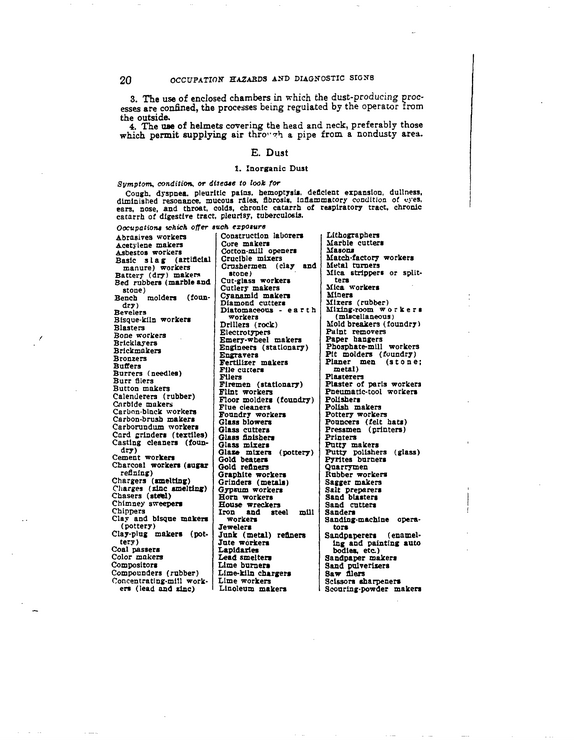
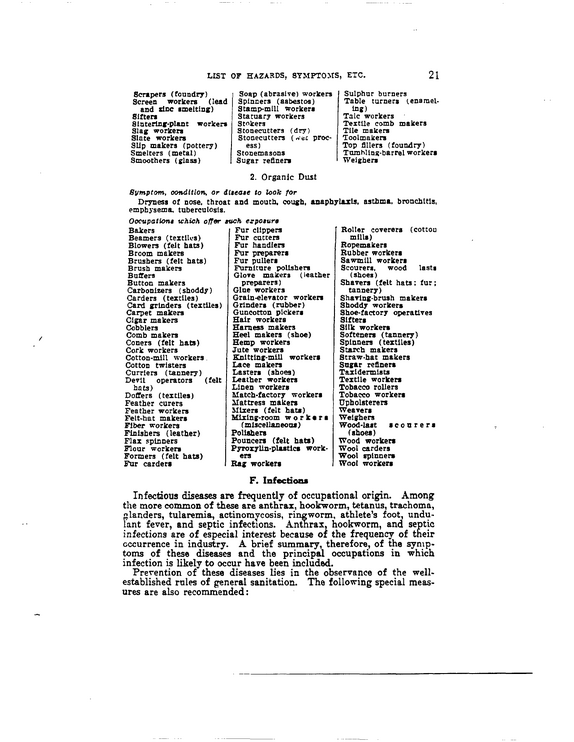
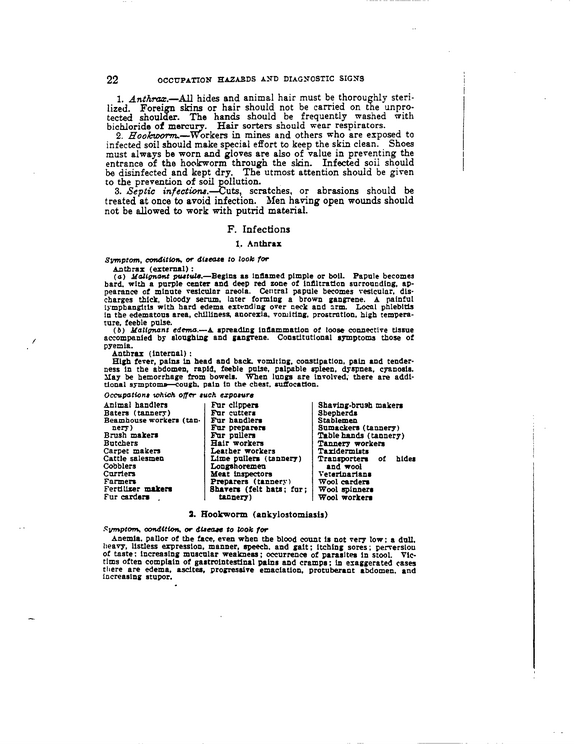
Sandpaper makers Sand pulverizers Saw fliers Scissors sharpeners Sconring-powder makers LIST OF HAZARDS, SYMPTOMS, ETC, 21 Scrapers (foundry) Screen workers (lead and zinc smelting) Sifters Sintering-plant workers Slag workers Slate workers Slip makers (pottery) Smelters (metal) Smoothers (glass) Soap (abrasive) workers Spinners (asbestos) Stamp-mill workers Statuary workers Stokers Stonecutters (dry) Stonecutters (.vec proc ess) Stonemasons Sugar refiners Sulphur burners Table turners (enamel ing) Talc workers Textile comb makers Tile makers Toolmakers Top fillers (foundry) Tumhllng-barrel workers Weighers 2.
refid# 0LBn5QZL3VOrrm1L0mnw6RYvm39 pages
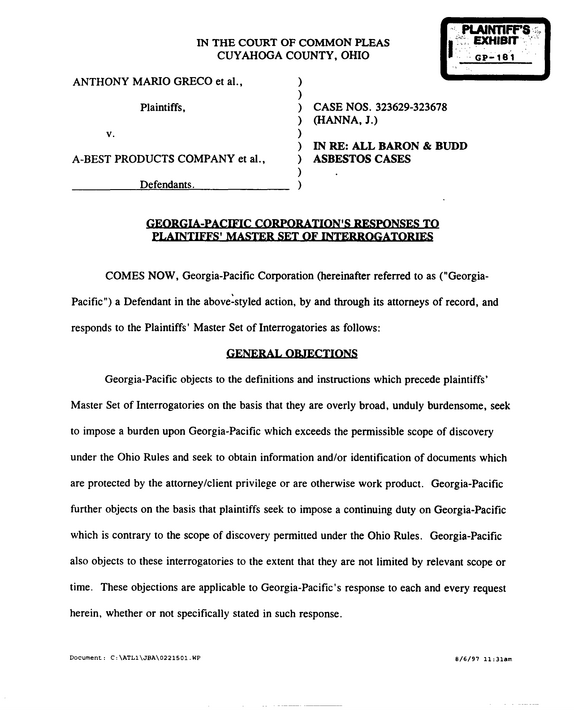
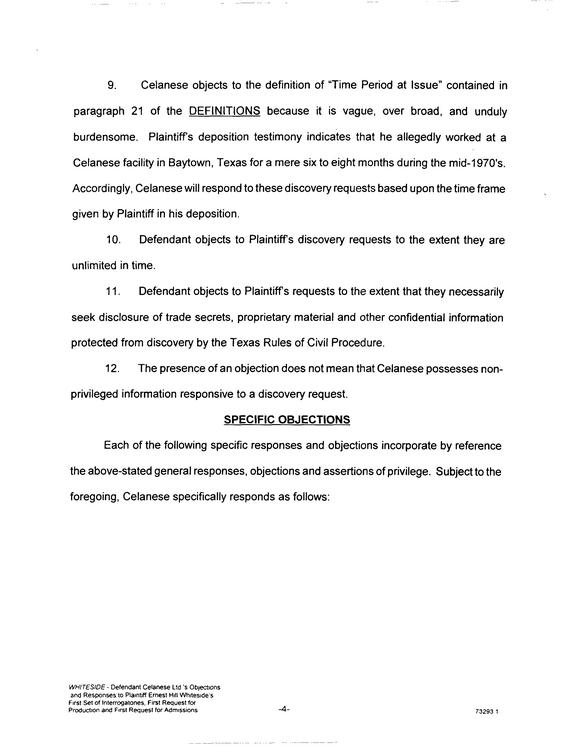
ANSWER: Georgia-Pacific objects to this interrogatory on the grounds that it is overbroad, unduly burdensome and not reasonable calculated to lead to the discovery of admissible evidence.
refid# 70Kb2RBXRmQ9vpw6kaep5dbjo65 pages
Although some of these 52 53 metabolic processes lead to activation to reactive electrophiles, many actually lead to 54 55 56 inactivation of the chemicals, by increasing aqueous solubility and leading to their increased 57 58 59 60 5 Toxicological Sciences Page 6 of 59 Downloaded from toxsci.oxfordjournals.org by guest on December 14, 2010 1 2 3 excretion either in the urine or the feces (Figure 1).
refid# xzjYJMQeONpBJwdJYqNVM7B4159 pages
Sandpaper makers Sand pulverizers Saw fliers Scissors sharpeners Sconring-powder makers LIST OF HAZARDS, SYMPTOMS, ETC, 21 Scrapers (foundry) Screen workers (lead and zinc smelting) Sifters Sintering-plant workers Slag workers Slate workers Slip makers (pottery) Smelters (metal) Smoothers (glass) Soap (abrasive) workers Spinners (asbestos) Stamp-mill workers Statuary workers Stokers Stonecutters (dry) Stonecutters (.vec proc ess) Stonemasons Sugar refiners Sulphur burners Table turners (enamel ing) Talc workers Textile comb makers Tile makers Toolmakers Top fillers (foundry) Tumhllng-barrel workers Weighers 2.
refid# 6wGvGYdja3ZbMLn1B2OXNqeg339 pages
It seeks matters that are not relevant to the subject matter of this lawsuit or reasonably calculated to lead to the discovery of admissible evidence; 2.
refid# jy4J2JKam6jBQXxZwNenY405p120 pages
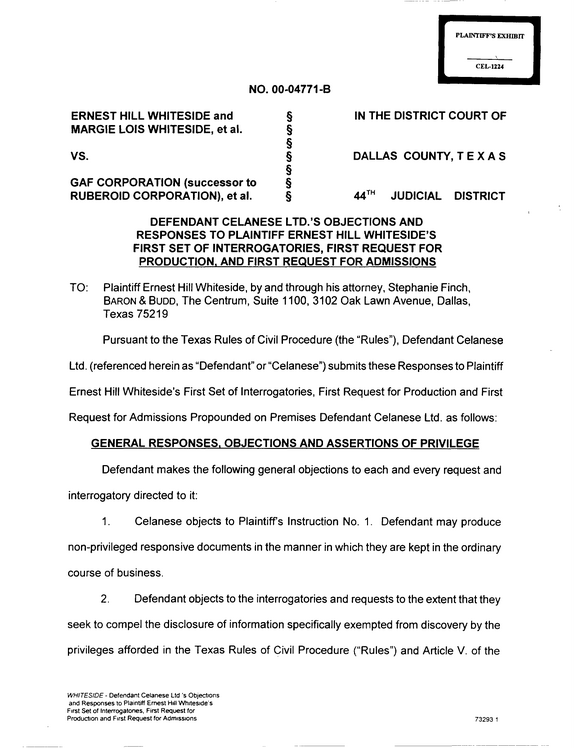
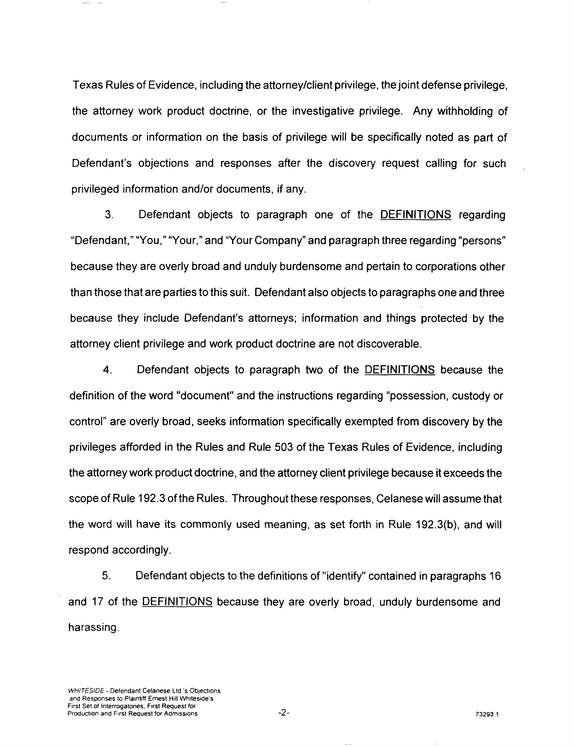
Defendant objects to Definition No. 1, attempting to define "Defendant", "you","your" and "your company" to include legally separate and distinct corporate entities who are not parties to this case on the grounds that such is overlybroad, unduly burdensome, harassing, not relevant and not reasonably ^aiculated to lead to the discovery ofadmissible evidence, and goes beyond the scope ofdiscovery under the Texas Rules of Civil Procedure. 3.
refid# NNq9wwMwYowvzYLGQYoVDxNJD74 pages
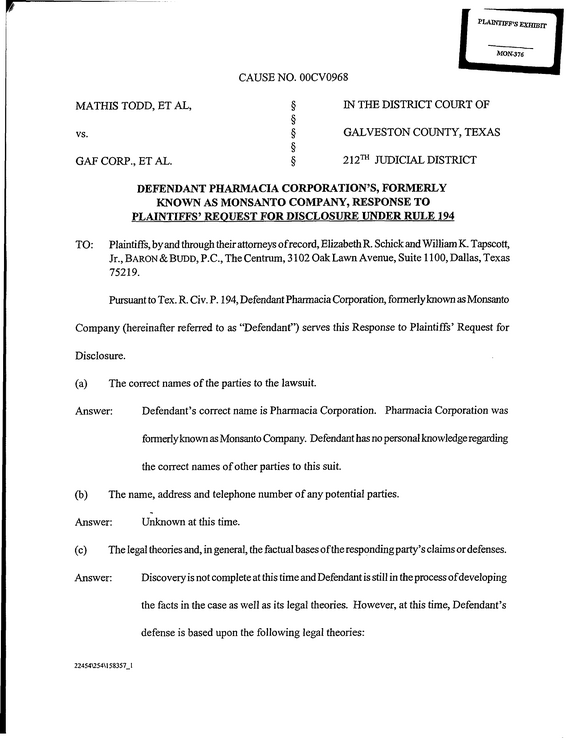
W CAUSE NO. 00CV0968 MATHIS TODD, ET AL, vs.
refid# dQvk0y7qwxjpjRdyNDRv4erEb94 pages
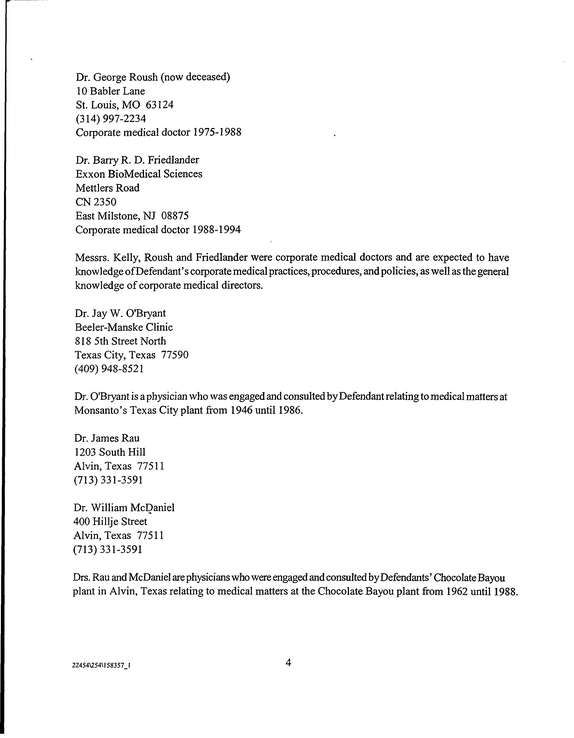
MONS 033043 j Too much cholesterol leads to hy- ( tfertenston and heart attacks, some .
refid# JeJLz8jwjzwnL2K5bzEKOd1B1 page
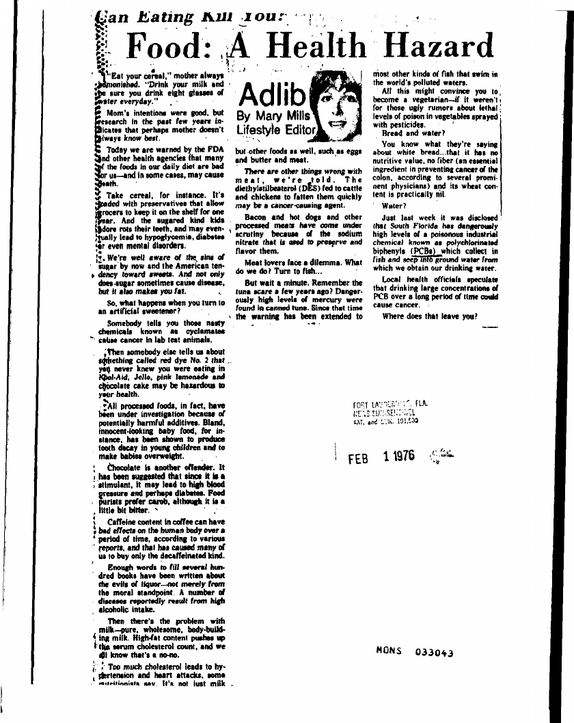
cation for such exposure tests is blood, limited use has been made of biopsy specimens of lung, skin and fat, but these are not very prac tical for penodic sampling The excretory products most frequently analyzed are urine and breath, sweat, the other major excretion product, is not well adapted for exposure tests (Table 38-A) The pulmonary ventilation rate of an aver age worker may be taken as 20 liters per min ute (L/min) or approximately 10,000 L m an eight-hour working day If the air contains one milligram per liter (mg/L) of some harm ful material, the maximum amount that can be absorbed in one day is 10 gm Likewise, the same total dose would result from an ex posure of one hour to a concentration m air of 8 33 mg/L The employee's exposure to gases and va pors is usually limited to his working hours The time spent away from work is usually more than adequate to permit complete elimi nation of the volatile matenal in the body be fore the beginning of the next daily exposure Except for highly soluble substances, such as methyl alcohol, or with reactive gases whose detoxification products are eliminated slowly, there would be no accumulation of gases and vapors from daily exposure Henderson and Haggard's book on noxious . gases (see References) treats the subject of respiration and absorpbon of gases and vapors in great detail, and the reader is urged to con sult this reference for specific details Harmful materials or their detoxification products are eliminated from the body through the respiratory tract, the intestinal tract, the urinary tract, and, in some cases, the sweat glands (Table 38-A) Most volatile organic compounds are elimi nated in a matter of hours or, at most, days Many of the poisonous elements, however, can be stored for long periods of time m vari ous parts of the body Chronic toxicity dam age is unlikely to have an even distribution throughout the body In many cases the organ affected is the hver or kidney, and m a num ber of substances, both the hver and bones In toxicity studies with radioactive isotopes, the organ which suffers the most severe dam age and appears to contribute most to the toxic effect on the body as a whole is called the critical organ The particular organ that shows the largest amount of damage is the one that is chosen for estimating the effect Lead, when taken into the body, may be de posited in the bones When die intake of lead stops, the stored portion is excreted until it is virtually eliminated from the system In chronic poisoning, the excretion rate usually rises until it balances the absorption rate In the case of lead poisoning, biochemical tests performed on the body fluids would in dicate the amount that is being circulated in the blood, excreted m the unne, or stored in the bones if an autopsy was made An important difference between inhalation as route of entry and ingestion or skin ab sorption is that through inhalation the ma tenal enters the artenal blood directly, whereas with ingestion or skin absorption the matenal enters the venous blood and is earned through the nght portion of the heart where it is then diluted by the entire venous system and passed through the lungs and then pumped by the left portions of the heart to the brain and other organs Reactive gases and vapors are altered within the body and are eliminated to a large extent in forms other than those in which they are absorbed The toxicological action may be exerted either by the substance in its ongmal form or by its detoxification products Nonreactive gases and vapors are not al tered to any appreciable extent in the body and are eliminated m Hie same chemical form in which they are absorbed The aliphatic hydrocarbons, such as propane and heptane, are examples of that type Mode of action Industrial poisoning may be classified as one of three types acute, subacute, or chronic The classification is based on the rate of in take of harmful materials, rate of onset of symptoms, and the duration of symptoms Acute poisoning, typically, is characterized by rapid absorption of the offending matenal and the exposure is sudden and severe For example, inhaling high levels of carbon mon oxide or swallowing a large quantity of cya nide compound will produce acute poisoning The death or survival of a victim through the critical penod occurs suddenly Generally, acute poisoning results from a single dose 1113
refid# 6RewYnOjQ9nakZGe9wkMqryJ31 page
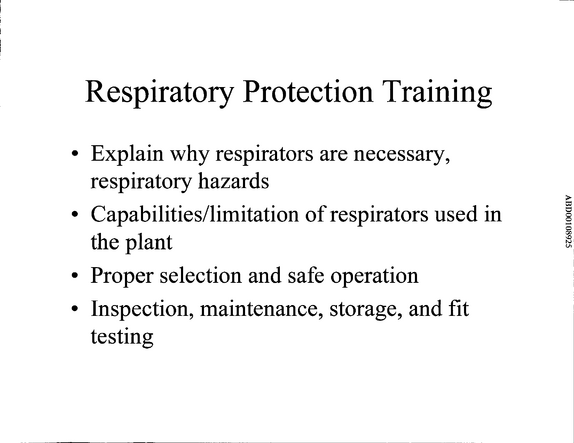
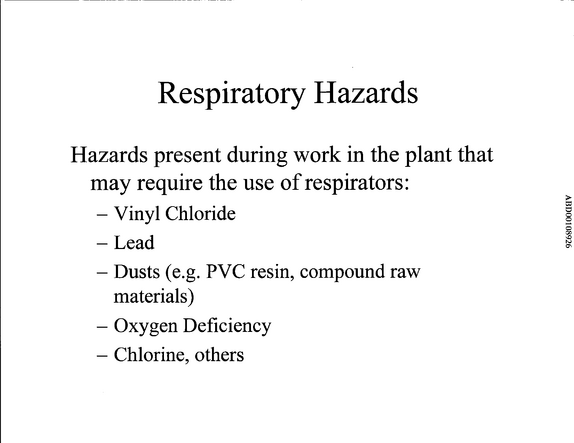
Aberdeen, MS ABDOO108925 Respiratory Protection Training Explain why respirators are necessary, respiratory hazards Capabilities/limitation of respirators used in the plant Proper selection and safe operation Inspection, maintenance, storage, and fit testing ABDOO108926 Respiratory Hazards Hazards present during work in the plant that may require the use of respirators: - Vinyl Chloride - Lead - Dusts (e.g.
refid# B51Br6Z4rYZM0ZVzDx92xY0gX14 pages