Refine
Estimated Years UndatedClear
267,355 results foundRefine Search
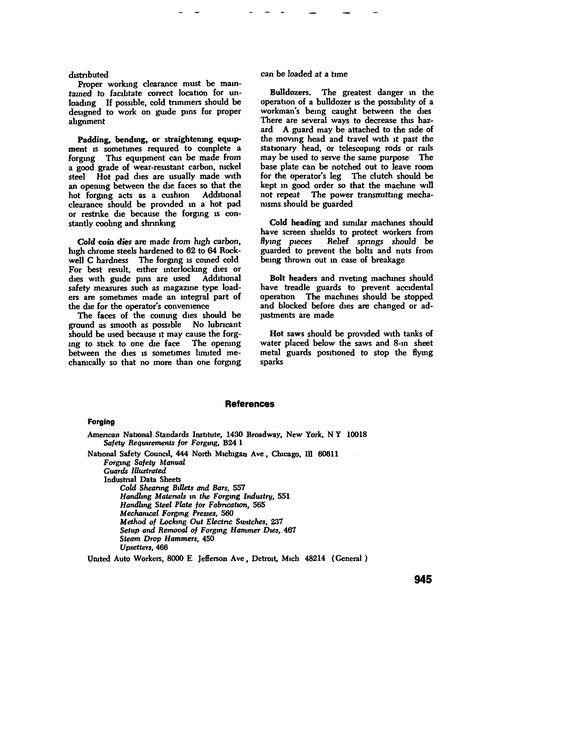
distributed Proper working clearance must be main tained to facibtate correct location for un loading If possible, cold trimmers should be designed to work on guide pins for proper ahgnment Padding, bending, or straightening equip ment is sometimes required to complete a forging This equipment can be made from a good grade of wear-resistant carbon, nickel steel Hot pad dies are usually made with an opening between the die faces so that the hot forging acts as a cushion Additional clearance should be provided in a hot pad or restnke die because the forging is con stantly cooling and shrinking Cold coin dies are made from high carbon, high chrome steels hardened to 62 to 64 Rock well C hardness The forging is corned cold For best result, either interlocking dies or dies with guide pins are used Additional safety measures such as magazine type load ers are sometimes made an integral part of the die for the operator's convenience The faces of the coining dies should be ground as smooth as possible No lubricant should be used because it may cause the forg ing to stick to one die face The opening between the dies is sometimes limited me chanically so that no more than one forging can be loaded at a time Bulldozers.
refid# 2JzYjr5Bq4mrmoj93Y5joknJ71 page
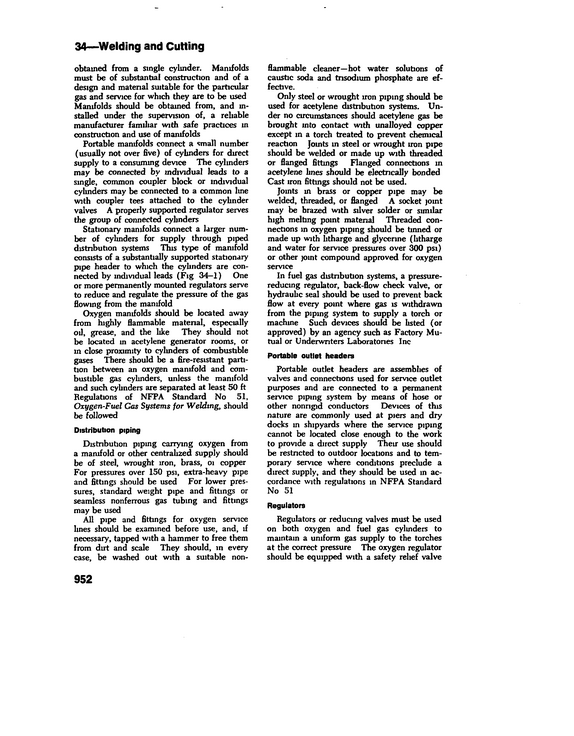
34--Welding and Culling obtained from a single cylinder.
refid# a4Ky9d0Kxz37X99Z2BZrvZMLB1 page
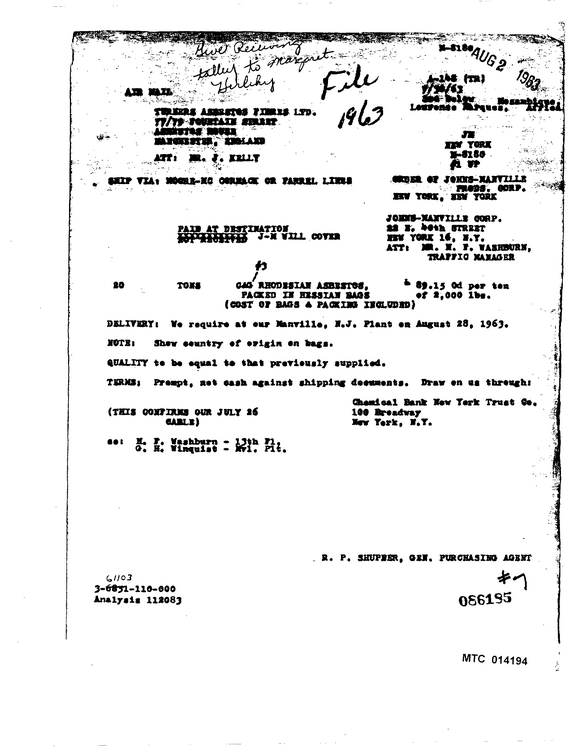
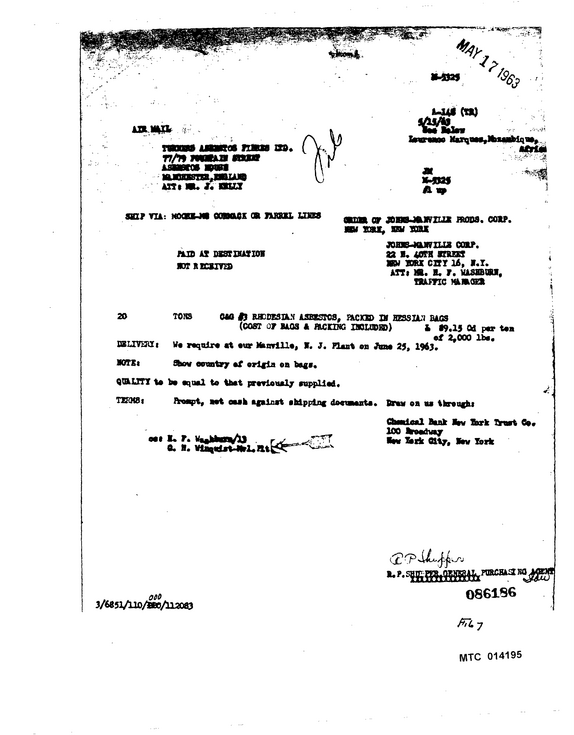
X ' ^ v M P Q J<\) I i li i l t 1V/ITC 013621 MTC 013622 FILE NUMBER COVER SHEET 7 l 0^3623 nvtc FILE NUMBER COVER SHEET V PRODUCTION BOX NUMBER Ot^ -/o 0 MTC 013630 INTER-OFFICE CHARGE dD CREDIT 3* To_ bBUISOtJIssued By_ NAc EXPLANATION (see Systems 1531 for instructions) to CAtictu APomSC MAfi&tiiM'CLtUVA/J AVC 7i S'-'M/vgr AMOUNT r\ }l7 --- - EASE F IL L IN 15 RESP OR DIVISION ACCOUNT NUMBER PLT RESP CODE i-iaic PLT EXP CODE 6//02- 070 ANALYSIS CODE JOB ORDER NUMBER OUANTITY OR FRT NUMBER DEBIT ?

refid# N2K55nnR2q0NMV0ORrDzXad8w11 pages
YV?

refid# ymnvRxLzNMv2B0OBzQnkyBmLd7 pages
DOCUMENT THE FOLLOWING DOCUMENTS) IS ILLEGIBLE OR OF POOR LEGIBILITY IN THE ORIGINAL THIS IS THE BEST COPY AVAILABLE.

refid# NEQ4EV84KGzyqvQ8dNEep1KMw8 pages
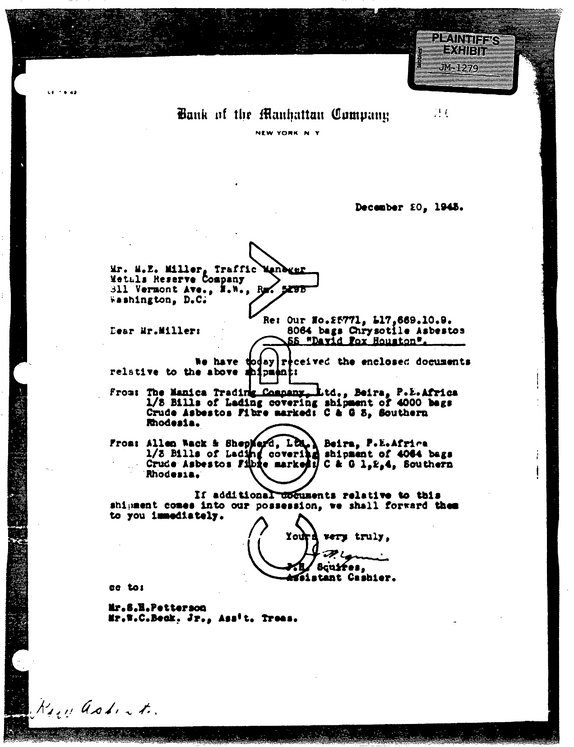
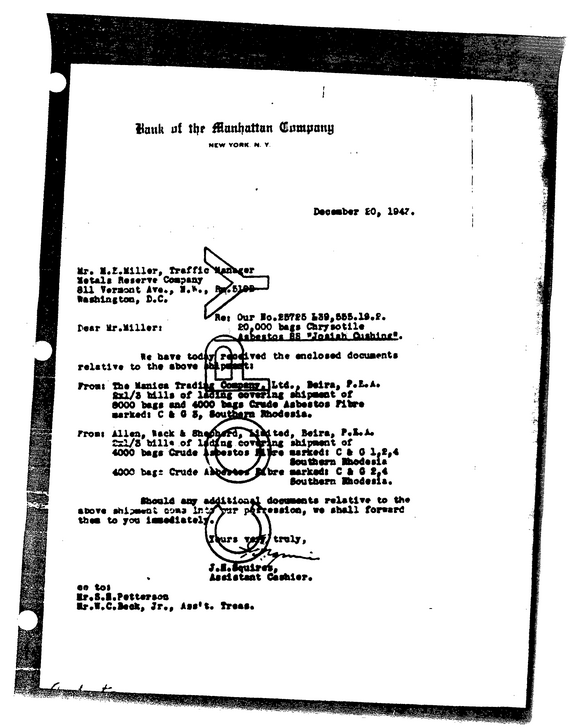
Bank nf llir iHanhattau (Cumyaiu; NIW YORK N Y Deceaber 0, 1*41.
refid# v5zvnRK6Mv9BzRdVZGrVyOGZ2 pages
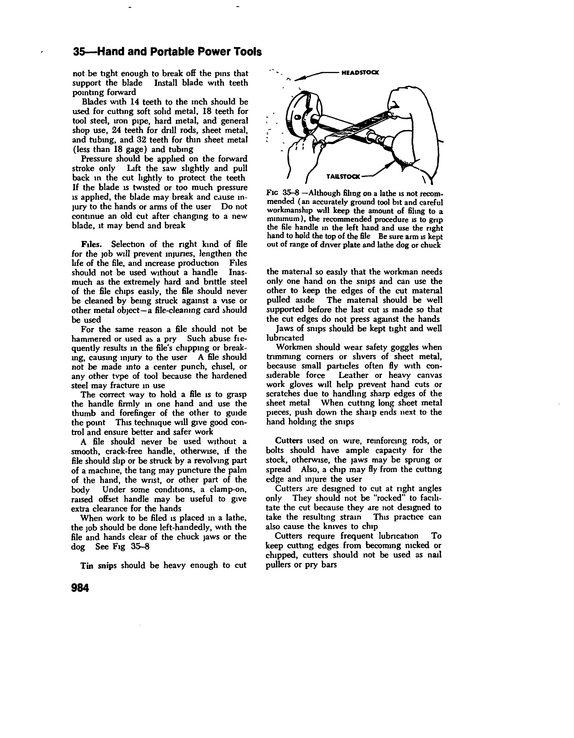
35--Hand and Portable Power Tools not be tight enough to break off the pins that support the blade Install blade with teeth pointing forward Blades with 14 teeth to the inch should be used for cutting soft solid metal, 18 teeth for tool steel, iron pipe, hard metal, and general shop use, 24 teeth for drill rods, sheet metal, and tubing, and 32 teeth for thin sheet metal (less than 18 gage) and tubing Pressure should be applied on the forward stroke only Lift the saw slightly and pull back in the cut lightly to protect the teeth If the blade is twisted or too much pressure is applied, the blade may break and cause in jury to the hands or arms of the user Do not continue an old cut after changing to a new blade, it may bend and break Files.
refid# j19JQQRBdxo1Q6MaNnD8GrdO1 page
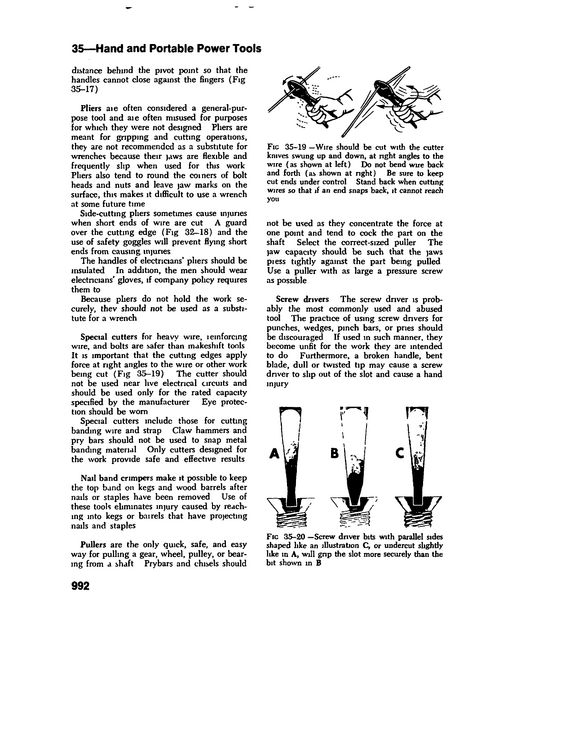
35--Hand and Portable Power Tools distance behind the pivot point so that the handles cannot close against the fingers (Fig 35-17) Pliers aie often considered a general-pur pose tool and aie often misused for purposes for which they were not designed Pliers are meant for gripping and cutting operations, they are not recommended as a substitute for wrenches because their jaws are flexible and frequently slip when used for this work Pliers also tend to round the coiners of bolt heads and nuts and leave jaw marks on the surface, this makes it difficult to use a wrench at some future time Side-cutting pliers sometimes cause injuries when short ends of wire are cut A guard over the cutting edge (Fig 32-18) and the use of safety goggles will prevent flying short ends from causing injuries The handles of electricians' pliers should be insulated In addition, the men should wear electricians' gloves, if company policy requires them to Because pliers do not hold the work se curely, thev should not be used as a substi tute for a wrench Special cutters for heavy wire, reinforcing wire, and bolts are safer than makeshift tools It is important that the cutting edges apply force at right angles to the wire or other work being cut (Fig 35-19) The cutter should not be used near live electrical circuits and should be used only for the rated capacity specified by the manufacturer Eye protec tion should be wom Special cutters include those for cutting banding wire and strap Claw hammers and pry bars should not be used to snap metal banding material Only cutters designed for the work provide safe and effective results Nail band crimpers make it possible to keep the top band on kegs and wood barrels after nails or staples have been removed Use of these tools eliminates injury caused by reach ing into kegs or bairels that have projecting nails and staples Pullers are the only quick, safe, and easy way for pulling a gear, wheel, pulley, or bear ing from a shaft Prybars and chisels should Fic 35-19 --Wire should be cut with the cutter knives swung up and down, at nght angles to the wire (as shown at left) Do not bend wire back and forth (as shown at nght) Be sure to keep cut ends under control Stand back when cutting wires so that if an end snaps back, it cannot reach you not be used as they concentrate the force at one point and tend to cock the part on the shaft Select the correct-sized puller The jaw capacity should be such that the jaws press tightly against the part being pulled Use a puller with as large a pressure screw as possible Screw drivers The screw driver is prob ably the most commonly used and abused tool The practice of using screw dnvers for punches, wedges, pinch bars, or pries should be discouraged If used m such manner, they become unfit for the work they are intended to do Furthermore, a broken handle, bent blade, dull or twisted tip may cause a screw driver to slip out of the slot and cause a hand injury rn r'f n Fic 35-20 --Screw driver bits with parallel sides shaped like an illustration C, or undercut slightly like m A, will grip the slot more securely than the bit shown m B 992
refid# 9KYZK6KKEEZGpVrNVNyegBy61 page
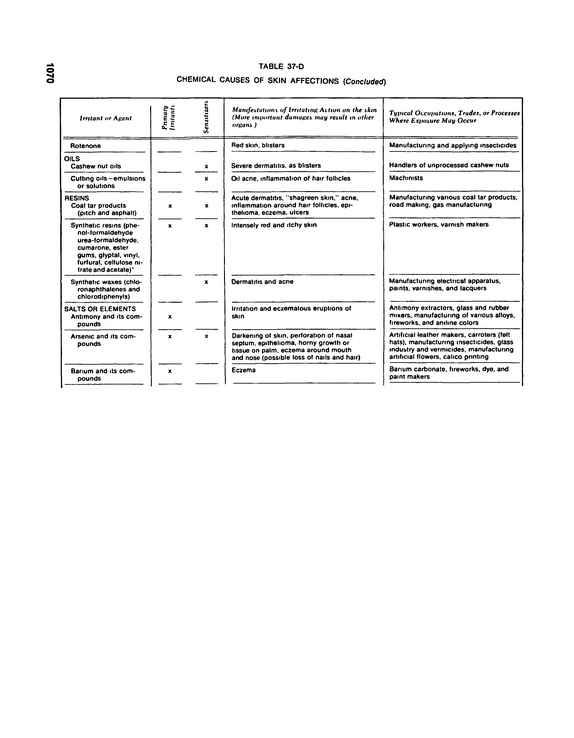
1070 TABLE 37-D CHEMICAL CAUSES OF SKIN AFFECTIONS (Concluded) Primary Irritants Sensitizers Imtant or Agent Rotenone OILS Cashew nut oils Cutting oils-emulsions or solutions RESINS Coal tar products (pitch and asphalt) Synthetic resins (phe nol-formaldehyde urea-formaldehyde, cumarone, ester gums, glyptal. vinyl, furfuraL cellulose ni trate and acetate)' Synthetic waxes (chloronaphthalenes and chlorodiphenyls) SALTS OR ELEMENTS Antimony and its com pounds Arsenic and its com pounds X X X X Barium and its com pounds X Manifestations of Irritating Action on the skin (More important damages may result in other organs ) Typical Occupations, Trades, or Processes Where Exposure May Occur Red skin, blisters Manufacturing and applying insecticides X Severe dermatitis, as blisters X Oil acne, inflammation of hair follicles Acute dermatitis, "shagreen skin." acne, X inflammation around hair follicles, epi thelioma. eczema, ulcers X Intensely red and itchy skin Handlers of unprocessed cashew nuts Machinists Manufacturing various coal tar products, road making, gas manufacturing Plastic workers, varnish makers X Dermatitis and acne Irritation and eczematous eruptions of skin x Darkening of skin, perforation of nasal septum, epithelioma, horny growth or tissue on palm, eczema around mouth and nose (possible loss of nails and hair) Eczema Manufacturing electrical apparatus, paints, varnishes, and lacquers Antimony extractors, glass and rubber mixers, manufacturing of various alloys, fireworks, and aniline colors Artificial leather makers, carroters (felt hats), manufacturing insecticides, glass industry and vermicides, manufacturing artificial flowers, calico printing Barium carbonate, fireworks, dye, and paint makers
refid# jg7Bg5g2qyYVqEReDEVyVkDvy1 page
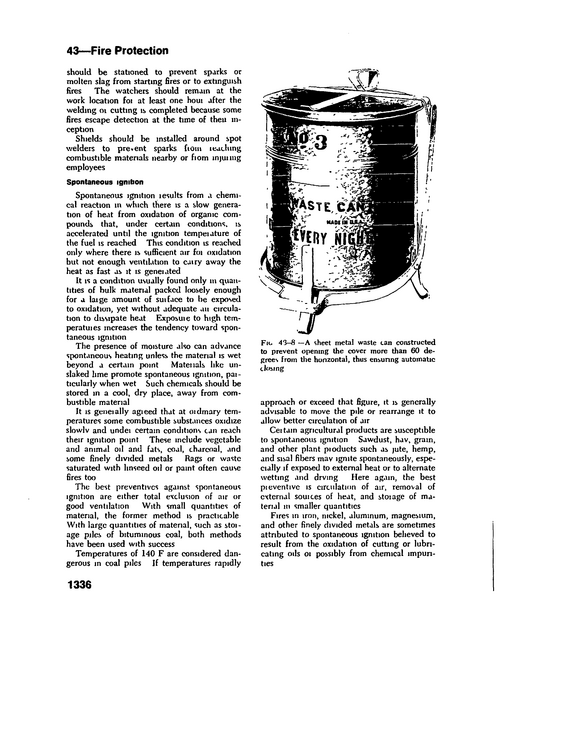
43--Fire Protection should be stationed to prevent sparks or molten slag from starting fires or to extinguish fires The watchers should remain at the work location foi at least one houi after the welding oi cutting is completed because some fires escape detection at the time of theu in ception Shields should be installed around spot welders to present sparks [torn leaching combustible materials nearby or fiom lnjuung employees Spontaneous ignition Spontaneous ignition lesults from a chemi cal reaction in which there is a slow genera tion of heat from oxidation of organic com pounds that, under certain conditions, is accelerated until the ignition tempeiature of the fuel is reached This condition is reached only where there is sufficient air foi oxidation but not enough ventilation to cairy away the heat as fast as it is geneiated It is a condition usually found only in quan tities of hulk matenal packed loosely enough for a laige amount of suiface to be exposed to oxidation, yet without adequate an circula tion to dissipate heat Exposuie to high temperatuies increases the tendency toward spon taneous ignition The presence of moisture also can advance spontaneous heating unless the material is wet beyond a certain point Matenals like un slaked lime promote spontaneous ignition, paiticularly when wet Such chemicals should be stored in a cool, dry place, away from com bustible matenal It is geneially agieed that at oidmary tem peratures some combustible substances oxidize slowlv and undei certain conditions can reach their ignition point These include vegetable and animal oil and fats, coal, charcoal, and some finely divided metals Rags or waste saturated with linseed oil or paint often cause fires too The best preventives against spontaneous ignition are either total exclusion of air or good ventilation With small quantities of material, the former method is practicable With large quantities of material, such as stoiage piles of bituminous coal, both methods have been used with success Temperatures of 140 F are considered dan gerous in coal piles If temperatures rapidly 1336 Fit. 43-8 --A sheet metal waste tan constructed to prevent opening the cover more than 60 de grees from the horizontal, thus ensuring automatic closing approach or exceed that figure, it is generally advisable to move the pile or rearrange it to allow better circulation of air Cei tain agricultural products are susceptible to spontaneous ignition Sawdust, hav, gram, and other plant pioducts such as jute, hemp, and sisal fillers mav ignite spontaneously, espe cially if exposed to external heat or to alternate wetting and drvmg Here again, the best pieventive is circulation of air, removal of external souices of heat, and stoiage of ma terial hi smaller quantities Fires m iron, nickel, aluminum, magnesium, and other finely divided metals are sometimes attributed to spontaneous ignition believed to result from the oxidation of cutting or lubri cating oils oi possibly from chemical impuri ties
refid# G6087VKO5pDG75k7pDa414Gyv1 page
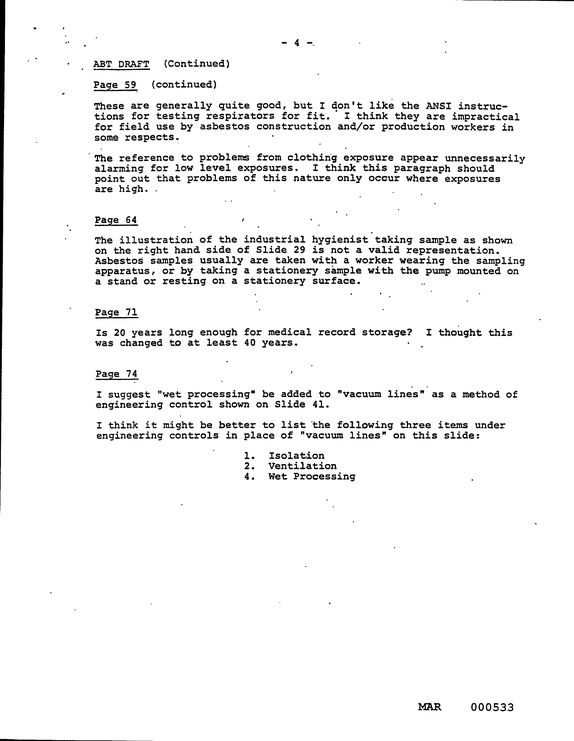
COMMENTS ON ABT DRAFT OF TRAINER'S GUIDE FOR BRAKE SHOP MANAGERS Page IS The presentation on cancer is quite simplistic, which may be okay for the purpose of this guide; but it does not seem quite right to present mesothelioma the way this text does.
refid# 6BoyapdDBGNEQae6KaJL4xRp14 pages
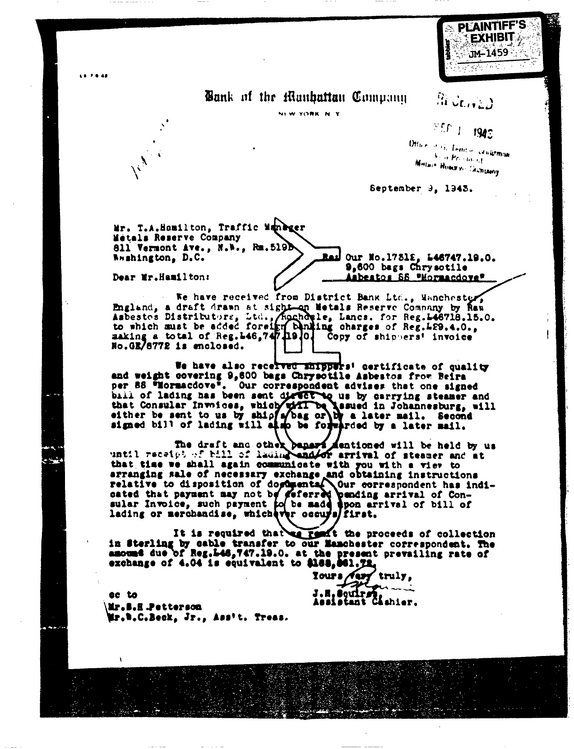
4* \ V Sank nf thr itiuttljattmi (Euiihkiiui Nt W YORK N Y or. rrr i 94- |l .
refid# DYXBYjbx789kzdMaoE2oJMx41 page
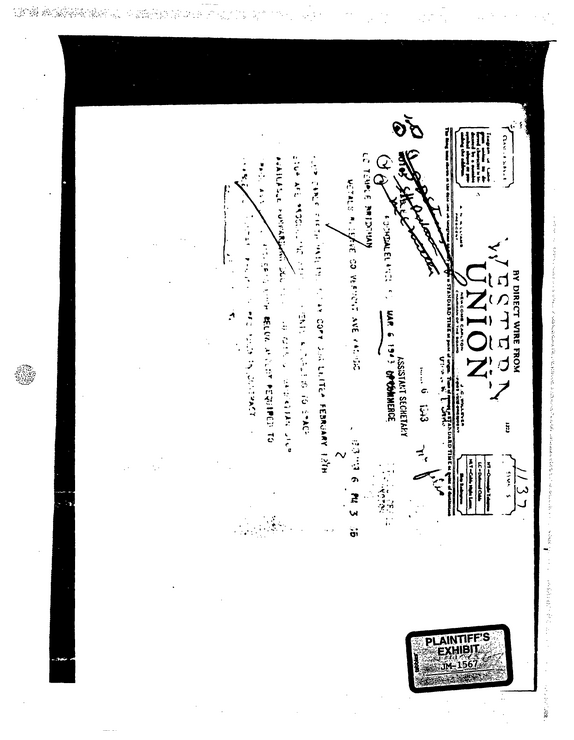
BY DIRECT WIRE FROM
refid# qVpp3GG4qv2Vmp5nQ92JyaqE1 page
/ PLAINTIFF'S EXHIBIT MAR-375 trfu lktu fio c .

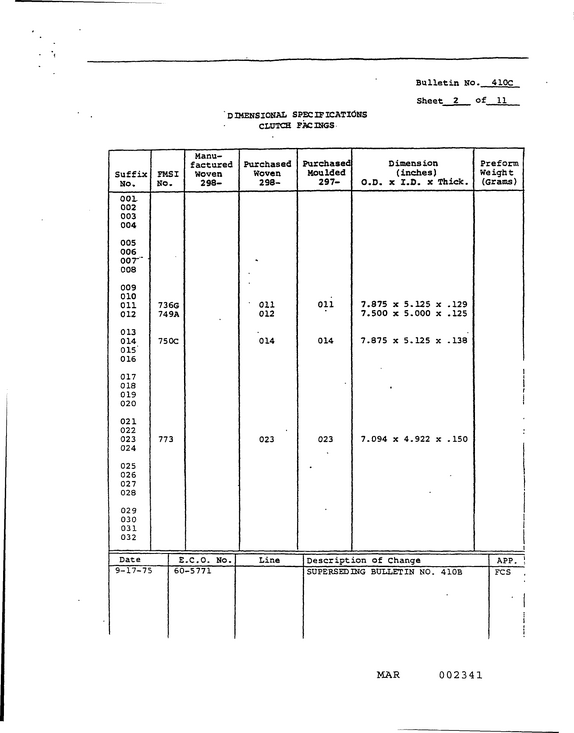
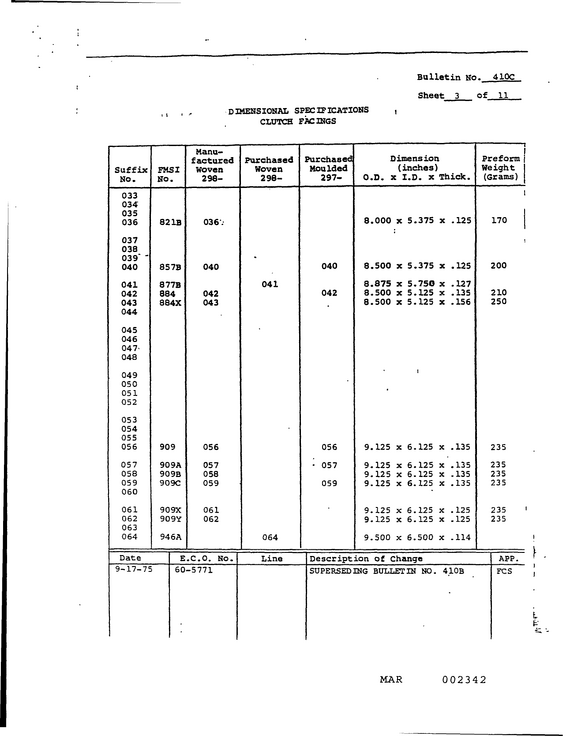
refid# 6Kzb2k96wz63ykdmLD0LzvVm12 pages
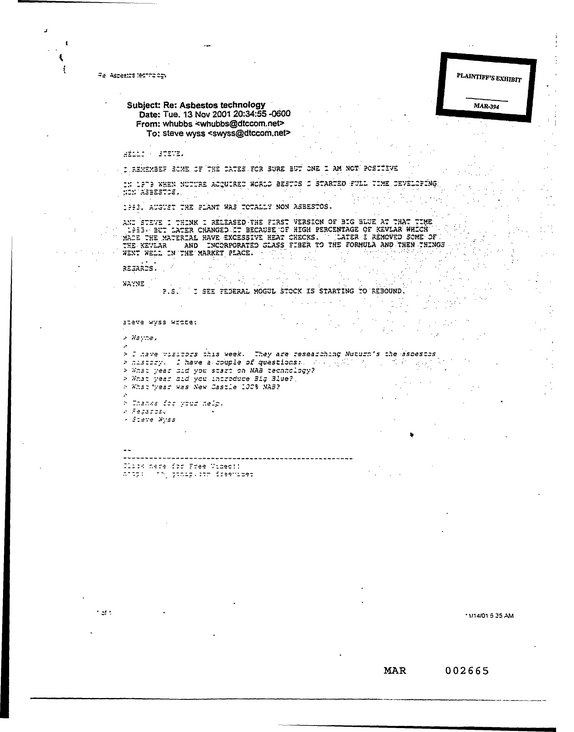
I =e Ascs:rs Subject: Re: Asbestos technology Date: Tue. 13 Nov 200120:34:55 -0600 From: whubbs -swhubbs@dtccom.net> To: Steve wyss <swyss@dtccom,net> hell: - hteve, :.
refid# byx2zB75DBRnYqMGYKqea0z701 page