Refine
Estimated Years UndatedClear
92,592 results foundRefine Search
refid# jyMmZQoxojJ67OQQ5ZekNDZ6k1 page
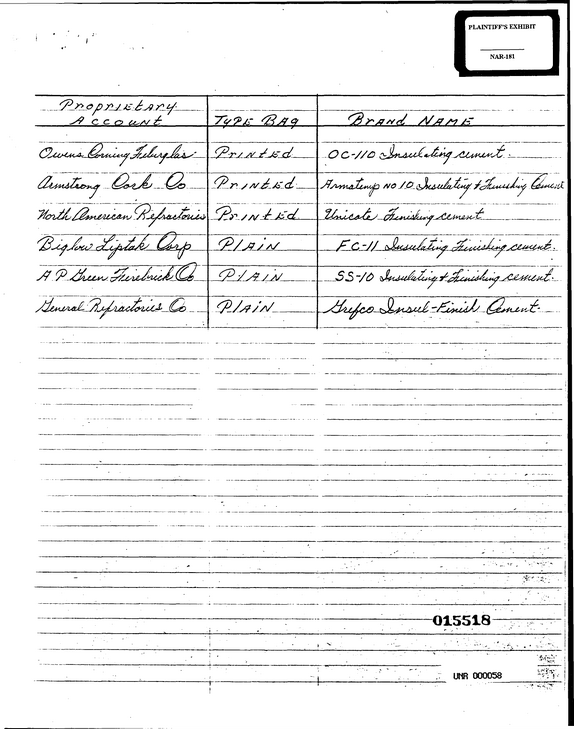
PLAINTIFF'S EXHIBIT NAR-181 opr>j /Ajj x1 ^9 C.
refid# 4a81dqrEq8QnR5m4pR84Ebozp1 page
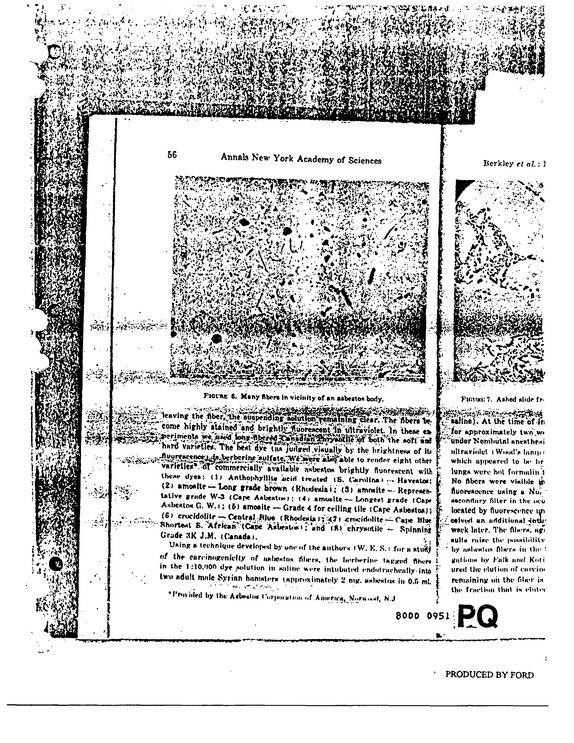
m 56 Annals New York Academy of Sciences \Xvv.
refid# QD5azD8YkpvazOdmbEQj3rY81 page
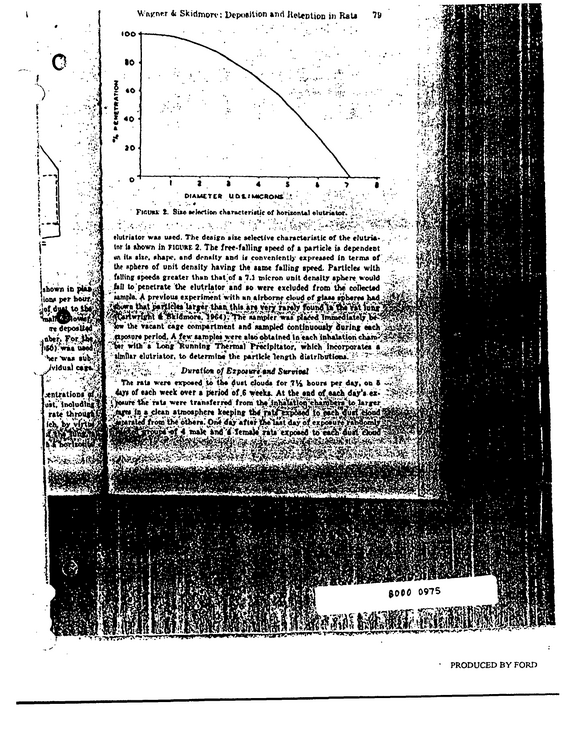
0 y Wft/nr.r & Skidmorv: Deposition and Retention in Rat* too 79 0 ivm o ;`vl w 1-IJ a4s * .
refid# qnaoe8dLLorVeR87bNKB8gXj1 page
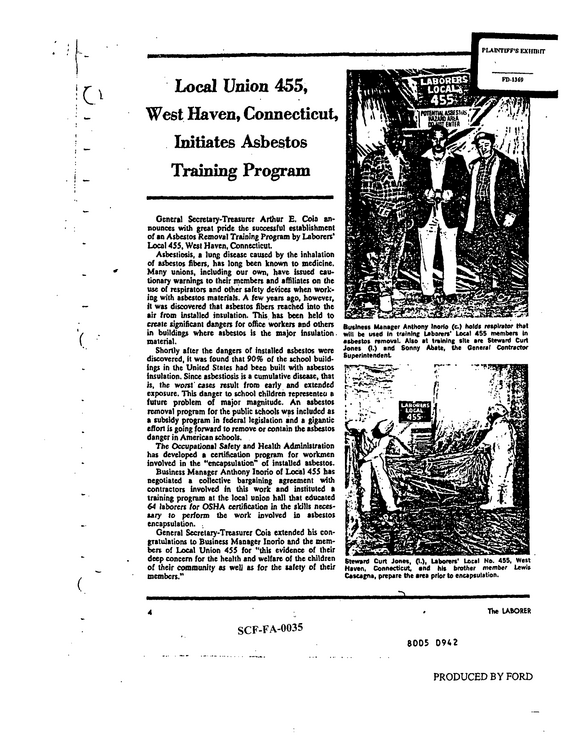
Local Union 455, West Haven, Connecticut, Initiates Asbestos Training Program General Secretary-Treasurer Arthur E.
refid# baL68m7dr4kzm9bVy27LXBO11 page
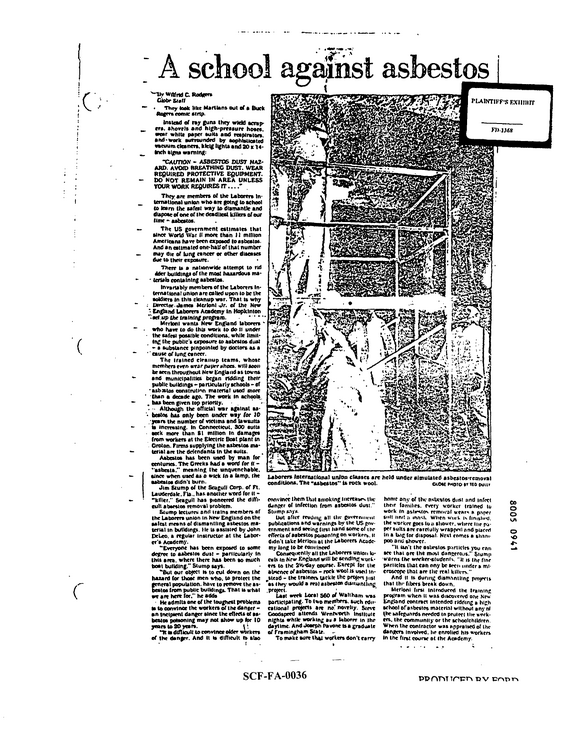
A school against asbestos 'my wrtd C.
refid# MMn5nZE5Z8oo4eg8bQRmNbmDz1 page
L/1 *r.
refid# bynMM82Q5gqr1RekRJxK9rXe130 pages
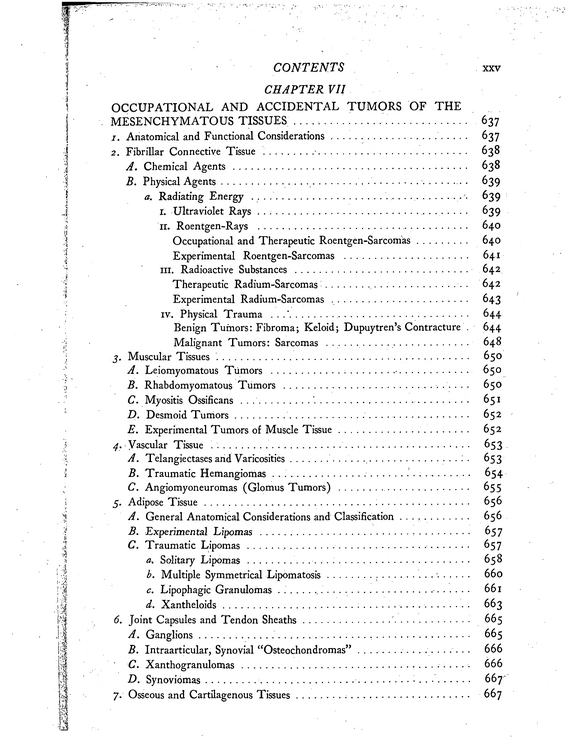
CONTENTS xxv CHAPTER VII OCCUPATIONAL AND ACCIDENTAL TUMORS OF THE MESENCHYMATOUS TISSUES ....... .................... ...............................637 1.
refid# Lgo67QybOmGwzRm233R3gDzQg1 page
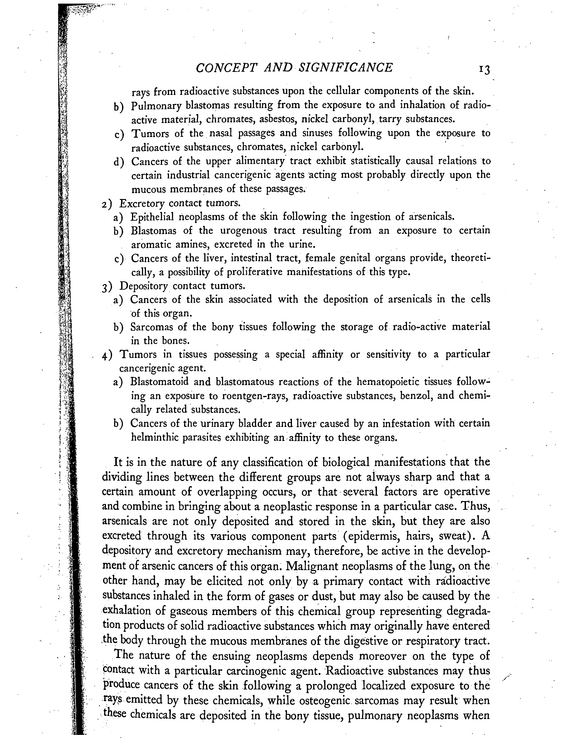
CONCEPT AND SIGNIFICANCE 13 rays from radioactive substances upon the cellular components of the skin. b) Pulmonary blastomas resulting from the exposure to and inhalation of radio active material, chromates, asbestos, nickel carbonyl, tarry substances. c) Tumors of the nasal passages and sinuses following upon the exposure to radioactive substances, chromates, nickel carbonyl. d) Cancers of the upper alimentary tract exhibit statistically causal relations to certain industrial cancerigenic agents acting most probably directly upon the mucous membranes of these passages. 2) Excretory contact tumors. a) Epithelial neoplasms of the skin following the ingestion of arsenicals. b) Blastomas of the urogenous tract resulting from an exposure to certain aromatic amines, excreted in the urine. c) Cancers of the liver, intestinal tract, female genital organs provide, theoreti cally, a possibility of proliferative manifestations of this type. 3) Depository contact tumors. a) Cancers of the skin associated with the deposition of arsenicals in the cells of this organ. b) Sarcomas of the bony tissues following the storage of radio-active material in the bones. 4) Tumors in tissues possessing a special affinity or sensitivity to a particular cancerigenic agent. a) Blastomatoid and blastomatous reactions of the hematopoietic tissues follow ing an exposure to roentgen-rays, radioactive substances, benzol, and chemi cally related substances. b) Cancers of the urinary bladder and liver caused by an infestation with certain helminthic parasites exhibiting an affinity to these organs.
refid# pBxDk4Opek9pDOYXQYovo1VzD1 page
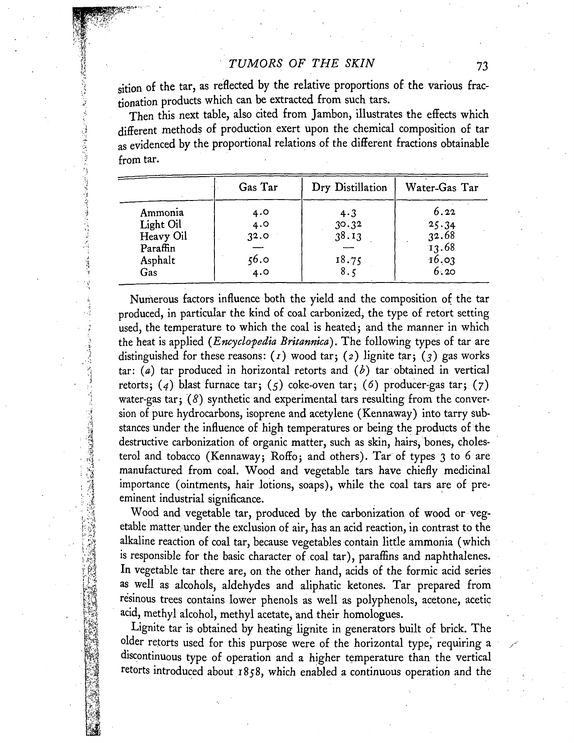
TUMORS OF THE SKIN 73 sition of the tar, as reflected by the relative proportions of the various frac tionation products which can be extracted from such tars.
refid# NBdDxkjZ8X4mezLz2vr7g5Kg1 page
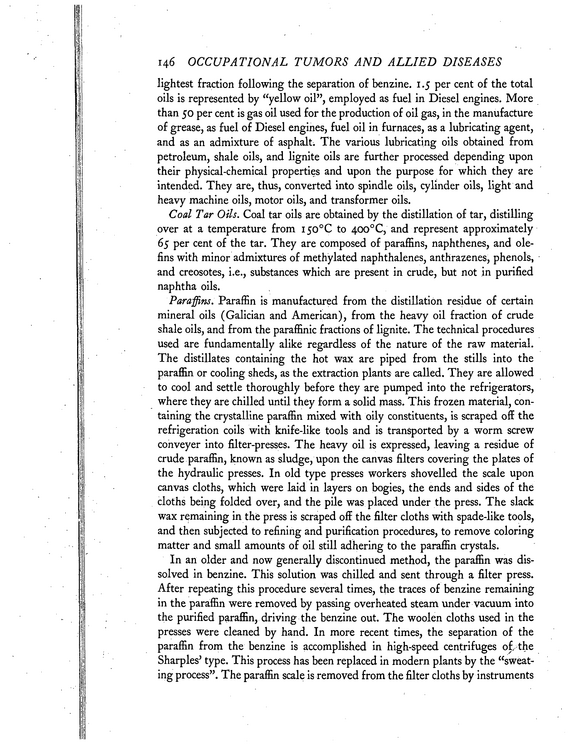
146 OCCUPATIONAL TUMORS AND ALLIED DISEASES lightest fraction following the separation of benzine, i .5 per cent of the total oils is represented by "yellow oil", employed as fuel in Diesel engines.
refid# Ene1g369moQrJdgMDDQob6vx1 page
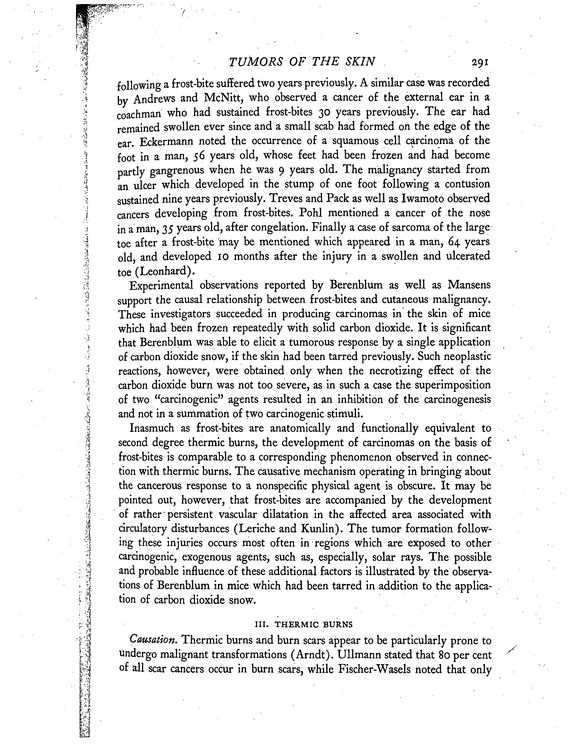
TUMORS OF THE SKIN 291 following a frost-bite suffered two years previously.
refid# 3JYV79x5mN13GaaOa8j8mnQRn1 page
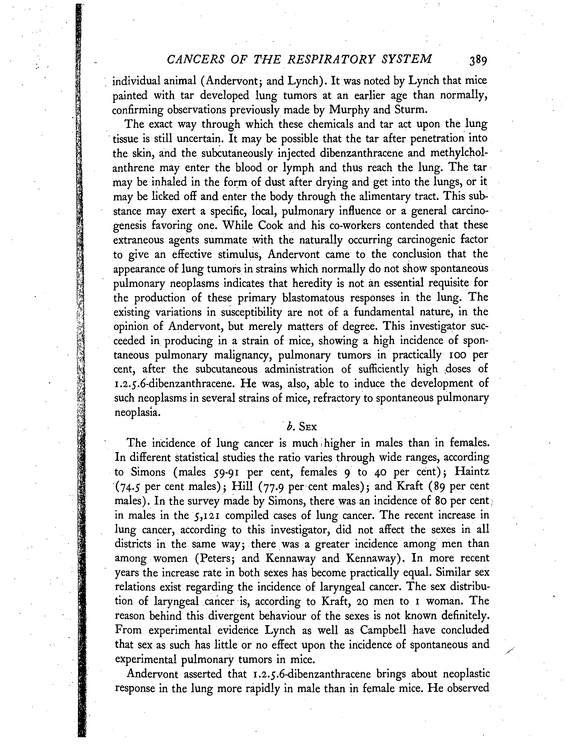
CANCERS OF THE RESPIRATORY SYSTEM 389 individual animal (Andervont; and Lynch).
refid# NGx0byxXadbrjzXJwK8w96g5b1 page
4i4 OCCUPATIONAL TUMORS AND ALLIED DISEASES for the occurrence of cancer, did not reveal any evidence supporting the conception that heredity plays any part in the production of pulmonary malignancy in chromate workers (A1wens).
refid# O1wRxJzbwvq0b5J9O4o2jqbqp1 page
548 OCCUPATIONAL TUMORS AND ALLIED DISEASES the location of the causative agent in regard to site and type of proliferating epithelial cells.
refid# 1Kx4dBKJbeDnxJv4BrO5E8JK1 page