Refine
Estimated Years UndatedClear
92,592 results foundRefine Search
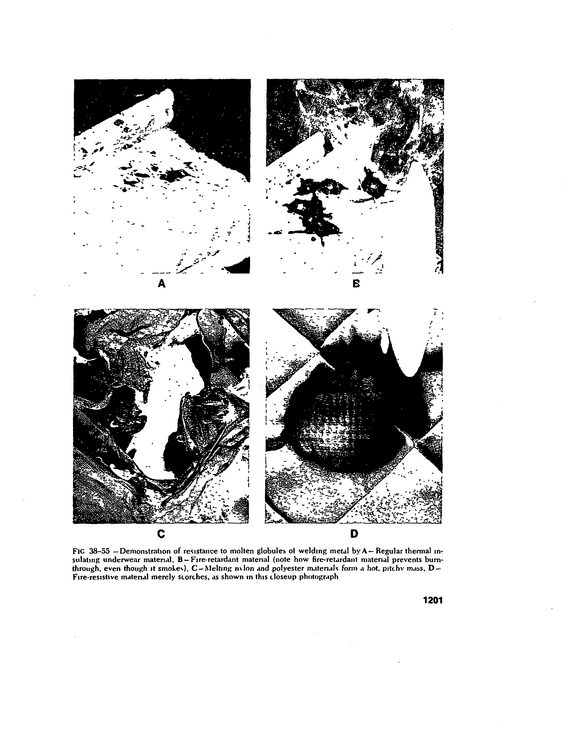
CD Fig 38-55 --Demonstration of resistance to molten globules of welding metal byA-- Regular thermal in sulating underwear material, B--Fire-retardant material (note how fire-retardant material prevents bumthrough, even though it smokes), C --Melting ns Ion and polyester materials form a hot, pitchv mass, D -- Fire-resistive material merely scorches, as shown in this closeup photograph 1201
refid# rpmON0JxqYggj7eBJGB4XKMxE1 page
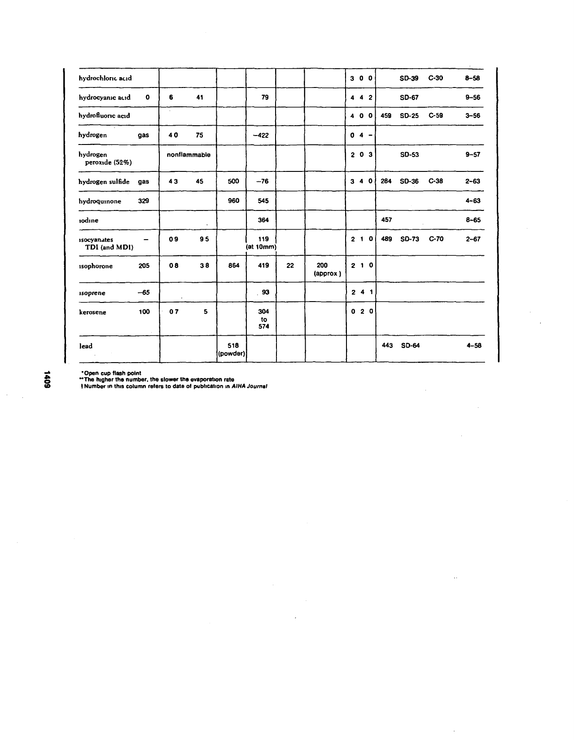
1409 hydrochloric acid hydrocyanic and hydrofluoric acid 0 hydrogen gas hydrogen peroxide (52%) hydrogen sulfide gas hydroquinone 329 iodine isocyanates -- TDI (and MDI) isophorone 205 6 41 4 0 75 nonflammable 4 3 45 09 95 08 38 79 -422 500 -76 960 545 364 119 ;at 10mm 864 419 22 isoprene --65 93 kerosene 100 07 5 304 to 574 lead 518 (powder) 'Open cup flash point "The higher the number, the slower the evaporation rate I Number tn this column refers to date of publication in AIHA Journal 300 SD-39 C-30 442 SD-67 4 0 0 459 SD-25 C-59 04- 203 SD-53 3 4 0 284 SD-36 C-38 457 2 1 0 489 SD-73 C-70 200 2 1 0 (approx) 241 020 443 SD-64 8-58 9-56 3-56 9-57 2-63 4-63 8-65 2-67 4-58
refid# jBmgbGE2N8bXdyVKKVDVpnoGy1 page
Ionizing Radiation Radiation Safety Program Notification Regulations and controls Preliminary planning of operating functions New functions and requirements Evaluation of needs Formation of policies Medical exami nations Educational and training activities Personal pro tective equipment Fire prevention and extinguishment Operating costs Nonionizing Radiation from Electronic Equipment Microwave safety Laser beam safety Laser hazards controls References 1487 1494 1504 This chapter will introduce the safety engi neer to the problems of radiation safety, to the methods for safe control of ionizing radiation, and to the considerations needed for safe handling of radioactive materials It will provide a frame of reference within which the safety of such operations can be evaluated It is directed to the safety engineer who wants a master checklist of the items which he must consider, information on current standards of radiation safety performance, and a guide to help him tailor his own efforts or get tech nical help to fit his specific problems Radiation safety is part of a company's total safety program and is related to other phases of that program Plant modification may call for the introduction of radiation devices, radioactive materials require radia tion safety reviews as well as engineering studies Traffic patterns for pedestrians and moving equipment may need to be altered to prevent or control the spread of radioactive material throughout the plant In the absence of a health physicist, the company considering use of radiation sources or devices should consult the safety profes sional m order that adequate control measures be established Because of his experience m company activities, he will recognize the need for further precautions to make sure that the work is done safely The accident expenence and basic safety problems of an organization should not change much before or after the introduction of even extensive work with radiation Frequency and seventy rates will nse or fall predomi nantly from the conventional accidents and injuries However, the control of chronic radiation exposures of personnel lends itself to effective accident prevention techniques, and some radiation hazards can be handled with common safety measures For other cases, the safety professional will have to con sult a qualified expert m order to obtain guid ance Thus, the safety professional should assume the initiative in making plans to han dle radiation problems m the plant Review and discussion by the safety pro fessional and supervisors of material in this chapter will point up difficulties which super visors and employees may encounter in work ing safely with radiation, and will hopefully point out what management must provide in plant facilities and m items of extraordinary expense It should enable the safety pro fessional to integrate basic radiation safety into his present overall safety effort and to point out areas where his program may need additional emphasis This chapter provides the safety profes sional with rough yardsticks to measure the magnitude of his problem and to help him determine when he w ill need technical advice for the specific situation being faced Many radiation safety problems, as is the case with safety problems, will require the expenence and advice of an expert in the field Several highly complex subjects --the charactenstics of radiation, the physics of the interaction of radiation and matter, and the This chapter was revised by Harold J Moe, Health Physicist, Argonne National Laboratones, Argonne, 111, and Julian B Ohshifski, P E , of the NSC Staff, based upon reviews by selected members of the National Safety Council 1432
refid# NEM52ybppya5G98n7Eyg0qbeD1 page
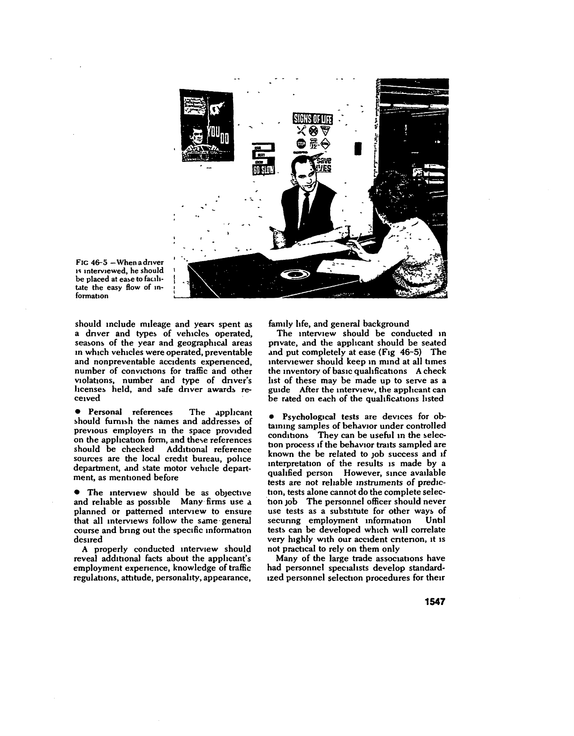
Fic 46-5 --Whenadriver is interviewed, he should be placed at ease to facili tate the easy flow of in formation should include mileage and years spent as a driver and types of vehicles operated, seasons of the year and geographical areas m which vehicles were operated, preventable and nonpreventable accidents expenenced, number of convictions for traffic and other violations, number and type of driver's licenses held, and safe driver awards re ceived Persona] references The applicant should furnish the names and addresses of previous employers in the space provided on the application form, and these references should be checked Additional reference sources are the local credit bureau, police department, and state motor vehicle depart ment, as mentioned before The interview should be as objective and reliable as possible Many firms use a planned or patterned interview to ensure that all interviews follow the same general course and bring out the specific information desired A properly conducted interview should reveal additional facts about the applicant's employment experience, knowledge of traffic regulations, attitude, personality, appearance, family life, and general background The interview should be conducted in pnvate, and the applicant should be seated and put completely at ease (Fig 46-5) The interviewer should keep in mind at all times the inventory of basic qualifications A check list of these may be made up to serve as a guide After the interview, the applicant can be rated on each of the qualifications listed Psychological tests are devices for ob taining samples of behavior under controlled conditions They can be useful in the selec tion process if the behavior traits sampled are known the be related to job success and if interpretation of the results is made by a qualified person However, since available tests are not reliable instruments of predic tion, tests alone cannot do the complete selec tion job The personnel officer should never use tests as a substitute for other ways of securing employment information Until tests can be developed which will correlate very highly with our accident criterion, it is not practical to rely on them only Many of the large trade associations have had personnel specialists develop standard ized personnel selection procedures for their 1547
refid# M4YvbVrNQryvv29GDdBqOYJ9x1 page
. v >I i i ',ir r vi I' (Board of Directors> continued) v : ' "r W; E. .Naumann, Chairman of the Board, M.
refid# JN4b2DvX51Kya6J5mYDeJvy221 page
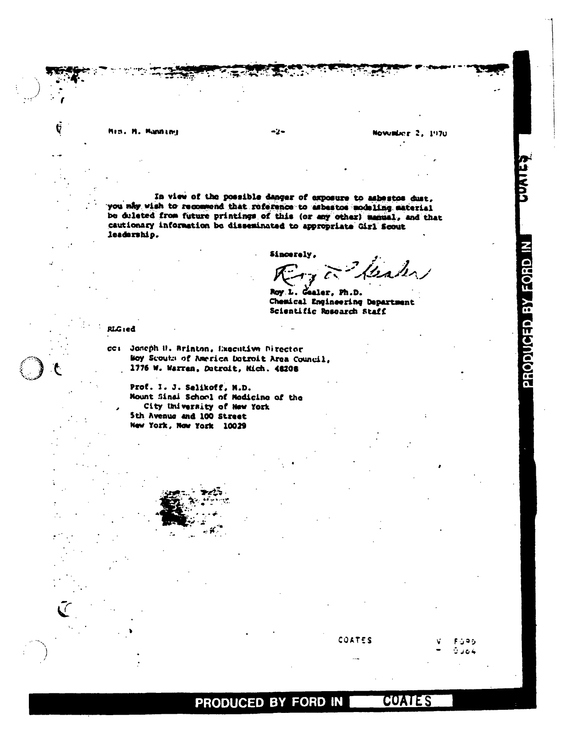
Zb vim of the possible danger of exposure to asbestos dust, you nfty wish to reooemthd that reference to asbestos apdsUb<g!
refid# g2a3O2Q7nEv0Qb7xYavLEMakQ1 page
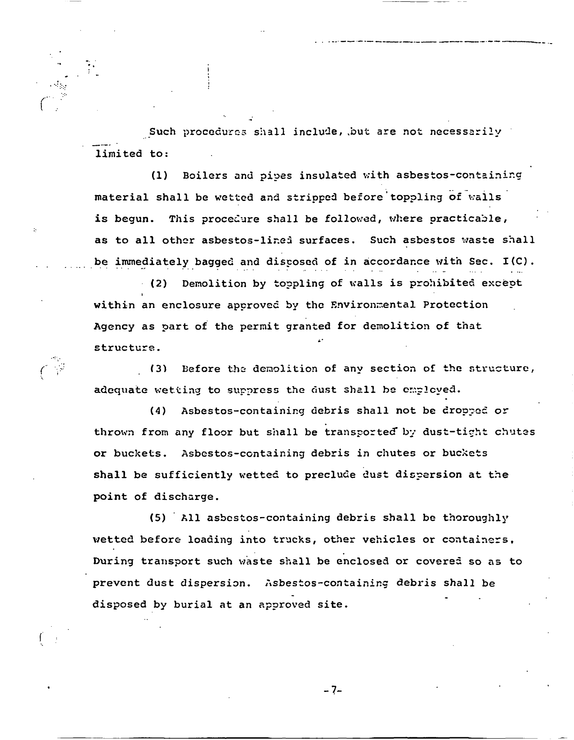
Such procedures shall include,.but are not necessarily limited to: (1) Boilers and pipes insulated with asbestos-containing material shall be wetted and stripped before ' toppling of v;alls is begun.
refid# wqeaD2dYGzd0z2jpNMyOLgqXV1 page
^.
refid# p64DNbrJoGNryjnq9wNnkxnE1 page
-3- must periodically test emissions, and report the results to EPA.
refid# jBOXjY0DrB5nD9my14EZBzkaZ1 page
r Cleveland, Ohio Durer Div.
refid# Qgzv0me6w0VbQ9mGKKJZQyG4o1 page
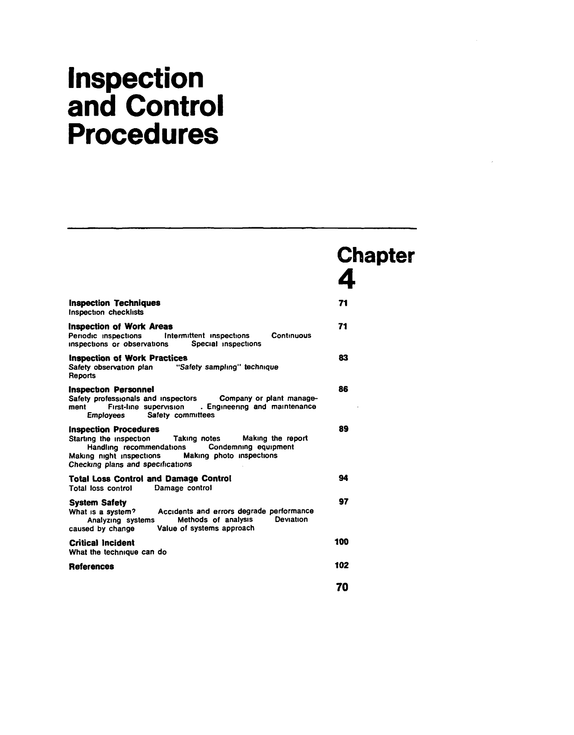
Inspection and Control Procedures Inspection Techniques Inspection checklists Inspection of Work Areas Penodic inspections Intermittent inspections Continuous inspections or observations Special inspections Inspection of Work Practices Safety observation plan "Safety sampling" technique Reports Inspection Personnel Safety professionals and inspectors Company or plant manage ment First-line supervision .
refid# zoB6jJjmBz6dYJgXay5jdzqBa1 page
4--Inspection and Control Procedures ployees spend all their time observing certain equipment and operations Maintenance men, electricians and others, whose job it is to keep equipment in good mechanical condi tion, are assigned to specific groups of ma chines They have no other dubes than to roam about the department, conhnuously ob serving operabons and making adjustments and minor repairs These men are responsible also for the safe operation of assigned machines and help train employees in safe pracbces This method of inspection makes these men familiar with the exact condibon of each part of the machines covered It enables them to point out weak nesses and defects long before they become serious or of a hazardous nature Some companies have roving troubleshooters selected from employees at regular intervals This job is rotated so that in the course of time each employee has had an opportunity to inspect the enbre operabon or his particular department The job is rotated on the theory that each employee will make a definite contnbubon to the safety of the enhre plant and to the safety educabon of fellow employees, as well as himself In one case, the roving inspectors are given a free hand to invesbgate all operations and to report their findings to the foremen Some times the continuous inspecbon is limited to key men in the department who have had long experience and a background of accident prevenbon work A conbnuous system of inspection of per sonal protecbve equipment is especially de sirable A constant check on goggles, respira tors, safety shoes, gloves, and other protecbve clothing, as well as any other personal pro tective devices, will ensure safe maintenance of this equipment Systematic inspection by supervisors.
refid# a1Bo5yo43zZadMK4kZx7gxgkN1 page
4--Inspection and Control Procedures found it practical for analyzing aerospace products.
refid# DGOjbyM6QnKn2GXw2vJLVq6La1 page
cal!
refid# 8RVBxJ8vkYnMdonGw52V2j8bo1 page
Concrete does not withstand acids, and in some types of work employees consider con crete too hard and too cold Resilient non slip mats with low heat conductivity can be placed over the concrete where workmen must stand in one position for considerable periods of time Cork tile is desirable for its insulation, re siliency, quietness, high nonshp rating, and ability to withstand light traffic for long peri ods It is not suitable for wet locations or where there are heavy loadings, and it is ex pensive Cast iron plates with checkered or other wise roughened surfaces laid in cement or asphalt are suitable for some types of rough wear such as that in warehouses The slip ping hazard at the door sills of elevators may be reduced by installing steel grating filled with concrete Lead is used for floors exposed to acids and as a mat for secure footing near wood-working or other machines involving serious danger to the operator if he slips and falls Lead is heat conductive, spark resistant, and quiet It should not be used for heavy trucking Zinc also is used for its spark-resistant qual ities, but, compared to lead, it is attacked more readily by alkalies Floors in com pounding rooms where fire and explosion haz ards exist are zinc-covered in some plants Asphalt-base, vinyl-base or linoleum-type tile often is used in offices, laboratories, and workrooms where cleanliness and good looks are important The material is easily cleaned, noiseless, and a poor conductor of heat Magnesite is suitable for light traffic or where light oils are used It must be laid on a ngid base and should not be used where there is excessive moisture or hydrostatic pres sure, as in basements A coating of bitu minous paint is necessary to protect metals such as pipe from contact, since magnesite corrodes some metals Checkered steel plate wears well, but it is noisy and highly conductive of heat and electricity It is relatively nonshppery unless wom smooth or wet with oil Metal grille floors and gratings will not col lect dust, dirt, or liquids but, because of noise, are not often used where hand trucking is done regularly This type of floor material is particularly useful m boiler rooms and over openings Parquet is laid on an underfloor and is suit able for offices If the material is sealed properly, little maintenance is necessary Par quet wears well but may be noisy Rubber flooring is resilient It also has high dielectric strength, which is undesirable where static electricity is a problem However, conductive types of rubber flooring are avail able Abrasive rubber flooring can be used to overcome slippenness Since terrazzo flooring has no joints m the surface, its use eliminates some of the diffi culties that may be encountered with other types of flooring It can be made electrically conductive by grounded grilles It is a con ductor of heat Suitable sealers are neces sary to make the floor impervious to most acids The terrazzo mixture is slippery unless it includes abrasive aggregates Plants requiring extreme cleanliness and sanitary conditions, such as dairies, use ce ramic glazed tile It should be laid in Trin idad asphalt or m cement with a low lime content Two or three layers of asphalt roof ing felt may be laid beneath the tile Wood floors of the proper matenal and con struction are suitable for vanous services ex cept for the obvious objection of a fire hazard Plank or board floors of the softer woods are generally unsatisfactory and a source of nu merous injuries from slipping and falling as well as from splinters and truck accidents A good floor for light manufacturing can be made from matched or jointed hardwood floor ing nailed to a subfloor structure or to sleepers in concrete The thickness of the hardwood flooring will depend on the service to which it will be subjected It is laid with the gram parallel to the hne of truck travel Wood blocks meet many of the lequirements for a good floor Properly made, a floor of this type is relatively noiseless and does not become slippery or cause fatigue If the blocks are laid on a smooth, ngid base, the floor is not likely to crack and will withstand heavy service Blocks impregnated with creosote are nec essary for floors in contact with liquids or moisture Expansion joints are required along walls, columns, and similar places If blocks are laid with a high melting point pitch, hot weather does not create problems Oils and 391
refid# ppv9ZDMDwY5yXkX4D9322xRvd1 page