Refine
Estimated Years 2010-2019Clear
19 results foundRefine Search
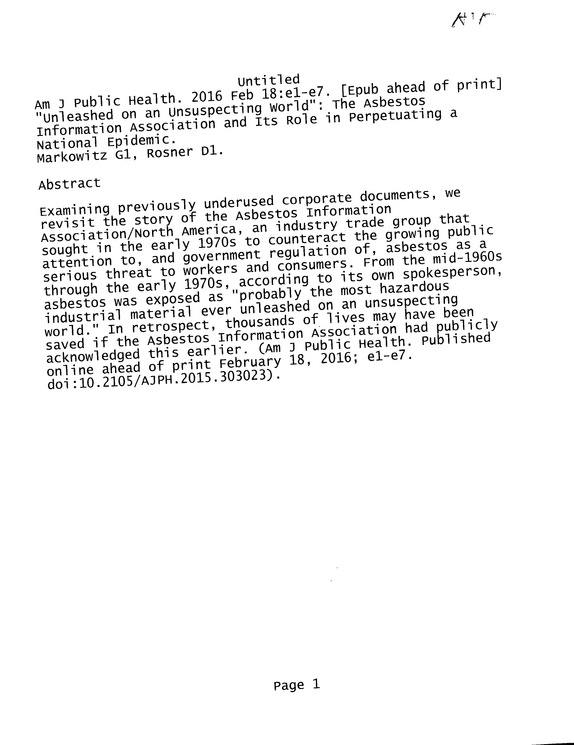
FILE NAME: Asbestos Information Association (AIA) DATE: 2016 Feb DOC#: AIA050 DOCUMENT DESCRIPTION: Journal Abstract - The AIA and Its Role in Perpetuatinga National Epidemic /$1r Am 3 public Health.
refid# da4NvN1Oz5E0MxvnZnG0J9bwe2 pages
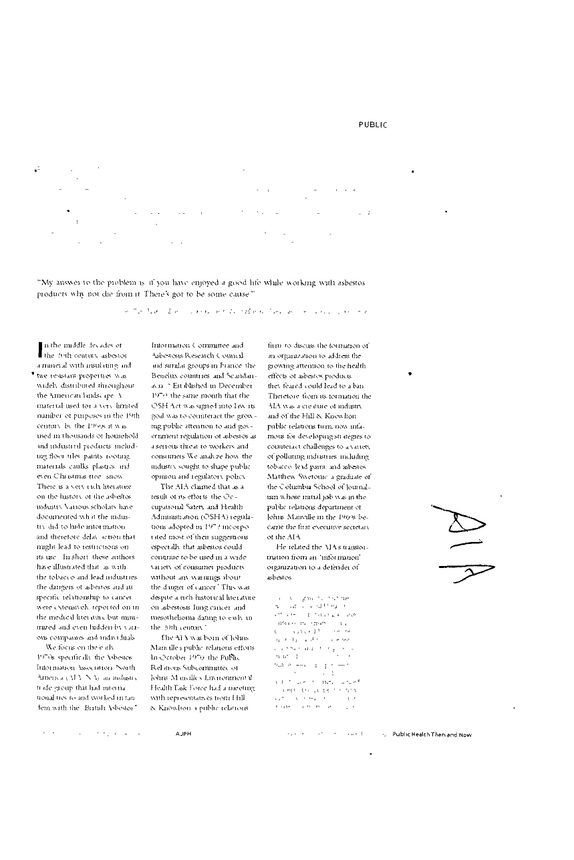
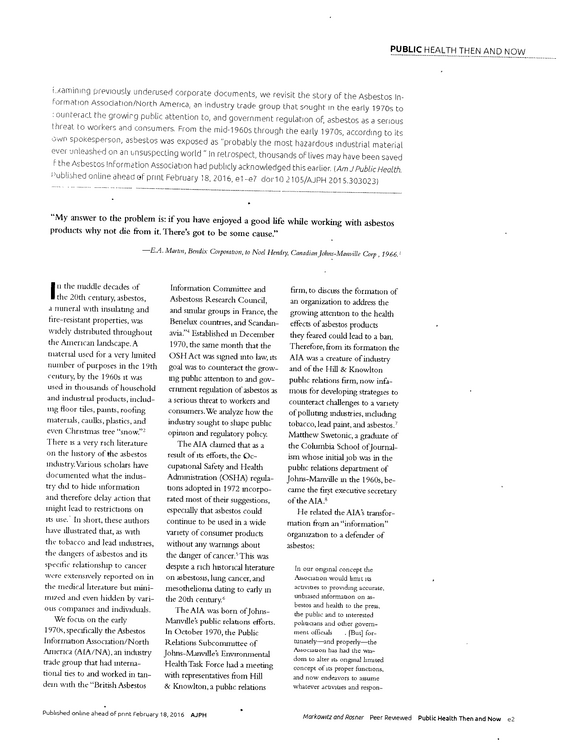
From the mid-1960s through the early 1970s, according to its own spokesperson, asbestos was exposed as "probably the most hazardous industrial material ever unleashed on an unsuspecting world " In retrospect, thousands of lives may have been saved i the Asbestos Information Association had publicly acknowledged this earlier.
refid# XxELE87we4aVe2bnLVNXjBxd8 pages
The company has no records or information to refute its association w ith this organization.
refid# k6zV6vGvZVjJkyeLV6JEzD6Oq7 pages
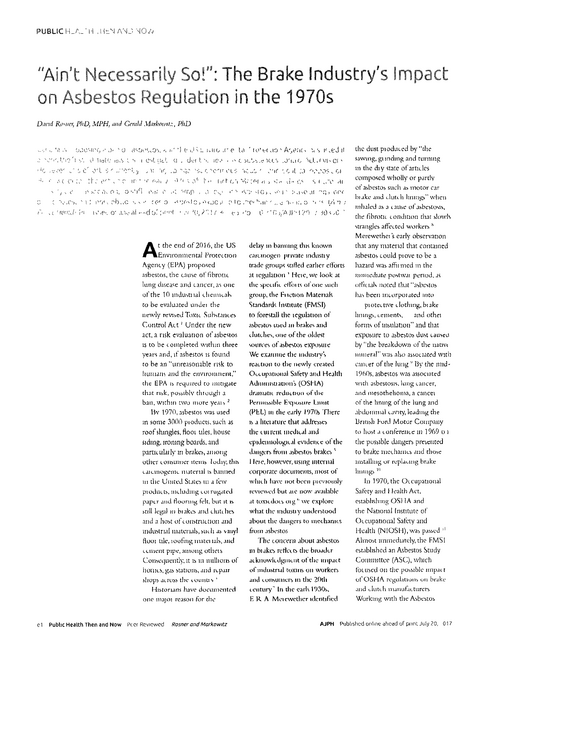
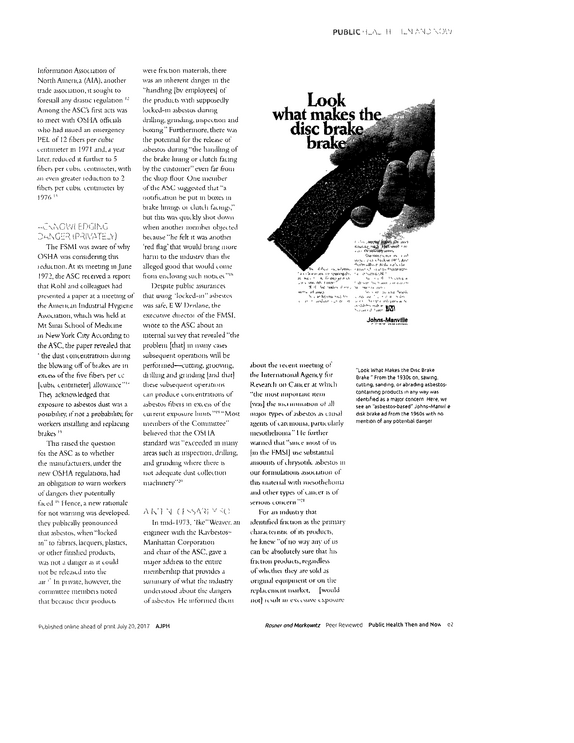
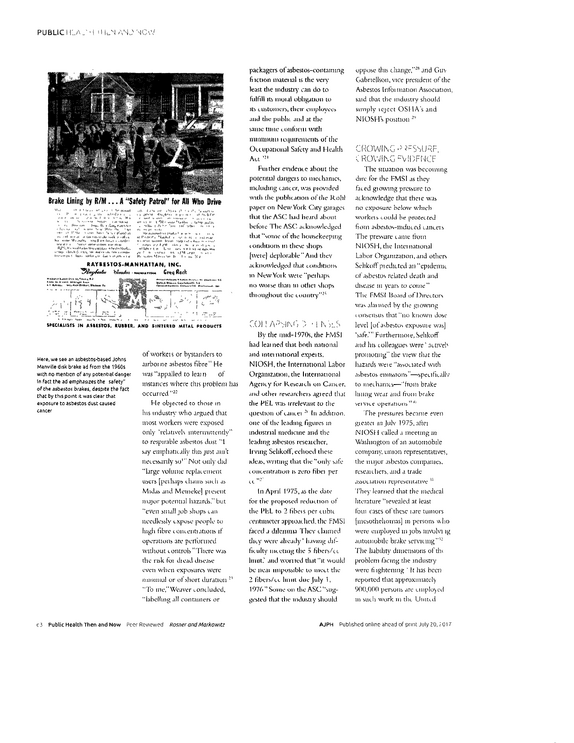
FILE NAME Brakes BRK DATE 2017 DOC BRK257 DOCUMENT DESCRIPTION Journal Article - The Brake Industry's Impact on Asbestos Regulation in the 1970s PUBLIC H_A_H HENAND HENAND NOW Ain't Necessarily So The Brake Industry's Impact on Asbestos Regulation in the 1970s David Rosner PhD MPH and Gerald Markowitz PhD Ys ODORING ADA NO foe Pestate Pestate Pestate asbestos a #ledSimiore #ledSimiore #ledSimiore la koku^Agencies Agencies Kedil 68 get a dere dere fl- - - KES Ac h OMES CE every every every every every aC 22 ae LOOT CLS WS Se Leah La os 4 5 * Get the err oT Dap tor ean 94rton 94rton 94rton McS McS McS McS McS McS SET at Sys e soot 0409fleur 0409fleur 0409fleur smp 2 OR KO) OEY ane ah ta cre Co ft TE ABC SS << A >>>>> >>>>> Pec Heach P wet or anval anval p20 p20 2017 < plecaMKOY plecaMKOY plecaMKOY plecaMKOY plecaMKOY plecaMKOY AN OC > C A 120 / 70 At the end of 2016 the US At Protection Agency EPA proposed asbestos the cause of fibrotic lung disease and cancer as one of the 10 industrial chemicals to be evaluated under the newly revised Toxic Substances Control Act Under the new act a risk evaluation ofasbestos is to be completed within three years and if asbestos is found to be an unreasonable risk to humans and the envirominent the EPA is required to mitigate that risk possibly through a 2 ban within two more years By 1970 asbestos was used in some 3000 products such as roof shingles floor tiles house siding ironing boards and particularly in brakes among other consumer items Today this carcinogenic material is banned in the United States in a few products including corrugated paper and flooring felt but it is still legal in brakes and clutches and a host of construction and Industrial materials such as vinyl floor tile 100fing materials and coment pipe among others Consequently it in mullions of honics gas stations and repair shops across the country Historians have documented one major reason for the delay in banning this known carcinogen private industry trade groups stifled earlier efforts 1 at regulation Here we look at the specific efforts of one such group the Fiction Materials Standards Institute FMSI to forestall the regulation of asbestos used in brakes and clutches one ofthe oldest sources of asbestos exposure We examine the industry's reaction to the newly created Occupational Safety and Health Administration's OSHA dramatic reduction ofthe Permissible Exposure Limit PEL in the early 1970s There is literature that addresses the current medical and epidemiological evidence ofthe 5 dangers from asbestos brakes Heie however using internal corporate documents most of which have not been previously reviewed but are now available " at toxicdocs org we explore what the industry understood about the dangers to mechanics from asbestos The concern about asbestos in brakes reflects the broader acknowledgment of the impact of industrial toxins on workers and consumers in the 20th century In the early 1930s ERA Merewether identified the dust produced by the sawing grinding and turning in the diy state of articles composed wholly or partly of asbestos such as motor car brake and clutch linings when mhaled as a cause of asbestosIS the fibrotic condition that slowly > strangles affected workers Merewether's Merewether's early observation that any material that contained asbestos could prove to be a hazard was affirmed affirmed in the immediate postwar period as officials noted that asbestos has been incorporated into protective clothing biake linings cements and other forms of insulation and that exposure to asbestos dust caused by the breakdown of the native muneral was also associated with of " cancer the lung By the mid1960s asbestos was associated with asbestosis lung cancer and mesothelioma a cancer of the lining ofthe lung and abdominal cavity leading the British Ford Motor Company to host a conference in 1969 o the possible dangers presented to brake mechanics and those installing or replacing brake 10 linings In 1970 the Occupational Safety and Health Act establishing OSHA and the National Institute of Occupational Safety and 11 Health NIOSwH as passed Almost immediately the FMSI established an Asbestos Study Committee ASC which focused on the possible impact of OSHA regulations on brake and clutch manufacturers Working with the Asbestos e1 Public Health Then and Now Peer Reviewed Rosner and Markowitz AJPH Published online ahead of print July 20 017 PUBLIC LAm 11 NOW NOW Information Association of North America AIA another trade association it sought to forestall any drastic regulation Among the ASC's first acts was to meet with OSHA officials who had issued an emergency PEL of 12 fibers per cubic centimeter in 1971 and a year later reduced it further to 5 fibers per cubic centimeter with an even greater reduction to 2 fibers per cubic centimeter by 1976 mA NOWLEDGING NOWLEDGING DANGER PRIVATELY The FSMI was aware of why OSHA was considering this reductioAnt its meeting in June 1972 the ASC received a report that Rohl and colleagues had presented a paper at meeting of the American Industrial Hygiene Association which was held at Mt Sinai School of Medicine in New York City According to the ASC the paper revealed that the dust concentrations during the blowing off of brakes are in excess of the five fibers per cc cubic centimeter allowance They acknowledged that exposure to asbestos dust was a possibility if not a probability for workers installing and replacing brakes This raised the question for the ASC as to whether the manufacturers under the new OSHA regulations had an obligation to warn workers of dangers they potentially faced to Hence a new rationale for not warning was developed they publically pronounced that asbestos when locked in to fabrics lacquers plastics or other finished products was not a danger as it could not be released into the air In private however the committee members noted that because their products were friction materials there was an inherent danger in the handling by employees of the products with supposedly locked asbestos during drilling grinding inspection and boxing Furthermore there was the potential for the release of asbestos during the handling of the brake lining or clutch facing by the customer even far from the shop floor One member of the ASC suggested that " notification be put boxes brake linings on clutch facings but this was quickly shot down when another member objected because he felt it was another red flag that would bring more harm to the industry than the alleged good that would come from enclosing such notices Despite public assurances that using locked asbestos was safe EW Drislane the executive director of the FMSI wrote to the ASC about an internal survey that revealed the problem that in many cases subsequent operations will be performed grooving diilling and grinding and that these subsequent operations can produce concentrations of asbestos fibers in excess of the current exposure limits Most members of the Committee believed that the OSHA standard was exceeded in many areas such as inspection drilling and grinding where there is not adequate dust collection " machinery ANIN PSSARY PSSARY SO In 1973 Ike Weaver an engineer with the RavbestosManhattan Corporation and chair of the ASC gave a major address to the entire membership that provides a summary of what the industry understood about the dangers of asbestos He informed them HOWARD, 2h My 4 Og ome, wpb Pas Retimsh EP tty, ***** ***** ***** 336 336 VOR 8 ged F Bag t^" *** *** *** mange em ad KA Xe at bf rom sat be " tebe un ERB HO A det Oe yore P42 OSaakas MA // Bee B allay Adthe ayes bas ater < > the Oregeee eage Sf we Str Reo FE ****** ****** ****** af ake OPK S gest 9 er eege maxx maxx gig~ ty > das et see stat wade a xxxxx xxxxx *** Wet Segesta we sSaey seach Segesta Segesta /,, Manville about the recent meeting of the International Agency for Research on Cancer at which the most important item was the incimination of all major types ofasbestos as causal agents of carcinoma particularly particularly " mesothelioma He further warned that since most of us in the FMSI use substantial amounts of chrysotik asbestos in our formulations association of this material with mesothelioma and other types of cancer is of 1121 serious concern For an industriyndustry that identified friction as the primary characteristic ofits products he knew of no way any ofus can be absolutely sure that his friction products regardless of whether they are sold as original equipment or on the replacement market would not result in excessive exposure Look What Makes the Disc Brake Brake From the 1930s on sawing cutting sanding or abrading asbestoscontaining products in any way was identified as a major concern Here we see an asbestos Manvil e disk brake ad from the 1960s with no mention of any potential danger Published online ahead of print July 2017 AJPH Rosner and Markowitz Peer Reviewed Public Health Then and Now = -- -- PUBLICIDA PUBLICIDA LH NAND NAND NOW ** eS Fear wt aoe fox Qtnaal >> se di form BE y Sy 8 hadt eas ---- S ios Booger BS ohaty ase CBee x / / /, // /, / / /,, /fiR/F /ap ok vix sts sts ey ange INDO ee of ok * Car Gk ade ed awed a ifs ***** ***** hy matty SONI?
refid# 6a2gOMy3vdk8gxx4DEL5NkY16 pages
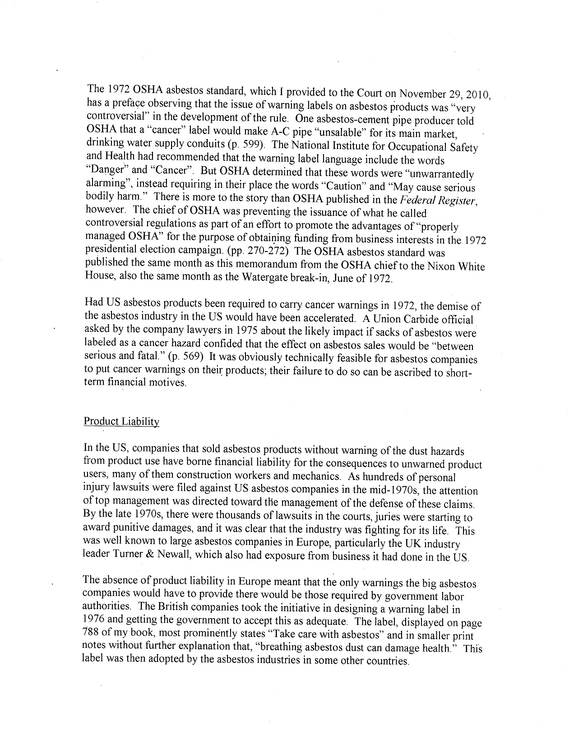
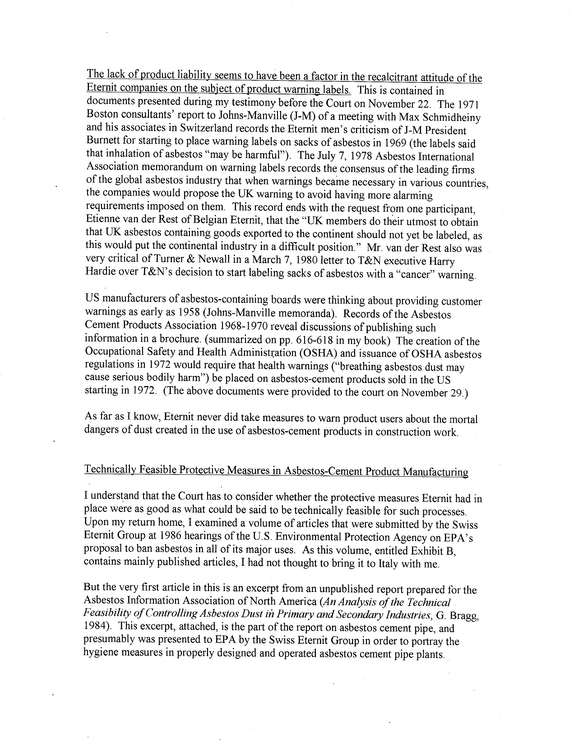
But the very first article in this is an excerpt from an unpublished report prepared for the Asbestos Information Association o f North America {An Analysis o f the Technical Feasibility o f Controlling Asbestos Dust in Primary and Secondary Industries, G.
refid# g2NyjrVV2E4x6xbLrjBBkqLa37 pages
In order to foster its interests, it had set up a powerful trade body in the 1970s called the Asbestos Information Association (AIA).
refid# g25Mw4YRmmY99RZG470g9mo2V13 pages
In order to foster its interests, it had set up a powerful trade body in the 1970s called the Asbestos Information Association (AIA).
refid# QJ6O5g5KVXZVk2aR8g12oGMdv13 pages
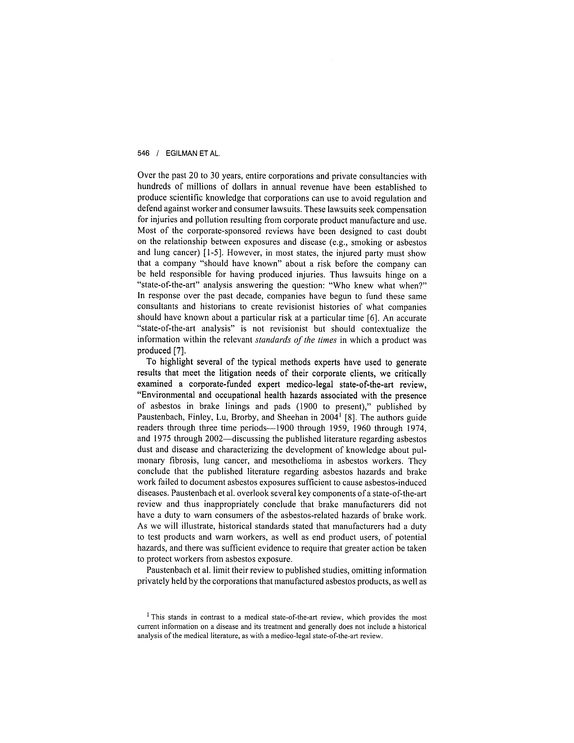
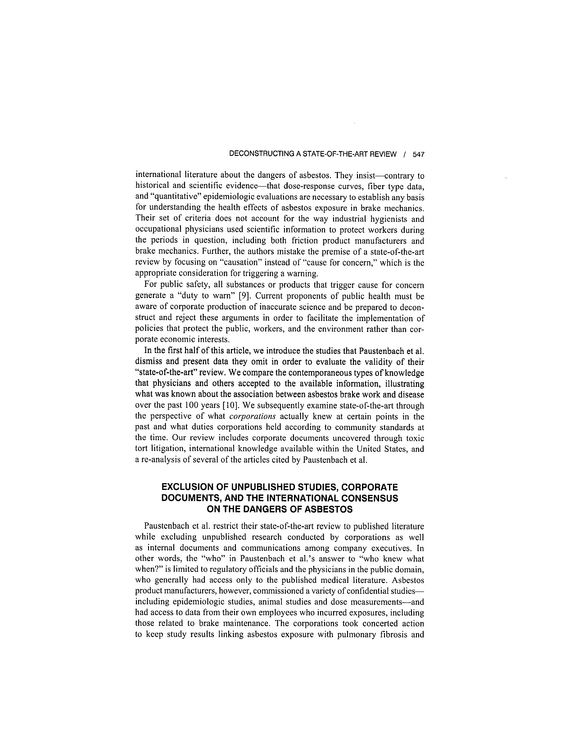
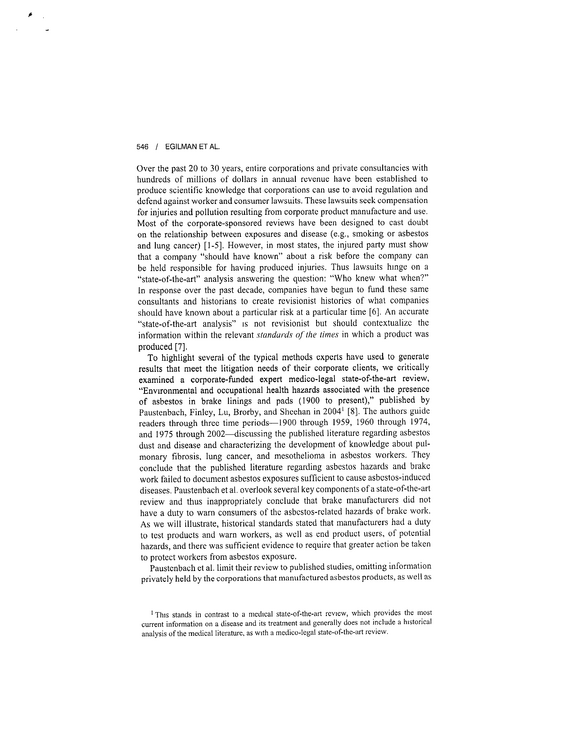
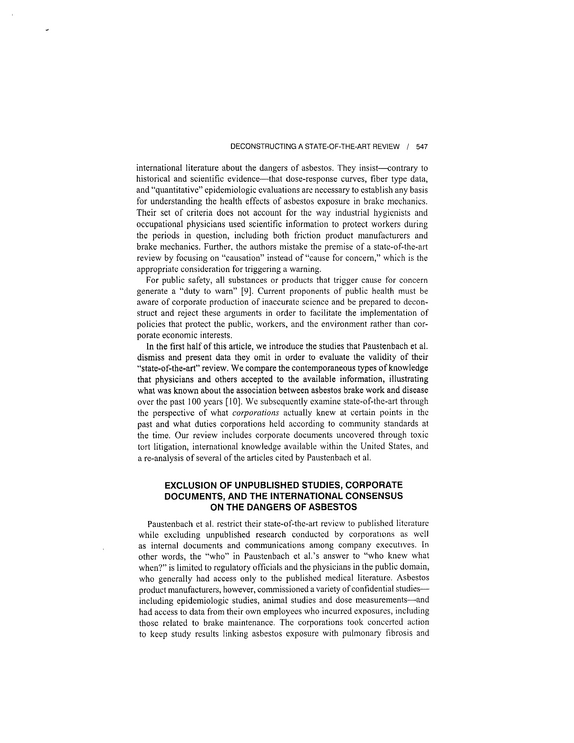
Paustenbach and his authors omit this information despite having access to these discovery materials Limiting an analysis to published information is particularly inappropriate in this case since the brake manufacturers concealed knowledge and published misinformation about the risks of asbestos exposure Corporate documents reveal that the brake companies knew more about the risks to brake mechanics than did the medical and regulatory sectors This information includes speeches and minutes from meetings of the Friction Manufacturing Standards Institute FMSI and personal correspondence among company executives industrial hygiene consultants and representatives from industrysponsored asbestos research institutes Appendix 1 lists some of the documents omitted from Paustenbach et al.'
refid# xjp1eMeXYawQXVQBwg2jeB5rg24 pages
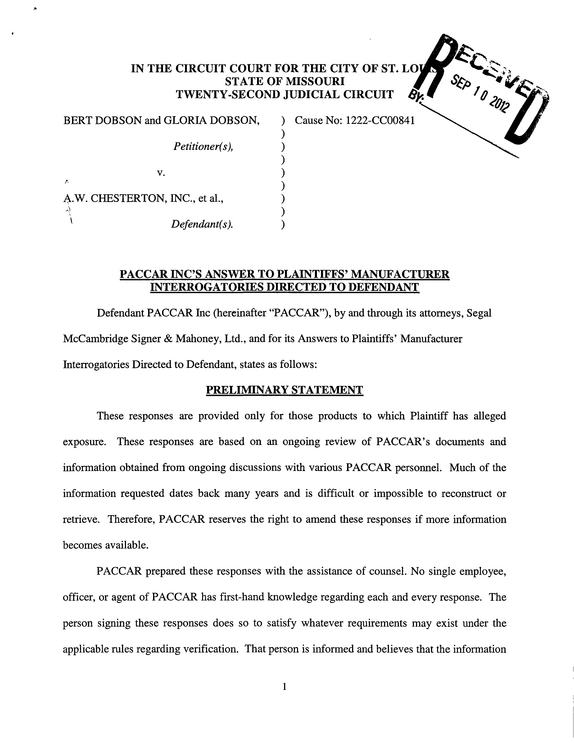
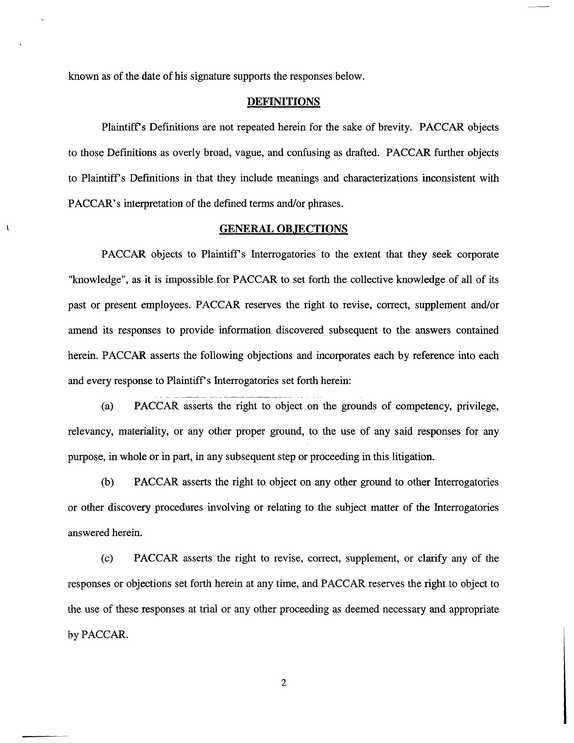
CHESTERTON INC et al ) \ Defendant ) ECEIVE ECEIVE ECEIVE 2012 , PACCAR INC'S ANSWER TO PLAINTIFFS MANUFACTURER INTERROGATORIES DIRECTED TO DEFENDANT Defendant PACCAR Inc hereinafter PACCAR by and through its attorneys Segal McCambridge Signer & Mahoney Ltd. and for its Answers to Plaintiffs Manufacturer Interrogatories Directed to Defendant states as follows PRELIMINARY STATEMENT These responses are provided only for those products to which Plaintiff has alleged exposure These responses are based on an ongoing review of PACCAR's documents and information obtained from ongoing discussions with various PACCAR personnel Much of the information requested dates back many years and is difficult or impossible to reconstruct or retrieve Therefore PACCAR reserves the right to amend these responses if more information becomes available PACCAR prepared these responses with the assistance of counsel No single employee officer or agent of PACCAR has hand knowledge regarding each and every response The person signing these responses does so to satisfy whatever requirements may exist under the applicable rules regarding verification That person is informed and believes that the information known as of the date of his signature supports the responses below DEFINITIONS Plaintiff's Definitions are not repeated herein for the sake of brevity PACCAR objects to those Definitions as overly broad vague and confusing as drafted PACCAR further objects to Plaintiff's Definitions in that they include meanings and characterizations inconsistent with PACCAR's interpretation of the defined terms and phrases GENERAL OBJECTIONS PACCAR objects to Plaintiff's Interrogatories to the extent that they seek corporate knowledge as it is impossible for PACCAR to set forth the collective knowledge of all of its past or present employees PACCAR reserves the right to revise correct supplement and amend its responses to provide information discovered subsequent to the answers contained herein PACCAR asserts the following objections and incorporates each by reference into each and every response to Plaintiff's Interrogatories set forth herein a PACCAR asserts the right tto o object on the grounds of competency privilege relevancy materiality or any other proper ground to the use of any said responses for any purpose in whole or in part in any subsequent step or proceeding in this litigation b PACCAR asserts the right to object on any other ground to other Interrogatories or other discovery procedures involving or relating to the subject matter of the Interrogatories answered herein c PACCAR asserts the right to revise correct supplement or clarify any of the responses or objections set forth herein at any time and PACCAR reserves the right to object to the use of these responses at trial or any other proceeding as deemed necessary and appropriate by PACCAR d PACCAR objects to the Plaintiff's Interrogatories to the extent that they involve matters outside of the geographical area at issue in this litigation and limits its responses to said area e Furthermore these Interrogatories ask PACCAR to disclose information of which may no longer exist or may not be readily available is unrelated to the products which Plaintiff alleges exposure to in this litigation and information which is also unrelated to the locations at which any PACCAR product was allegedly used the conditions under which the products were allegedly used the time period during which any PACCAR product was allegedly in use at any alleged work sites or the time periods during which exposure to a PACCAR product allegedly occurred Thus these Interrogatories seek information which is neither material nor relevant to the issues in this litigation are overly broad in time scope and location and are otherwise not reasonably calculated to lead to the discovery of admissible evidence f These Interrogatories are oppressive and burdensome and would require PACCAR to undertake a massive and extraordinary document search the results of which would have little to no demonstrable bearing on this litigation in light of the alleged exposure Moreover many of these Interrogatories are not susceptible to a response because they request information which dates back many years and is now virtually impossible for PACCAR to reconstruct or retrieve in its entirety g PACCAR objects to these Interrogatories because they were propounded to harass and coerce a settlement despite the lack or complete absence of verifiable product identification and the lack of evidence of injury as a result of alleged exposure to or use of any product which PACCAR may or may not have manufactured h PACCAR objects to these Interrogatories because they are propounded for an additional improper purpose namely as a fishing expedition for the purposes of obtaining information that may be taken out of context by Plaintiff's counsel to create allegations against PACCAR where none may legitimately exist ) PACCAR objects to these Interrogatories as overly broad in that they seek information from entities other than itself or its predecessors PACCAR over the course of its long history has owned several businesses which are not involved in the instant litigation Therefore all references in these Interrogatories to YOU YOUR COMPANY and THIS DEFENDANT are assumed to refer only to PACCAR's unincorporated truck divisions Kenworth Truck Company and Peterbilt Motors Company ( PACCAR objects to each and every Interrogatory that seeks production of any information constituting a trade secret confidential financial data or other confidential research development or commercial information k PACCAR objects on the basis that these Interrogatories are argumentative because they assume that a health hazard is created by the PACCAR products that may have incorporated containing component parts which PACCAR denies 1 PACCAR objects to these Interrogatories on the basis that they are vague and ambiguous The Interrogatories relating to certain diseases fail to provide facts relating to the amount of exposure duration of exposure fiber type in exposure and latency period m PACCAR objects to these Interrogatories in that they tend to group together all of the defendants in this litigation and are therefore overly broad unduly burdensome harassing and not calculated to lead to the discovery of relevant and material evidence n PACCAR objects to each and every Interrogatory that calls for either pure speculation or legal conclusions on the part of PACCAR for its answers o PACCAR objects to these Interrogatories to the extent that they call for a medical conclusion beyond the scope of PACCAR's knowledge and capability p PACCAR objects to each and every Interrogatory that purports to impose any obligations on it that are not set forth in the Missouri Rules of Civil Procedure q PACCAR objects to these Interrogatories to the extent that they seek information protected by the attorney client privilege or attorney work product doctrine \ r PACCAR objects to these Interrogatories to the extent that they seek disclosure of information generated by persons other than PACCAR that has come into the possession of PACCAR's counsel during the course of discovery and trial preparation in asbestos litigation s PACCAR objects to these Interrogatories to the extent that they seek information for any period subsequent to Bert Dobson's alleged exposure t PACCAR objects to these Interrogatories to the extent that they seek information that is not under PACCAR's custody or control or which is within the public domain or otherwise equally available to Plaintiff as it is to PACCAR Without waiving any of the foregoing objections PACCAR states as follows PACCAR'S ANSWERS TO INTERROGATORIES INTERROGATORY NO 1 Describe the manner in which the information used to answer these interrogatories was collected by identifying any and all such sources of information relied upon including records or documents reviewed records or documents determined to have been destroyed document retention policies persons providing information and overseeing the process and the person verifying the answers ANSWER PACCAR objects this Interrogatory is overly broad not limited in scope vague and confusing as drafted PACCAR further objects to the extent that this Interrogatory seeks information protected by the attorney privilege the attorney work product doctrine and the consulting expert privilege Subject to and without waiving objection Rod Curbo Product Safety and Compliance Manager for Peterbilt Motors Company has verified these answers and has supplied responsive information Mr.

refid# zb5Dmk5XM3G6q6ewbgXO0bNbB43 pages
YOUR use of RAW ASBESTOS and/or ASBESTOS CONTAINING H PRODUCTS; 15 C.
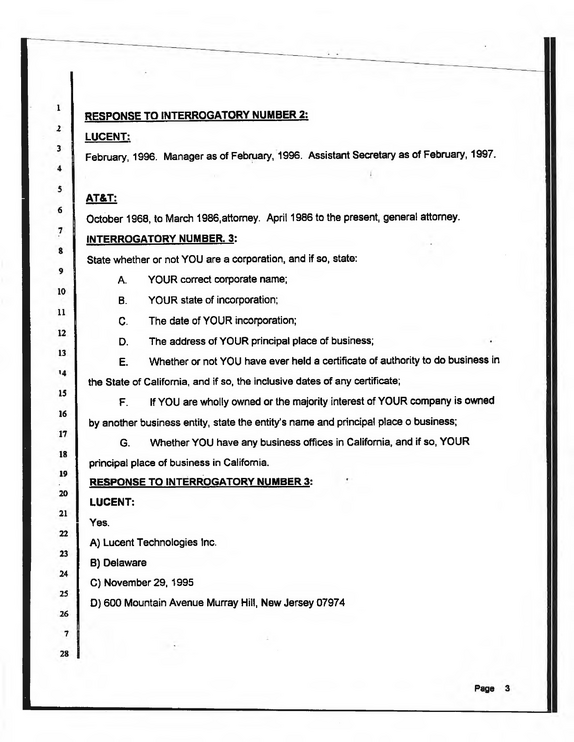
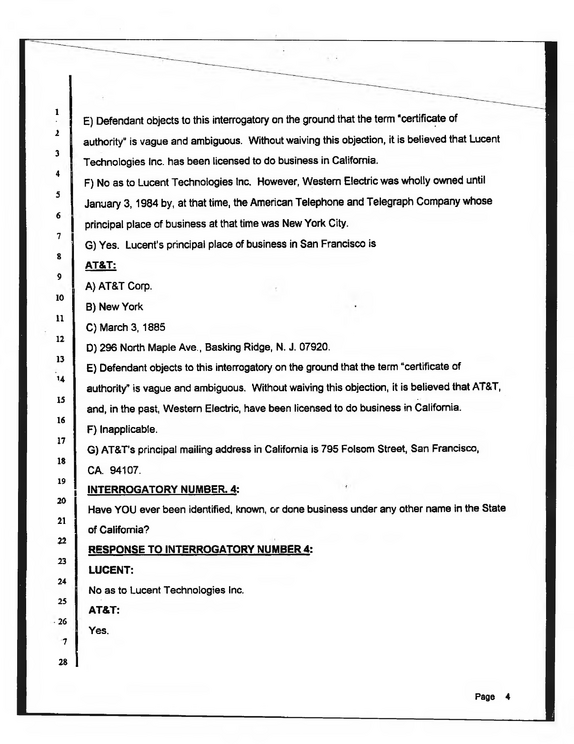
refid# MY3do7adjk18rgpKgY73pXV973 pages
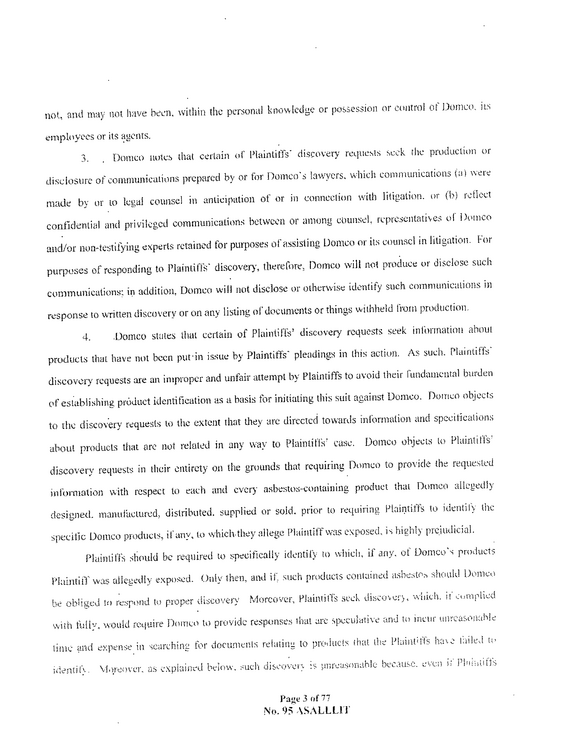
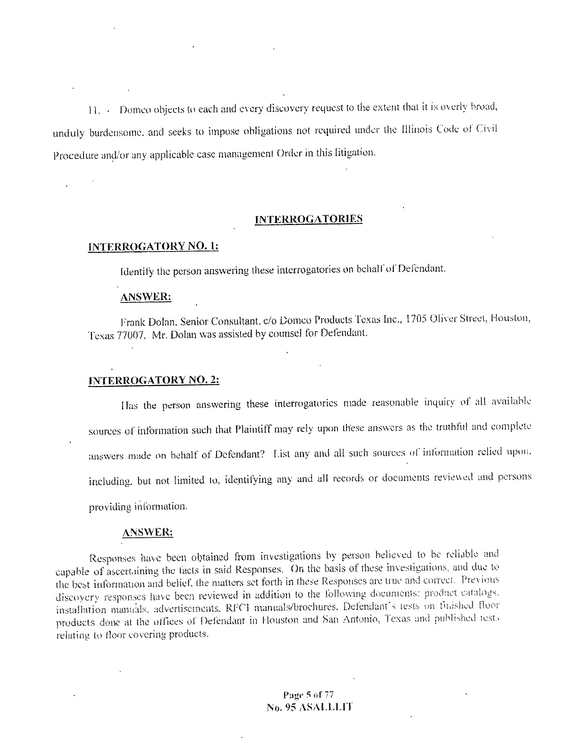
Defendant objects to this interrogatory became the requested information is be vend ihe scope of information relevant to Avrock lodustnes. n W Domco 1redacts [ecus Inc., end is -tot relevant or reasonably calculated to lead to the discovery ol admissible evidence.
refid# Zmvw01aB27bj787MgDpYzabJ74 pages
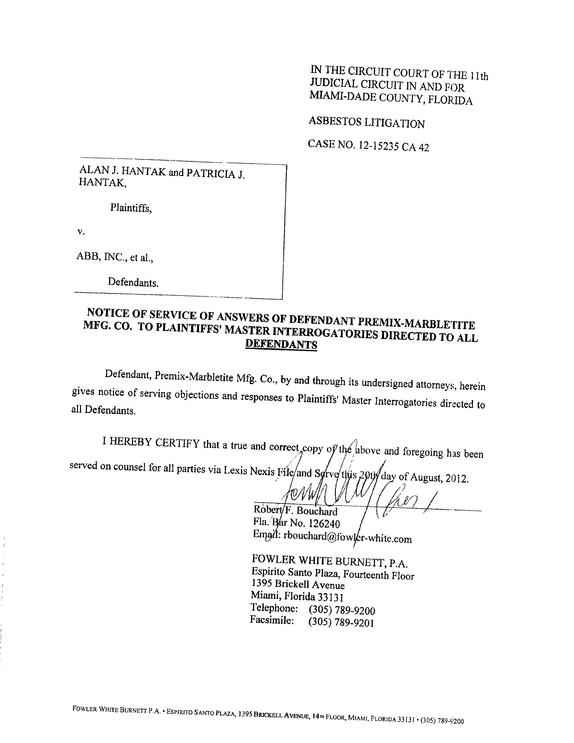
ABB INC et Defendants ASBESTOS LITIGATION CASE NO 12-15235 CA 42 DEFENDANT PREMIX MARBLETITE MANUFACTURING CO.'
refid# nm10yZzMVvJRQXYKzY6eX7pD198 pages
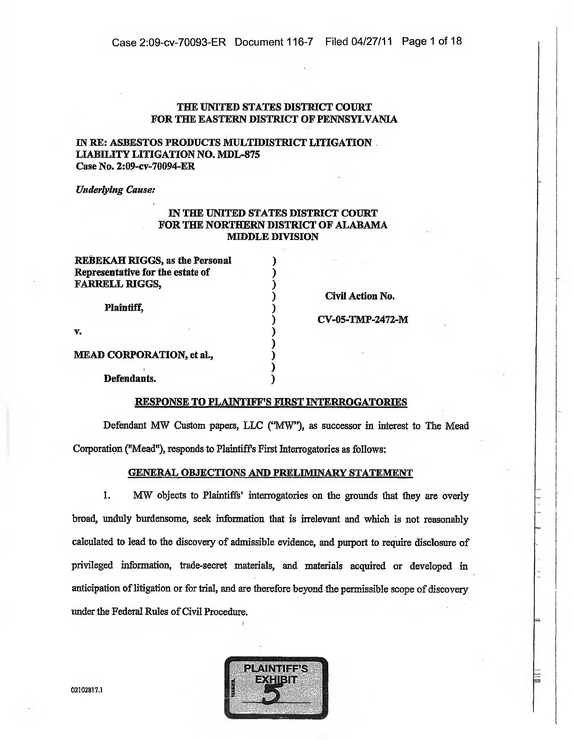
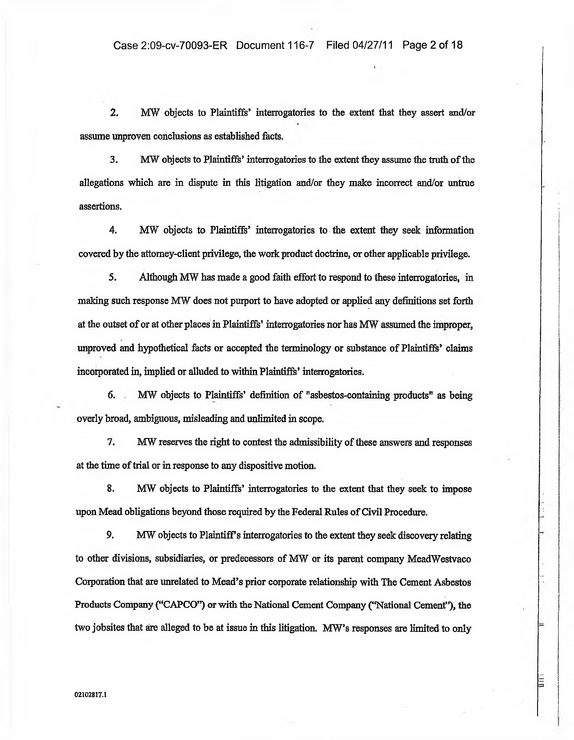
MW is in possession o f no documents or information that indicate that there was an asbestos component to any gaskets sold by M urray to CAPCO.
refid# 1Qwy8K8egZVLqvLj26zMObXK564 pages
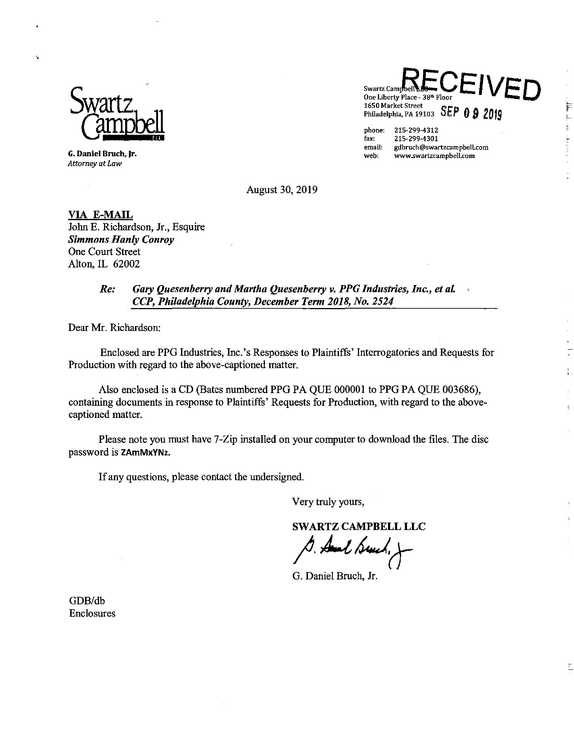
Therefore, some information may be incomplete, no longer available, or not within PPG's possession or control.
refid# VjDBd4o7vB4y589wny6JDj8kq70 pages
Paustenbach and his authors omit this information despite having access to these discovery materials Limiting an analysis to published information is particularly inappropriate in this case since the brake manufacturers concealed knowledge and published misinformation about the risks of asbestos exposure Corporate documents reveal that the brake companies knew more about the risks to brake mechanics than did the medical and regulatory sectors This information includes speeches and minutes from meetings of the Friction Manufacturing Standards Institute FMSI and personal correspondence among company executives industrial hygiene consultants and representatives from industrysponsored asbestos research institutes Appendix 1 lists some of the documents omitted from Paustenbach et al.'
refid# N22Xjb7YOVnXQk1VNnzx5505y28 pages