Refine
Estimated Years 2010-2019Clear
5,288 results foundRefine Search
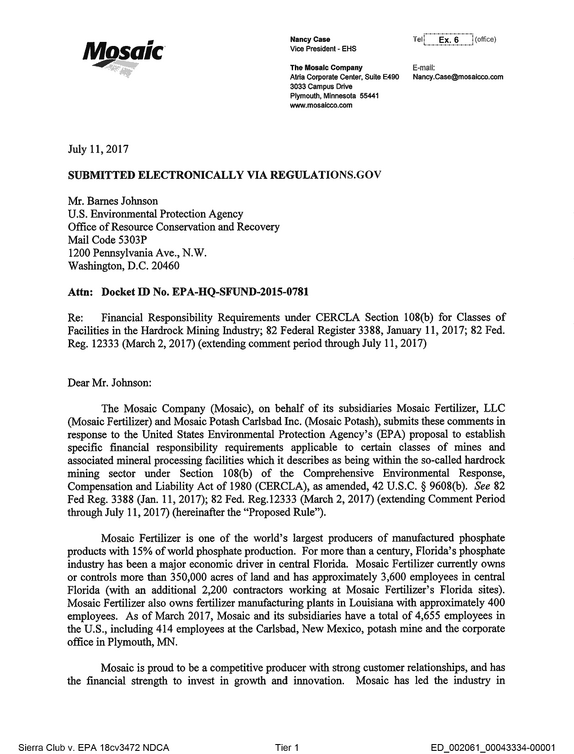
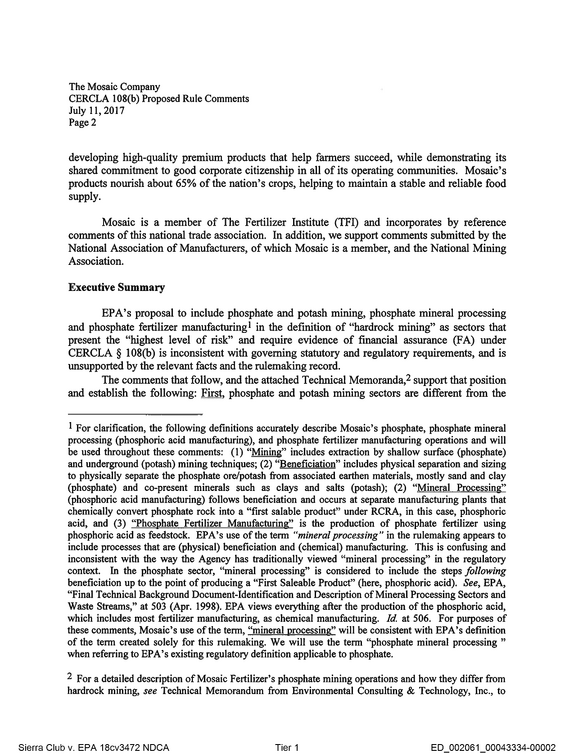
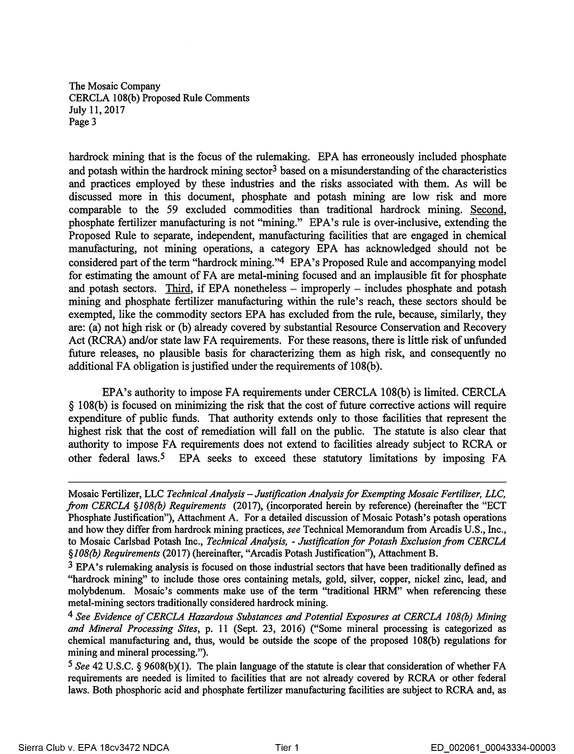
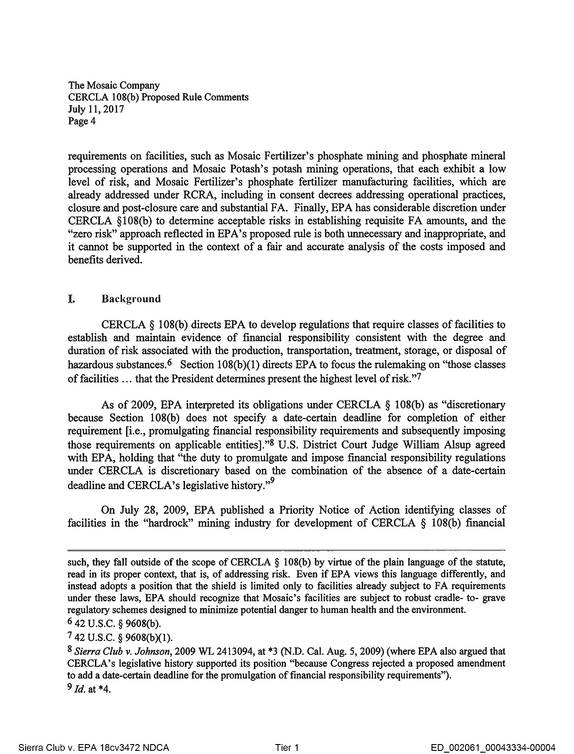
., Technical Analysis, - Justification fo r Potash Exclusion from CERCLA 108(b) Requirements (2017) (hereinafter, "Arcadis Potash Justification"), Attachment B. 3 EPA's rulemaking analysis is focused on those industrial sectors that have been traditionally defined as "hardrock mining" to include those ores containing metals, gold, silver, copper, nickel zinc, lead, and molybdenum.
refid# jRoDJmrzvp3vxBbyOyn0VmNO86 pages
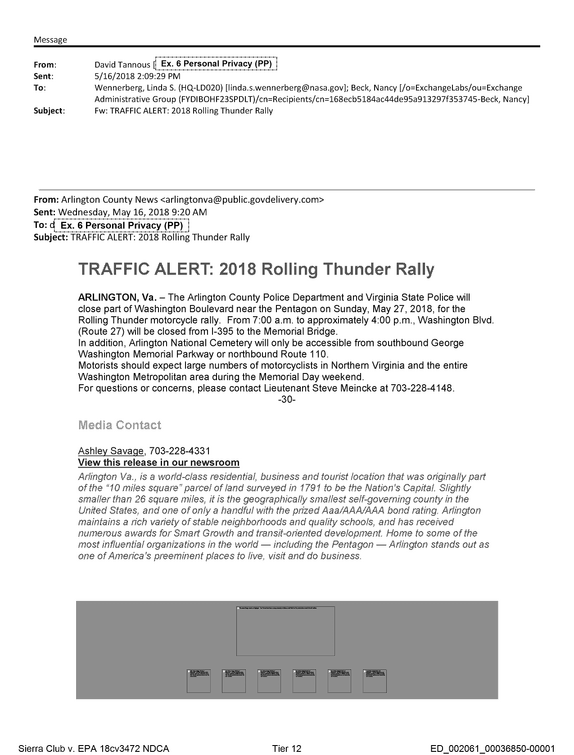
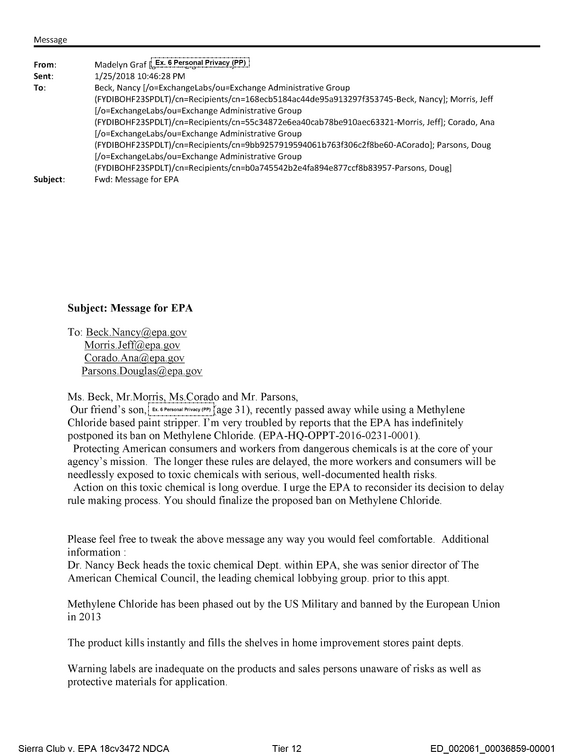
Nancy Beck heads the toxic chemical Dept, within EPA, she was senior director o f The American Chemical Council, the leading chemical lobbying group, prior to this appt.
refid# oDva5BR8vo1bGoaj3re70L2JD1,026 pages
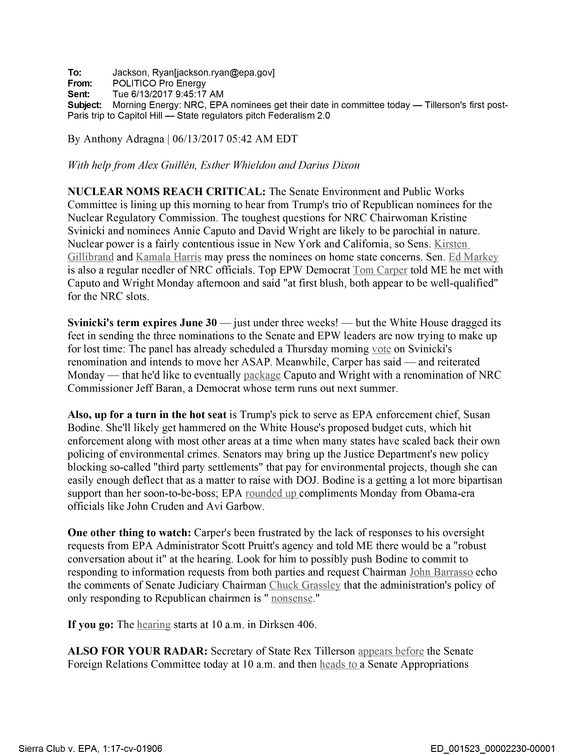
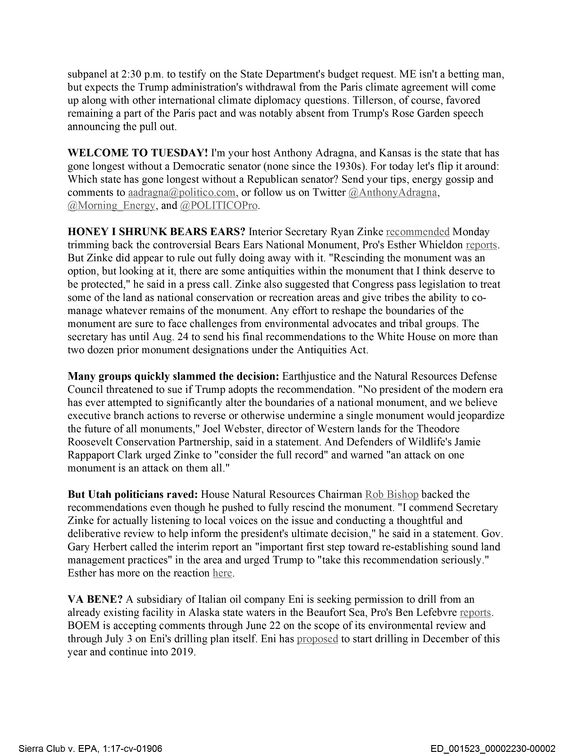
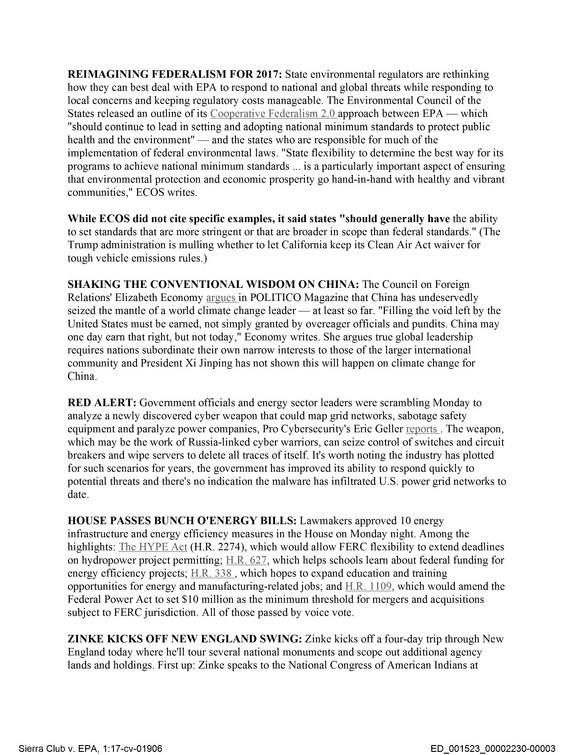
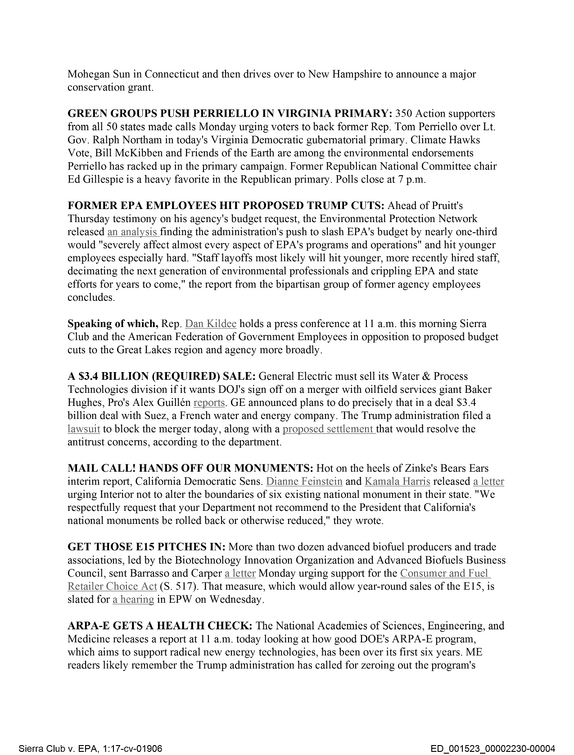
The Environmental Council of the States released an outline of its Cooperative Federalism 2,0 approach between EPA -- which "should continue to lead in setting and adopting national minimum standards to protect public health and the environment" -- and the states who are responsible for much of the implementation of federal environmental laws.
refid# 158wokz9XNwQ682kNQ6E0oJbX18 pages
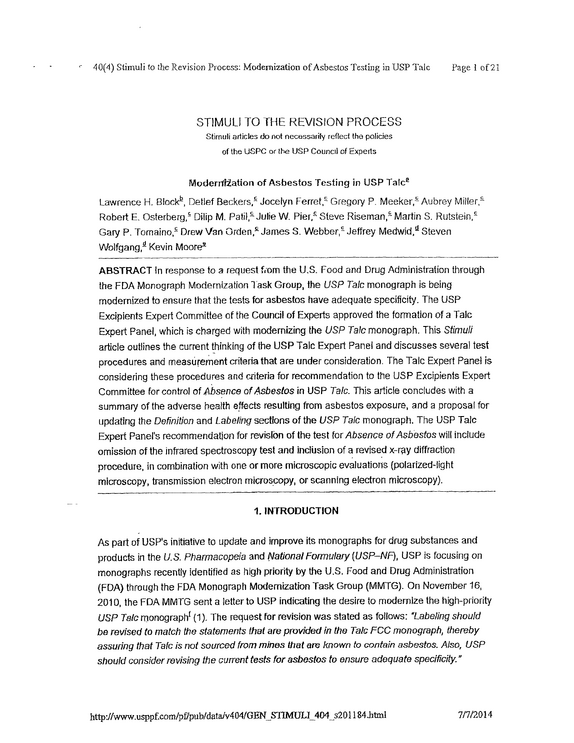
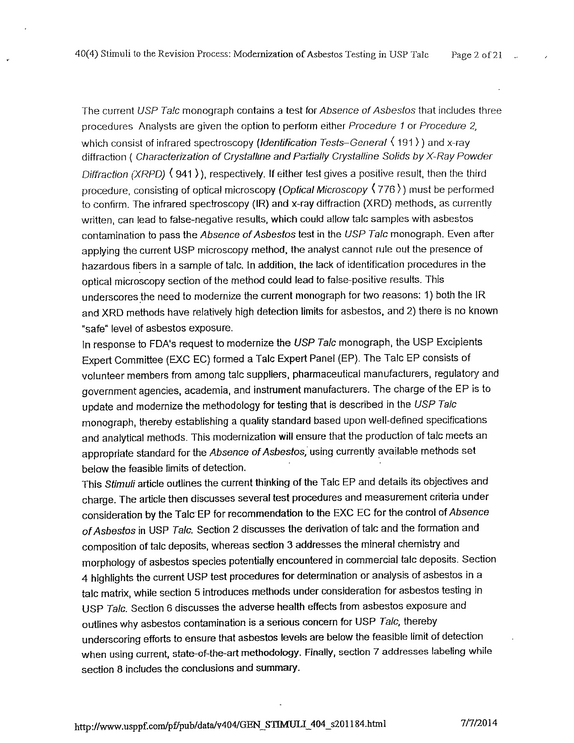
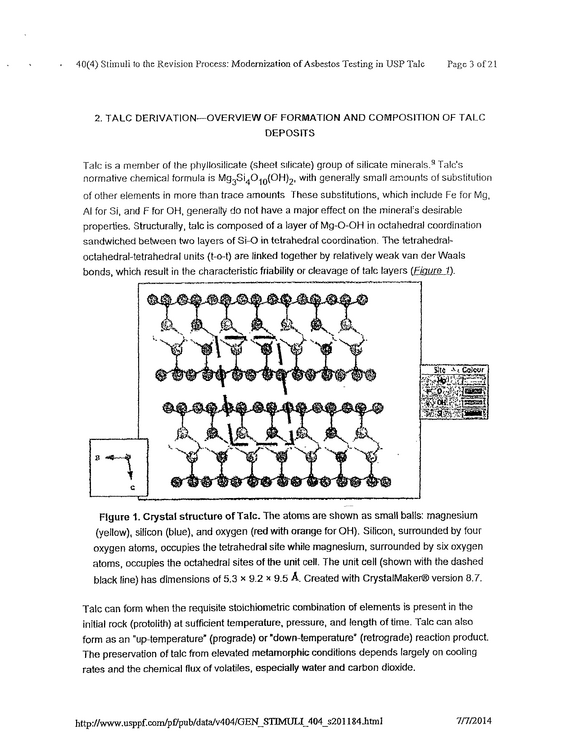
Food and Drug Administration FDA through the FDA Monograph Modernization Task Group MMTG On November 16 2010 the FDA MMTG sent a letter to USP indicating the desire to modernize the priority USP Talc monograph1 The request for revision was stated as follows Labeling should be revised to match the statements that are provided in the Talc FCC monograph thereby assuring that Talc is not sourced from mines that are known to contain asbestos Also USP should consider revising the current tests for asbestos to ensure adequate specificity http://www.usppf.com/pf/pub/data/y404/GEN_STIMULI_404_s20htp:/w1.uspf.com/pf1ub/dat/y40/GEN8_STIMUL_40s204184.html .html htp:/ww.uspf.com/pf/pub/data/y404/GEN_STIMULI_404_s20184.html 7/7/2014 40 Stimuli to the Revision Process Modernization of Asbestos Testing in USP Talc Page 2 of 21 The current USP Talc monograph contains a test for Absence of Asbestos that includes three procedures Analysts are given the option to perform either Procedure 1 or Procedure 2 which consist of infrared spectroscopy Identification General 191 ) and ray diffraction ( Characterization of Crystalline and Partially Crystalline Solids by Ray Powder Diffraction XRPD ( 941 ) respectively If either test gives a positive result then the third procedure consisting of optical microscopy Optical Microscopy 776 ) must be performed to confirm The infrared spectroscopy IR and ray diffraction XRD methods as currently written can lead to negative results which could allow talc samples with asbestos contamination to pass the Absence of Asbestos test in the USP Talc monograph Even after applying the current USP microscopy method the analyst cannot rule out the presence of hazardous fibers in a sample of talc In addition the lack of identification procedures in the optical microscopy section of the method could lead to positive results This underscores the need to modernize the current monograph for two reasons ) both the IR and XRD methods have relatively high detection limits for asbestos and 2 there is no known safe level of asbestos exposure In response to FDA's request to modernize the USP Talc monograph the USP Excipients Expert Committee EXC EC formed a Talc Expert Panel EP The Talc EP consists of volunteer members from among talc suppliers pharmaceutical manufacturers regulatory and government agencies academia and instrument manufacturers The charge of the EP is to update and modernize the methodology for testing that is described in the USP Talc monograph thereby establishing a quality standard based upon defined specifications and analytical methods This modernization will ensure that the production of talc meets an appropriate standard for the Absence of Asbestos using currently available methods set ; below the feasible limits of detection This Stimuli article outlines the current thinking of the Talc EP and details its objectives and charge The article then discusses several test procedures and measurement criteria under consideration by the TalEcP for recommendation to the EXC EC for the control of Absence of Asbestos in USP Talc Section 2 discusses the derivation of talc and the formation and composition of talc deposits whereas section 3 addresses the mineral chemistry and morphology of asbestos species potentially encountered in commercial talc deposits Section 4 highlights the current USP test procedures for determination or analysis of asbestos in a talc matrix while section 5 introduces methods under consideration for asbestos testing in USP Talc Section 6 discusses the adverse health effects from asbestos exposure and outlines why asbestos contamination is a serious concern for USP Talc thereby underscoring efforts to ensure that asbestos levels are below the feasible limit of detection when using current state methodology Finally section 7 addresses labeling while section 8 includes the conclusions and summary http://www.usppf.com/pf/pub/data/v404/GEN_STIMULI_404_s201184.html 7/7/2014 40 Stimuli to the Revision Process Modernization of Asbestos Testing in USP Talc Page 3 of 21 2.
refid# 7Vxek7XxxpJNyzXjMV0RB5qV22 pages
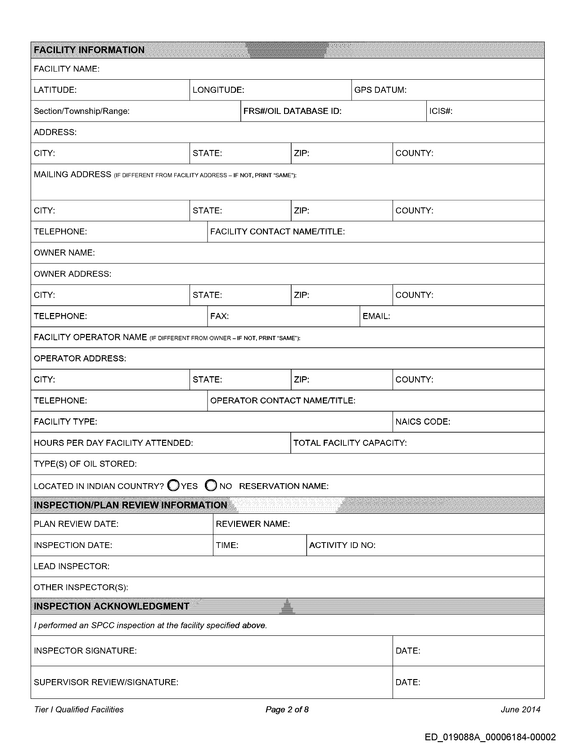
YES NO RESERVATION NAME: INSPECTION/PLAN REVIEW INFORMATION PLAN REVIEW DATE: 09/15/2023 REVIEWER NAME: Mark Aaron INSPECTION DATE: 08/17/2023 TIME: 15:30 ACTIVITY ID NO: SPCC-MO-2023-00024 LEAD INSPECTOR: Mark Aaron OTHER INSPECTOR(S): Jeff Pritchard INSPECTION ACKNOWLEDGMENT I performed an SPCC inspection at the facility specified above.
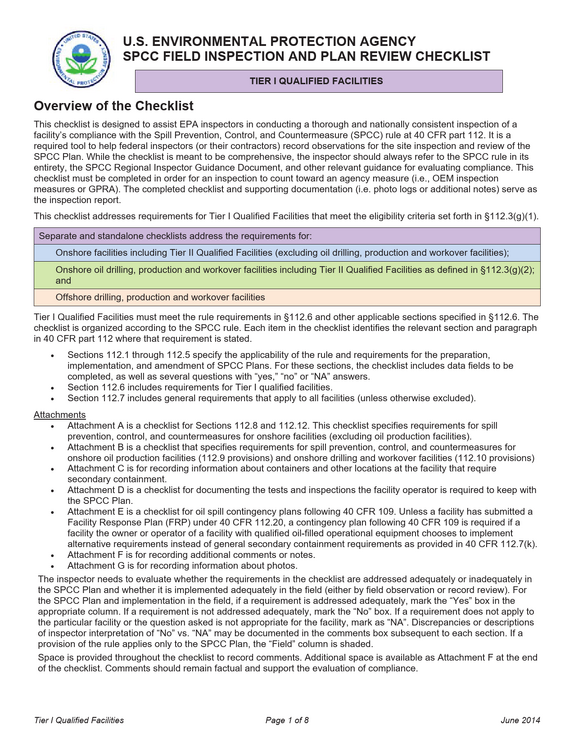
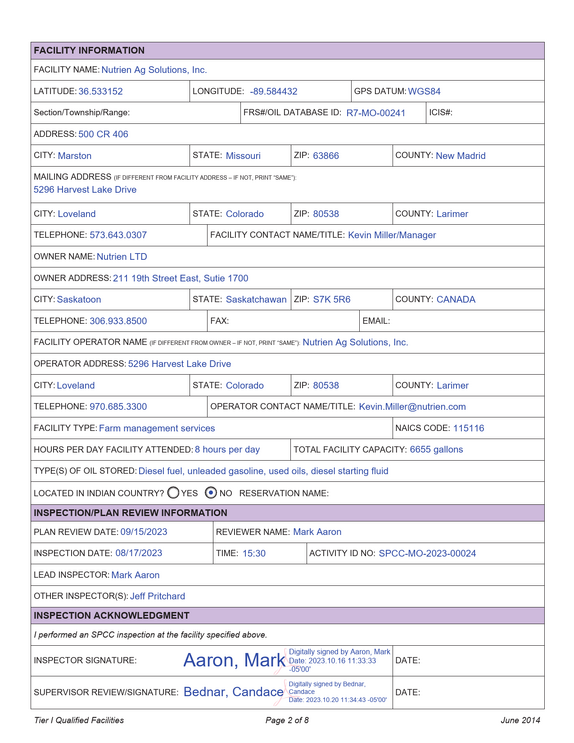
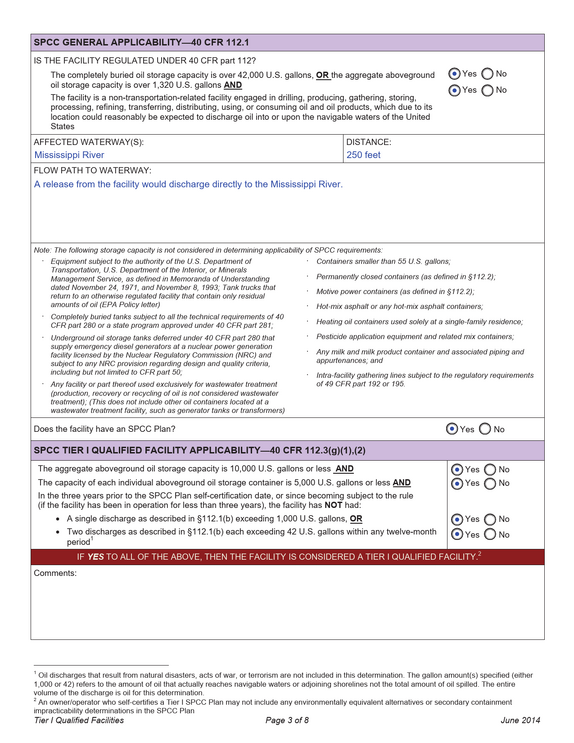
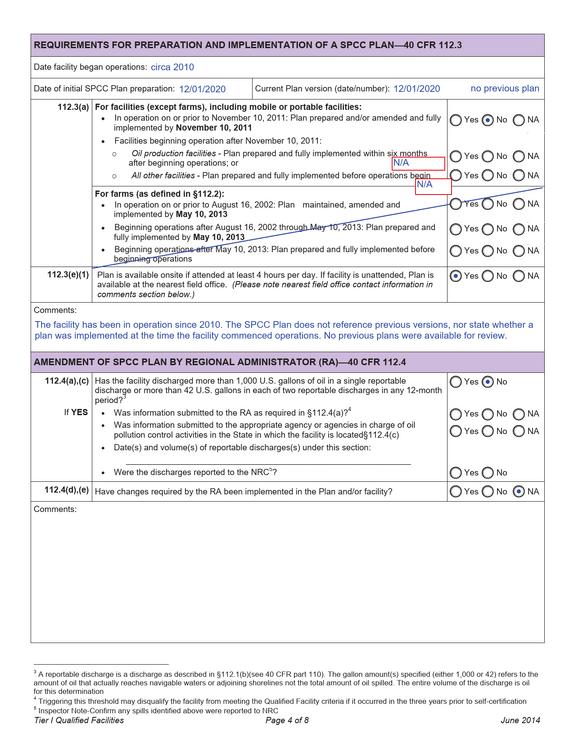
refid# mGMz3JQwo2MgZpaDj4ankQdZ24 pages
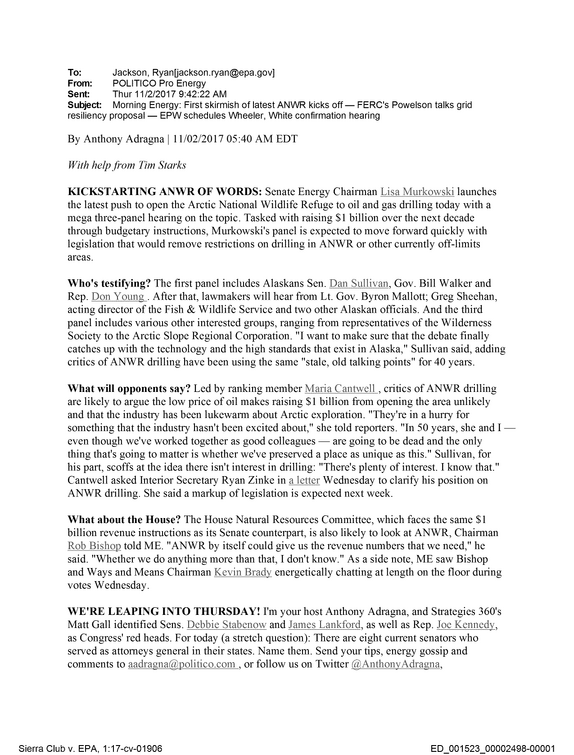
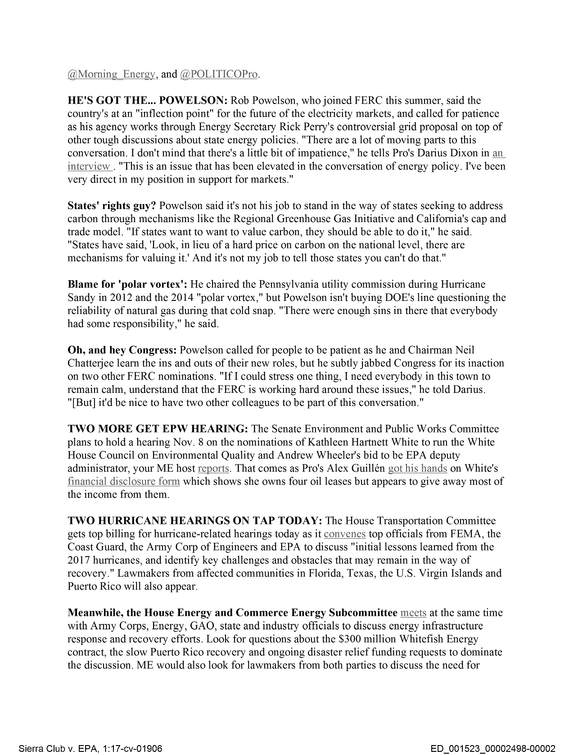
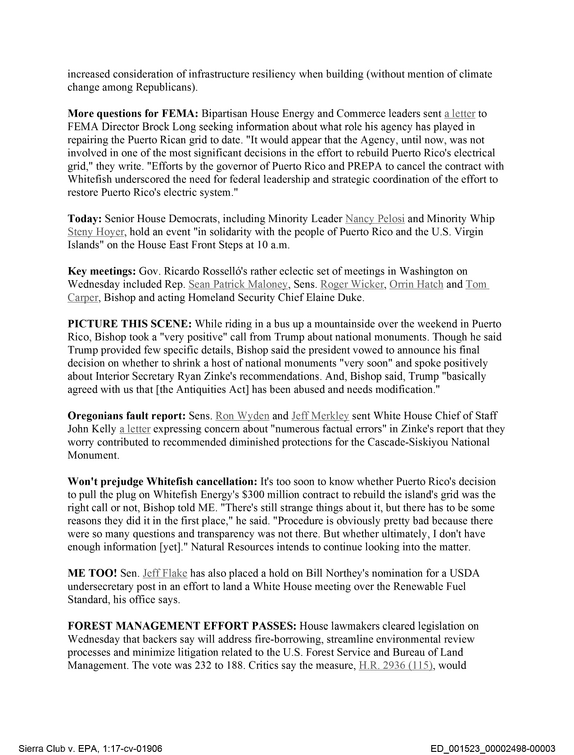
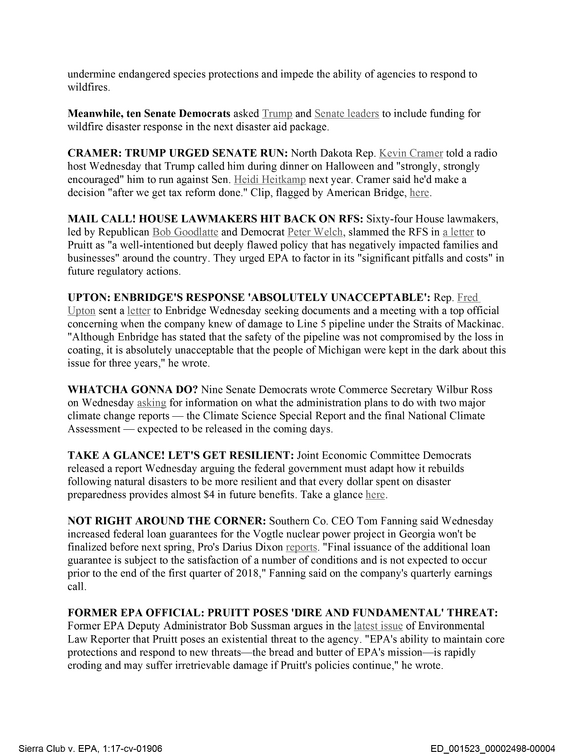
To: Jackson, Ryan[jackson.ryan@epa.gov] From: POLITICO Pro Energy Sent: Thur 11/2/2017 9:42:22 AM Subject: Morning Energy: First skirmish of latest ANWR kicks off-- FERC's Powelson talks grid resiliency proposal -- EPW schedules Wheeler, White confirmation hearing By Anthony Adragna | 11/02/2017 05:40 AM EDT With help from Tim Starks KICKSTARTING ANWR OF WORDS: Senate Energy Chairman Lisa Murkowski launches the latest push to open the Arctic National Wildlife Refuge to oil and gas drilling today with a mega three-panel hearing on the topic.
refid# RjejZrm8jkw9nryRr4oyo64aV19 pages
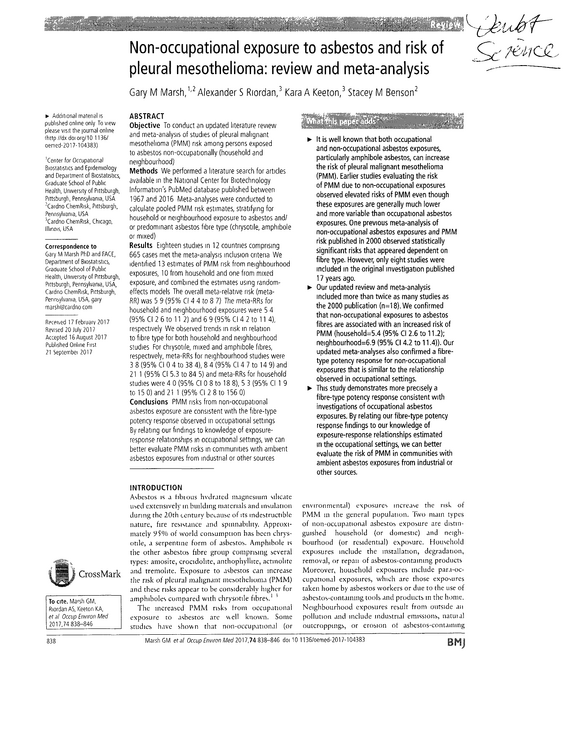
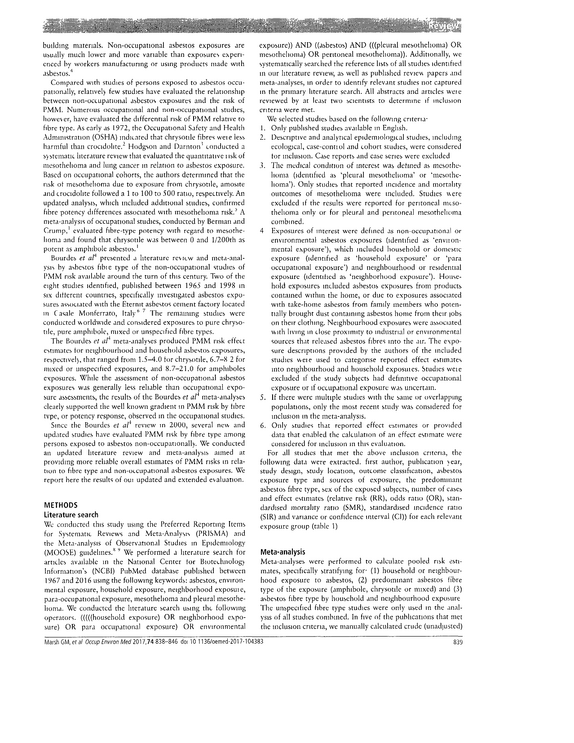
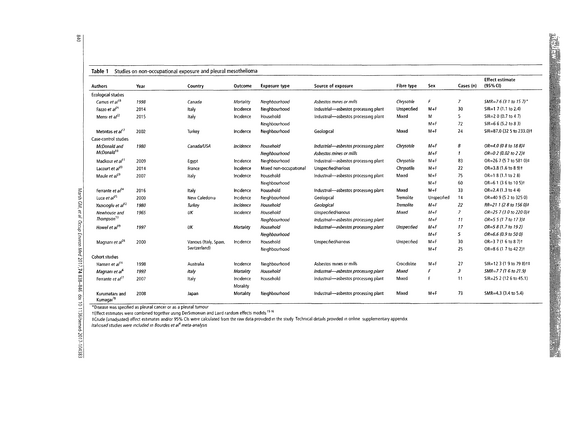
FILE NAME: Doubt Science (DBTS) DATE: 2017 DOC#: DBTS022 DOCUMENT DESCRIPTION: Journal Article - Non-Occupational Exposure to Asbestos and Risk of Pleural Mesothelioma: Review and Meta-Analysis Non-occupational exposure to asbestos and risk of pleural mesothelioma: review and meta-analysis Gary M Marsh,1,2Alexander S Riordan,3 Kara A Keeton,3 Stacey M Benson2 Additional material is published online only To view please visit the |ournal online (http //dx doi org/10 1136/ oemed-2017-104383) 'Center for Occupational Biostatistics and Epidemiology and Department of Biostatistics, Graduate School of Public Health, University of Pittsburgh, Pittsburgh, Pennsylvania, USA JCaidno ChemRisk, Pittsburgh, Pennsylvania, USA JCardno ChemRisk, Chicago, Illinois, USA Correspondence to Gary M Marsh PhD and FACE, Department of Biostatistics, Graduate School of Public Health, University of Pittsburgh, Pittsburgh, Pennsylvania, USA, Cardno ChemRisk, Pittsburgh, Pennsylvania, USA, gary m arshecardno com Received 17 February 2017 Revised 20 July 2017 Accepted 16 August 2017 Published Online First 21 September 2017 ABSTRACT O bjective To conduct an updated literature review and meta-analysis of studies of pleural malignant mesothelioma (PMM) risk among persons exposed to asbestos non-occupationally (household and neighbourhood) M etho d s We performed a literature search for articles available in the National Center for Biotechnology Information's PubMed database published between 1967 and 2016 Meta-analyses were conducted to calculate pooled PMM risk estimates, stratifying for household or neighbourhood exposure to asbestos and/ or predominant asbestos fibre type (chrysotile, amphibole or mixed) Results Eighteen studies in 12 countries comprising 665 cases met the meta-analysis inclusion criteria We identified 13 estimates of PM M risk from neighbourhood exposures, 10 from household and one from mixed exposure, and combined the estimates using randomeffects models The overall meta-relative risk (metaRR) was 5 9 (95% C M 4 to 8 7) The meta-RRs for household and neighbourhood exposures were 5 4 (95% Cl 2 6 to 11 2) and 6 9 (95% Cl 4 2 to 11 4), respectively We observed trends in risk in relation to fibre type for both household and neighbourhood studies For chrysotile, mixed and amphibole fibres, respectively, meta-RRs for neighbourhood studies were 3 8 (95% Cl 0 4 to 38 4), 8 4 (95% Cl 4 7 to 14 9) and 21 1 (95% Cl 5.3 to 84 5) and meta-RRs for household studies were 4 0 (95% Cl 0 8 to 18 8), 5 3 (95% Cl 1 9 to 15 0) and 21 1 (95% Cl 2 8 to 156 0) Conclusions PMM risks from non-occupational asbestos exposure are consistent w ith the fibre-type potency response observed in occupational settings By relating our findings to knowledge of exposureresponse relationships in occupational settings, we can better evaluate PMM risks in communities with ambient asbestos exposures from industrial or other sources It is well known that both occupational and non-occupational asbestos exposures, particularly amphibole asbestos, can increase the risk of pleural malignant mesothelioma (PMM).
refid# baxoEa460gy956pq7rKyk4kgO11 pages
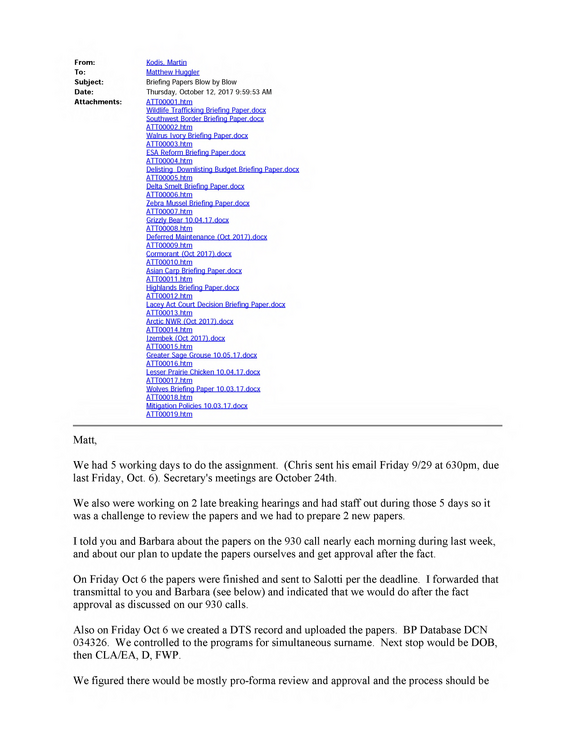
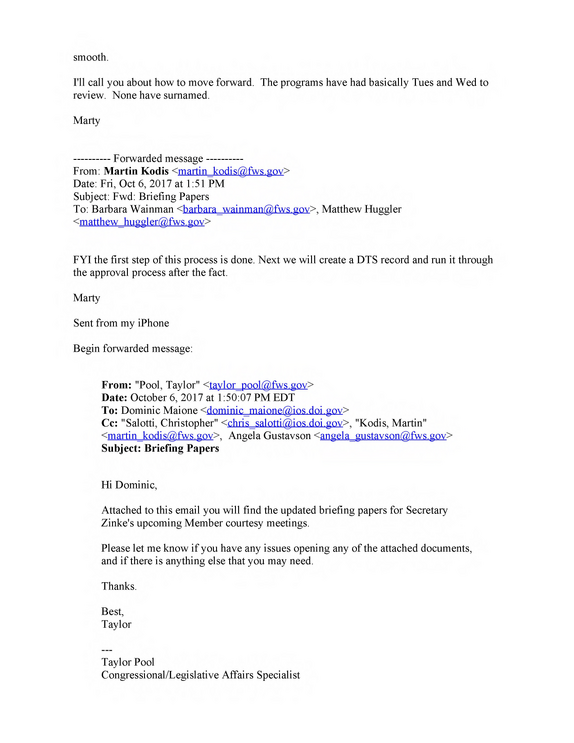
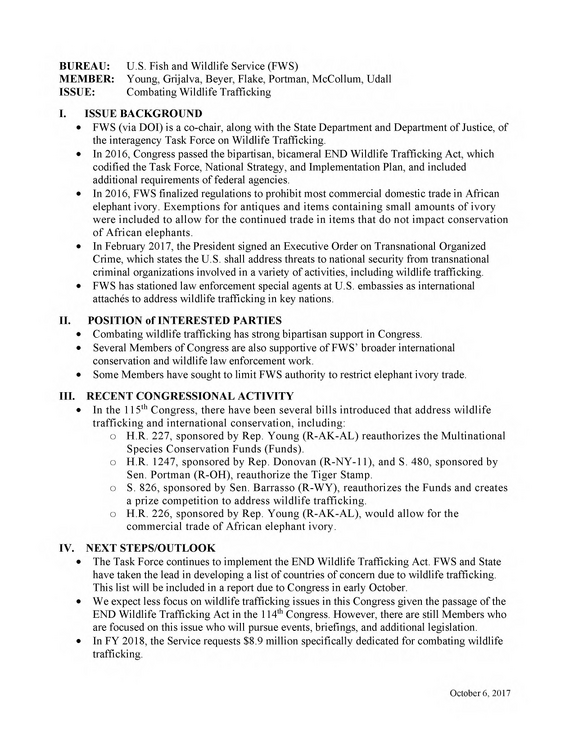
FWS and State have taken the lead in developing a list of countries of concern due to wildlife trafficking.
refid# vVwb4K3ynon6p27JwroLOLe2922 pages
lead lolhm ; 3 17cv1906 Sierra Club v.

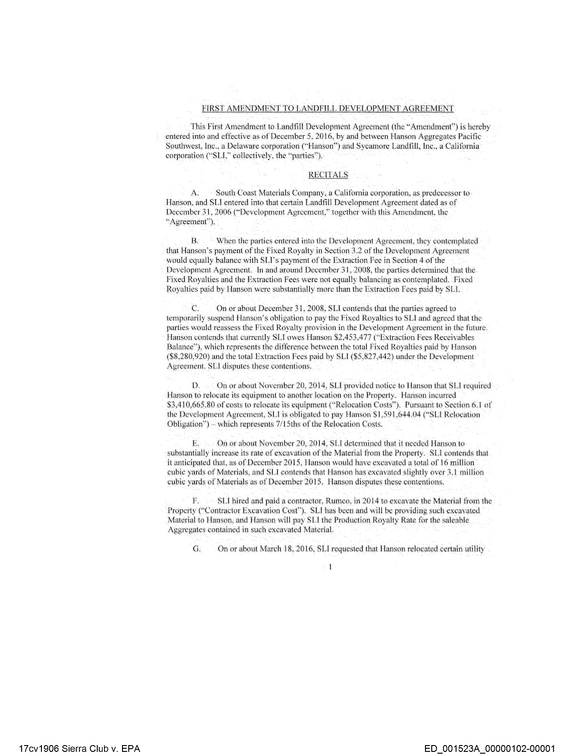
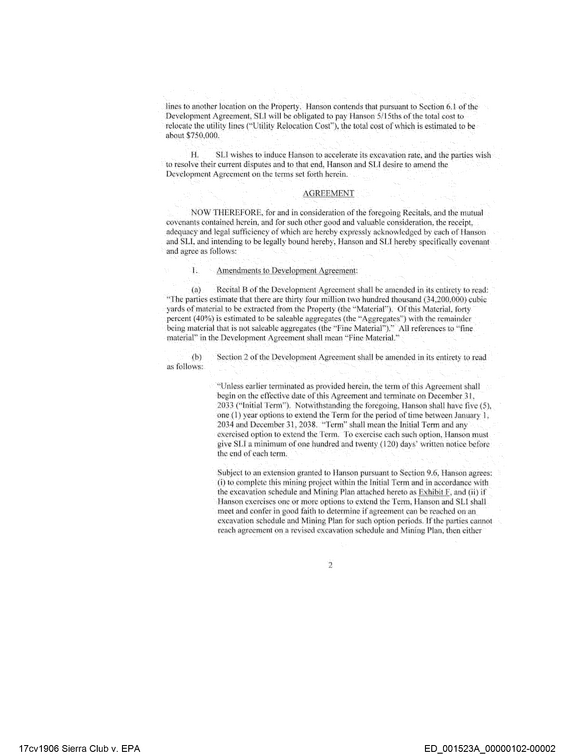
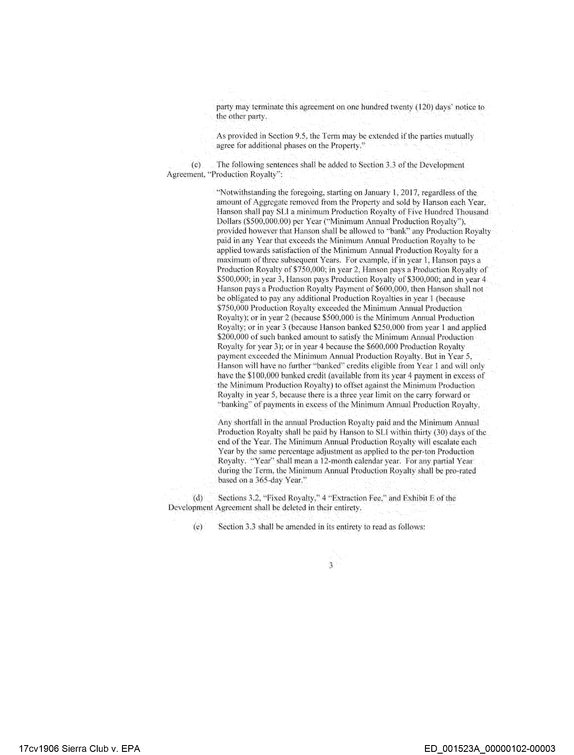
refid# dQrEZvog8rwMoBRDNz795daBQ18 pages
The Solid Waste Working Group represents a broad base of the waste management sector, with NWRA as the leading trade association, and SWANA as the leading professional association for public and private waste management officials in the sector.
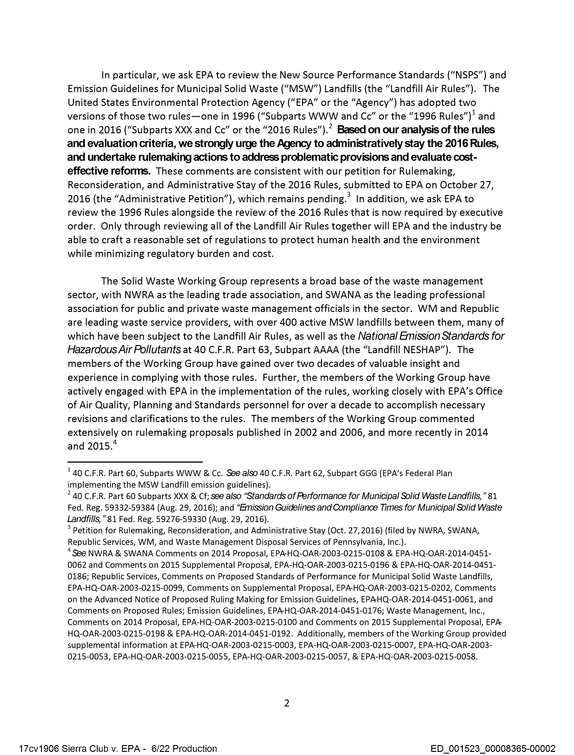
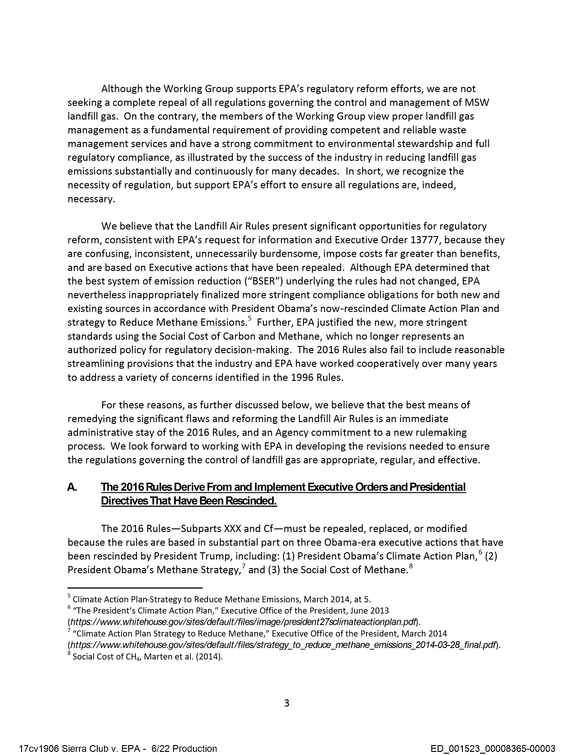
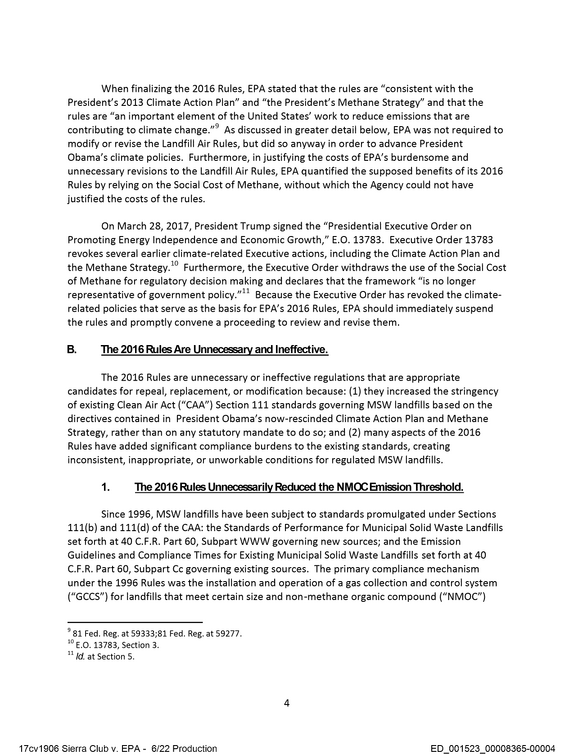
refid# RJ8dJnRkRL4keDeD644vpakyB20 pages
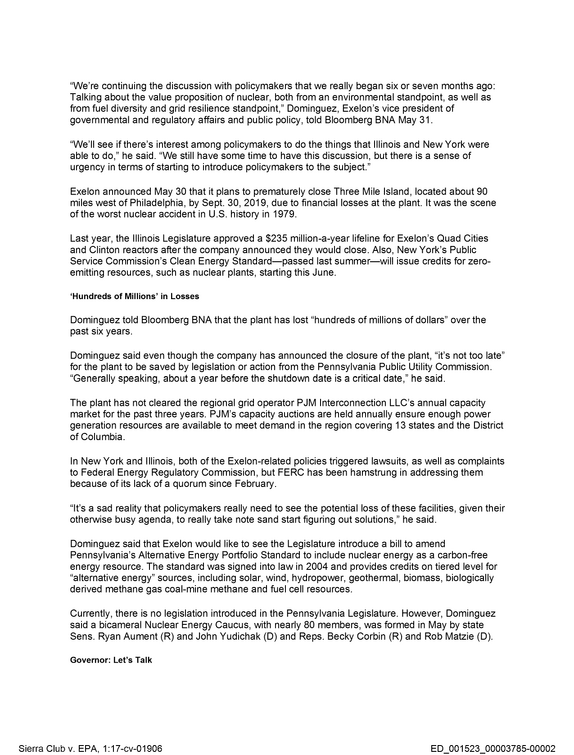
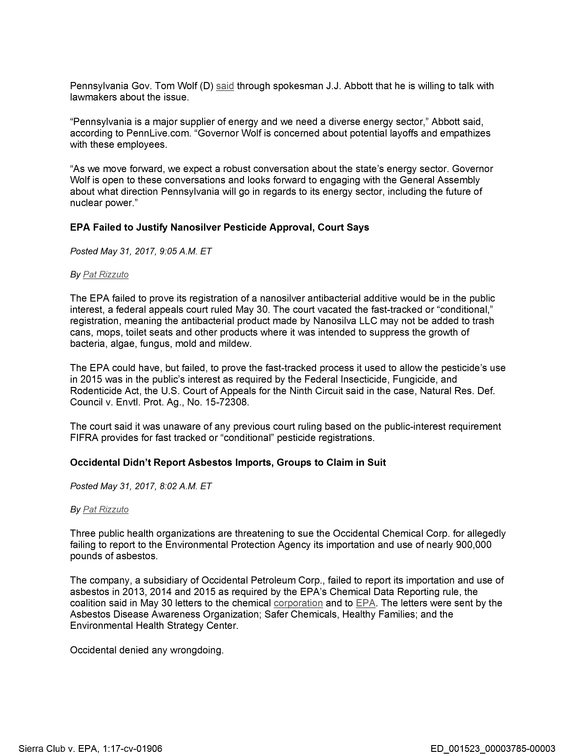
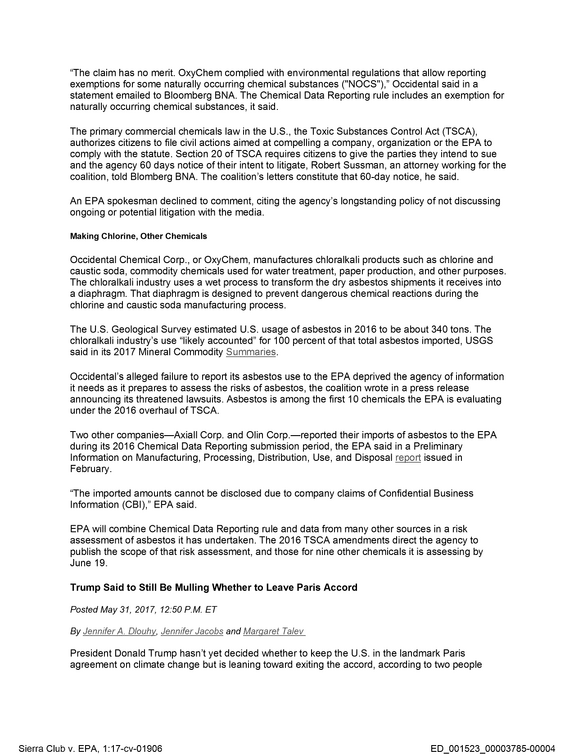
To: From: Sent: Subject: Jackson, Ryan[jackson.ryan@epa.gov] Bloomberg BNA Wed 5/31/2017 8:18:19 PM May 31 - Daily Environment Report - Afternoon Briefing Daily Environment Report Afternoon Briefing - Your Preview of Today's News The following news provides a snapshot of what Bloomberg BNA is working on today.
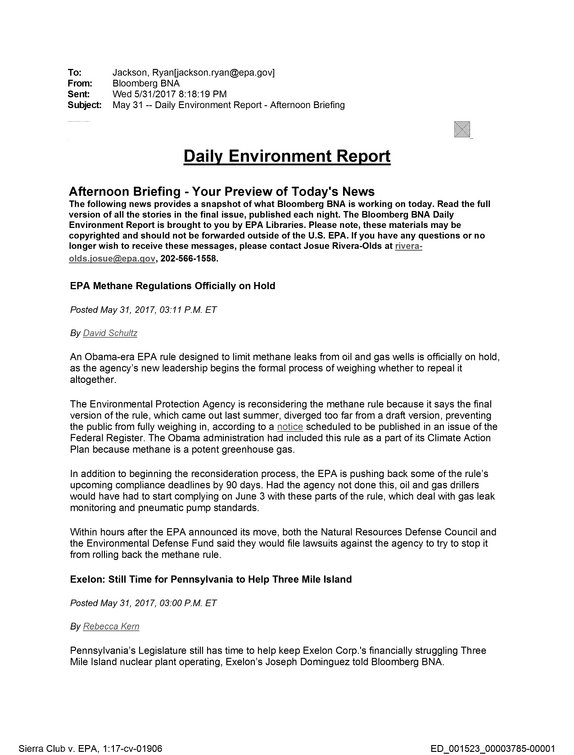
refid# 7MaeanBaaz9rYpLVqY1Z41Kmj19 pages
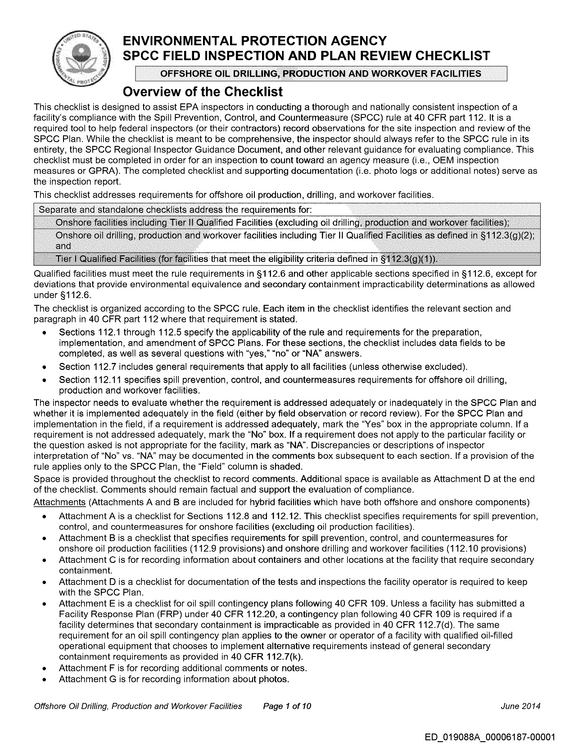
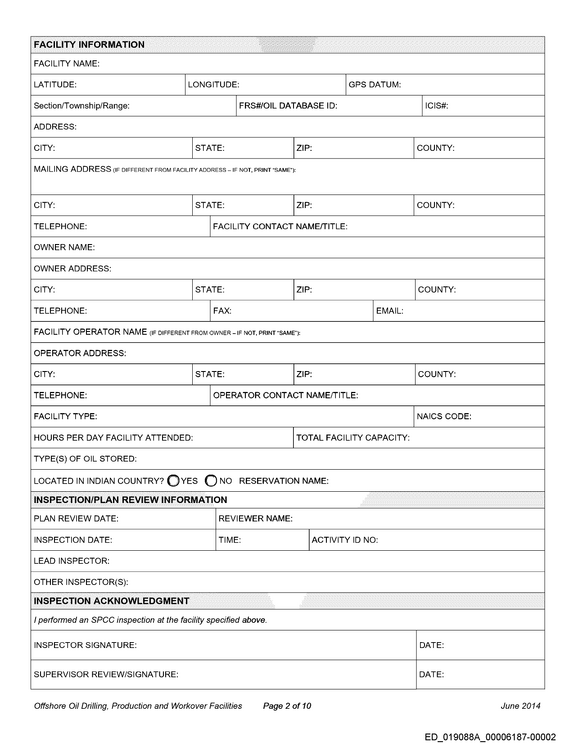
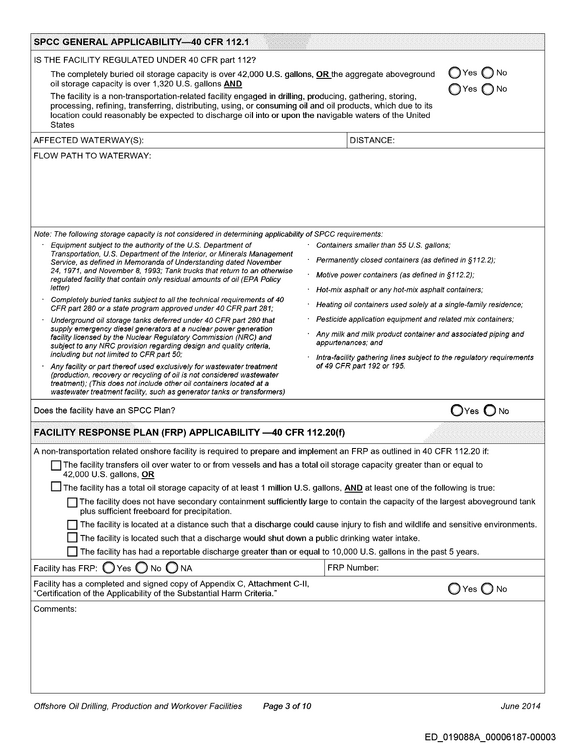
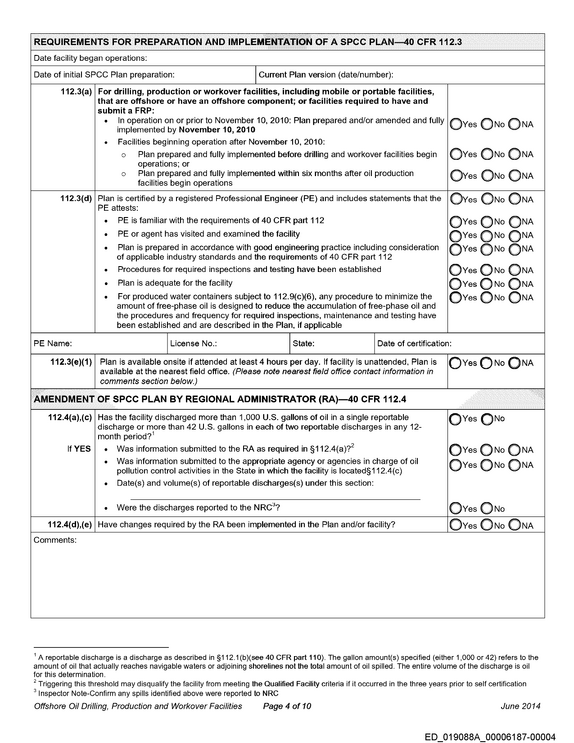
YES NO RESERVATION NAME: INSPECTION / PLAN REVIEW INFORMATION PLAN REVIEW DATE:REVIEWER NAME: INSPECTION DATE:TIME:ACTIVITY ID NO: LEAD INSPECTOR: OTHER INSPECTOR(S): INSPECTION ACKNOWLEDGMENT I performed an SPCC inspection at the facility specified above.
refid# vyQk6Od2veX8mkNDoOwJbaQjm26 pages
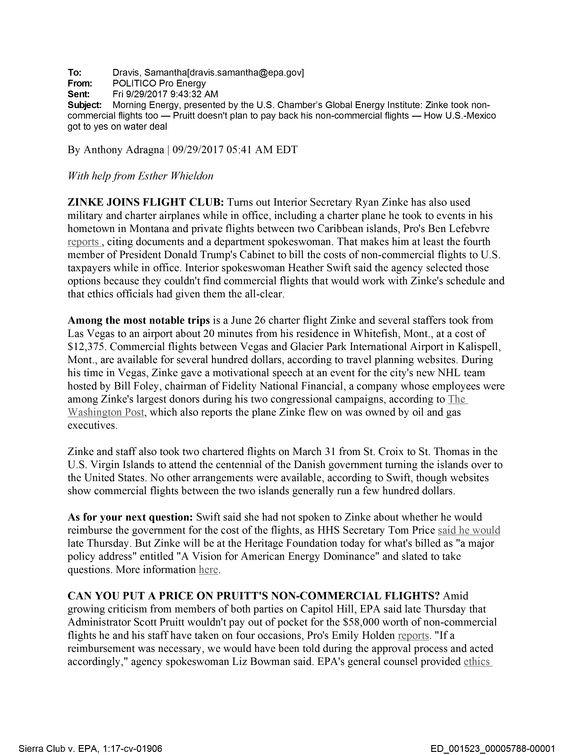
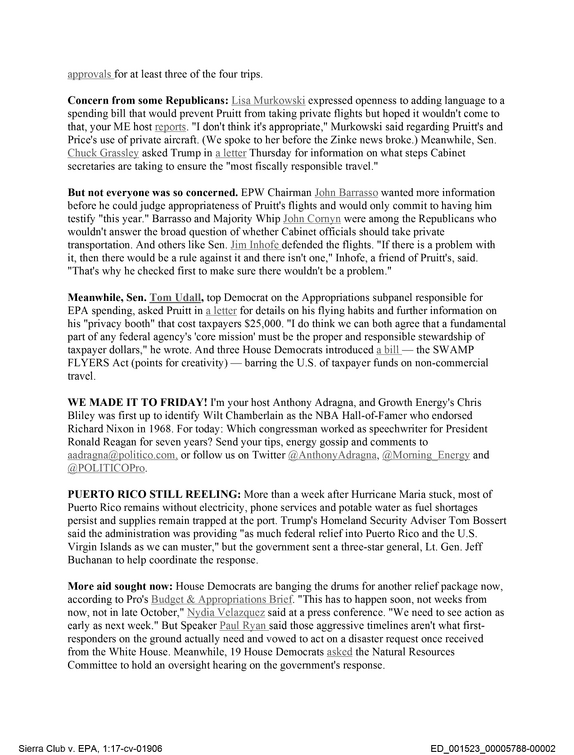
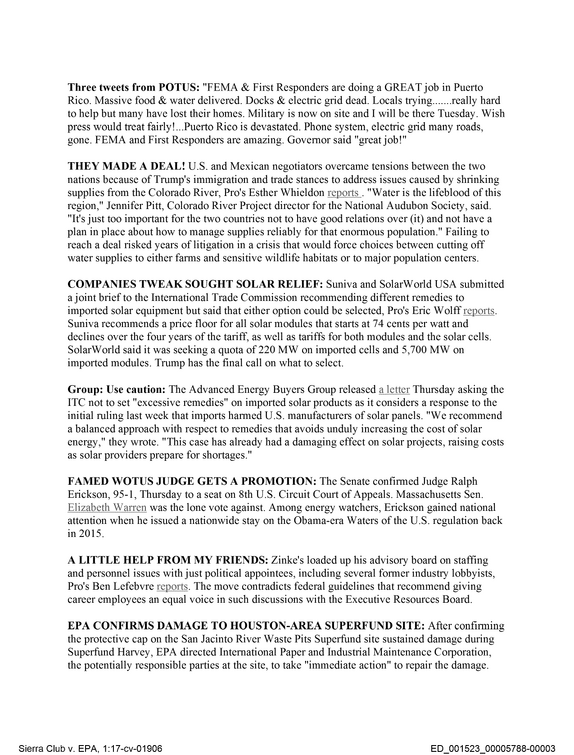
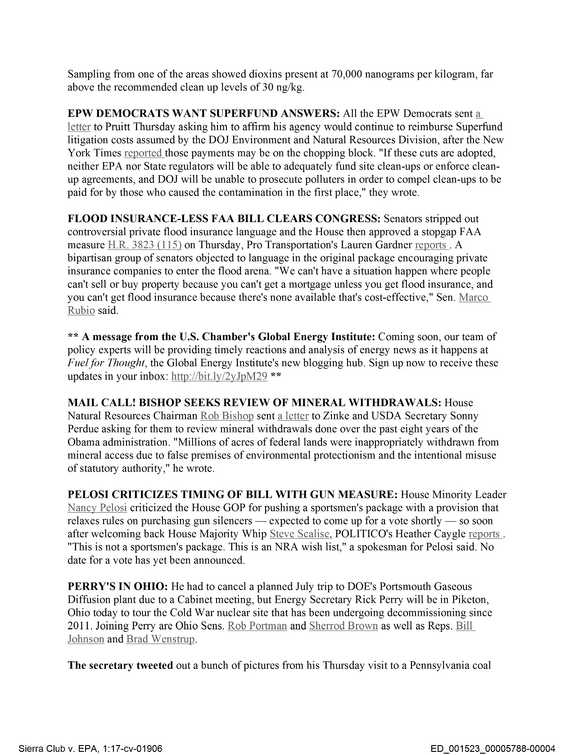
To: Dravis, Samantha[dravis.samantha@epa.gov] From: POLITICO Pro Energy Sent: Fri 9/29/2017 9:43:32 AM Subject: Morning Energy, presented by the U.S.
refid# jy6bZmvLmREwG8Qen5zLyn2eO20 pages
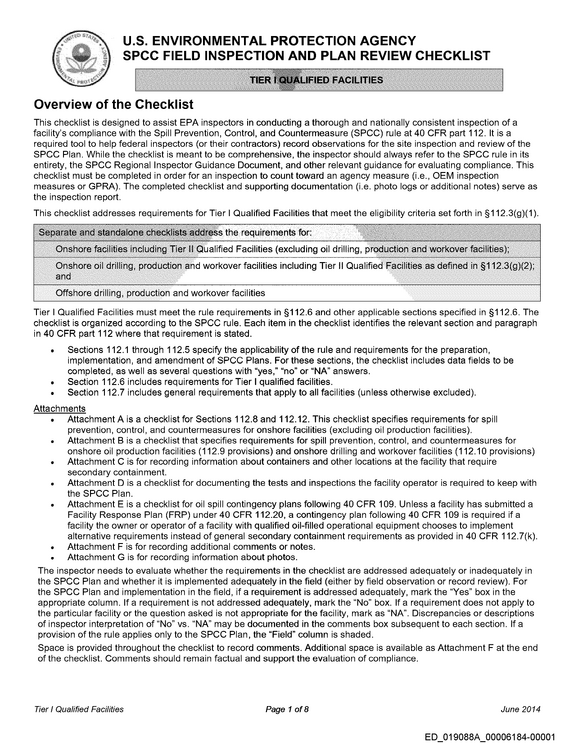
YES NO RESERVATION NAME: INSPECTION / PLAN REVIEW INFORMATION PLAN REVIEW DATE:REVIEWER NAME: INSPECTION DATE:TIME:ACTIVITY ID NO: LEAD INSPECTOR: OTHER INSPECTOR(S): INSPECTION ACKNOWLEDGMENT I performed an SPCC inspection at the facility specified above.
refid# 3eQNKmp1k3XnJnjpvJQqj5nmD24 pages