Refine
Estimated Years 2010-2019Clear
5,288 results foundRefine Search
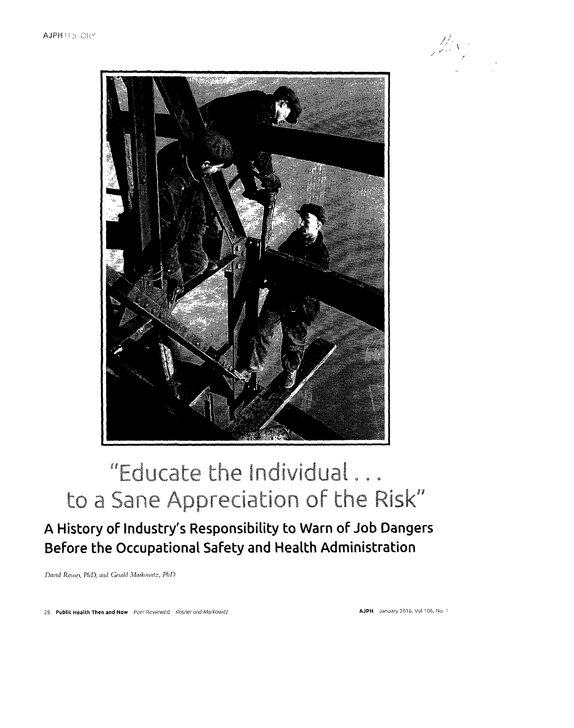
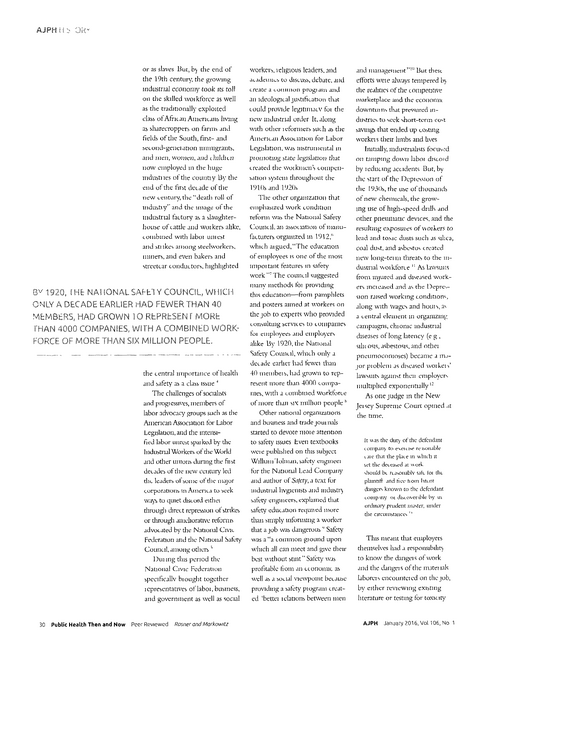
o , : A , '< ; o M c a ' " <, / c H ' t y , W c o \ ' 0 W ip <' The Occupational Safety and Health Act o f 1970 and the Workers Right to Know laws later in that decade were signature moments m the his tory ot occupational safety and health They enshrined in law the principle that employers had a responsibility to protect their workforce in part by in forming them ot the potential hazards ot the substances they woiked with and the chemi cal makeup o f the matenals they encountered as part of their work Today, we take for granted the idea that workers hate a right to know about the dangers o f the jo b Undei new federal and state regula tions, the means ot m fonnm g workeis about the hazaiclous materials they use can take many forms material safety data sheets, contatrici labeling, warning posteis, even lectures on safety and health organized bv formal labor--management committees Although there is a rich literature about warnings tor consumers, particulaily as it addresses pharmaceuticals and food safety,1 there is relatively little that explores the rich, of ten fraught, history o f warnings and education about danger in the workplace in the era before the passage o f the Occupational Safety and Health A c tJ We look at part o f that his tory, and we show that modern "standards o f behavior," that is, ethical responsibilities o f industries to protect the work force bv educating them "to a sane appreciation o f the risk" developed duiing the first half of the 20th century In the face of labor challenges regarding the control o f the work process and the resistance o f management to laboi demands, industry reasseited its " right" to control the work floor and, at least i hetoi lcallv. acknowledged its obliga tion to provide a safe workplace for its woikforce Part o f that obligation, industiv said, was to provide information to then workeis about the dangers they faced horn the machinery and materials with which they came in contact Tlnough a variety o f tiade associations, fedei ations, and oi gamzations, such as the National Civic Federation, the National Safety Council, and the Manu facturing Chemists Association, industry engaged in " preemptive reform," a " co-optation ' o f chal lenges that radicals and unions, such as the Industrial Workers o f the World during the progressive era and the Congress o f Industrial O rganization during the Cheat Depression, were mcoiporating into their demands over wages, hours, and working conditions ' " Progressive" industry initiatives on warnings and safety cam paigns would hopefully eliminate or delay blame o f and litigation and regulatory efforts against industry for many decades It was not until the late 1960s that the inadequacy of such a voluntary approach was challenged by labor and the left The Occupational Safety and Health Act and other icgulatory legislation put m place legal mandates to require information and warnings on the variety o f chemicals, asbestos, lead, and other dangeious materials In response, major industrial leaders aigued that such legislation was unnecessary because o f business's existing codes of conduct l A*U Y 2(r-C LN IuR v B A C X C R O jK b The 19th-century economy depended on laying thousands o f miles o f taihoad, digging canals, logging the nations forests, mining iron, coal, and lead, harvesting crops, picking cotton, and running textile mills 1'hese in turn depended on the hackbreaking exploitation of men. women, and children who lived on meager wages ABOUT THE AUTHORS David Rmer n with the Center for the Hi-toiy and Etluc< of Pnhlu Health, Department of bociomtdical b cun a\ Columbia Unwasity Madman School of Public Ihalth and tin D ipan inoli of Hidoiy Columbia l aiweinty \iw \o ik , Y Y Cuald Maikowtt?
refid# NGD6LmLKae4rxJ0bLeY4m8NZQ9 pages
Proposed Rule Air Quality State Implementation Plans; Approvals and Promulgations: Alaska; Infrastructure Requirements for the 2008 Lead National Ambient Air Quality Standards FR Document: 2017-10938 Citation: 82 FR 24914 PDF Pages 24914-24923 (10 pages) Pemialink Sierra Club v.
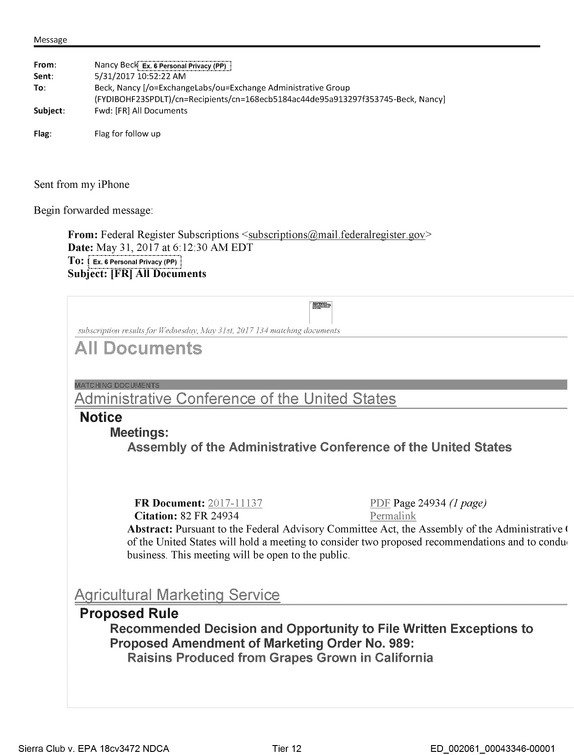
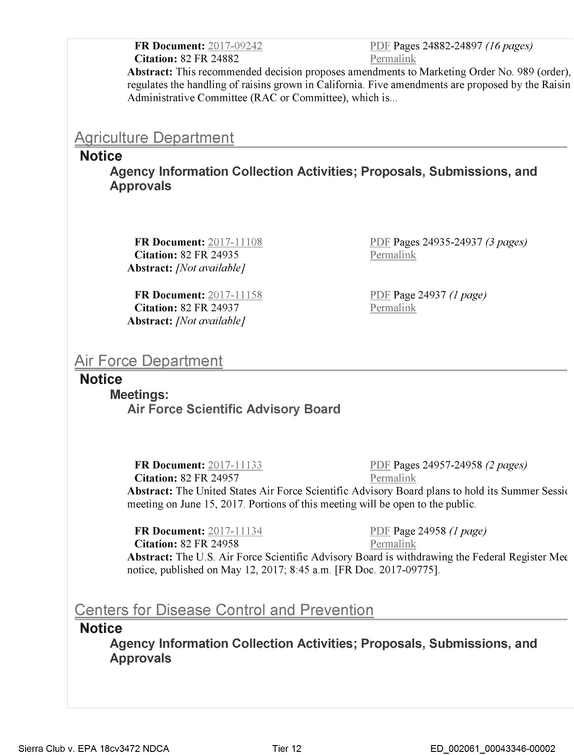
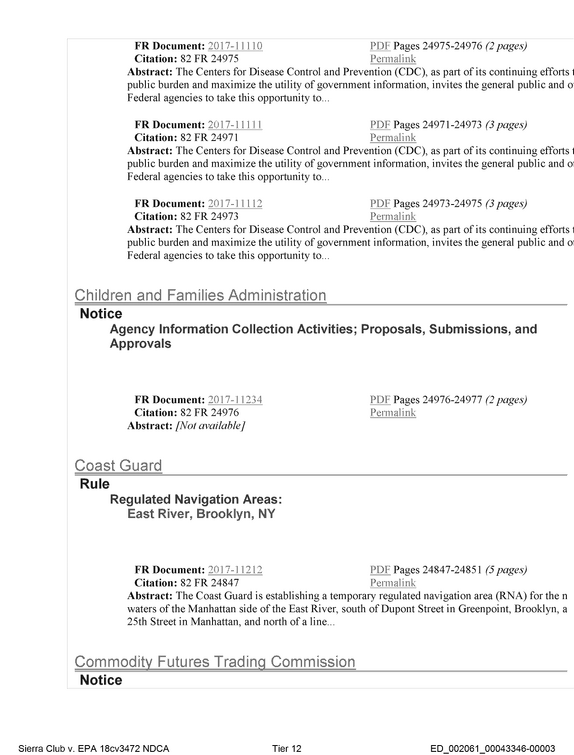
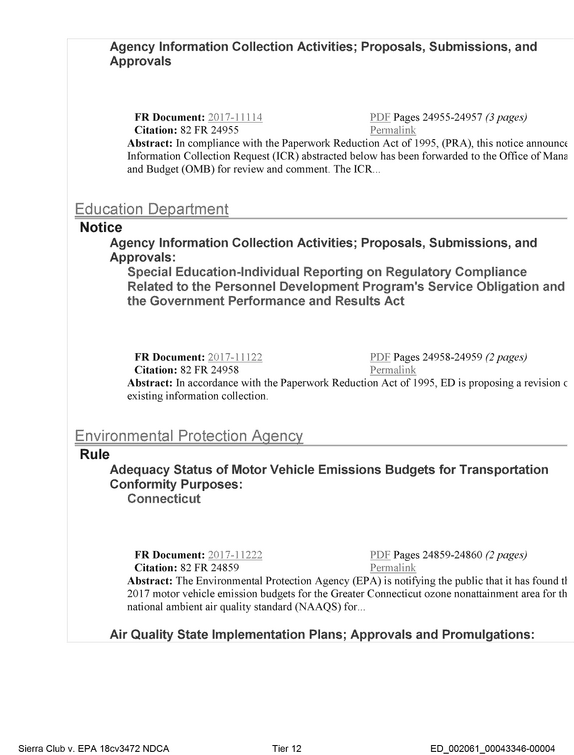
refid# b5r3ZDxROjXd25gdoMw25eX8O33 pages
Kasowitz, his longtime lawyer, who is leading the team of private lawyers representing him.
refid# 0bdv967DR6QRDVQy9bda9DKm12 pages
To: From: Sent: Subject: Jackson, Ryan[jackson.ryan@epa.gov] Bloomberg BNA Thur 7/6/2017 7:09:47 PM July 6 - Daily Environment Report - Afternoon Briefing Daily Environment Report Afternoon Briefing - Your Preview of Today's News The following news provides a snapshot of what Bloomberg BNA is working on today.
refid# Yje9B9YZQk2Yzdd8DBxeDyEN813 pages
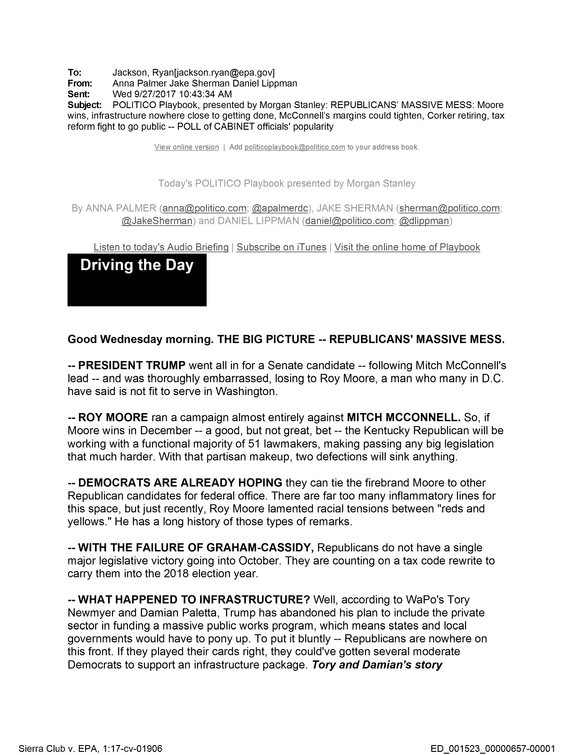
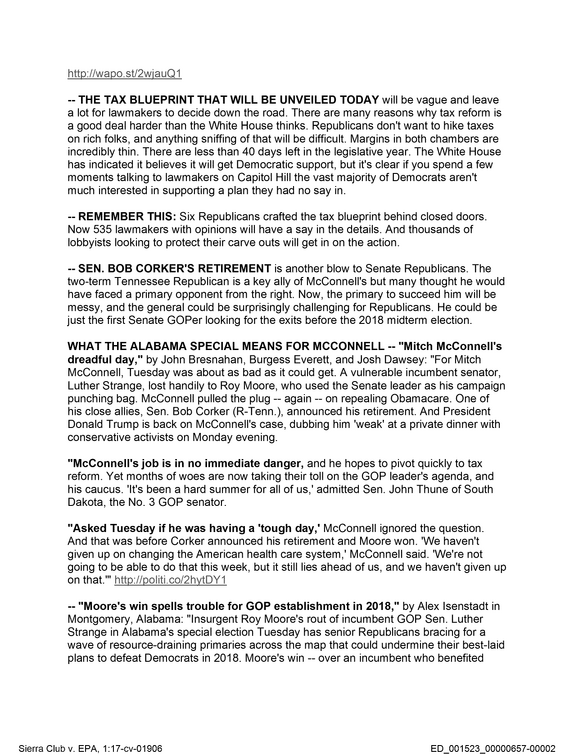
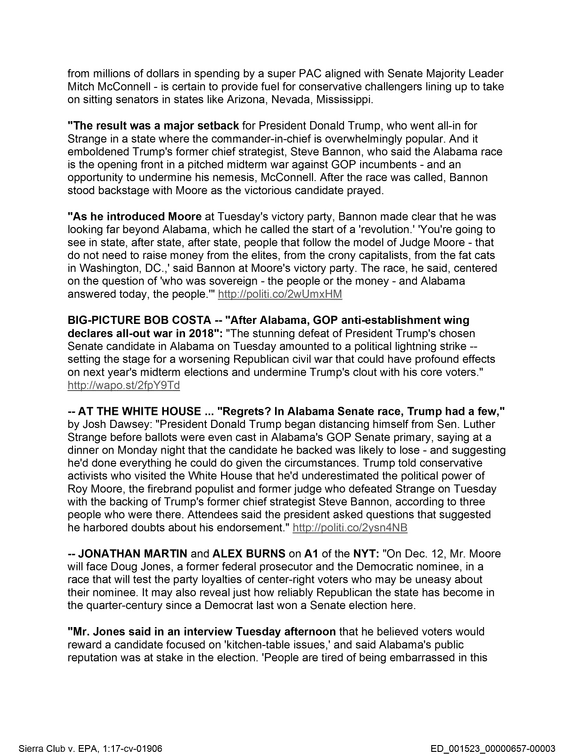
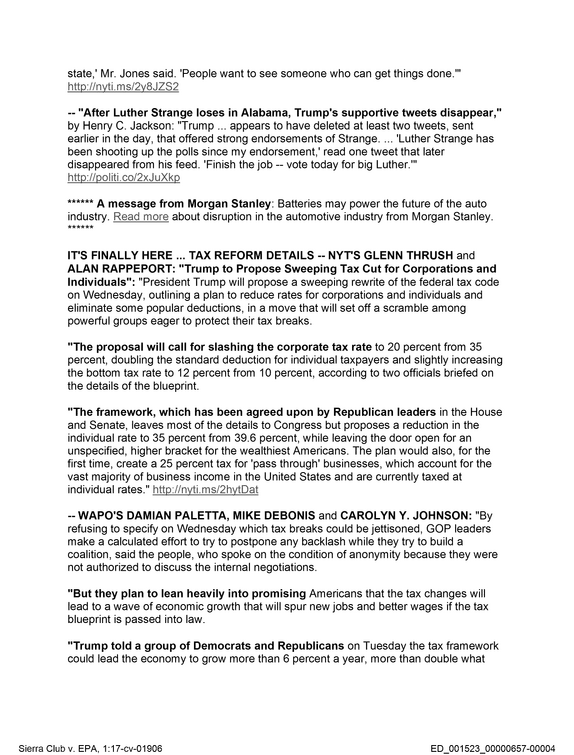
. - - PRESIDENT TRUMP went all in for a Senate candidate -- following Mitch McConnell's lead -- and was thoroughly embarrassed, losing to Roy Moore, a man who many in D.C. have said is not fit to serve in Washington. - - ROY MOORE ran a campaign almost entirely against MITCH MCCONNELL.
refid# wDqjqR2K5E6qVdybxEKqBzNa613 pages
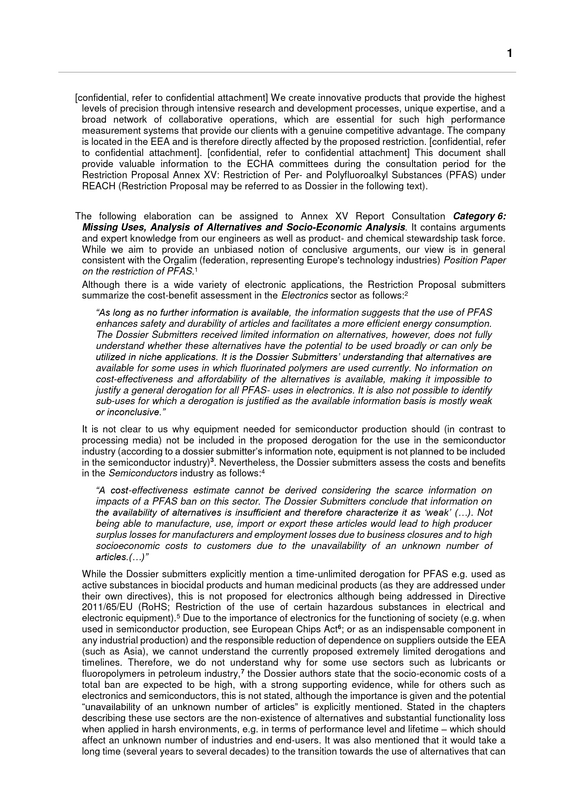
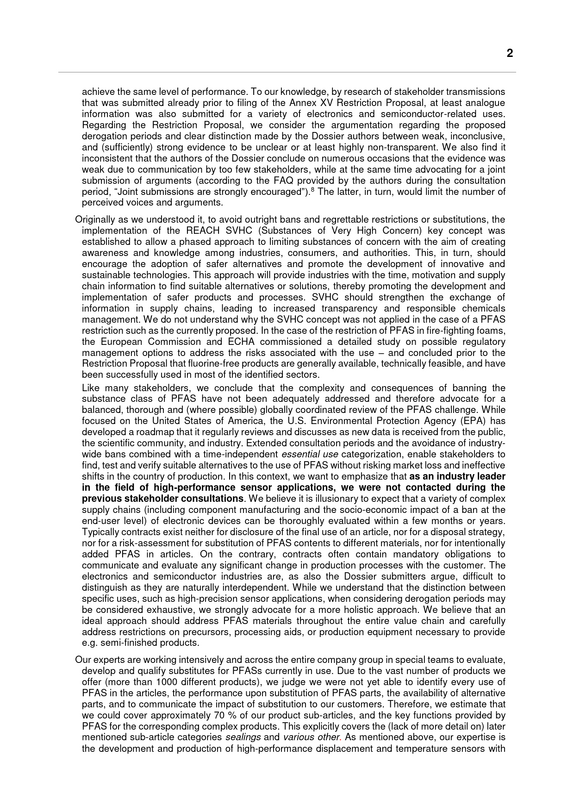
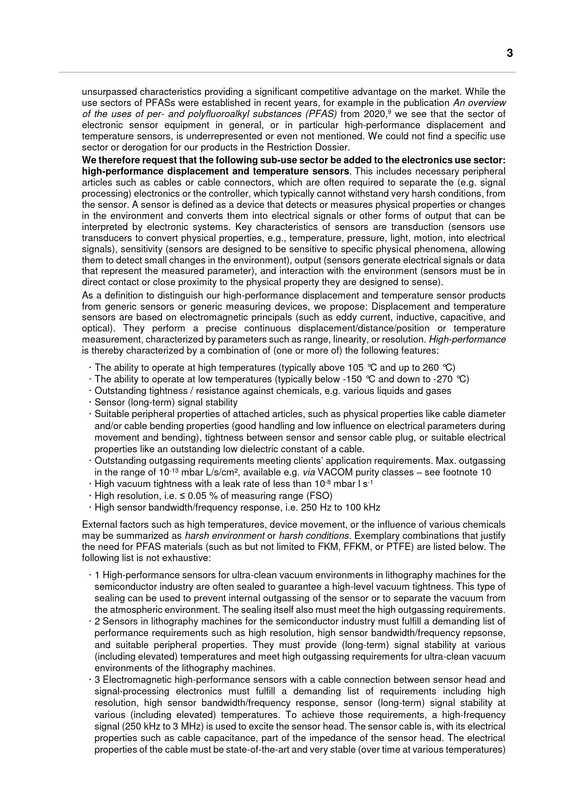
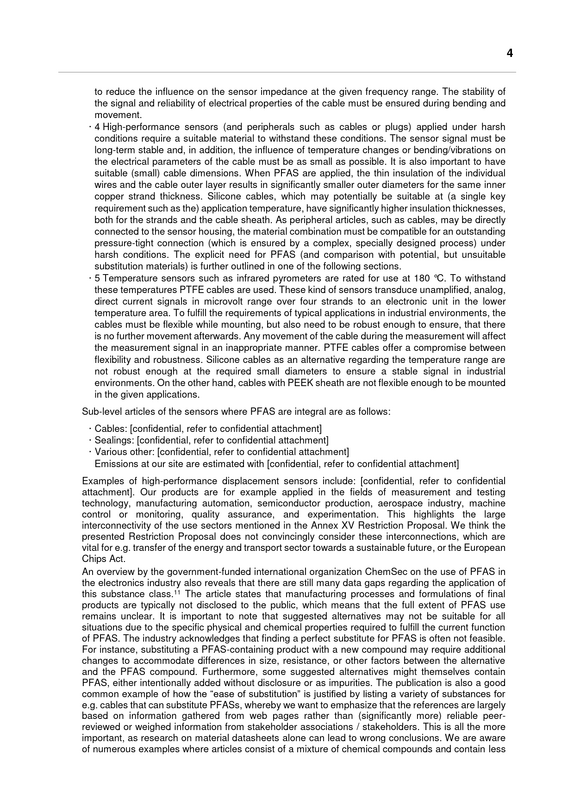
SVHC should strengthen the exchange of information in supply chains, leading to increased transparency and responsible chemicals management.
refid# OzDgbvBLd5vveaB9eK3Z3b6oQ10 pages
Exposure in humans can lead to headaches, dizziness, and in some cases convulsions and death.
refid# ZnvjRXL9kn9EoYK1M4qgzGDpO15 pages
Castoldi said the 2018 evaluation could lead to a revised safe daily exposure level for bisphenol A.
refid# 0gqXVNqXqNjKyGdJKpYkpYG1m14 pages
Georgia-Pacific Chemicals LLC, Highway 82 & Paper Mill Road, Crossett, AR 71635 (Primary NAICS code 325211, plastics material and resin manufacturing) March 20, 2014, EPCRA 313 Inspection Report ------------------------------------------------------------------------------------------------------------ UNITED STATES ENVIRONMENTAL PROTECTION AGENCY (US EPA) REGION 6, 1445 ROSS AVENUE, DALLAS, TX 75202 EMERGENCY PLANNING AND COMMUNITY RIGHT TO KNOW ACT (EPCRA) SECTION 313 INSPECTION REPORT Report date: July 8, 2014 Revised: July 24, 2014 I.




refid# 7NOakXX905JK2g7ww2aoD6O825 pages
The chemical and thermal stability of a perfluoroalkyl moiety, in addition to its hydrophobic and lipophobic nature, lead to highly useful and enduring properties in surfactants and polymers into which the perfluoroalkyl moiety is incorporated (Kissa 1994, 2001).
refid# rBj4kVY3ovpRygDaLZ51rKDr29 pages
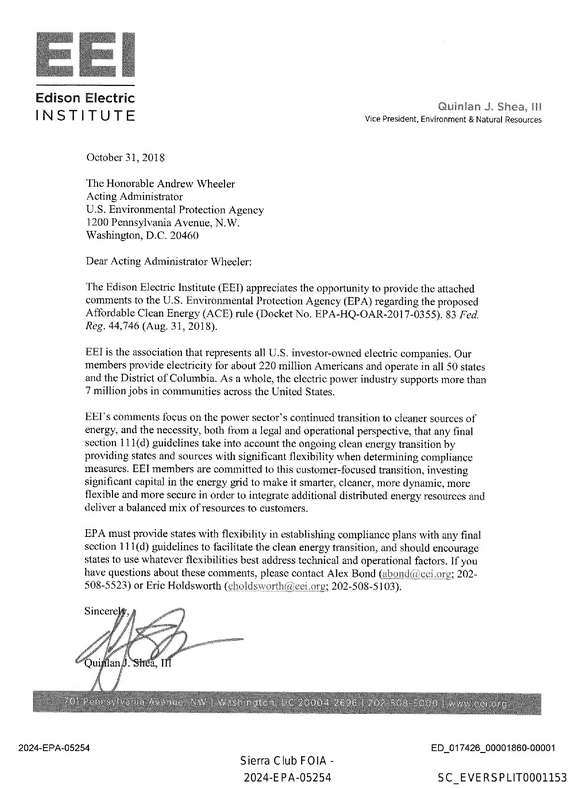
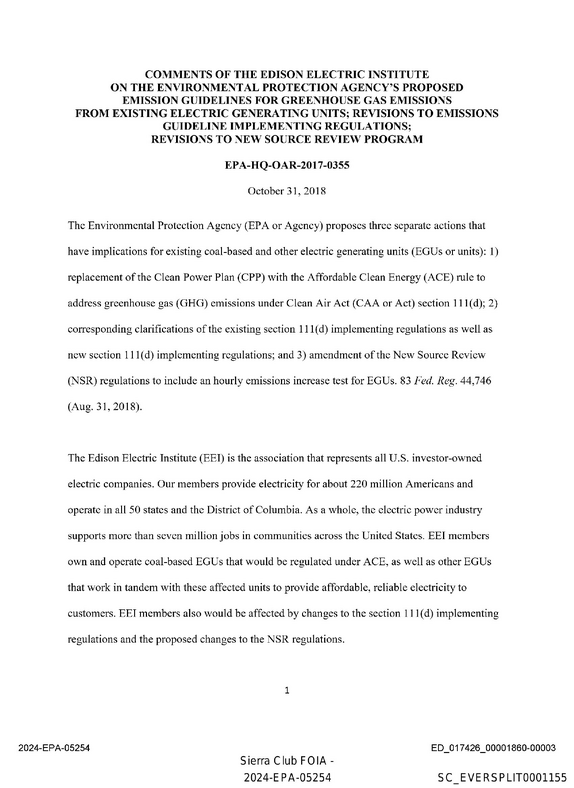
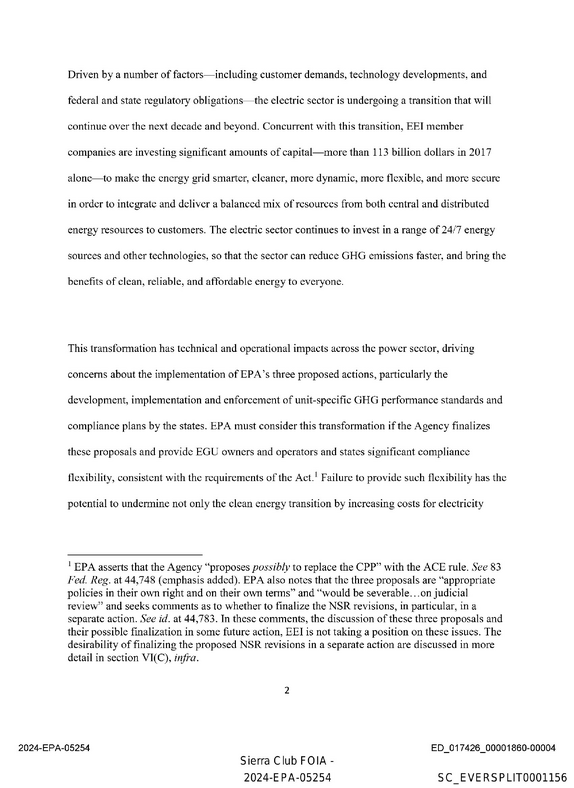
Electric companies are committed to delivering clean energy to customers and are leading the clean energy transition.
refid# jg27Jzj8YQao3YegyzrZ5kMZ943 pages
I am connecting you with my colleague, Albert "Kel" Kelly (cc'd), who leads the Administrator's Superfund Task Force and is your best point of contact on these issues.
refid# 0dBa20jq24qXmvxdRxaYEKkO3 pages
It. will certainly lead to the fragmentation of the alliance between Saleh's network and the Iranian-backed al Houthi movement.


refid# v1nr45bXJNLzgD8aOD7o71KdE5 pages
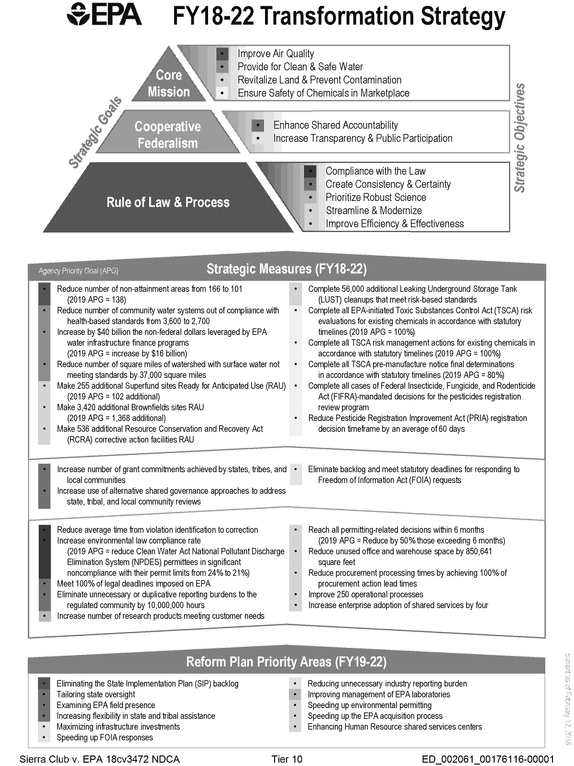
EPA FY18-22 Transformation Strategy Improve Air Quality Provide for Clean & Safe Water Revitalize Land & Prevent Contamination Ensure Safety of Chemicals in Marketplace Enhance Shared Accountability Increase Transparency & Public Participation Compliance with the Law Create Consistency & Certainty Prioritize Robust Science Streamline & Modernize Improve Efficiency & Effectiveness Reduce number of non-attainment areas from 166 to 101 (2019 APG = 138) Reduce number of community water systems out of compliance with health-based standards from 3,600 to 2,700 Increase by $40 billion the non-federal dollars leveraged by EPA water infrastructure finance programs (2019 APG = Increase by $16 billion) Reduce number of square miles of watershed with surface water not meeting standards by 37,000 square miles Make 255 additional Superfund sites Ready for Anticipated Use (RAU) (2019 APG = 102 additional) Make 3,420 additional Brownfields sites RAU (2019 APG = 1,368 additional) Make 536 additional Resource Conservation and Recovery Act (RCRA) corrective action facilities RAU Complete 56,000 additional Leaking Underground Storage Tank (LUST) cleanups that meet risk-based standards Complete all EPA-initiated Toxic Substances Control Act (TSCA) risk evaluations for existing chemicals in accordance with statutory timelines (2019 APG = 100%) Complete all TSCA risk management actions for existing chemicals in accordance with statutory timelines (2019 APG = 100%) Complete all TSCA pre-manufacture notice final determinations in accordance with statutory timelines (2019 APG = 80%) Complete all cases of Federal Insecticide, Fungicide, and Rodenticide Act (FIFRA)-mandated decisions for the pesticides registration review program Reduce Pesticide Registration improvement Act (PRIA) registration decision timeframe by an average of 60 days Increase number of grant commitments achieved by states, tribes, and local communities Increase use of alternative shared governance approaches to address state, tribal, and local community reviews Eliminate backlog and meet statutory deadlines for responding to Freedom of Information Act (FOIA) requests Reduce average time from violation identification to correction Increase environmental law compliance rate (2019 APG = reduce Clean Water Act National Pollutant Discharge Elimination System (NPDES) permittees in significant noncompliance with their permit limits from 24% to 21 %) Meet 100% of legal deadlines imposed on EPA Eliminate unnecessary or duplicative reporting burdens to the regulated community by 10,000,000 hours Increase number of research products meeting customer needs Reach all permitting-related decisions within 6 months (2019 APG = Reduce by 50% those exceeding 6 months) Reduce unused office and warehouse space by 850,641 square feet Reduce procurement processing times by achieving 100% of procurement action lead times Improve 250 operational processes Increase enterprise adoption of shared services by four Reform Plan Priority Areas (FY19-22) Eliminating the State Implementation Plan (SIP) backlog Tailoring state oversight Examining EPA field presence Increasing flexibility in state and tribal assistance Maximizing infrastructure investments Speeding up FOIA responses Reducing unnecessary industry reporting burden Improving management of EPA laboratories Speeding up environmental permitting Speeding up the EPA acquisition process Enhancing Human Resource shared services centers Sierra Club v.
refid# Z48V7mLdgZaXBgLVaQ8RyaaqL1 page
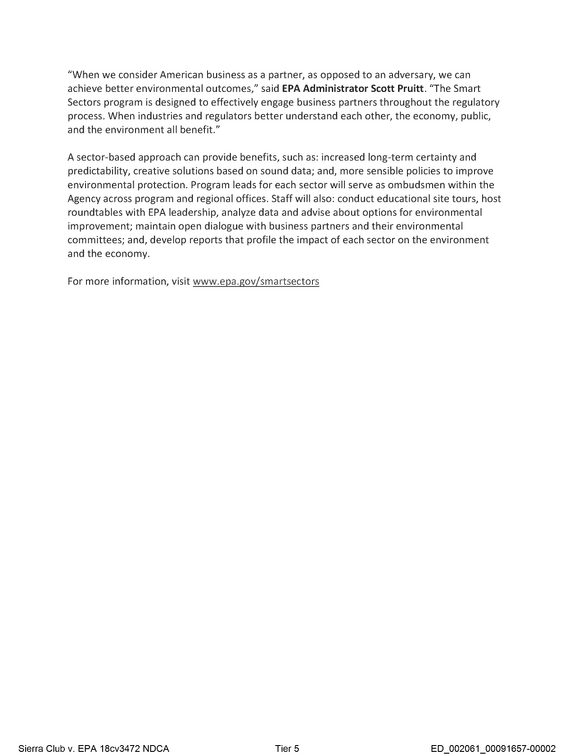
Program leads for each sector will serve as ombudsmen within the Agency across program and regional offices.
refid# 3ev4epnp2xN44bDOaN86d15562 pages