Refine
Estimated Years 2000-2009Clear
18,679 results foundRefine Search
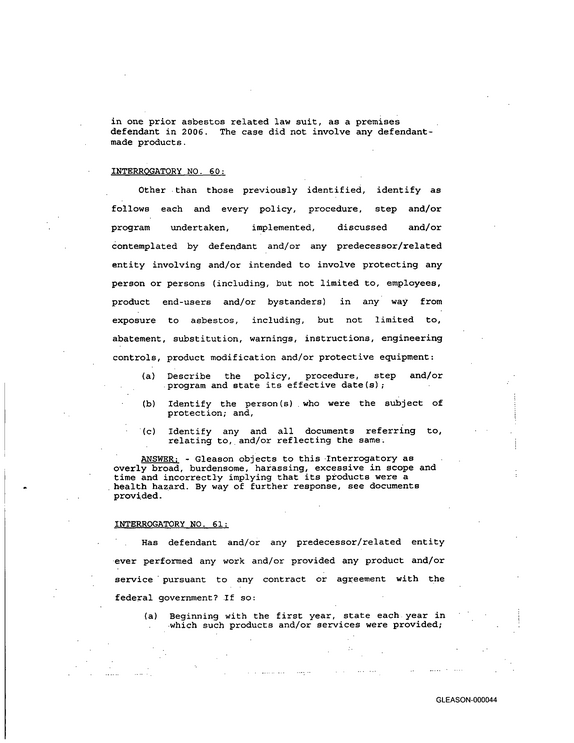
in one prior asbestos related law suit, as a premises defendant in 2006.
refid# da9axDqvw8mBZwoaeDLNobE261 page
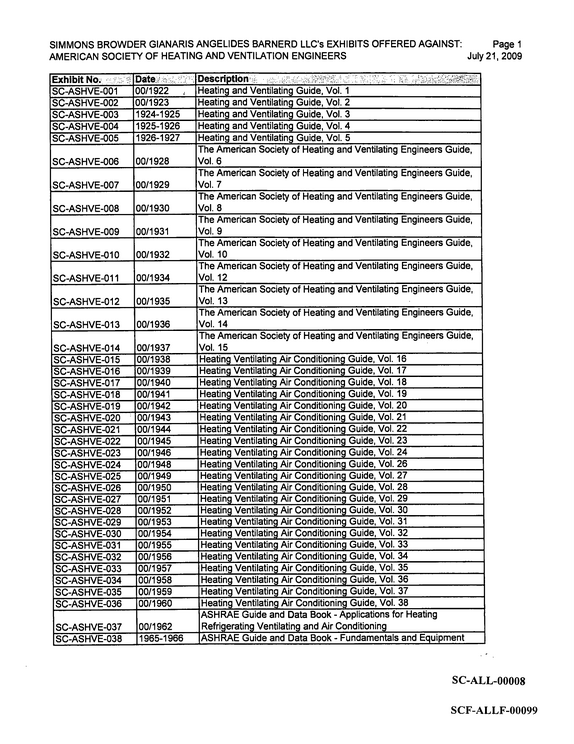
SIMMONS BROWDER GIANARIS ANGELIDES BARNERD LLC's EXHIBITS OFFERED AGAINST: Page 1 AMERICAN SOCIETY OF HEATING AND VENTILATION ENGINEERS July 21, 2009 Exhibit No.
refid# o9xxrDD51LVeeypb6EqKbJO331 page
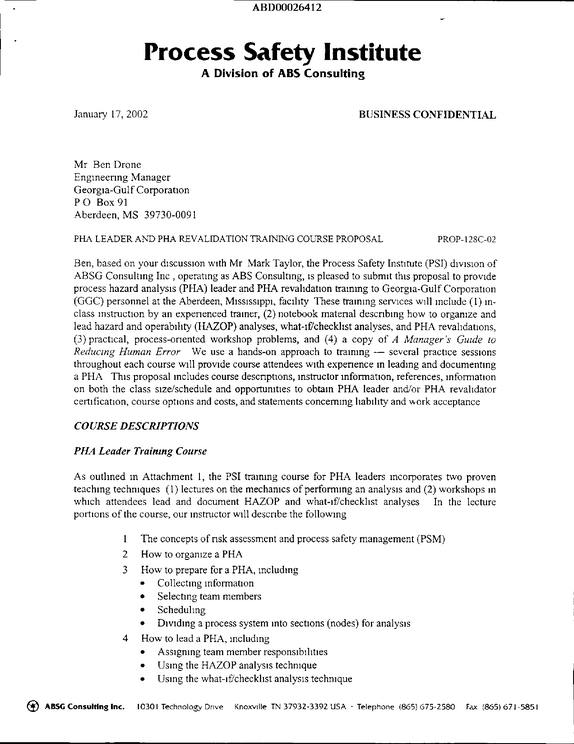
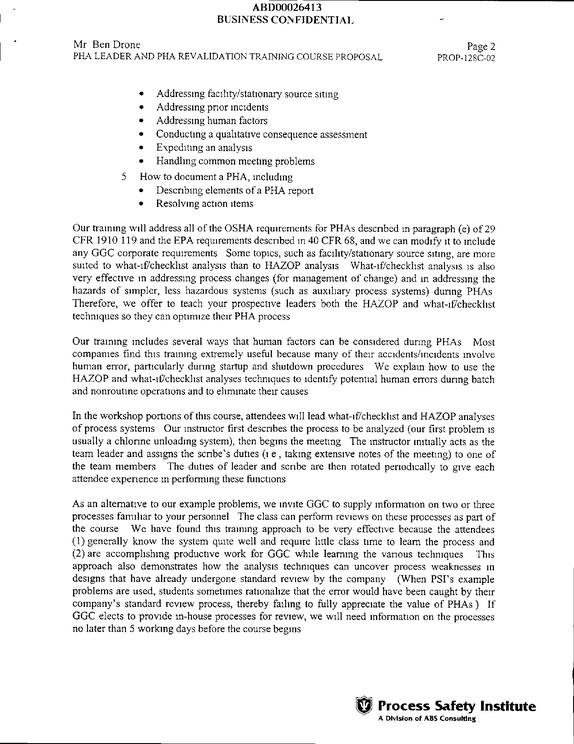
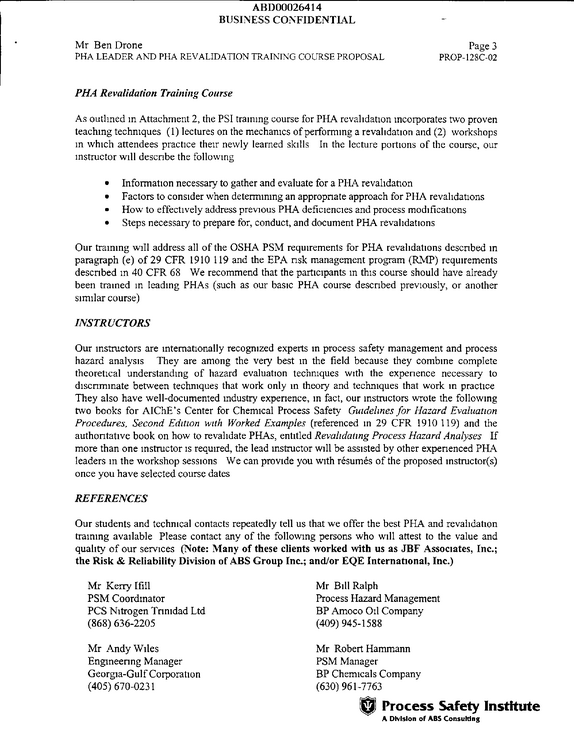
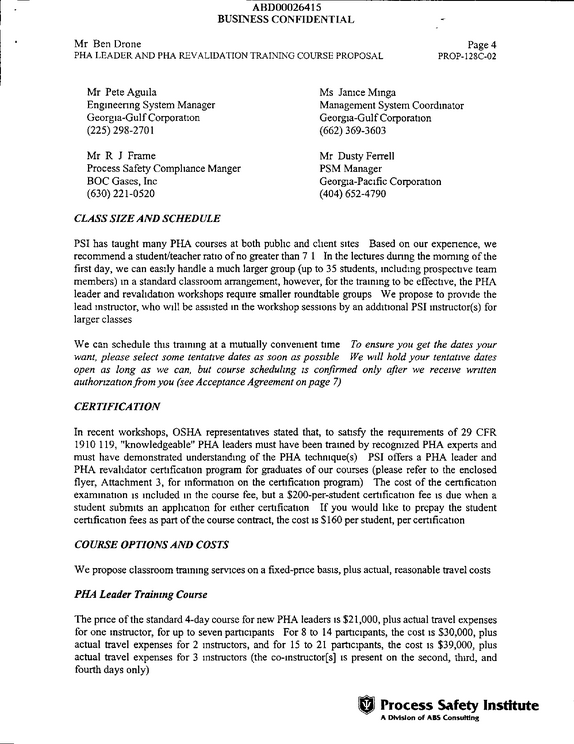
ABD00026412 Process Safety Institute A Division of ABS Consulting January 17, 2002 BUSINESS CONFIDENTIAL Mr Ben Drone Engineering Manager Georgia-Gulf Corporation P O Box 91 Aberdeen, MS 39730-0091 PHA LEADER AND PHA REVALIDATION TRAINING COURSE PROPOSAL PROP-128C-02 Ben, based on your discussion with Mr Mark Taylor, the Process Safety Institute (PSI) division of ABSG Consulting Inc , operating as ABS Consulting, is pleased to submit this proposal to provide process hazard analysis (PHA) leader and PHA revaluation training to Georgia-Gulf Corporation (GGC) personnel at the Aberdeen, Mississippi, facility These training services will include (1) mclass instruction by an experienced trainer, (2) notebook material describing how to organize and lead hazard and operability (HAZOP) analyses, what-if/checkhst analyses, and PHA revaluations, (3) practical, process-onented workshop problems, and (4) a copy of A Manager's Guide to Reducing Human Error We use a hands-on approach to training -- several practice sessions throughout each course will provide course attendees with expenence in leading and documenting a PHA This proposal includes course descriptions, instructor information, references, information on both the class size/schedule and opportunities to obtain PHA leader and/or PHA revalidator certification, course options and costs, and statements concerning liability and work acceptance COURSE DESCRIPTIONS PHA Leader Training Course As outlined m Attachment 1, the PSI training course for PHA leaders incorporates two proven teaching techniques (1) lectures on the mechanics of performing an analysis and (2) workshops in which attendees lead and document HAZOP and what-if/checkhst analyses In the lecture portions of the course, our instructor will descnbe the following 1 The concepts of risk assessment and process safety management (PSM) 2 How to organize a PHA 3 How to prepare for a PHA, including Collecting information Selecting team members Scheduling Dividing a process system into sections (nodes) for analysis 4 How to lead a PHA, including Assigning team member responsibilities Using the HAZOP analysis technique Using the what-if/checkhst analysis technique 0 ABSG Consulting Inc. 10301 Technology Drive Knoxville TN 37932-3392 USA Telephone (865)675-2580 Fax (865)671-5851 ABD00026413 BUSINESS CONFIDENTIAL Mr Ben Drone PHA LEADER AND PHA REVALIDATION TRAINING COURSE PROPOSAL Page 2 PROP-128C-02 Addressing facility/stationary source siting Addressing prior incidents Addressing human factors Conducting a qualitative consequence assessment Expediting an analysis Handling common meeting problems 5 How to document a PHA, including Descnbing elements of a PHA report Resolving action items Our training will address all of the OSHA requirements for PHAs described in paragraph (e) of 29 CFR 1910 119 and the EPA requirements described in 40 CFR 68, and we can modify it to include any GGC corporate requirements Some topics, such as facility/stationary source siting, are more suited to what-if/checklist analysis than to HAZOP analysis What-if/checklist analysis is also very effective in addressing process changes (for management of change) and in addressing the hazards of simpler, less hazardous systems (such as auxiliary process systems) during PHAs Therefore, we offer to teach your prospective leaders both the HAZOP and what-if/checklist techniques so they can optimize their PHA process Our training includes several ways that human factors can be considered during PHAs Most companies find this training extremely useful because many of their accidents/incidents involve human error, particularly during startup and shutdown procedures We explain how to use the HAZOP and what-if/checklist analyses techniques to identify potential human errors during batch and nonroutine operations and to eliminate their causes In the workshop portions of this course, attendees will lead what-if/checklist and HAZOP analyses of process systems Our instructor first descnbes the process to be analyzed (our first problem is usually a chlorine unloading system), then begins the meeting The instructor initially acts as the team leader and assigns the scnbe's duties (i e , taking extensive notes of the meeting) to one of the team members The duties of leader and scnbe are then rotated periodically to give each attendee experience in performing these functions As an alternative to our example problems, we invite GGC to supply information on two or three processes familiar to your personnel The class can perform reviews on these processes as part of the course We have found this training approach to be very effective because the attendees (1) generally know the system quite well and require little class time to leam the process and (2) are accomplishing productive work for GGC while learning the various techniques This approach also demonstrates how the analysis techniques can uncover process weaknesses in designs that have already undergone standard review by the company (When PSI's example problems are used, students sometimes rationalize that the error would have been caught by their company's standard review process, thereby failing to fully appreciate the value of PHAs) If GGC elects to provide m-house processes for review, we will need information on the processes no later than 5 working days before the course begins Process Safety Institute A Division of ABS Consulting ABD00026414 BUSINESS CONFIDENTIAL Mr Ben Drone PHA LEADER AND PHA REVALIDATION TRAINING COURSE PROPOSAL Page 3 PROP-128C-02 PHA Revalidation Training Course As outlined in Attachment 2, the PSI training course for PHA revaluation incorporates two proven teaching techniques (1) lectures on the mechanics of performing a revaluation and (2) workshops in which attendees practice their newly learned skills In the lecture portions of the course, our instructor will describe the following Information necessary to gather and evaluate for a PHA revaluation Factors to consider when determining an appropriate approach for PHA revalidations How to effectively address previous PHA deficiencies and process modifications Steps necessary to prepare for, conduct, and document PHA revaluations Our training will address all of the OSHA PSM requirements for PHA revalidations described in paragraph (e) of 29 CFR 1910 119 and the EPA nsk management program (RMP) requirements described m 40 CFR 68 We recommend that the participants in this course should have already been trained in leading PHAs (such as our basic PHA course descnbed previously, or another similar course) INSTRUCTORS Our instructors are internationally recognized experts m process safety management and process hazard analysis They are among the very best m the field because they combine complete theoretical understanding of hazard evaluation techniques with the experience necessary to discriminate between techniques that work only in theory and techniques that work in practice They also have well-documented industry experience, m fact, our instructors wrote the following two books for AIChE's Center for Chemical Process Safety Guidelines for Hazard Evaluation Procedures, Second Edition with Worked Examples (referenced in 29 CFR 1910 119) and the authoritative book on how to revalidate PHAs, entitled Revalidating Process Hazard Analyses If more than one instructor is required, the lead instructor will be assisted by other expenenced PHA leaders m the workshop sessions We can provide you with resumes of the proposed instructors) once you have selected course dates REFERENCES Our students and technical contacts repeatedly tell us that we offer the best PHA and revaluation training available Please contact any of the following persons who will attest to the value and quality of our services (Note: Many of these clients worked with us as JBF Associates, Inc.; the Risk & Reliability Division of ABS Group Inc.; and/or EQE International, Inc.)
refid# B5oXqpYr8MrEo6QLz6XbgwwaJ7 pages
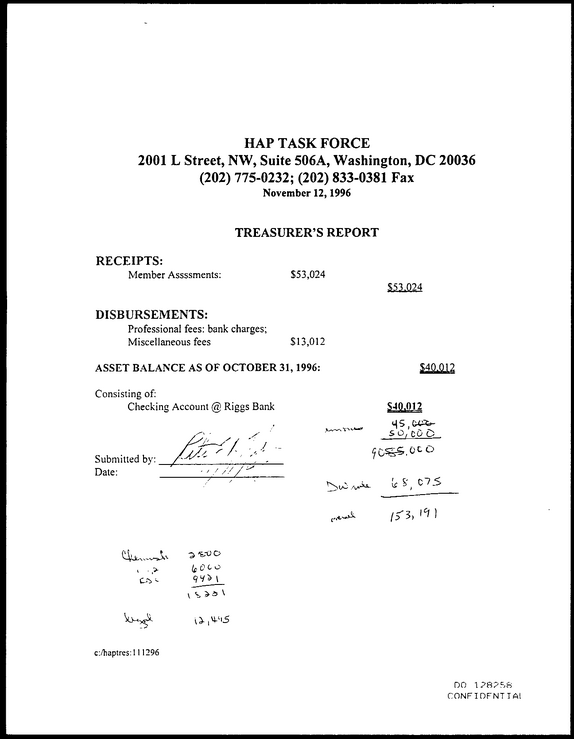
HAP TASK FORCE 2001 L Street, NW, Suite 506A, Washington, DC 20036 (202) 775-0232; (202) 833-0381 Fax November 12,1996 TREASURER'S REPORT RECEIPTS: Member Assssments: $53,024 $53.024 DISBURSEMENTS: Professional fees: bank charges; Miscellaneous fees $13,012 ASSET BALANCE AS OF OCTOBER 31,1996: Consisting of: Checking Account @ Riggs Bank Submitted by: Date: /mC'. / // /// M0-Q12 $40.012 MS, so, qO o /A \ S' C7 5 3, ^ cd - 9*0 l , v >* \ c:/haptres: 111296 DO 1 ,?
refid# v6aYNLkRBRkgmqzD404DVJLEq1 page
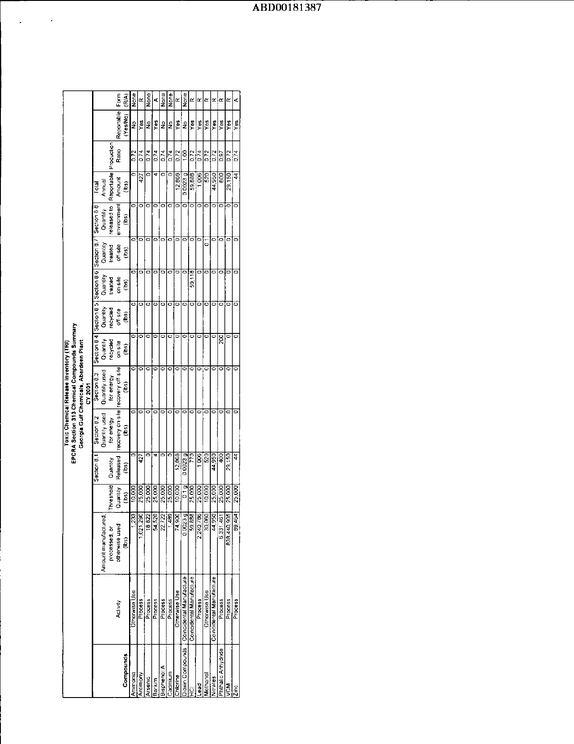
T oxic C hem ical Release In ve n to ry (TRI) EPCRA Section 313 C hem ical C om pounds Sum m ary G eorgia G u lf C hem icals, A berdeen Plant CY 2001 Am ount manufactured, Section 8.1 Section 8 2 Section 8.3 Section 8 4 Section 8 5 i Section 8 6 Quantity used Quantity used Quantity Quantity Quantity processed, or Threshold Quantity for energy for energy recycled recycled treated C om pounds Activity otherwise used (lbs) Quantity Released recovery on-site recovery off-site !
refid# rp85QjoadKprJ8reNXLm0Qmre1 page
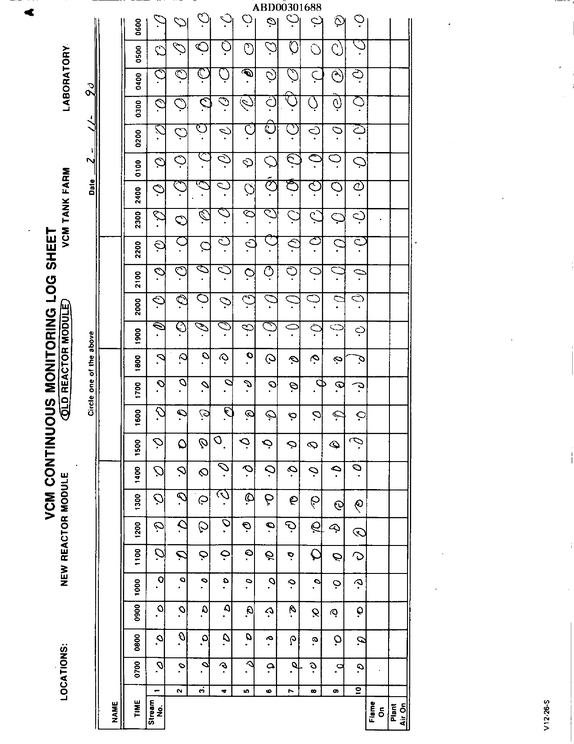
0500 LABORATORY ABD00301688 oo o <0 cj o o oO C C o o 0 S3 0 0 0 ooo o 9 0 0 C o oo O c on Drs 0 q) or\ o 9 *=d 6 u O o cD 0200 VCM TANK FARM 2000 <gLD REACTOR MODULE^ VCM CONTINUOUS MONITORING LOG SHEET oo o 9 o oo c> fM 0 O . o o CD <o 0 <b O o <D oo(CO*J CD <> CD c CD O o 0 u c oD D .
refid# KRdw15My1ZjrjQ9O55539RoQ21 page
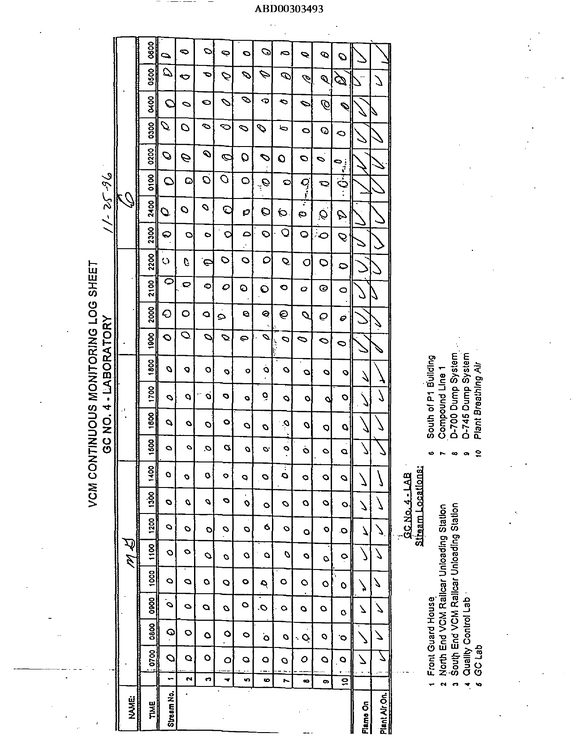
ABD00303493 VCM CONTINUOUS MONITORING LOG SHEET GC NO. 4 - LABORATORY / A 0500 0600 Gi z> o <3> & <o G> c g* O <D <5 .^ <6 V \ iT | 0400 0200 0300 O <o <G> o O Q <D A | 0100 <G 0 a oOO o V0 C> Ci o; A.
refid# g518bmbgRGLK6YnGXm4mbbq1 page
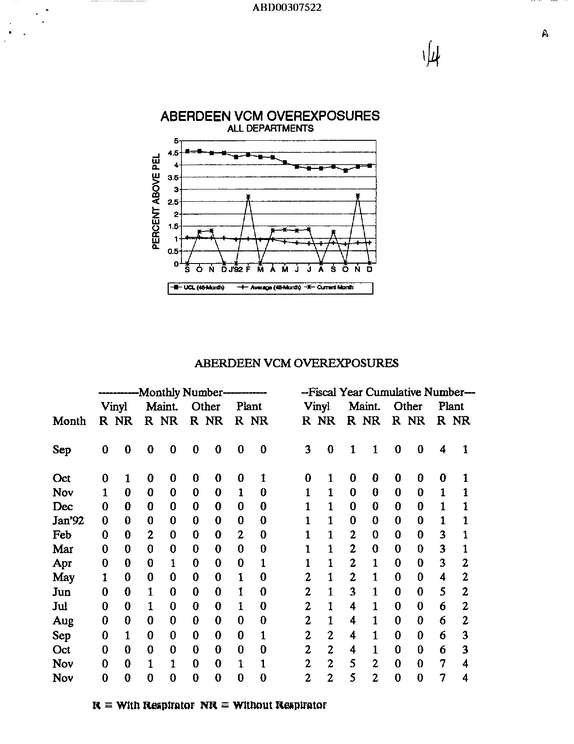
ABD00307522 M ABERDEEN VCM OVEREXPOSURES ALL DEPARTMENTS (XL (4&Month) --4-- Avwaga (48-Morrth) Curort Month ABERDEEN VCM OVEREXPOSURES -Monthly NumberVinyl Maint Other Plant Month R NR R NR R NR R NR --Fiscal'Year Cunlulative Nfumber-- Vinyl Maint.
refid# g2ZVJoxLQ24GdXxmLGB2Rbw5a1 page
1 asked me about.
refid# dYyYGRdDj5p9ovrGg5K689BzB1 page
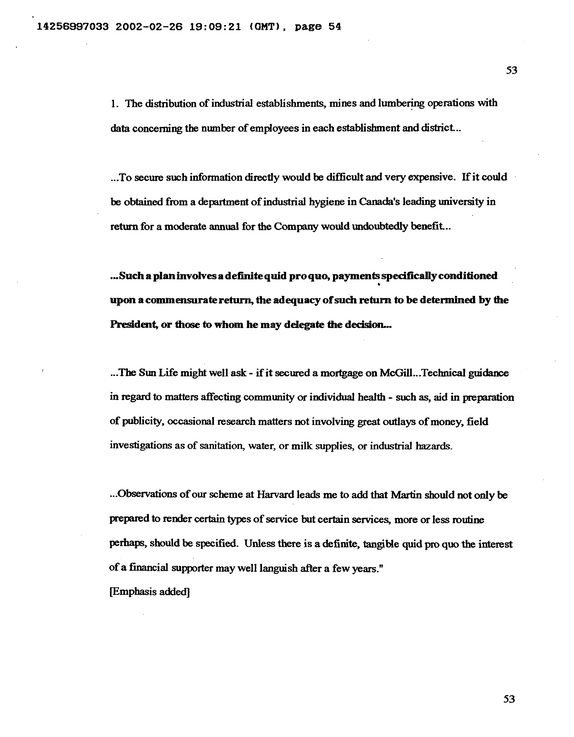
14256997033 2002-02-26 19:09:21 (GMT), page 54 53 1.
refid# OEabXqYZw211akqvkBGoDVaop1 page
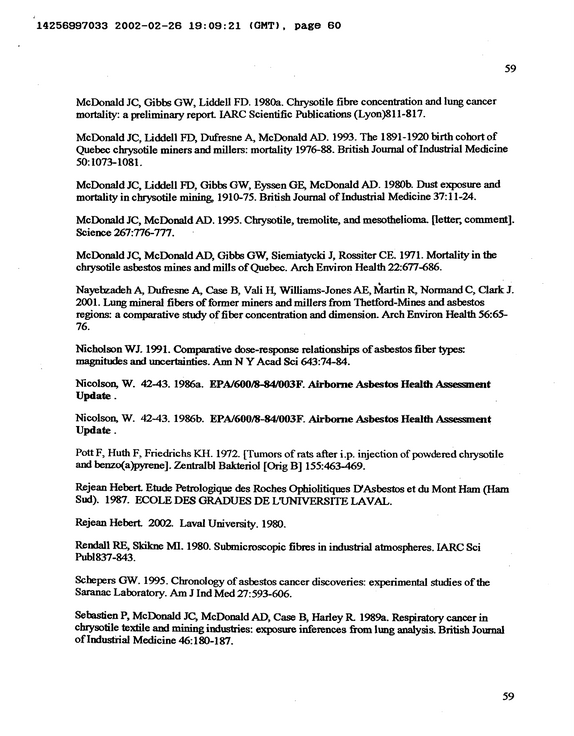
14256997033 2002-02-26 19:09:21 (GMT), page 60 59 McDonald JC, Gibbs GW, Liddell FD. 1980a.
refid# 4aeOBd5e8Qp0gZzEye1Yb9kYR1 page
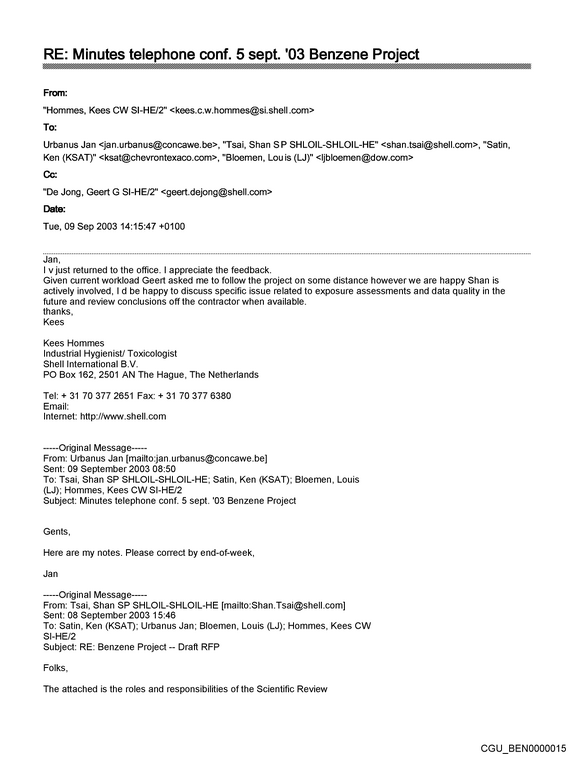
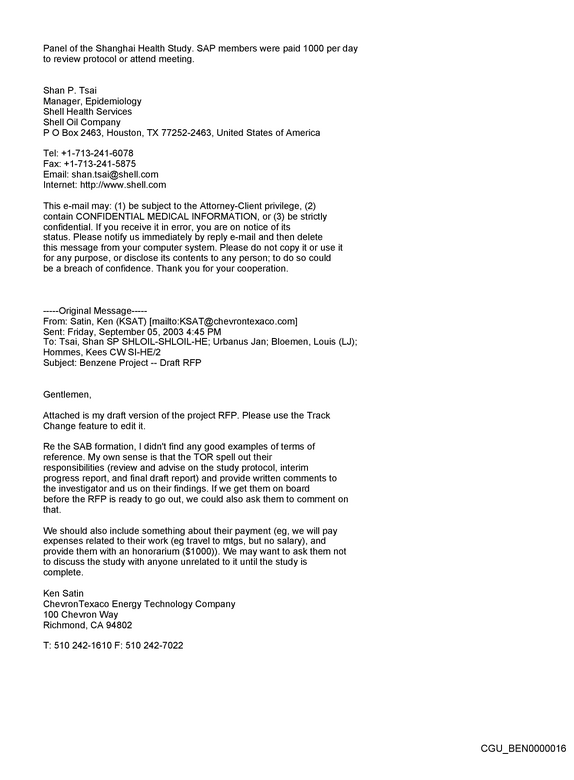
RE: Minutes telephone conf. 5 sept. '03 Benzene Project From: "Hommes, Kees CW SI-HE/2" <kees.c.w.hommes@si.shell.com> To: Urban us Jan <jan.urbanus@concawe.be>, "Tsai, Shan S P SHLOIL-SHLOIL-HE" <shan.tsai@shell.com>, "Satin, Ken (KSAT)" <ksat@chevrontexaco.com>, "Bioemen, Lou is (LJ)" <ljbloemen@dow.com> Cc: "DeJong, Geert G SI-HE/2" <geert.dejong@shell.com> Date: Tue, 09 Sep 2003 14:15:47 +0100 Jan, I v just returned to the office.
refid# NE8Nq2GO36aV5VQ5yM8RRYVRp2 pages
To: From: Cc: Bcc: Received Date: Subject: Brian Doll (E-mail)<brian.e.doll@exxonmobiLcom>; Burnett, Don (E-mail)<burnetdm@bp.com>; Michael Johnston <Mike.d.Johnston@ConocoPhillips.com>; Zach Wong (Email) <ZachWong@chevrontexaco.com>; Anita Balaraman (E-mail)<anita.balaraman@chevrontexaco.com>; Bruce M.
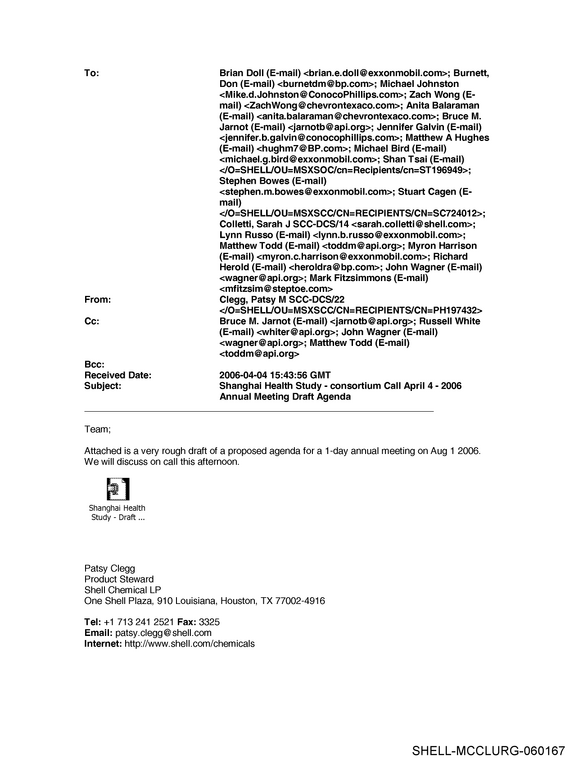

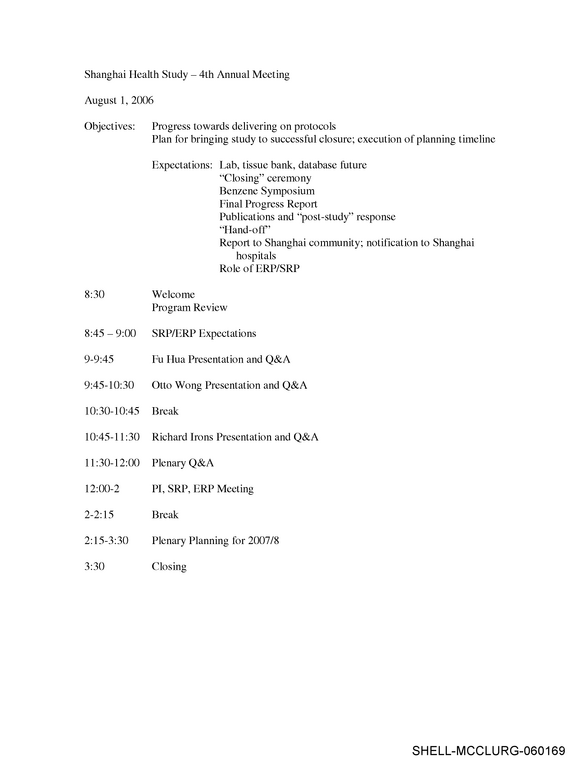
refid# G005XRgDDeD05yBV99x6LD5N3 pages
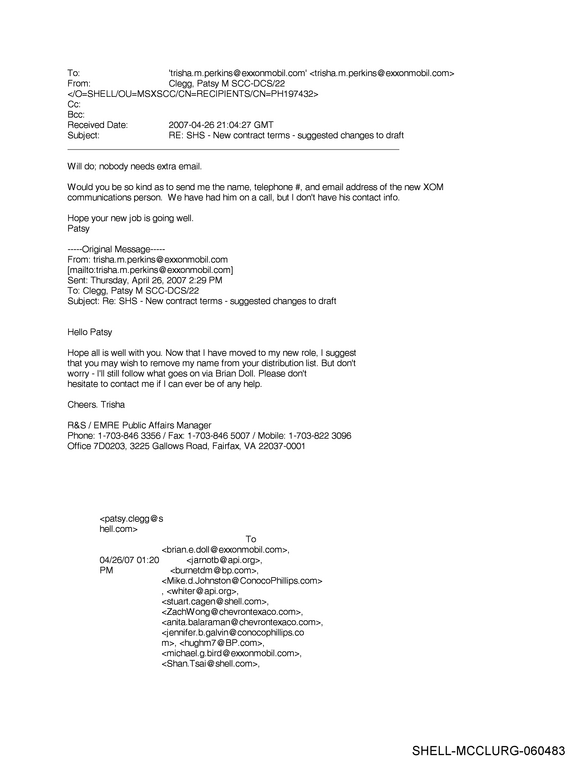
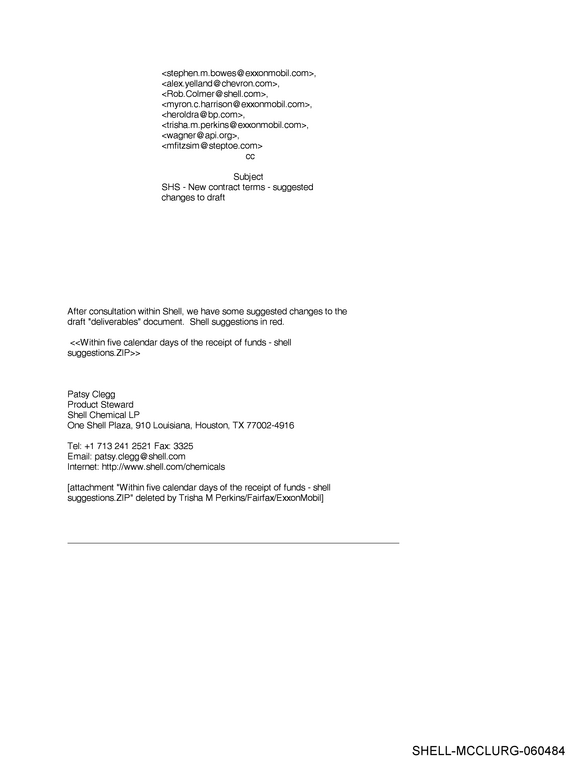
To: 'trisha.m.perkins@exxonmobil.com' <trisha.m.perkins@exxonmobil.com> From: Clegg, Patsy M SCC-OCS/22 </O=SHE LUOU=MSXSCC/CN=RE CI PI ENTS/CN=PH197432> Cc: Bcc: Received Date: 2007-04-2621 :04:27 GMT Subject: RE: SHS - New contract terms - suggested changes to draft Will do; nobody needs extra email.
refid# 2JQvvdG7Rrq1X9dqXZ96QvMLa2 pages
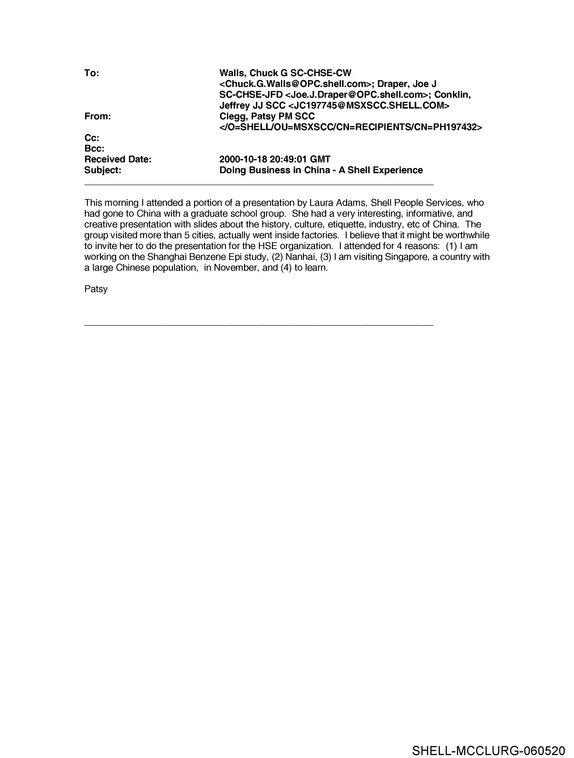
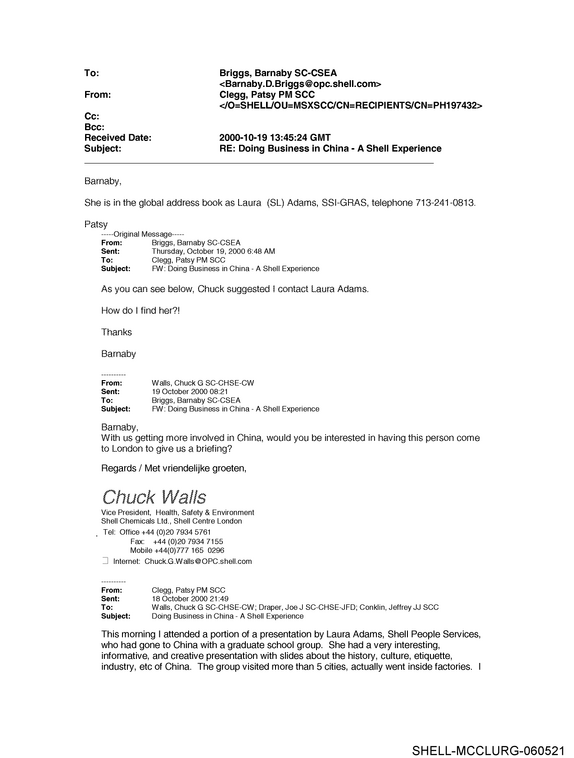
To: From: Cc: Bcc: Received Date: Subject: Walls, Chuck G SC-CHSE-CW <Chuck.G.Walls@OPC.shell.com>; Draper, Joe J SC-CHSE-JFD <Joe.J.Draper@OPC.shell.com>; Conklin, Jeffrey JJ SCC <JC197745@MSXSCC.SHELL.COM> Clegg, Patsy PM SCC <lO=SHELLlOU=MSXSCC/CN=RECIPIENTS/CN=PH197432> 2000-10-1820:49:01 GMT Doing Business in China - A Shell Experience This morning I attended a portion of a presentation by Laura Adams, Shell People Services, who had gone to China with a graduate school group.

refid# KzzjEZJ1KjnqpeJzJ9R6Bp0463 pages