Refine
Estimated Years 2000-2009Clear
3,232 results foundRefine Search
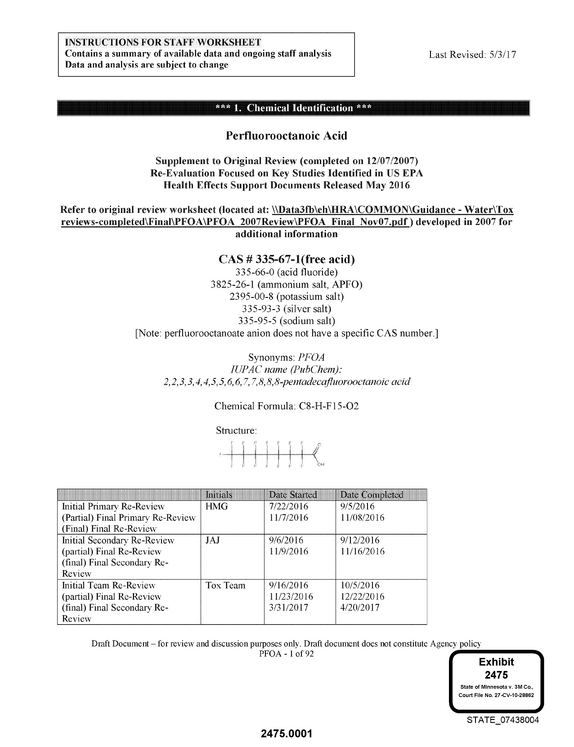
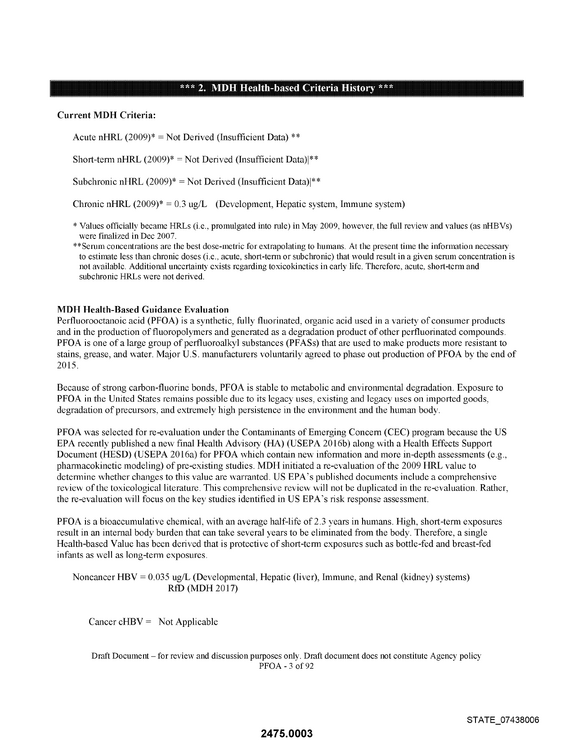
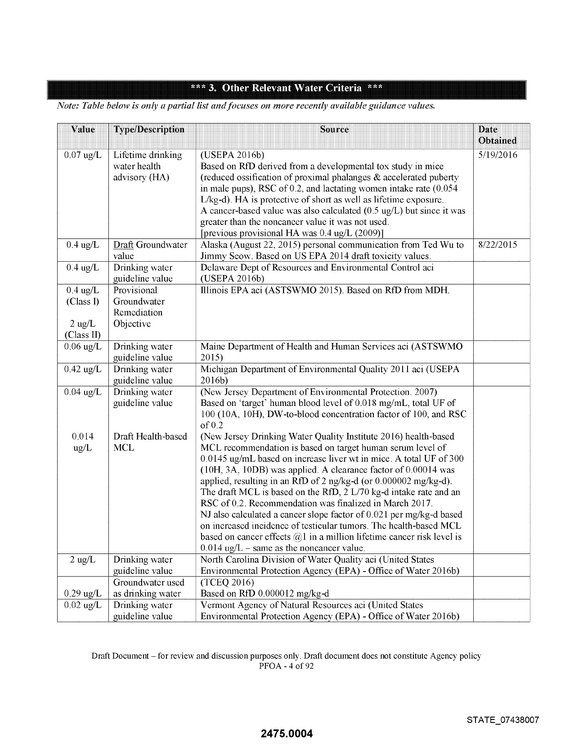
`IINCNoSnSTtTaRiRnUUsCCaTTsIIuOOmNNmSSarFFyOOoRRf aSSvTTaAAilFFaFFbleW WdOOaRtRaKKaSSnHHdEEoEnEgTToing staff analysis Data and Contains Data and analysisare subject to change a summary of available data and analysis are subject to change ongoing staff analysis Last Revised: 5/3/17 Last Revised: 5/3/17 PPeerrfflluuoorrooooccttaannooiicc AAcciidd Supplement to Original Review (completed on 12/07/2007) ReS-uEpvpalleumateinotntoFoOcruigseindaol nReKveiyewSt(ucdoimesplIedteendtiofnie1d2i/n07U/S20E07P)A Health Effects Support Re-Evaluation Focused on Health Effects Support Documents Released May Key Studies Identified in Documents Released May 2016 [IS EPA 2016 RRreeefferevttrooiooerriiggwiinnsaall-rreecFvviiioenewwamlwwpoPorFrlkkOssAehh\eetPeetFteO({Alldoo_cc2aa0ttee0dd7Raatte::v\Wi\DDeawat\taPa3Ff3bOM\eA\he~FHIiRRnaAAl\\CCNOoOvM M0V7M.IpOOdNNf)\GGuduieviddeaalnnoccpeeed-- iW Wnaat2t0ee0rr7i\TTfooo~xr `additional information reviews-completed\Final\PFOA\PFOA 2007Review\PFOA Final Nov07.pdf) developed in 2007 for additional information (CCAASS ## 333355--6677--11((ffrreeee aacciidd)) 5825-233633-551--66(66a--0m0m((oaaccniiidduffmlluusooarrliid,deeA))PFO) 3825-26-1 (ammonium salt, APFO) 335933 (slver sl) 22339955--0000-88 ((ppoottaassssiiuumm ssaalltt)) 333355.9-953--53((ssoidlvieurmssaallt)t) [Note: perfluorooctanoat3e3a5n-i9o5n-5do(essodnioutmhasavlet)a specific CAS number ] [Note: perfluorooctanoate anion does not have a specific CAS number.]

refid# a4vdEoVadr0OvLnK0Q2q3rYBy92 pages
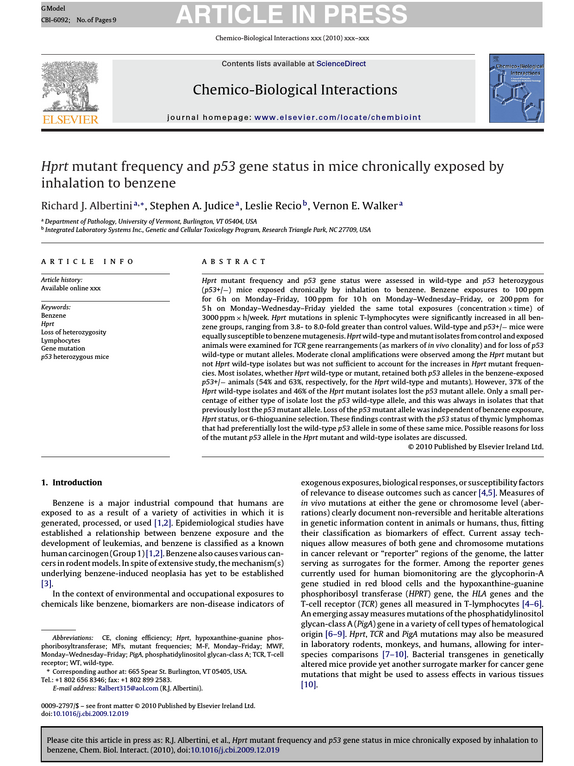
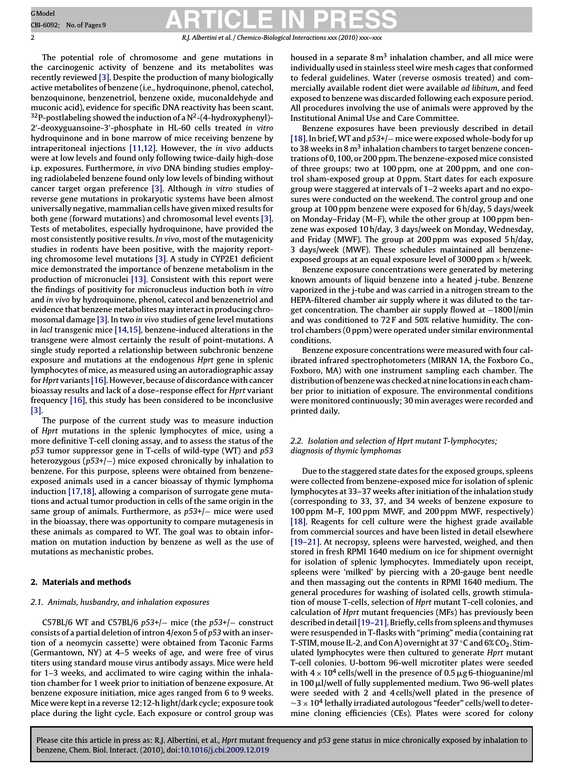
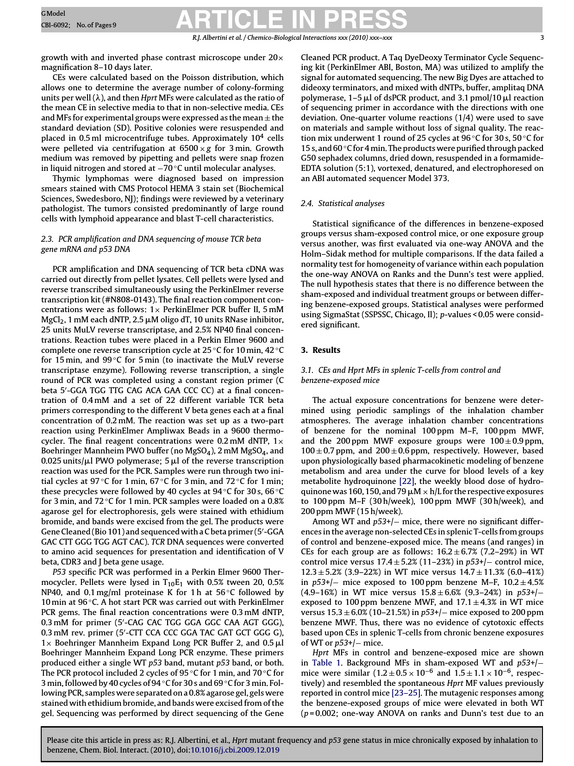
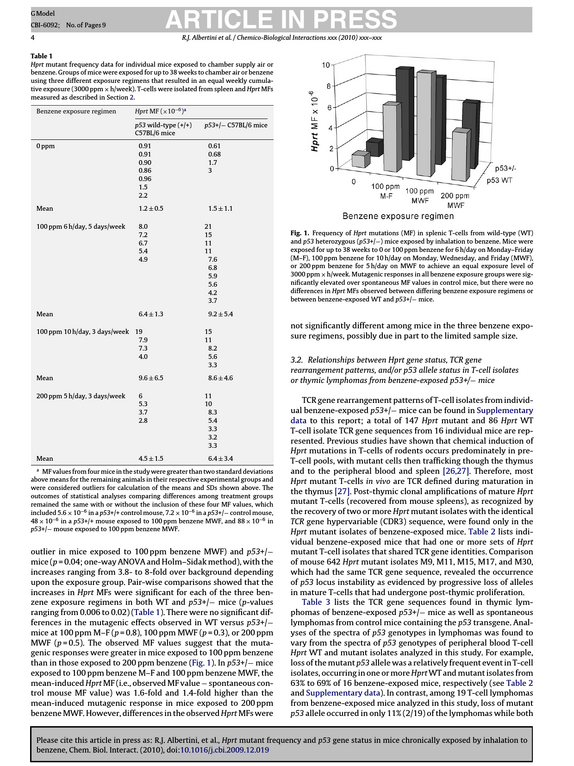
G Model CBI-6092; No. of Pages 9 ARTICLE IN PRESS Chemico-Biological Interactions xxx (2010) xxxxxx Contents lists available at ScienceDirect Chemico-Biological Interactions journal homepage: www.elsevier.com/locate/chembioint Hprt mutant frequency and p53 gene status in mice chronically exposed by inhalation to benzene Richard J.
refid# 2NvpYVO3OMq4bgGEEk7oZwk1R9 pages
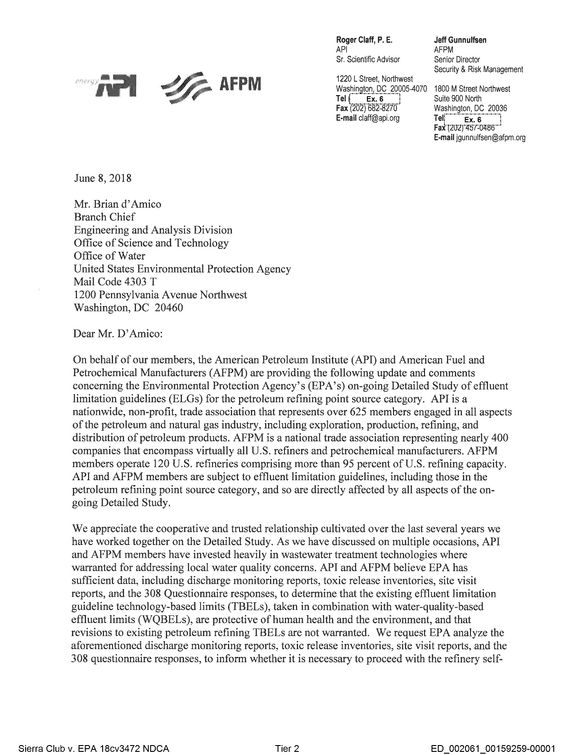
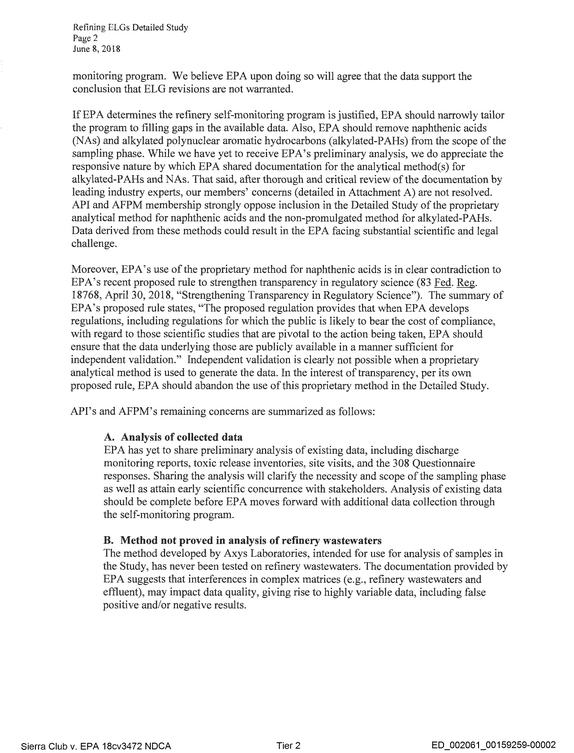
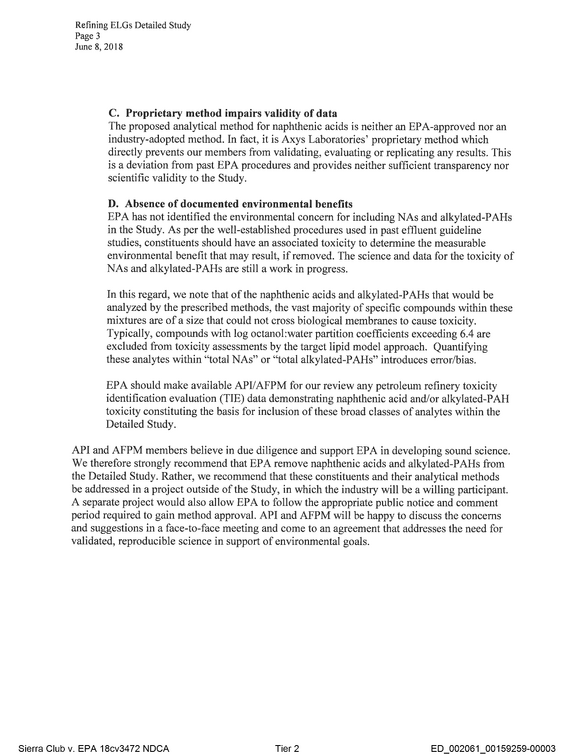
That said, after thorough and critical review of the documentation by leading industry experts, our members' concerns (detailed in Attachment A) are not resolved.
refid# NE3jbwE85koD7XrpmyOZ970M828 pages
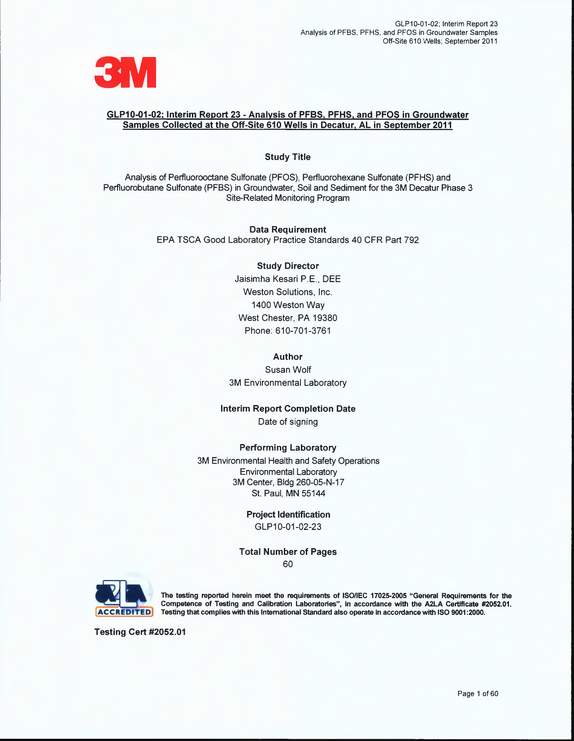
3M GLP10-01-02; Interim Report 23 Analysis of PFBS, PFHS, and PFOS in Groundwater Samples Off-Site 610 Wells; September 2011 GLP10-01-02; Interim R eport 23 - A n a lysis o f PFBS.
refid# rwMXzxaO9znN6rvy998ZBQg765 pages
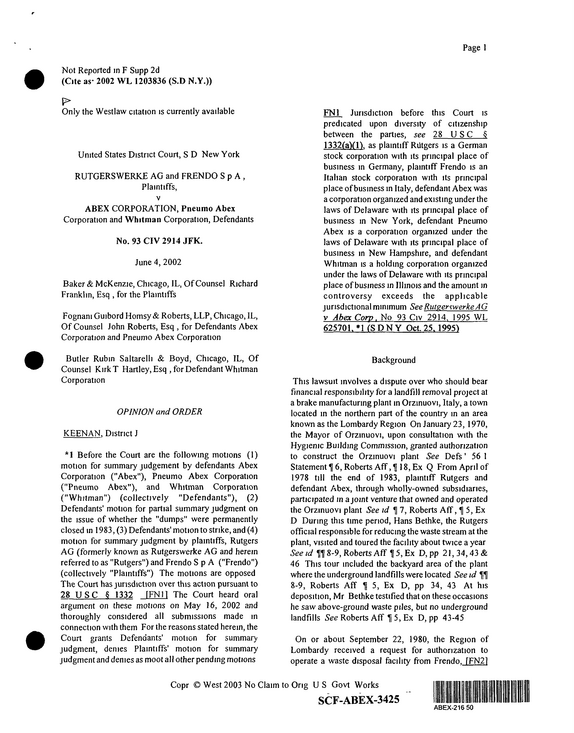
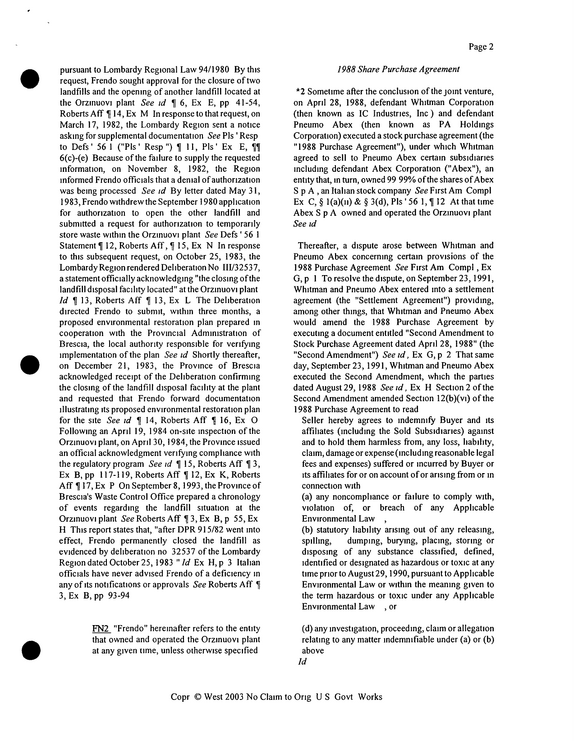
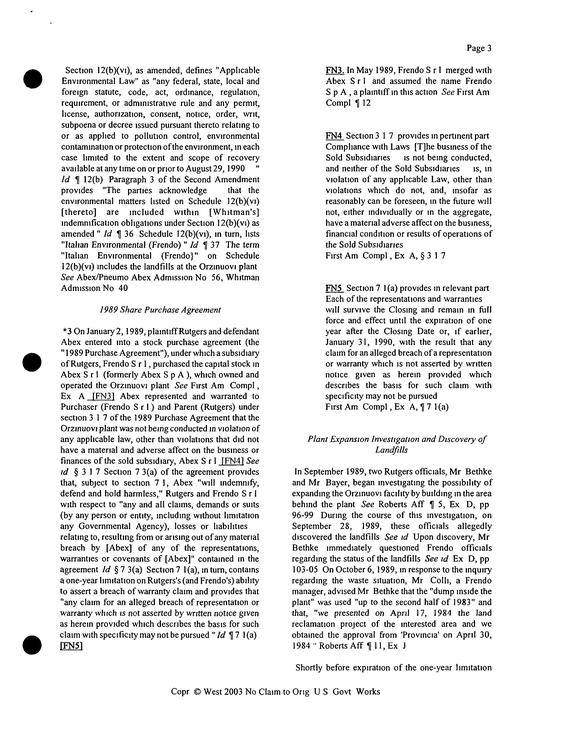
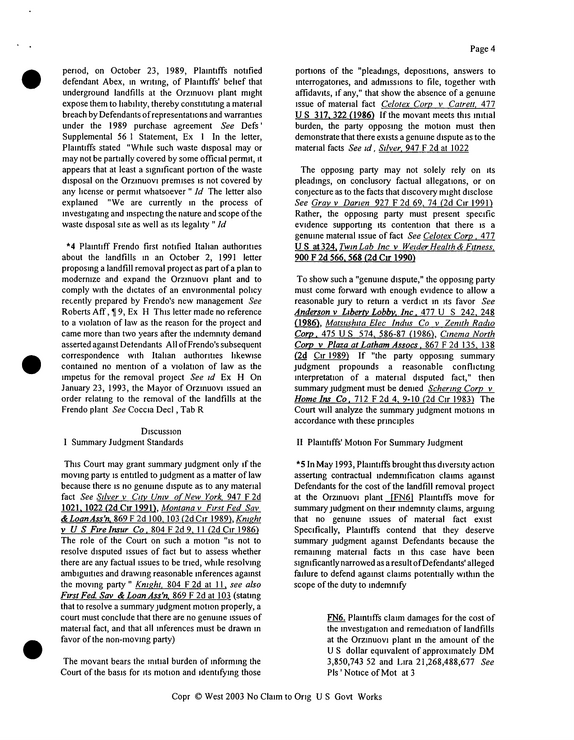
Not Reported in F Supp 2d (Cite as- 2002 WL 1203836 (S.D N.Y.)) t> Only the Westlaw citation is currently available United States District Court, S D New York RUTGERSWERKE AG and FRENDO S p A , Plaintiffs, v ABEX CORPORATION, Pneumo Abex Corporation and Whitman Corporation, Defendants No. 93 CIV 2914 JFK.
refid# MMQjdagRG76O33L8bgrrZKmzk16 pages
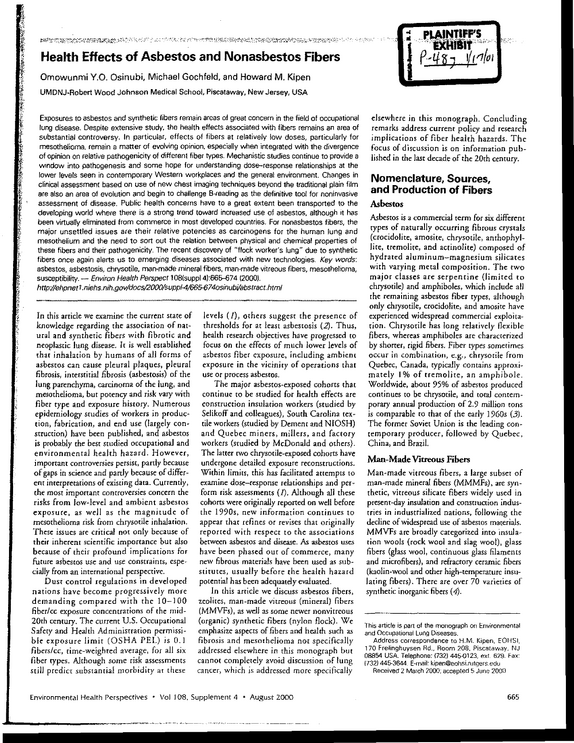
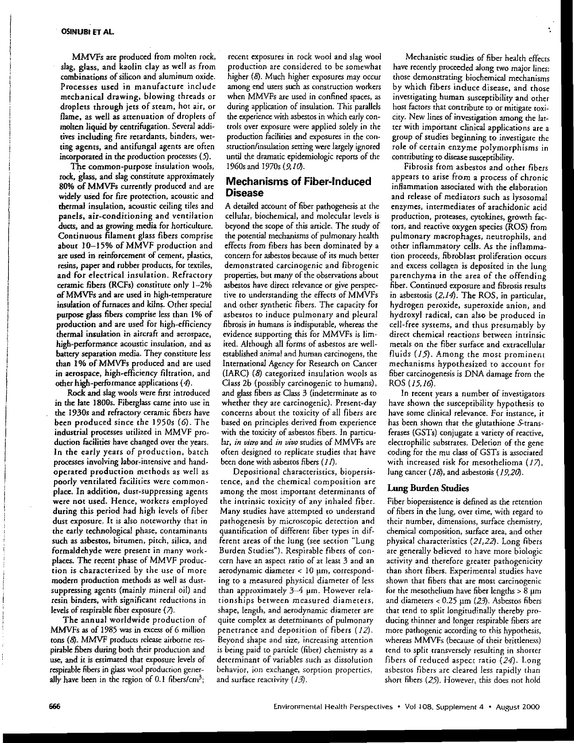
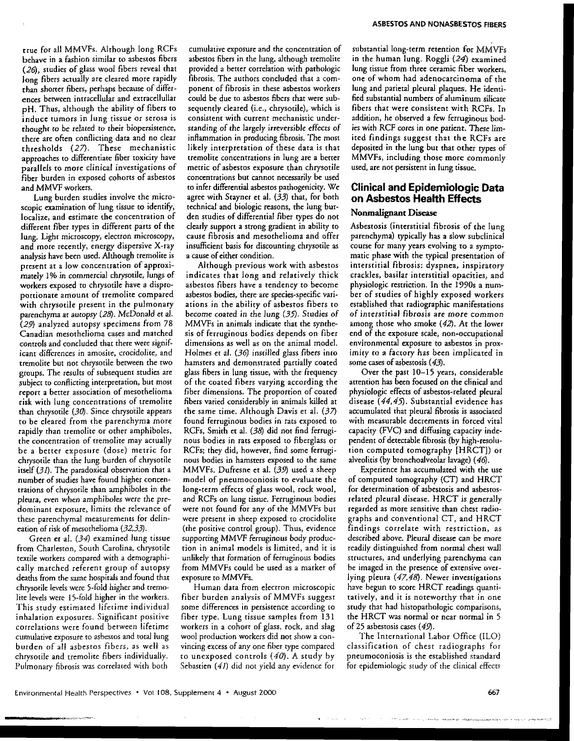
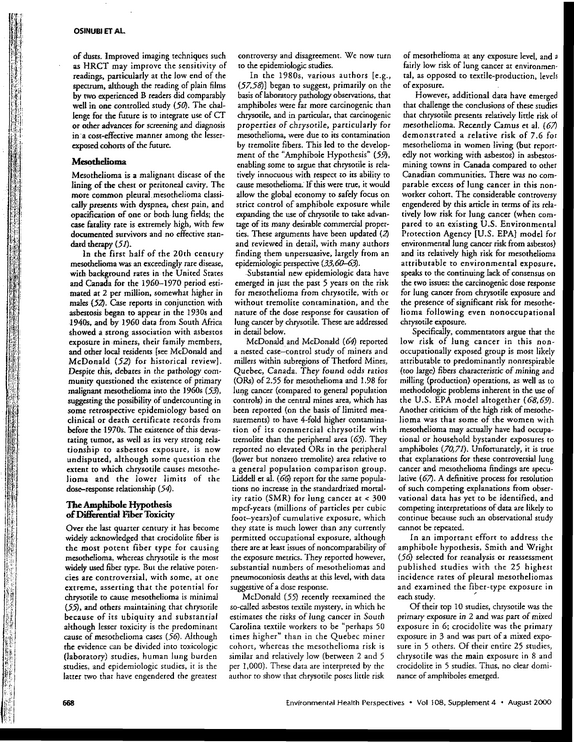
tion, fabrication, and end use (largely con tile workers (studied by Dement and NIOSH) The former Soviet Union is the leading con struction) have been published, and asbestos and Quebec miners, millers, and factory temporary producer, followed by Quebec, is probably the best studied occupational and workers (studied by McDonald and others).
refid# Evw4EyEnqJq83xRZpen4MDeqj10 pages
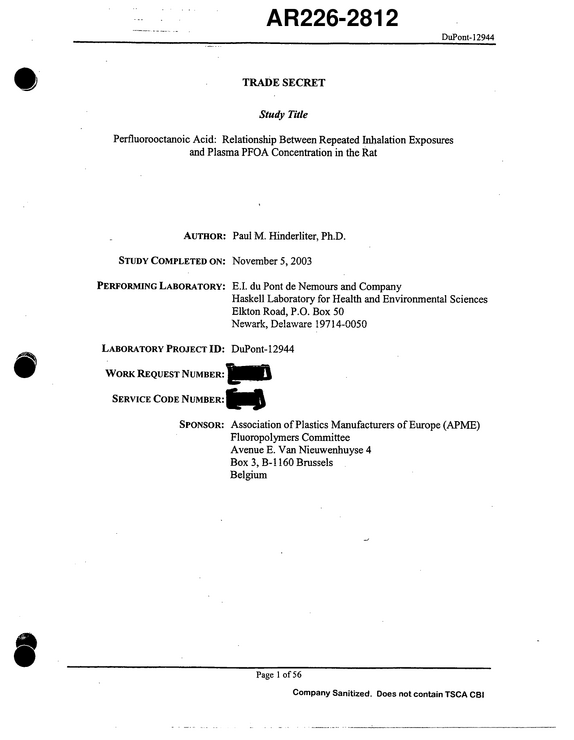
AR226-2812 TRADE SECRET Study Title Perfluorooctanoic Acid: Relationship Between Repeated Inhalation Exposures and Plasma PFOA Concentration in the Rat AUTHOR: Paul M.
refid# KGDG3xzmEEmdde1BJk5GvZYvo56 pages
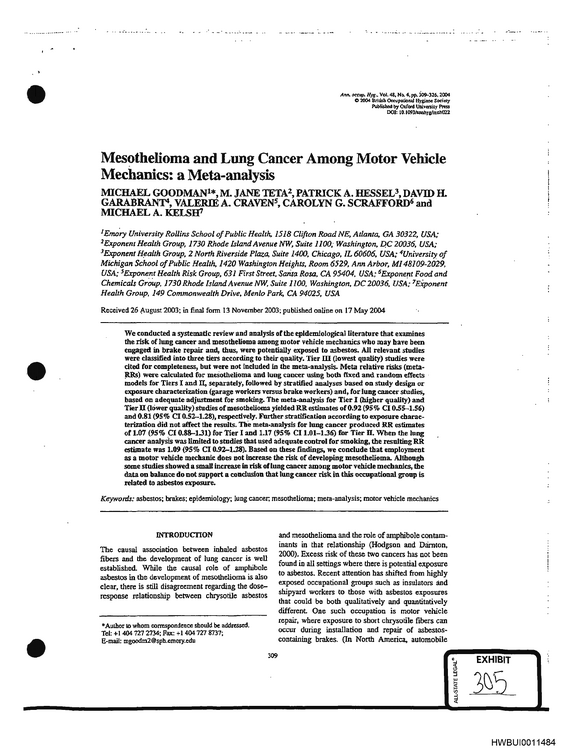
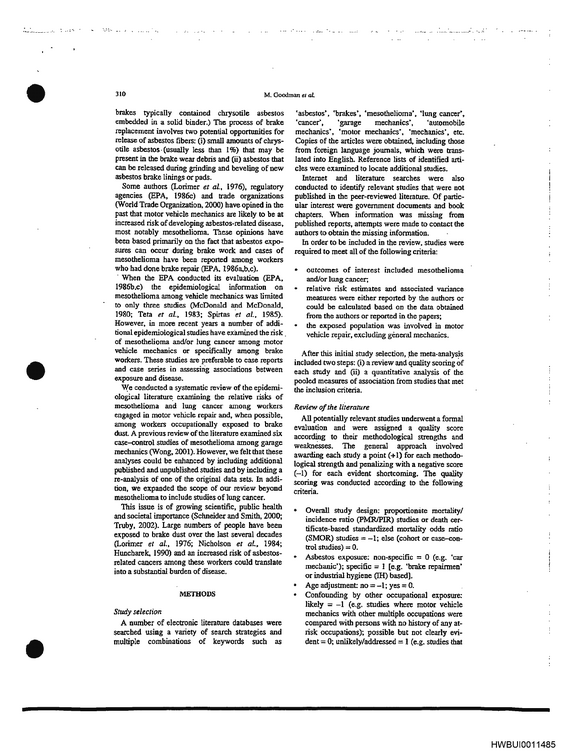
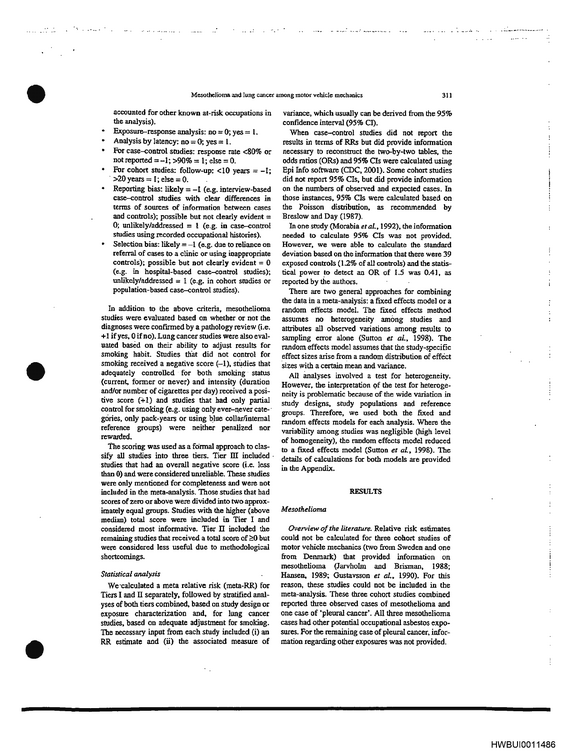
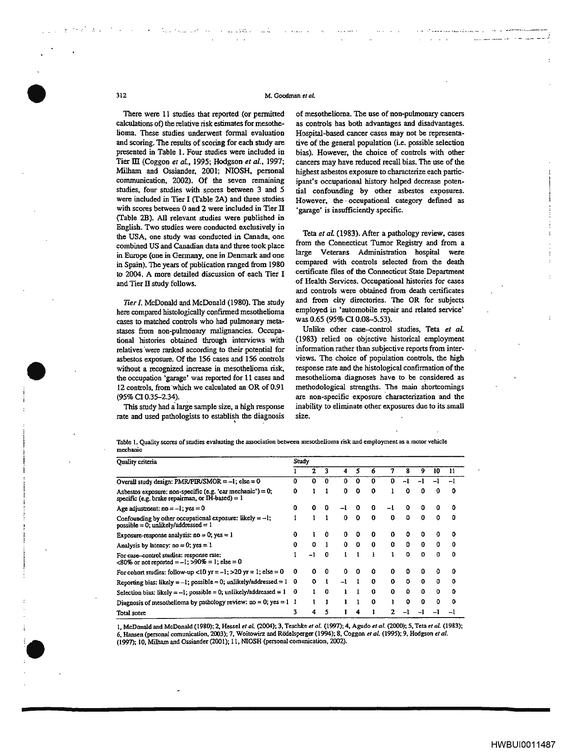
Ann, otesp, ffyg., VO. 4$, Nk 4,pp. 309-326.2004 2004 British OeeMpaijonsl Hygime Society Published by Oxford University Press DO!
refid# a2Gj8L1BVe43M4kpG5r3zwmX18 pages
ARR EG -- 1828 Final Report on A Pharmacokinetic Study of Potassium Perfluorooctanoate in the Cynomolgus Monkey ~~T-757:!
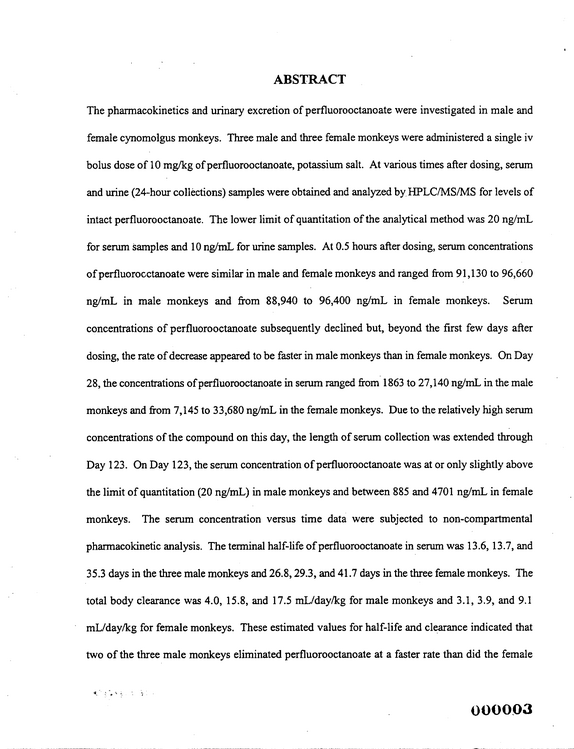
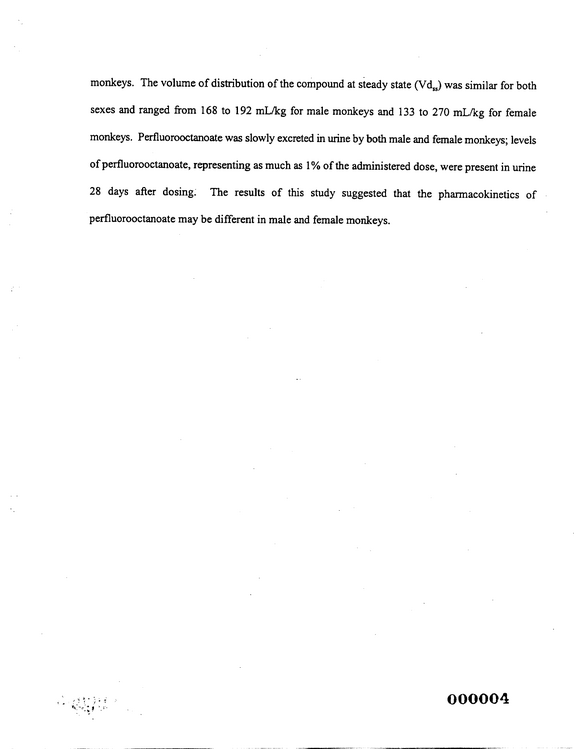
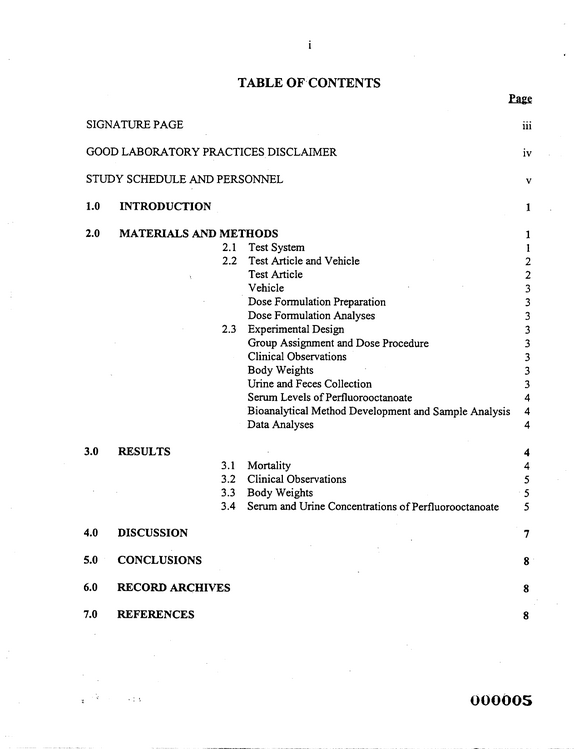
refid# gbMgLxDEqXdGdRo0wDrEegYq360 pages
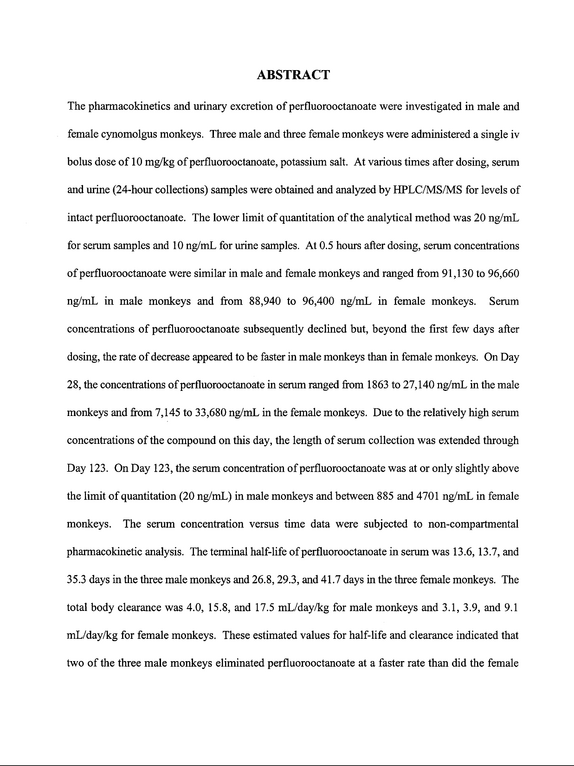
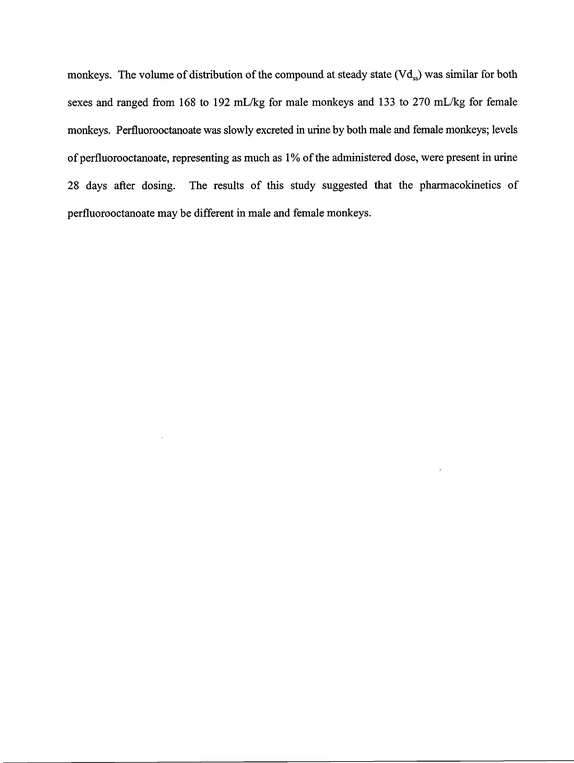
A Pharmacokinetic Study of Potassium Perfluorooctanoate in the Cynomolgus Monkey Southern Research Institute Study ID: 9921.4 January 14, 2003 Final Report on A Pharmacokinetic Study of Potassium Perfluorooctanoate in the Cynomolgus Monkey To: 3M Corporation P.O.
refid# pmzv2x7zEGVJrMOYdw0ZNZrjB61 pages
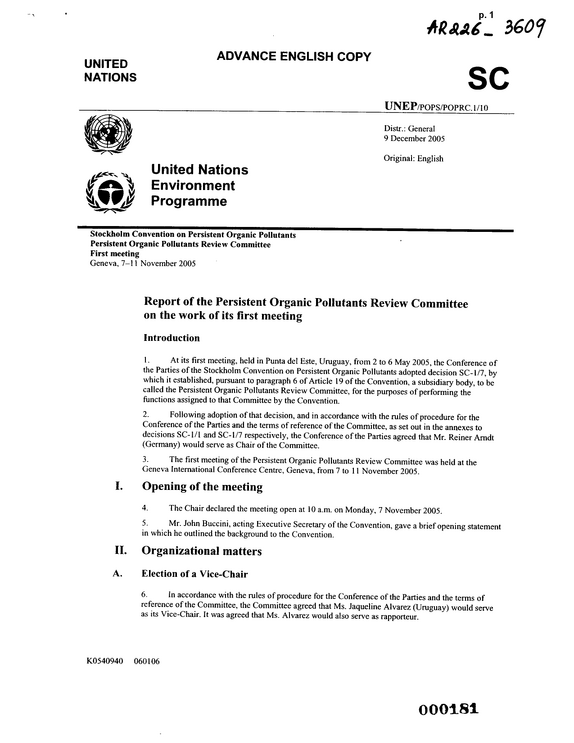
UNITED ADVANCE ENGLISH COP Y NATIONS P.
refid# LK75Gr43RxeK91qg1zzn08k2Q35 pages
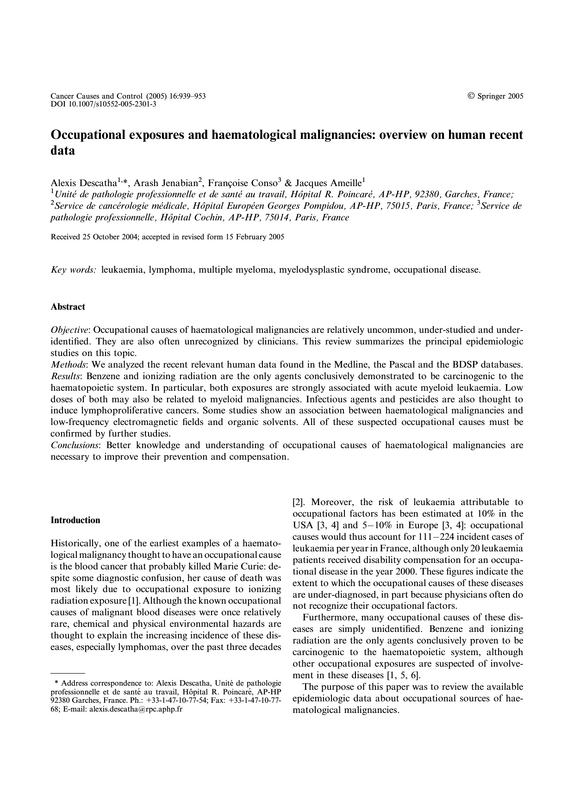
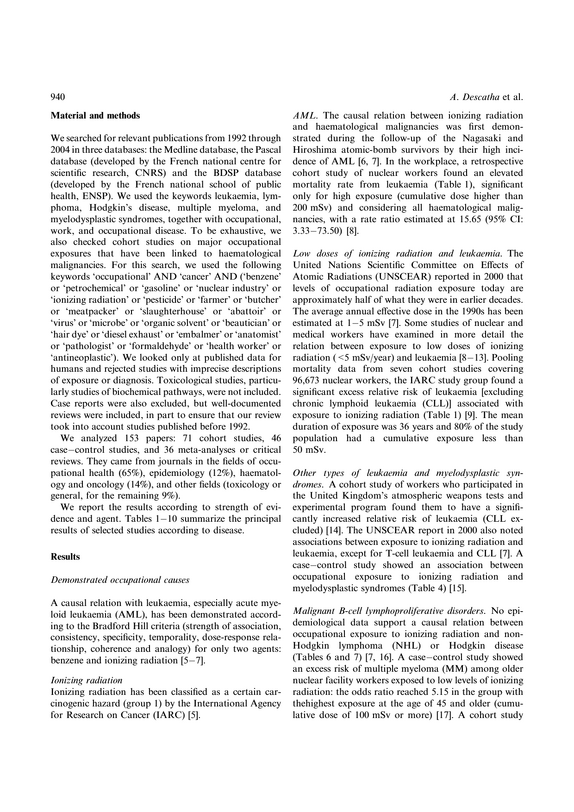
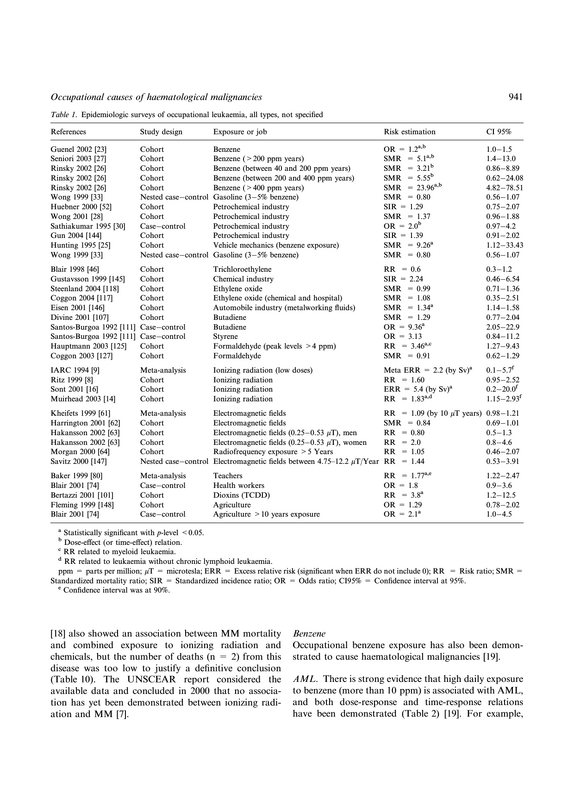
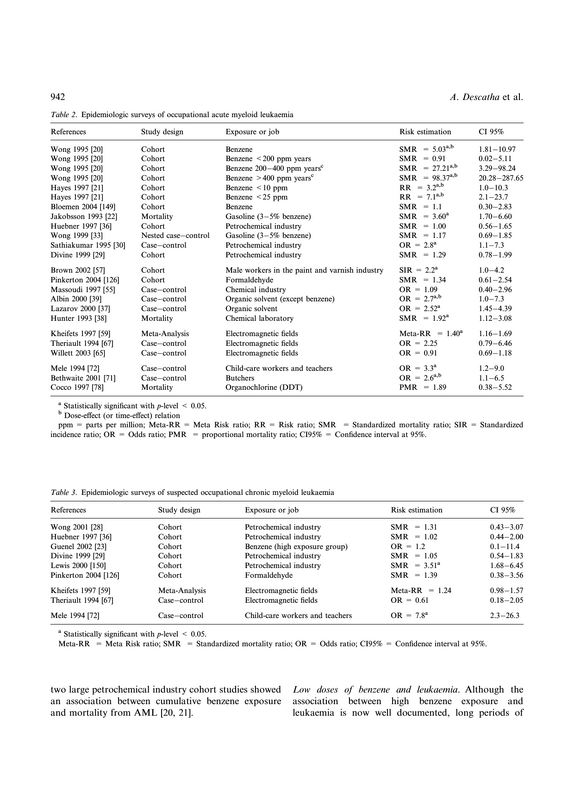
Cancer Causes and Control (2005) 16:939953 DOI 10.1007/s10552-005-2301-3 Springer 2005 Occupational exposures and haematological malignancies: overview on human recent data Alexis Descatha1,*, Arash Jenabian2, Franc oise Conso3 & Jacques Ameille1 1Unite de pathologie professionnelle et de sante au travail, Ho^pital R.
refid# 3N4Z4x7gXZqdN2aO7pz8O84qx15 pages
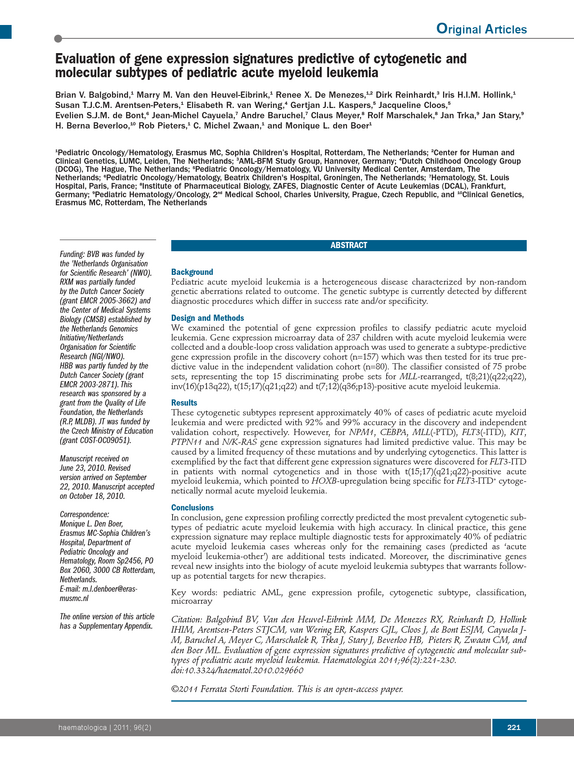
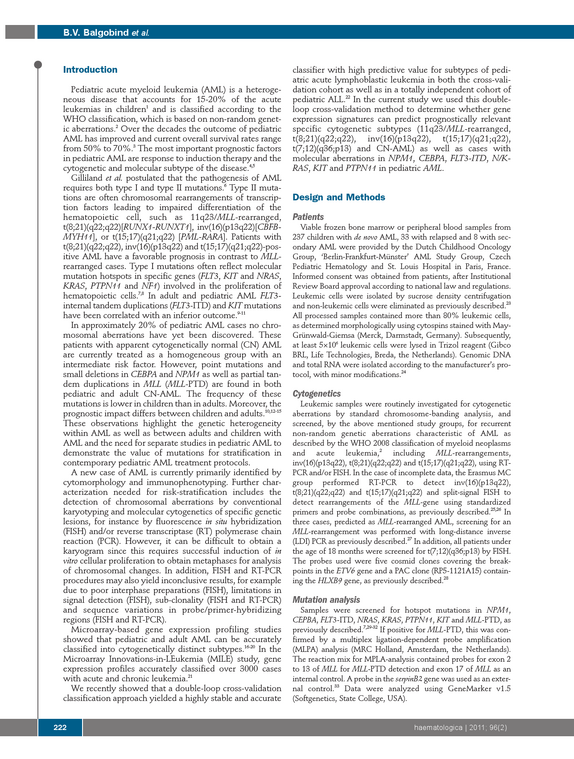
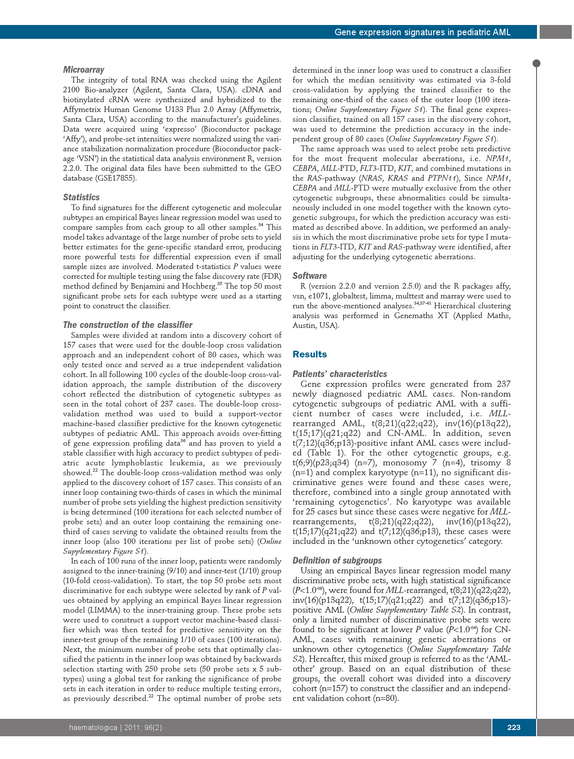
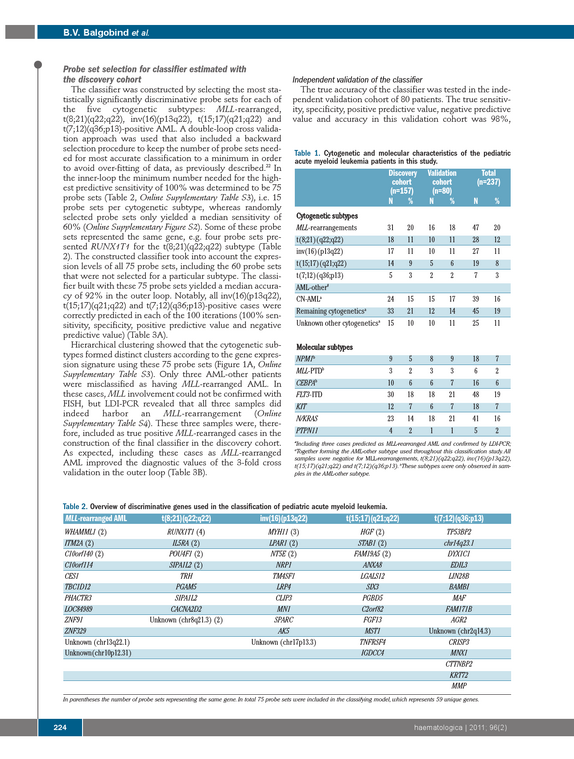
Introduction Pediatric acute myeloid leukemia (AML) is a heterogeneous disease that accounts for 15-20% of the acute leukemias in children1 and is classified according to the WHO classification, which is based on non-random genetic aberrations.2 Over the decades the outcome of pediatric AML has improved and current overall survival rates range from 50% to 70%.3 The most important prognostic factors in pediatric AML are response to induction therapy and the cytogenetic and molecular subtype of the disease.4,5 Gilliland et al. postulated that the pathogenesis of AML requires both type I and type II mutations.6 Type II mutations are often chromosomal rearrangements of transcription factors leading to impaired differentiation of the hematopoietic cell, such as 11q23/MLL-rearranged, t(8;21)(q22;q22)[RUNX1-RUNXT1], inv(16)(p13q22)[CBFBMYH11], or t(15;17)(q21;q22) [PML-RARA].
refid# 82ezLVEJVn7a3pbXovKqgoOzZ10 pages
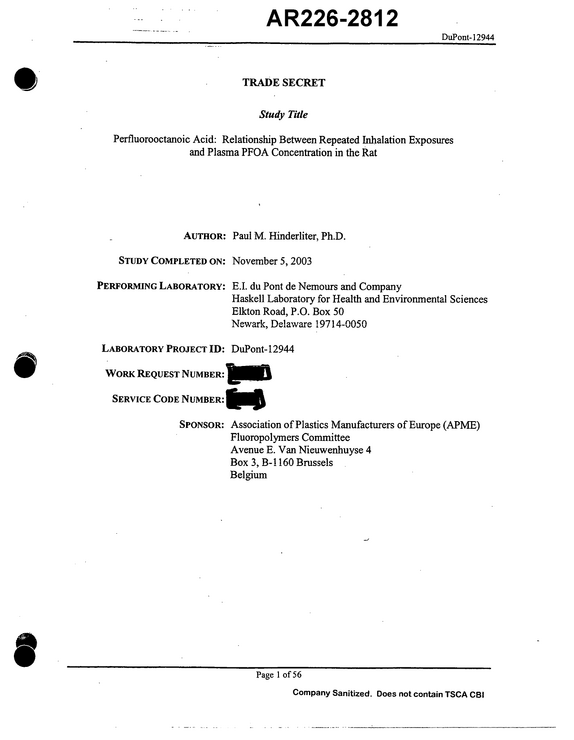
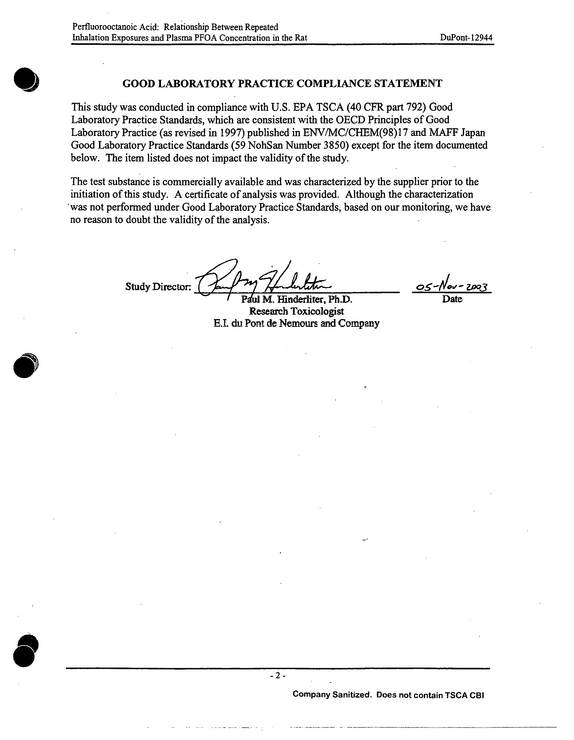
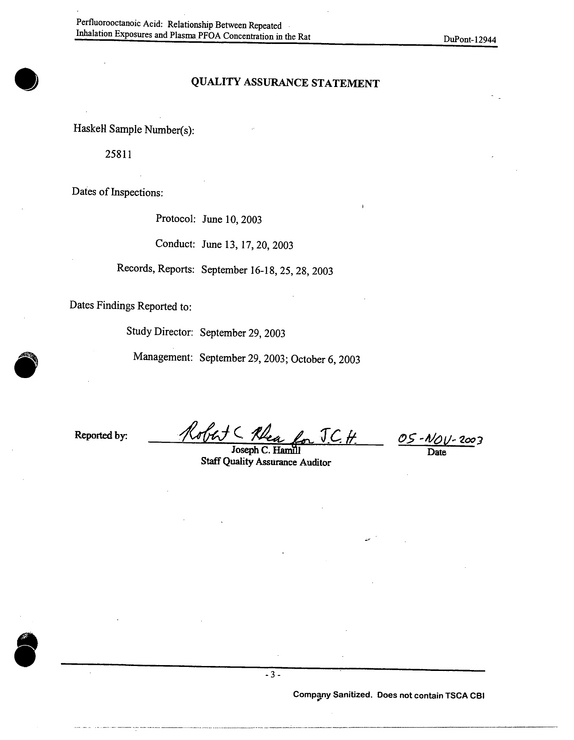
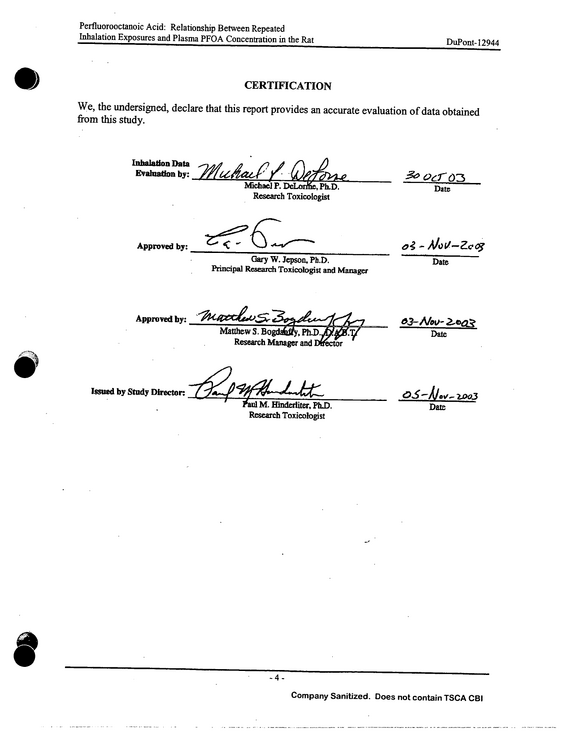
AR226-2812 DuPont-12944 TRADE SECRET Study Title Perfluorooctanoic Acid: Relationship Between Repeated Inhalation Exposures and Plasma PFOA Concentration in the Rat Author: Paul M.
refid# oDRq54erDneZ92QZ4RojggO3o56 pages
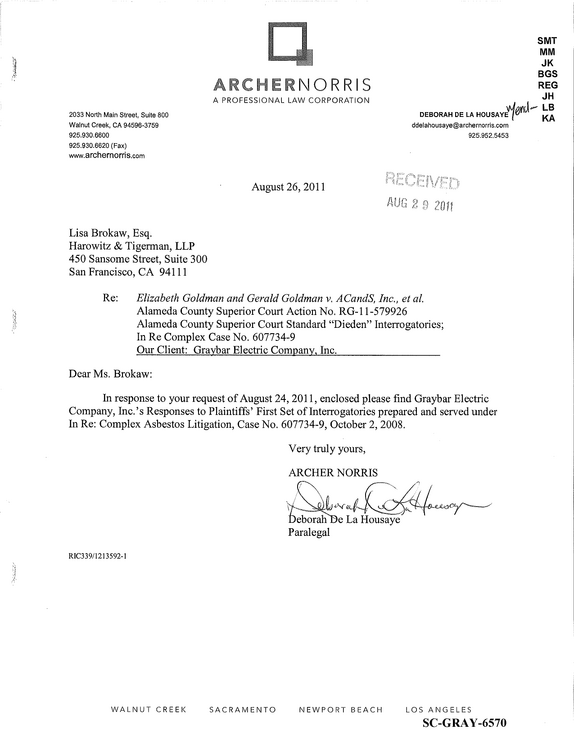
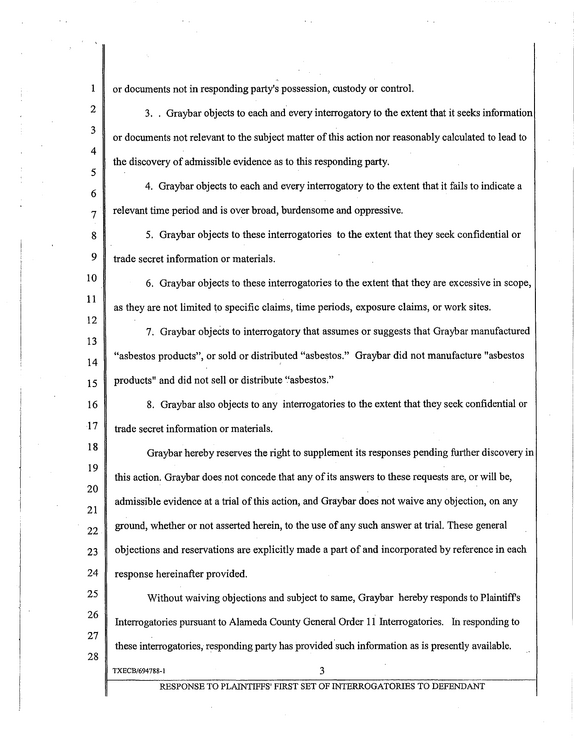
Graybar objects to each and every interrogatory to the extent that it seeks information 3 or documents not relevant to the subject matter of this action nor reasonably calculated to lead to 4 the discovery of admissible evidence as to this responding party. 5 4.
refid# 700NNQn2j9JEYgdm3yX5e7QmB31 pages