Refine
Estimated Years 2000-2009Clear
3,232 results foundRefine Search
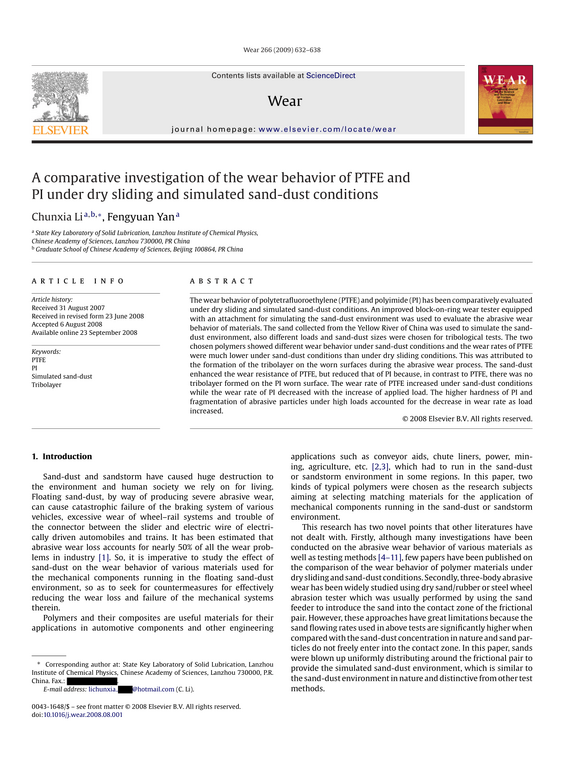
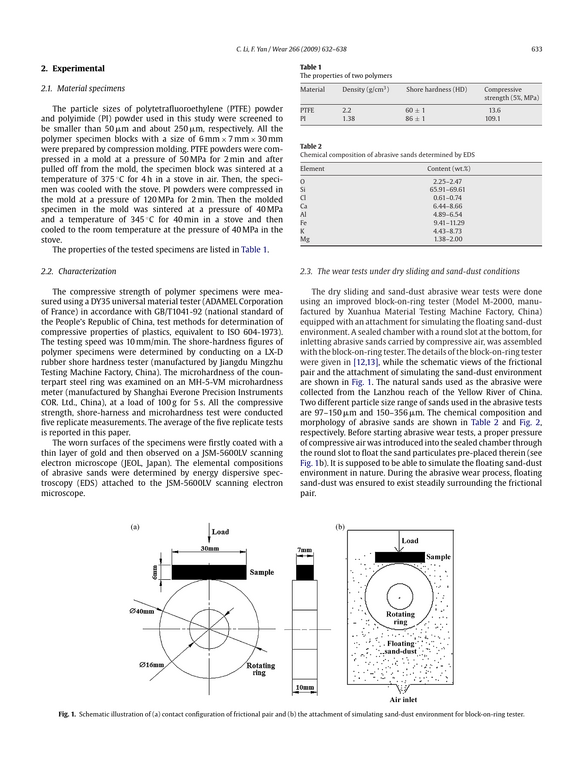
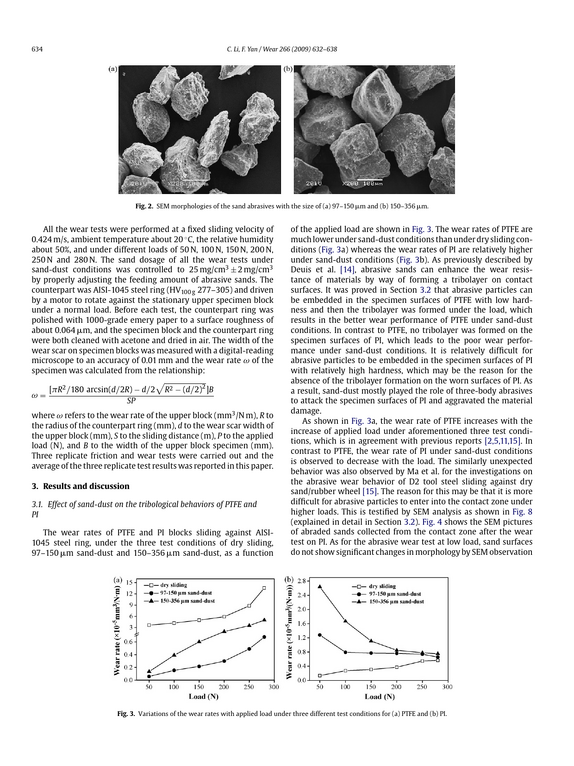
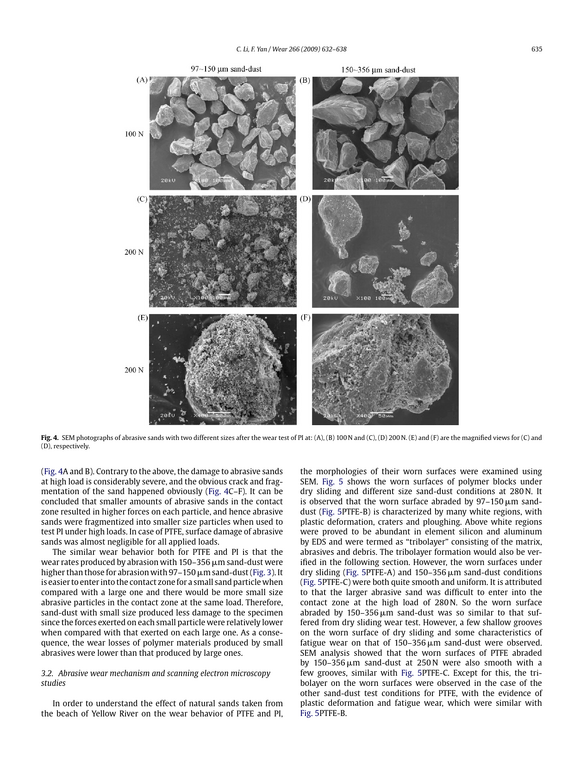
ELSEV ER Wear 266 (2009) 632-638 Contents lists available at ScienceDirect Wear journal homepage: www.elsevier.com/locate/wear A comparative investigation of the wear behavior of PTFE and PI under dry sliding and simulated sand-dust conditions Chunxia Li a' b' *, Fengyuan Yana a State Key Laboratory of Solid Lubrication, Lanzhou Institute of Chemical Physics, Chinese Academy of Sciences, Lanzhou 730000, PR China b Graduate School of Chinese Academy of Sciences, Beijing 100864, PR China ARTICLE INFO Article history: Received 31 August 2007 Received in revised form 23 June 2008 Accepted 6 August 2008 Available online 23 September 2008 Keywords: PTFE PI Simulated sand-dust Tribolayer ABSTRACT The wear behavior of polytetrafluoroethylene (PTFE) and polyimide (PI) has been comparatively evaluated under dry sliding and simulated sand-dust conditions.
refid# 4eNV59aNG8Z1DvVR4805Xa8p7 pages
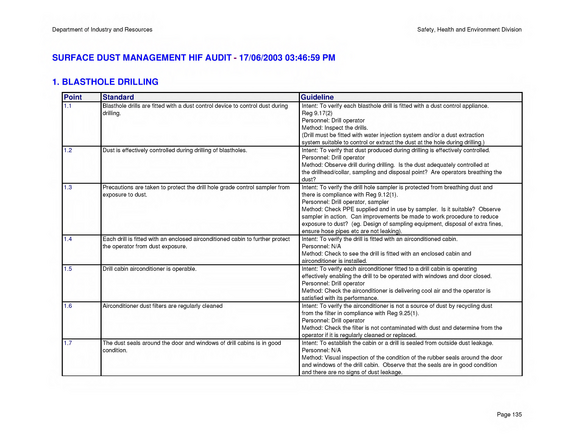
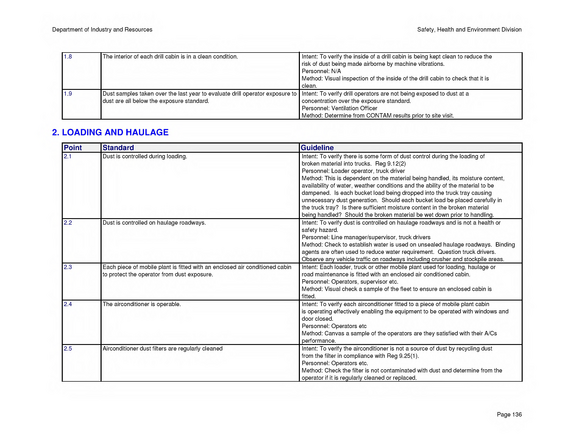
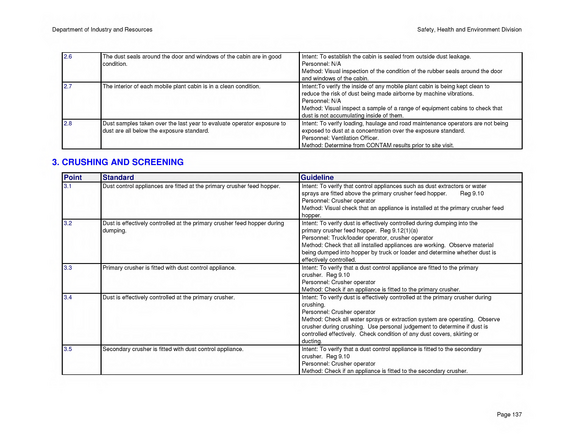
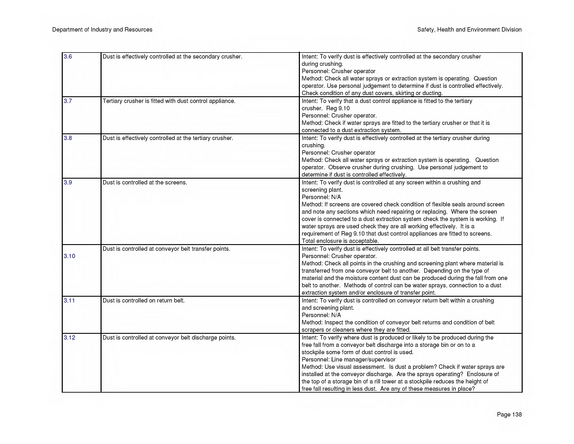
Department of Industry and Resources Safety, Health and Environment Division SURFACE DUST MANAGEMENT HIF AUDIT - 17/06/2003 03:46:59 PM 1.
refid# ZnQz2erwO2v4Em8181LDVYO4p17 pages
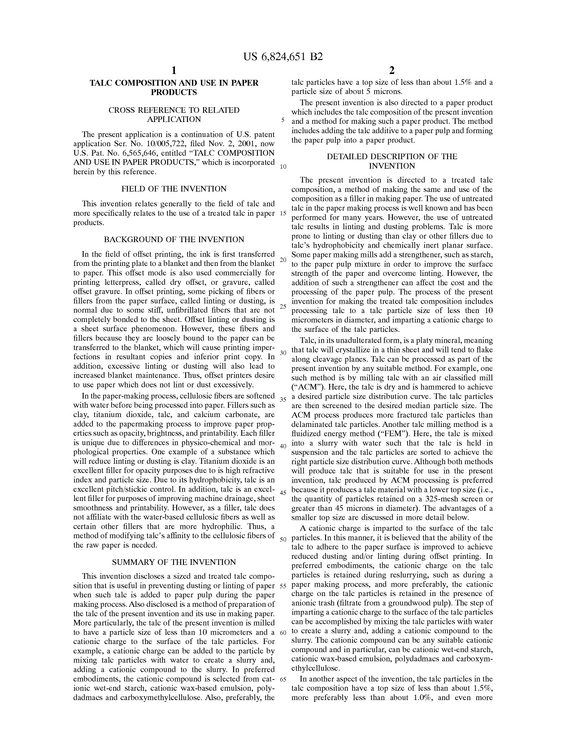
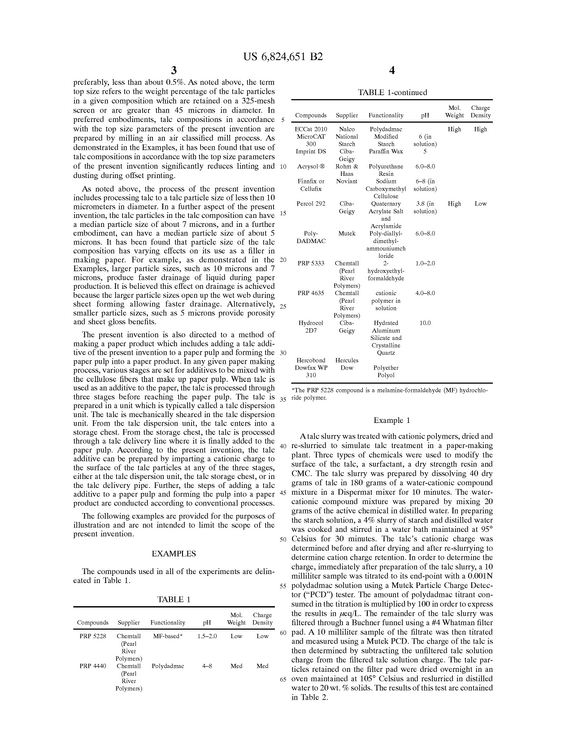
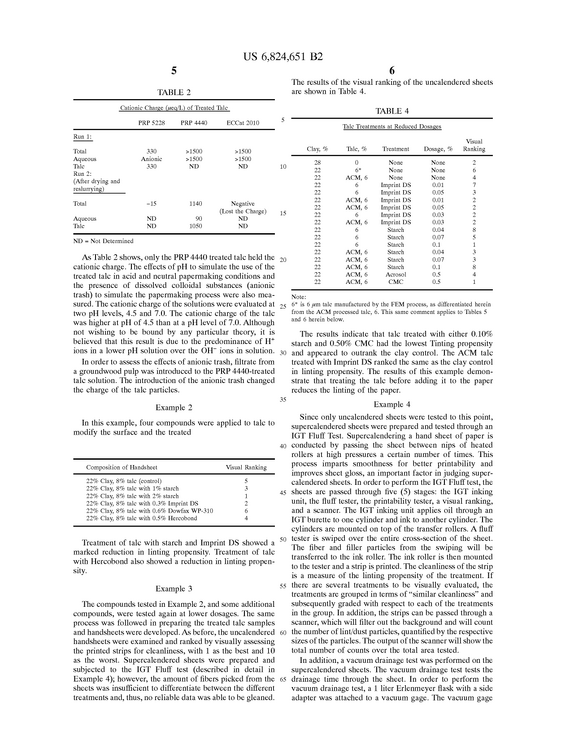
Talc can be processed as part of the addition, excessive linting or dusting Will also lead to present invention by any suitable method.
refid# EqzEG6ny9w2R0Mj1QD3RgkzJg7 pages
Recovery Animals Examined by Light and ElectronMicroscopy Males 105511 105522 0.75 me-,Ika-/dPaFvO (Group 4 Hiah-Dose) Females 105533 105542 Thin sections(approximately 90 nm) from the Epon-embedded liverswere cut,mounted on 200-mesh copper zrids.stainedwith 5% methanolic uranyl acetateand Reynold's lead citratea,nd examined on a Zeiss 900 transmissionelectronnucroscope.

refid# 3NjX797Q60Mqn0OnDoze62rR634 pages
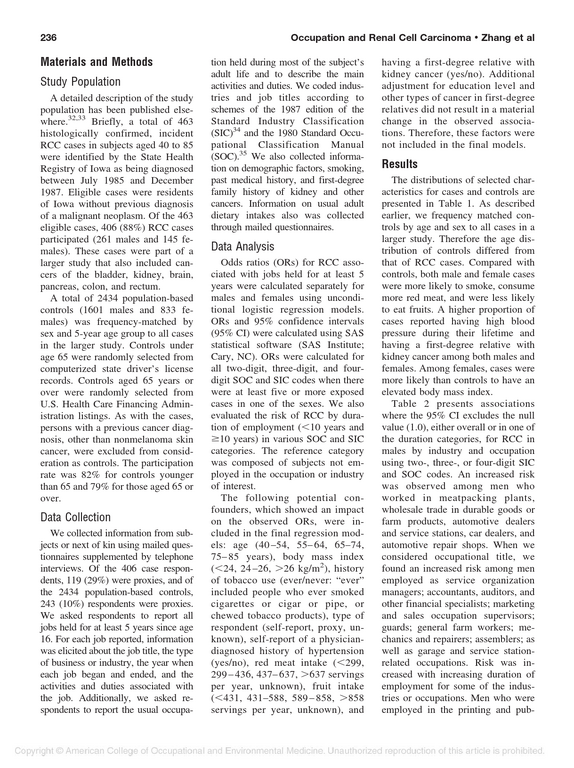
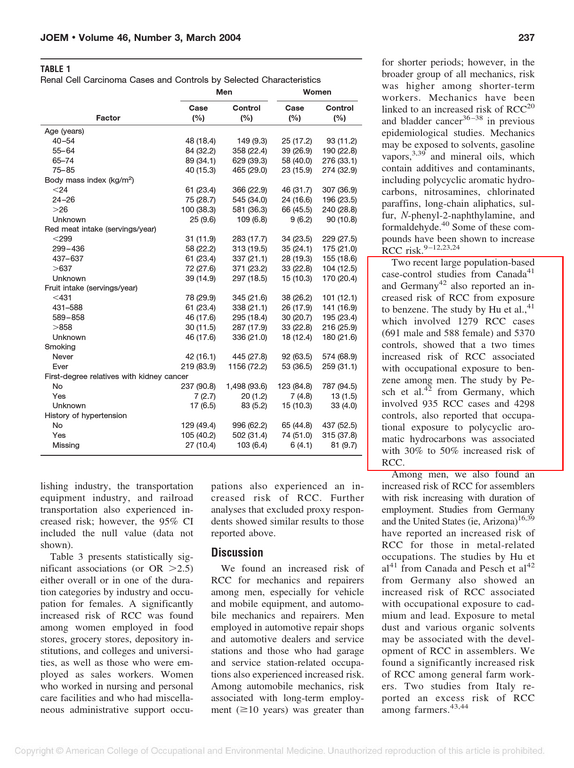
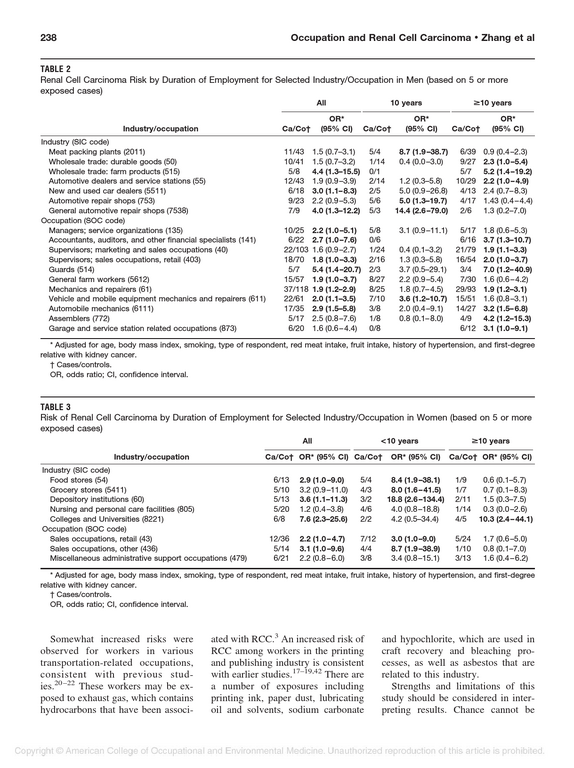
JOEM Volume 46, Number 3, March 2004 235 A Population-Based Case-Control Study of Occupation and Renal Cell Carcinoma Risk in Iowa Yawei Zhang, MD Kenneth P.
refid# OJJDR27EnDJXMJ1kXNDQEOj516 pages
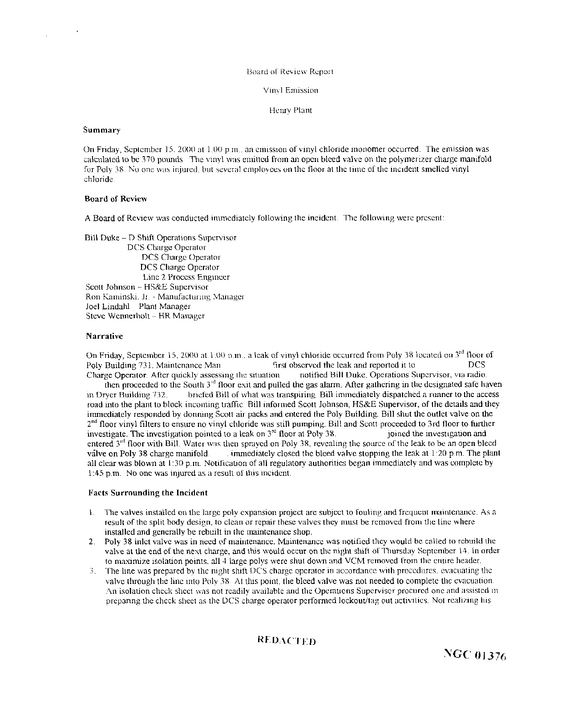
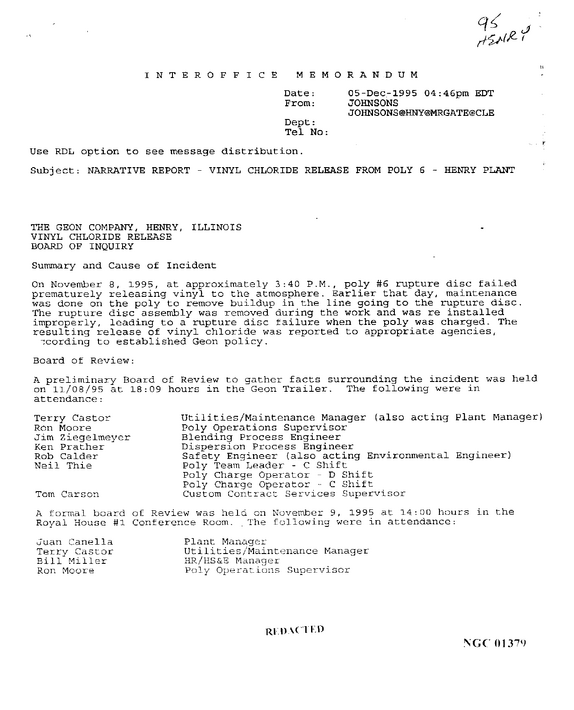
Earlier that day, maintenance was done on the poly to remove buildup in the line going to the rupture disc The rupture disc assembly was removed during the work and was re installed improperly, leading to a rupture disc failure when the poly was charged.
refid# 2jYLQROZk5qXDq6jMrnb181db15 pages
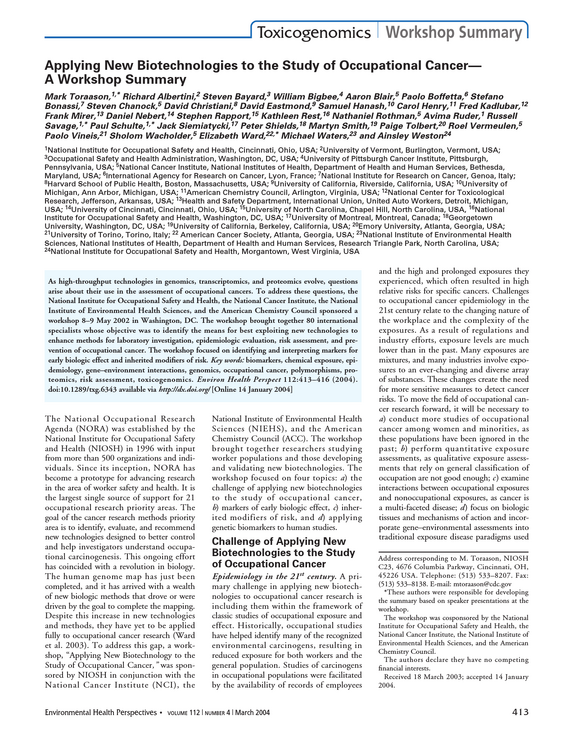
Toxicogenomics Workshop Summary Applying New Biotechnologies to the Study of Occupational Cancer-- A Workshop Summary Mark Toraason,1,* Richard Albertini,2 Steven Bayard,3 William Bigbee,4 Aaron Blair,5 Paolo Boffetta,6 Stefano Bonassi,7 Steven Chanock,5 David Christiani,8 David Eastmond,9 Samuel Hanash,10 Carol Henry,11 Fred Kadlubar,12 Frank Mirer,13 Daniel Nebert,14 Stephen Rapport,15 Kathleen Rest,16 Nathaniel Rothman,5 Avima Ruder,1 Russell Savage,1,* Paul Schulte,1,* Jack Siemiatycki,17 Peter Shields,18 Martyn Smith,19 Paige Tolbert,20 Roel Vermeulen,5 Paolo Vineis,21 Sholom Wacholder,5 Elizabeth Ward,22,* Michael Waters,23 and Ainsley Weston24 1National Institute for Occupational Safety and Health, Cincinnati, Ohio, USA; 2University of Vermont, Burlington, Vermont, USA; 3Occupational Safety and Health Administration, Washington, DC, USA; 4University of Pittsburgh Cancer Institute, Pittsburgh, Pennsylvania, USA; 5National Cancer Institute, National Institutes of Health, Department of Health and Human Services, Bethesda, Maryland, USA; 6International Agency for Research on Cancer, Lyon, France; 7National Institute for Research on Cancer, Genoa, Italy; 8Harvard School of Public Health, Boston, Massachusetts, USA; 9University of California, Riverside, California, USA; 10University of Michigan, Ann Arbor, Michigan, USA; 11American Chemistry Council, Arlington, Virginia, USA; 12National Center for Toxicological Research, Jefferson, Arkansas, USA; 13Health and Safety Department, International Union, United Auto Workers, Detroit, Michigan, USA; 14University of Cincinnati, Cincinnati, Ohio, USA; 15University of North Carolina, Chapel Hill, North Carolina, USA, 16National Institute for Occupational Safety and Health, Washington, DC, USA; 17University of Montreal, Montreal, Canada; 18Georgetown University, Washington, DC, USA; 19University of California, Berkeley, California, USA; 20Emory University, Atlanta, Georgia, USA; 21University of Torino, Torino, Italy; 22 American Cancer Society, Atlanta, Georgia, USA; 23National Institute of Environmental Health Sciences, National Institutes of Health, Department of Health and Human Services, Research Triangle Park, North Carolina, USA; 24National Institute for Occupational Safety and Health, Morgantown, West Virginia, USA As high-throughput technologies in genomics, transcriptomics, and proteomics evolve, questions arise about their use in the assessment of occupational cancers.
refid# jyjgvv96dnOjZ968xjq9eron54 pages
Possible replacement materials used in the past Asbestos and lead are prohibited and therefore are not an option.
refid# oavGzEDkggO2jDmqnVzmKbKo10 pages
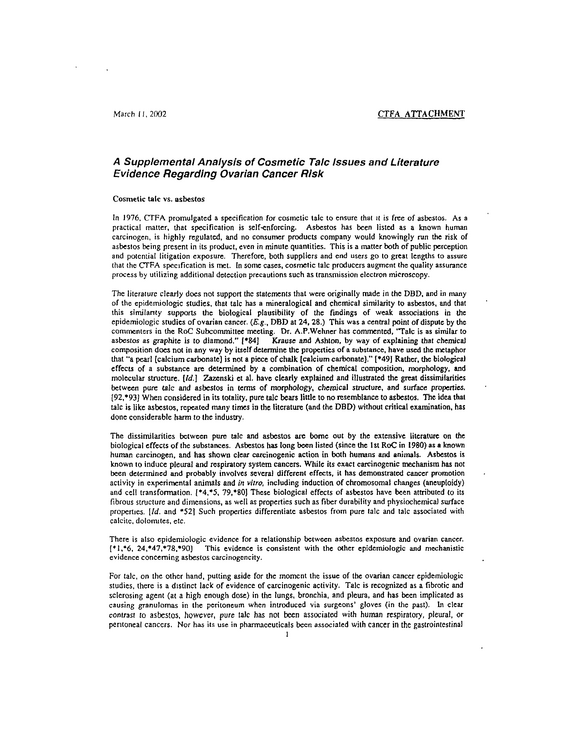
While it has been hypothesized that talc fibrosis in the ovaries due to use of talc on condoms could lead to ovarian cancer [*461, there have been no observations of ovarian fibrosis associated with ovarian cancer.
refid# vyzQkOxeyZR8RgwvQQEMdDEyb13 pages
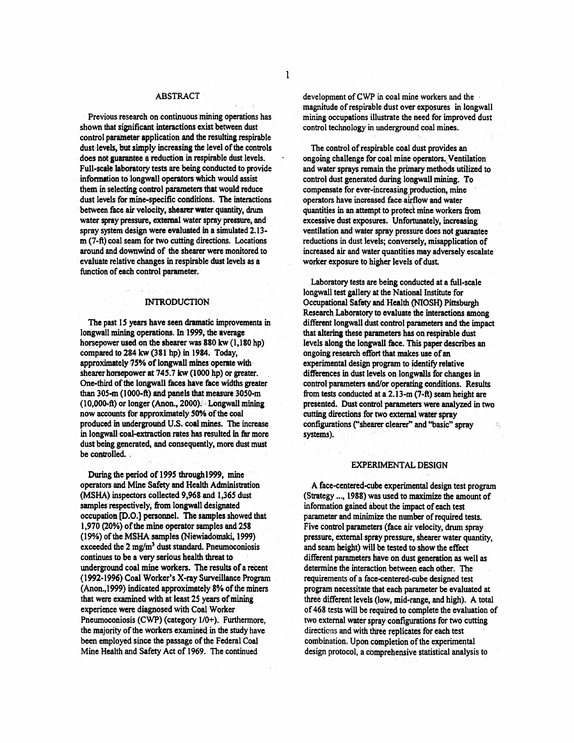
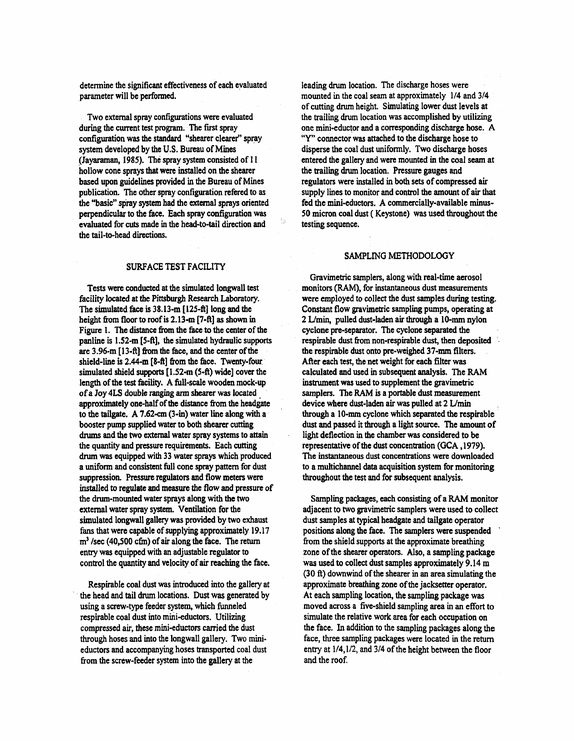
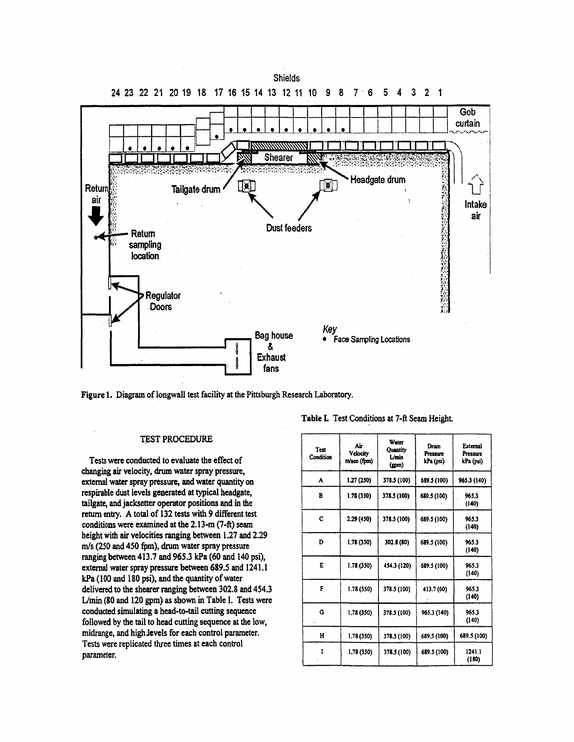
Two mini eductors and accompanying hoses transported coal dust from the screw-feeder system into the gallery at the leading drum location.
refid# a46zeoL36jrZvkVKXrXbG68gy11 pages
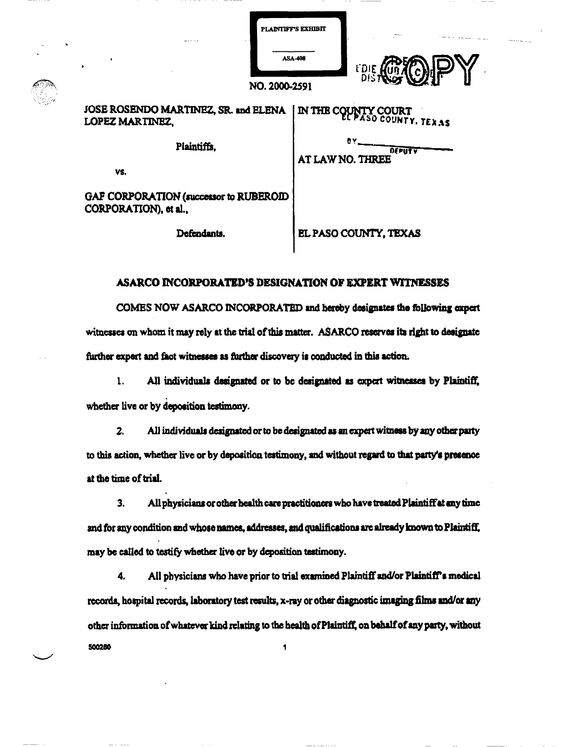
PLAINTIFF'S EXHIBIT NO. 2000-2591 PY`glfjESrci JOSE ROSENDO MARTINEZ, SR. and ELENA IN THE COUNTY COURT LOPEZ MARTINEZ, ttPAso couNry. tea as Plaintiffs, vs.
refid# DGzxGdg4aVOz75wVzm6rjLVoB17 pages
Toxicogenomics Workshop Summary Applying New Biotechnologies to the Study of Occupational Cancer-- A Workshop Summary Mark Toraason,1,* Richard Albertini,2 Steven Bayard,3 William Bigbee,4 Aaron Blair,5 Paolo Boffetta,6 Stefano Bonassi,7 Steven Chanock,5 David Christiani,8 David Eastmond,9 Samuel Hanash,10 Carol Henry,11 Fred Kadlubar,12 Frank Mirer,13 Daniel Nebert,14 Stephen Rapport,15 Kathleen Rest,16 Nathaniel Rothman,5 Avima Ruder,1 Russell Savage,1,* Paul Schulte,1,* Jack Siemiatycki,17 Peter Shields,18 Martyn Smith,19 Paige Tolbert,20 Roel Vermeulen,5 Paolo Vineis,21 Sholom Wacholder,5 Elizabeth Ward,22,* Michael Waters,23 and Ainsley Weston24 1National Institute for Occupational Safety and Health, Cincinnati, Ohio, USA; 2University of Vermont, Burlington, Vermont, USA; 3Occupational Safety and Health Administration, Washington, DC, USA; 4University of Pittsburgh Cancer Institute, Pittsburgh, Pennsylvania, USA; 5National Cancer Institute, National Institutes of Health, Department of Health and Human Services, Bethesda, Maryland, USA; 6International Agency for Research on Cancer, Lyon, France; 7National Institute for Research on Cancer, Genoa, Italy; 8Harvard School of Public Health, Boston, Massachusetts, USA; 9University of California, Riverside, California, USA; 10University of Michigan, Ann Arbor, Michigan, USA; 11American Chemistry Council, Arlington, Virginia, USA; 12National Center for Toxicological Research, Jefferson, Arkansas, USA; 13Health and Safety Department, International Union, United Auto Workers, Detroit, Michigan, USA; 14University of Cincinnati, Cincinnati, Ohio, USA; 15University of North Carolina, Chapel Hill, North Carolina, USA, 16National Institute for Occupational Safety and Health, Washington, DC, USA; 17University of Montreal, Montreal, Canada; 18Georgetown University, Washington, DC, USA; 19University of California, Berkeley, California, USA; 20Emory University, Atlanta, Georgia, USA; 21University of Torino, Torino, Italy; 22 American Cancer Society, Atlanta, Georgia, USA; 23National Institute of Environmental Health Sciences, National Institutes of Health, Department of Health and Human Services, Research Triangle Park, North Carolina, USA; 24National Institute for Occupational Safety and Health, Morgantown, West Virginia, USA As high-throughput technologies in genomics, transcriptomics, and proteomics evolve, questions arise about their use in the assessment of occupational cancers.
refid# Zxnqojyz8MwZovwkZ20J70gY4 pages
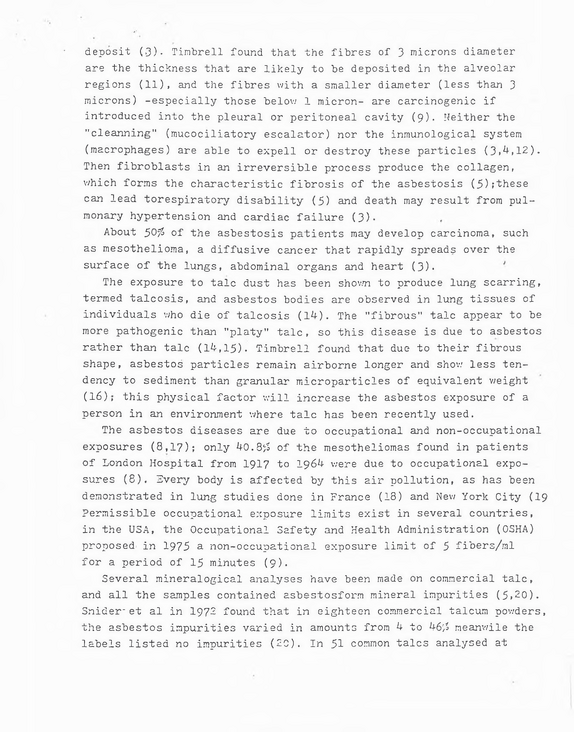
Then fibroblasts in an irreversible process produce the collagen, which forms the characteristic fibrosis of the asbestosis (5)these can lead torespiratory disability (5) and death may result from pul monary hypertension and cardiac failure (3).
refid# reX45Ok021aVR1jEXpmjZ1Ngr23 pages
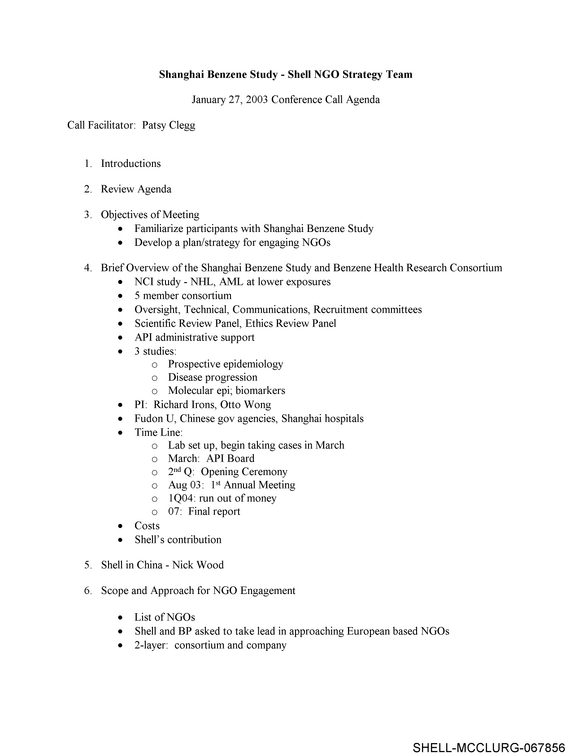
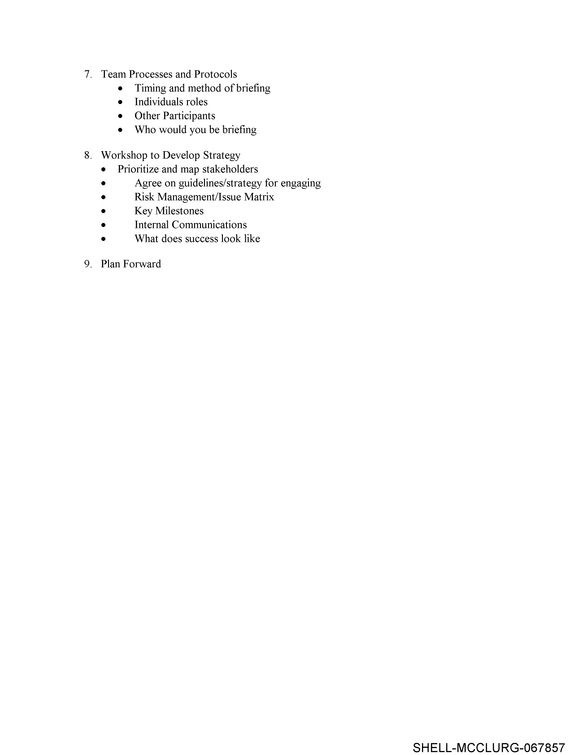
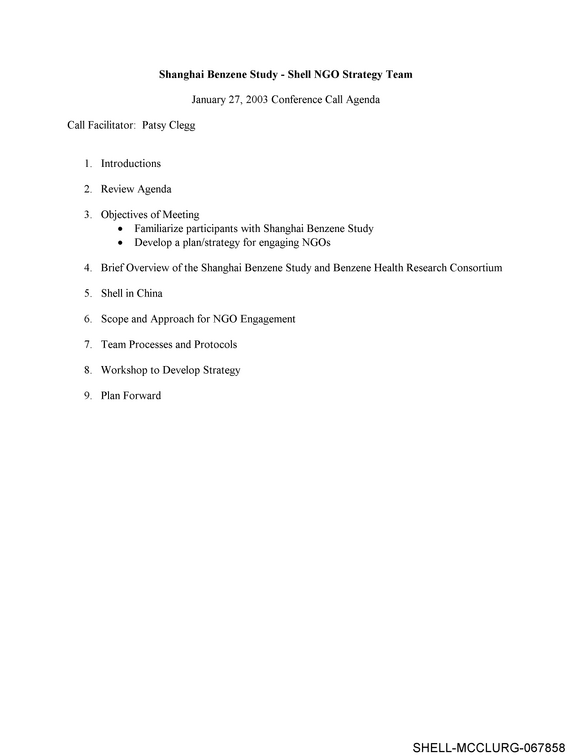
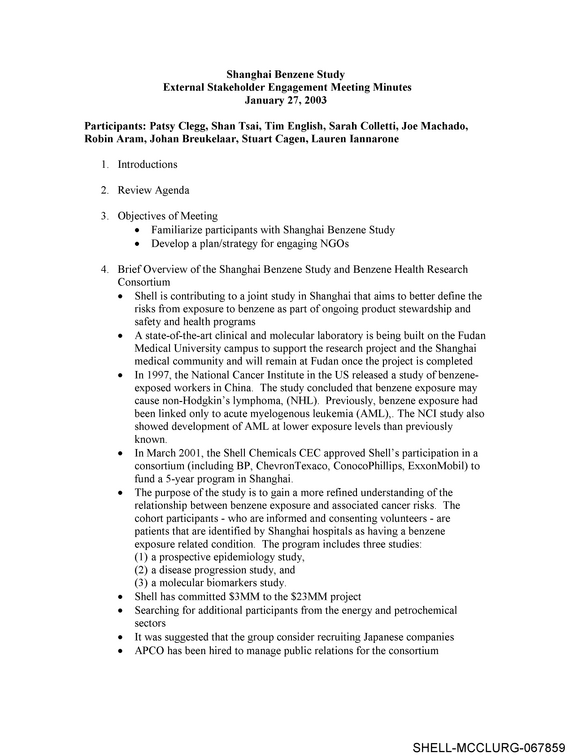
Scope and Approach for NGO Engagement List ofNGOs Shell and BP asked to take lead in approaching European based NGOs 2-layer: consortium and company SH ELL-MCCLU RG-067856 7.
refid# k2oBEEb05noRaLBOe9d3L1xD28 pages
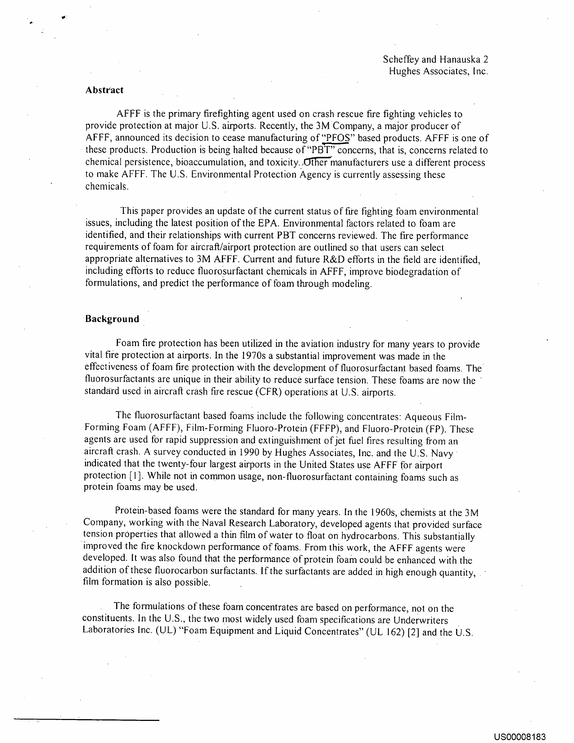
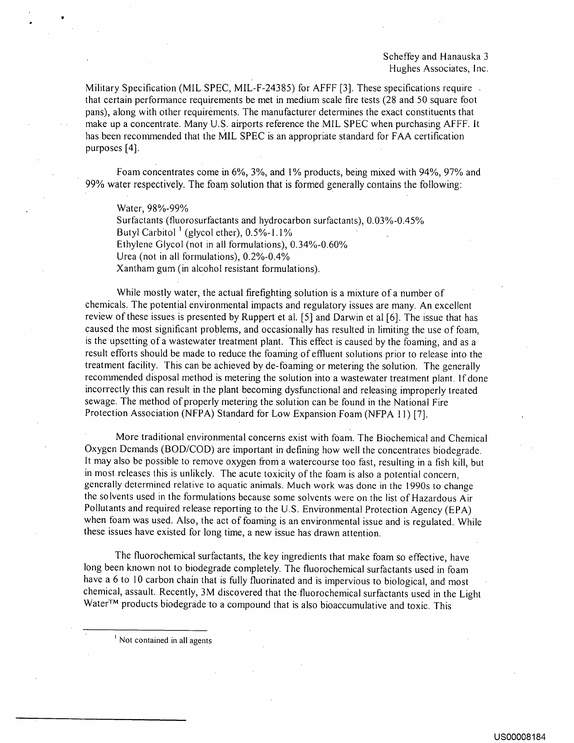
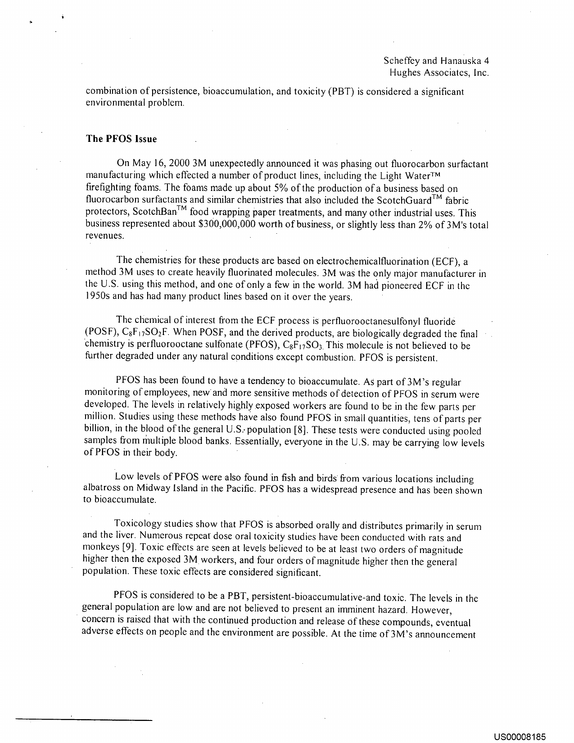
STATUS REPORT ON ENVIRONMENTAL CONCERNS RELATED TO AQUEOUS FILM FORMING FOAM (AFFF) By: Joseph L.
refid# 7O69jBG62jBKoJxJvanqQ8R8R13 pages