Refine
Estimated Years 2000-2009Clear
3,232 results foundRefine Search
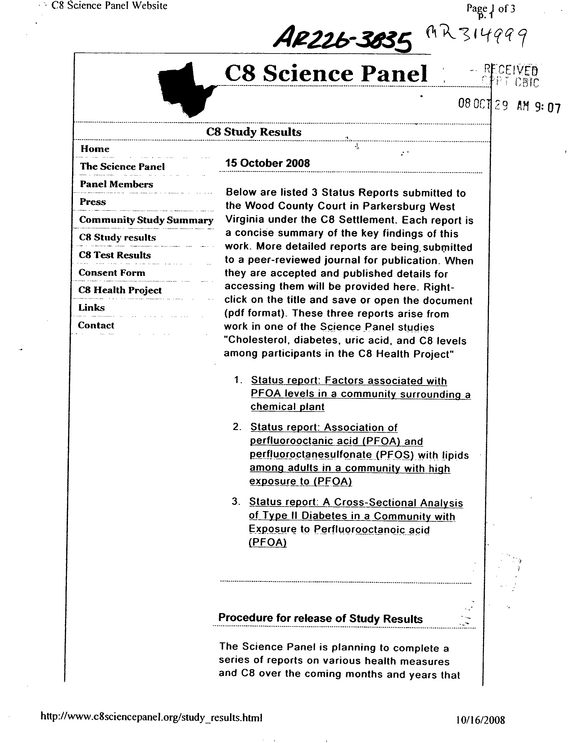
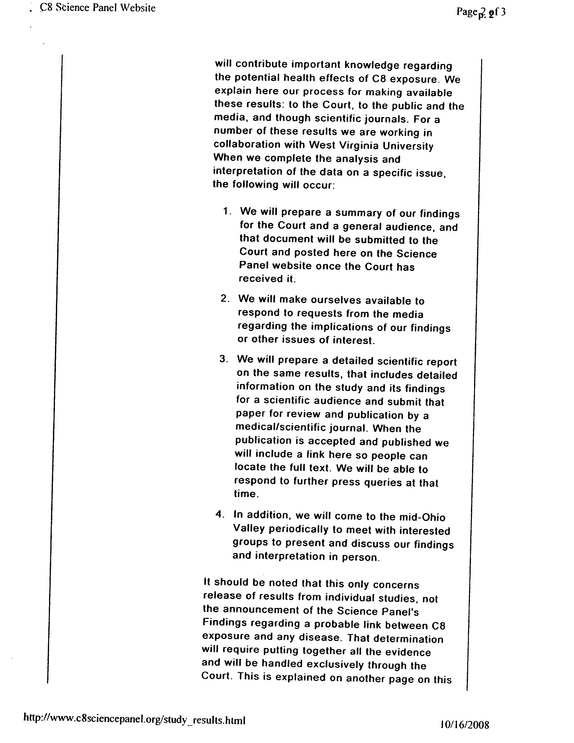
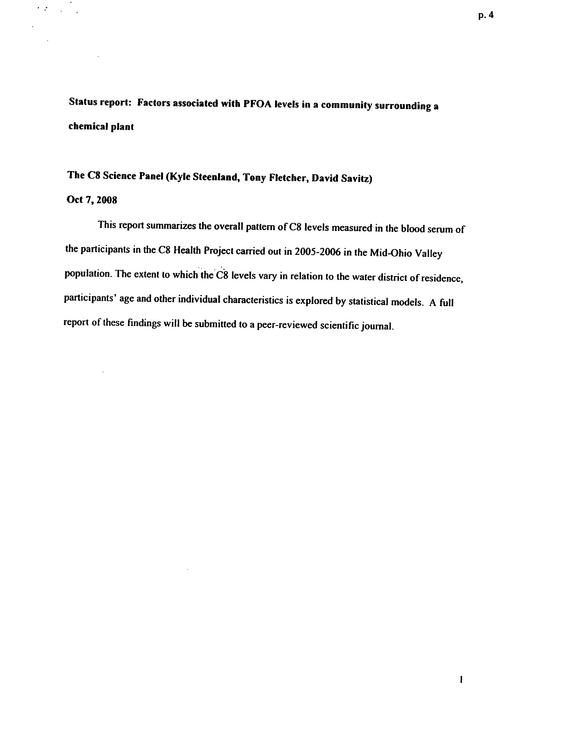
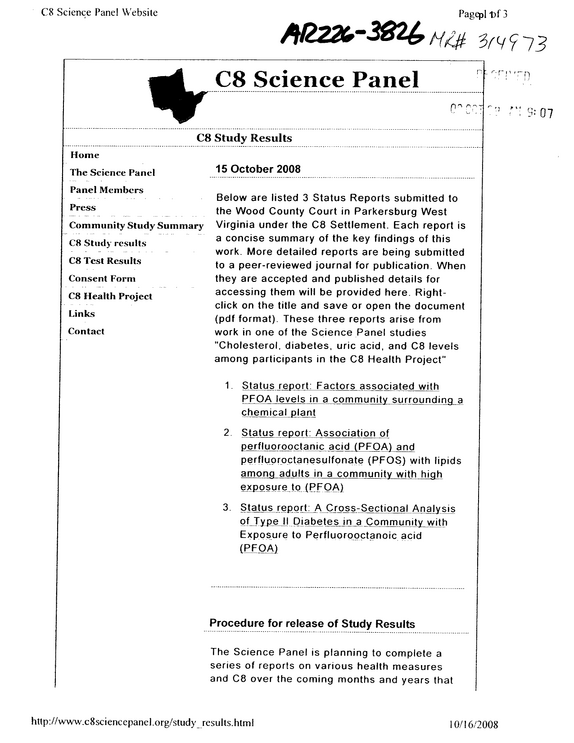
C8 Science Panel Website C8 Science Panel 1:c e pt o s re 08 QC '0 m s C8 Study Results Home The Science Panel 15 October 2008 Panel Members Press Community Study Sum m ary C8 Study results C8 T est Results Consent Form C8 H ealth Project Links C o n ta ct Below are listed 3 Status Reports submitted to the Wood County Court in Parkersburg West Virginia under the C8 Settlement.

refid# zVYrjvkNoV4nozXxjVERGyg314 pages
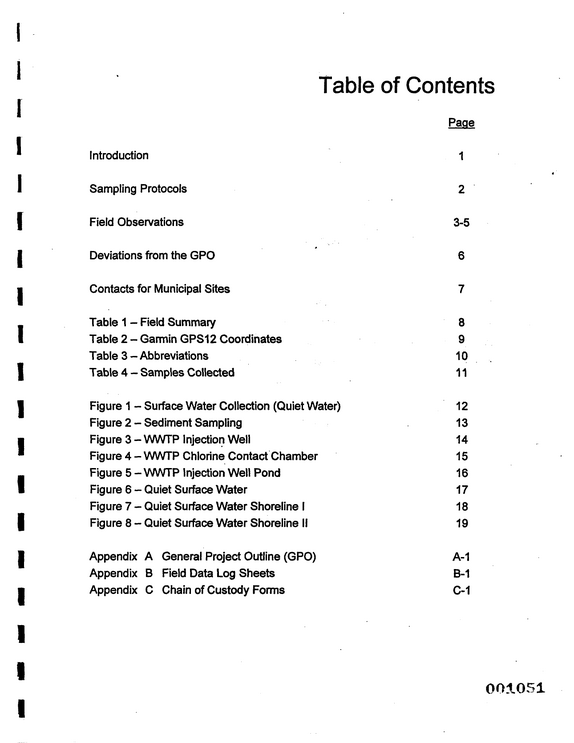
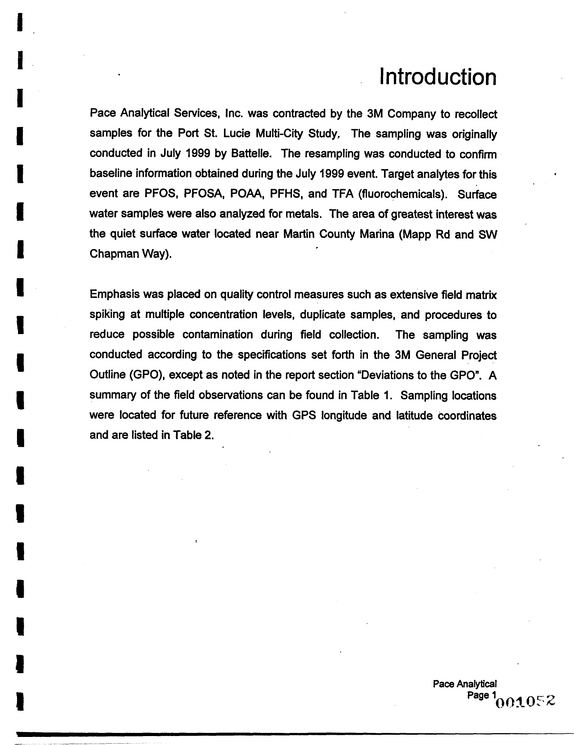
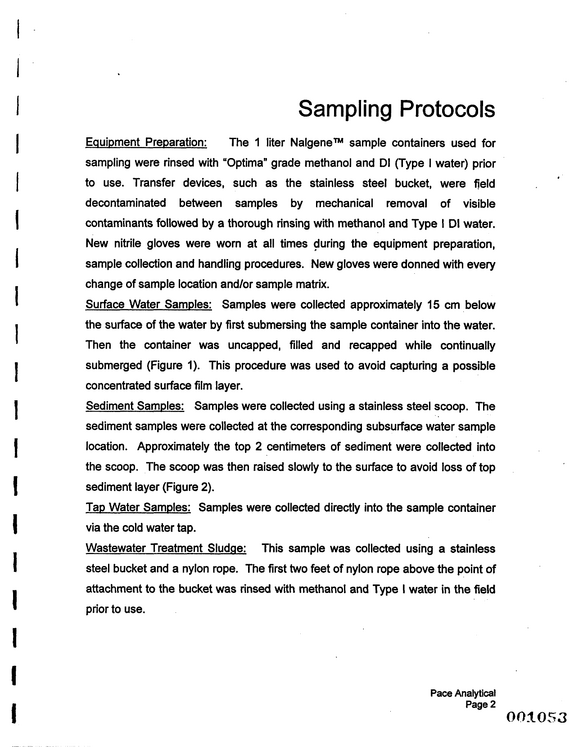
Note Figure 5, which shows the algae-like film on the surface of the pond leading to the injection well.
refid# 8rngrJxK9pybrN9JdBL3dJ1B13 pages
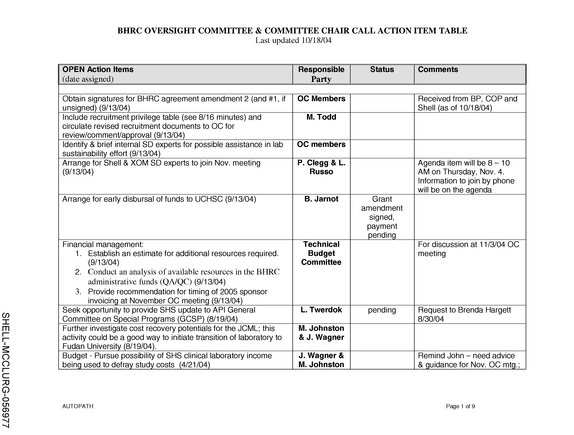
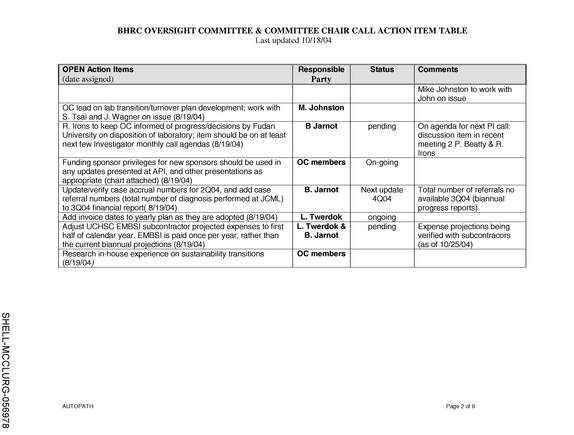
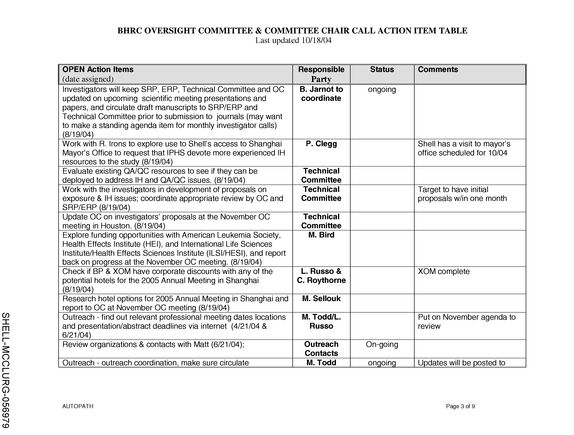
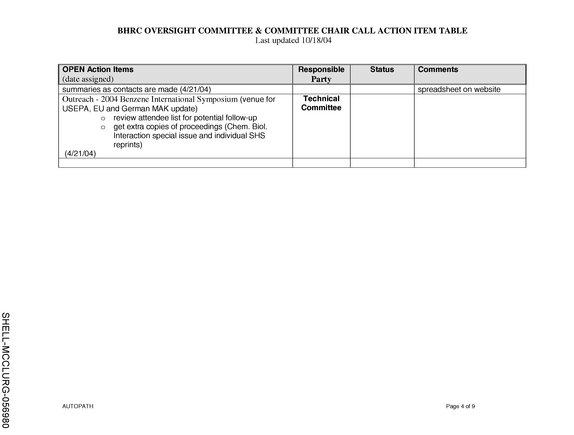
OC C ;a G) oI c..n AUTOPATH (J) Page 1 of 9 <D -.....J -.....J BHRC OVERSIGHT COMMITTEE & COMMITTEE CHAIR CALL ACTION ITEM TABLE Last updated 10/18/04 OC lead on lab transition/turnover plan development; work with S.
refid# RjmYmgz5Y7bXEyNG8kBxEa66z11 pages
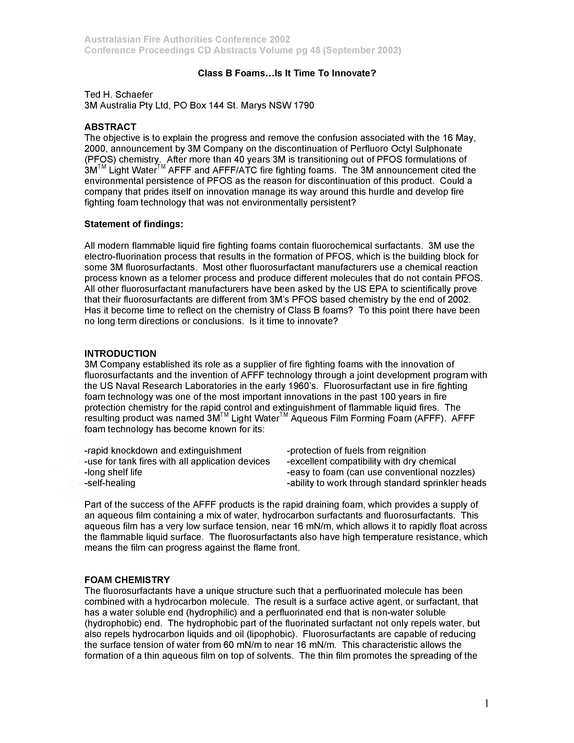
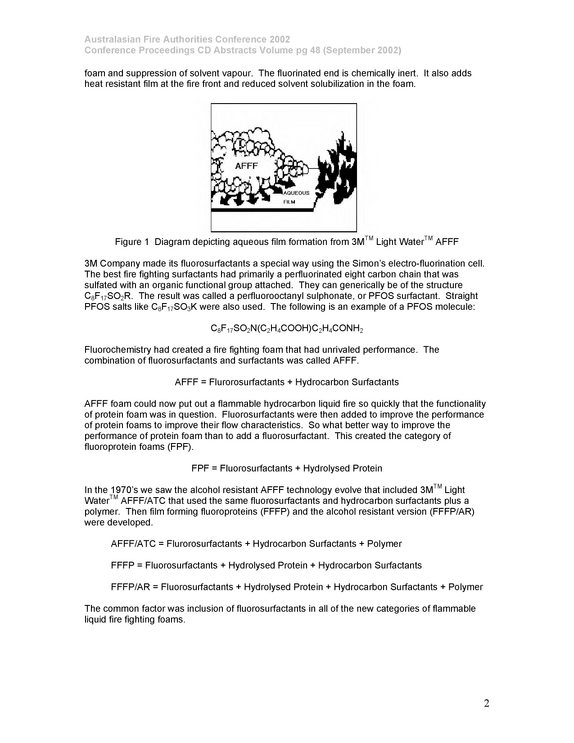
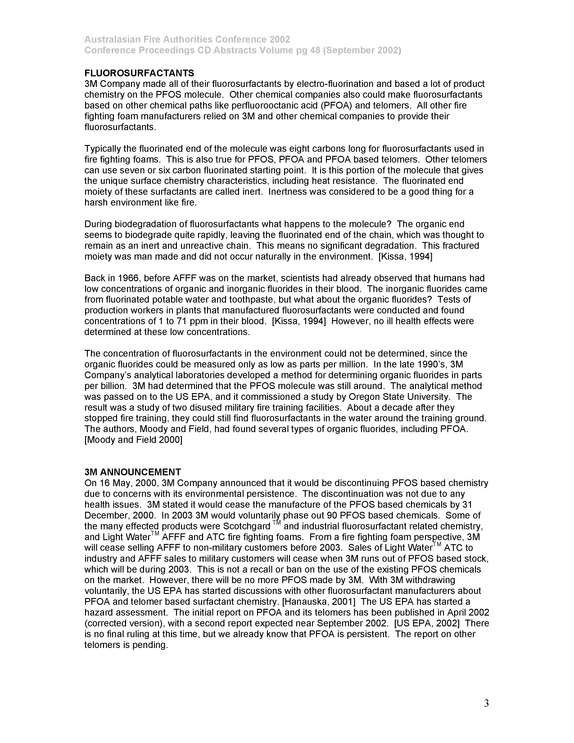
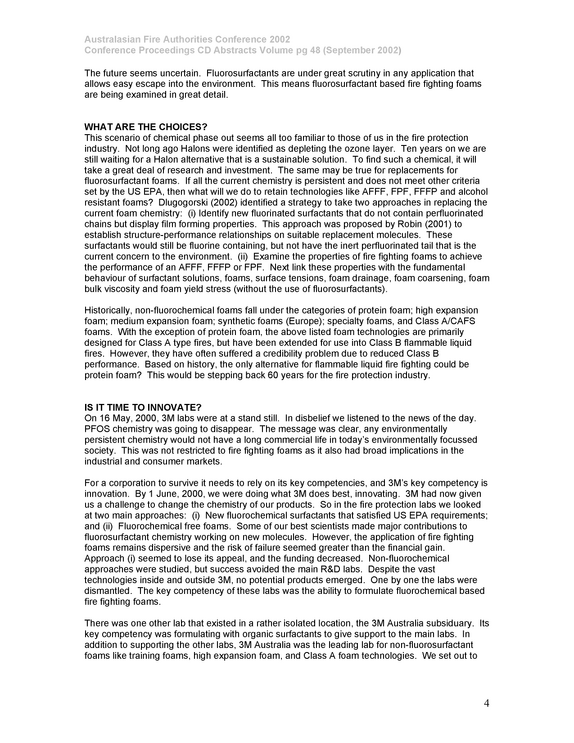
Australasian Fire Authorities Conference 2002 Conference Proceedings CD Abstracts Volume pg 48 (September 2002) Class B Foams...Is It Time To Innovate?
refid# 6BMmKDjg7n63v6oOODGrZd6O36 pages
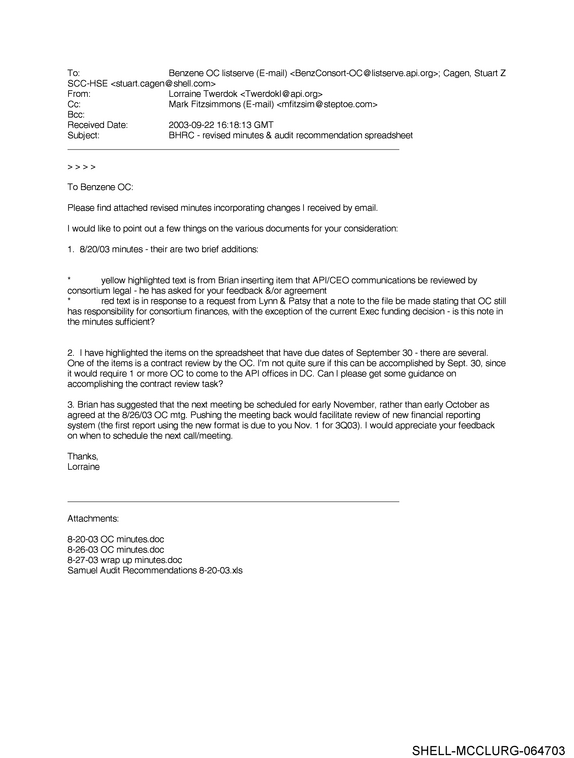
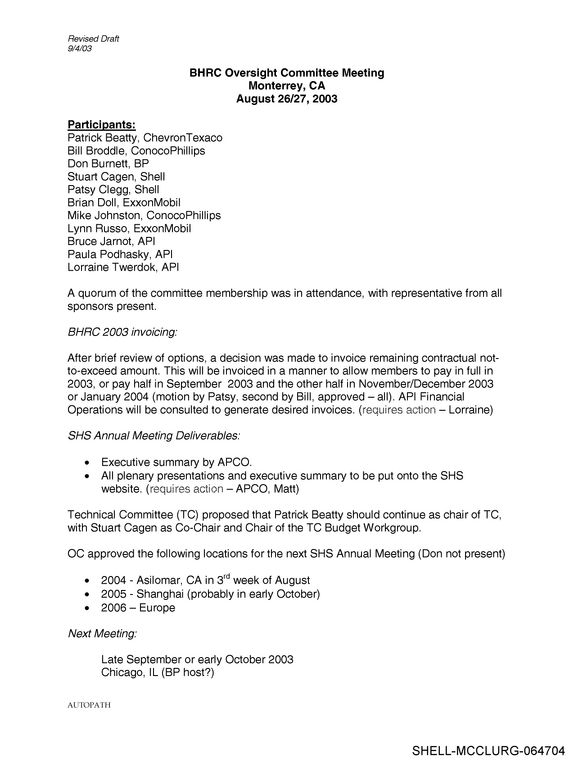
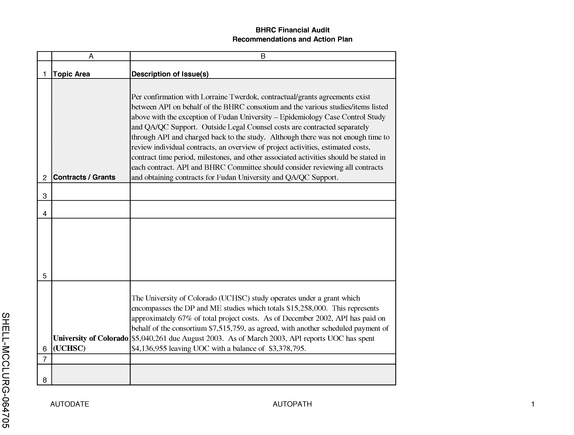
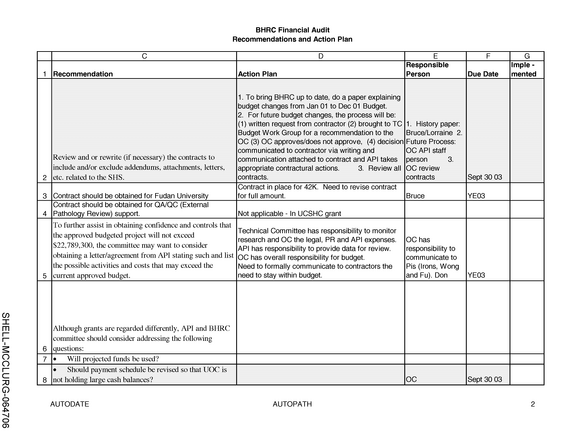
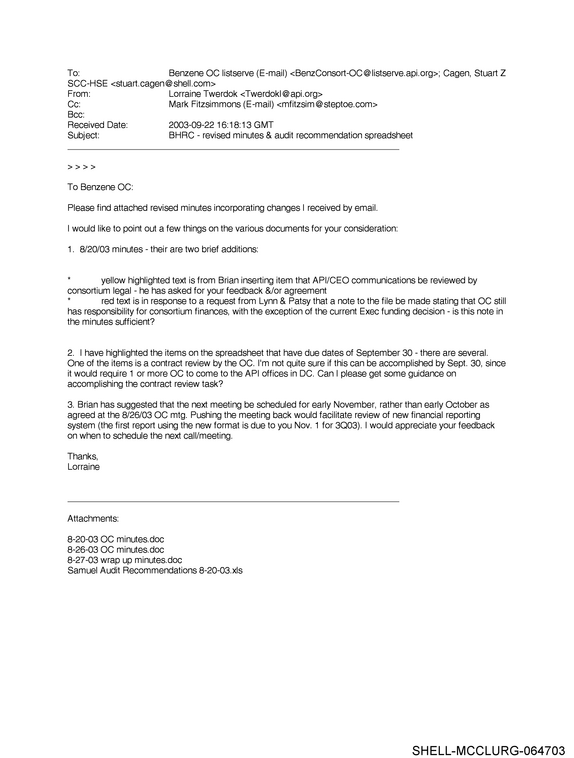
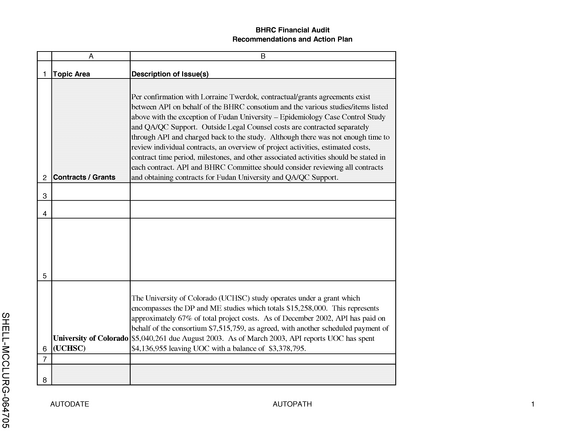
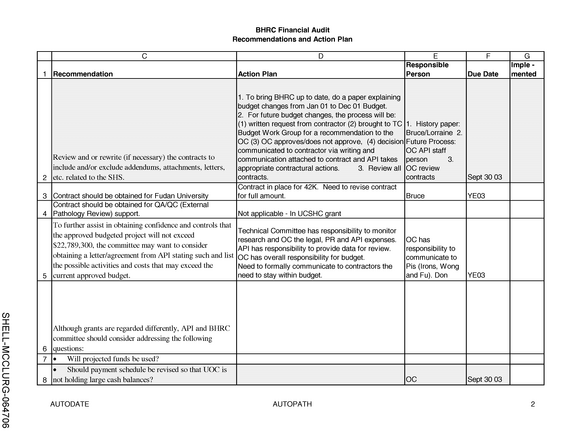
To: Benzene OC listserve (E-mail) <BenzConsort-OC@listserve.api.org>; Cagen, Stuart Z SCC-HSE <stuart.cagen@shell.com> From: Lorraine Twerdok <Twerdokl@api.org> Cc: Mark Fitzsimmons (E-mail)<mfitzsim@steptoe.com> Bcc: Received Date: 2003-09-22 16: 18: 13 GMT Subject: BHRC - revised minutes & audit recommendation spreadsheet To Benzene OC: Please find attached revised minutes incorporating changes I received by email.
refid# pBwoJKGM1wN4KvzMk7ZzJLvww12 pages
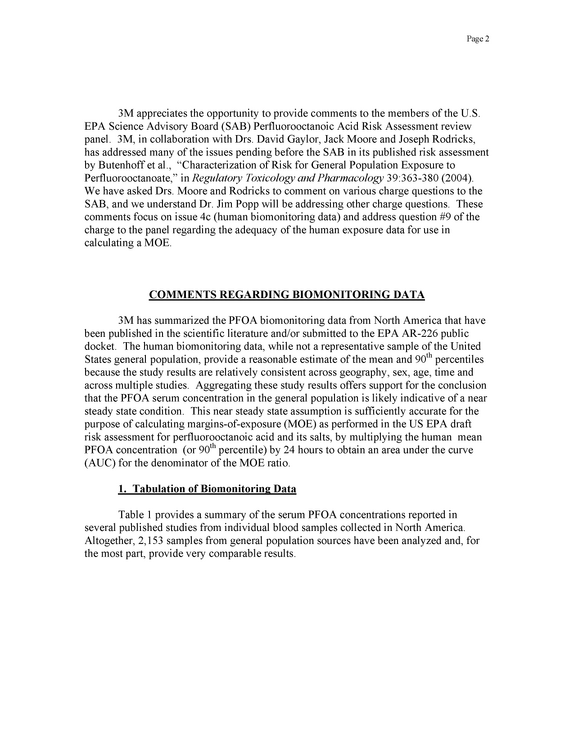
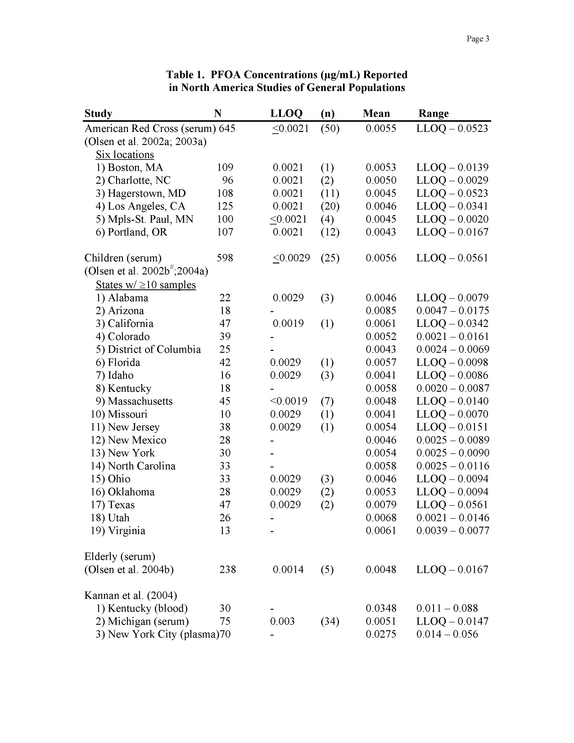
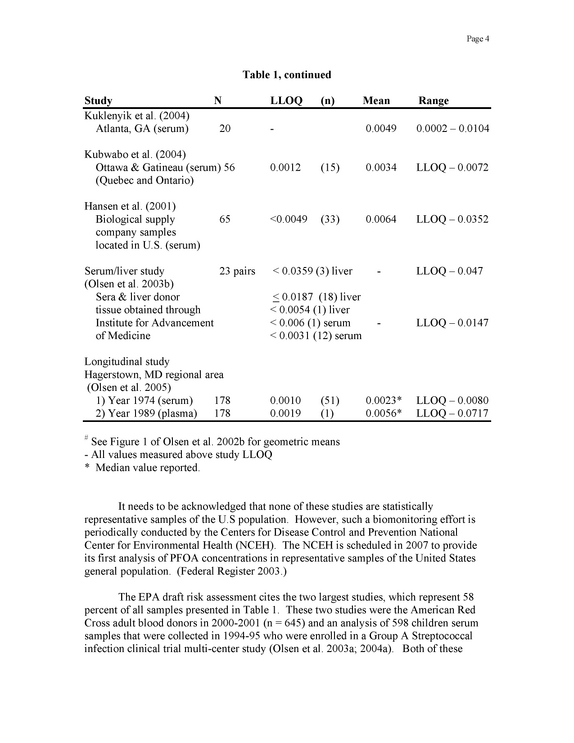
This could lead to significant bias in the analytical results that can be both analyte (e.g., PFOA) and matrix dependent.
refid# DDVK2qJpJvXb5GJ9o4GgDzBQM10 pages
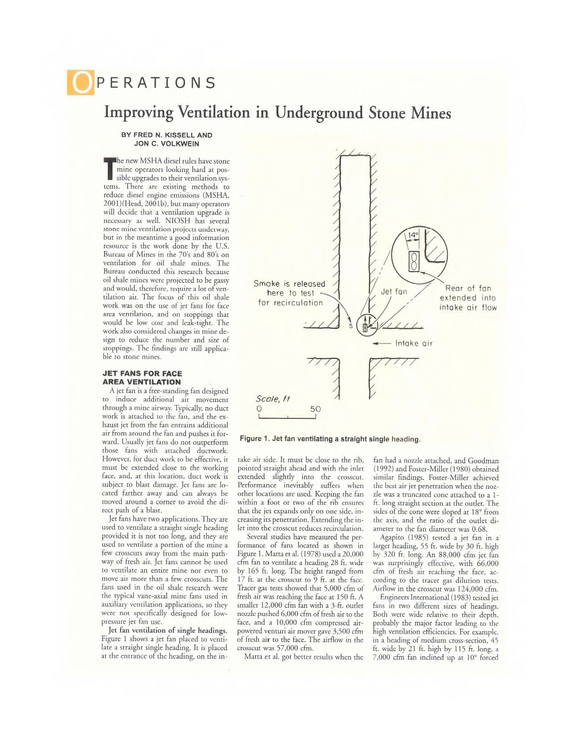
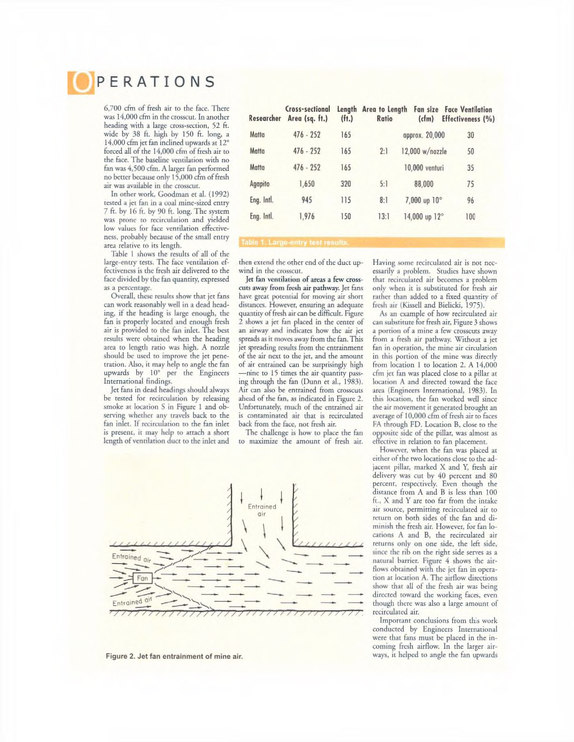
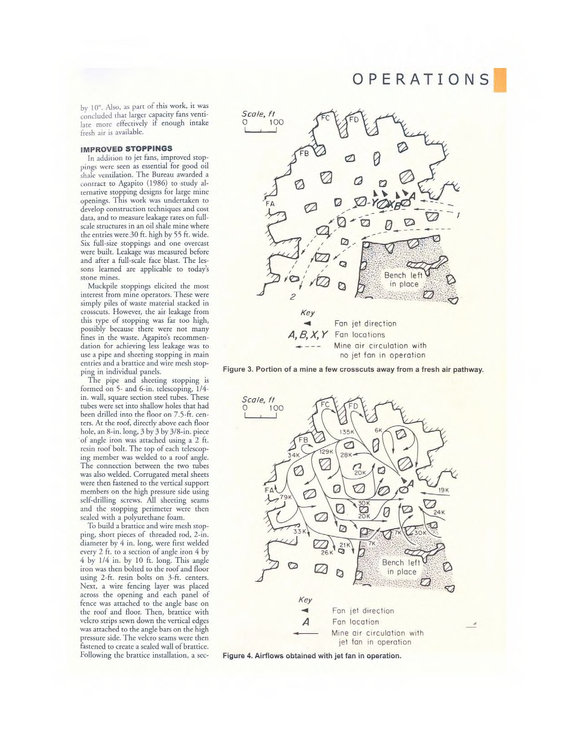
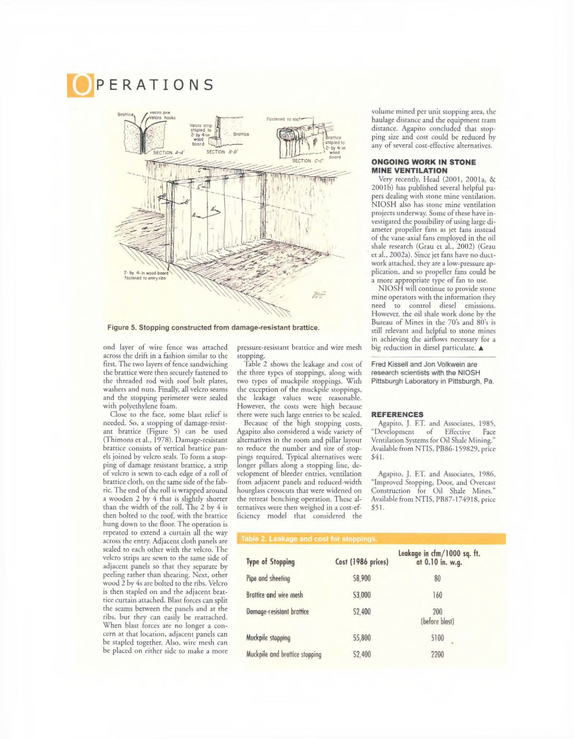
Both were wide relative to their depth, robably the major factor leading to the igh ventilation efficiencies.
refid# 4QBNg4GoynoeBeNm5QODD21y15 pages
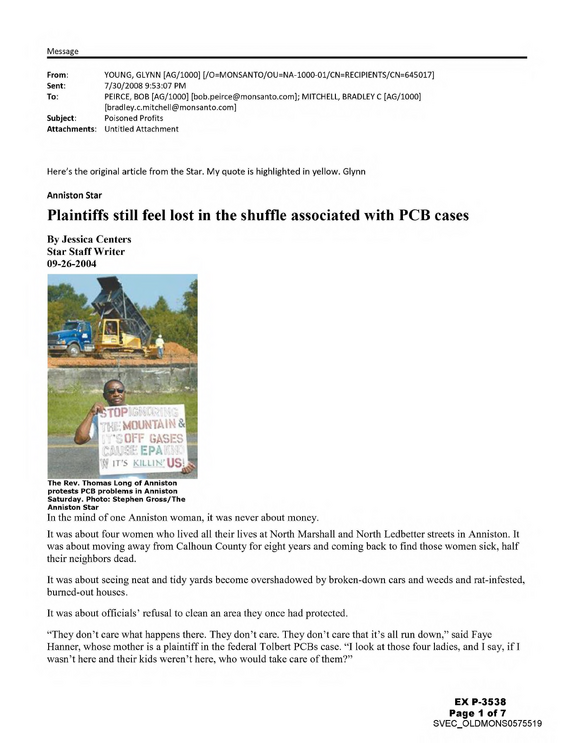
Donald Stewart, lead attorney in the Abernathy case, said there's no question that the cleanup and research would not have come had he not pursued the litigation.
refid# 0G8JQLk0jgK96p26LXD7Dd3d7 pages
In addition, for what it is worth, I would like to think this adds to what I would call an effective year for me (including: effective leadership of ACC membership review, moving benzene Shanghai forvl/ard, leading butadiene air issues, support/advice regarding LRI US, appointment to EPA Science Advisory Board and ACGIH TLV committee).
refid# mL6g84Mx4GmnDYew2MR7JM1k9 pages
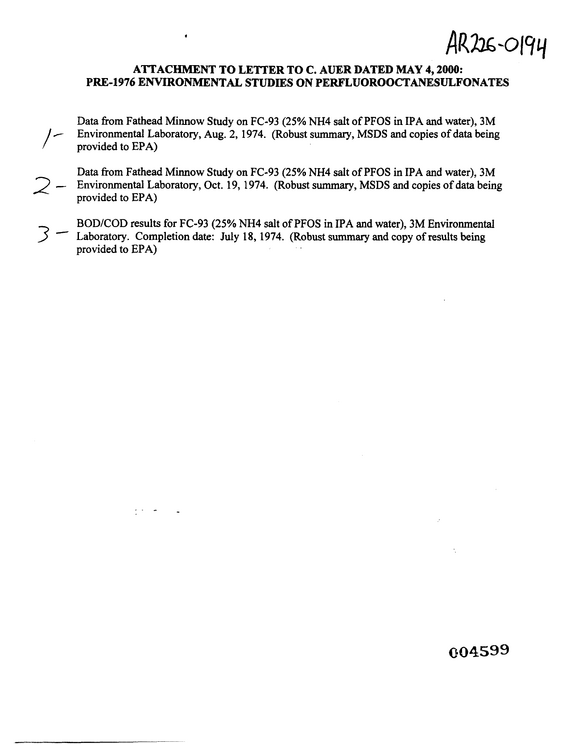
ATTACHMENT TO LETTER TO C.
refid# 9JwgoZq3GYzwpbRz0bvqG7Z8311 pages
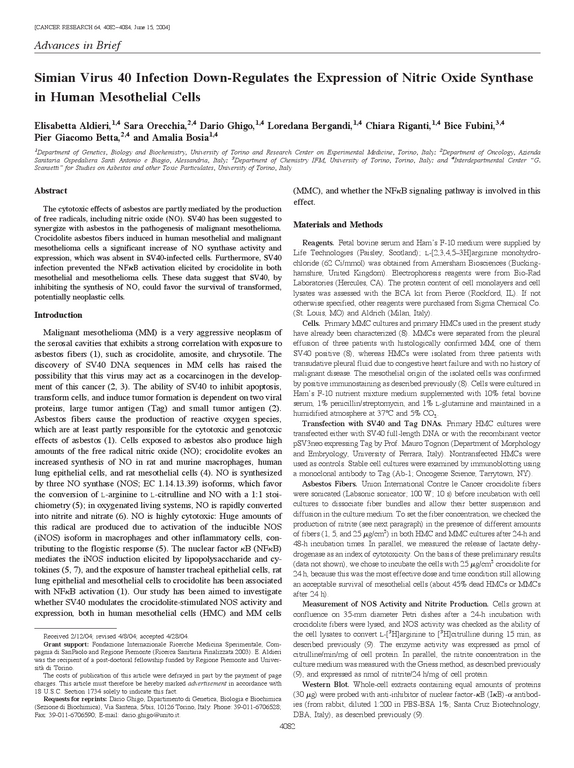
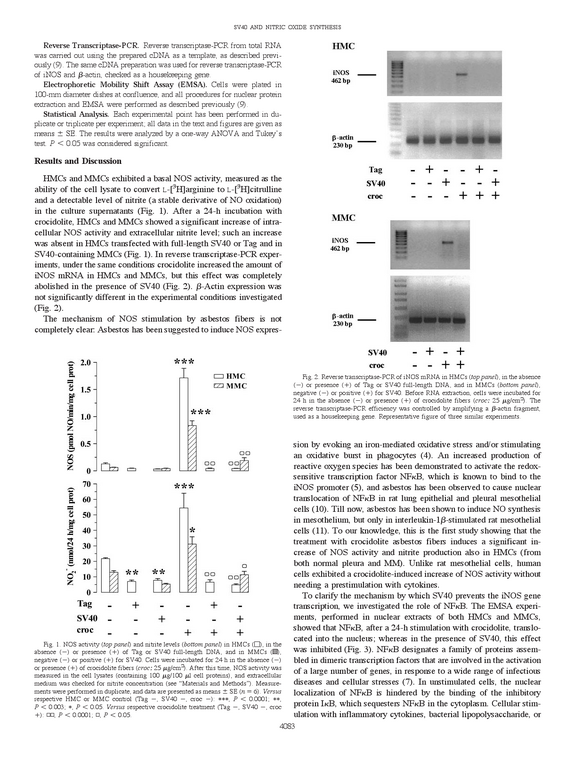
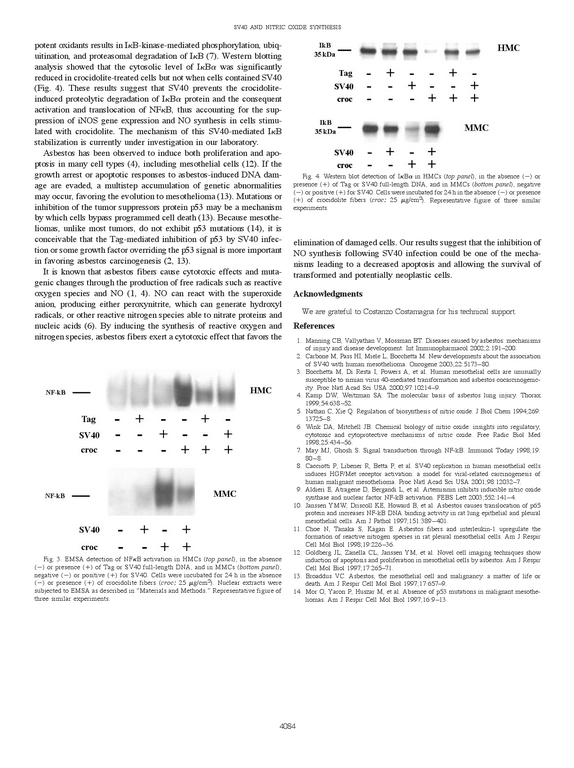
[CANCER RESEARCH 64, 4082 4084, June 15, 2004] Advances in Brief Simian Virus 40 Infection Down-Regulates the Expression of Nitric Oxide Synthase in Human Mesothelial Cells Elisabetta Aldieri,1,4 Sara Orecchia,2,4 Dario Ghigo,1,4 Loredana Bergandi,1,4 Chiara Riganti,1,4 Bice Fubini,3,4 Pier Giacomo Betta,2,4 and Amalia Bosia1,4 1Department of Genetics, Biology and Biochemistry, University of Torino and Research Center on Experimental Medicine, Torino, Italy; 2Department of Oncology, Azienda Sanitaria Ospedaliera Santi Antonio e Biagio, Alessandria, Italy; 3Department of Chemistry IFM, University of Torino, Torino, Italy; and 4Interdepartmental Center "G.
refid# bxaZoJrd3446k8jvGqyNKDgZ3 pages
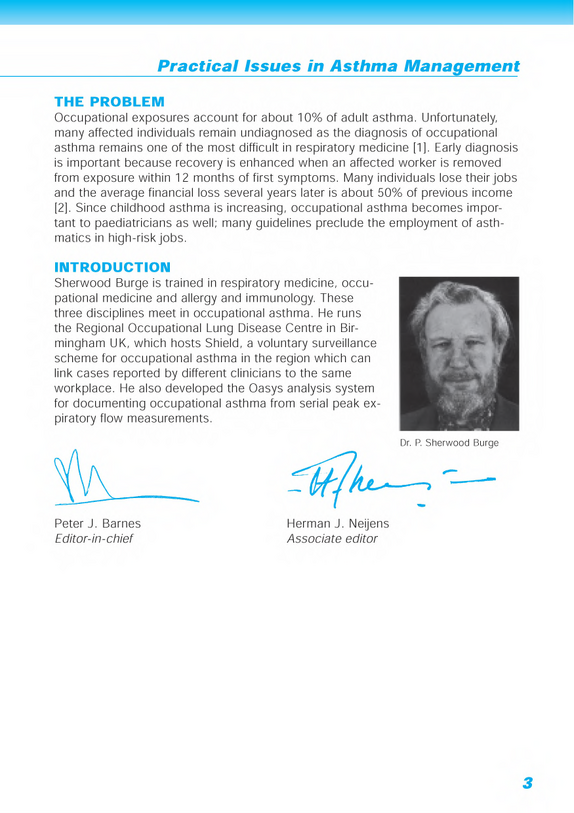
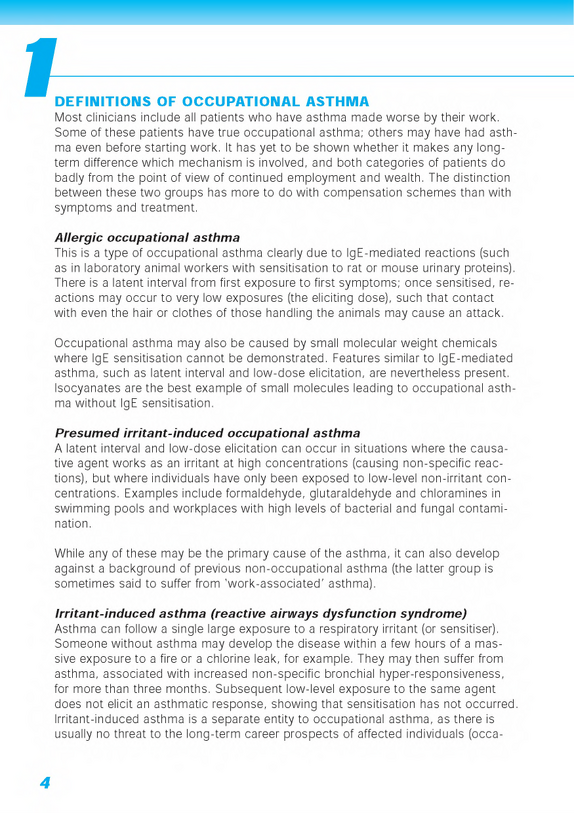
Isocyanates are the best example of small molecules leading to occupational asth ma without IgE sensitisation.
refid# k9DwXqMax9nN95k3GgGzL8xMy10 pages
To: Benzene OC listserve (E-mail) <BenzConsort-OC@listserve.api.org>; Cagen, Stuart Z SCC-HSE <stuart.cagen@shell.com> From: Lorraine Twerdok <Twerdokl@api.org> Cc: Mark Fitzsimmons (E-mail)<mfitzsim@steptoe.com> Bcc: Received Date: 2003-09-22 16: 18: 13 GMT Subject: BHRC - revised minutes & audit recommendation spreadsheet To Benzene OC: Please find attached revised minutes incorporating changes I received by email.
refid# 70EzygXMR000kmRkNQMJpB1X612 pages
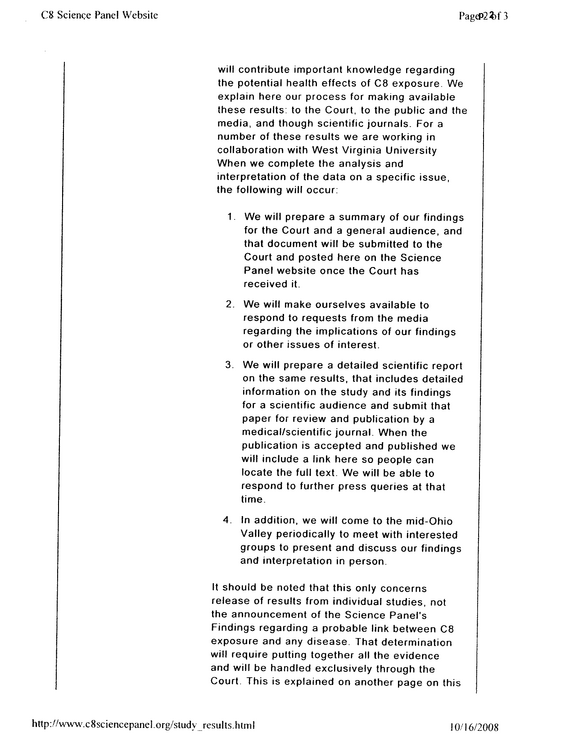
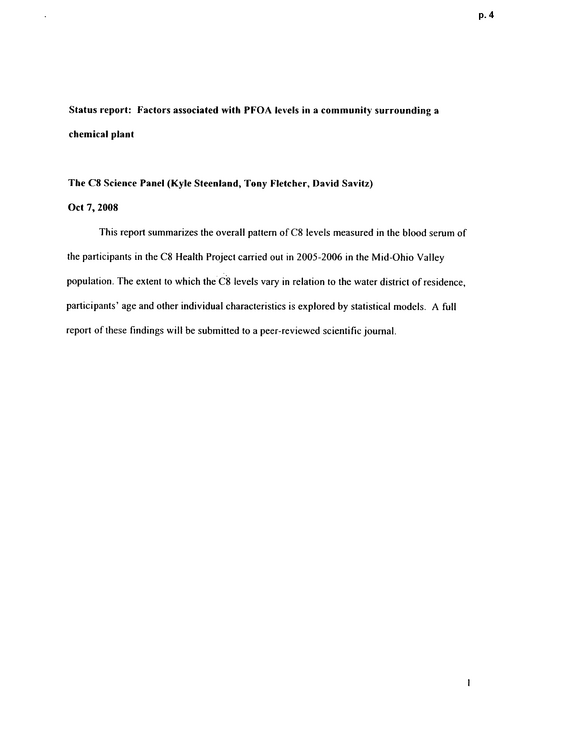
C8 Science Panel Website Pagepl 'bf 3 rAW15cG-40o510"G24W0W~31r4 H41) ~~Y ~ 73 C8 Science Panel r-i ,. 07 ---------------------------------------------------------------- C--8-----S---t---u---d----y----R---e---s---u---l---t--s--------------------- ------------------------ ---------------- --------- Home The Science Panel 15 October 2008 Panel Members Press Community Study Summary C8 Study results C8 Test Results Consent Form C8 Health Project Links Contact Below are listed 3 Status Reports submitted to the Wood County Court in Parkersburg West Virginia under the C8 Settlement- Each report is a concise summary of the key findings of this work .
refid# aK9wG0kN8Y09gDbobxGzLR0a14 pages
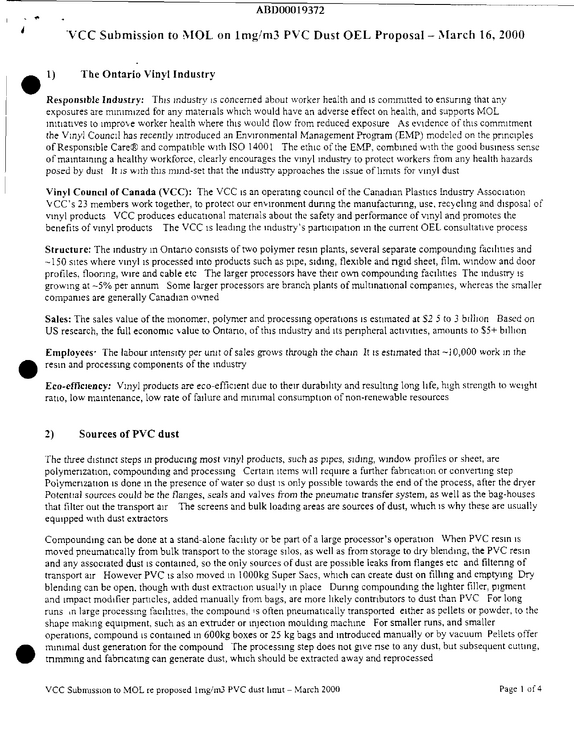
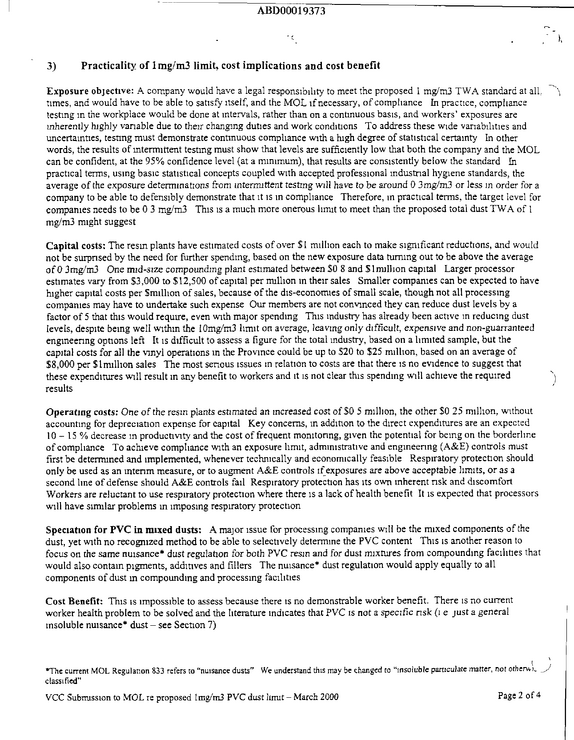
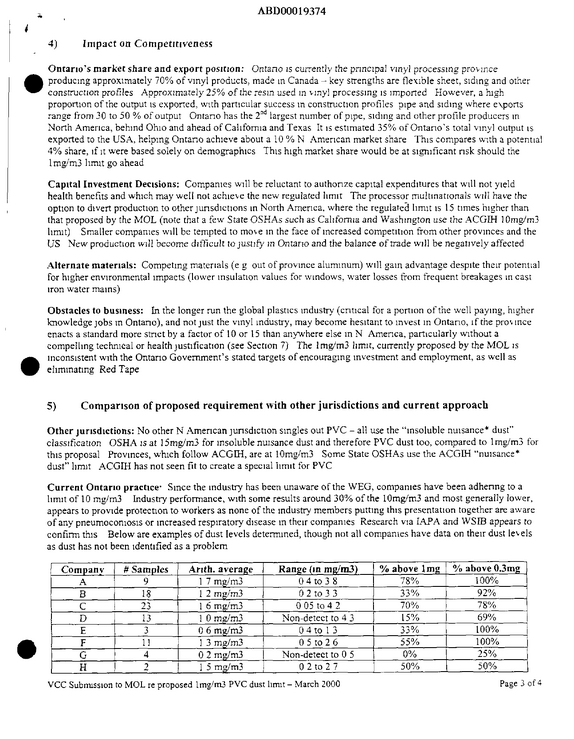
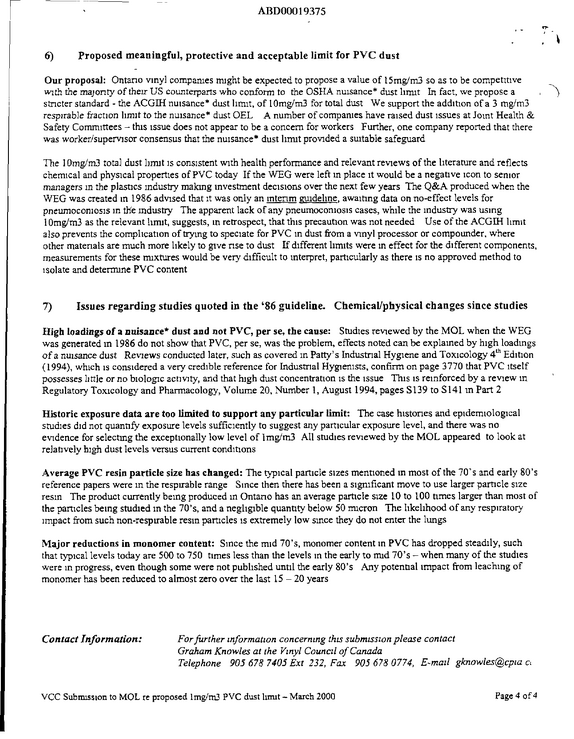
ABDOOO19372 VCC Submission to MOL on lmg/m3 PVC Dust OEL Proposal - March 16, 2000 1) The Ontario Vinyl Industry Responsible Industry: This industry is concerned about worker health and is committed to ensuring that any exposures are minimized for any materials which would have an adverse effect on health, and supports MOL initiatives to improve worker health where this would flow from reduced exposure As evidence of this commitment the Vmyl Council has recently introduced an Environmental Management Program (EMP) modeled on the principles of Responsible Care and compatible with ISO 14001 The ethic of the EMP, combined with the good business sense of maintaining a healthy workforce, clearly encourages the vinyl industry to protect workers from any health hazards posed by dust It is with this mmd-set that the industry approaches the issue of limits for vmyl dust Vinyl Council of Canada (VCC): The VCC is an operating council of the Canadian Plastics Industry Association VCC's 23 members work together, to protect our environment during the manufacturing, use, recycling and disposal of vinyl products VCC produces educational materials about the safety and performance of vinyl and promotes the benefits of vinyl products The VCC is leading the industry's participation m the current OEL consultative process Structure: The industry in Ontario consists of two polymer resin plants, several separate compounding facilities and -150 sites where vinyl is processed into products such as pipe, siding, flexible and ngid sheet, film, window and door profiles, flooring, wire and cable etc The larger processors have their own compounding facilities The industry is growing at ~5% per annum Some larger processors are branch plants of multinational companies, whereas the smaller companies are generally Canadian o'vned Sales: The sales value of the monomer, polymer and processing operations is estimated at S2 5 to 3 billion Based on US research, the full economic value to Ontario, of this industry and its peripheral activities, amounts to S5+ billion Employees' The labour intensity per unit of sales grows through the chain It is estimated that ~10,000 work in the resin and processing components of the industry Eco-efficiency: Vmyl products are eco-efficient due to their durability and resulting long life, high strength to weight ratio, low maintenance, low rate of failure and minimal consumption of non-renewable resources 2) Sources of PVC dust The three distinct steps in producing most vmyl products, such as pipes, siding, window profiles or sheet, are polymerization, compounding and processing Certain items will require a further fabrication or converting step Polymerization is done in the presence of water so dust is only possible towards the end of the process, after the dryer Potential sources could be the flanges, seals and valves from the pneumatic transfer system, as well as the bag-houses that filter out the transport air The screens and bulk loading areas are sources of dust, which is why these are usually equipped with dust extractors Compounding can be done at a stand-alone facility or be part of a large processor's operation When PVC resin is moved pneumatically from bulk transport to the storage silos, as well as from storage to dry blending, the PVC resin and any associated dust is contained, so the only sources of dust are possible leaks from flanges etc and filtering of transport air However PVC is also moved in 1000kg Super Sacs, which can create dust on filling and emptying Dry blending can be open, though with dust extraction usuaPy in place During compounding the lighter filler, pigment and impact modifier particles, added manually from bags, are more likely contributors to dust than PVC For long runs m large processing facilities, the compound<s often pneumatically transported either as pellets or powder, to the shape making equipment, such as an extruder or injection moulding machine For smaller runs, and smaller operations, compound is contained in 600kg boxes or 25 kg bags and introduced manually or by vacuum Pellets offer minimal dust generation for the compound The processing step does not give rise to any dust, but subsequent cutting, tnmming and fabricating can generate dust, which should be extracted away and reprocessed VCC Submission to MOL re proposed lmg/m3 PVC dust limit - March 2000 Page 1 of 4 ABDOOO19373 3) Practicality of lmg/m3 limit, cost implications and cost benefit Exposure objective: A company would have a legal responsibility to meet the proposed 1 mg/m3 TWA standard at all, times, and would have to be able to satisfy itself, and the MOL if necessary, of compliance In practice, compliance testing in the workplace would be done at intervals, rather than on a continuous basis, and workers' exposures are inherently highly variable due to their changing duties and work conditions To address these wide variabilities and uncertainties, testing must demonstrate continuous compliance with a high degree of statistical certainty In other words, the results of intermittent testing must show that levels are sufficiently low that both the company and the MOL can be confident, at the 95% confidence level (at a minimum), that results are consistently below the standard In practical terms, using basic statistical concepts coupled with accepted professional industrial hygiene standards, the average of the exposure determinations from intermittent testing will have to be around 0 3mg/m3 or less m order for a company to be able to defensibly demonstrate that it is m compliance Therefore, m practical terms, the target level for companies needs to be 0 3 mg/m3 This is a much more onerous limit to meet than the proposed total dust TWA of 1 mg/m3 might suggest Capital costs: The resin plants have estimated costs of over $ 1 million each to make significant reductions, and would not be surprised by the need for further spending, based on the new exposure data turning out to be above the average of 0 3mg/m3 One mid-size compounding plant estimated between $0 8 and $ 1 million capital Larger processor estimates vary from $3,000 to $12,500 of capital per million in their sales Smaller companies can be expected to have higher capital costs per $million of sales, because of the dis-economies of small scale, though not all processing companies may have to undertake such expense Our members are not convinced they can reduce dust levels by a factor of 5 that this would require, even with major spending This industry has already been active in reducing dust levels, despite being well within the 10mg/m3 limit on average, leaving only difficult, expensive and non-guarranteed engineering options left It is difficult to assess a figure for the total industry, based on a limited sample, but the capital costs for all the vinyl operations in the Province could be up to $20 to $25 million, based on an average of $8,000 per $lmillion sales The most serious issues m relation to costs are that there is no evidence to suggest that these expenditures will result in any benefit to workers and it is not clear this spending will achieve the required results Operating costs: One of the resin plants estimated an increased cost of $0 5 million, the other SO 25 million, without accounting for depreciation expense for capital Key concerns, in addition to the direct expenditures are an expected 10-15 % decrease m productivity and the cost of frequent monitoring, given the potential for being on the borderline of compliance To achieve compliance with an exposure limit, administrative and engineering (A&E) controls must first be determined and implemented, whenever technically and economically feasible Respiratory protection should only be used as an interim measure, or to augment A&E controls if exposures are above acceptable limits, or as a second line of defense should A&E controls fail Respiratory protection has its own inherent nsk and discomfort Workers are reluctant to use respiratory protection where there is a lack of health benefit It is expected that processors will have similar problems in imposing respiratory protection Speciation for PVC in mixed dusts: A major issue for processing companies will be the mixed components of the dust, yet with no recognized method to be able to selectively determine the PVC content This is another reason to focus on the same nuisance* dust regulation for both PVC resin and for dust mixtures from compounding facilities that would also contain pigments, additives and fillers The nuisance* dust regulation would apply equally to all components of dust in compounding and processing facilities Cost Benefit: This is impossible to assess because there is no demonstrable worker benefit.
refid# zQwRz3mEJDY3qgVpxn27BD4374 pages