Refine
Estimated Years 2000-2009Clear
6,589 results foundRefine Search
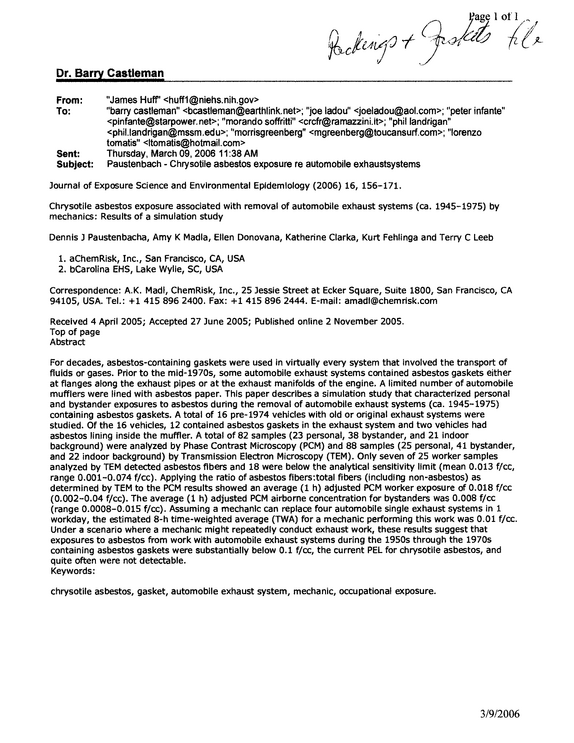
FILE NAME Packings and Gaskets PAG DATE 2006 DOC PAG001 DOCUMENT DESCRIPTION Published Journal Abstract fle Dr.
refid# xjeKEqkgpmJErQJ8r4qBZRbLm2 pages
DISTRICT COURT, COUNTY OF BOULDER, COLORADO 1777 6th Street Boulder, CO 80302 SUZANNE KRANTZ, Individually and as Surviving Spouse of JOHN KRANTZ, Plaintiff, vs.
refid# 1aQmj9ybwRMV9vV2dEBmKR5Z18 pages
mechanical means, use some type of carrying device Cylinders may be rolled on bottom edge but never dragged 4 Protect cylinders from cuts or abrasions 5 Do not lift compressed gas cylinders with an electromagnet Where cylinders must be handled by a crane or derrick, as on construction jobs, carry them in a cradle or similar device and take extreme care that they are not dropped Do not use slings 6 Do not drop cylinders or let them strike each other violently 7 Do not use cylinders for rollers, supports, or any purpose other than to contain gas 8 Do not tamper with safety devices in valves on cylinders 9 When m doubt about the proper handling of a compressed gas cylinder or its con tents, consult the supplier of the gas 10 When empty cylinders are to be returned to the vendor, mark them Empty or MT with chalk Close the valves and replace the valve protection caps 11 Load cylinders to be transported to allow as little movement as possible Secure them to prevent violent contact or up setting 12 Always consider cylinders as full and handle them with corresponding care Accidents have resulted when containers under partial pressure were thought to be empty The fusible safety plugs on acetylene cyl inders melt at about the boiling point ofwater If an outlet valve becomes clogged with ice or frozen, it should be thawed with warm (not boiling) water, applied only to the valve A flame should never be used Stonng cylinders Cylinders should be stored m a safe, dry, well-ventilated place prepared and reserved for the purpose Flammable substances, such as oil and volatile liquids, should not be stored m the same area Cylinders should not be stored near elevators, gangways, stair wells, or other places where they can be knocked down or damaged Cylinders of oxygen should not be stored indoors close to cylinders containing flam mable gases Unless they are stored apart, oxygen cylinders and flammable gas cylinders should be separated by a fire-resistive parti tion Acetylene and liquefied fuel gas cylinders should be stored with the valve end up The total capacity of acetylene cylinders stored inside a building should be limited to 2000 cu ft of gas, exclusive of cylinders in use or connected for use Quantities exceeding this total should be stored m a special room built m accordance with the specifications of NFPA Standard No 51, in a separate building, or outdoors Acetylene storage rooms and build ings must be well ventilated, and open flames must be prohibited Storage rooms should have no other occupancy Cylinders should be stored on a level, fire proof floor One common type of storage house consists of a shed roof with side walls extending approximately halfway down from the roof and a dividing wall between one kind of gas and another To prevent rusting, cylinders stored in the open should be protected from contact with the ground and against extremes of weatheraccumulations of ice and snow in winter and continuous direct rays of the sun in summer Cylinders are not designed for tempera tures in excess of 130 F Accordingly, they should not be stored near sources of heat, such as radiators or furnaces, or near highly flammable substances like gasoline Cylinder storage should be planned so that cylinders will be used in the order m which they are received from the supplier Empty and full cylinders should be stored separately, with empty cylinders being plainly identified as such to avoid confusion Group together cylinders which have held the same contents A direct flame or electric arc should never be permitted to contact any part of a com pressed gas cylinder Storage rooms for cylinders containing flam mable gases should be well ventilated to prevent the accumulation of explosive con centrations of gas No source of ignition should be permitted Smoking should be prohibited Wiring should be in conduit Electric lights should be in fixed position and enclosed in glass or other transparent ma terial to prevent gas from contacting lighted 923
refid# wKD41JnJ0reGvaMppjMq3e25d1 page
with relatively lower efficiency since light out put and life have an inverse relationship It is important that incandescent lamps conform to the supply voltage, because the change of only a few volts will seriously affect both life and light output Inside-frosted and "white-coated" lamps provide diffusion and thereby reduce high fila ment brightnesses Light outputs are approxi mately equal to those of clear lamps, how ever, the effective source sizes are increased, which may affect luminaire distribution Many incandescent lamps are available in colors, or in tints of colors For instance, the daylight incandescent lamp has a bluish glass bulb that reduces the percentage of red light and gives a color closer to that of daylight Daylight incandescent lamps are roughly 65 percent as efficient as other comparable types.
refid# x5Bq2ygpYxe0Qmb5JVqJ2Y4z01 page
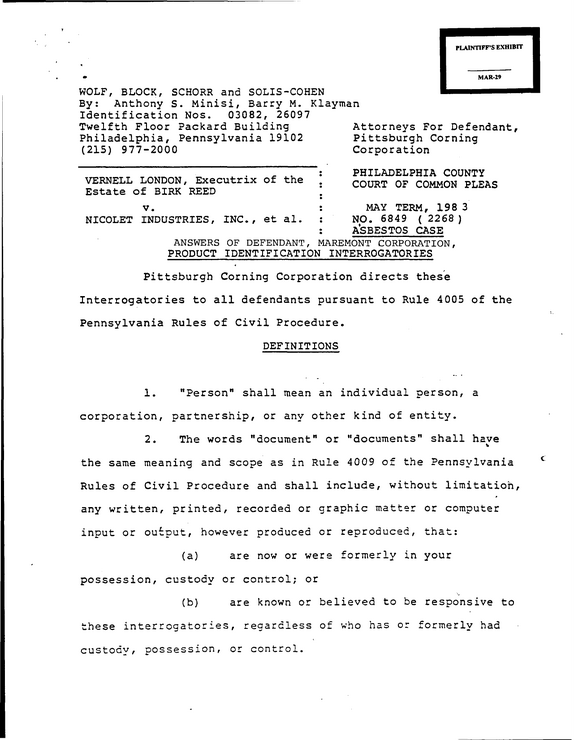
PLAINTIFF'S EXHIBIT WOLF, BLOCK, SCHORR and SOLIS-COHEN By: Anthony S.
refid# n98qMnj3K78VyQyXwnbkG2gj69 pages
hazard from single exposure to high concen trations and organic (liver) injury is likely only if severe anesthetic effects are apparent Repeated exposure to moderately excessive concentrations is likely to result in slight liver injury The material has a low oral toxicity and does not present a problem from skin ab sorption Bromochloromethane is slightly irri tating to the eyes and has a defatting effect on the skin Fire extinguishers containing bromochloro methane should only be used on outdoor or other fires m areas of good ventilation If used in small, confined, or poorly ventilated locations, the area should be evacuated im mediately Since pyrolysis products of bromo chloromethane, like other halogenated hydro carbons, are more toxic than the compound itself, these areas should be ventilated thor oughly before they are reentered Cross skin contact should be prevented, suitable eye pro tection should be provided 1,3-Butadiene is a colorless liquid, which is mildly narcotic similar to gasoline, although it can produce very high concentrations in the air very rapidly because of its low boiling point It is mainly hazardous because of its flammability and because, if exposed to the air or to oxygen in the absence of antioxidants, it forms peroxides rapidly These peroxides are explosive and sensitive to both mechanical shock such as a hammer blow, and to heat 1- Butanol (n-butyl alcohol) has a toxicity greater than that of ethanol, and the vapor is much more irritating, producing coughing, ir ritation of eyes, nose, and throat, dizziness, and nausea Severe eye damage may result if overexposure is permitted Butanol is used as a solvent for various plastics, particularly in lacquers and rubber cements It is more toxic than the lower alcohols, but the hazard is somewhat allevi ated by its lower volatility, which limits the exposuie at room temperature to about 8600 ppm 2- Butanone (methyl ethyl ketone) is a flam mable liquid with an odor objectionable to most people, and is highly irritating to the eyes, nose, and throat in concentrations which are not systemically dangerous The odor is probably a warning only on first exposure be cause the sense of smell is rapidly dulled by continuing exposure In the cementing of plastic raincoats, there have been a number of long-continued ex posures at concentrations of 600 to 800 ppm with peak concentrations running well over 2000 ppm Under these conditions the em ployees complained of headaches and nausea, and there were some cases of illness and un consciousness with no apparent aftereffects n-Butyl acetate is widely used as a solvent m lacquers and in cements based on either natural or synthetic resms or gums Like most of the aliphatic esters, it is a relatively in nocuous material In man, it produces symp toms of mild irritation of the nose and throat, irritation of the eyes, and finally narcosis It is not stored long in the body and is not cumu lative Butyl Cellosolve--see Ethylene glycol mon obutyl ether. n-Butylamine is a colorless, flammable liquid with a strong, ammonia-like odor The liquid produces severe damage to the slan and eyes, and the vapor is highly irritating to the upper respiratory tract and eyes Inhala tion of approximately 10 ppm may produce mild headaches and flushing of the slan and face Its chrome exposure hazard is moderate and cumulative effects have not been ob served Butyllithium (in hydrocarbon solvents) has the characteristic odor of the particular sol vent Due to the extremely low vapor pres sure of butylithium itself, the solvent presents the major hazard as far as vapor inhalation is concerned For skin contact, due to leaks, spills, or splashes, the first effect is the effect of the solvent m removing fats and oils from the skin The second effect is the reaction of butyllithium with the moisture of the skin to form lithium hydroxide which can cause a severe caustic bum When water and butylhthium solvents are mixed, local over-heat ing can result and cause ignition of the sol vent If a solution of butyllithium is poured on dry or damp organic materials, such as ex- 1131
refid# 3ebL9Vb3KKv44zEEDGRgyLdbJ1 page
). . . 1 NATIONAL C1VSHED STONE ASSOC. 1415 ELLIOT PL..
refid# qkpvv4NDDgZe2g2OJxO2GG43R1 page
THE CLINICAL SIGNIFICANCE OF FERRUGINOUS BODIES IN SPUTA Jerry W.
refid# RJYd8D5J7L0G4x8Yv810Y0pbE33 pages
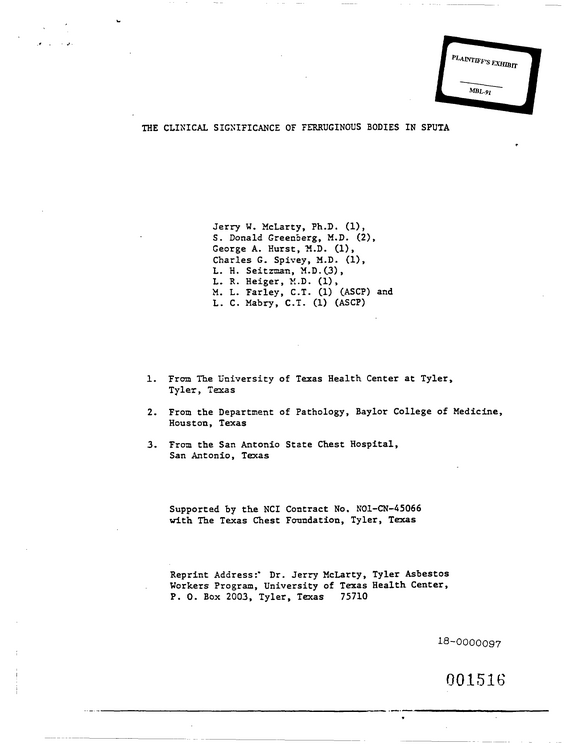
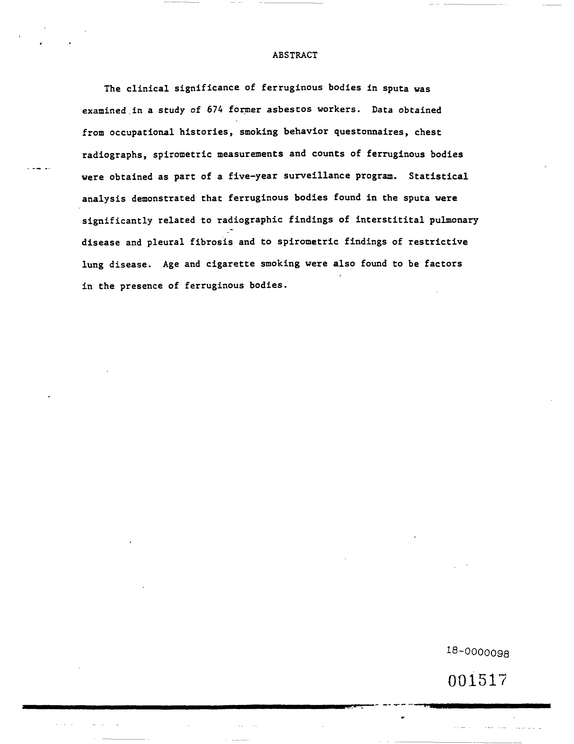
IN THE CIRCUIT COURT THIRD JUDICIAL CIRCUIT MADISON COUNTY, ILLINOIS IN RE: ALL ASBESTOS LITIGATION FILED BY THE SIMMONS FIRM, LLC, Plaintiffs vs.
refid# 5z12qkveg2BL2aLEKgKX6Zx81 page
14256997033 2002-02-26 19:09:21 (GMT), page 31 30 Unfortunately, the quantity of samples is no substitute for quality and the QAMA-McGill researchers acknowledged the poor quality ofthe measurements in otter published assessments the exposure data: "We cannot claim precision or certainty for our estimates, only that the available data-more plentiful in this industry than most others were used to the best ofour ability."
refid# xzQZKqydVonp61nr4DqB2Ry1y1 page
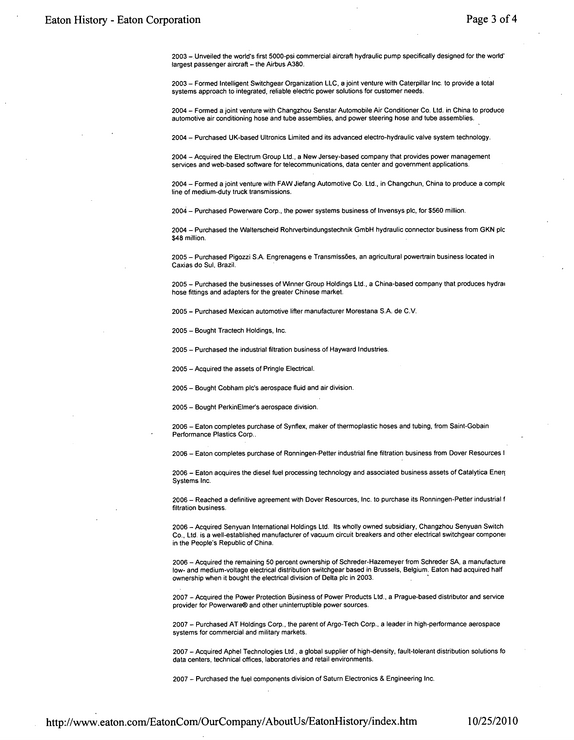
Eaton History - Eaton Corporation Page 3 of 4 2003 - Unveiled the world's first 5000-psi commercial aircraft hydraulic pump specifically designed for the world' largest passenger aircraft - the Airbus A380. 2003 - Formed Intelligent Switchgear Organization LLC, a joint venture with Caterpillar Inc. to provide a total systems approach to integrated, reliable electric power solutions for customer needs. 2004 - Formed a joint venture with Changzhou Senstar Automobile Air Conditioner Co.
refid# 7R8kd4pn5mxmqXMz2dnn4On281 page
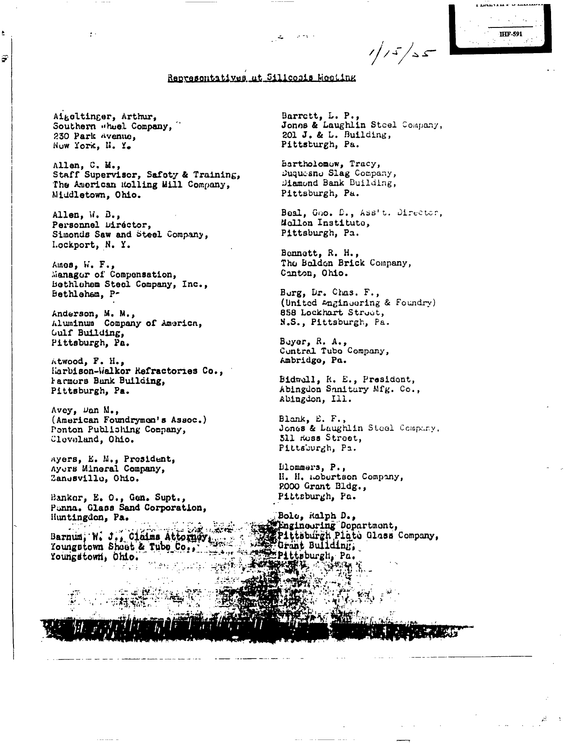
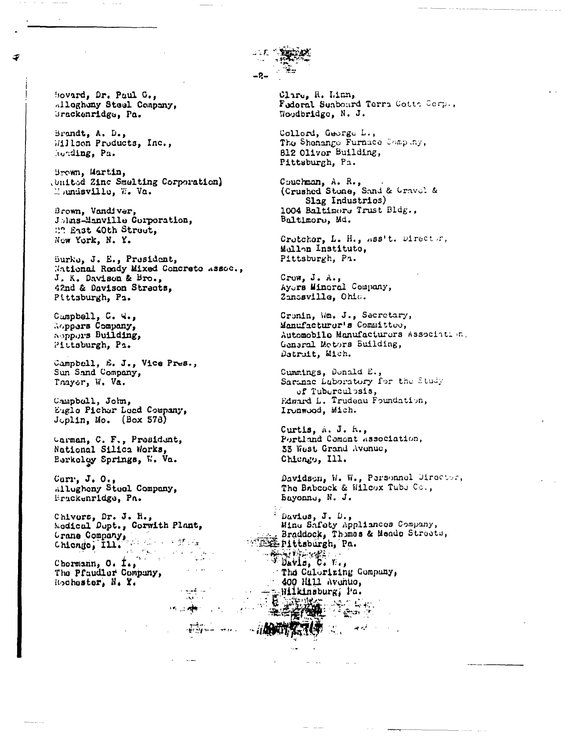
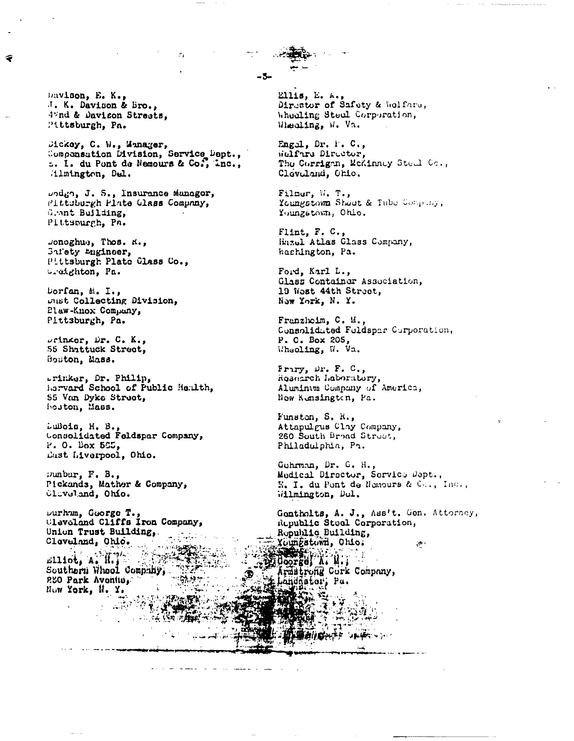
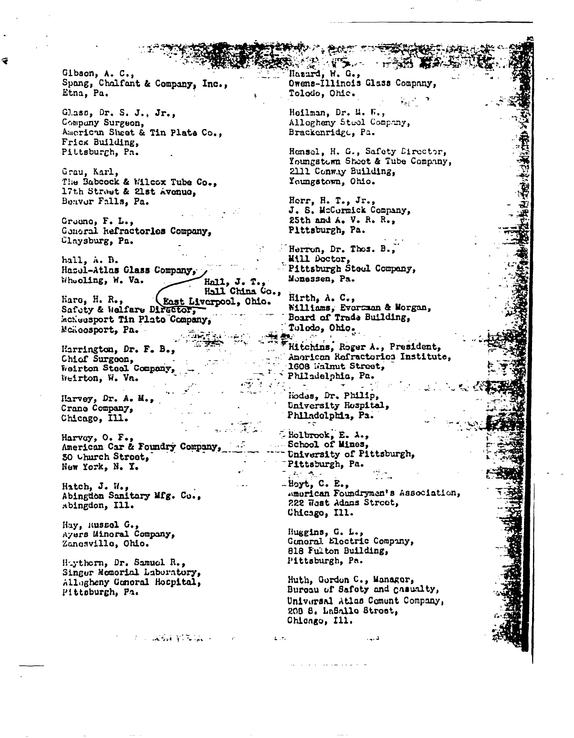
///-i sr' Representatives ut Silicosis tioellnK Aigoltinger, Arthur, Southern 'heel Company, 230 Parle avenue, Nuw York, U.
refid# M4M6b31v0NR97xLM37nvoyge98 pages
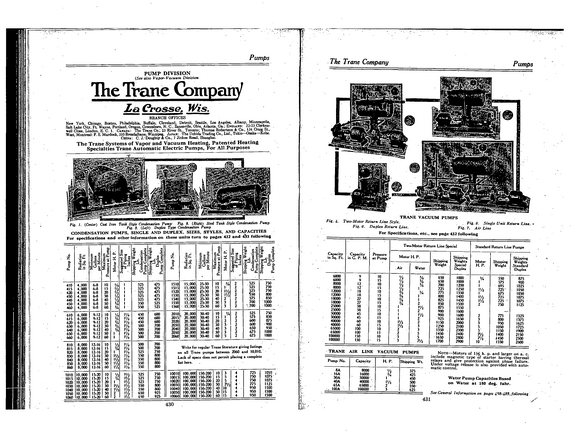
Pumps PUMP DIVISION (See also Vapor-Vacuum Division The Trane Company La Crosse; BRANCH OFFICES New York.
refid# zo51qEZowpBqLyvjor3qnVZd61 page
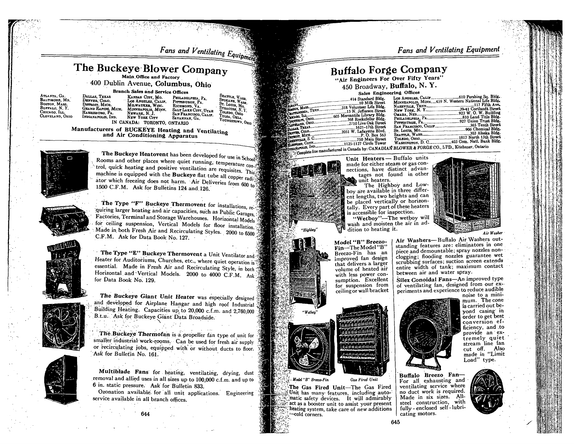
{'' Fans and Ventilating Equi^M, The Buckeye Blower Company Main.Office and Factory 400 Dublin Avenue, Columbus, Ohio m Atlanta, Ga.
refid# oeKepwzp3YjnQgmky4aY1mwEw1 page
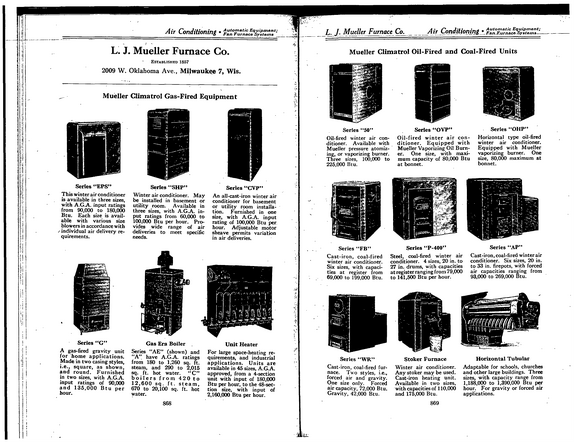
Air Conditioning !'
refid# wzEmzBGa14R0pqw1DyR4G3G61 page