Refine
Estimated Years 1980-1989Clear
7,383 results foundRefine Search
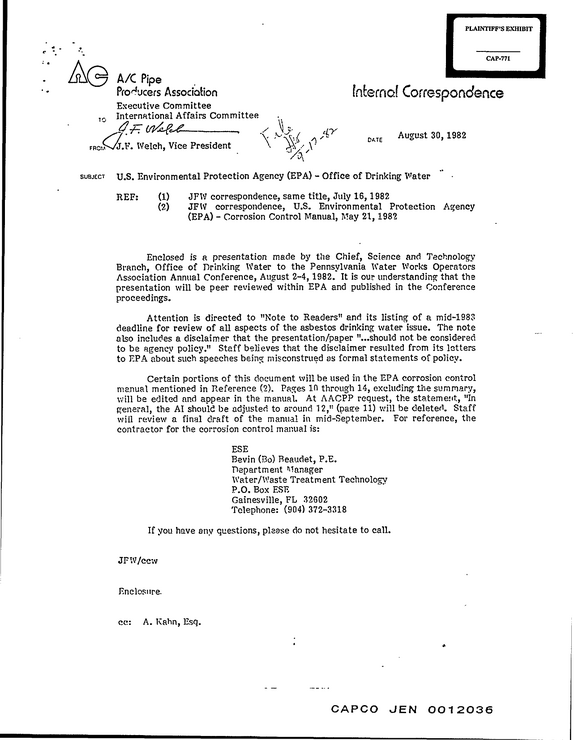
A A/C Pip,>e Producers Association Executive Committee to International Affairs Committee cf.F.
refid# NpzJJa2vX4eQZZJvyRggMRVQ21 pages
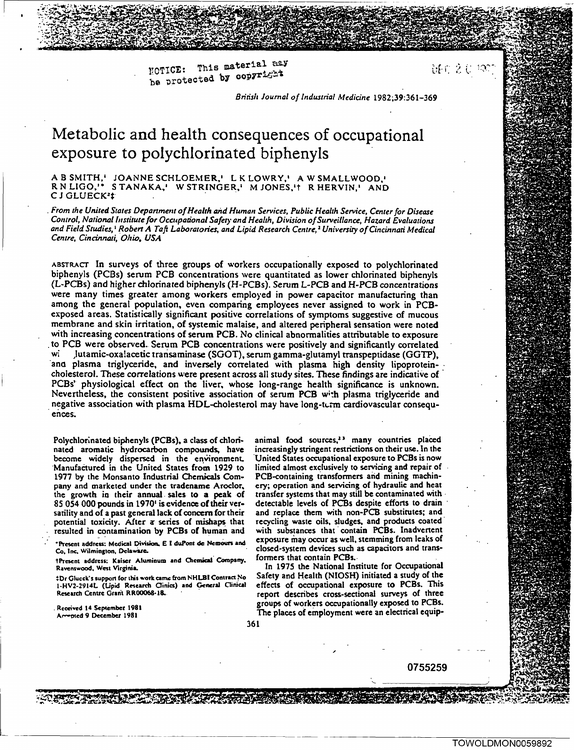
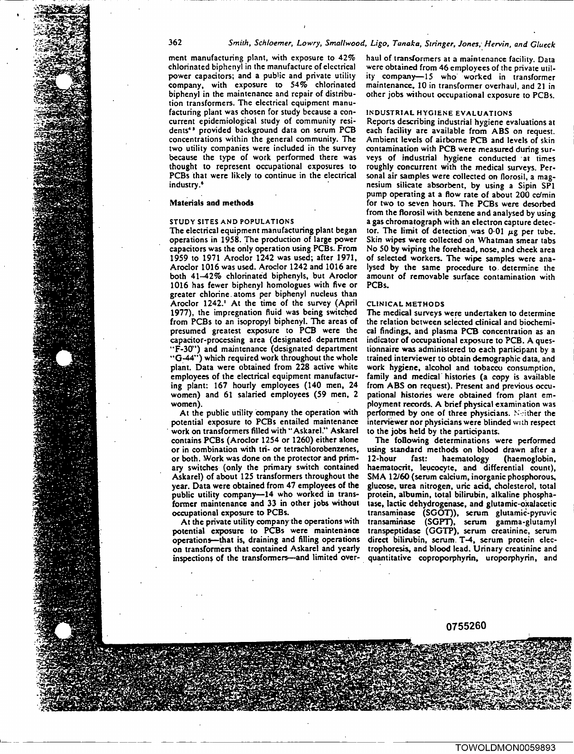
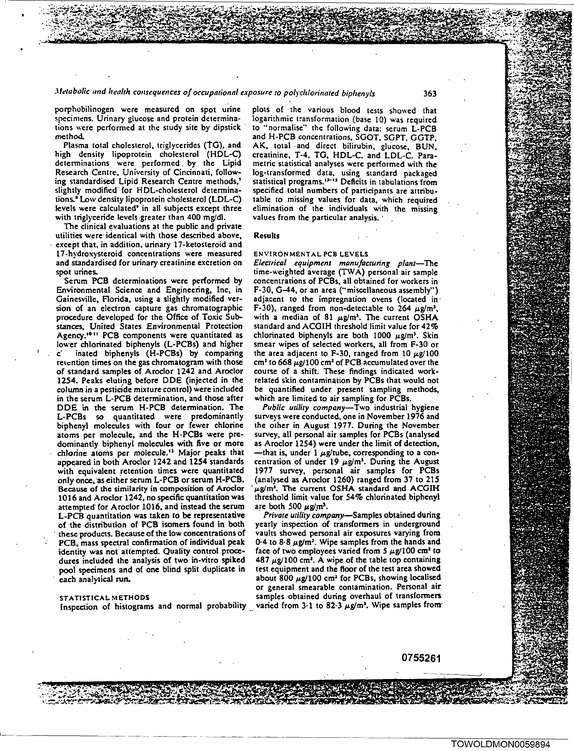
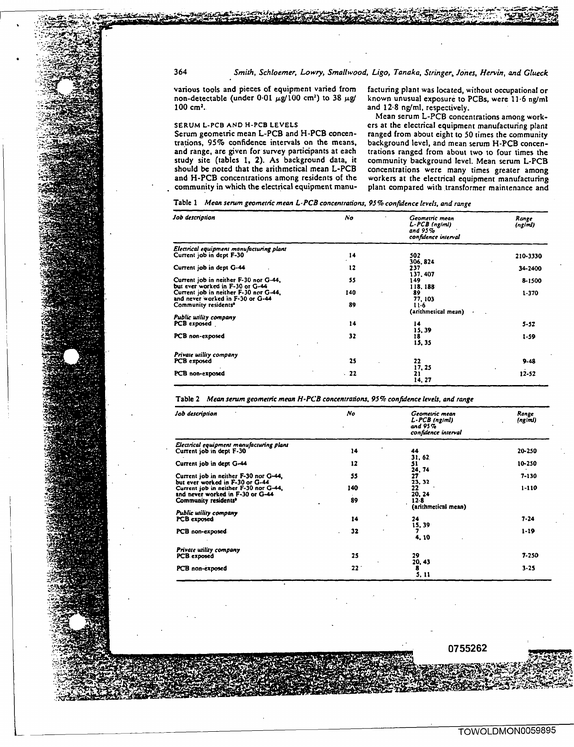
T-4, serum protein elec on transformers that contained Askarel and yearly trophoresis, and blood lead.
refid# 9165gKgKmyymEa1OonEvpN6D9 pages
Interoffice Communication To Distribution From Date Ronald E.
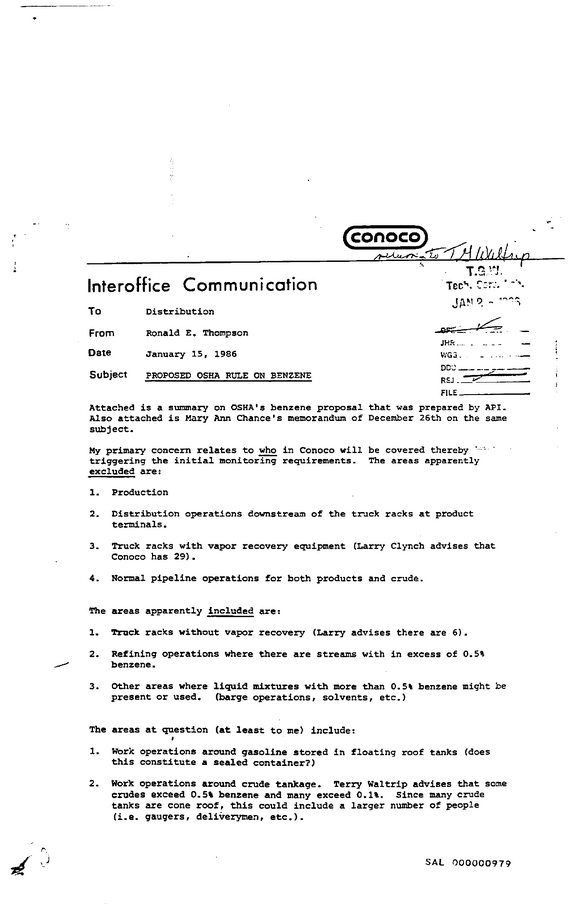
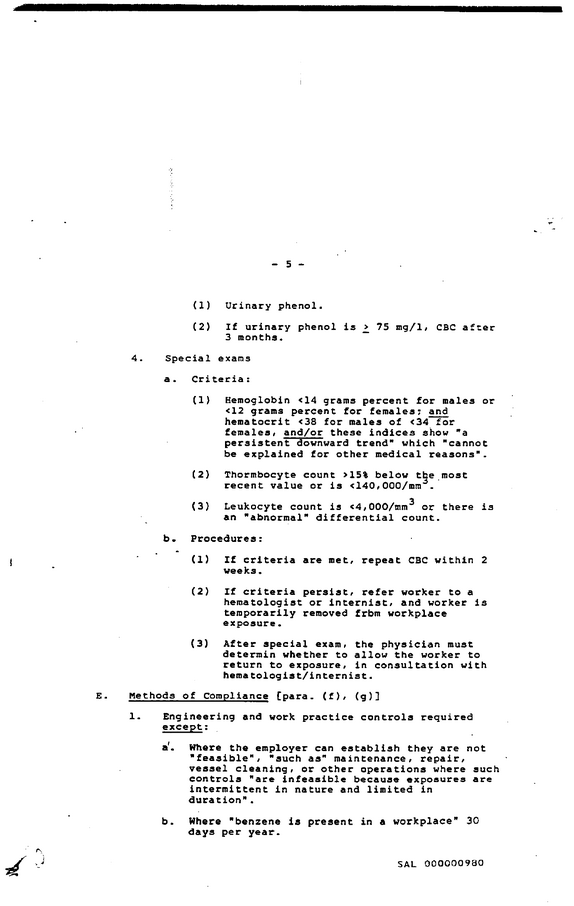
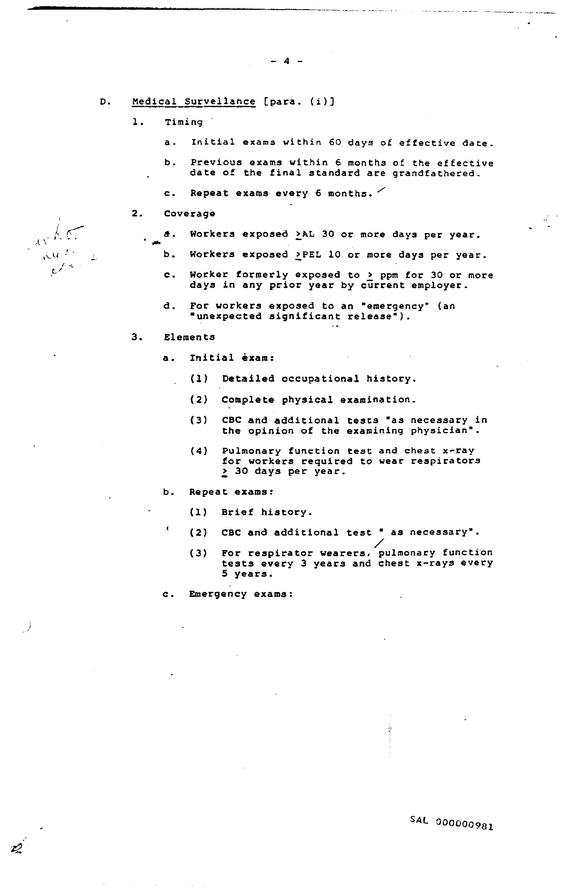
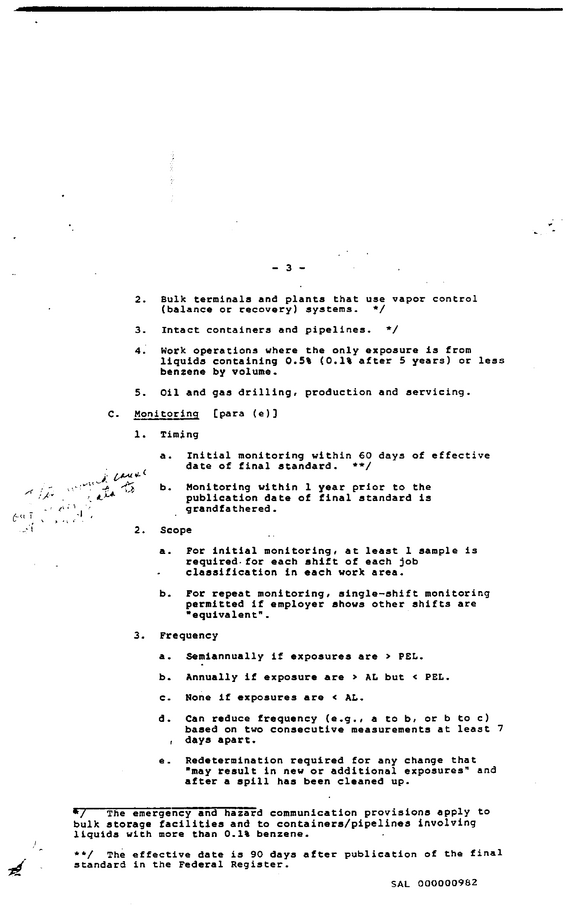
refid# ykqjYmMmz5o9o56EKKjn0w7jr22 pages
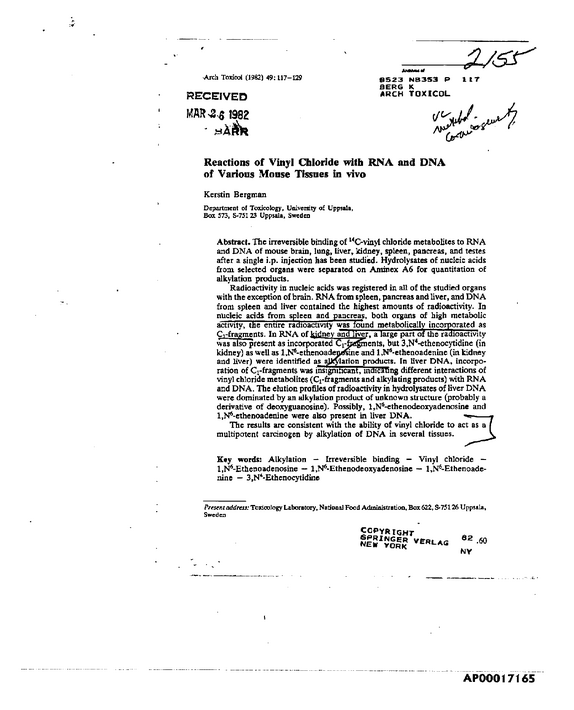
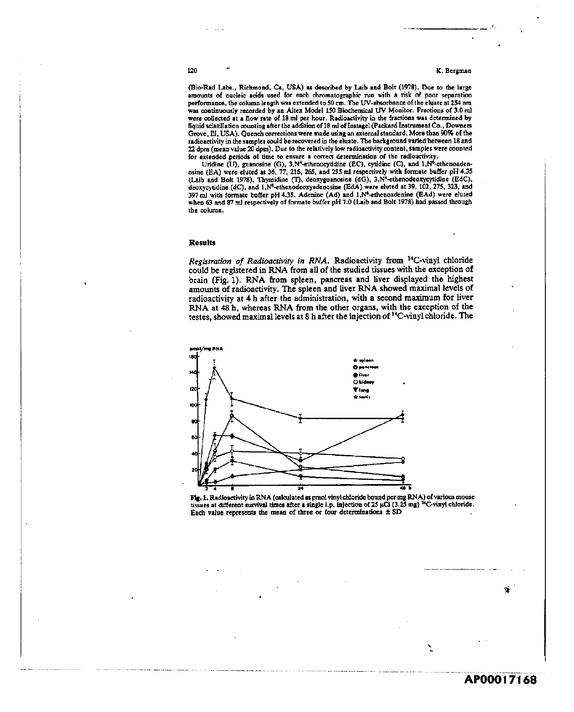
Arch Toxicol (1982) 49:117-129 RECEIVED MAR 1982 AnMtm*l 8523 NB3S3 P BERG K ARCH TOXICOL 117 Reactions of Vinyl Chloride with RNA and DNA of Various Mouse Tissues in vivo Kerstin Bergman Department of Toxicology, University of Uppsala, Box 573, S-75123 Uppsala, Sweden Abstract.
refid# mqD7Vp7k08dvmN4L21bRw7ELZ13 pages
. , a leading European PVC producer, reported producing cancers in test animals at high exposure levels (10,000 to 30,000 ppm).
refid# b5EoOVvpeqd6xZn0ob7QdxBN027 pages
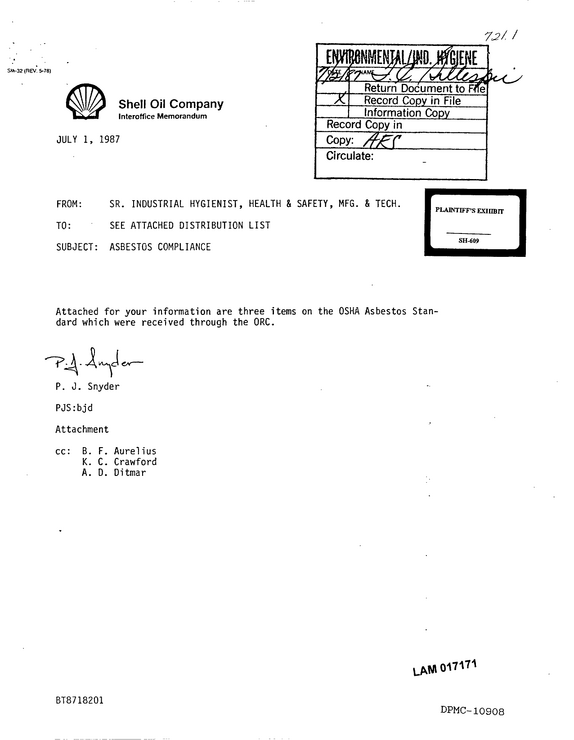
SNt-32 (REV. 5-78) Shell Oil Company Interoffice Memorandum JULY 1, 1987 7j?
refid# ZJdNaye32JJmVL2mMJdJyqj1013 pages
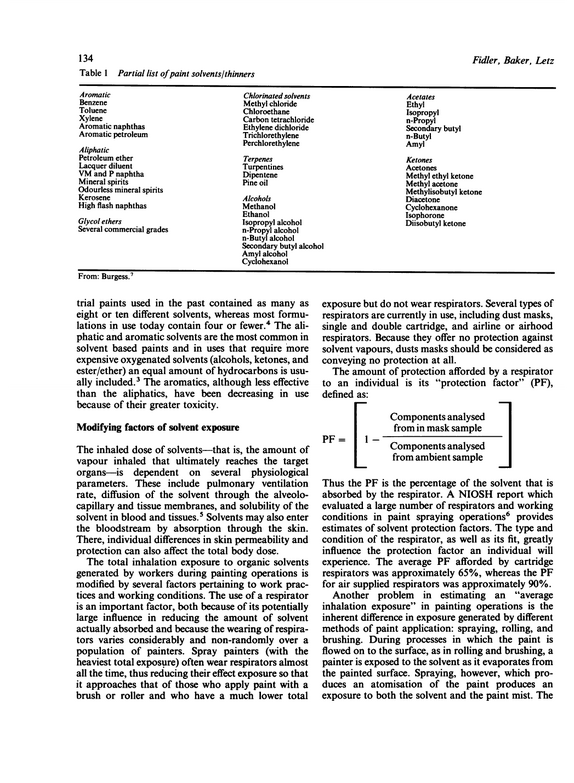
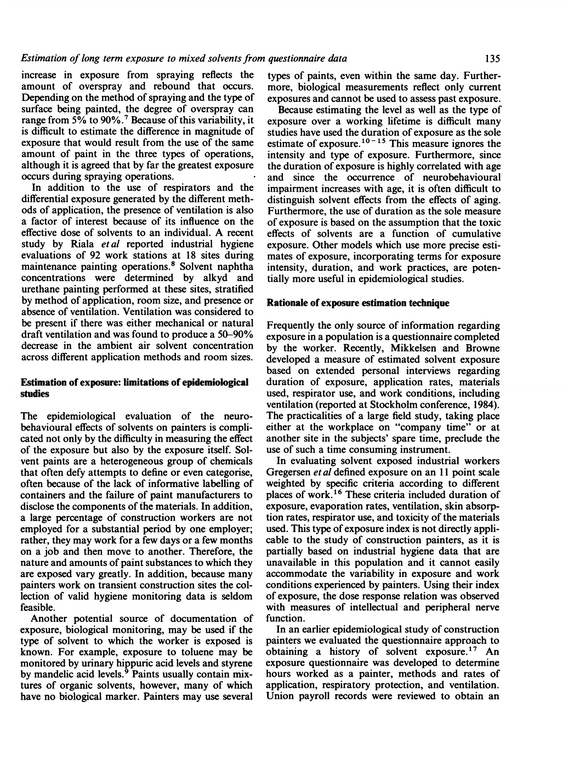
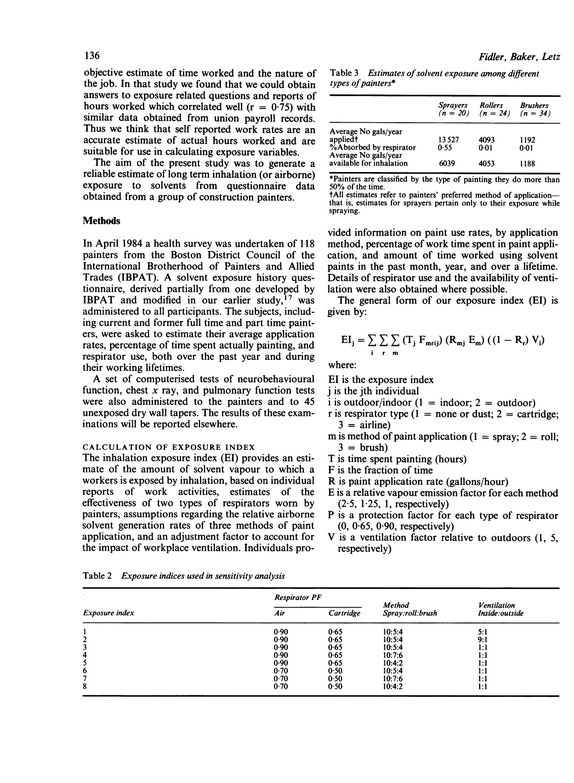
British Journal of Industrial Medicine 1987;44: 133-141 Estimation of long term exposure to mixed solvents from questionnaire data: a tool for epidemiological investigations ANNE T FIDLER, E L BAKER, R E LETZ From the Occupational Health Program, Harvard School of Public Health, Boston, MA 02115, USA ABSTRACT Quantifying the exposure of construction painters to mixed organic solvents is difficult in the face of a lack of industrial hygiene data, the heterogeneity of the solvents used, and the variability in work practices which influences the amount of solvents to which a worker is actually exposed.
refid# d1bVNzovN0r637nNqKvxVB2q9 pages
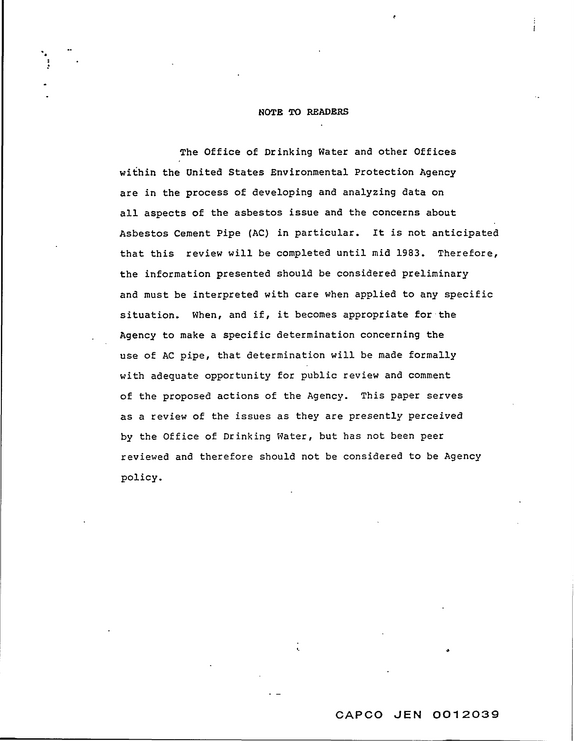
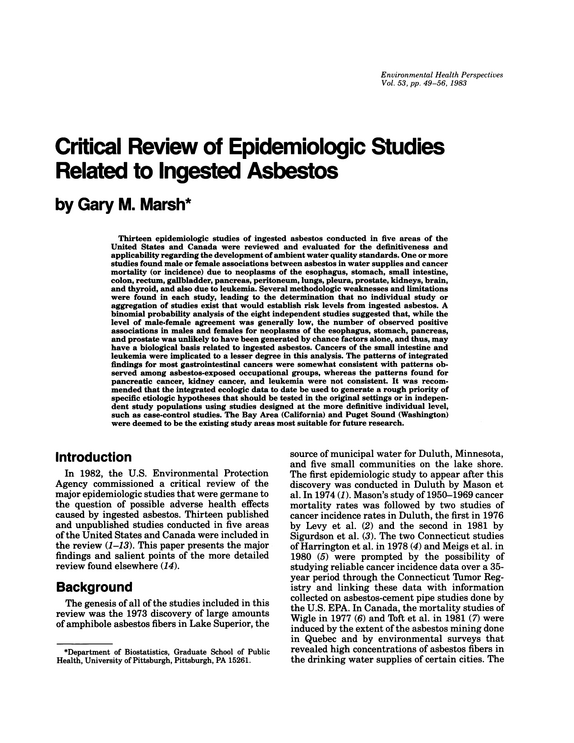
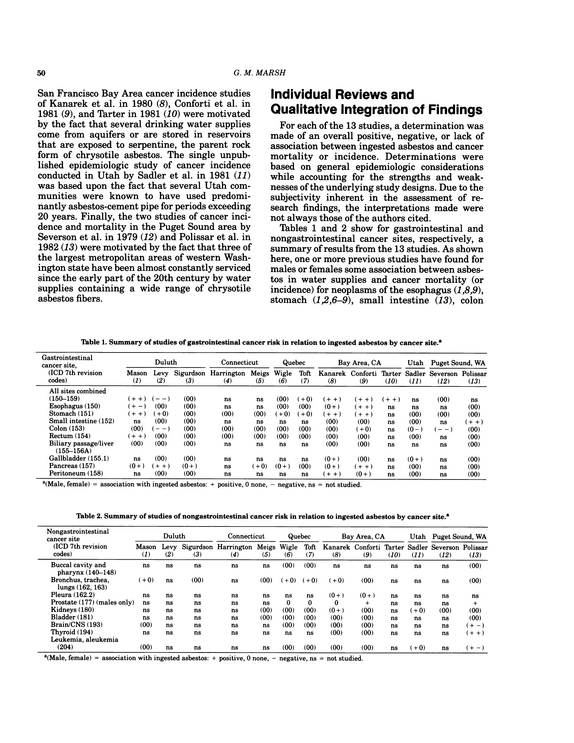
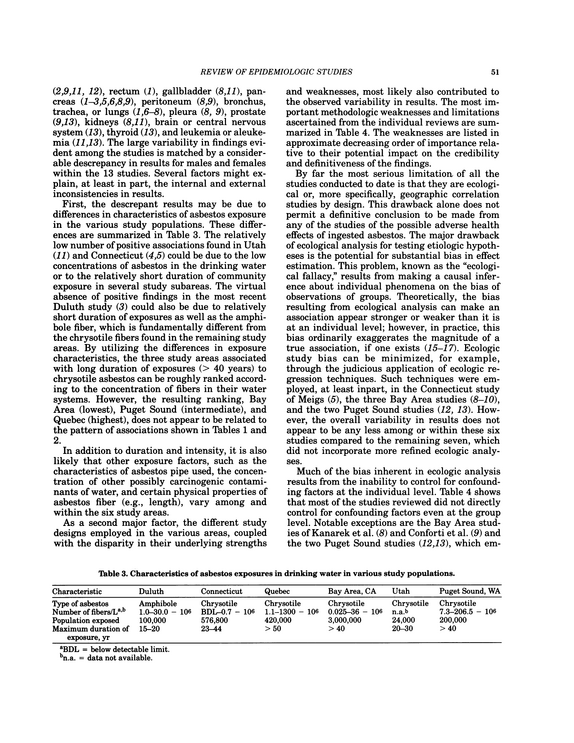
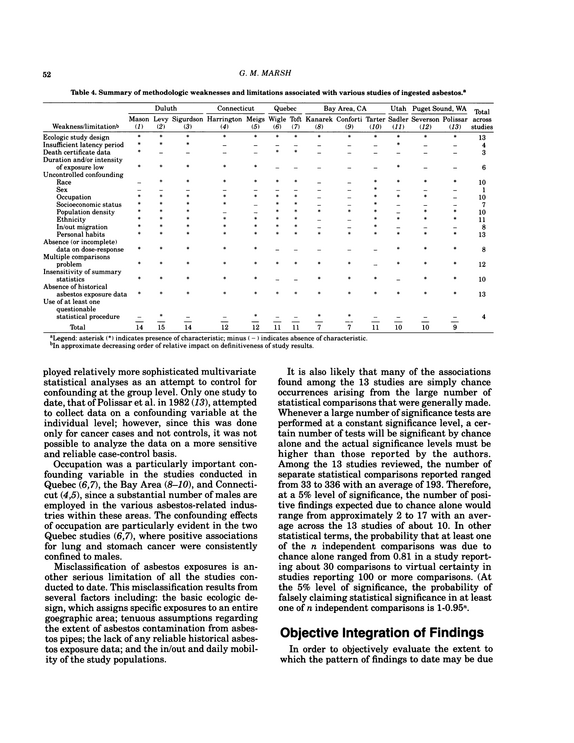
Several methodologic weaknesses and limitations were found in each study, leading to the determination that no individual study or aggregation of studies exist that would establish risk levels from ingested asbestos.
refid# byMvqX4937K1ZrZMRjKb82jYo8 pages
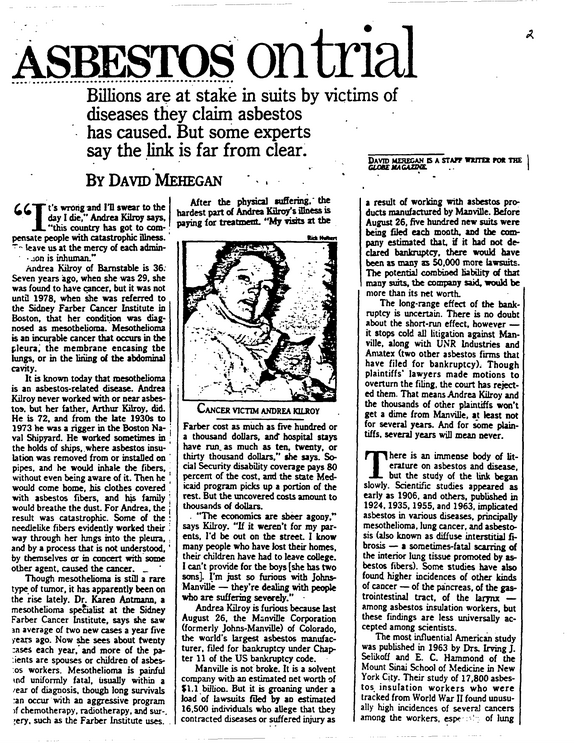
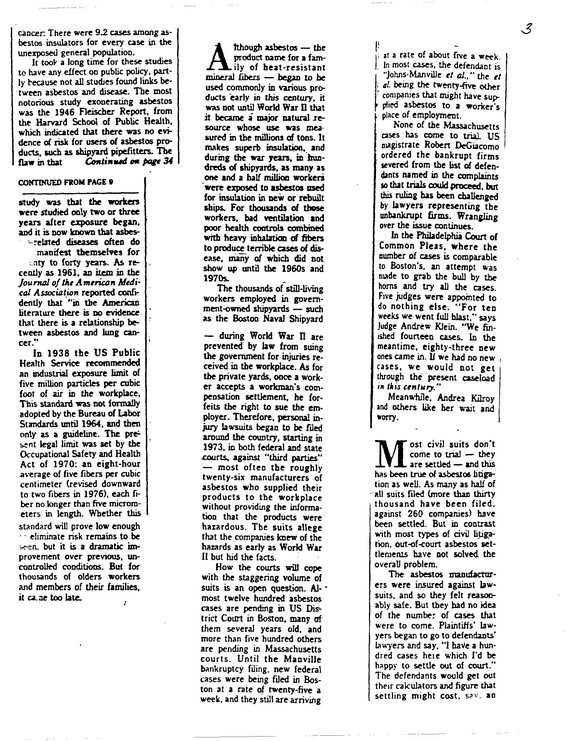
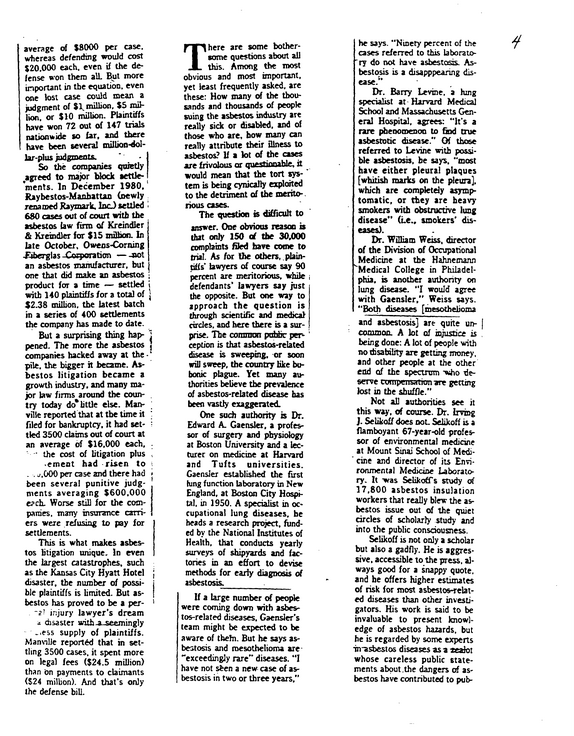
PLAINTIFFS I EXHIBIT I GH-205 / - January 16, 1983 By David Mehegan j > * it-**-- Who'll help the victims?

refid# jyxGDV7kOkvwvx81Vv9okO9vR9 pages
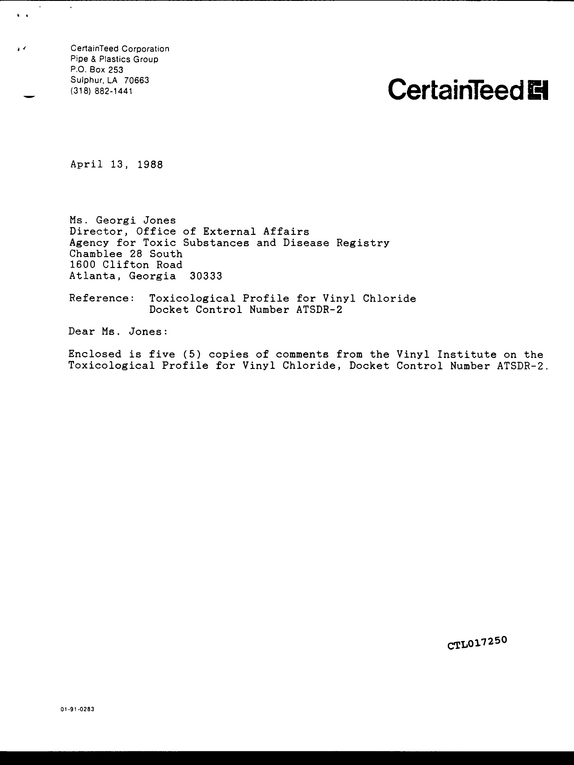
CertainTeed Corporation Pipe & Plastics Group P.O.
refid# k9NZ2ZdN8oVo7G6jbagJekv9q19 pages
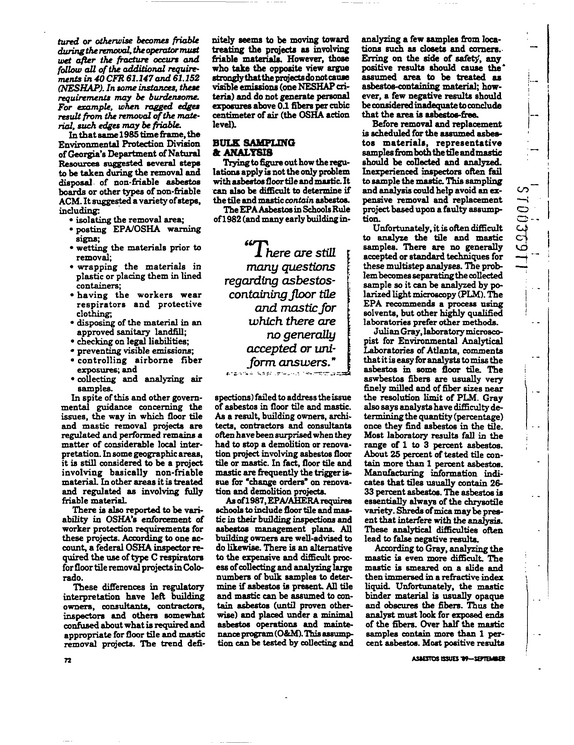
These analytical difficulties often lead to false negative results.
refid# vyB6djGaYmbgD6V3gG94DLxJE9 pages
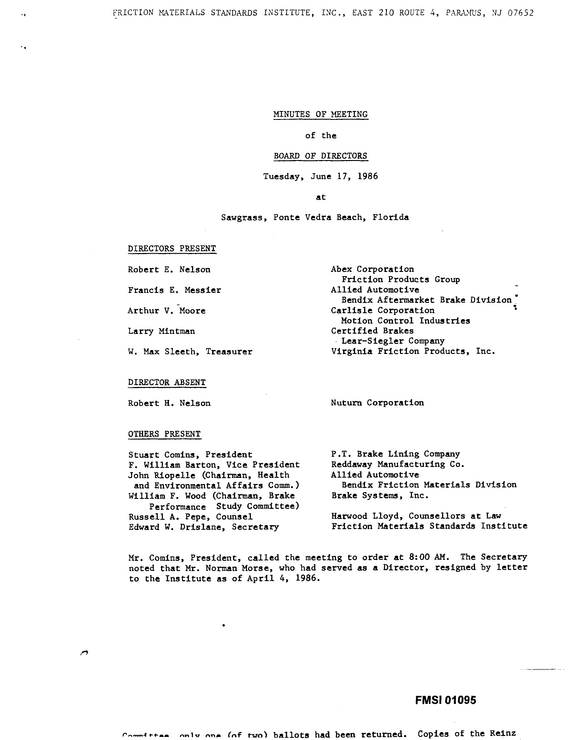
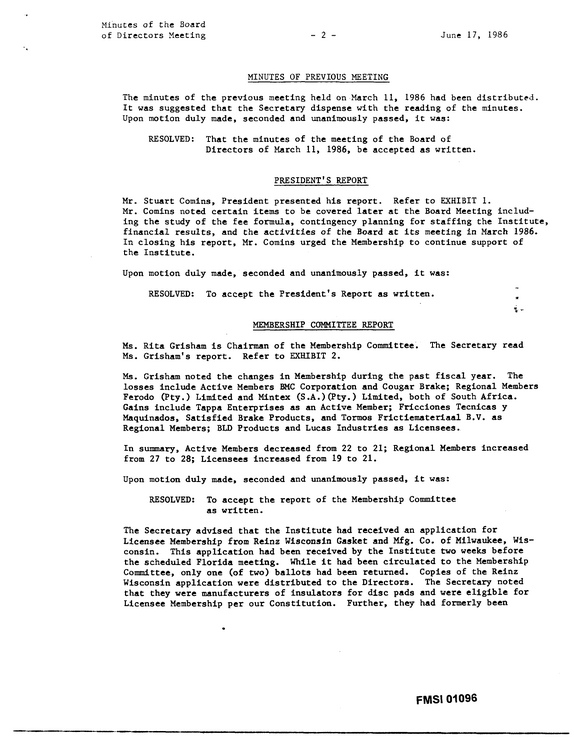
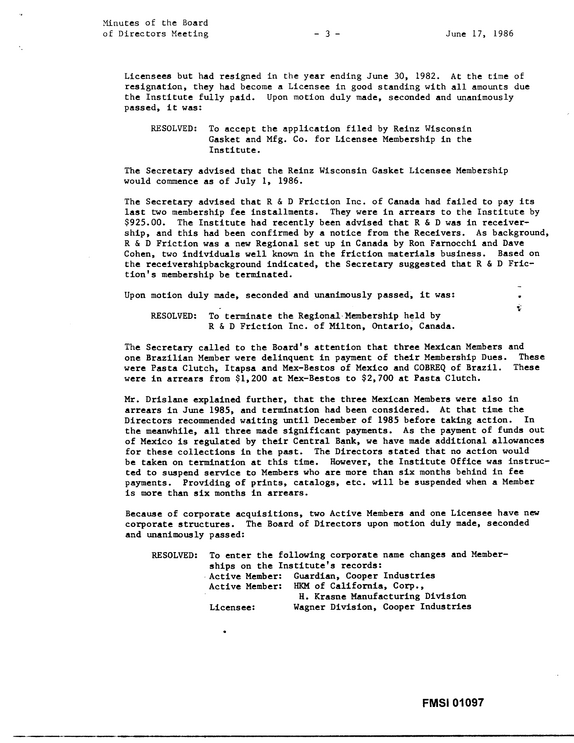
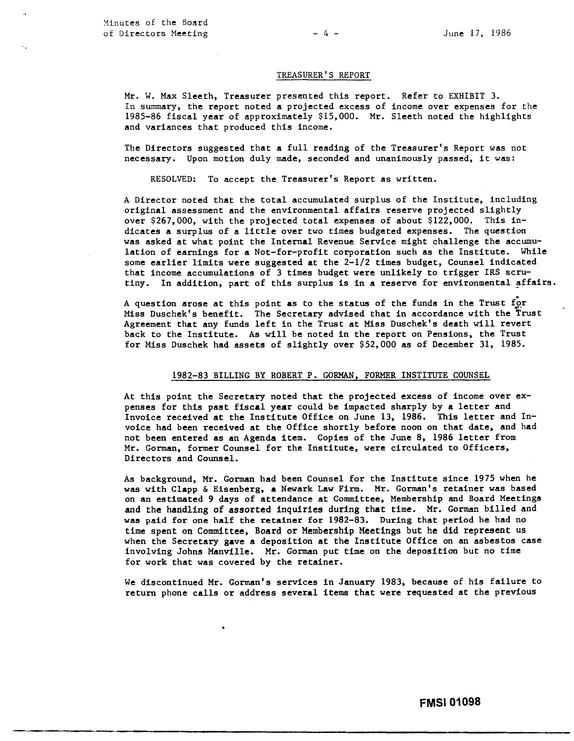
FRICTION MATERIALS STANDARDS INSTITUTE, INC., EAST 210 ROUTE 4 PARAMUS, NJ 07652 MINUTES OF MEETING of the BOARD OF DIRECTORS Tuesday, June 17, 1986 at Sawgrass, Ponte Vedra Beach, Florida DIRECTORS PRESENT Robert E.
refid# yp1Vxye9owpbzV1xnwj1mbVzr17 pages
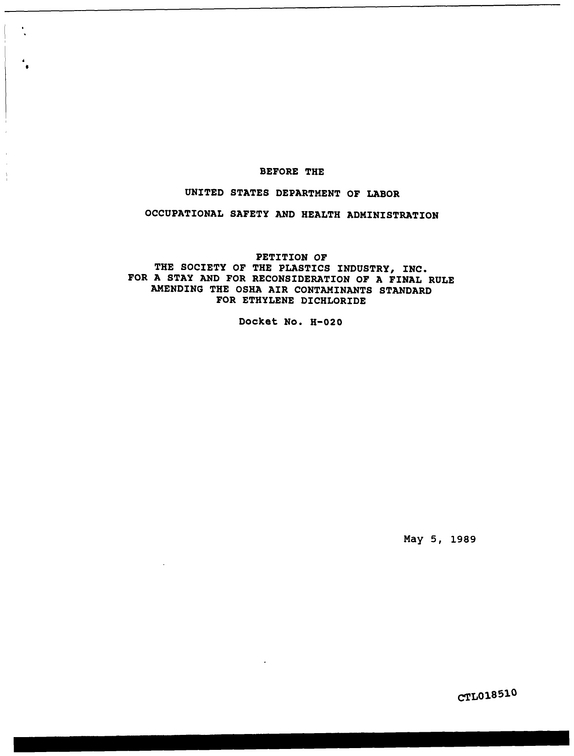
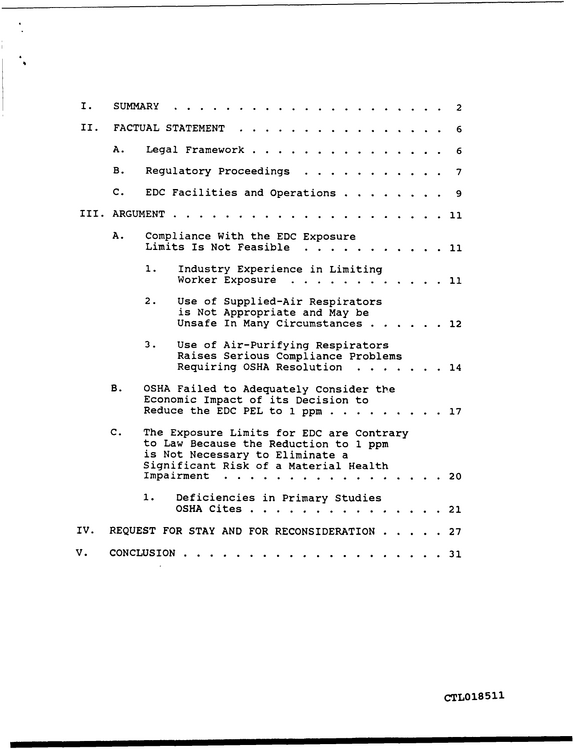
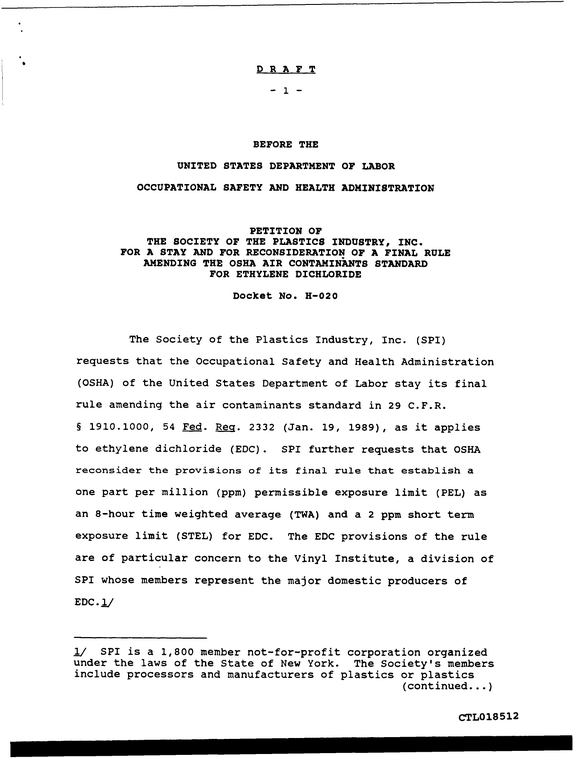
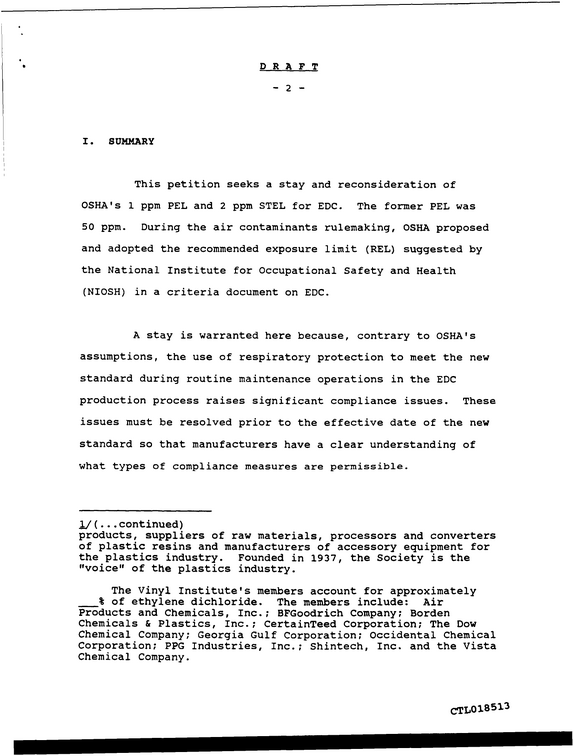
BEFORE THE UNITED STATES DEPARTMENT OF LABOR OCCUPATIONAL SAFETY AND HEALTH ADMINISTRATION PETITION OF THE SOCIETY OF THE PLASTICS INDUSTRY, INC.
refid# ppE5Rdo0xXZjJ8vg4bkXdG19D33 pages
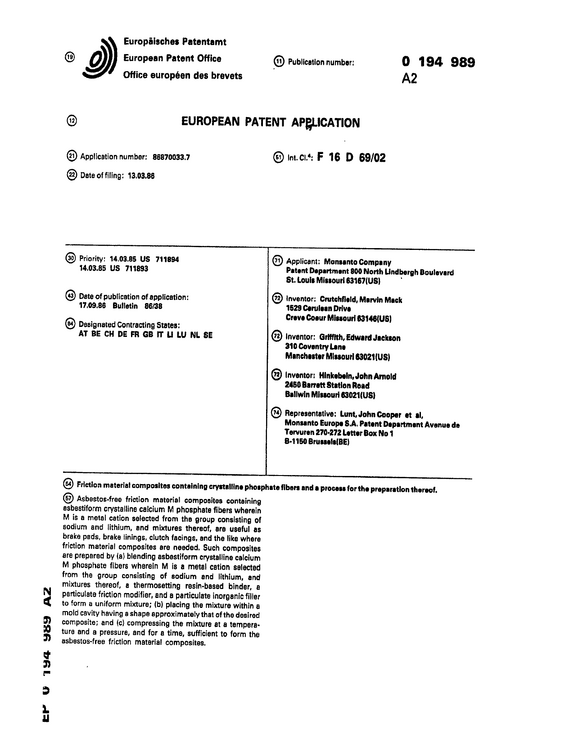
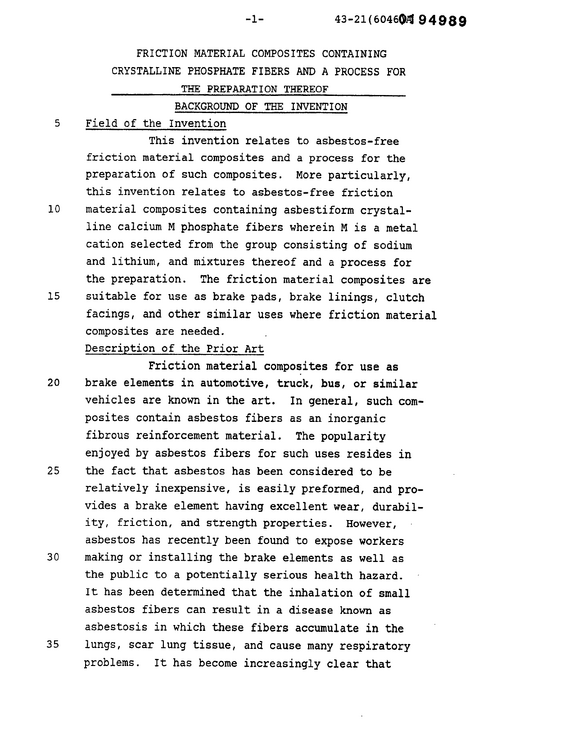
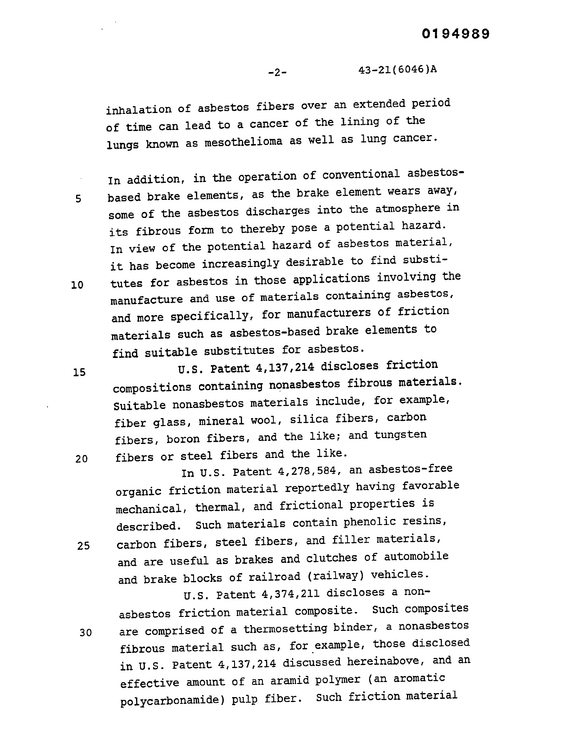
Patent Department Avenue de Tervuren 270-272 Letter Box No 1 8-1150 Brussels Friction material composites containing crystalline phosphate fibers and a process for the preparation thereof Asbestos friction material composites containing asbestiform crystalline calcium M phosphate fibers wherein M is a metal cation selected from the group consisting of sodium and lithium and mixtures thereof are useful as brake pads brake linings clutch facings and the like where friction material composites are needed Such composites are prepared by a blending asbestiform crystalline calcium M phosphate fibers wherein M is a metal cation selected from the group consisting of sodium and lithium and mixtures thereof a thermosetting based binder a AZ particulate friction modifier and a particulate inorganic filler to form a uniform mixture b placing the mixture within a mold cavity having a shape approximately that of the desired 989 composite and c compressing the mixture at a temperature and a pressure and for a time sufficient to form the asbestos friction material composites 194 V EP -1- 60460 94989 FRICTION MATERIAL COMPOSITES CONTAINING CRYSTALLINE PHOSPHATE FIBERS AND A PROCESS FOR THE PREPARATION THEREOF BACKGROUND OF THE INVENTION Field of the Invention This invention relates to asbestos friction material composites and a process for the preparation of such composites More particularly this invention relates to asbestos friction 10 material composites containing asbestiform crystal- line calcium M phosphate fibers wherein M is a metal cation selected from the group consisting of sodium and lithium and mixtures thereof and a process for the preparation The friction material composites are 15 suitable for use as brake pads brake linings clutch facings and other similar uses where friction material composites are needed Description of the Prior Art Friction material composites for use as 20 brake elements in automotive truck bus or similar vehicles are known in the art In general such com- posites contain asbestos fibers as an inorganic fibrous reinforcement material The popularity enjoyed by asbestos fibers for such uses resides in 25 the fact that asbestos has been considered to be relatively inexpensive is easily preformed vides a brake element having excellent wear and produrabil- ity friction and strength properties However asbestos has recently been found to expose workers 30 making or installing the brake elements as well as the public to a potentially serious health hazard It has been determined that the inhalation of small asbestos fibers can result in a disease known as asbestosis in which these fibers accumulate in the 35 lungs scar lung tissue and cause many respiratory problems It has become increasingly clear that 0194989 -2- 43-21 inhalation of asbestos fibers over an extended period of time can lead to a cancer of the lining of the lungs known as mesothelioma as well as lung cancer 10 15 20 25 30 In addition in the operation of conventional asbestos- based brake some of the elements as the brake element wears away asbestos discharges into the atmosphere in its fibrous form to thereby pose a potential hazard In view of the potential hazard of asbestos material it has become increasingly desirable to find substitutes for asbestos in those applications involving the manufacture and use of materials containing asbestos and more specifically for manufacturers of friction materials such as asbestos brake elements to find suitable substitutes for asbestos U.S.
refid# rxmG2g2Zzj7n9E2z4aZDrDJpE30 pages
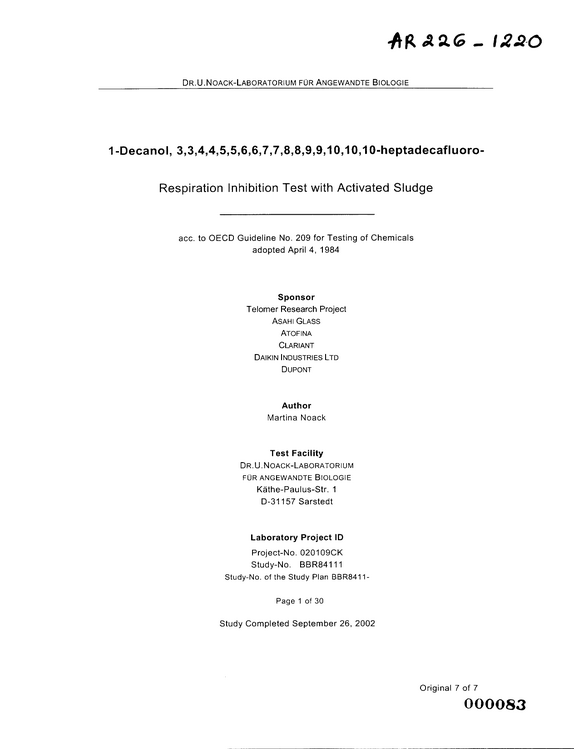
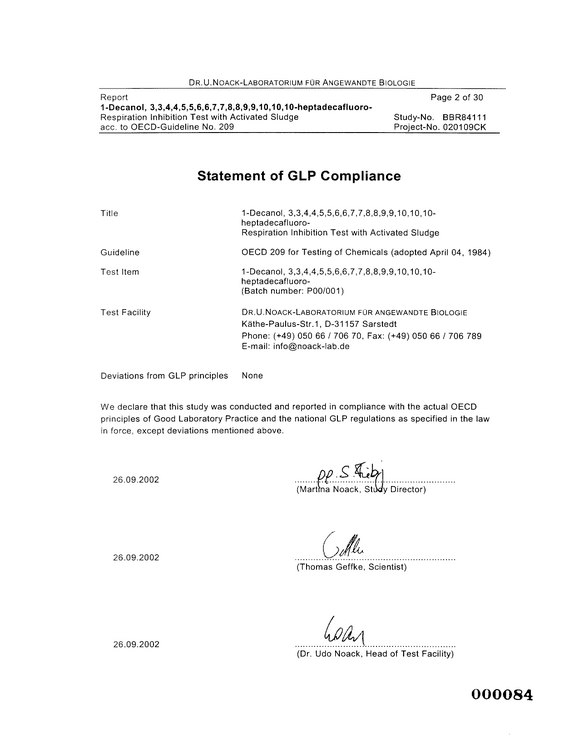
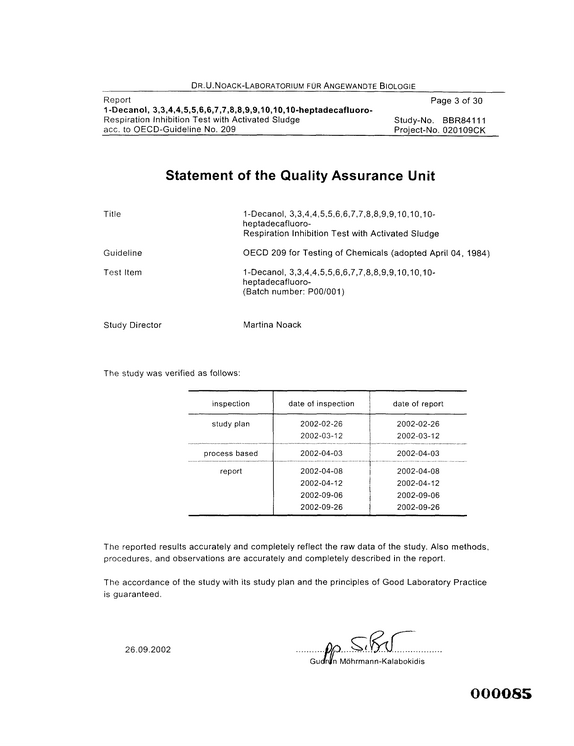
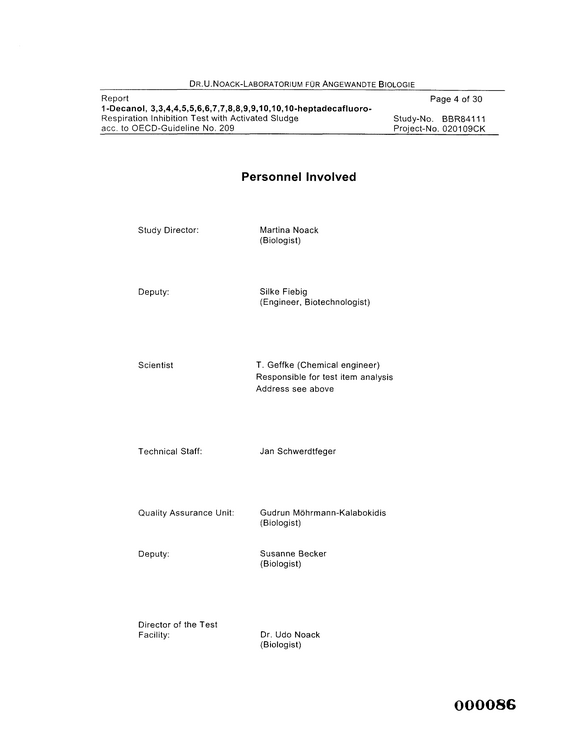
Ar a 6 _ i o Dr.U.Noack-Laboratorium fr Angewandte Biologie 1-Decanol, 3,3,4,4,5,5,6,6,7,7,8,8,9,9,10,10,10-heptadecafluoro- Respiration Inhibition Test with Activated Sludge acc. to OECD Guideline No. 209 for Testing of Chemicals adopted April 4, 1984 Sponsor Telomer Research Project A sahi Glass Atofina Clariant Daikin Industries Ltd Dupont Author Martina Noack Test Facility Dr .U .N o ack-Laborato rium FR ANGEWANDTE BIOLOGIE Kthe-Paulus-Str. 1 D -31157 Sarstedt Laboratory Project ID Project-No. 020109CK Study-No.
refid# vVZZ9j8ZX3GOE1ZXJr7EJ26yE30 pages