Refine
Estimated Years 1980-1989Clear
14,918 results foundRefine Search
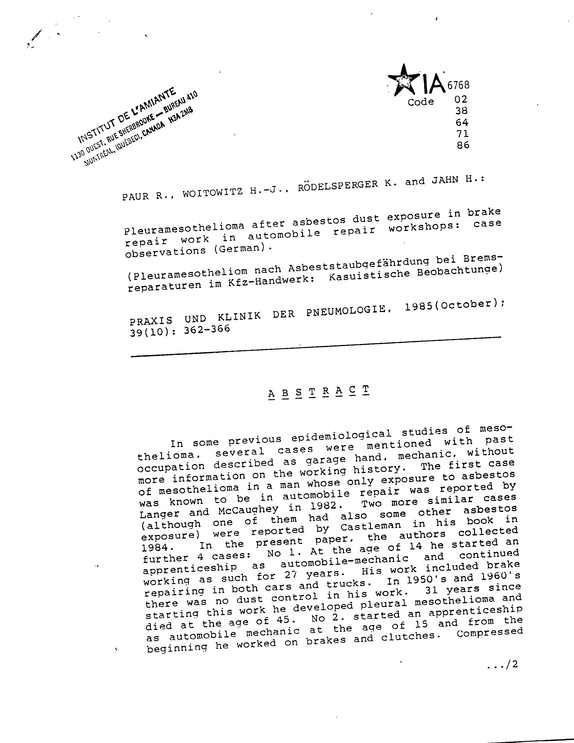
FILE NAME Brakes BRK DATE 1985 Oct DOC BRK092 DOCUMENT DESCRIPTION English Abstract - Pleuramesothelioma After Asbestos Dust Exposure in Brake Repair Work Case Studies - Original Article in German L'AMIANTE L'AMIANTE 410 MUNTR^ AL L'AMIANTE INSTITUT DE SHERBROOKE H3A INSTITUT INSTITUT SHERBROOKE SHERBROOKE CANADA SHERBROOKE INSTITUT OUEST 1130 MUNTR^AL : KIA KIA KIA6768 Code 02 38 64 71 86 PAUR R.
refid# jyEgQO0dm9RdBJo0Gp262593p2 pages
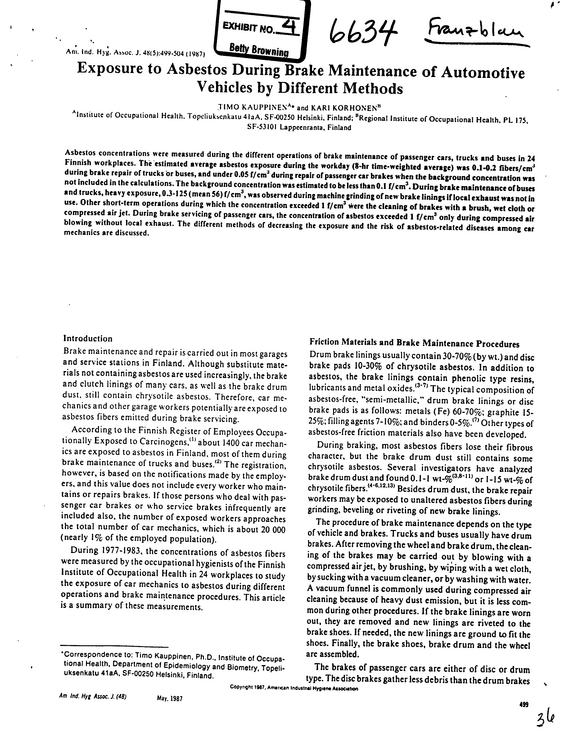
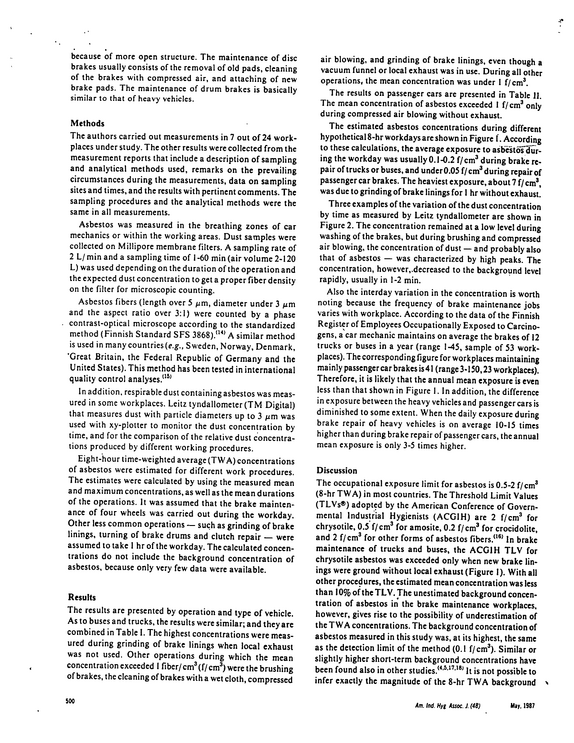
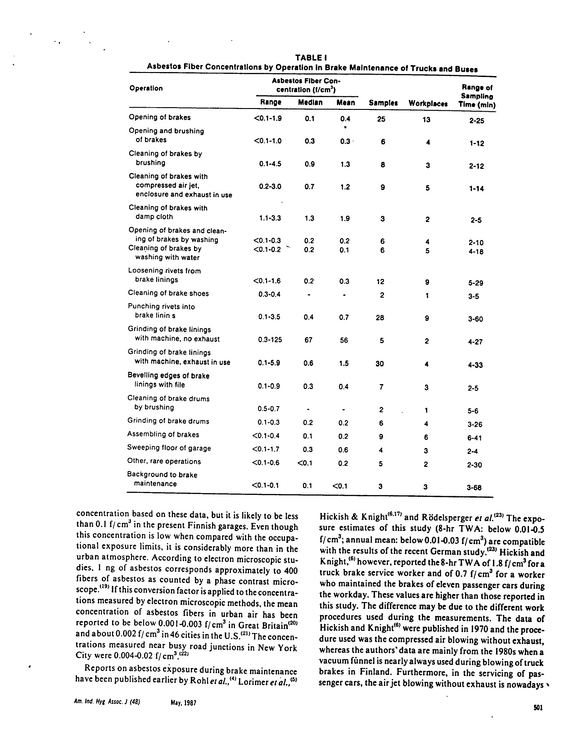
FILE NAME Brakes BRK DATE 1987 DOC BRK101 DOCUMENT DESCRIPTION Journal Article - Exposure to Asbestos During Brake Maintenance of Automotive Vehicles by Different Methods 4s Ind Am Ind Hyg Assoc J. 499-504 1987 EXHIBIT Betty Browning Browning 6634 Franzblan Exposure to Asbestos During Brake Maintenance of Automotive Vehicles by Different Methods TIMO KAUPPINEN and KARI KORHONEN Institute of Occupational Health Topeliuksenkatu 41aA 00250 Helsinki Finland Regional Institute of Occupational Health PL 175 53101 Lappeenranta Finland Asbestos concentrations were measured during the different operations of brake maintenance of passenger cars trucks and buses in 24 Finnish workplaces The estimated average asbestos exposure during the workday hr weighted average was 0.1-0.2 fibers during brake repair of trucks or buses and under 0.05 cmduring repair of passenger car brakes when the background concentration was not included in the calculations The background concentration was estimated to be less than 0.1 cmDuring brake maintenance of buses and trucks heavy exposure 0.3-125 mean 56 / cmwas observed during machine grinding of new brake linings if local exhaust was not in use Other short operations during which the concentration exceeded 1 cmwere the cleaning of brakes with a brush wet cloth or compressed air jet During brake servicing of passenger cars the concentration of asbestos exceeded 1 cmonly during compressed air blowing without local exhaust The different methods of decreasing the exposure and the risk of asbestos diseases mechanics are discussed among car Introduction Brake maintenance and repair is carried out in most garages and service stations in Finland Although substitute mate- rials not containing asbestos are used increasingly the brake and clutch linings of many cars as well as the brake drum dust still contain chrysotile asbestos Therefore car mechanics and other garage workers potentially are exposed to asbestos fibers emitted during brake servicing According to the Finnish Register of Employees Occupationally Exposed to Carcinogens about 1400 car mechan- ics are exposed to asbestos in Finland most of them during brake maintenance of trucks and buses The registration however is based on the notifications made by the employ- ers and this value does not include every worker who main- tains or repairs brakes If those persons who deal with passenger car brakes or who service brakes infrequently are included also the number of exposed workers approaches the total number of car mechanics which is about 20 000 nearly % of the employed population During 1977-1983 the concentrations of asbestos fibers were measured by the occupational hygienists of the Finnish Institute of Occupational Health in 24 workplaces to study the exposure of car mechanics to asbestos during different operations and brake maintenance procedures This article is a summary of these measurements Friction Materials and Brake Maintenance Procedures Drum brake linings usually contain 30-70 by wt and disc brake pads 10-30 of chrysotile asbestos In addition to asbestos the brake linings contain phenolic type resins lubricants and metal oxides The typical composition of asbestos metallic drum brake linings or disc brake pads is as follows metals Fe 60-70 graphite 15- 25 filling agents 7-10 and binders 0-5 Other types of asbestos friction materials also have been developed During braking most asbestos fibers lose their fibrous character but the brake drum dust still contains some chrysotile asbestos Several investigators have analyzed brake drum dust and found 0.1-1 3,8-11 or 1-15 wt- of chrysotile 4-6,12,13 Besides drum dust the brake repair workers may be exposed to unaltered asbestos fibers during grinding beveling or riveting of new brake linings The procedure of brake maintenance depends on the type of vehicle and brakes Trucks and buses usually have drum brakes After removing the wheel and brake drum the cleaning of the brakes may be carried out by blowing with a compressed airjet by brushing by wiping with a wet cloth by sucking with a vacuum cleaner or by washing with water A vacuum funnel is commonly used during compressed air cleaning because of heavy dust emission but it is less com- mon during other procedures If the brake linings are worn out they are removed and new linings are riveted to the brake shoes If needed the new linings are ground to fit the shoes Finally the brake shoes brake drum and the wheel Correspondence to Timo Kauppinen Ph.D.
refid# oeX6GMdnjXp1Zoo56vXZvvZoR5 pages
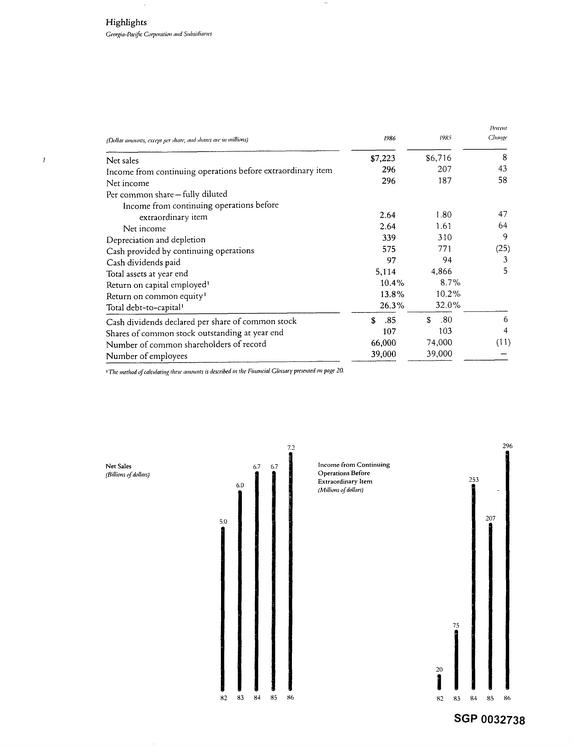
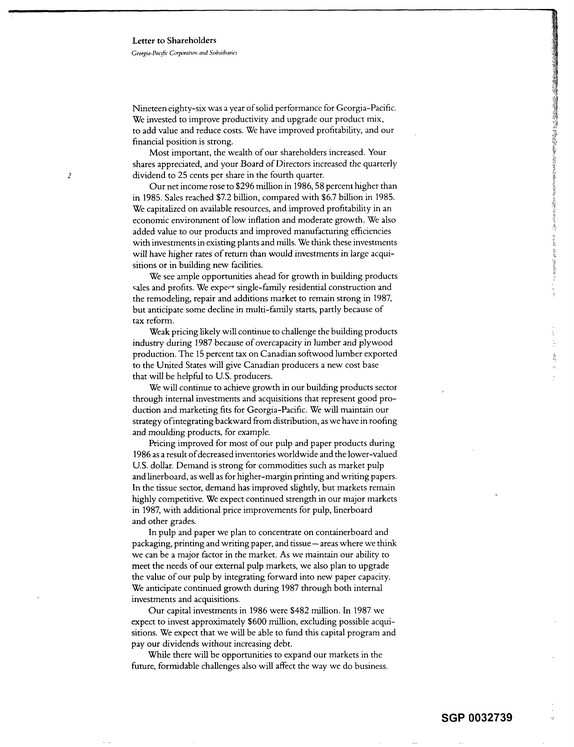
Georgia-Pacific Corporation PLAINTIFF'S EXHIBIT GP-948 Sixty Years of Growth 1986 Annual Report SGP 0032736 ., 1986 SourcesofCash !

refid# eEpmDLo9yDkJ8K7M1aXBqmKg54 pages
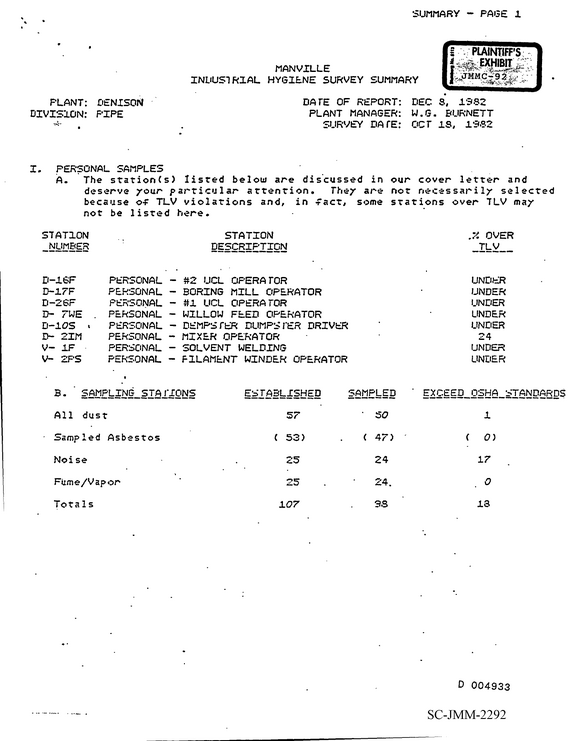
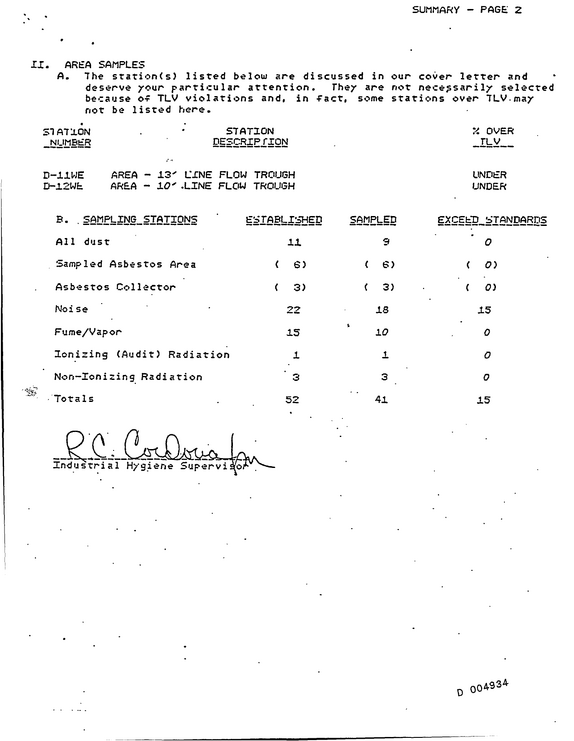
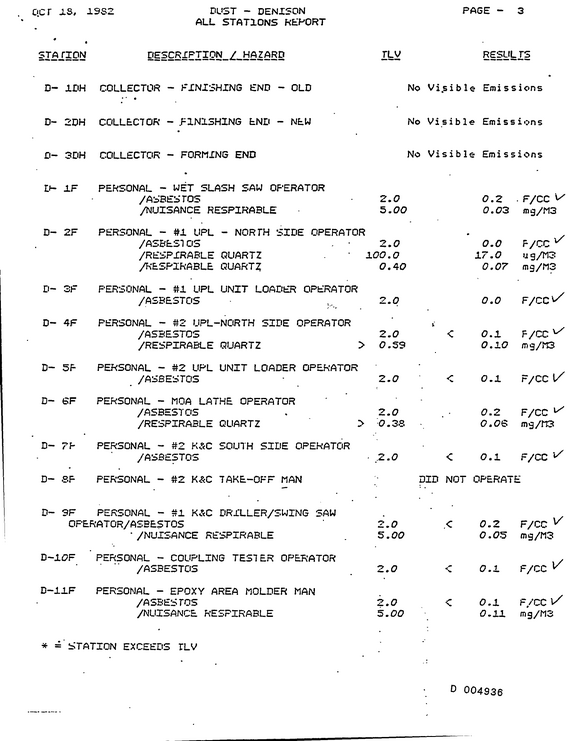
SUMMARY - PAGE 1 PLANT: DENISON DIVISION: PIPE MANVILLE INDUSTRIAL HYGIENE SURVEY SUMMARY DATE OF REPORT: DEC S, 1982 PLANT MANAGER: W.G.
refid# 17zrMr7OoknrprpOjKKyawq95 pages
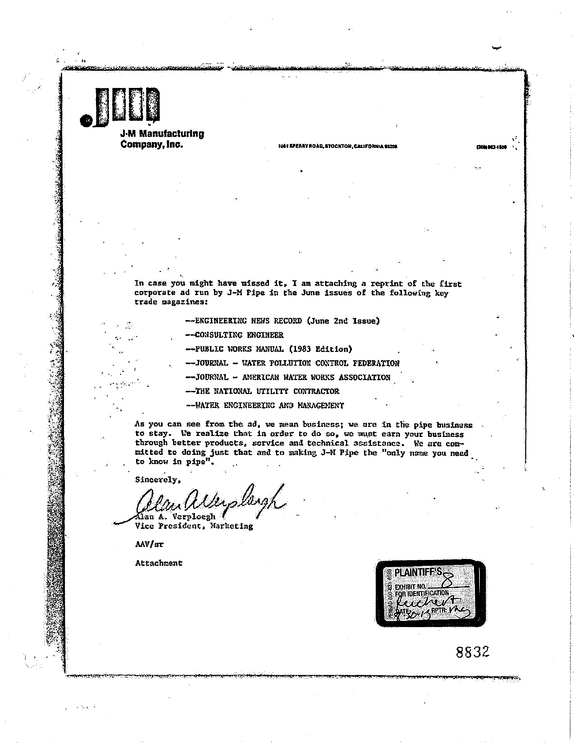
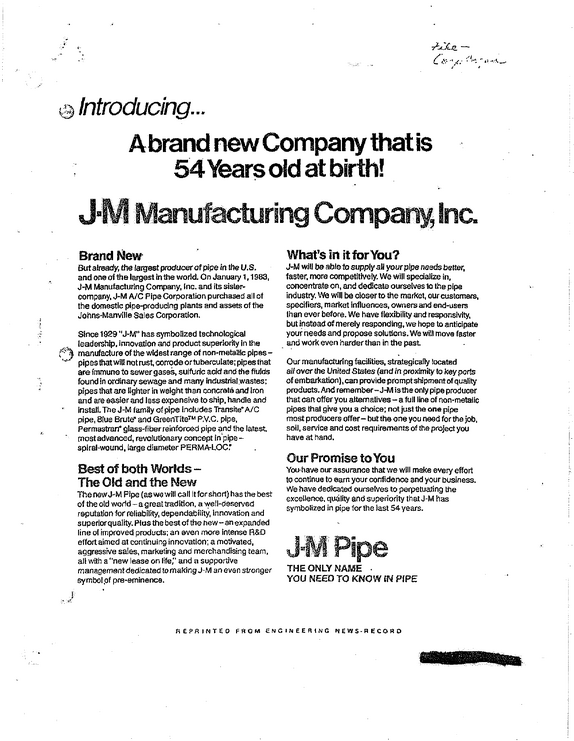
; l J-M Manufacturing Company, Inc. yi IBM BmKVROAB.
refid# Z8v9k0vBa2ra8nEaBD11OGvGJ2 pages
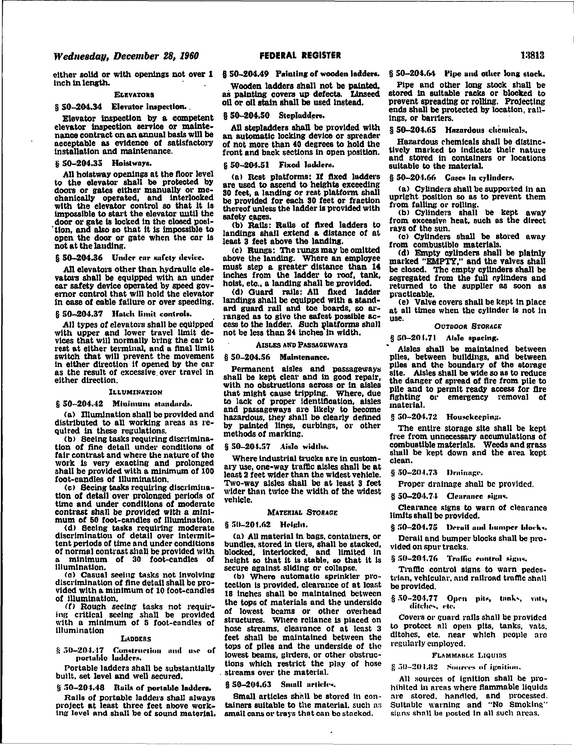
Wednesday, December 28, 1980 FEDERAL REGISTER 13813 either solid or with openings not over 1 inch in length.
refid# 2J1mzqp8Mxqw4dkmGEjDyy1ka1 page
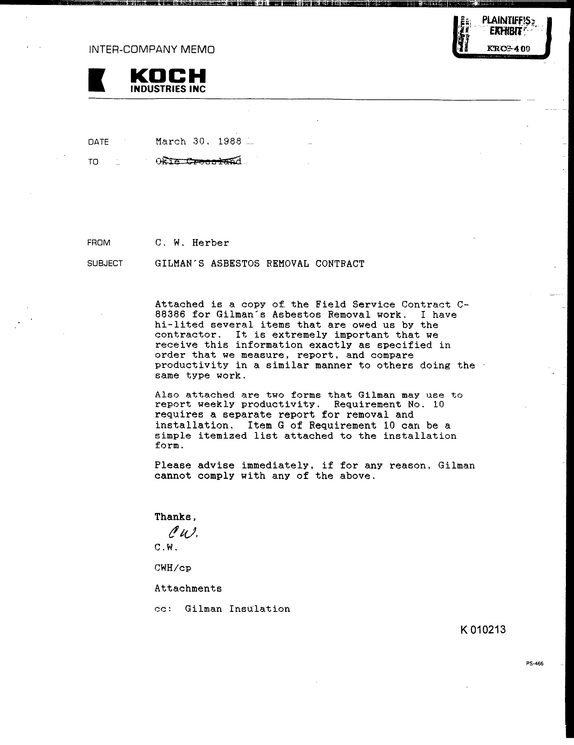
INTER-COMPANY MEMO KkochINDUSTRIES INC DATE TO March 30. 1988 -- PLAINTIFFS; EXHfsiir K&O3-40D BBEBBnH FROM SUBJECT C.
refid# yLxRzXLBa8Vg7ajVXnkov3bn6 pages
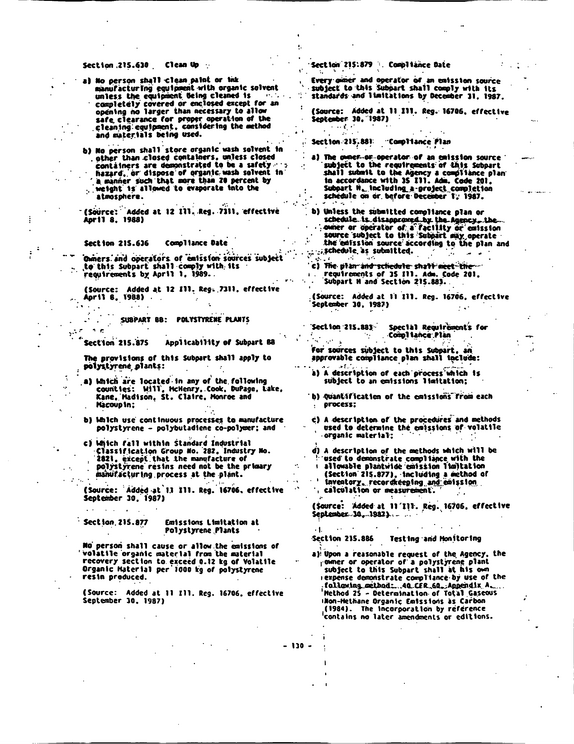
Section .215.630 .
refid# o9Br20n9Q7JB00LV9Ezem5a7o1 page
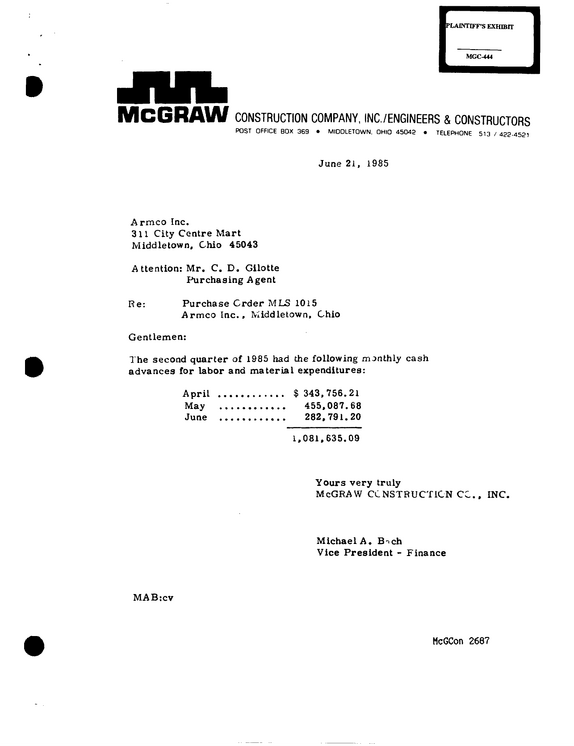
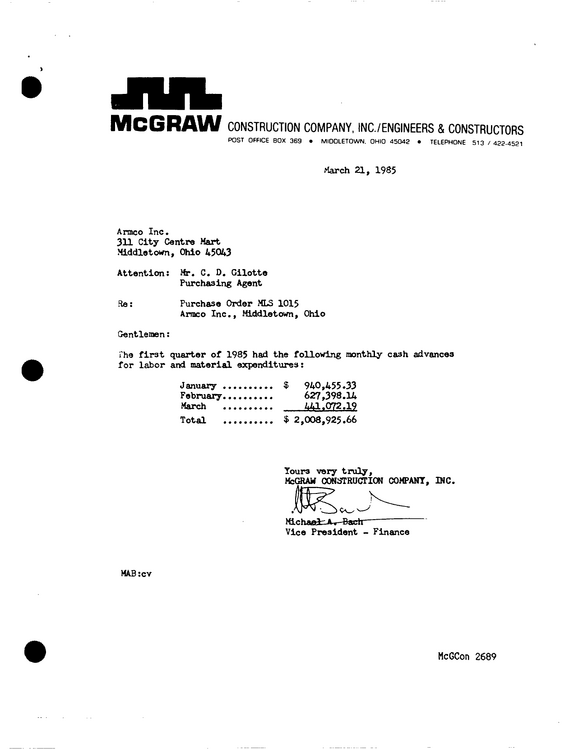
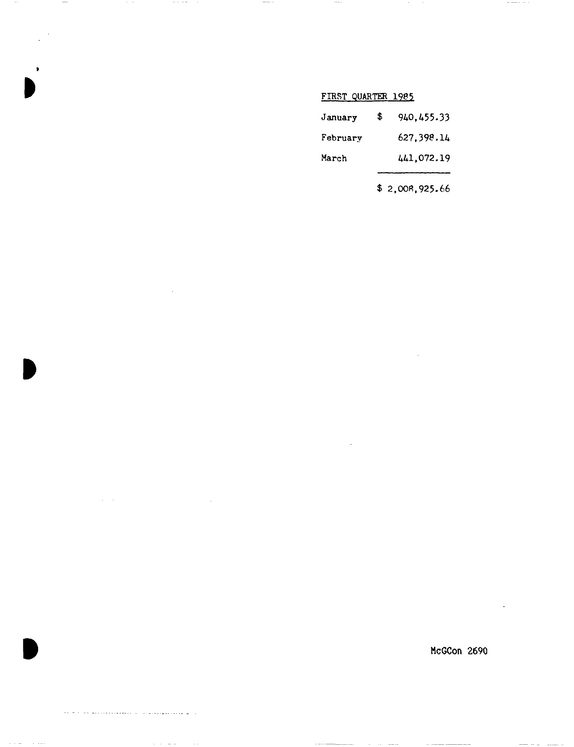
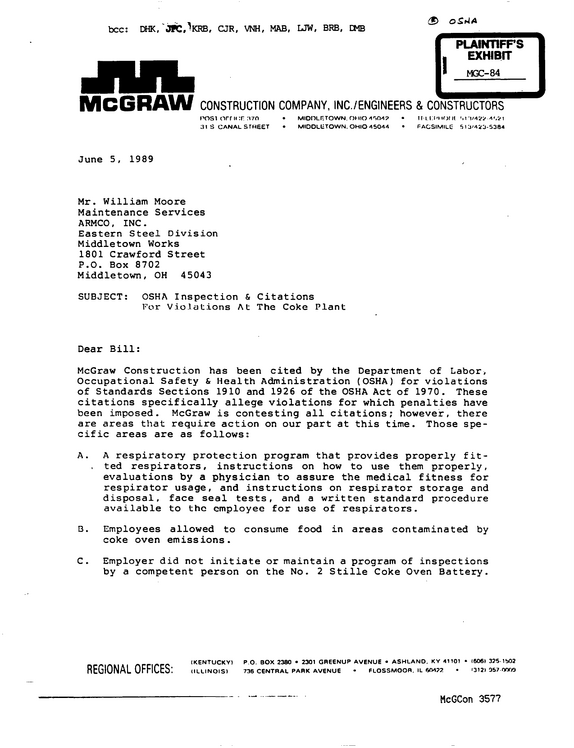
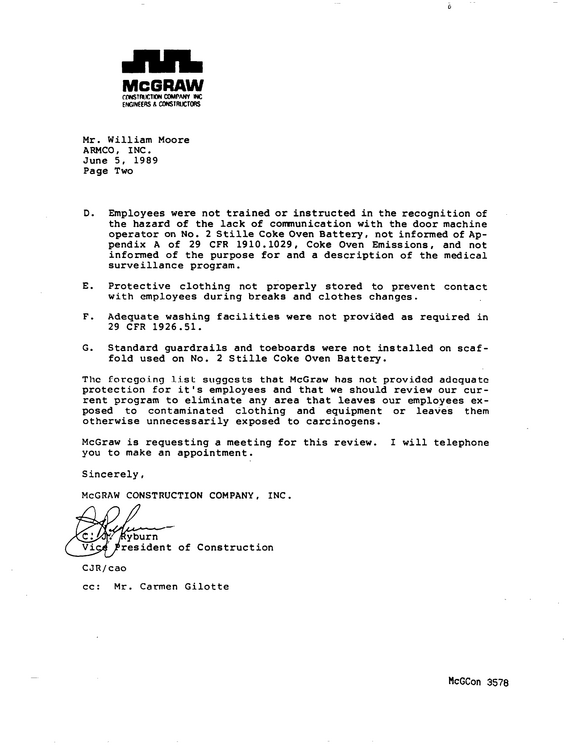
McGRAW CONSTRUCTION COMPANY, INC.

refid# zKaeNYLOr6OvNX5Rk8o6KRZg36 pages
bcc: DHK, JfC.
refid# vByMjdY4p0aRNa4DRDwnxNNkZ2 pages
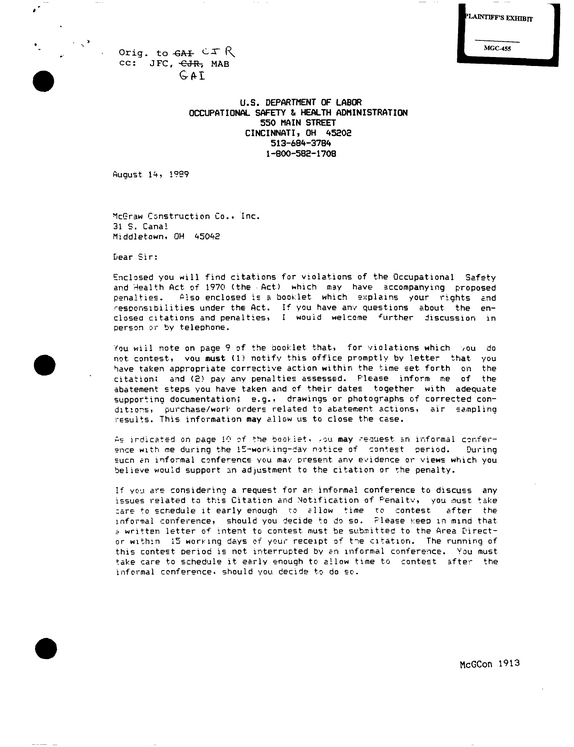
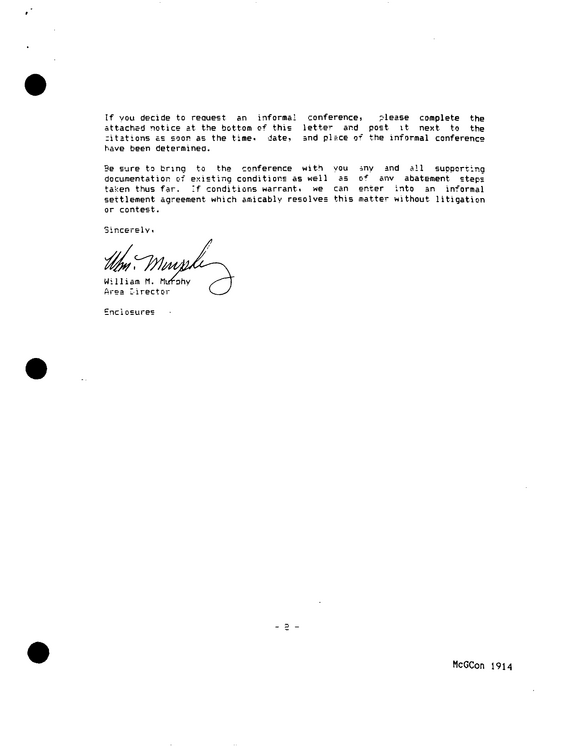
Orig. to c:r cc: JFC, -6JR-, MAB GA-I U.S.
refid# 44NddYRBjY0bYopqg9YadQY7j26 pages
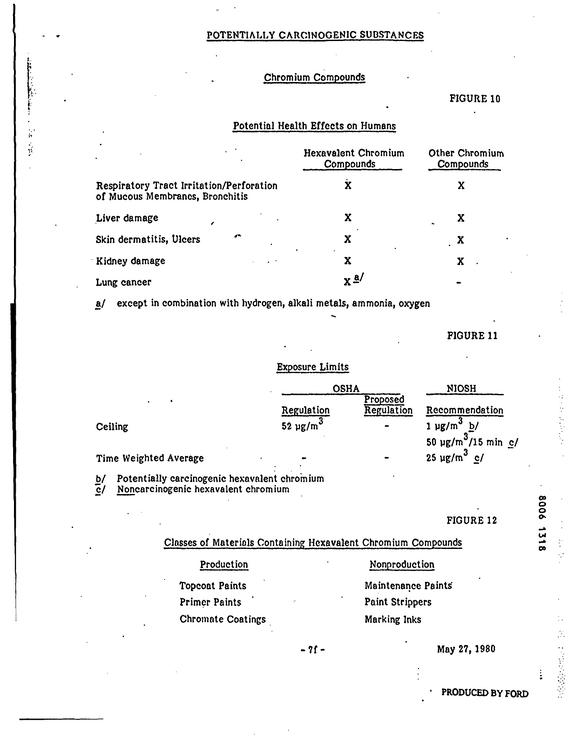
POTENTIALLY CARCINOGENIC SUBSTANCES Chromium Compounds FIGURE 10 Potential Health Effects on Humans Hexavalent Chromium Compounds Other Chromium Compounds Respiratory Tract Irritation/Perforation of Mucous Membranes, Bronchitis X X Liver damage / XX Skin dermatitis, Ulcers XX Kidney damage Lung cancer X X-ft/ X a/ except in combination with hydrogen, alkali metals, ammonia, oxygen FIGURE 11 Exposure Limits Ceiling Time Weighted Average OSHA____________________ NIOSH Proposed Regulation Regulation Recommendation -- -- 52 pg/m - - 1 pg/m b/ 3~ 50 pg/m /15 min c/ 3" 25 pg/m c/ b/ Potentially carcinogenic hexevalent chromium c/ Noncarcinogenic hexavalent chromium FIGURE 12 Classes of Materials Containing Hexavalent Chromium Compounds Production Nonproduction Topcoat Paints Primer Paints Chromate Coatings Maintenance Paints' Point Strippers Marking Inks - 7f - May 27, 1980 8006 1318 PRODUCED BY FORD
refid# NeVvyMoKqXO9GYXXQknRN2J5w1 page
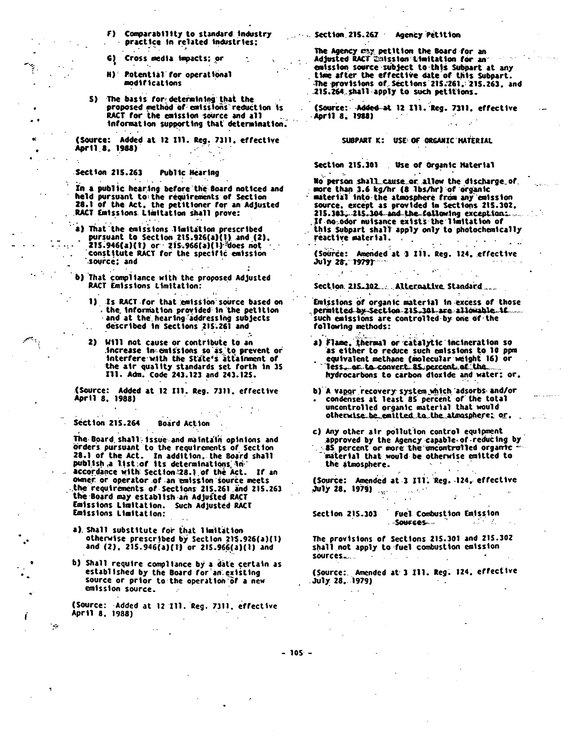
F) Comparability to standard Industry practice In related industries: G) Cross media Impacts; or H) Potential for operational modifications S) The basis for; determining that the proposed method of emissions reduction is RACT for the emission source and all Information supporting that determination.'
refid# jgKyxyNreGok8QZN1yLZK4qzR1 page
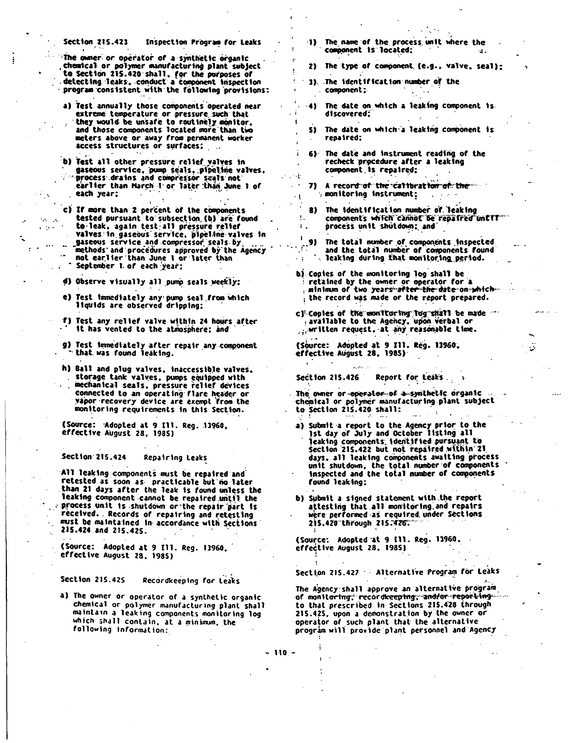
Section 215.423 Inspection Program for Leaks The owner or operator of a synthetic organic , chemical or polymer manufacturing plant subject to Section 2TS.420 shall, for the purposes of delecting leaks, conduct a'Component Inspection - program consistent With the following provisions: a) Test annually those components operated near extreme temperature or pressure, such that . they would be unsafe to routinely monitor, and those components located more than two meters above or away from permanent worker access structures or surfaces; b) test all other pressure relief valves In gaseous service, pump seals, .pipeline valves
refid# DD90rD8Z7BmQpJQYJ9BMMdrYn1 page
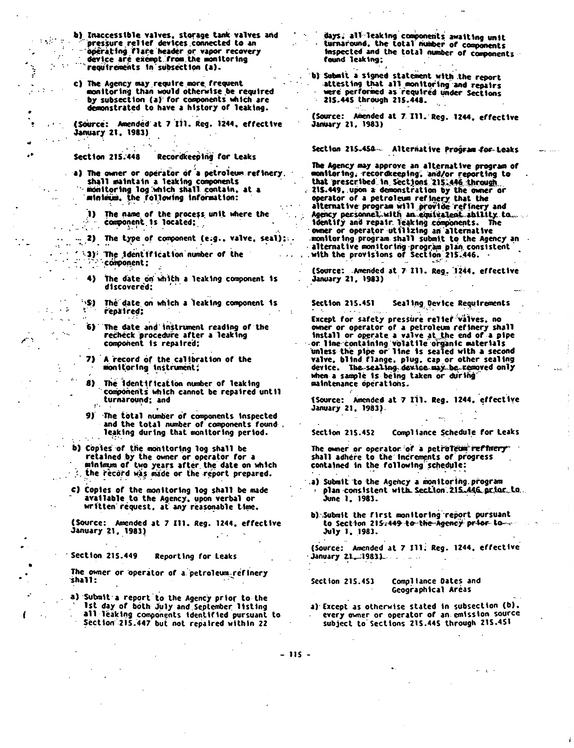
b) Inaccessible valves, storage tank valves and ' pressure , reller devices connected to an 'operating flare header or vapor recover/ device are exempt.from, the monitoring requirements In subsection (a).
refid# 9JLE6y5Y8znV9My07ZerM3oKR1 page