Refine
Estimated Years 1980-1989Clear
14,918 results foundRefine Search
Letters RE: Controlled Use of Asbestos A lie can travel halfway around the world while the truth is still putting on its shoes. -- Mark Twain To the Editor:--Castleman's recent article, "Controlled Use of Asbestos" critiques industry's mis representation of the hazards asso ciated with using asbestos.1 We agree with Castleman when he states that, "`Controlled use' of asbestos is the asbestos industry's way of referring to business as usual with a false face."
refid# VJnd9E57bbZNJajjyR7rzeLON9 pages
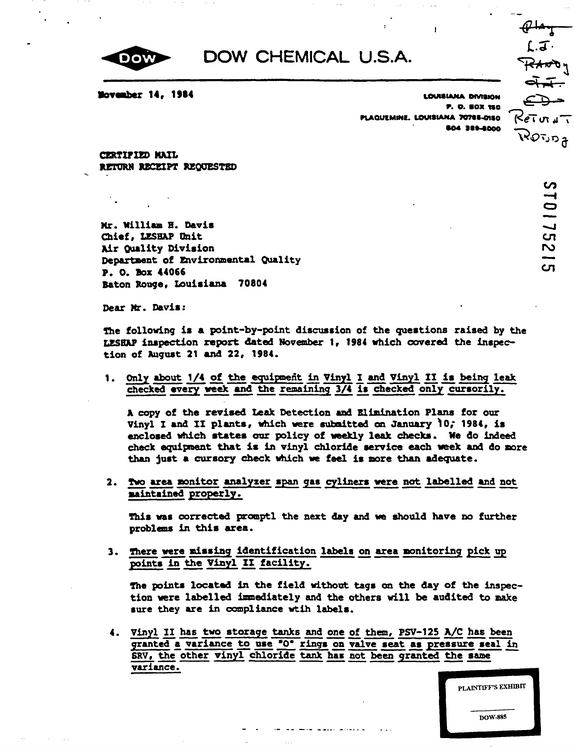
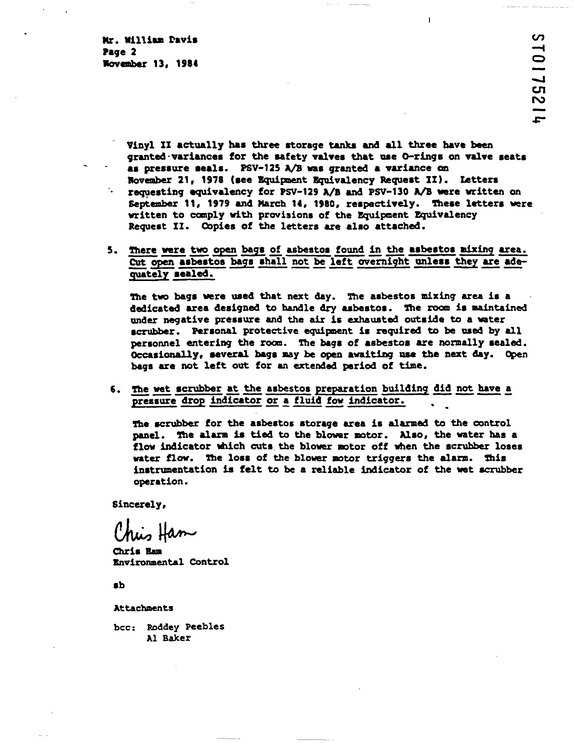
DOW CHEMICAL U.S.A L3*- November 14, 1984 CERTIFIED KAIL RETURN RECEIPT REQUESTED LOUISIANA DIVISION P.
refid# k9m7wxMeK4r0rZ20oMzxD53Mn2 pages
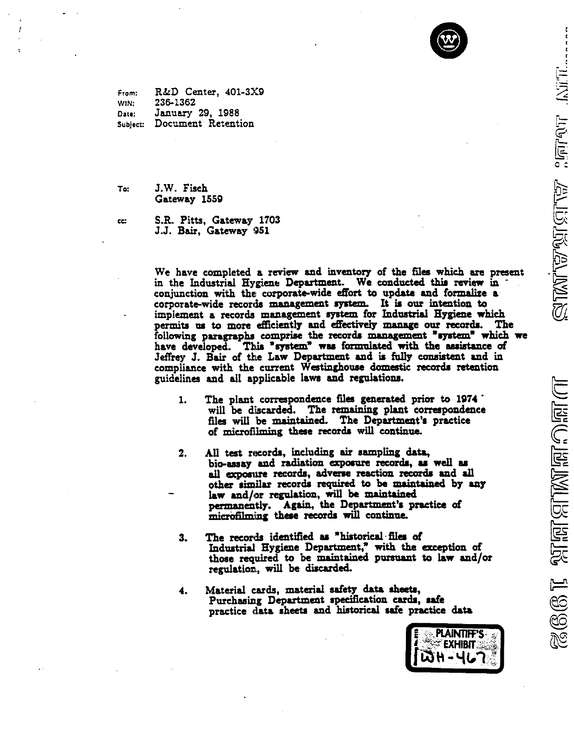
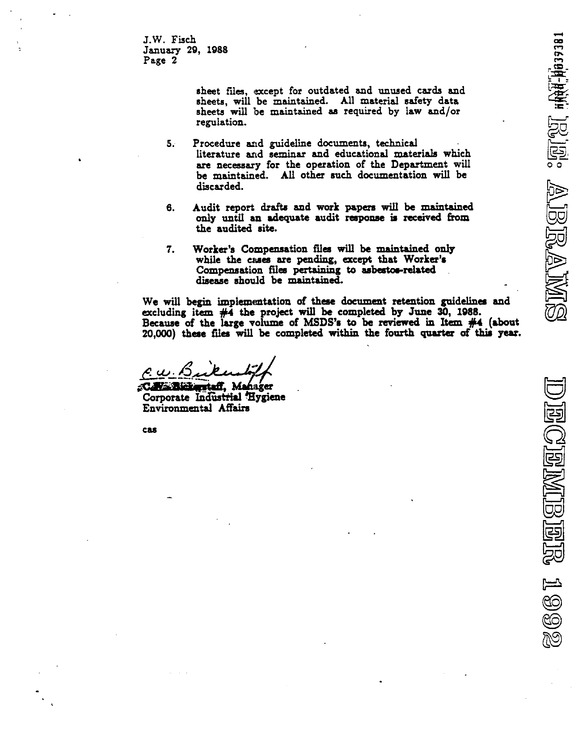
1 From: WIN: Datt: Subject: RLD Center, 401-3X9 236-1362 January 29, 1988 Document Retention c<{c To: J.W.
refid# zo6G12gO2oMVYEOm4gmxjeMDz2 pages
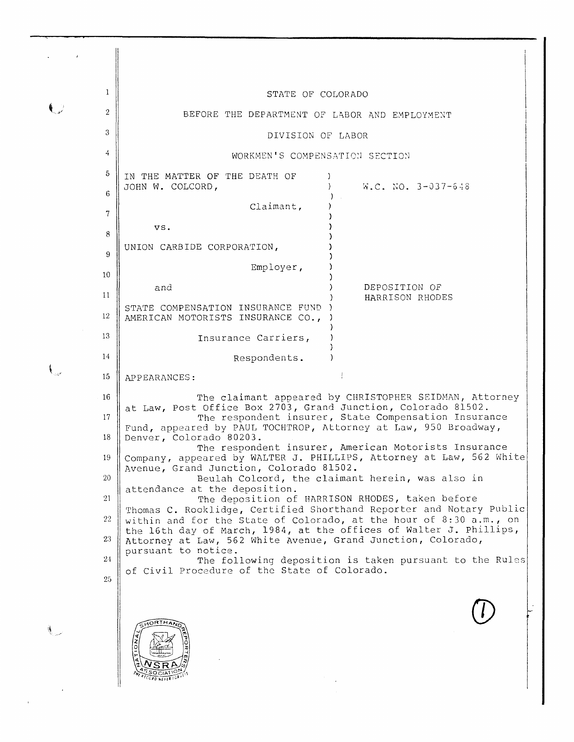
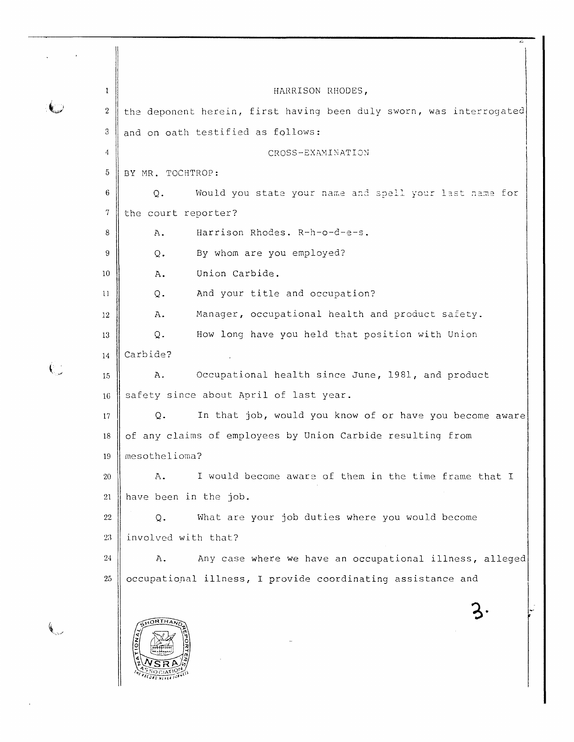
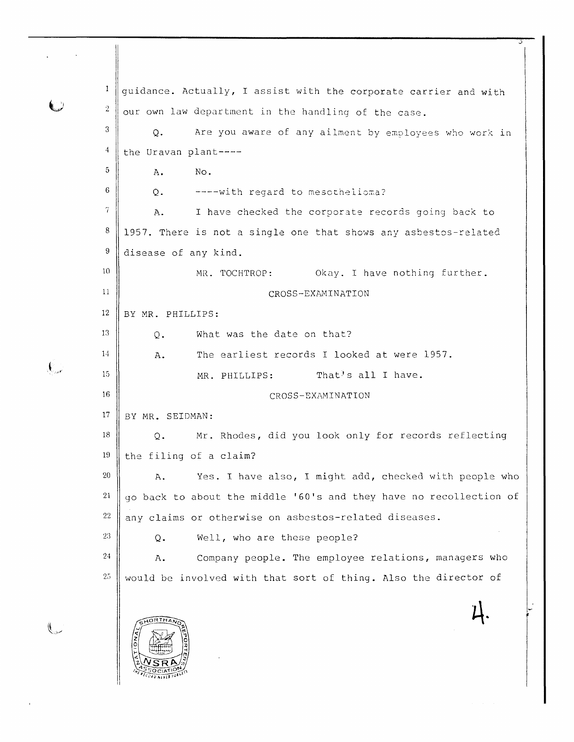
1 STATE OF COLORADO 2 BEFORE THE DEPARTMENT OF LABOR AND EMPLOYMENT 3 DIVISION OF LABOR 4 WORKMEN'S COMPENSATION SECTION 5 IN THE MATTER OF THE DEATH OF ) JOHN W.
refid# BvR43GezmXbxZMjYybJ29qn810 pages
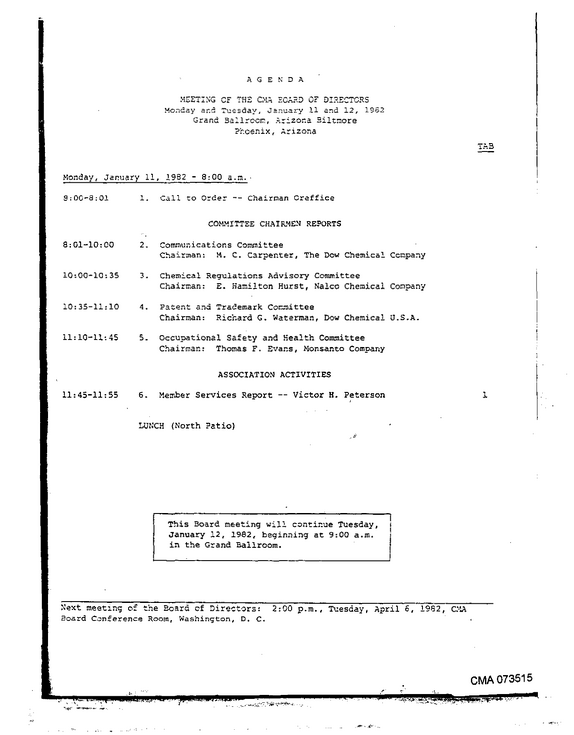
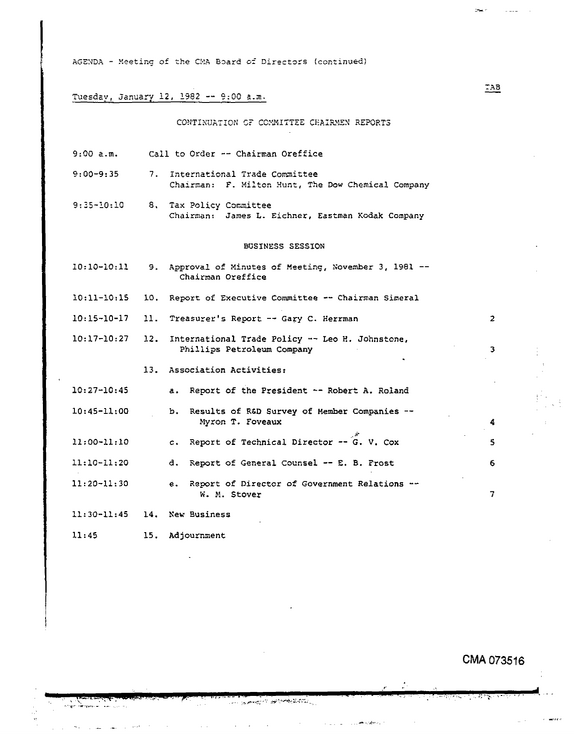
AGENDA MEETING CF THE CMA HOARD OF DIRECTORS Monday and Tuesday, January 11 and 12, 1S62 Grand Ballroom, Arizona Siltmore Phoenix, Arizona Monday, January 11, Z9B2 - 8:00 a.ia.
refid# OznG0mGNvd0e3x8em0NKbd3xL31 pages
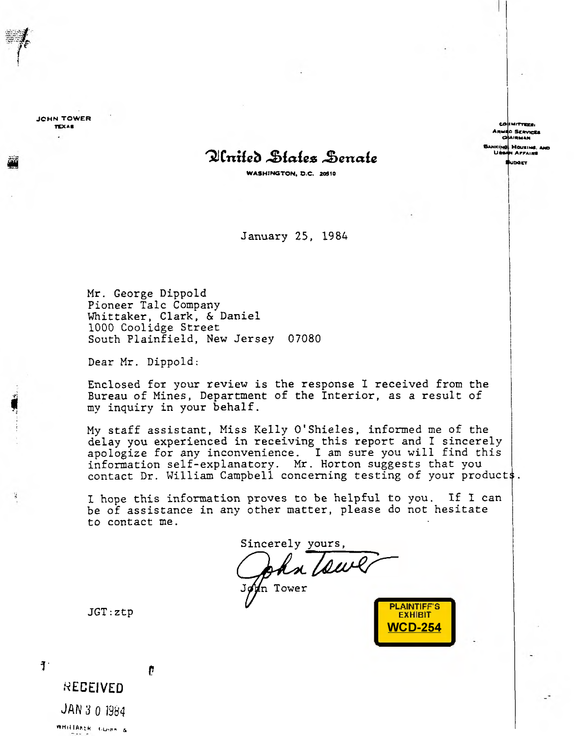
JOHN TOW ER TEXAS Q J C n x ic b Pieties Jenale W ASHINGTON, D.C. 3(010 t o iM r r n u i A^MId StlWicU O *I*MAN H o u s im *. a n d January 25, 1984 Mr.
refid# qpwXO0adBbXZjrQ1yXwZr0Nx1 page
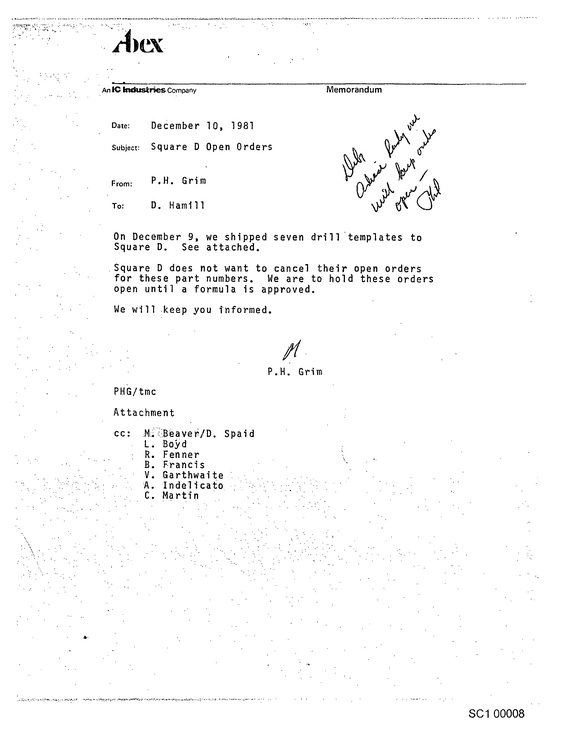
An 1C (ntfusiries Company Memorandum Date: December 10, 1981 subject: Square D Open Orders From: To: P H Grim D.
refid# vVk4vKpnmbYp07ewa5ab1kMa91 page
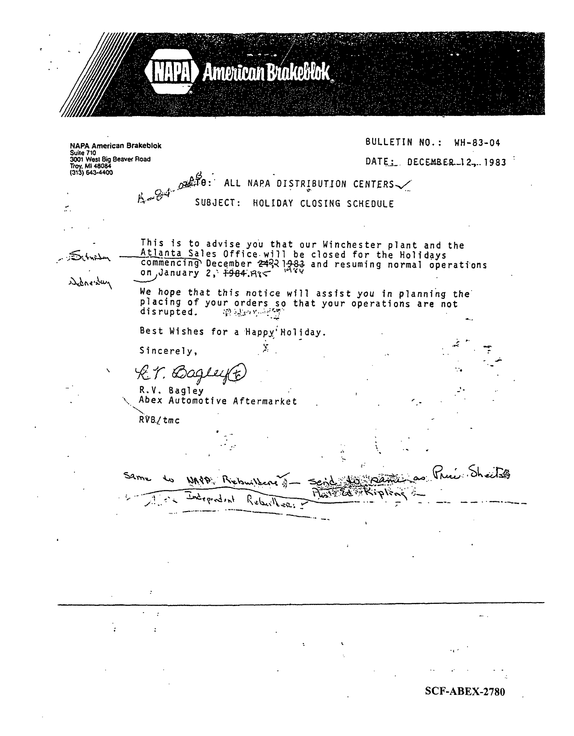
NAPA American Brakeblok Suite 710 3001 West Big Beaver Road Troy.
refid# ZaVV38Mvq09JQy7Go197vky02 pages
An 1C industries Company Memorandum Date: Subject: April 10, 1987 Experimental Order No. 15660 From: To: D.
refid# b590z1mdkQaL3OZjjqy4GDQpg1 page
Federal Register / Vol. 51, No. 119 / Friday, June 20, 1986 / Proposed Rules 22533 intended to provide a substantial increase in overall protection but is considered justifiable and warranted to prevent a decrease in the level of protection considered availcble under current regulations.
refid# reQgZYv8DQ9dm2kprbVoagD8G1 page
Federal Register / Vol. 51, No. 119 / Friday, June 20, .1986 / Rules and Regulations 22707 out in paragraph (a)(4) of the scope and standard.
refid# ZBvg2ad0Q27NOa6bM1n5LQ2GJ1 page
22728 Federal Register / Vol. 51.
refid# zQkMRMq43JENKnj1Np380rMyR1 page
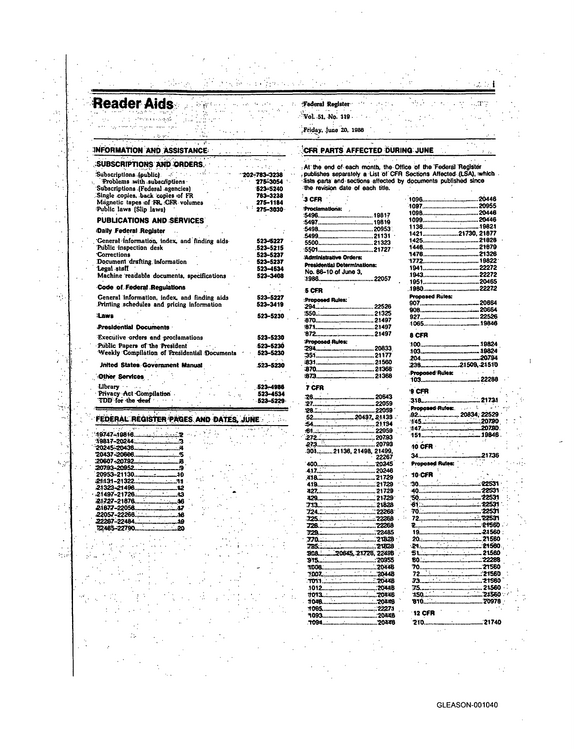
Reader Aids ^Federal Register Vol 51.
refid# mBzDzazxgBQKBKakvOngOG8zk1 page
assignment shall be a condition to Closing; and provided fur ther that no such transfer or assignment shall be required to the extent (i) such Licensed Intellectual Property is exclu sively licensed to a third party in such jurisdiction; (11) in the case of trademarks, such Licensed Intellectual Property is, under trademark law, "associated" with other trademarks so as to render assignment impracticable; (iii) such assignment or transfer would entitle any third party {pursuant to an existing arrangement covering Seller or to which Seller is subject) to assert proprietary rights over any Intellectual Property of Seller or (iv) in the case of trademarks or trademark regis trations, such trademark or trademark registration also covers products manufactured by Seller or a Continuing Affiliate and it is not reasonably practicable (x) to divide such registra tion into separate registrations for products of the Business and all other products, or (y) to amend such registration to permit the issuance of a registration to Buyer covering the products of the Business, or (z) to partially assign the reg istration to Buyer to the extent the registration covers products of the Business.
refid# xjMZg2NKMKZpxGQp6LEydoYRy1 page
Plaintiffs argue that they are relieved of any responsibility ofproving actual liability arising from the landfills at the Orzinuovi plant because Defendants breached their duty to defend against the claims made by Italian authorities Plaintiffs base their argument on a line of New York cases involving breach of the duty to defend in which courts have held that where an indemnitor declines to defend, the indemnitor will be bound by any reasonable settlement reached by the indemnitee In making this argument, Plaintiffs principally rely upon the following passage in ELRAC, Inc v Cruz. 699 N Y S 2d 647 (N Y Civ Ct Queens Co. 19993 If, however, the indemnitor is given notice of the claim or proceeding against the indemnitee and declines to defend, then the indemnitor is conclusively bound by any reasonable good faith settlement the indemnitee may make or any litigated judgment that may be rendered against him Under these circumstances, an indemnitee may recover based on its "potential liability", and need not demonstrate "actual liability" by providing the elements of the underlying claim against it In other words, ifsufficient notice was grven, an [indemnitee] will have to show (1) only "potential liability, to wit that the indemnitee could have been found liable at the trial of the underlying action, and (2) that the underlying settlement was reasonable and made m good faith Id at 649 (internal citations omitted) In light of ELRAC, Plaintiffs maintain that they need establish only that "(l) they could have been found potentially liable to the Italian Authorities, and (n) that the underlying settlement with the Italian Authorities was reasonable and made in good faith " Pis ' Br at 10 But the ELRAC string of cases is inapposite As Defendants point out, jnhke in this case, each of those cases involved a situation in which a third party brought a suit against the indemnitee that plainly fell within the given indemnity provision's coverage, thereby triggering the indemnitor's duty to defend, whereas here no third party ever instituted a lawsuit triggering Defendants' defense obligations Neither Plaintiffs' October 23, 1989 letter expressing the belief that the landfills might expose them to potential liability, nor the Mayor's January 23, 1993 order triggered any defense obligations under the indemnification provisions because neither situation presented Defendants with anything to defend [FN71 Contrary to Plaintiffs' assertion, Defendants never declined to defend the claims of Italian authorities for the simple reason that there were no formal claims to defend against, or, at the very least, there was insufficient Page 5 notice of any such claim 1FN81 See Atlantic Richfield Co v Interstate Oil Transport Co. 784 F 2d 106. 113 (2dCir 1986) ("Notice sufficient to give the indemnitor a meanmgfiil opportunity to defend is the indispensable element to be proven by the party seeking indemnity Where notice--which includes a meaningful opportunity to assume the defense~is lacking, a demonstration of actual liability is required"), Carey Transit v Greyhound Co . 80 B R 646. 652-53 (Bankr S D N Y 1987) ("Where an indemnitor is subject to an express duty to defend, and where the indemnitee fails to give adequate notice of the claim or makes a settlement without giving the indemnitor reasonable opportunity to participate, the indemnitee cannot recover indemnity for the settlement without proving actual liability") This is illuminated by the fact that Plaintiffs point to no evidence indicating that they acted m Defendants' stead m pursuing a defense against any claim made by Italian authorities Quite the contrary, evidence in this case indicates that Plaintiffs tried to create a "violation of law" to create indemnity claims by drafting the cleanup order ultimately issued by the Mayor of Orzinuovi and by failing to contest the order, despite Plaintiffs' knowledge of its invalidity FN7 In the insurance-coverage context, courts have explained the duty to defend concept as follows "the duty to defend is measured against the allegations of pleadings but the duty to pay is determined by the actual basis for the insured's liability" Huso Boss Fashions.
refid# pmEoMZ49Ng8YyGE8GvwMB1v5w1 page