Refine
Estimated Years 1970-1979Clear
13,913 results foundRefine Search
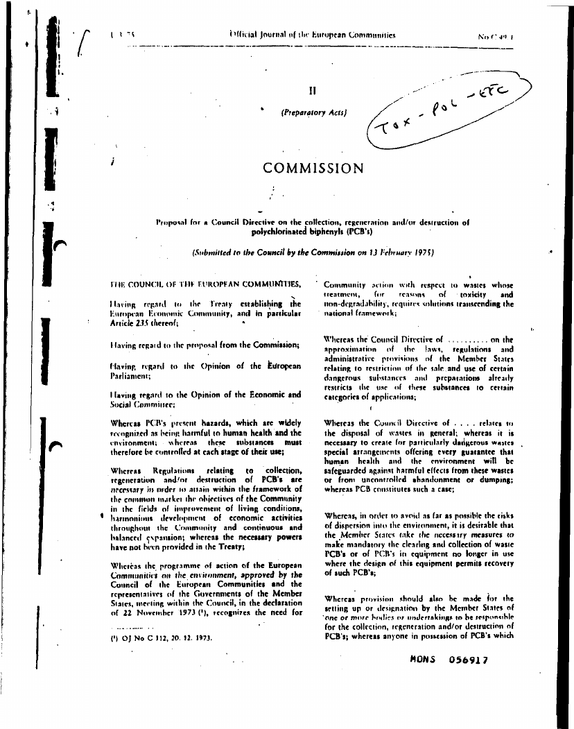
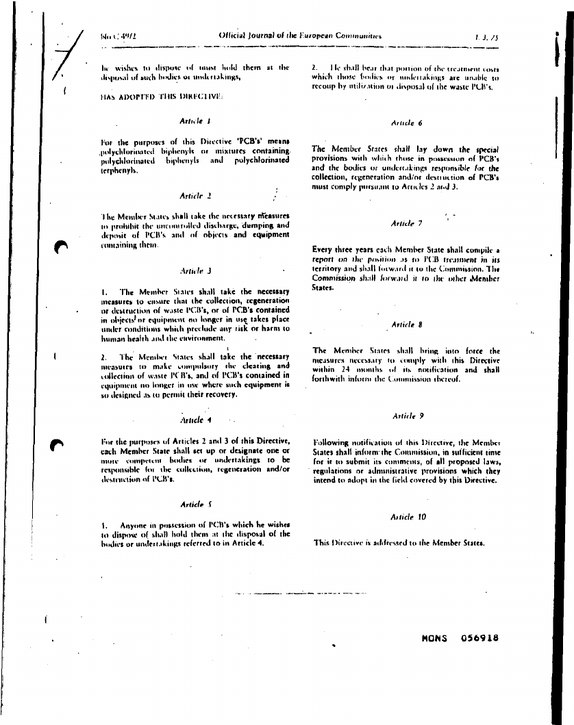
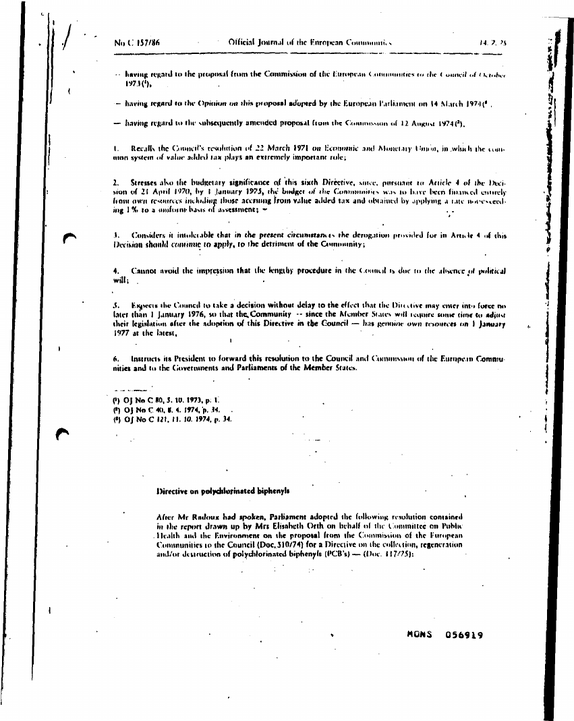
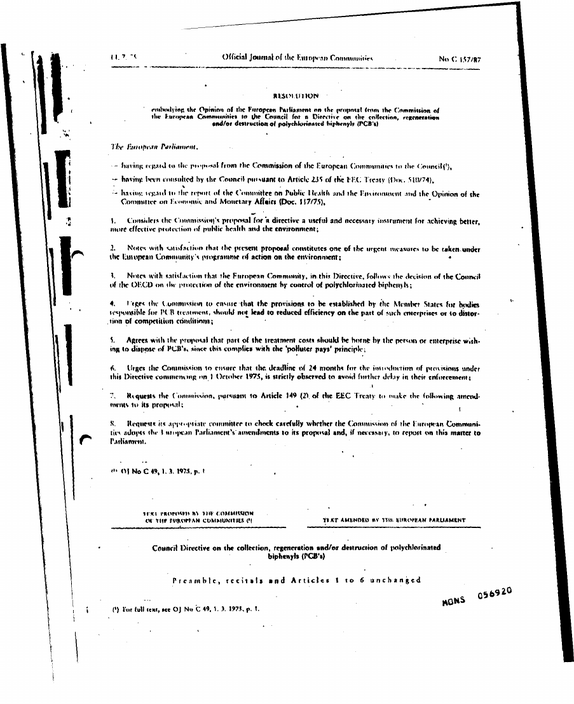
I'(Res thv Commission to chmuc that the provisions to be established by the Member States for bridies tvsponsiWe for PI H treatment, should not lead to reduced efficiency on the part of such enterprises or to distor tion of competition conditions; - V Agrees with the proposal that part of the treatment costs should be borne by the person or enterprise with* mg to dispose of PUT*, since this complies with the `polluter pays' principle; tv Urges the Commission to ensure that the. deadline of 24 months for the imtodmimn of provisions under this Directive comment mg on I October 1V75, is strictly observed to avoid further delay in their enforcement; Rv quests the Comnmsinn, pursuant to Article 149 (2V of the EEC Treaty to make the following amend ments to its p
refid# ZnByer9B8yq09RLDz93RzgwXJ5 pages
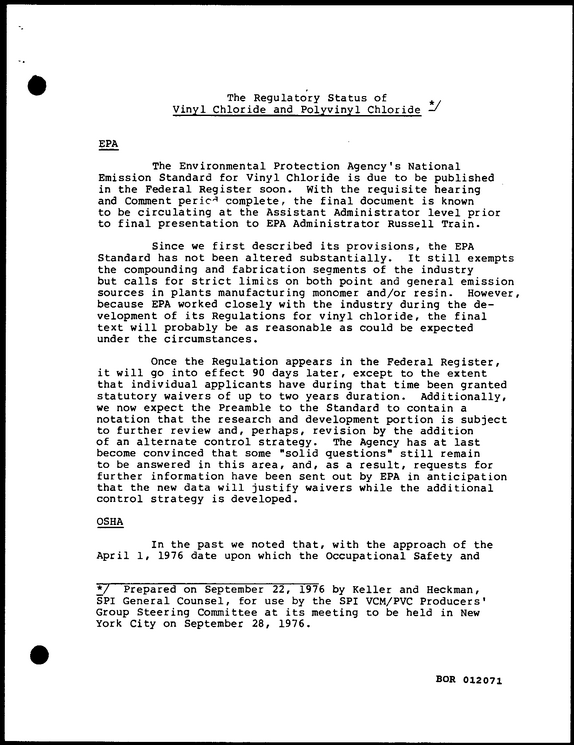
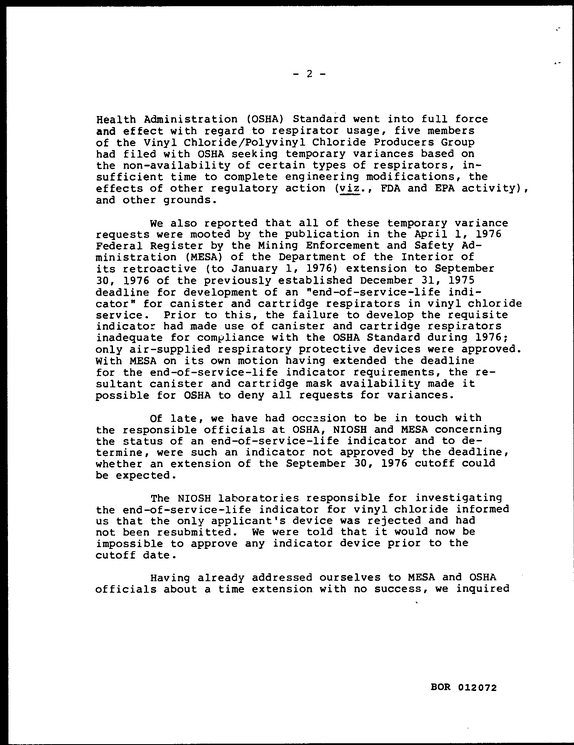
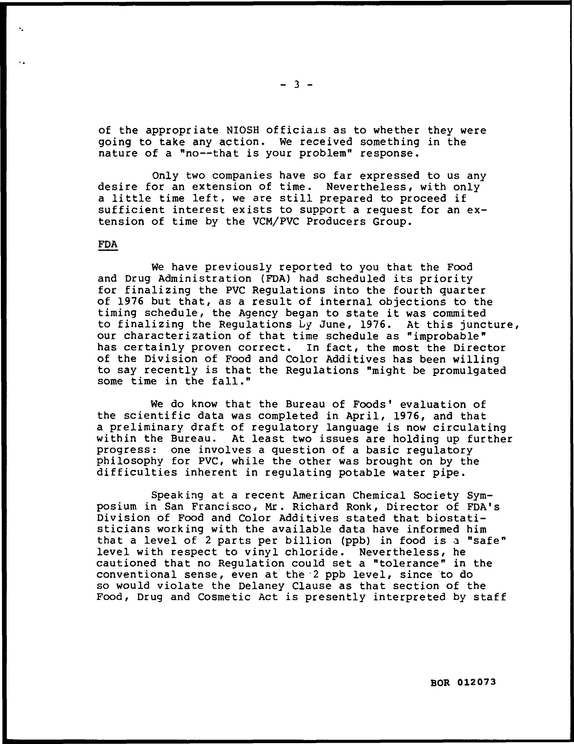
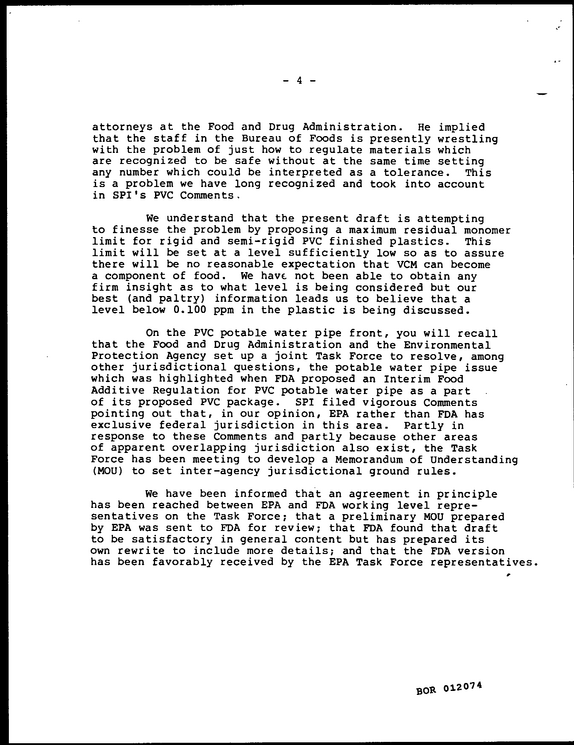
We have, not been able to obtain any firm insight as to what level is being considered but our best (and paltry) information leads us to believe that a level below 0.100 ppm in the plastic is being discussed.
refid# 4QKqRvxLXwQRVNmRE0X85k7L17 pages
.
refid# LgOzDEZ67x7Qkxwv6GgnpeyMg4 pages
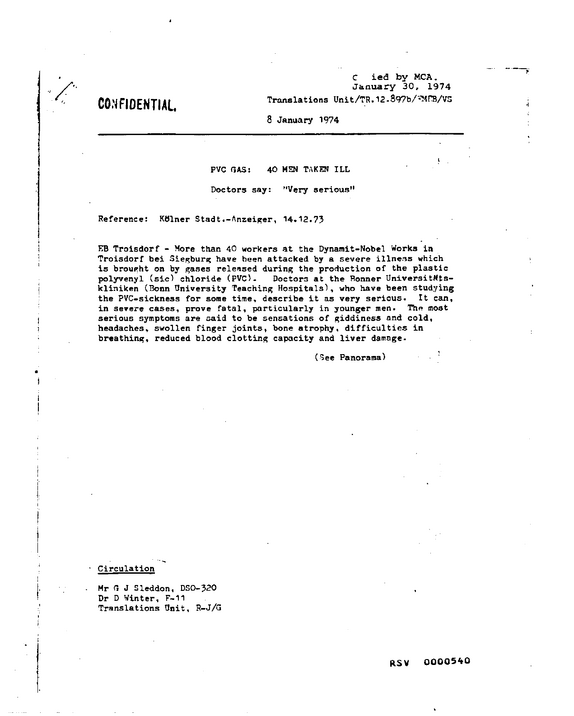
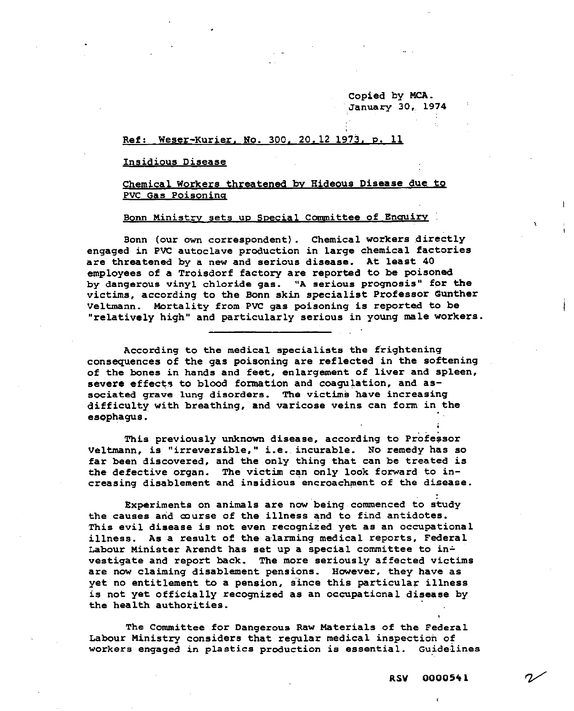
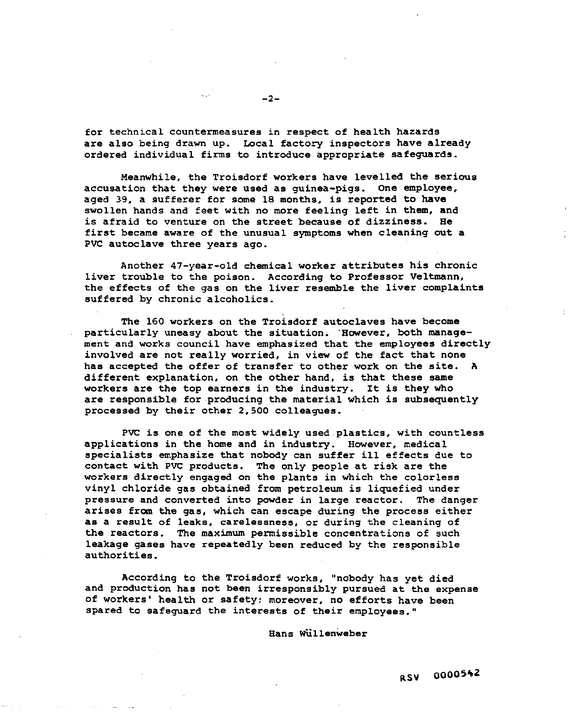
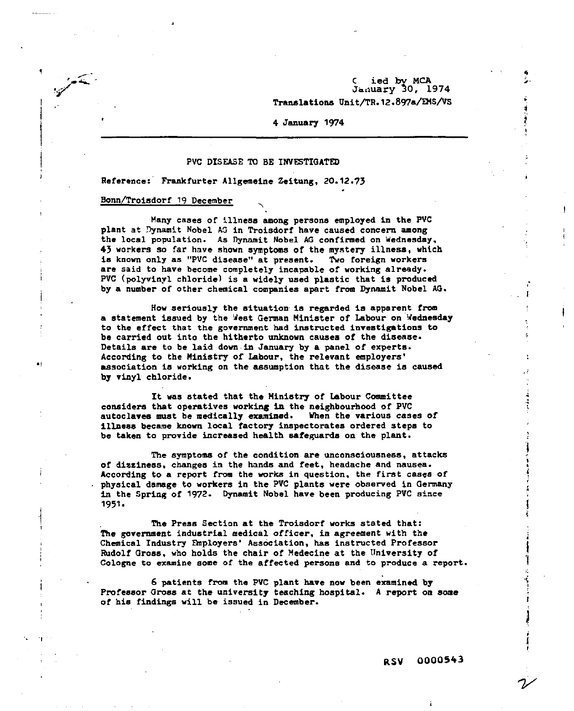
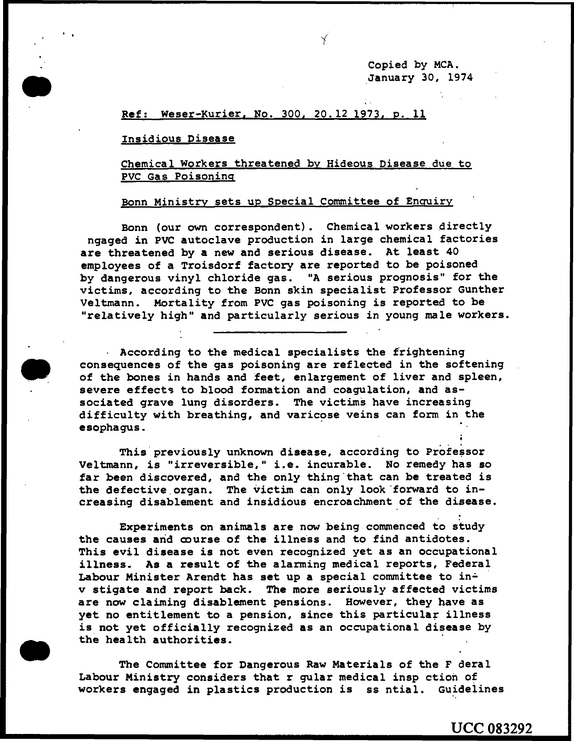
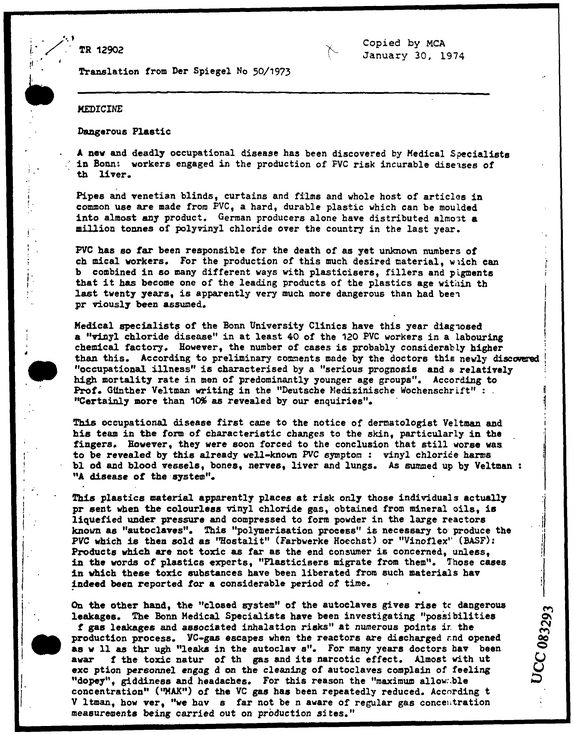
German producers alone have distributed almost a million tonnes of polyvinyl chloride over the country in the last year* PVC has so far been responsible for the death of as yet unknown numbers of chemical workers* For the production of this much desired material, wiich can be combined in so many different ways with plasticisers, fillers and pigments that it has become one of the leading products of the plastics age within the last twenty years, is apparently very ouch more dangerous than had been previously been assumed.
refid# 93RwRLD6g0ewZYbEbEqnKEDOp6 pages
All commonly used pipes can contribute minor amounts of carcinogenic materials to water supply a Galvanized iron pipe can contribute cadmium lead and zinc to water b C. "/ PVC Pipe can release vinyl chloride monomer C Pipe when carrying very aggressive water can impart asbestos to water "/Asphalt or coal tar lined iron or steel pipe can release polynuclear aromatic hydrocarbons PAH's .
refid# M0wnXEx4yeB3mXaa9BnO6GdL10 pages
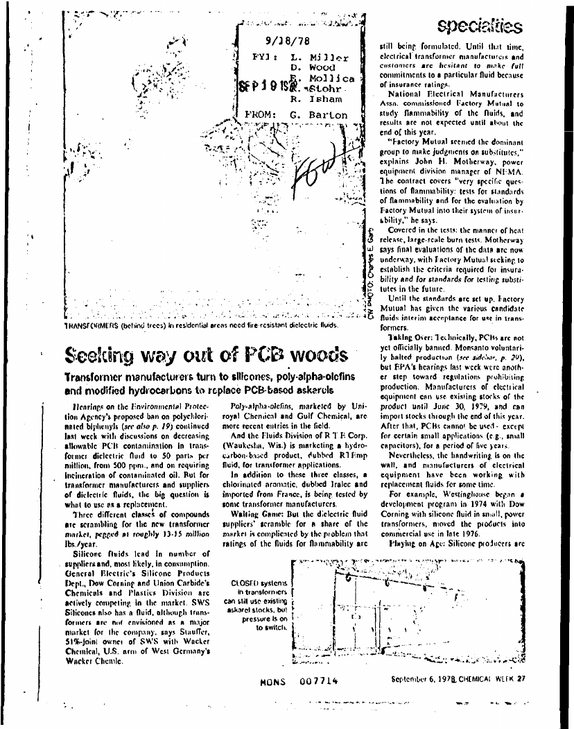
ratings of the fluids for flammability arc Flaying on Age: Silicone producers arc Silicone fluids lead in number of suppliers and, most likely, in consumption.
refid# e12X431r0Oo2jMdORqLYXD94E3 pages
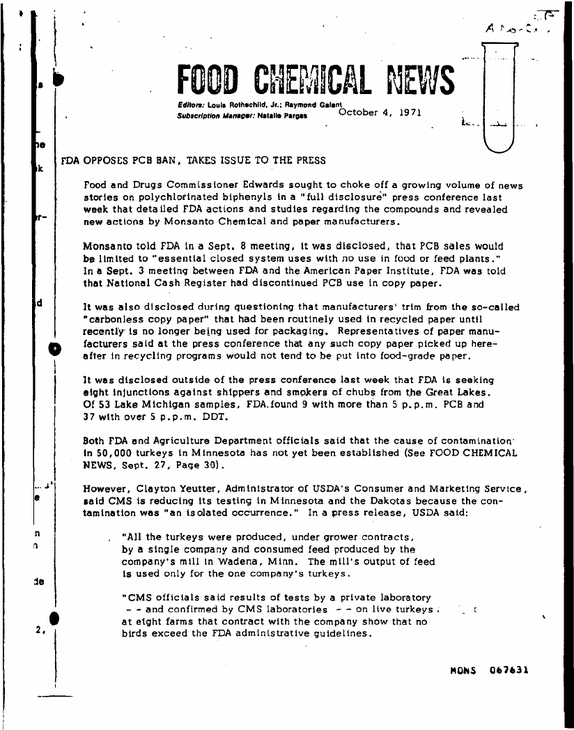
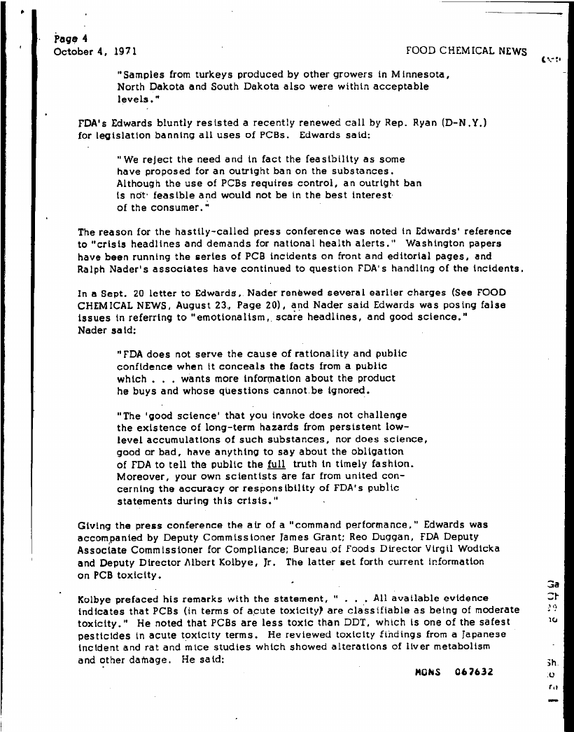
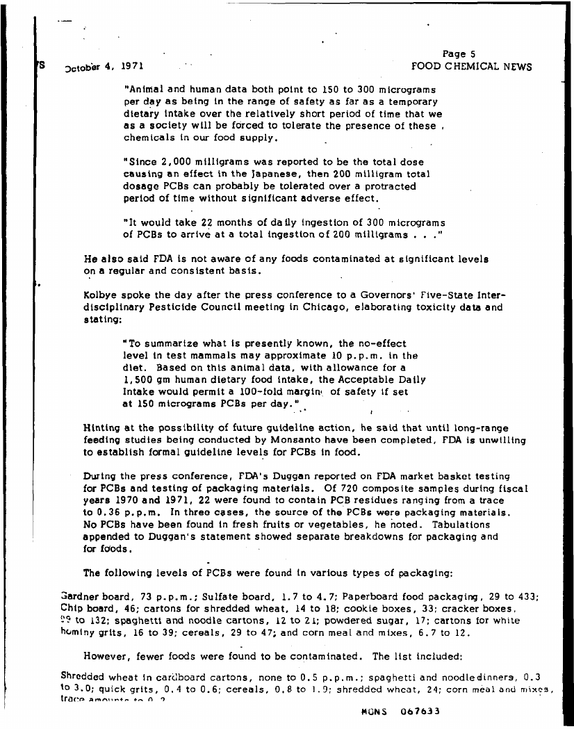
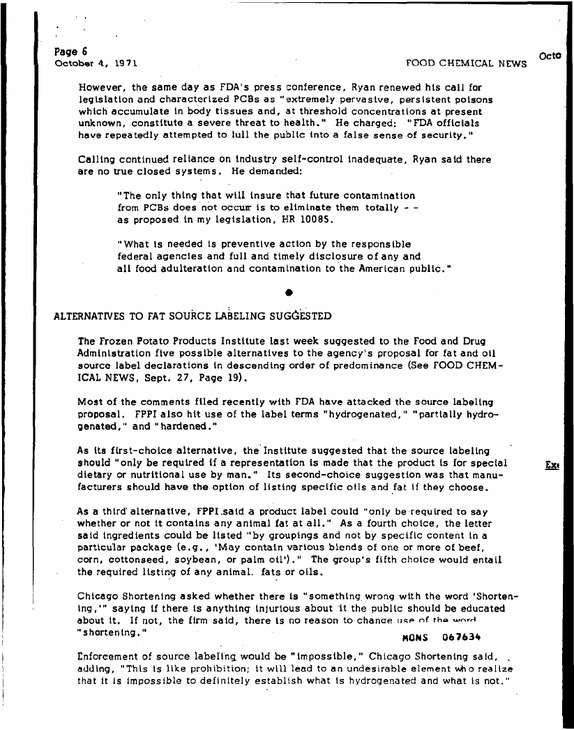
Editor*: Loul Rothschild, Jr.: Raymond Galoot SuOicrlptfon u*n*a*r: Natalia Pargaa October 4 , 1971 L..
refid# jmXYX5Ezz8nDZR6KaVZOLKpN96 pages
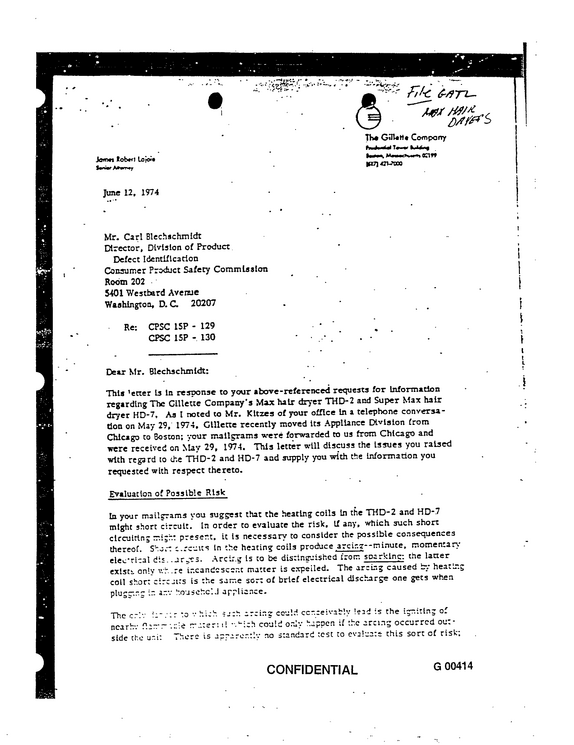
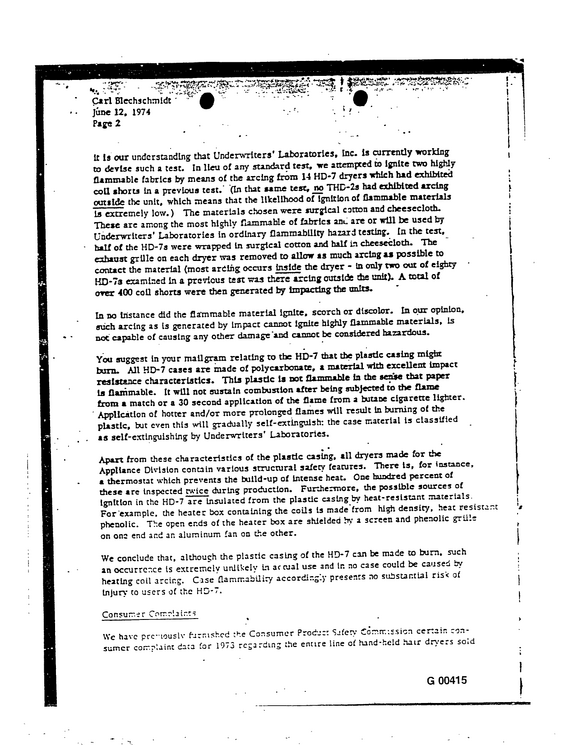
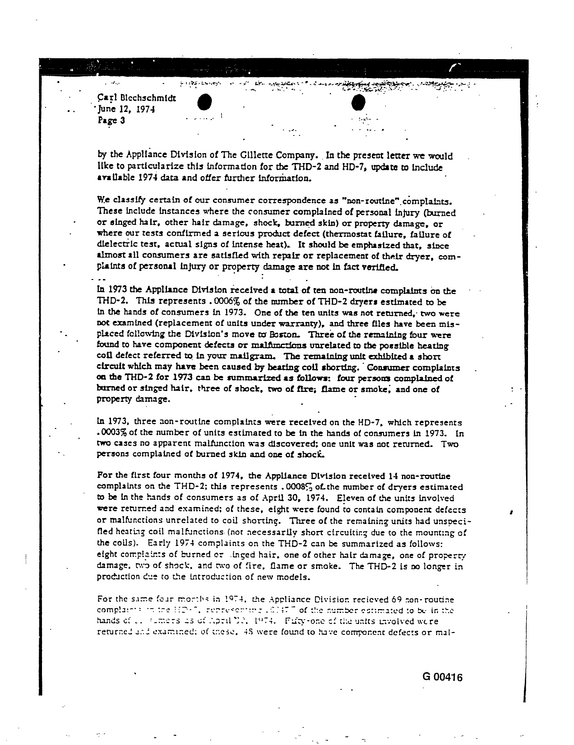
The cr'.v I f near hr fl 2 r : side the unit rcinr could conceivably lead is the igniting of h could only happen if the arcing occurred out:lv no standard test to evaluate this sort of risk; CONFIDENTIAL G 00414 4 '* " C arl Blechschm June 12. 1974 Page 2 .
refid# LpyrNx79YoQGj2GG6qbV11Vjq7 pages
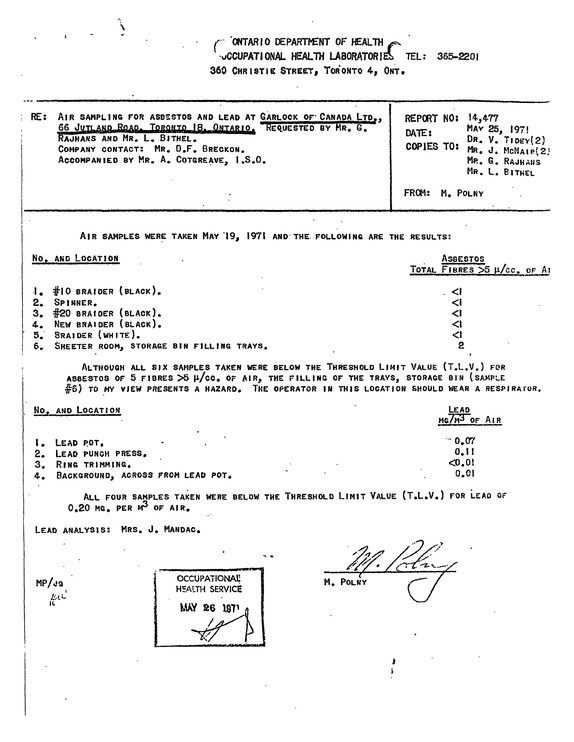
<0.01 0.01 All four samples taken were below the Threshold L imit Value (T.L.V.) for lead of 0.20 m g . per w3 of a i r .
refid# 7MM9YjnzpkxxNayRaoJLMK6nE5 pages
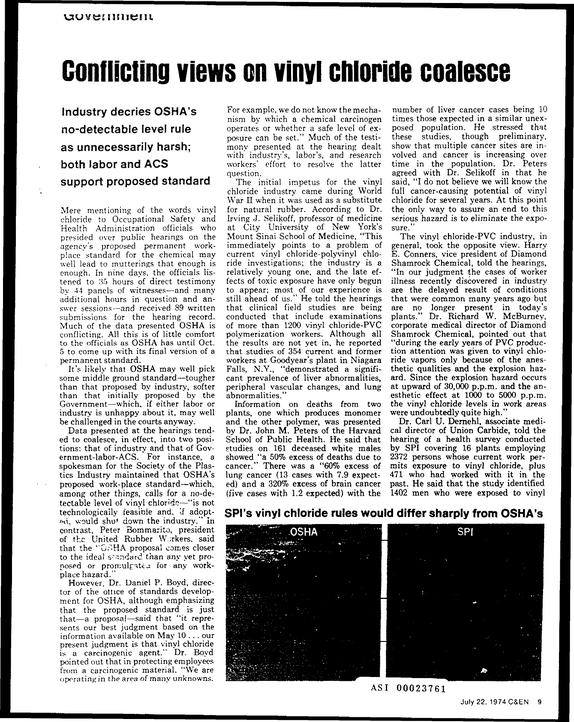
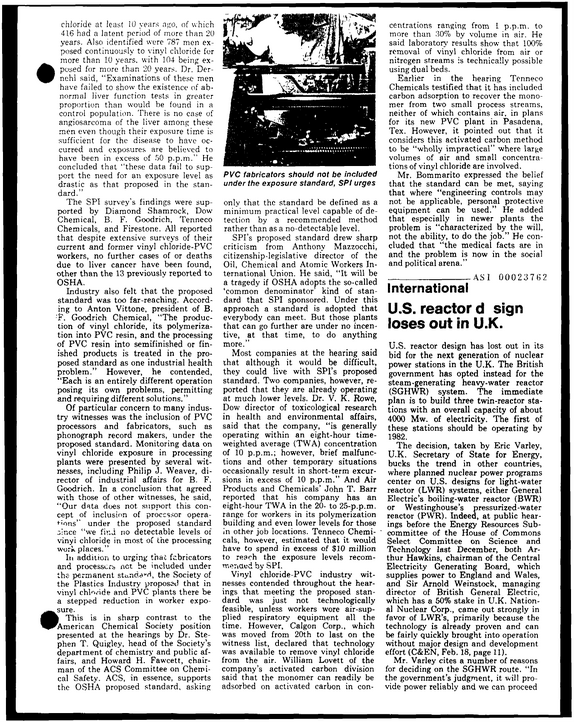
vsuvemmeiu Conflicting views on vinyl chloride coalesce Industry decries OSHA's no-detectable level rule as unnecessarily harsh; both labor and ACS support proposed standard Mere mentioning of the words vinyl chloride to Occupational Safety and Health Administration officials who presided over public hearings on the agency's proposed permanent work place standard for the chemical may well lead to muttcrings that enough is enough.
refid# MJ12Mgpk8YbJ3e5ZVYO2KL9yk2 pages
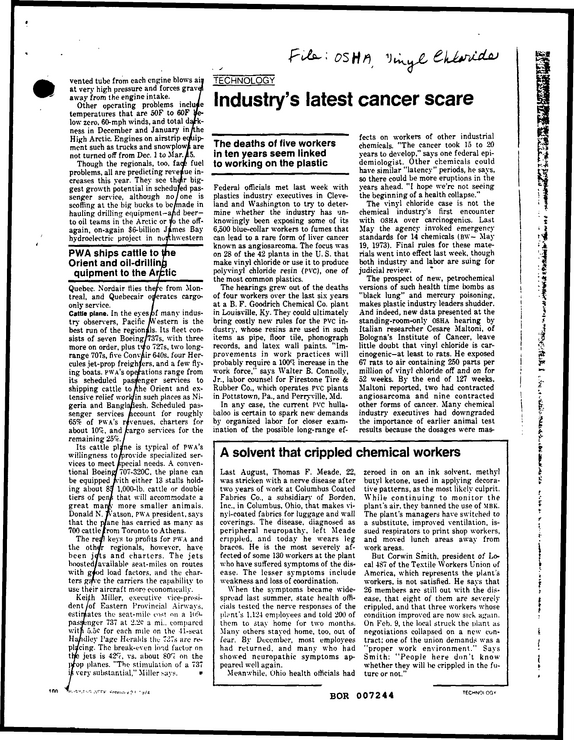
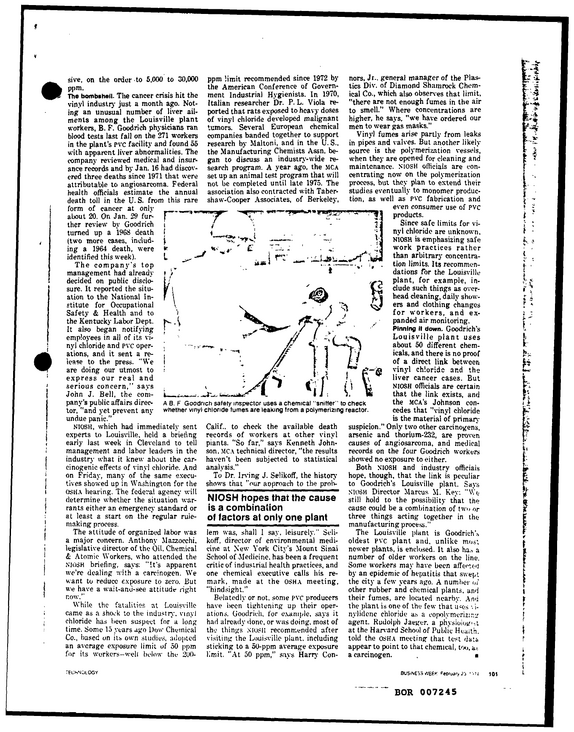
* TECHNOLOGY Industry's latest cancer scare The deaths of five workers in ten years seem linked to working on the plastic Federal officials met last week with plastics industry executives in Cleve land and Washington to try to deter mine whether the industry has un knowingly been exposing some of its 6,500 blue-collar workers to fumes that can lead to a rare form of liver cancer known as angiosarcoma.
refid# K6OdQw727dEZbprdqMNzZZR3Q2 pages
INDUSTRIES z.
refid# baRnmbEo5d346LDrLR8MM0Dmk5 pages
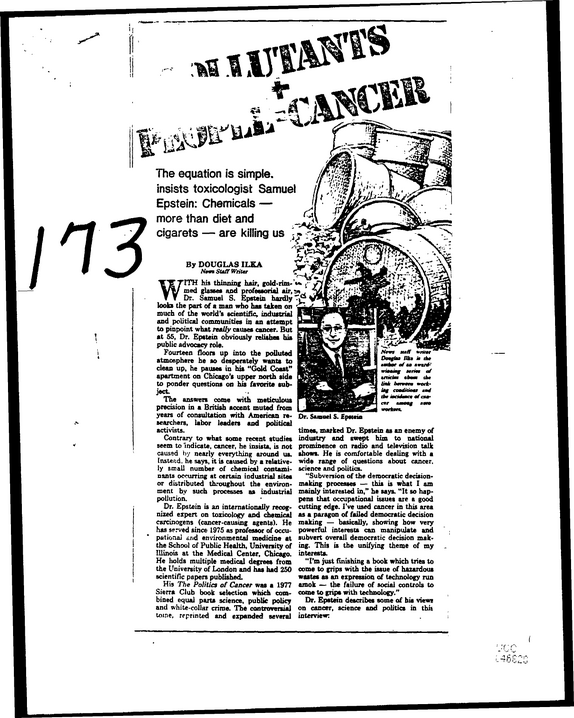
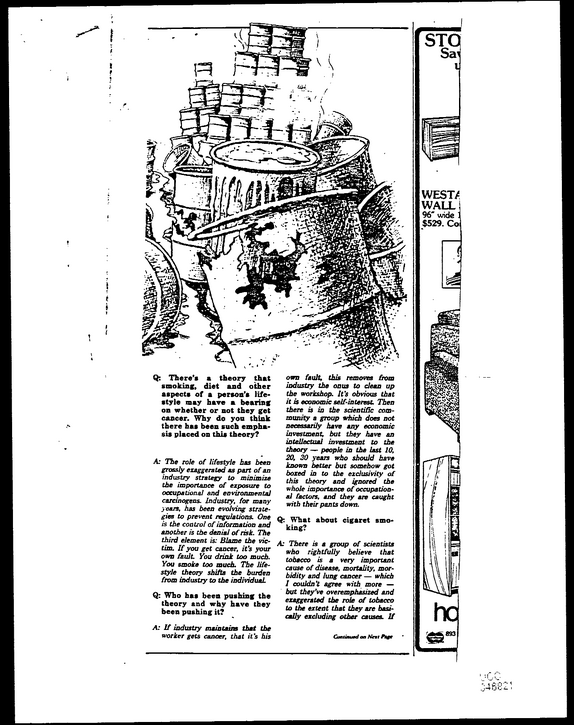
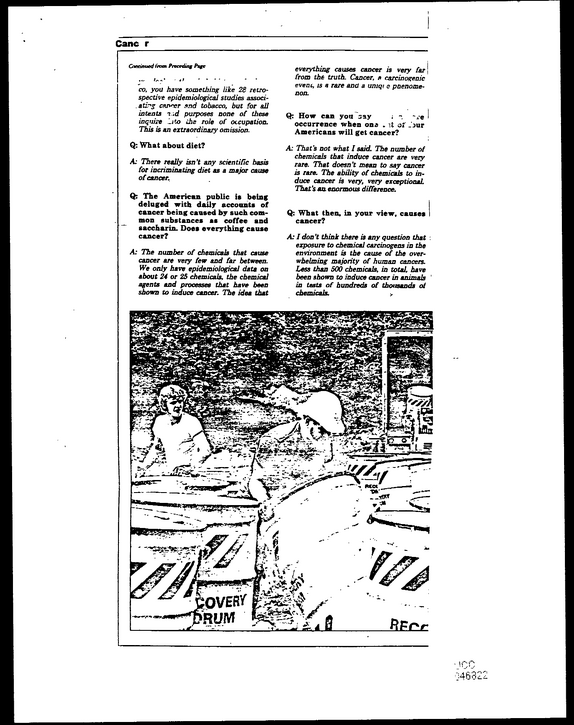
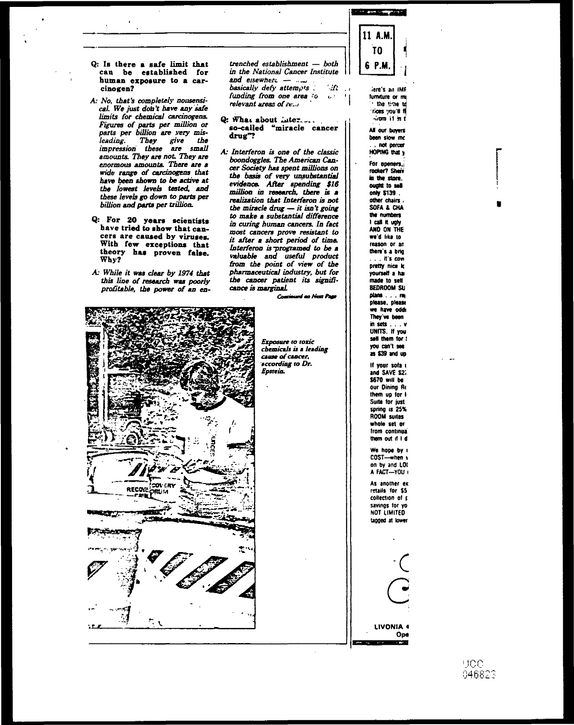
Figures of parts per million or parts per billion are very mis leading.
refid# Rj99En117aeQ5aDmav3N59MmX5 pages
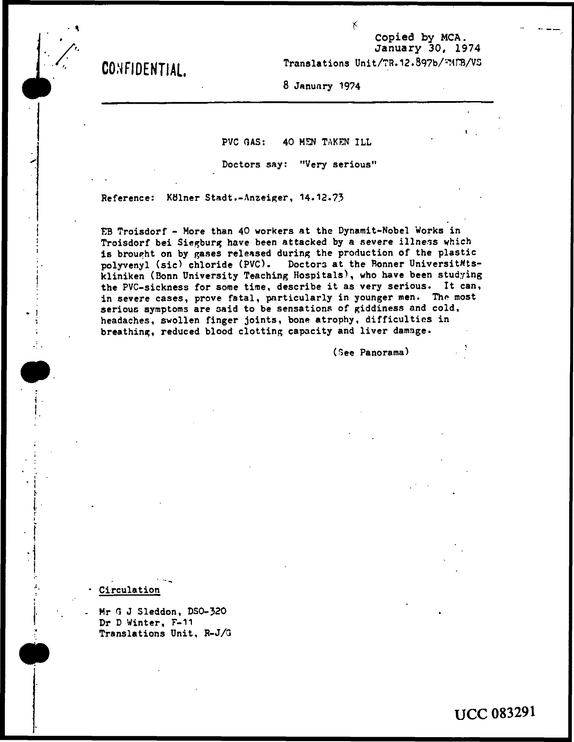
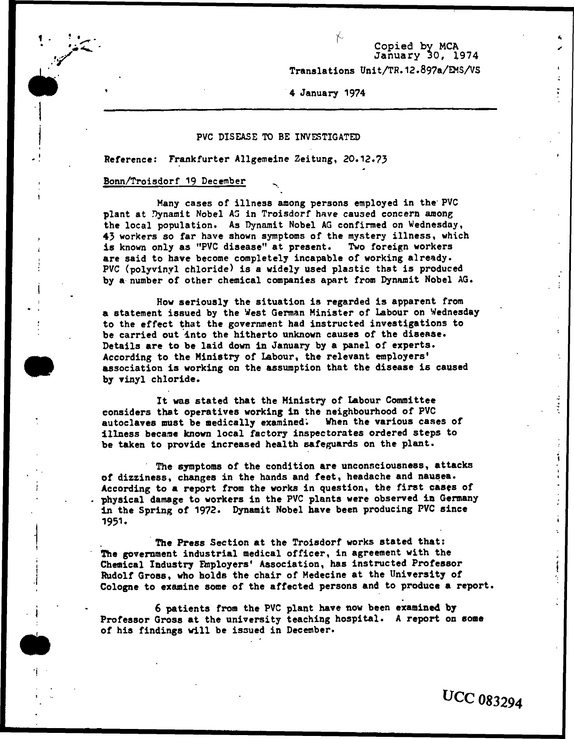
PVC has so far been responsible for the death of as yet unknown numbers of ch mical workers* For the production of this much desired material, wiich can b combined in so many different ways with plasticisers, fillers and pigments that it has become one of the leading products of the plastics age within th last twenty years, is apparently very much more dangerous than had beei pr viously been assumed. ?
refid# baBjX8e7vdzJJ64vKEBVNK00O5 pages
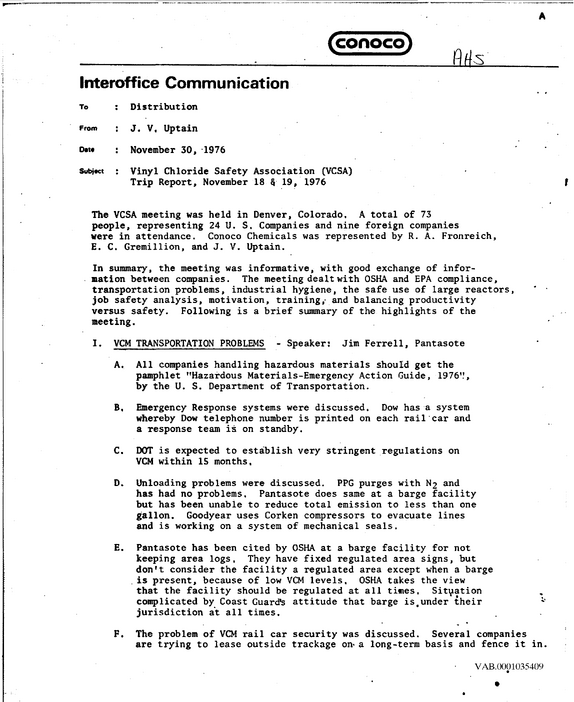
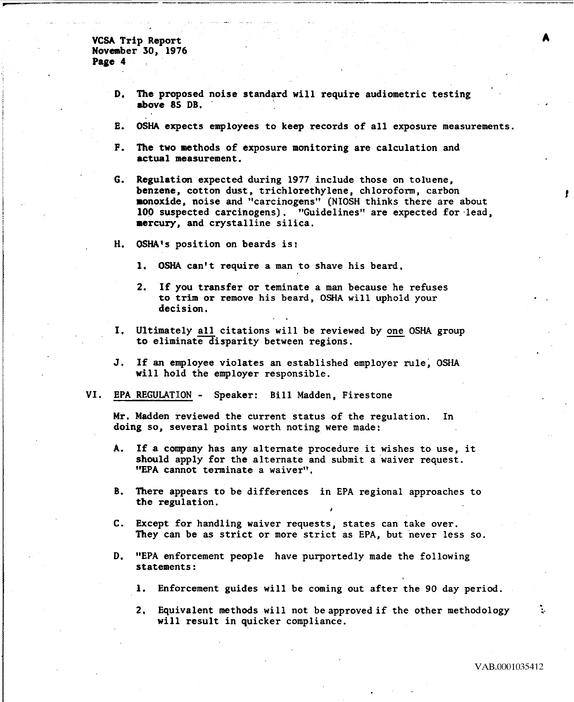
Regulation expected during 1977 include those on toluene, benzene, cotton dust, trichlorethylene, chloroform, carbon monoxide, noise and "carcinogens" (NIOSH thinks there are about t 100 suspected carcinogens), "Guidelines" are expected for lead, | mercury, and crystalline silica.
refid# x5kd9qD1K1mx3LvvJJQ739Mb6 pages