Refine
Estimated Years 1970-1979Clear
13,912 results foundRefine Search
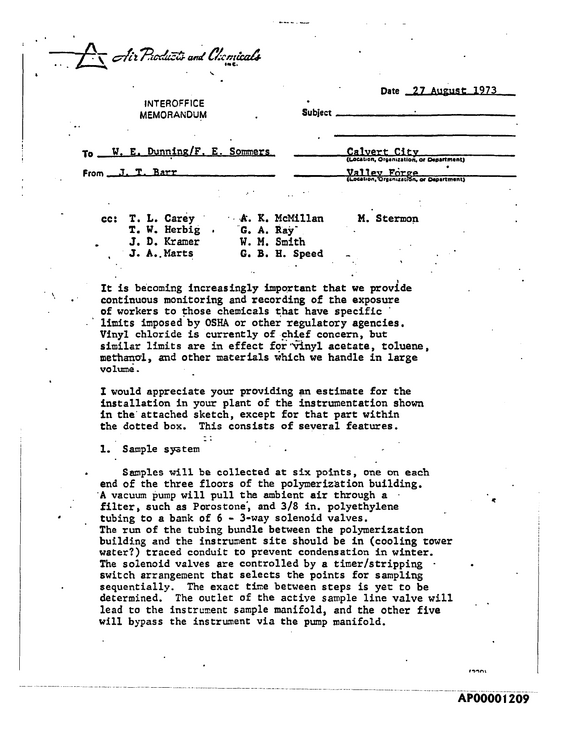
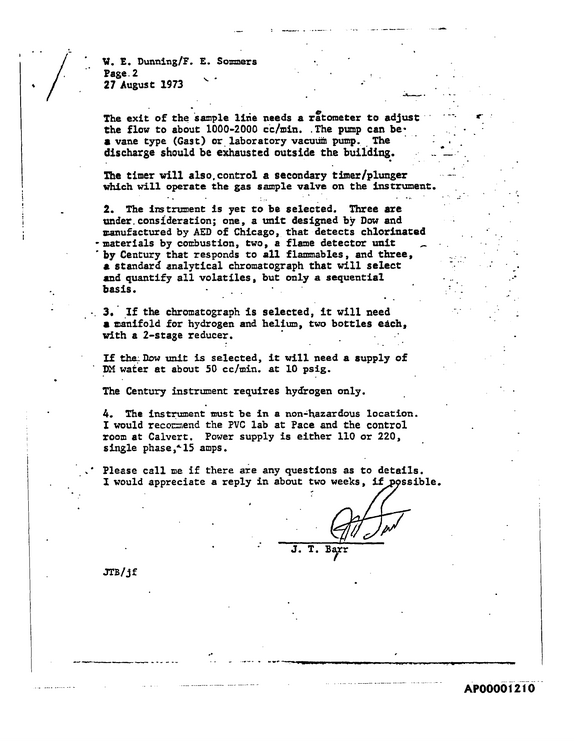
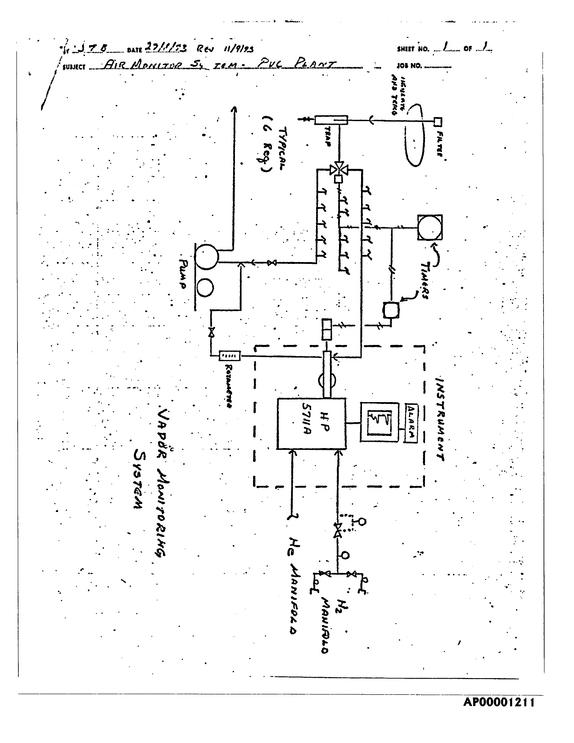
The outlet of the active sample line valve will lead to the instrument sample manifold, and the other five will bypass the instrument via the pump manifold.
refid# bBBoZLQGaKkdrvVjgmJaaG3wZ4 pages
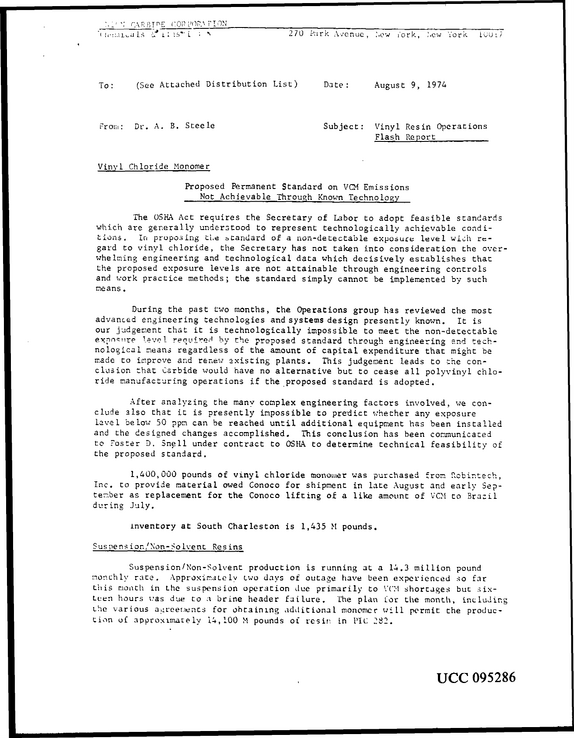
This judgement leads to the con clusion that Carbide would have no alternative but to cease all polyvinyl chlo ride manufacturing operations if the proposed standard is adopted.
refid# GGdy1gX1xkXeZw3JKvDzMQ3n3 pages
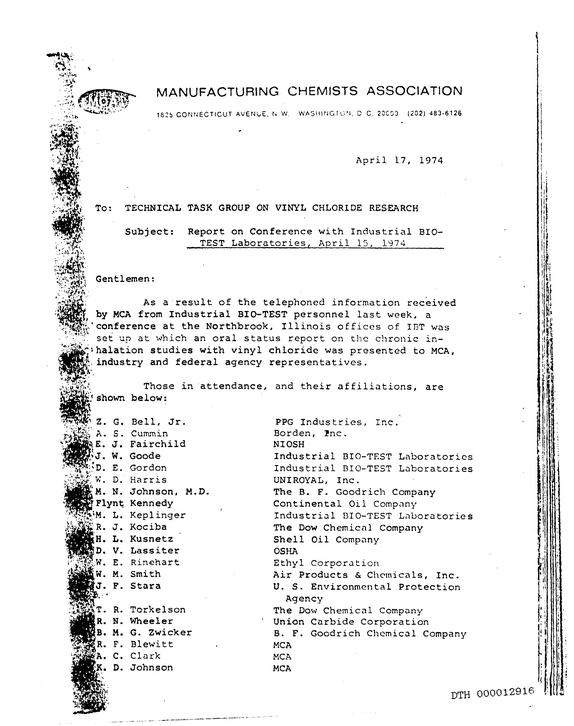
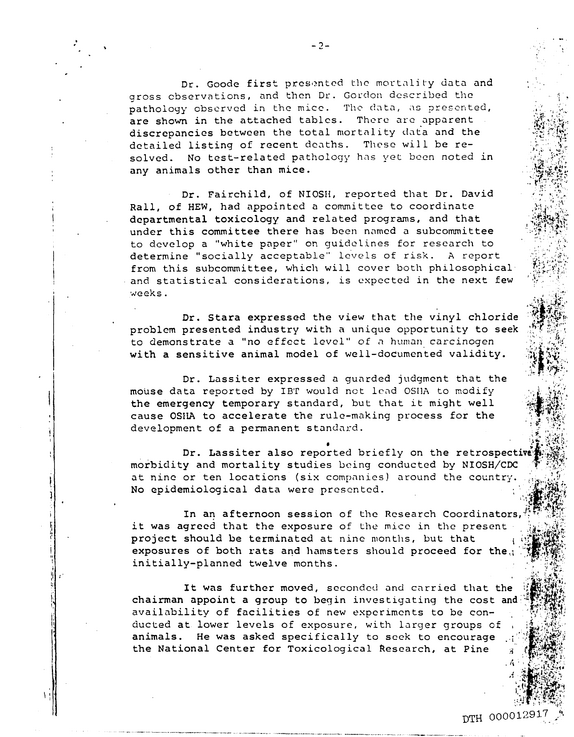
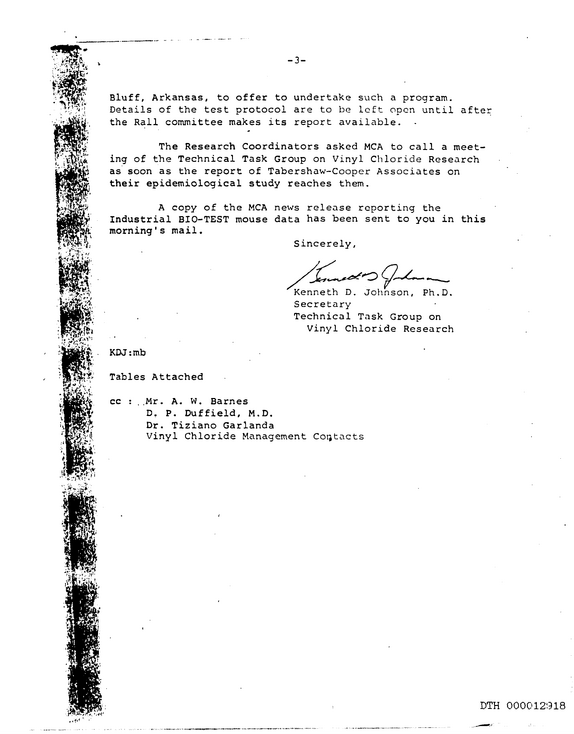
Lassiter expressed a guarded judgment that the mouse data reported by IBT would not lead 0SI1A to modify the emergency temporary standard, but that it might well cause 0SI1A to accelerate the rule-making process for the development of a permanent standard.
refid# ZqyJ8j7xv9QQz9oqvQVnOwK73 pages
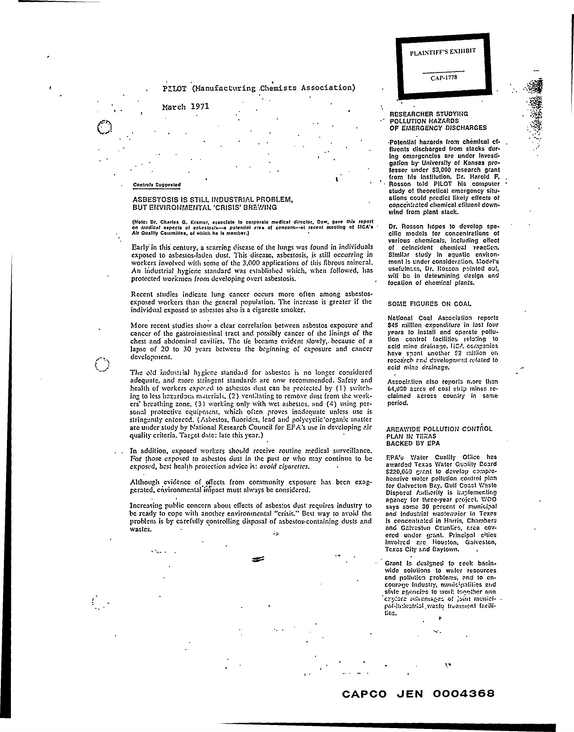
(Asbestos, fluorides, lead and po'ycyclic'organx matter arc under study by National Research Council for EFA's use in developing air quality criteria.
refid# bBEBRbaJB9XgpRqx3BOdDBd8y1 page
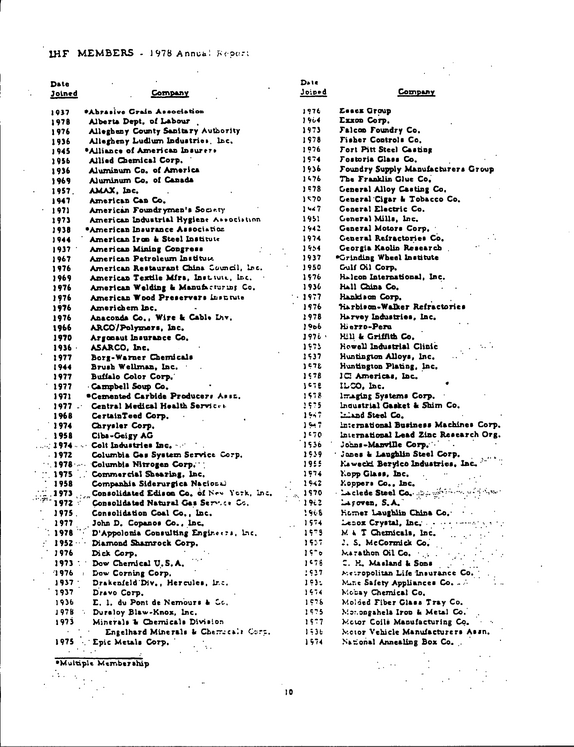
International Business Machines Corp International Lead Zinc Reeearch Org Johns-Mauville Corp.
refid# 2RwBQMOwzgM3ZdgRy09Y773Mp1 page
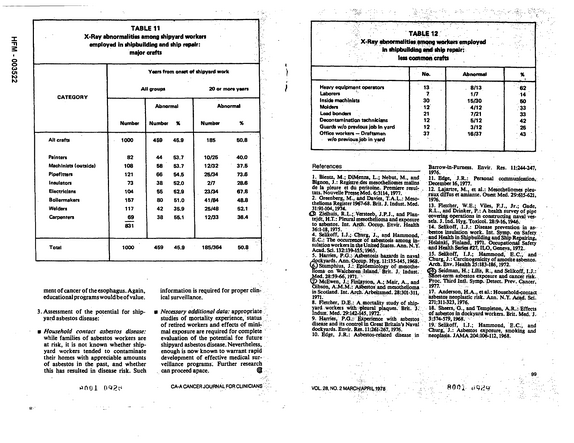
<3 anojL CA-A CANCER JOURNAL FOR CLINICIANS TABLE 12 X-Ray abnormalities among workers employed in shipbuilding and ship repair: less common crafts Heavy equipment operators Laborers Inside machinists Molders Lead bondets Decontamination technicians Guards w/o previous job in yard Office workers -- Draftsmen w/o previousjob in yard No. 13 7 30 12 21 12 12 37 Abnormal . 8/13 1/7 15/30 4/12 7/21 5/12 3/12 16/37 ..% 1 62 14 50 33 33 42 26 43 Reference 1.
refid# Ozy2R68pEN5XMGaV0XNb3Zrzv1 page
We merely say that, in our opinion, the data and the comparisons in this particular study do not lead to that conclusion.
refid# zd810GL35ZkLLNJbxBkn4gzo71 page
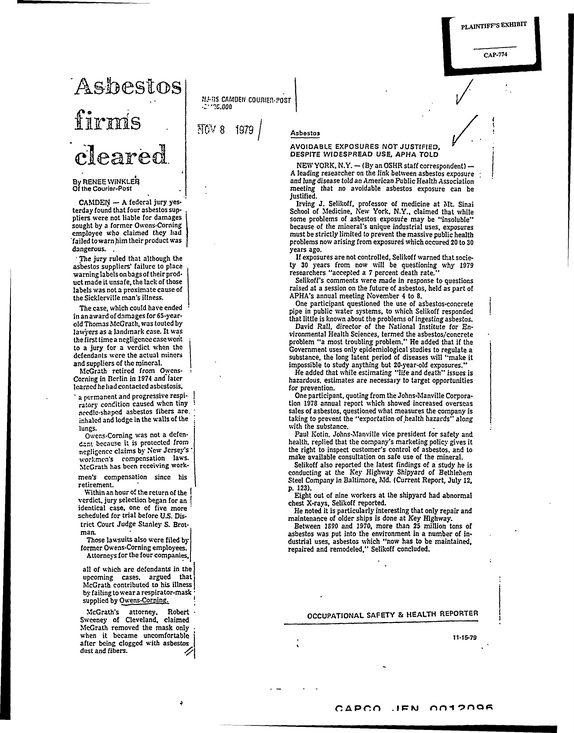
. - (By an OSHR staff correspondent) - A leading researcher on the link between asbestos exposure ; and lung disease told an American Public Health Association meeting that no avoidable asbestos exposure can be justified.
refid# JJEL6kKbrbV9D00RQDR4O9KXX1 page
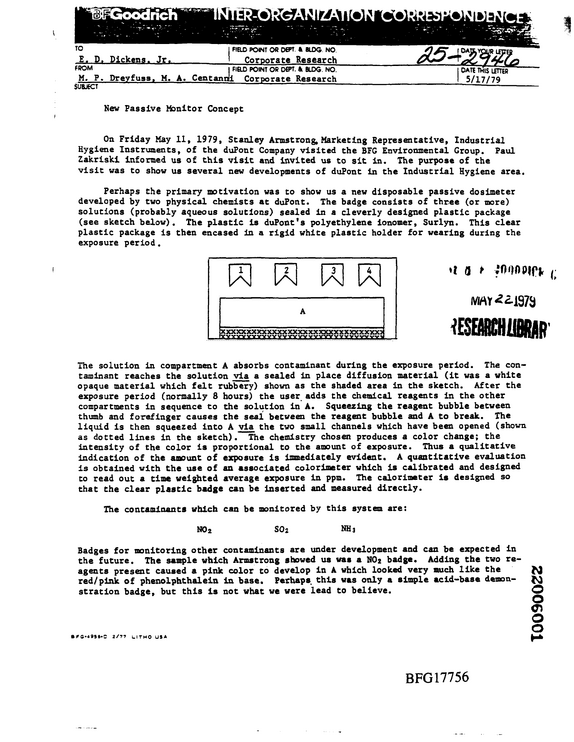
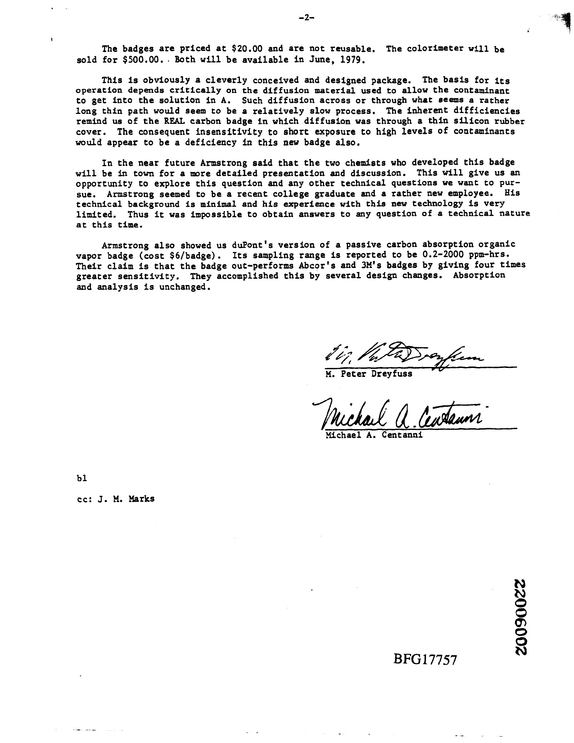
Perhaps this was only a simple acid-base demon stration badge, but this is not what we were lead to believe. 22006001 BFS-.9SS*C 2/77 LITHO USA BFG17756 -2- The badges are priced at $20.00 and are not reusable.
refid# Dv9Erj6xv8gXpx3E96XqqqyJN2 pages
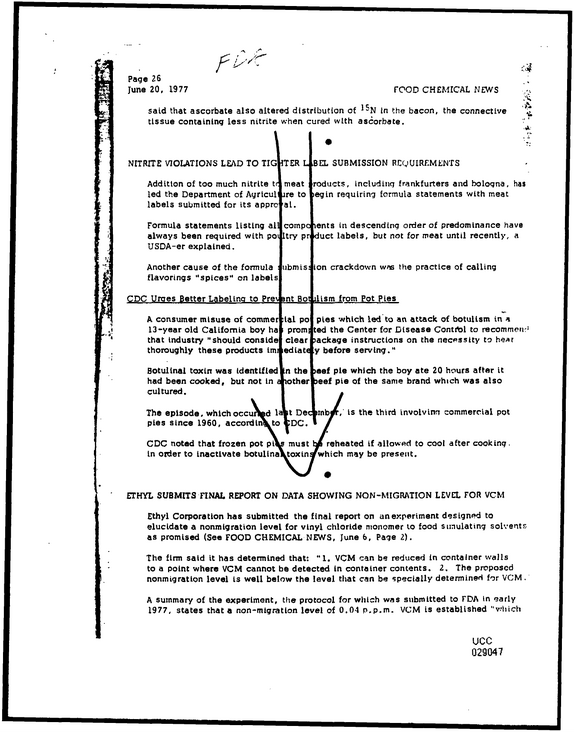
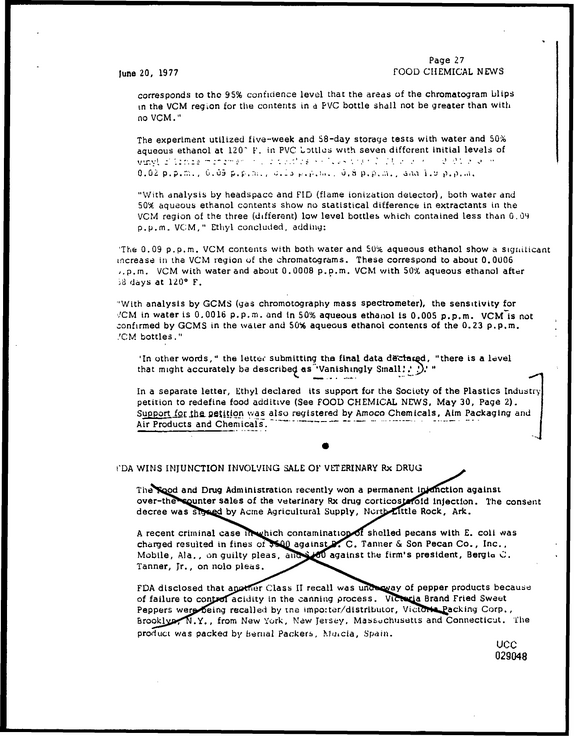
%r r - NITRITE VIOLATIONS LEAD TO TIG ITER L BEL SUBMISSION REQUIREMENTS Additton of too much nitrite t meat roducts, including frankfurters and bologna, has led the Department of AyrlculAire to iegin requiring formula statements with meat labels submitted for its appro al.
refid# RvedZj2N7Zm4wq6jjVpNxav82 pages
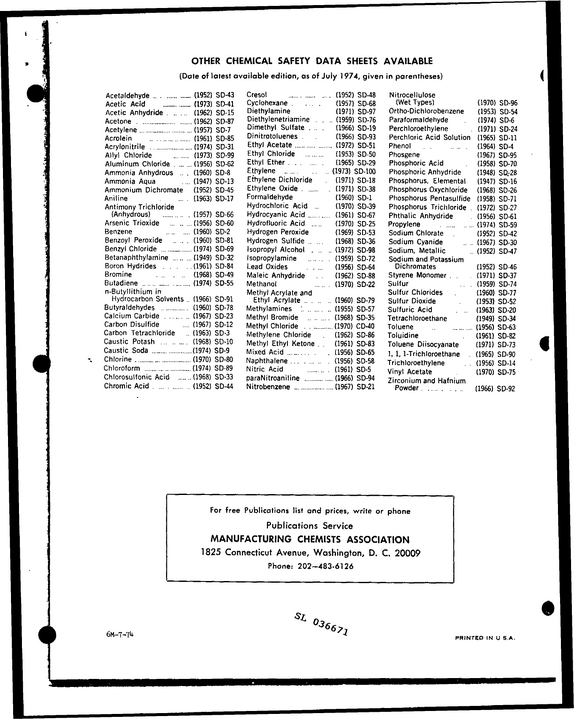
(1965) SD-29 Ethylene ___ .. (1973) SD-100 Ethylene Dichloride . (1971) SD-18 Ethylene Oxide . . (1971) SD-38 Formaldehyde (1960) SD-1 Hydrochloric Acid .. (1970) SD-39 Hydrocyanic Acid..... ... (1961) SD-67 Hydrofluoric Acid .... (1970) SD-25 Hydrogen Peroxide (1969) SD-53 Hydrogen Sulfide .. .. (1968) SD-36 Isopropyl Alcohol . .. .. (1972) SD-98 Isopropylamine ..... . (1959) SD-72 Lead Oxides . . .. (1956) SD-64 Maleic Anhydride (1962) SD-88 Methanol . . (1970) SD-22 Methyl Acrylate and Ethyl Acrylate....... .. (1960) SD-79 Methylamines ....... .. (1955) SD-57 Methyl Bromide .. .. ... (1968) SD-35 Methyl Chloride ....... .... (1970) CD-40 Methylene Chloride (1962) SD-86 Methyl Ethyl Ketone . . (1961) SD-83 Mixed Acid ............. . (1956) SD-65 Naphthalene.............. . (1956) SD-58 Nitric Acid ..... . . (1961) SD-5 paraNitroaniline ....... ... (1966) SD-94 Nitrobenzene ............ .... (1967) SD-21 Nitrocellulose (Wet Types) Ortho-Dichlorobenzene (1970) SD-96 (1953) SO-54 Paraformaldehyde (1974) SD-6 Perchloroethylene . (1971) SD-24 Perchloric Acid Solution (1965) SD-11 Phenol ..................... (1964) SD-4 Phosgene Phosphoric Acid (1967) SO-95 (1958) SD-70 Phosphoric Anhydride (1948) SD.-28 Phosphorus, Elemental (1947) SD-16 Phosphorus Oxychloride (1968) SD-26 Phosphorus Pentasulfide (1958) SD-71 Phosphorus Trichloride . (1972) SD-27 Phthalic Anhydride , (1956) SD-61 Propylene ................. (1974) SD-59 Sodium Chlorate (1952) SD-42 Sodium Cyanide .. .. (1967) SD-30 Sodium, Metallic .. (1952) SD-47 Sodium and Potassium Dichromates (1952) SD-46 Styrene Monomer . . (1971) SD-37 Sulfur .. . (1959) SD-74 Sulfur Chlorides Sulfur Dioxide (1960) SD-77 (1953) SD-52 Sulfuric Acid . .. (1963) SD-20 Tetrachloroethane (1949) SD-34 Toluene .....................(1956) SD-63 Toluidine (1961) SD-82 Toluene Diisocyanate (1971) SD-73 1, 1, 1-Trichloroethane . (1965) SD-90 Trichloroethylene . . (1956) SD-14 Vinyl Acetate (1970) SD-75 Zirconium and Hafnium Powder................... (1966) SD-92 6m-T'T4 For free Publications list and prices, write or phone Publications Service MANUFACTURING CHEMISTS ASSOCIATION 1825 Connecticut Avenue, Washington, D, C. 20009 Phone: 202-483-6126 O3 66?
refid# Qzb9X794nbGKZnXkg08OwNV61 page
Any further offorto to conceal the' tru th s about PCD's as alleged by some reporters w ill most lik e ly lead to much greater opposition from the public ns well as increased lia b ility . .
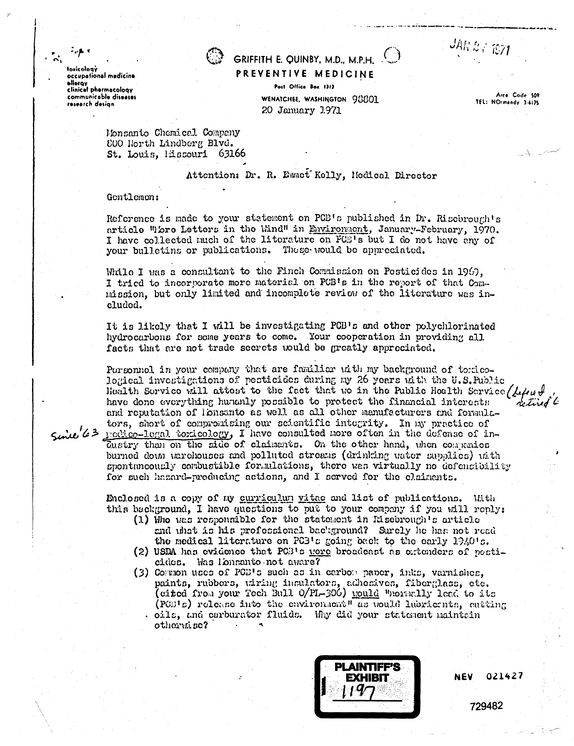
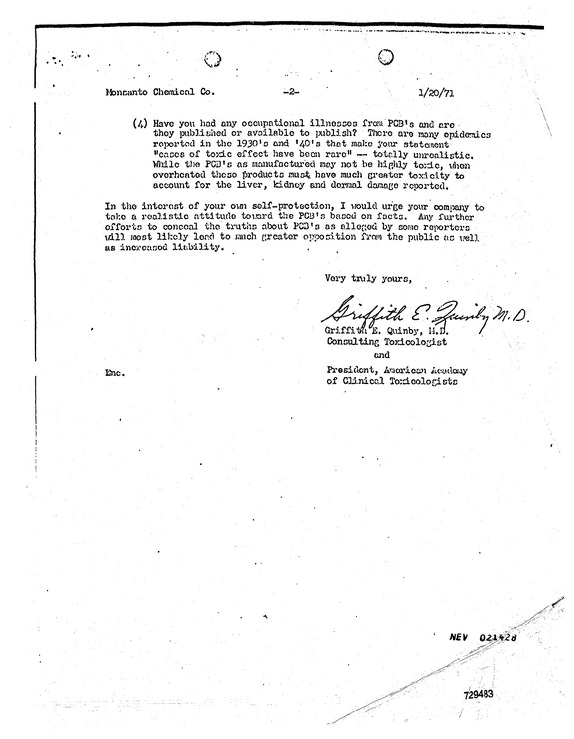
refid# O37z6ZR206E0gnwJmbBay84Ze2 pages
Bvnij| "1 &'ftiih0virrfaVlcn In the form of chloracne, systematic Intoxication leads to nausea, vomitingi Toss of weight, edema and abdominal paltj 1 4Nli I l*M AID W( Cl DURIS Remove from exposure.
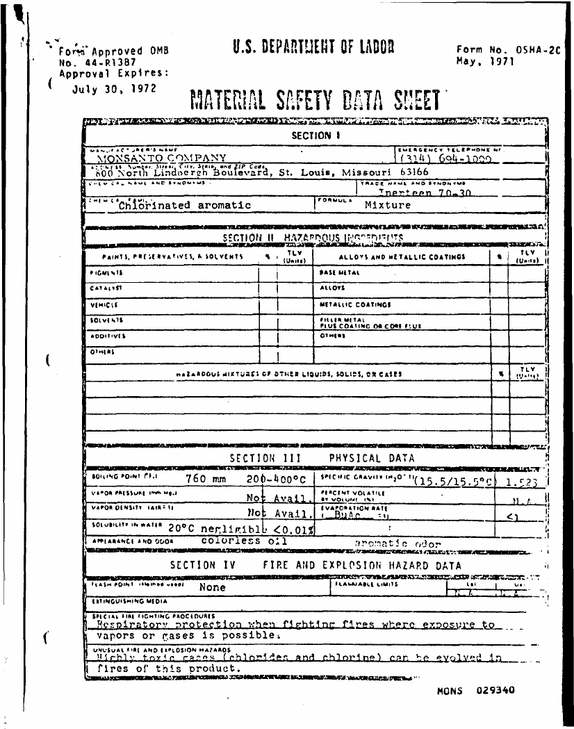
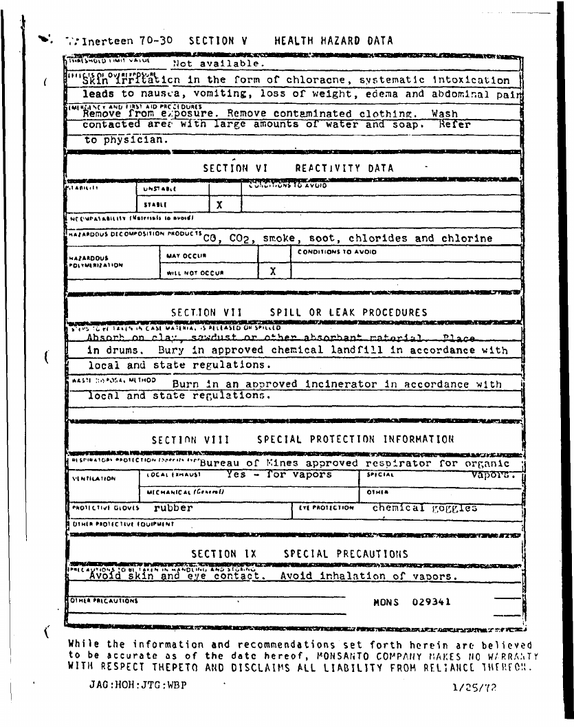
refid# xjp25ppq5D7a9zpQNJpdzkVy62 pages
Train said he hopes toxic substances control legislation will be passed in the next session of Congress, bul he' 'did not want to use the lack of legislation as a crutch for EPA inac tion.' ' He said the proposed program would not lead lo "quick and easy reduction" of the amounts of PCBs already m the environment, but control of discharges would help arrest the rapid growth of the problem
refid# p1EV9anoJMMkQYz5Jj3BRROd1 page
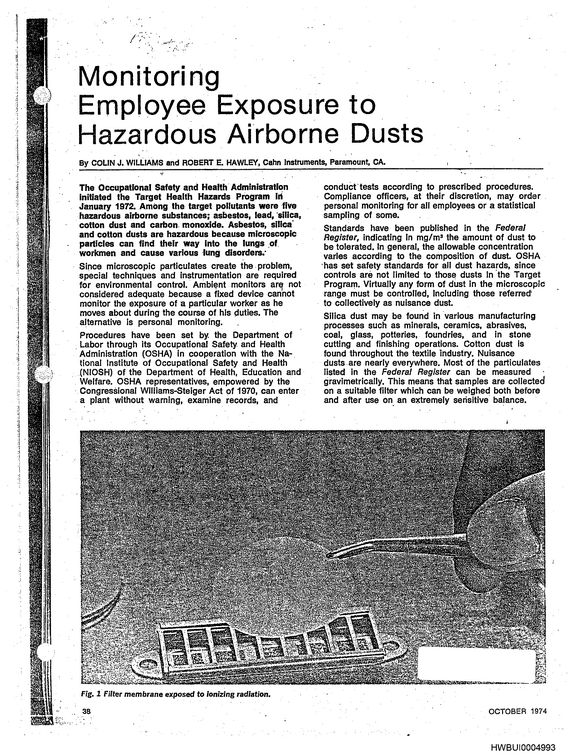
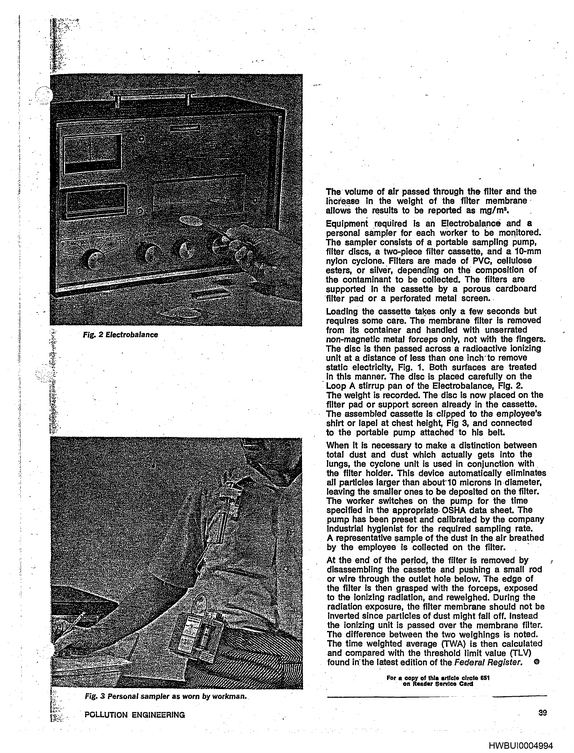
Among the target pollutants were five hazardous airborne substances; asbestos, lead, silica, cotton dust and carbon monoxide.
refid# w7O5M01yJwemMzapewegoy0B2 pages