Refine
Estimated Years 1970-1979Clear
27,937 results foundRefine Search
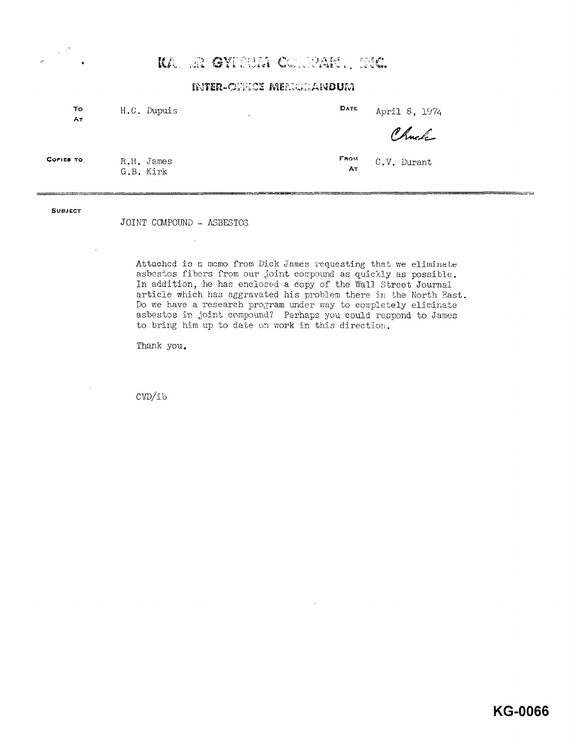
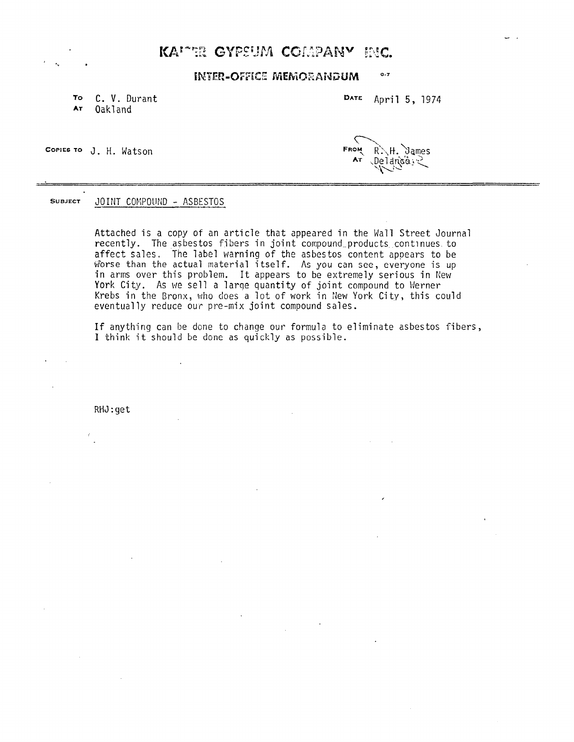
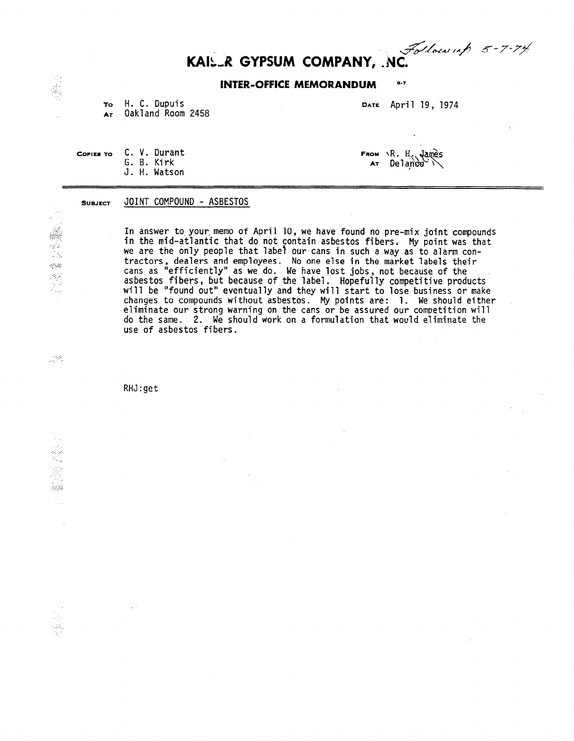
To At Copies to Subject KA A .V fc> id I )Aps k r\ c i fc nrf k M.
refid# LJwRo3mzkmVZ5YBy2oykbg7x54 pages
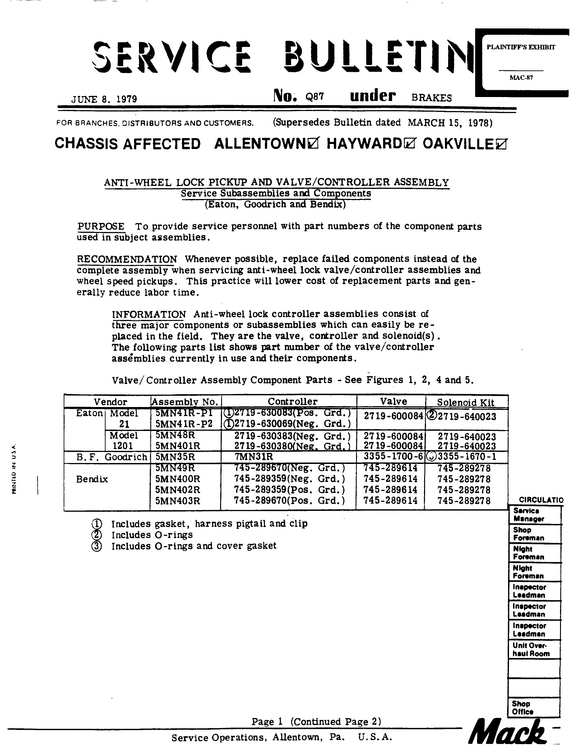
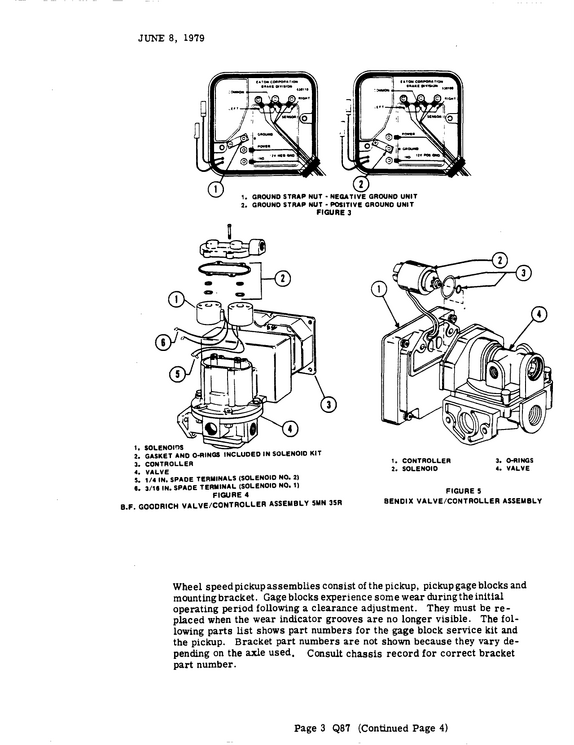
BULLETIN JUNE 8. 1979 _________________ No.
refid# 6wqDmBxexKvObjeZDy5kkywGm2 pages
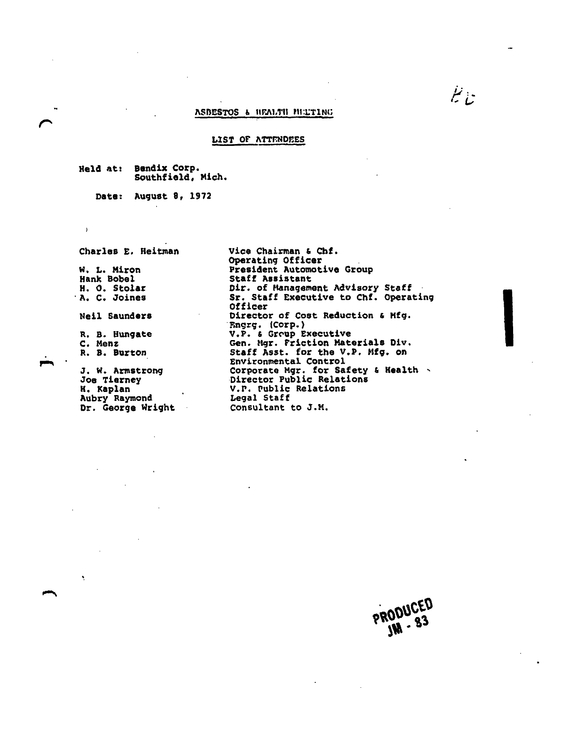
ASBESTOS k HEALTH MEETING LIST OF ATTENDEES Held at: Bendix Corp.
refid# ykE5evZyZer9eZRqjxLoMZ68r1 page
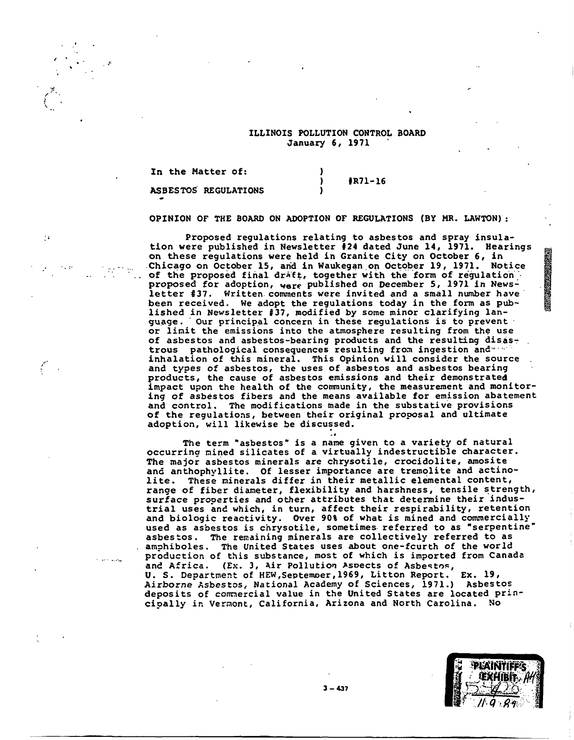
ILLINOIS POLLUTION CONTROL BOARD January 6, 1971 In the Matter of: ASBESTOS REGULATIONS ) ) #R71-16 ) OPINION OF THE BOARD ON ADOPTION OF REGULATIONS (BY MR.
refid# 93En148qV6GdGQVVzepa5EqwL1 page
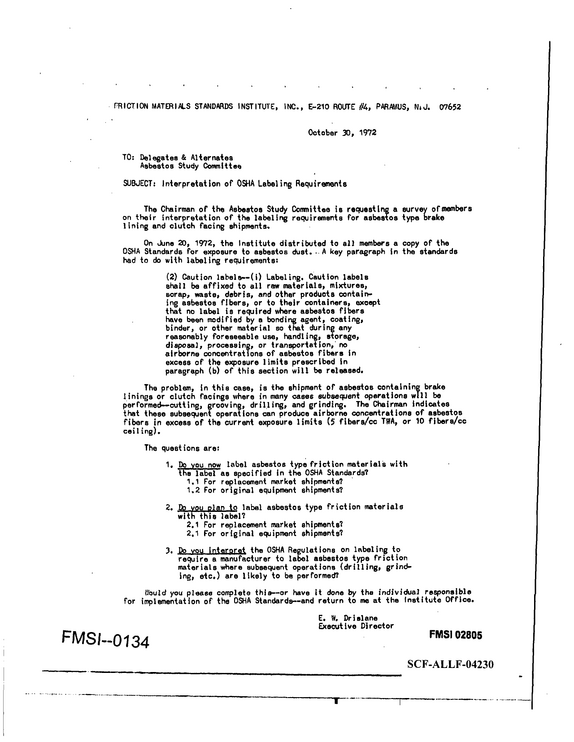
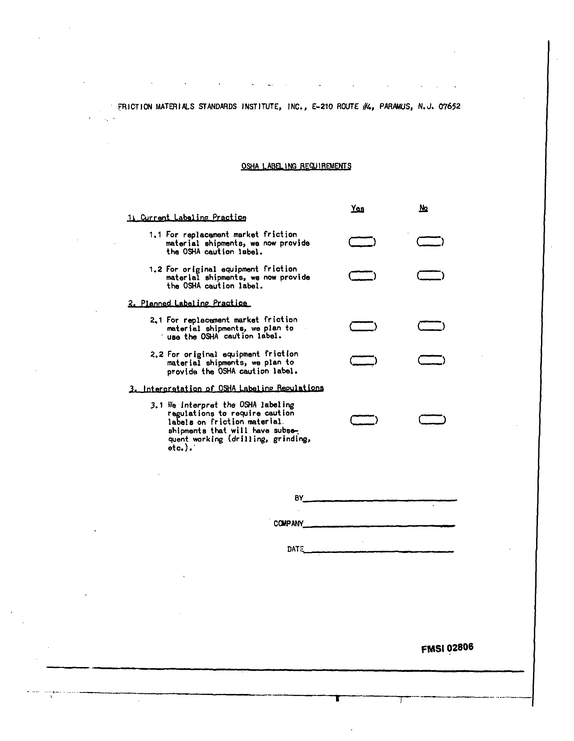
FRICTION MATERIALS STANDARDS INSTITUTE, INC., E-210 ROUTE //4, PARAMUS, NJ. 07652 October 30, 1972 TO: Delegates & Alternates Asbestos Study Committee SUBJECT: Interpretation of OSHA Labeling Requirements The Chairman of the Asbestos Study Committee is request Inc a survey of members on their interpretation of the labeling requirements for asbestos type Drake lining and clutch facing shipments.
refid# emdEz37QG564kvg0kONXVGQRp2 pages
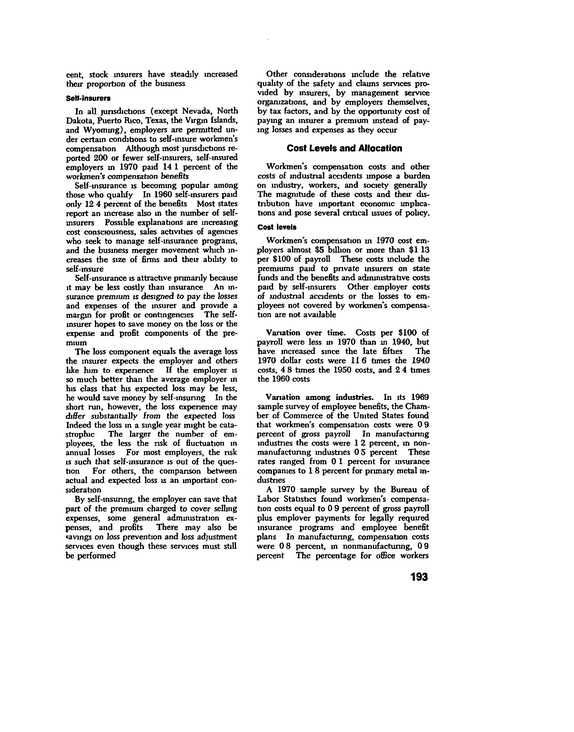
cent, stock insurers have steadily increased their proportion of the business Self-insurers In all jurisdictions (except Nevada, North Dakota, Puerto Rico, Texas, the Virgin Islands, and Wyoming), employers are permitted un der certain conditions to self-insure workmen's compensation Although most jurisdictions re ported 200 or fewer self-insurers, self-insured employers in 1970 paid 14 I percent of the workmen's compensation benefits Self-insurance is becoming popular among those who qualify In 1960 self-insurers paid only 12 4 percent of the benefits Most states report an increase also in the number of selfinsurers Possible explanations are increasing cost consciousness, sales activities of agencies who seek to manage self-insurance programs, and the business merger movement which in creases the size of firms and their ability to self-insure Self-insurance is attractive primarily because it may be less costly than insurance An in surance premium is designed to pay the losses and expenses of the insurer and provide a margin for profit or contingencies The selfinsurer hopes to save money on the loss or the expense and profit components of the pre mium The loss component equals the average loss the insurer expects the employer and others like him to experience If the employer is so much better than the average employer in his class that his expected loss may be less, he would save money by self-insunng In the short run, however, the loss experience may differ substantially from the expected loss Indeed the loss m a single year might be cata strophic The larger the number of em ployees, the less the nsk of fluctuation in annual losses For most employers, the nsk is such that self-insurance is out of the ques tion For others, the comparison between actual and expected loss is an important con sideration By self-insunng, the employer can save that part of the premium charged to cover selling expenses, some general administration ex penses, and profits There may also be savings on loss prevention and loss adjustment services even though these services must still be performed Other considerations include the relative quality of the safety and claims services pro vided by insurers, by management service organizations, and by employers themselves, by tax factors, and by the opportunity cost of paying an insurer a premium instead of pay ing losses and expenses as they occur Cost Levels and Allocation Workmen's compensation costs and other costs of industrial accidents impose a burden on industry, workers, and society generally The magnitude of these costs and their dis tribution have important economic implica tions and pose several critical issues of policy.
refid# e7oyzgnyQq4E1RV77Y5dndEaM1 page
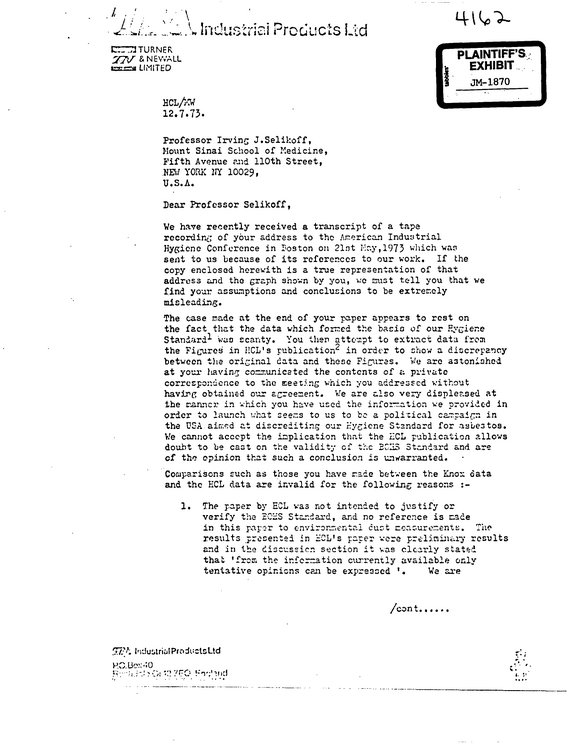
j: ,/ \ AU::,. _.w..L Industrial Products Ltd CTT773 TURNER ZT7\f & NEVVALL i-T---j UNITED HCL/fctf 12.7.73.
refid# NeoLYdrd5VK99nMxVK0eMepo85 pages
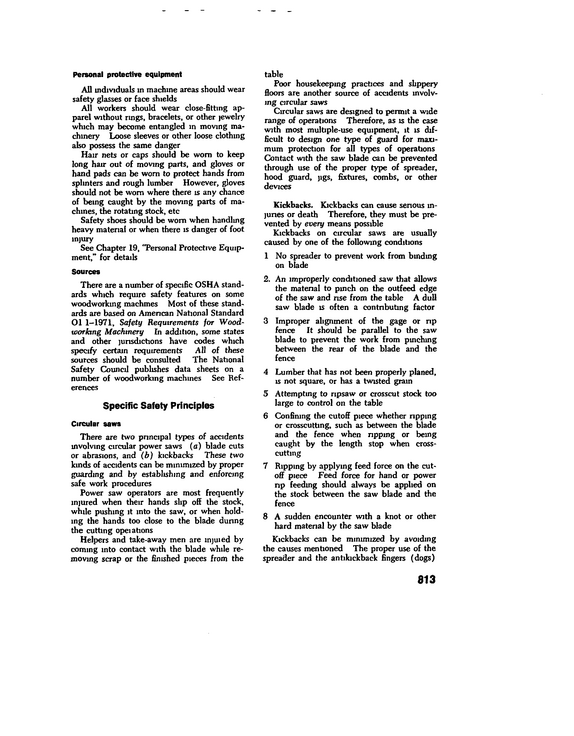
Personal protective equipment All individuals m machine areas should wear safety glasses or face shields All workers should wear close-fitting ap parel without rings, bracelets, or other jewelry which may become entangled m moving ma chinery Loose sleeves or other loose clothing also possess the same danger Hair nets or caps should be worn to keep long hair out of moving parts, and gloves or hand pads can be worn to protect hands from splinters and rough lumber However, gloves should not be wom where there is any chance of being caught by the moving parts of ma chines, the rotating stock, etc Safety shoes should be wom when handling heavy material or when there is danger of foot injury See Chapter 19, "Personal Protective Equip ment," for details Sources There are a number of specific OSHA stand ards which require safety features on some woodworking machmes Most of these stand ards are based on American National Standard 01 1-1971, Safety Requirements for Wood working Machinery In addition, some states and other jurisdictions have codes which specify certain requirements All of these sources should be consulted The National Safety Council publishes data sheets on a number of woodworking machines See Ref erences Specific Safety Principles Circular saws There are two principal types of accidents involving circular power saws (a) blade cuts or abrasions, and (b) kickbacks These two kinds of accidents can be minimized by proper guarding and by establishing and enforcing safe work procedures Power saw operators are most frequently injured when their hands slip off the stock, while pushing it into the saw, or when hold ing the hands too close to the blade during the cutting opeiations Helpers and take-away men are mjuied by coming into contact with the blade while re moving scrap or the finished pieces from the table Poor housekeeping practices and sbppery floors are another source of accidents involv ing circular saws Circular saws are designed to permit a wide range of operations Therefore, as is the case with most multiple-use equipment, it is dif ficult to design one type of guard for maxi mum protection for all types of operations Contact with the saw blade can be prevented through use of the proper type of spreader, hood guard, jigs, fixtures, combs, or other devices Kickbacks.
refid# MGew7Veyr3Ov75ponqBJ5wrJk1 page
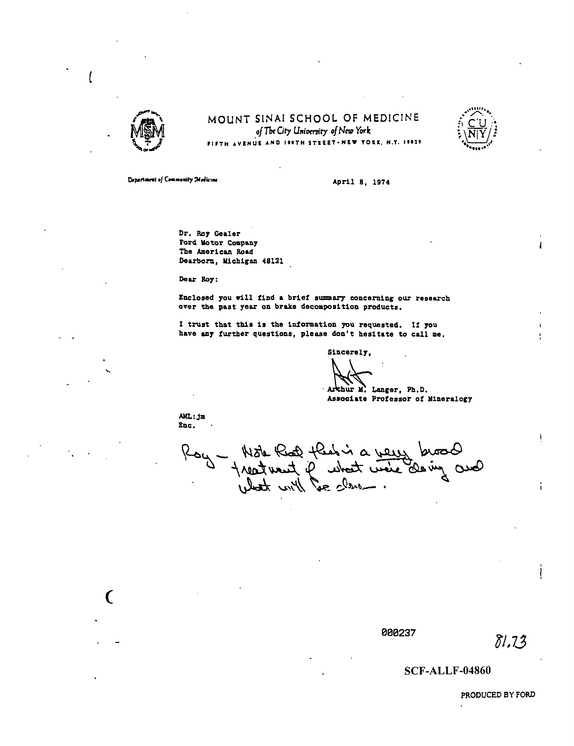
( \ZJ D*pArtMl t/ MOUNT SINAI SCHOOL OF MEDICINE of Tbt City Unioenity ofNew York FIFTH AVENUE and lTH STIEET NET TOEE, N.T.
refid# o9oeJG6p6Ej9J40b4LjQ2x5GE1 page
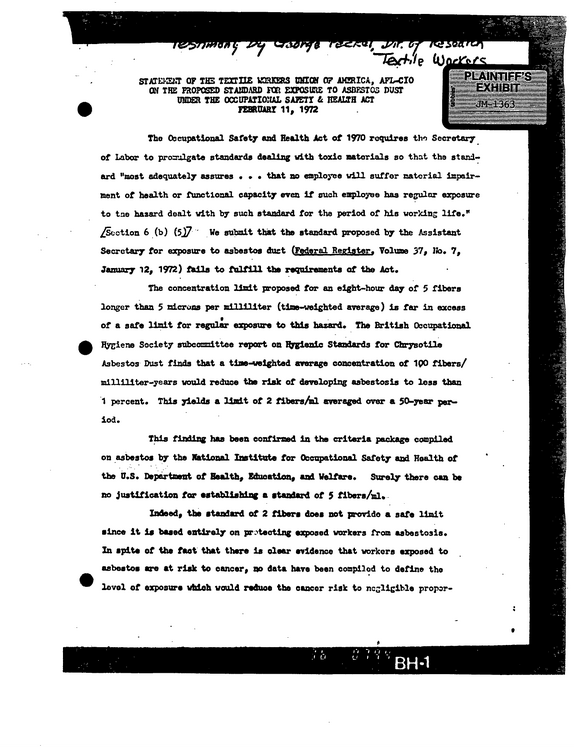
STATEMENT OF THE TEXTILE WORKERS DMCM OF AHZRICA, AFL-CIO ON THE PROPOSED STANDARD FOR EXPOSURE TO ASBESTOS DUST UNDER THE OCCUPATIONAL SAPETI L HEALTH ACT FEBRUART 11, 1972 Tho Occupational Safety and Health Act of 1970 requires the Secretary of Labor to promulgate standards dealing with toxic natorials so that the stand ard "most adequately assures that no employee will suffer material impair ment of health or functional capacity even if ouch employee has regular exposure to tne hazard dealt with by such standard for the period of his working life."
refid# JJzXJNObvk8VLX2Rbz2jYRaZO7 pages
.. .l - Cuc-S 4. f` ""* TO(CK C v*o**C u.
refid# zdkoN4vaKBerDwBr5rq0v9pyz1 page
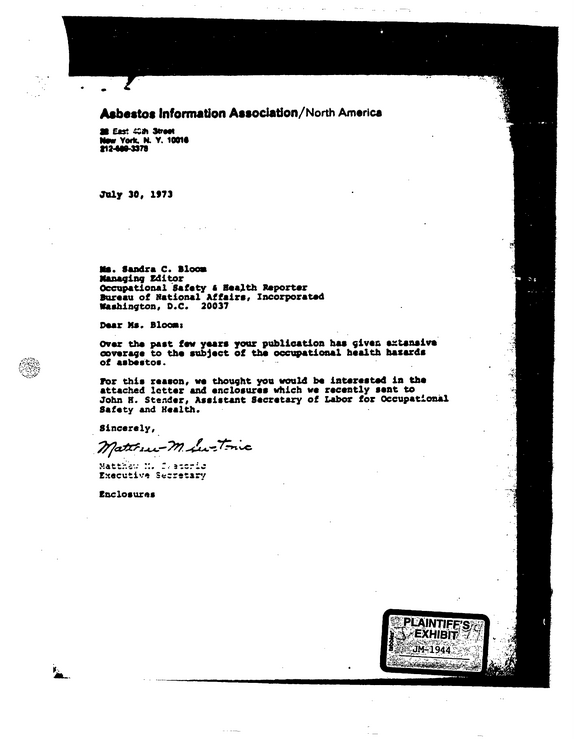
Asbestos Information Association/North America a East StrMt New YoA.
refid# G5qz4EvGpDyG4J39r8q1Mjxrr1 page
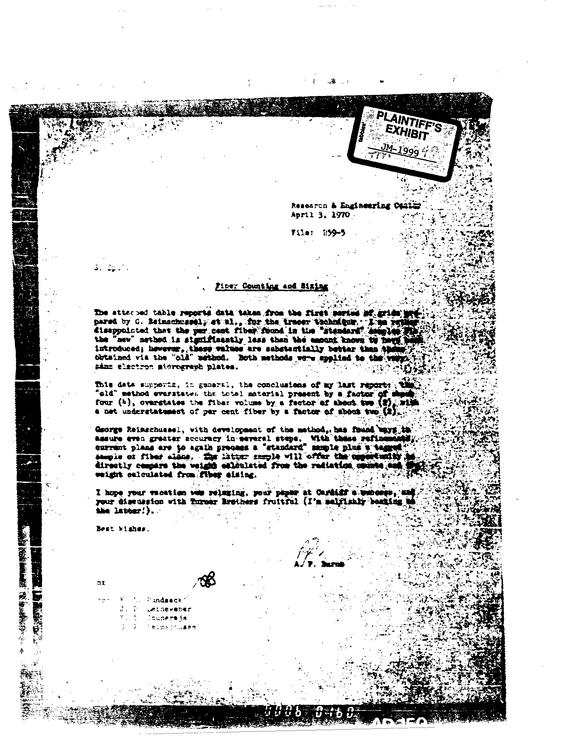
I JS Baaaarcn k EngiReerilsg C**Viip April J. 1970 ' y-y-j file: 5!
refid# pmYo5wr37MzMzZENyGoNmK8y62 pages
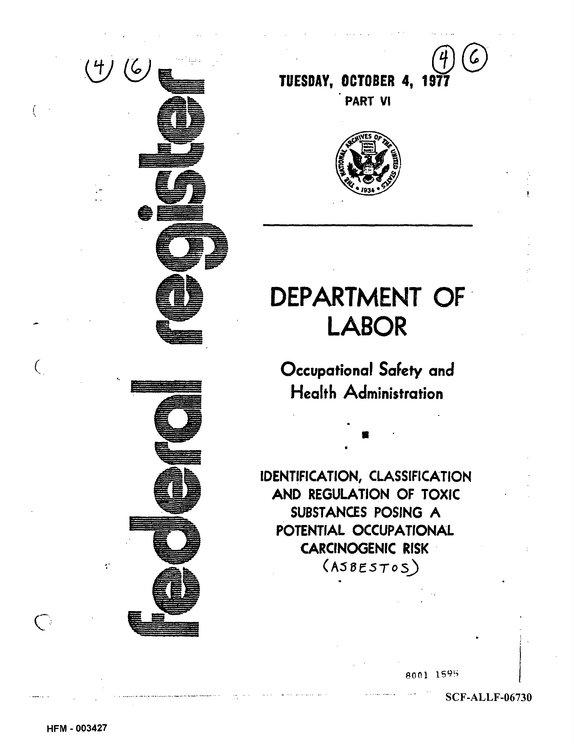
au ay @ TUESDAY, OCTOBER 4, 1977 PART VI HFM - 003427 DEPARTMENT OF LABOR Occupational Safety and Health Administration IDENTIFICATION, CLASSIFICATION AND REGULATION OF TOXIC SUBSTANCES POSING A POTENTIAL OCCUPATIONAL CARCINOGENIC RISK (A58E5T os3 8001 159!
refid# a4gNv5zYXvjYvBLE5v8JZ3Y3y2 pages
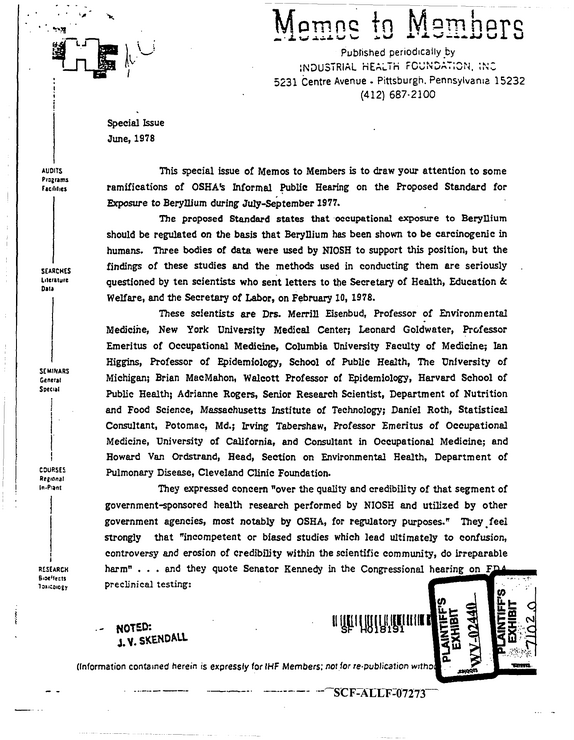
AUDITS Programs Facilities SEARCHES literature Data SEMINARS General Special COURSES Regional In-Piant RESEARCH Bise'letw Tsiicsiogy Special Issue June, 1978 Mornnc In Mqrnharc Published periodically by INDUSiRIAL HAi_in rCwJ,'ii^n.iGN, 5231 Centre Avenue .
refid# RpRrj57aOamzZVjz41EX6gevn1 page