Refine
Estimated Years 1960-1969Clear
31,974 results foundRefine Search
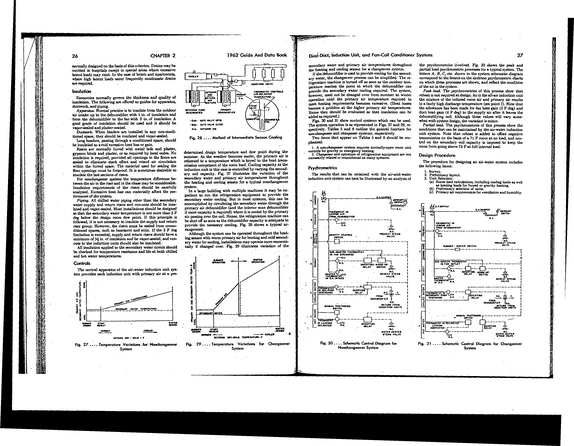
26 CHAPTER 2 1962 Guide And Data Book normally designed on the basis of toi* criterion.
refid# Oz0w9Mvw987gEvDvx2NOOGKL11 page
Mann m v.U.
refid# 0JMr92vDJMap39DVJ3E4mvLxb2 pages
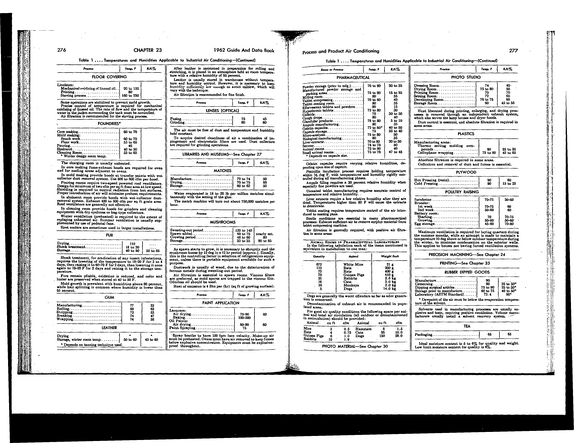
276 CHAPTER 23 1962 Guide And Data Book Table \ .
refid# 85g5R62pby633YBxKNLQ7Y6Ym1 page
530 CHAPTER 49 1962 Guide And Data Book stable food and does not require refrigeration although whole egg and yolk solids benefit from some refrigeration.
refid# NoaZDdX3wxkwO11ZNJpYxyNV1 page
92 Air Condition* INDUSTRIAL ACOUSTICS COMPANY, INC. 341 Jackson Avenue New York 54, N.Y.

refid# EdZgrkXwy6xyO9QG9nEXpRJ0x1 page
W Water chillers.
refid# e5EDJDqN9gwZ0wLBD6XJK6b7M1 page
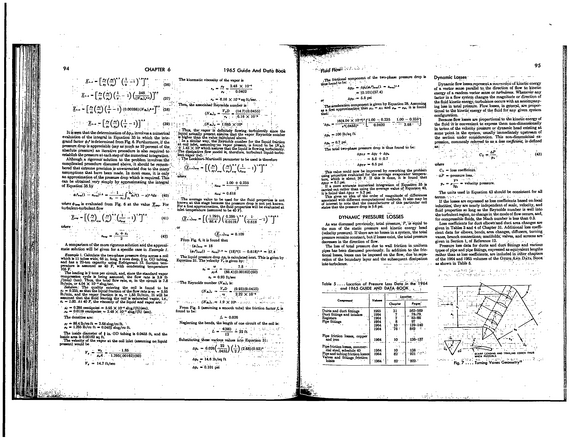
94 CHAPTER 6 1965 Guide And Data Book . " L * V M,/ V* . / J ; The kinematic viscosity of the vapor ia (36) , _ (V 2.48 x 10⁻¹ *' " p, " 0.0402 - [7' 0 (7 - 0 r, * 6.16 X I0"* sq ft/sec. .
refid# QkRaVQd3d3me99Bp8Yw1yJzx81 page
172 CHAPTB?
refid# 44j5KOEx58yKJ9JDz8dQGpaxQ1 page
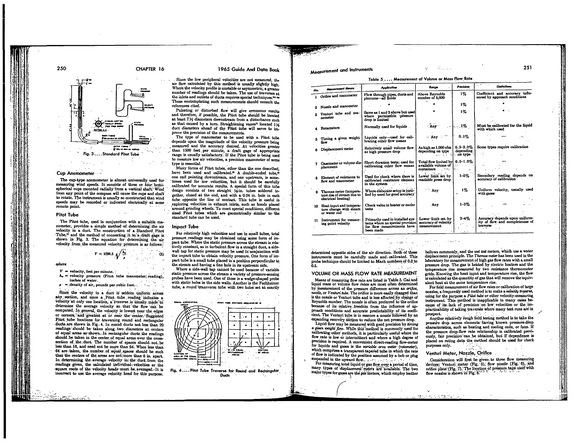
250 CHAPTER 16 1965 Guide And Data Book i r* - Since the low peripheral velocities are not measured. th air flow calculated by this method is usually slightly high Where the velocity profile is unstable or asymmetric, a greater number of readings should be taken.
refid# gbmXmob6R38joKBoqO84YoYLe1 page
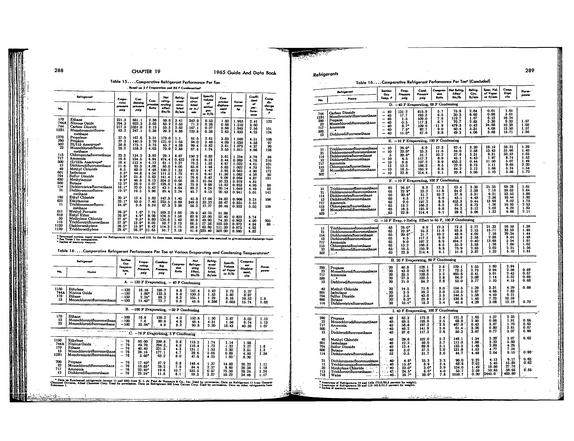
288 CHAPTER 19 1965 Guide And Data Book Table 15... .Comparative Refrigerant Performance Per Ton .
refid# DDwJwwL1vmje9LV9NzgaQXQNO1 page
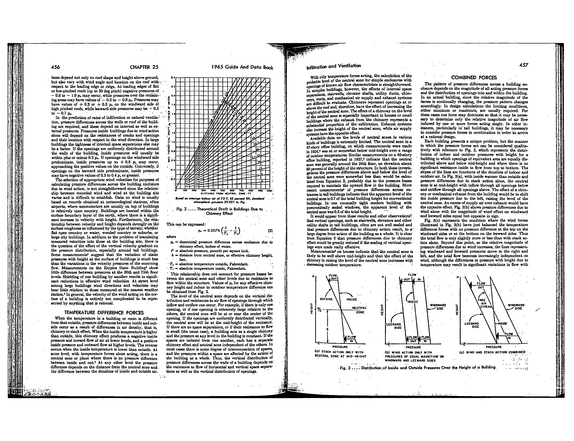
456 CHAPTER 25 1965 Guide And Data Book faces depend not only on roof shape and height above ground, but also vary with wind angle and location on the roof with'u respect to the leading edge or ridge.
refid# Z8o1Rk1kKR7Jm517wL4rx19Vd1 page
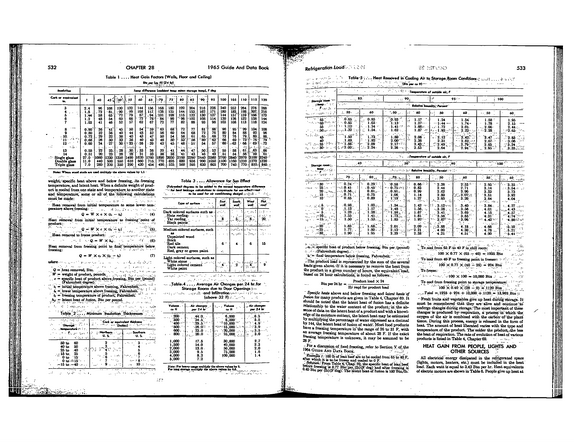
if I; i 532 CHAPTER 28 1965 Guide And Data Book Table 1 Heat Gain Factors (Walls, Boor and Ceiling) Stop-- (*| ft) {24 M famriafioa Temp difference (gmbectrf lasp mintij storage tcap), f deg Cork or equivalent in. 1 40 50: [55 60 65 -:70 . '75' so .
refid# rxMoEReR6Qrp03827KYYmYmRa1 page
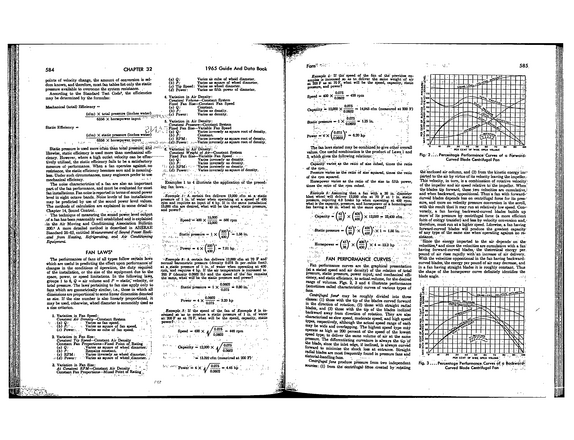
584 CHAPTER 32 1965 Guide And Data Book points of velocity change, the amount of conversion is sel dom known, and therefore, most fan tables list only the static pressure available to overcome the system resistance. . - According to the Standard Test Code*, the efficiencies may be determined by the formulas: (total) Efficiency = (cfm) X total pressure (inches watcr)^. 6356 X horsepower input Static Efficiency (cfm) X static pressure finches water) 6356 X horsepower, input . ..
refid# YGQkjoXk4D9XMN0X5NB4J63101 page
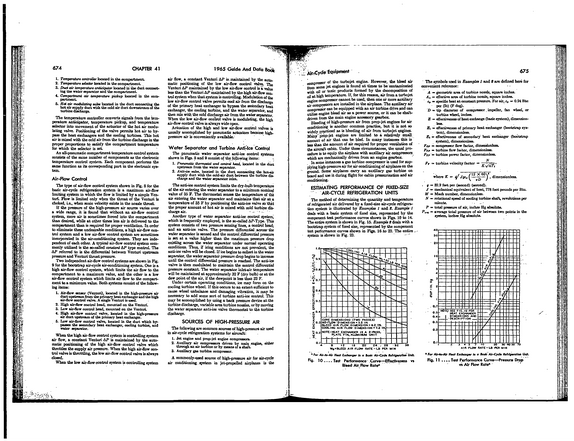
674 CHAPTER 41 1.
refid# 6rY1EoMGgNppO7a1e21YoO311 page
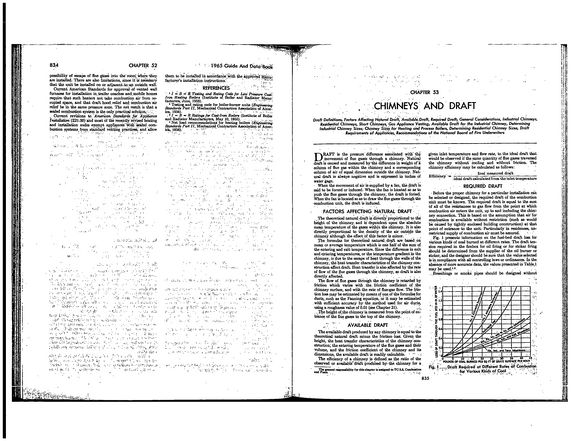
834 CHAPTER 52 possibility of escape of flue gases into the room; where1they are installed.
refid# gE32BXGdaqV1BBrwyjD6kznkL1 page