Refine
Estimated Years 1950-1959Clear
14,527 results foundRefine Search
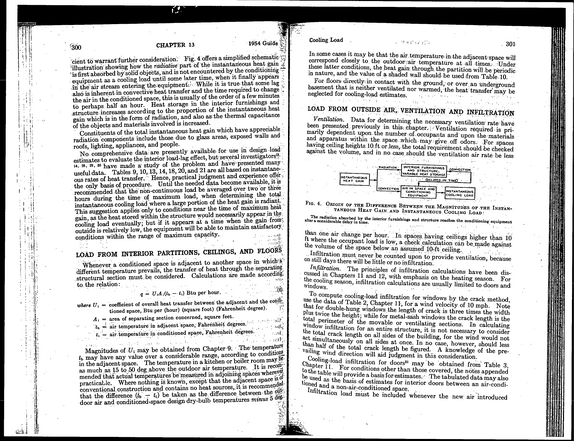
f3do CHAPTER 13 1954 Guide ;ciCnt to warrant farther consideration: Tig. 4 offers a simplified schematic 'illustration'showing how the radiative part of the instantaneous heat gain 'is first absorbed bysolid objects, and is hot encountered by the conditioning & equipment as a cooling load until some later time, when it finally appears * in' the5 air stream entering the-equipinen;i While it is true-that some lag also is inherent in convective heat transfer and the time required to change the air in the conditioned space, this is usually of the order of a few minutes to perhaps half an hour.
refid# kDm2g1ZEyZ51RevBqg1XMN5kE1 page
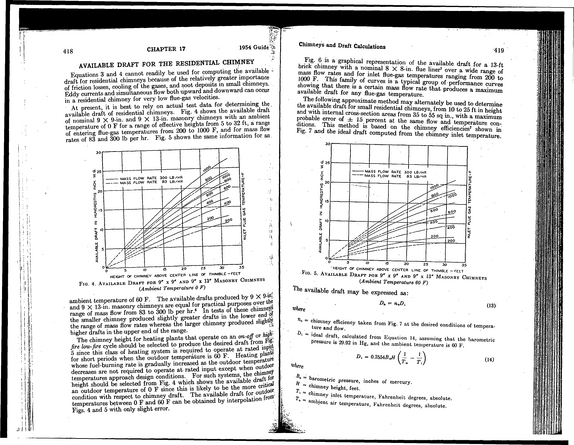
418 CHAPTER 17 1954 Guide % AVAILABLE DRAFT FOR THE RESIDENTIAL CHIMNEY Equations 3 and 4 cannot readily be used for computing the available draft for residential chimneys because of the relatively greater importance of friction losses, cooling of the gases, and soot deposits in small chimneys.
refid# mOqj3nxVLawaZ1pro8Bd3bwg1 page
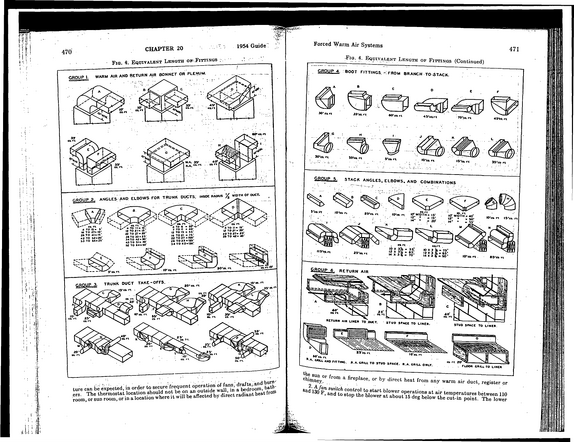
470 CHAPTER 20 Fig. 4.
refid# dDNoKpnrdDEwvDNq9eerJNqxq1 page
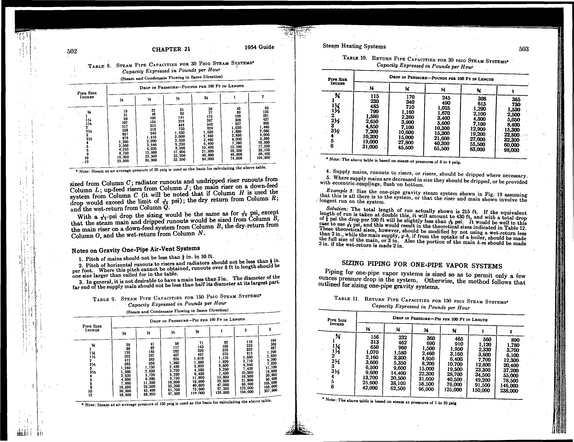
502 CHAPTER 21 1954 Guide Table 8.
refid# omKGDyRDrDvg0g9yxmXMZ9mo71 page
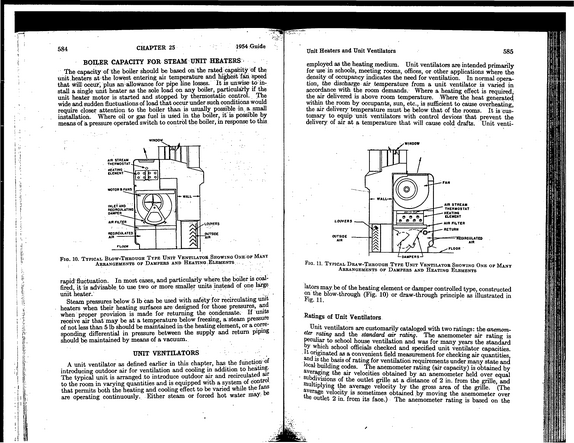
584 CHAPTER 25 1954 Guide BOILER CAPACITY FOR STEAM UNIT HEATERS The capacity of the boiler should be based on the rated capacity of the unit.heaters at the lowest entering air temperature and highest fan-speed' that will occur', plus an-allowance for pipe line losses.
refid# oDoyY57wMqa3XwbwKr770wog81 page
4 CHAPTER 1 1955 Guide Down-Feed System {Steam): A steam heating system in which the supply mains are above the level of the heating units which they serve.
refid# MJ077VxmRd8KgpRmLxao4q9qa1 page
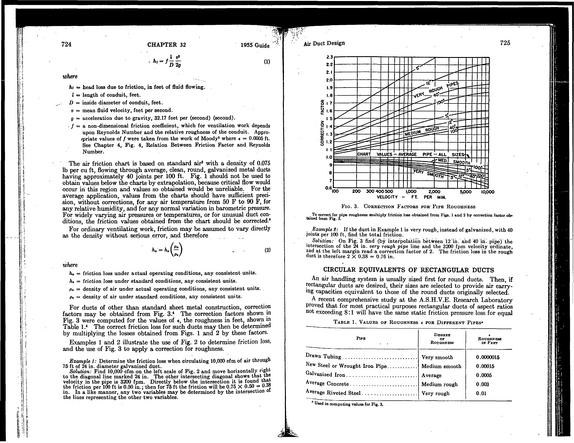
724 CHAPTER 32 1955 Guide . h, = (1) where hi = bead loss due to friction, in feet of fluid flowing.
refid# 71Zwbr4aJ1KyEjXn55xEBorw61 page
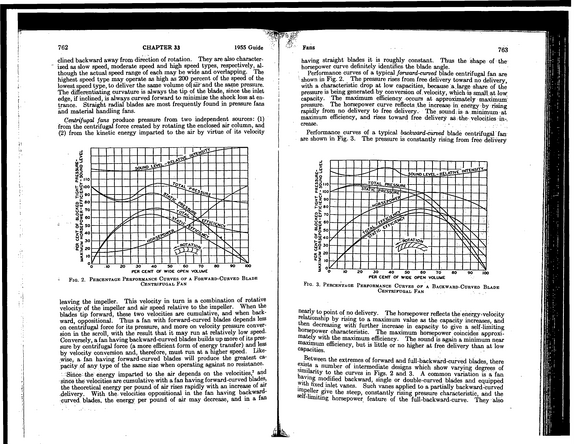
762 CHAPTER 33 1955 Guide clined backward away from direction of rotation.
refid# YjyYKDJQayM7yaMM11b5bBJok1 page
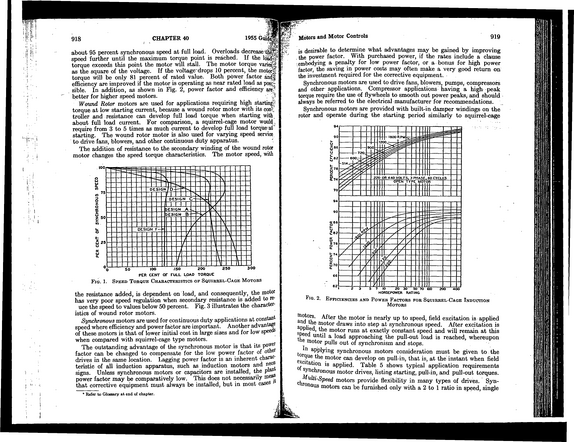
918 CHAPTER 40 1955 about 95 percent synchronous speed at full load.
refid# LpnLZ9aLmMm2K2bgLgzKpL9xX1 page
Copyright 1956 BY THE American Society op Heating and Air-Conditioning Engineers, Inc.
refid# O382vabLoyxYV0Lb55drzjDGw1 page
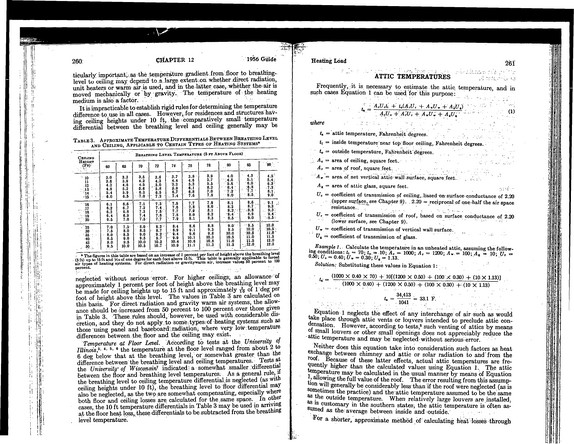
2.60: QHAPTER 12 1956 Guide tieularly' important;, as the temperature gradient from .floor to breathinglevel to ceiling may. depend to . a .large extent,on whether .direct radiation, unit heaters or warm air is used, and in the latter casey whether the air is moved mechanically or by gravity.
refid# ZJjoNm44VxE4DV2MNy4zXxY171 page
j ; ;ri ' i- 1{?
refid# G5Ymx0VRydK3bDR3xX6bK6vQr1 page
1136 CHAPTER 50 1956 Guide REFERENCES 1 Cooling a Small Residence with a Two-Horsepower Mechanical Condensing Unit, by H.
refid# g9jzQNLa0BDjXp6je38ze82L1 page
3 |C ,S:: ,V I- -I | -:;i llr;: i I|i; tfri i: S :< i, 30 CHAPTER 3 1957 Guide vapor present, The probable reasons for this inaccuracy are due to the effect of: X.
refid# 6R9zj7daDoJ71859gg3LgOpX11 page
378 CHAPTER 14 1957 Guide " Condensation of Moisture in Flues, by William R.
refid# rpXv6ZBROXQzrO7zGezzxYgR01 page