Refine
Estimated Years 1950-1959Clear
14,527 results foundRefine Search
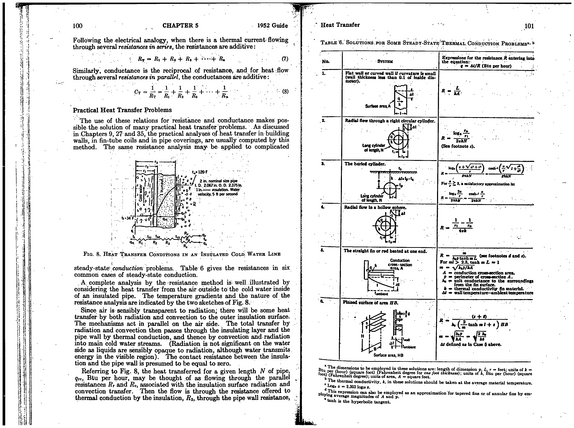
100 CHAPTER 5 1952 Guide Following the-electrical analogy, when there is a thermal current-flowing through several resistances in series, the resistances are additive: fiT = Ri + R + + -l" tt, (7) Similarly, conductance is the reciprocal of resistance, and for heat-flow through several resistances in parallel, the conductances are additive: 11 1 R--,--1-R---i-- 1-R-z---h (8) Practical Heat Transfer Problems ' The use of these relations for resistance and conductance makes pos sible the solution of many practical heat transfer problems.
refid# qMjqJgeMbpxz1gQ2EmxgbQ5k1 page
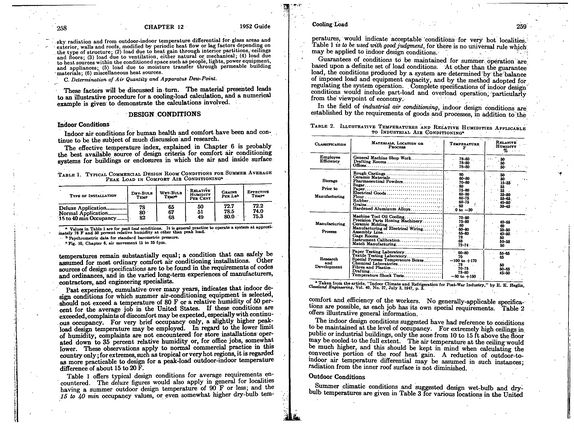
258 CHAPTER 12 1952 Guide sky radiation and from outdoor-indoor temperature differential for-glass areas and exterior, walls and roofs, modified by periodic heat flow or lag factors depending on . the type of structure; (2) load due to heat gain through interior partitions, ceilings and floors; (3) load due to ventilation, either natural or mechanical; (4) load due to heat sources within the conditioned space such as people, lights, power equipment, and appliances; (5) load due to moisture transfer through permeable building 'materials; (6) miscellaneous heat sources.
refid# 37zmkEvJvV0Rmxbxb5Lm7kwQa1 page
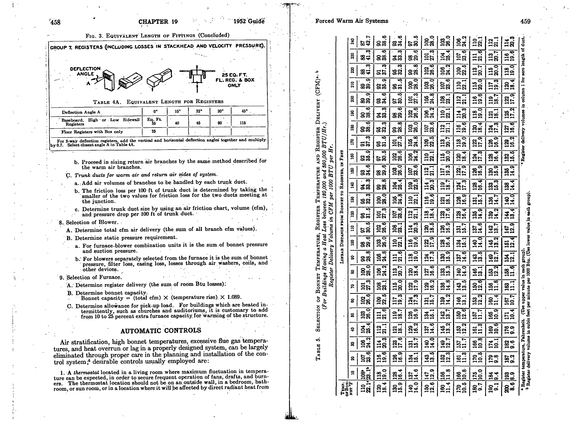
'458 CHAPTER 19 1952 Guide Fig. 3.
refid# ZBkbReb7nyOy9Z3zNn6vm5pKL1 page
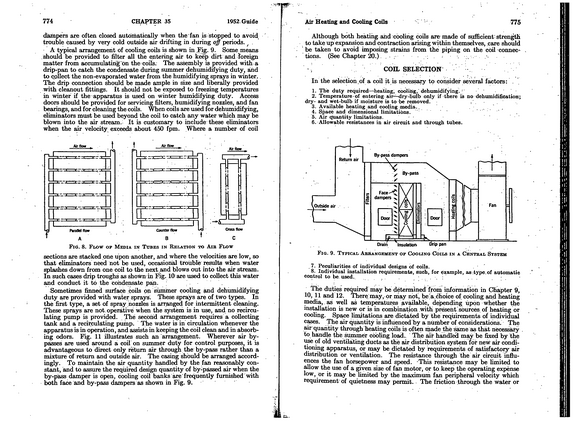
774 CHAPTER 35 1952.
refid# gLnJxJm6J5aKoDVeY8jXvvwQ1 page
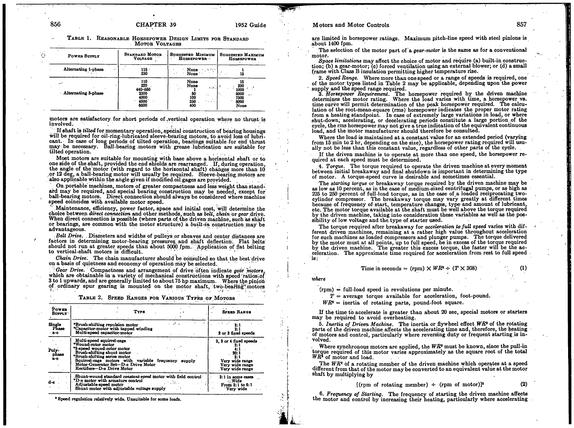
856 CHAPTER 39 1952 Guide Table 1.
refid# yXJrVjx7VO1GV9QmEgLpbdnd1 page
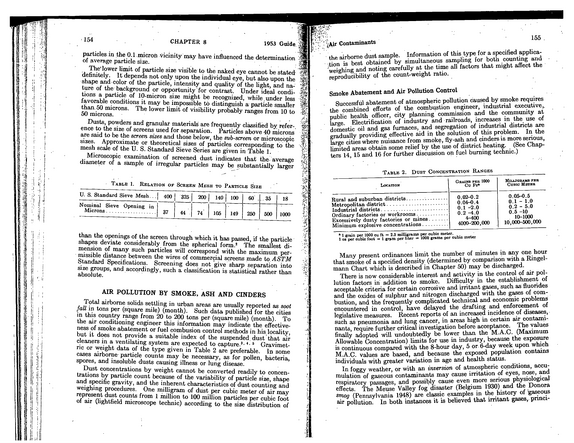
154 CHAPTER 8 1953 Guide.
refid# MG842B3q6ed0a3opLrxV5DOEk1 page
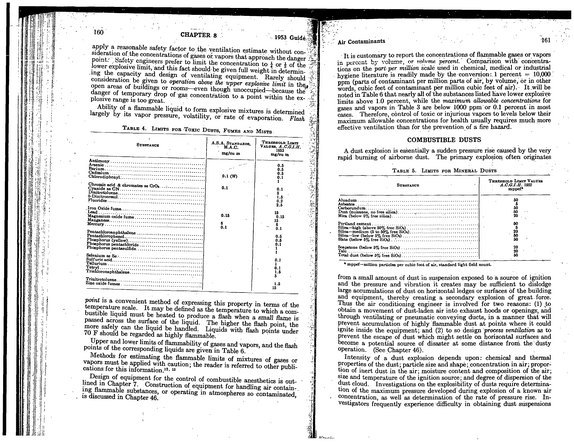
160 apply a reasonable safety factor to the ventilation estimate without con-; sideration of the concentrations of gases of, vapors that approach the danger / point.' .
refid# e1Mq5DaVE5K069bdBx6KZQkyq1 page
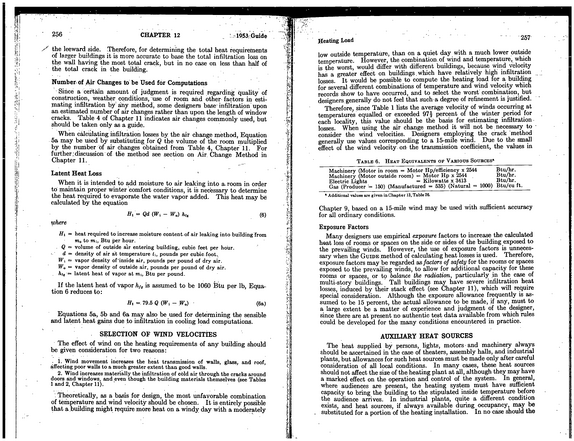
256 CHAPTER 12 1953 Guide the leeward side.
refid# mBB1Lp704Q1NZM3MVeqzkwz4O1 page
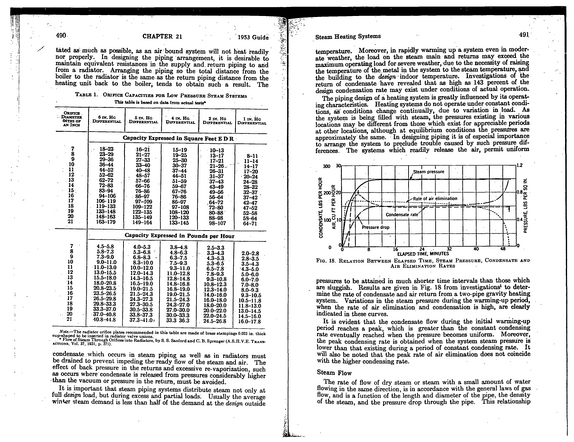
490 CHAPTER 21 1953 Guide tated as much as possible, as an air bound system will not heat readily nor properly.
refid# VKzY0LqX9mG42QVDLGdLN3on41 page
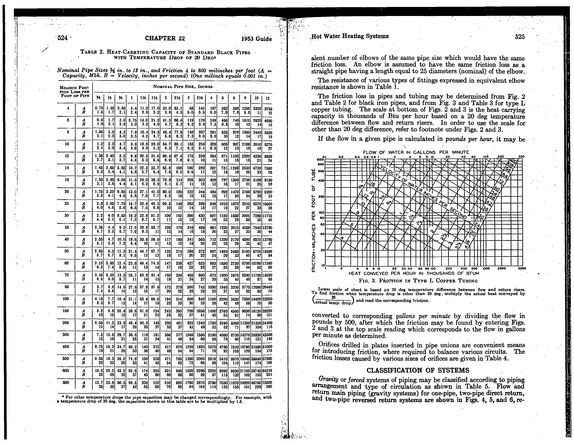
524' CHAPTER 22 1953 Guide Table 2.
refid# e7JqxEv4YV99xQgp2Gdyee0y91 page
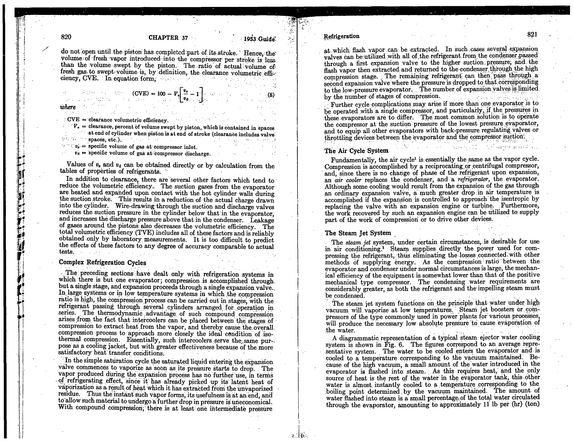
820 CHAPTER 37 1953 Guidg: do not open, until the piston has .completed part of itsstroke. ` Hence, the' volume of fresh vapor introduced-into the compressor per. stroke is lessthan the volume swept by the piston.
refid# 6RBrzKyXoJBBQ24owLxjQNzy31 page
ip m 5^
refid# K5y0XOaDjkZO4QzDn1d6gppK3 pages
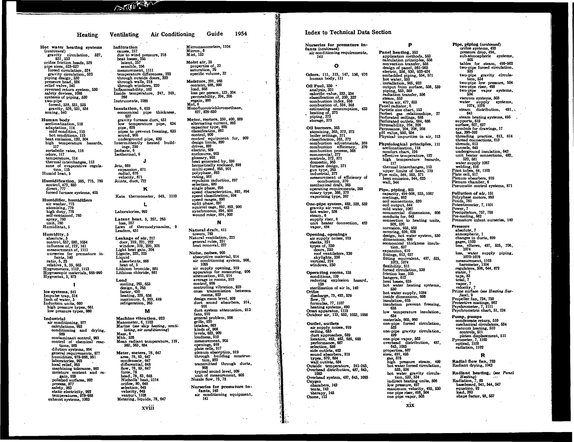
Heating Ventilating Air Conditioning Guide 1954 Hot water beating systems {continued) gravity circulation, 527, 531,533 orifice friction beads, 529 pipe sizes, 525-527 forced circulation, 524 gravity circulation, 523 piping design, 530 pressure head, 524 relief valve, 540 reversed return system, 530 safety devices, 1086 systems of piping, 530 two-pipe forced, 528, 531,535 gravity, 526, 531, 534 zoning, 540 Human body acclimatization, 118 adaptation. 114 cold condition, 115 hot conditions, 115 heat emission, 120, 304 high temperature hazards, 117 metabolic rates, 116 odors, 117 temperature, 114 thermal interchanges, 113 zone of evaporative regula tion, 115 Humid heat, 5 Humidification. 595, 775, 780 control, 472 , 880 direct, 777 forced furnace systems, 405 Humidifier, humidifiers air washer, 773 atomizing, 779 high duty, 779 self-contained, 780 spray, 780 unit, 780 Humidistat, 5 Humidity, 5 absolute, 5 control, 657, 880, 1054 infiuence of, 122,141 measurement of, 1111 nurseries for premature in fants, 140 ratio, 5, 25 relative, 5, 25,665 Hygrometers, 1112,1113 Hygroscopic materials, 988-990 Hygrost&t, 5, 872 I Ice systems. 841 Impulse trap. 514 Incn of water, 5 Induction units, 660 high pressure types, 661 low pressure types, 660 Industrial air conditioning, 977 calculations, 993 conditioning and drying, 989 contaminant control, 993 control of chemical reac tions, 989 dilution systems, 994 general requirements, 977 humidities, 978-988, 991 laboratories, 992 local relief, 995 machining tolerance, 992 moisture content and re gain, 988 polished surfaces, 992 process, 977 safety, 993 static electricity, 992 temperatures, 978-988 exhaust systems, 1003 Infiltration causes, 217 due to wind pressure, 218 heat losses, 255 latent, 257 sensible, 256 measurement. 1111 temperature differences, 223 through outside doors, 222 through walls, 218 through windows, 220 Inflammability, 162 Inside temperature, 247, 248, 266 Instruments, 1099 Insulation, 6, 625 economical pipe thickness, 637 pipe, 628 pipes to prevent freezing,.635 sound, 905 underground pipe, 639 Intermittently heated build ings, 259 Isobaric, 6 Isothermal, 6 j Jets, 669 expansion, 671 radial, 676 velocity, 671 Joints, duct, 722 K Kata thermometer, 549,' 1110 L Laboratories, 992 Latent beat, 5, 257, 265 loss, 257 Laws of thermodynamics, Leaders, 451 9 Leakage of air. 217 door, 219,221, 222 window, 219, 220, 301 Light heat gain, 304 Lignite, 322, 323 Liquid absorbents, 866 heat of, 5 Lithium bromide, 861 Lithium chloride, 861 Load cooling, 265, 653 design, 6, 265 factor, 450 heating, 239 , 658 maximum, 6, 393, 449 refrigeration, 265 M Machine vibration, 923 Manometer, 6, 1103 Marine (see ahip heating, venti lating, air conditioning) Mass, 6 Mbh.526 Mean radiant temperature, 119, 560, 563,884 Meter, meters, 78 , 647 area, 78, 85 , 647 condensate, 647 differentia], 648 flow, 78 , 85, 647 force, 78 head, 78 . 83 , 648 Nicholls' heat, 1114 orifice, 80, 648 selection, 649 velocity, 648 venturi, 1108 Metering, liquids, 78, 647 xviii Micromanometers, 1104 Micron, 6 Mist, 152 Moist air, 25 properties of, 32 saturation. 29 specific volume, 32 Moisture. 201,988 oontent, 988, 990 load, 868 loss per person, 122, 304 permeability, 204, 206 regain, 990 Mol, 6 Monofluorotrichloromethane, 827 , 828-830 Motor, motors, 259, 400, 889 alternating current, 893 capacitor type, 899 classification, 892 control, 900 control equipment for, 902 design limits, 890 drives, 892 electric, 889 enclosures, 903 glossary, 903 heat generated by, 259 hermetically enclosed, 898 multi-speed, 895, 901 polyphase, 893 rating, 901 repulsion induction, 897 selection, 889 single phase, 896 speed characteristics, 892, 894 speed classification, 904 speed ranges, 890 split phase, 897 squirrel cage, 892, 893, 900 synchronous, 894 , 900 wound rotor, 894,900 N Natural draft, 411 towers, 783 Natural ventilation, 225 Noise, noises, 905 absorptive material, 914 air conditioning system, 906, 1095 air supply opening, 919 apparatus for measuring, 906 attenuation, 913, 914 average in rooms, 910 control. 906. controlling vibration, 923 cross transmission between rooms, 922 design room level, 909 duct sound absorbers, 914, 916 duct system attenuation, 913 fans, 910 general problem, 906 grille, 920 intakes, 692 kinds of, 908 levels, 683, 909 loudness, 910 measurement, 905 openings, 919 plate cells, 917 plenum absorption, 919 through building construc tion, 922 transmitted through ducts, 908 typical sound level, 909 unit of measurement, 905 Nozzle flow, 75, 78 Nurseries for premature in-, fants, 140 air conditioning equipment, 141 Index to Technical Data Section Nurseries for premature in fants (continued) air conditioning requirements, 141 o Odors.
refid# 6p46wEjDRdjOk78YMwRZ2NKm1 page
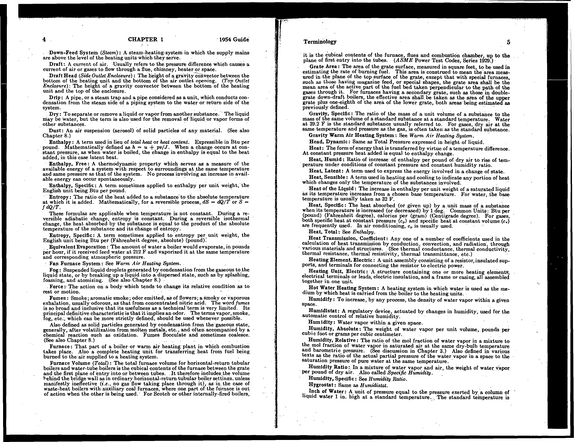
4 CHAPTER 1 1954 Guide Down-Feed Sys tein (Steam): A steam-heating- system in which the supply mains are above the level of the heating units which they serve.
refid# 6RVaqxXKZoMaJZE7Xe5oJbdw31 page
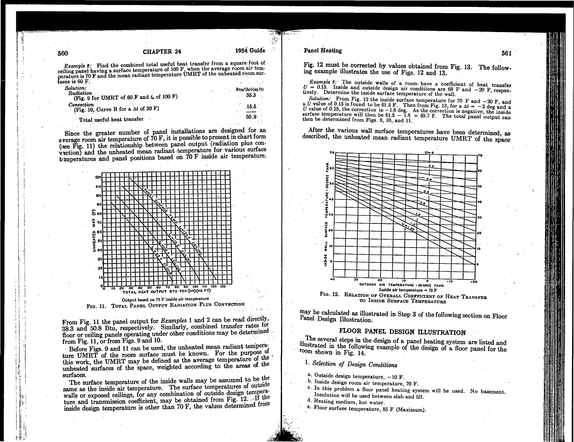
560 CHAPTER 24 1954 Guide Example 8: Find the combined total useful heat transfer from a square'foot of ceiling panel haying a surface temperature of 100 F, when the average room air tem perature is 70 F and the mean radiant temperature UMRT of the unheated room sur faces is 60 F.
refid# Lp31KQyqYp18Oq5RzOwkmdvRg1 page