Refine
Estimated Years 1950-1959Clear
14,527 results foundRefine Search
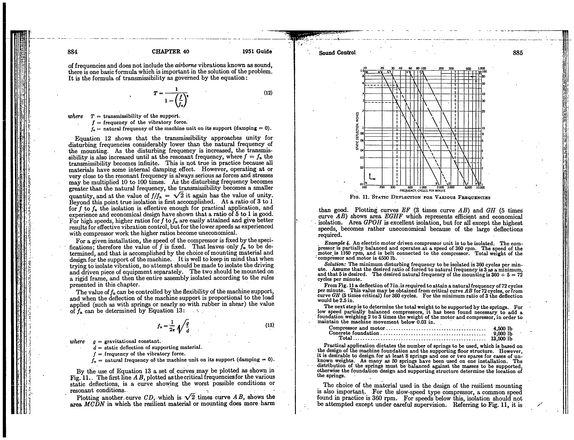
884 CHAPTER 40 1951 Guide of frequencies and does not include the airborne vibrations known as sound, there is one basic formula which is important in the solution of the problem.
refid# J2Xkjo6bbNawkp88gXvKYNzZ1 page
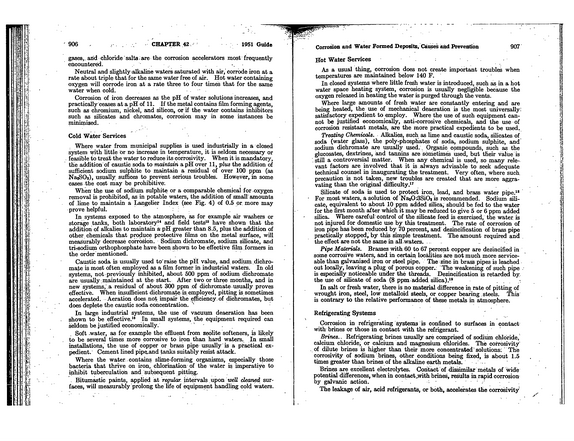
906 CHAPTER 42 1951 Guide gases,, arid chloride salts are the corrosion accelerators most frequently encountered.
refid# 3NbbX45K4Mz6bdJz5xLxG6nxE1 page
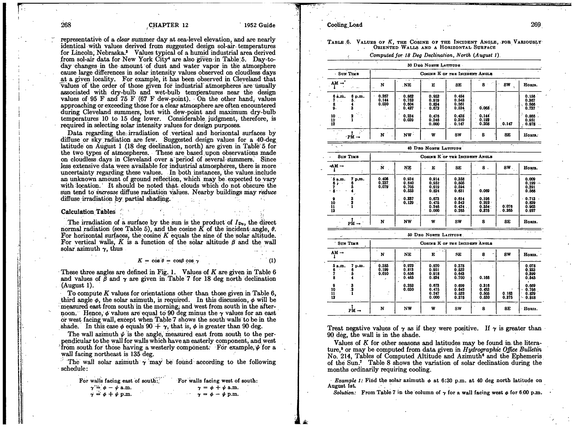
268 CHAPTER 12 1952 Guide representative of a clear summer day at sea-level elevation, and are nearly identical with values derived from suggested design sol-air. temperatures for Lincoln, Nebraska.'
refid# OZ1r7nOqXGqN8aRvwNkgOoDp1 page
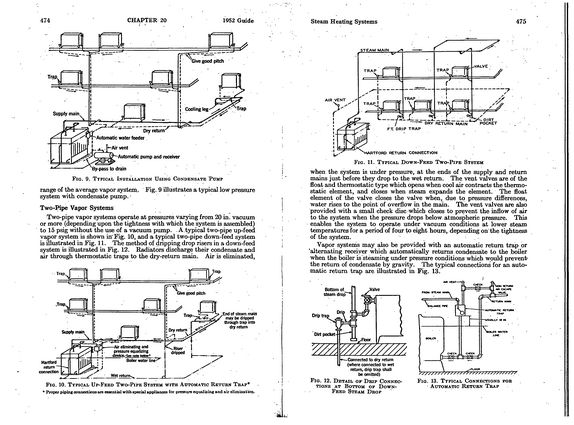
474 CHAPTER 20 1952 Guide Steam Heating Systems 475 range of the average vapor system.
refid# 0GKrkgr2379mYLVQz5DmeZpx1 page
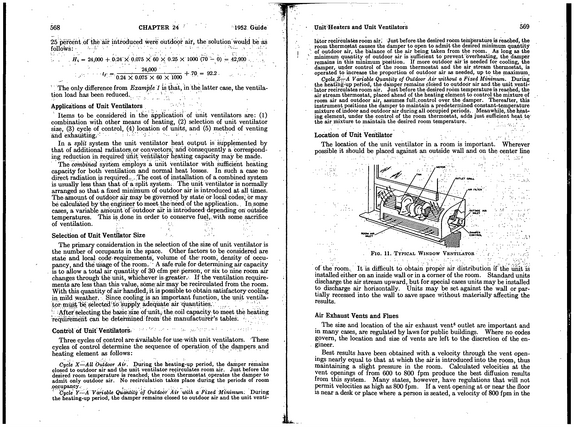
568 CHAPTER 24 1952 Guide 25 percent of the air introduced were outdoor air, the solution would be as follows:- '!'
refid# 26Dodpo7vXEmZK8LxN1zN2xg1 page
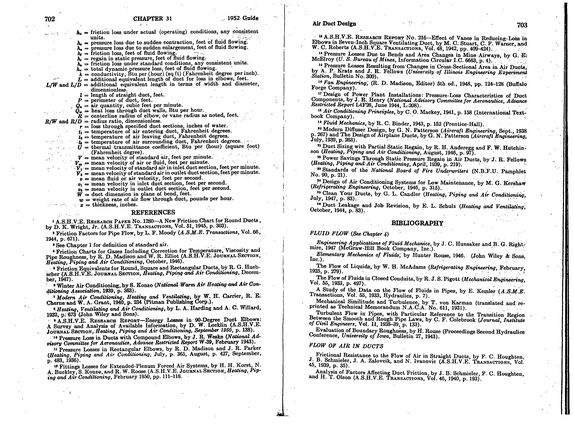
702 CHAPTER 31 1952: Guide -: Ao = frietion loss under actual (operating) conditions, any consistent Units
refid# jNBBkvaD8g7QV08BdB75Qm6zZ1 page
v.
refid# zQK438LV733K5xd6Yr2eE4b6a1 page
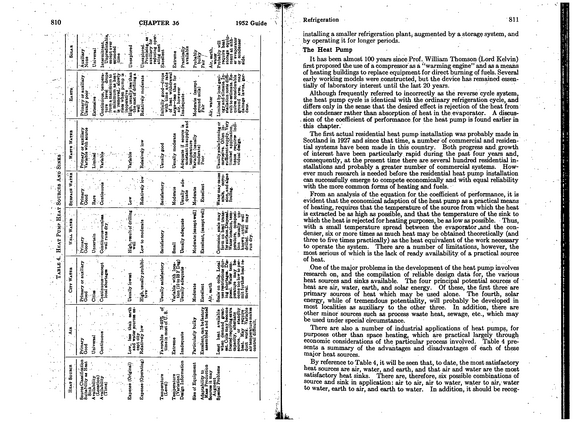
H eat P omp H e a t Sources A nd Sin ks 810 s s <8 8 HI* < S B S' < 8H < . ao < d: 00 at . < H eat Source - Cit y Water Well Water .'
refid# kmMkbwaR16E2RnOLNwoEqbMVJ1 page
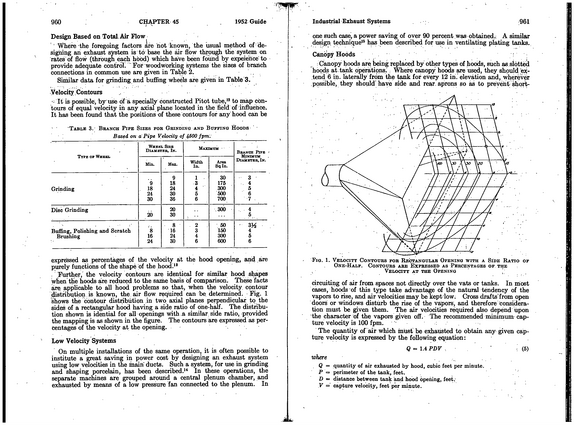
960 CHAPTER 45 1952 Guide I^ Design Based on Total.
refid# DDV14DOVo93Yo0YRKY5VGGyoo1 page
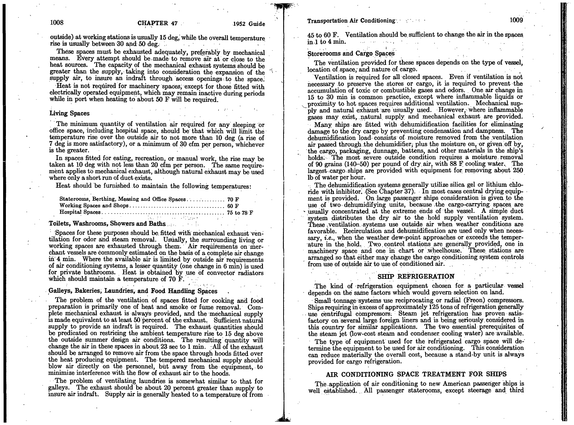
1008 CHAPTER 47 1952 Guide outside) at working stations is usually 15 deg, while the overall temperature rise is usually between 30 and 50 deg. '..
refid# x1Krq8NGGxYpoe1w5RKJ9JjB11 page
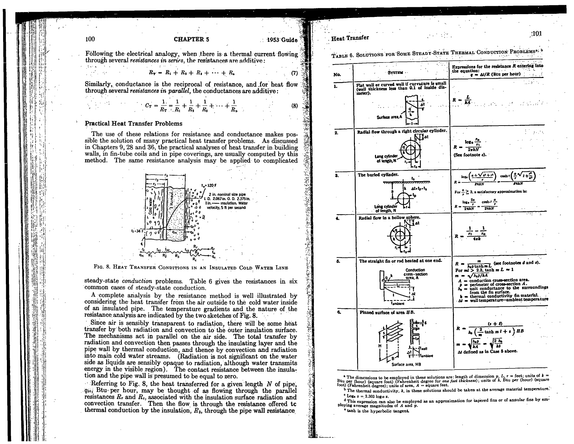
100 CHAPTER 5 1953 Guide Following the electrical analogy, when .there is a thermal current flowing through several resistances in series, the resistances are additive : Rr -- Ri + R* + R* + * + Ra (7) Similarly, conductance is the reciprocal of resistance, and .for heat flow through several resistances in parallel, the conductances are additive: Ct = jS R1, + RIt + Ri, (8) Practical Heat Transfer Problems The use of these relations for resistance and conductance makes pos sible the solution of many practical heat transfer problems.
refid# jm8jv4yKD6JZ4rxB80q6Q2ErN1 page
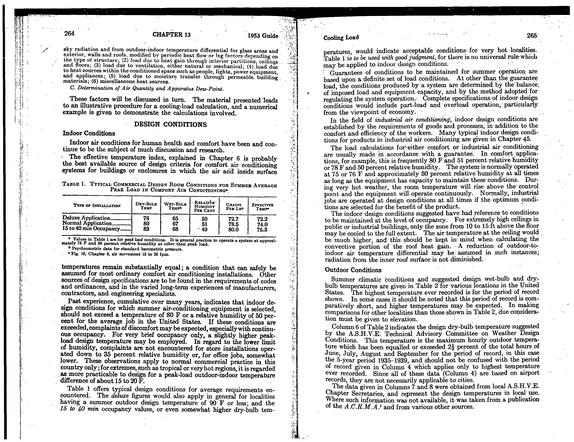
264 CHAPTER 13 1953 Guide sky radiation and from outdoor-indoor temperature differential for glass areas and exterior, walls and roofs, modified by periodic heat flow or lag factors depending on the type of structure; (2) load due to heat gain through interior partitions, ceilings and floors; (3) load due to ventilation, either natural or mechanical; (4) load due to heat sources within the conditioned space such as people, lights, power equipment and appliances; (5) load due to moisture transfer through permeable building materials; (6) miscellaneous heat sources.
refid# evKvjEmV6aVg6dyj1LapK6aYy1 page
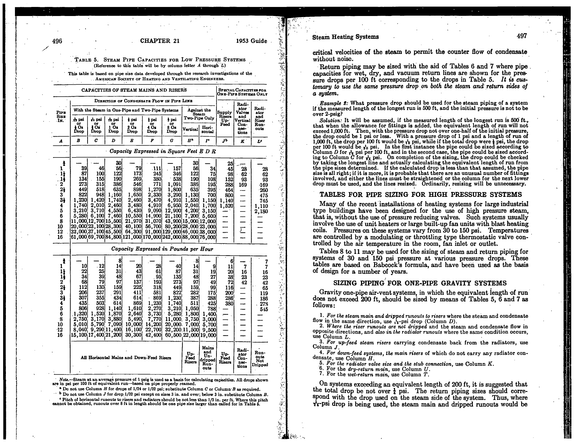
496 CHAPTER 21 1953 Guide Table 5.
refid# 9mepg9kyok0L2bj5bV5wndg71 page
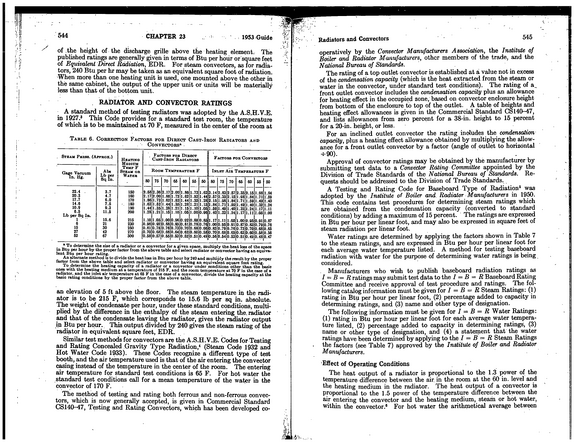
544 CHAPTER 23 1953 Guide of the height of the discharge grille above the heating element.
refid# G5qeegmvjvxp8EdvR2nG7v2eV1 page
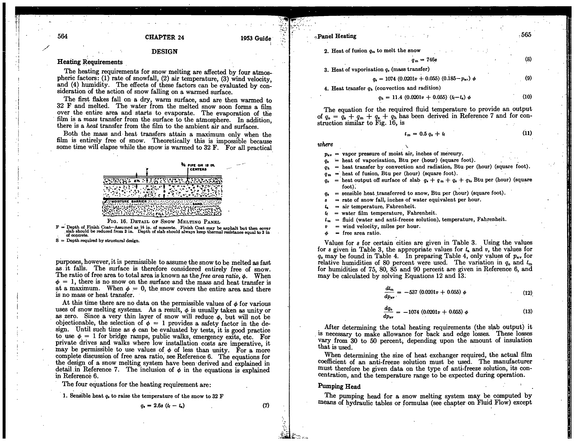
564 CHAPTER 24 1953 Guide DESIGN Heating Requirements The heating requirements for snow melting are affected by four atmos pheric factors: (1) rate of snowfall, (2) air temperature, (3) wind velocity, and (4) humidity.
refid# 2e966gvRb2p5dkrOLNJBqxKp1 page