Refine
Estimated Years 1950-1959Clear
21,856 results foundRefine Search
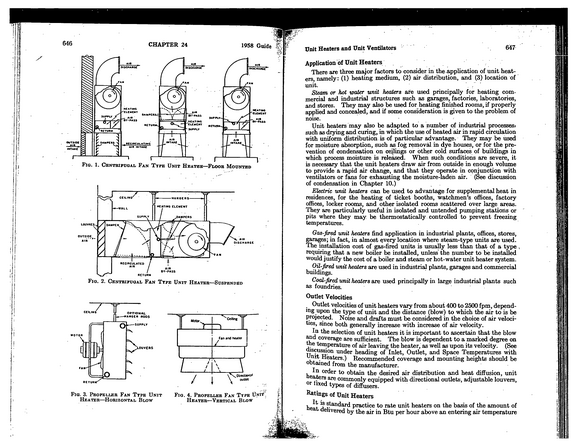
646 CHAPTER 24 1958 Guide Fiq. 2.
refid# RaGeyMJqdBEezr0ebJ80vpoqz1 page
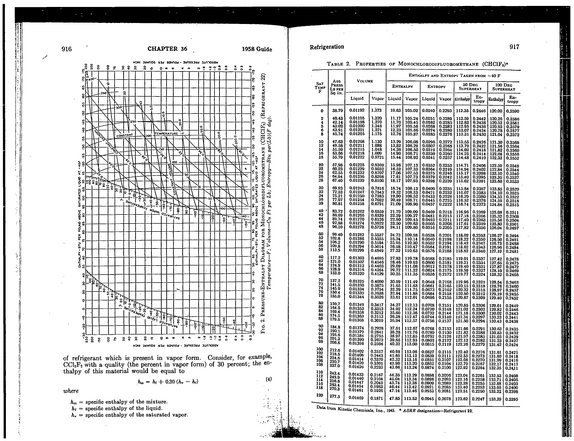
916 CHAPTER 36 1958 Guide ob ss g& 3s 5 a?
refid# 7xBgopR6dE0kD30xRZxXp64R1 page
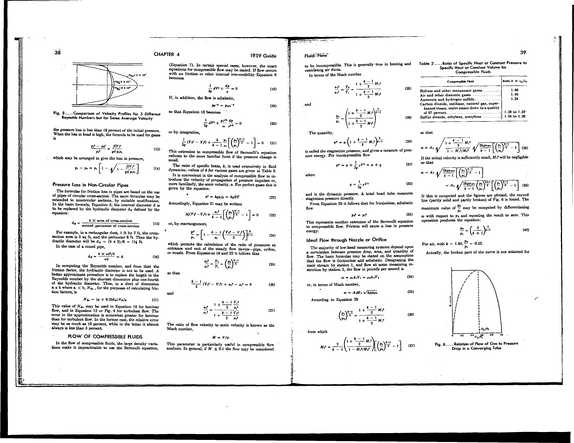
38 CHAPTER 4 1959 Guide (Equation 7).
refid# 9JLE0maOLx7pqzGk91KpVyxvR1 page
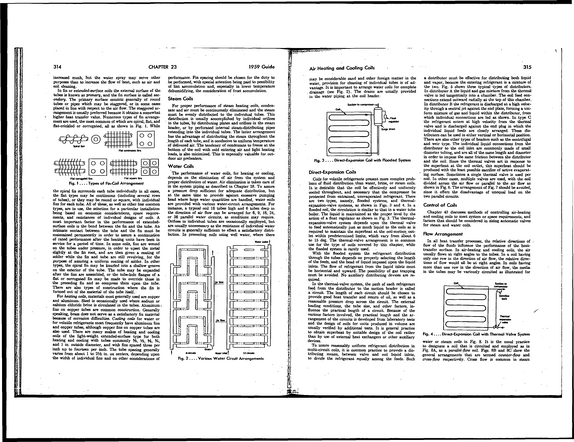
314 CHAPTER 23 1959 Guide increased much, but the water spray may serve other purposes than to increase the flow of heat, such as air and coil cleaning.
refid# oeb2ZexM0y8wmxNr0XdJ3LZxX1 page
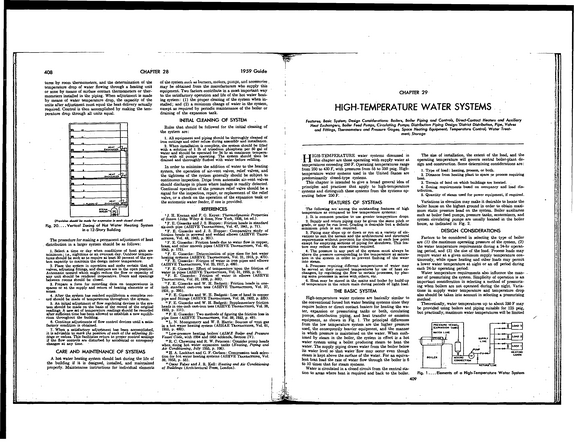
408 CHAPTER 28 1959 Guide tures by room thermometers, and the determination of the temperature drop of water flowing through a heating unit or zone by mp-ana of surface contact thermometers or ther mometers installed in the piping.
refid# KRzn7BzOzN5LOyO9VGgk4z3zw1 page
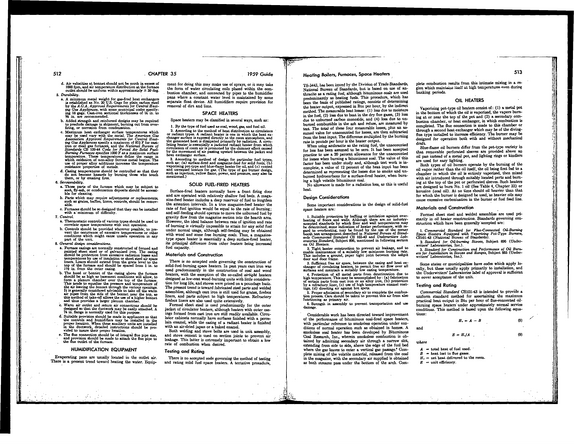
512 .
refid# x5Qp5jXE8mgr59MDGXOVZ65pm1 page
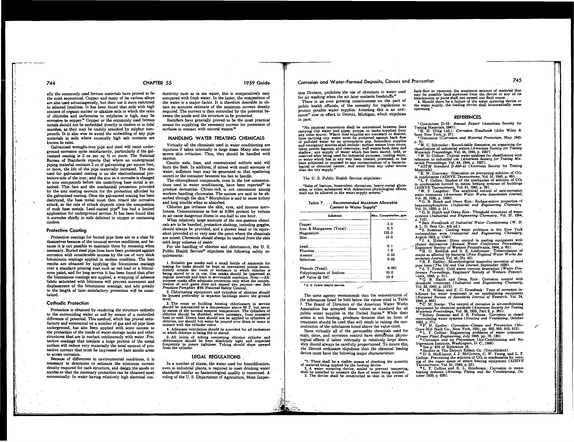
744 CHAPTER 55 1959 Guide ally the commonly used ferrous materials have proved to be the most economical.
refid# 0JLOV3MQExXM1Rm28wdXg36qm1 page
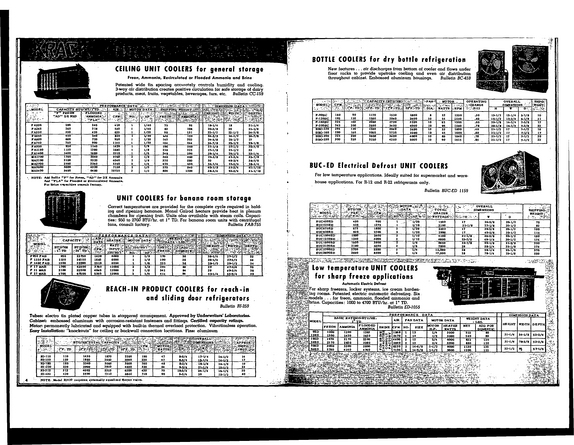
CEILING UNIT COOLERS for general storage Freon, Ammonia, Recirculated or Flooded Ammonia and Brine Patented wide fin spacing accurately controls humidity and cooling. 3-way air distribution creates positive circulation for safe storage of dairy products, meat, fruits, vegetables, beverages, furs. etc.
refid# QgGeDqaNdp7Ln81KrbB9GEyN61 page
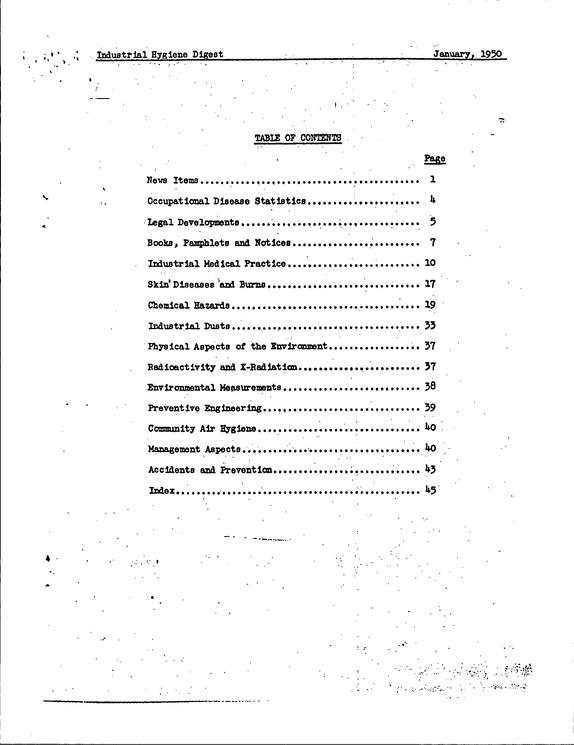
Industrial Hygiene Digest_____________ ___________ ;January, 1950 I. ' " *.
refid# 7RXvy32azdxpMXx67L98zMdZE1 page
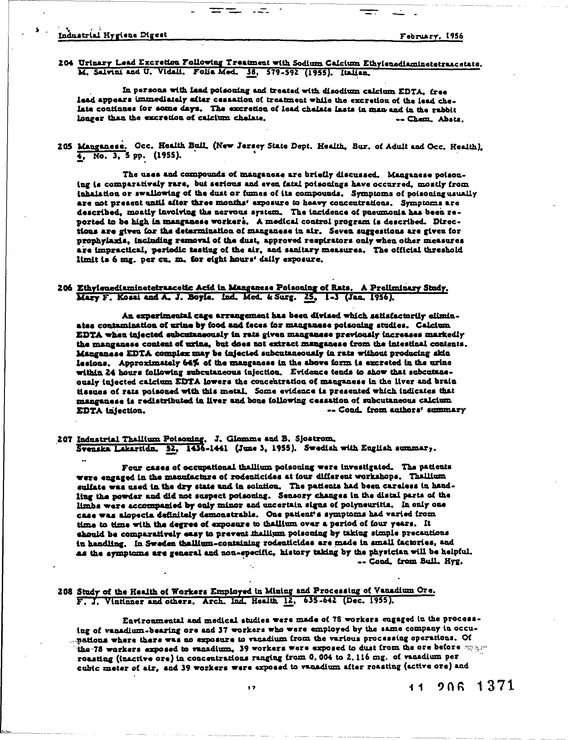
Industrial Hygiene Dlgeet February, 1956 204 Urinary Lasd Excretion following Treatment with Sodium Calcium Ethylaaa^amiwetetraacctate.
refid# baw3jYw8xL46ZzDVapQ58B2ao1 page
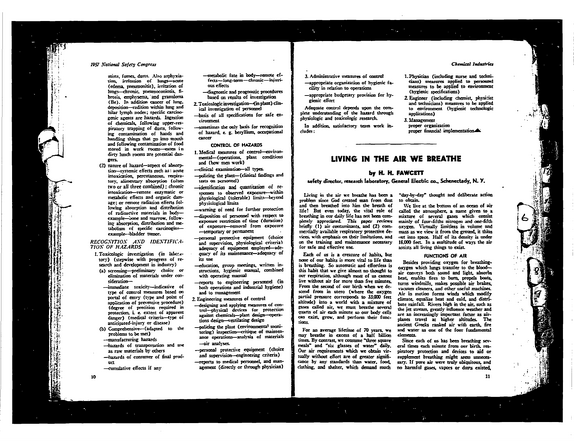
1957 National Safety Congress mists, fumes, dusts.
refid# v123z46pLpO29N2YQ1y2RxGM61 page
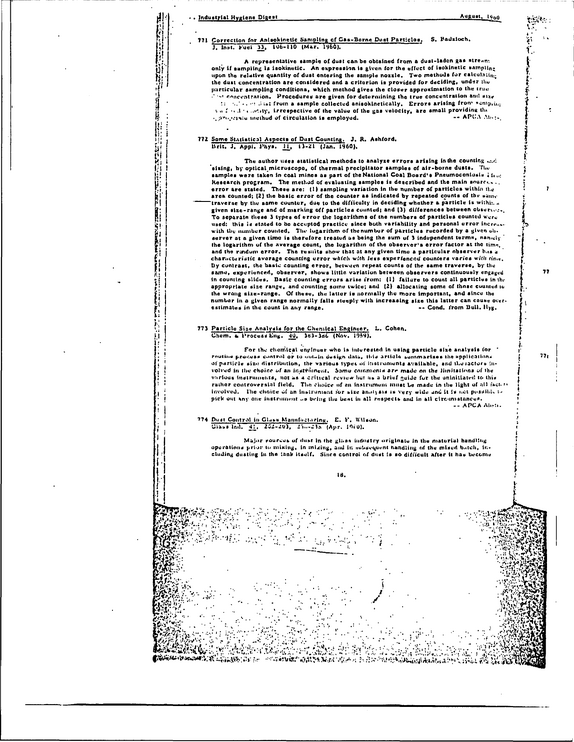
* Industrial Hygiene Digest August.
refid# VjYnK0GxKVaZKyD6kRZZQBBRj1 page
/9d/ Xattnnal Safety Congress On every side, and as far as the ere could st.< Into the heavy distance, tall chimneys, crowding on each other, and presenting- that endless repetition of the same dull. ugly form, which is the horror of oppressive dreams, poured out their plague or smoke, obscured the light. and made foul the melancholy air.
refid# wg807LqYGv7MB4ezadv9Zg0B31 page
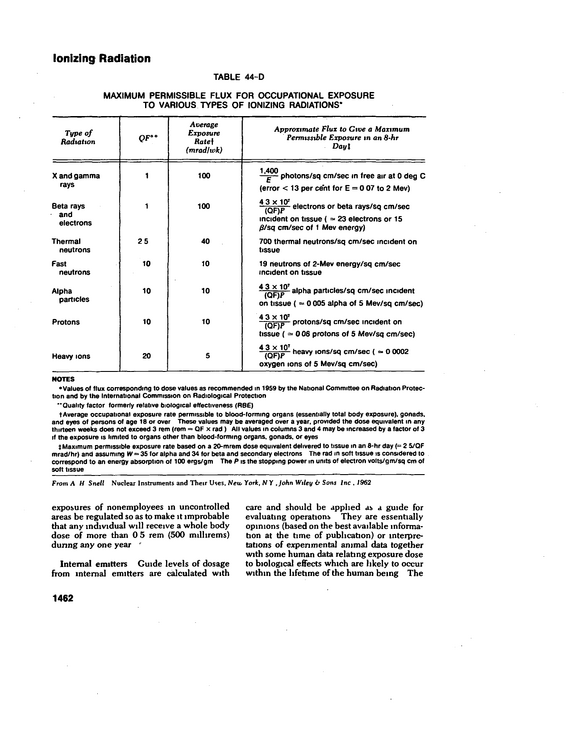
Ionizing Radiation TABLE 44-D MAXIMUM PERMISSIBLE FLUX FOR OCCUPATIONAL EXPOSURE TO VARIOUS TYPES OF IONIZING RADIATIONS* Type of Radiation QF` Average Exposure Rate\ (mradlwk) Approximate Flux to Give a Maximum Permissible Exposure in an 8-hr Dayt X and gamma rays Beta rays and electrons Thermal neutrons Fast neutrons Alpha particles Protons Heavy ions 1 1 25 10 10 10 20 100 100 40 10 10 10 5 1 '4g00 photons/sq cm/sec in free air at 0 deg C (error < 13 per cent for E = 0 07 to 2 Mev) 4 3 x 10* "(QF)P e,ectrons or 1)6,3 rays/sq cm/sec incident on tissue ( = 23 electrons or 15 /8/sq cm/sec of 1 Mev energy) 700 thermal neutrons/sq cm/sec incident on tissue 19 neutrons of 2-Mev energy/sq cm/sec incident on tissue 4 ~3|qxf)1pflT alpha particles/sq cm/sec incident on tissue ( = 0 005 alpha of 5 Mev/sq cm/sec) 43|qXpj1p07 protons/sq cm/sec incident on tissue ( = 0 06 protons of 5 Mev/sq cm/sec) 4 3 x 10⁷ heavy lons/sq cm/sec ( = 0 0002 oxygen ions of 5 Mev/sq cm/sec) NOTES `Values of flux corresponding to dose values as recommended in 1959 by the National Committee on Radiation Protec tion and by the International Commission on Radiological Protection " Quality factor formerly relative biological effectiveness (R6E) tAverage occupational exposure rate permissible to blood-forming organs (essentially total body exposure), gonads, and eyes of persons of age 18 or over These values may be averaged over a year, provided the dose equivalent in any thirteen weeks does not exceed 3 rem (rem = QF x rad) All values in columns 3 and 4 may be increased by a factor of 3 if the exposure is limited to organs other than blood-forming organs, gonads, or eyes t Maximum permissible exposure rate based on a 20-mrem dose equivalent delivered to tissue in an 8-hr day (= 2 5/QF mrad/hr) and assuming IV = 35 for alpha and 34 for beta and secondary electrons The rad in soft tissue is considered to correspond to an energy absorption of 100 ergs/gm The P is the stopping power in units of electron volts/gm/sq cm of soft tissue From A H Snell Nuclear Instruments and Their Uses, New York, N Y , John Wiley b Sons Inc , 1962 exposures of nonemployees in uncontrolled areas be regulated so as to make it improbable that any individual will receive a whole body dose of more than 0 5 rem (500 millirems) during any one year ' Internal emitters Guide levels of dosage from internal emitters are calculated with care and should be applied as a guide for evaluating operations They are essentially opinions (based on the best available informa tion at the time of publication) or interpre tations of experimental animal data together with some human data relating exposure dose to biological effects which are likely to occur within the lifetime of the human being The 1462
refid# v303NnxeBXQk2OjLDjJgoZvE1 page
V Research Center February 25, 1952 436-R4* -- / ; HatORiSoApR FILE Donald A.
refid# ZBGRVQJOqjYzvrVpwB20KdGG019 pages