Refine
Estimated Years 1950-1959Clear
21,856 results foundRefine Search
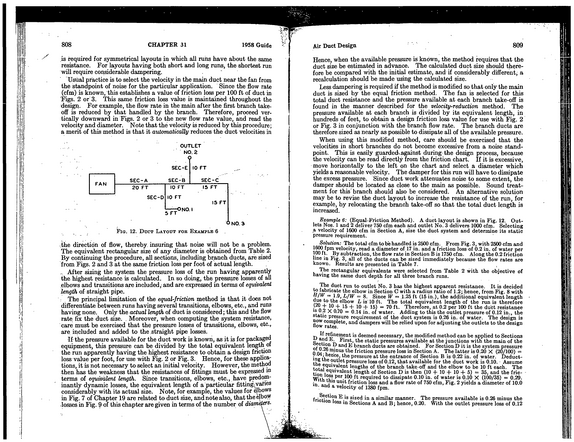
808 CHAPTER 31 1958 Guide is required for symmetrical layouts in which all runs have about the same resistance.
refid# 6BazkgQ5gxOro2Qz97Lp2gjYd1 page
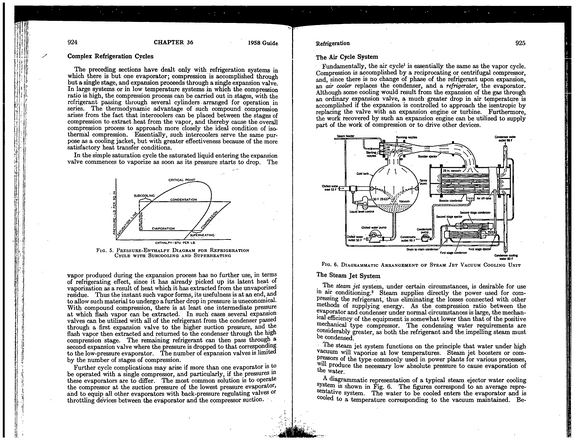
924 CHAPTER 36 1958 Guide Complex Refrigeration Cycles The preceding sections have dealt only with refrigeration systems in which there is but one evaporator; compression is accomplished through but a single stage, and expansion proceeds through a single expansion valve.
refid# 65Br0m0kM6G7Ryn5oOnOXkKxg1 page
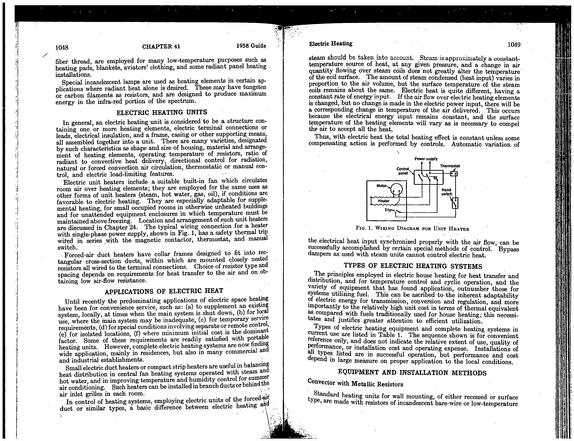
1048 CHAPTER 41 1958 Guide fiber thread, are employed for many low-temperature purposes such as heating pads, blankets, aviators' clothing, and some radiant panel heating installations.
refid# OE0O98YadXwDDbZOD5m4gY60M1 page
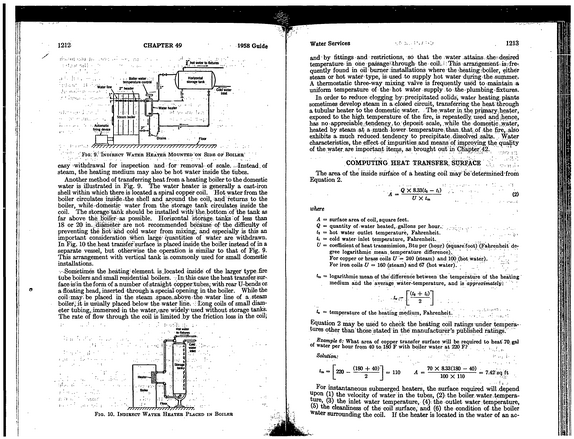
1212, CHAPTER 49 1958 Guide easy withdrawal for inspection and for removal of scale. .
refid# em91vbe4My0b1D4O2y4E0B1qG1 page
X 6 1958 Guide FITZGIBBONS BOILER CO., INC., 101 Park Ave., New York 17, N.
refid# dnXbg4z1yYGLpL1zq51RO1Bb51 page
24 1958 Guide FURNACE PIPE AND FIT Aladdin Heating Corp., *190 Babcock A Wilcox Co., The, *362 TINGS American Foundry A Furance Co., Cleaver-Brooks Co., *364-366 United States Register Co., *270- 82-83 Columbia Boiler Co. of Pottstown, 271 E.
refid# 5L1eeQpLrea9BagOqk4Z1rLGD1 page
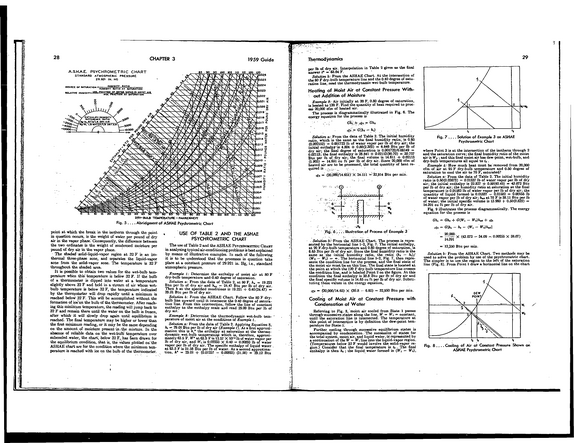
28 CHAPTER 3 1959 Guide point at which the break in the isotherm through the point in question occurs, is the weight of water per pound of dry air in the vapor phase.'
refid# 5kR6xqgXwZZKnobLLrMxN9YrD1 page
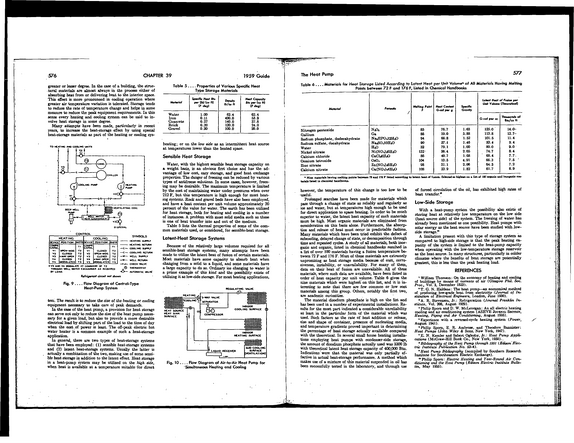
576 CHAPTER 39 1959 Guide greater or lesser degree.
refid# aBdLZDRG0pvRgo0oJXnaKBbGN1 page
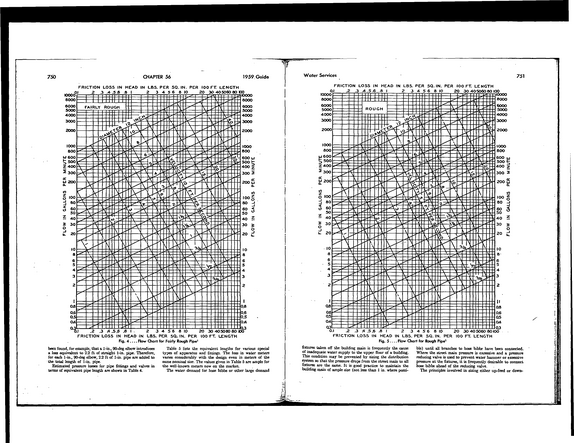
750 CHAPTER 56 1959.
refid# p2vzLbrma26w0Q240e58X6G8X1 page
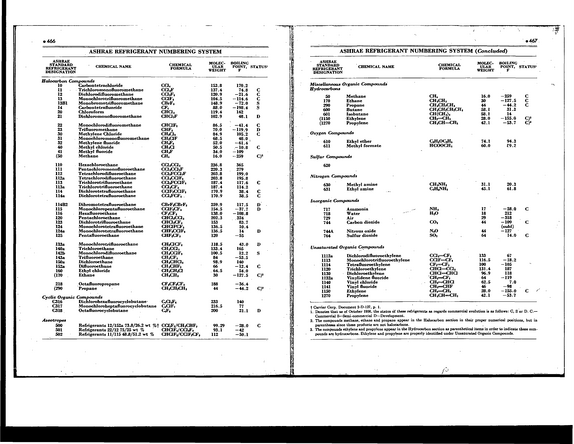
466 ASHRAE REFRIGERANT NUMBERING SYSTEM ASHRAE STANDARD REFRIGERANT DESIGNATION CHEMICAL NAME CHEMICAL FORMULA MOLEC BOILING ULAR POINT, STATUS1 WEIGHT F Halocarbon Compounds 10 Carbontetrachloride 11 Trichloromonofluoromethane 12 Dichiorodilluoromethane 13 Monochlorotriiluoromethane 13B1 Monobromotrifluoromethane 14 Carbontetrafluoride 20 Chloroform 21 Dichloromonofluoromethane 22 Monochlorodifluoromethane 23 Trifluoromethane 30 Methylene Chloride 31 Monochloromonofluoromethane 32 Methylene fluoride 40 Methyl chloride 41 Methyl fluoride (SO Methane 110 111 112 112a 113 113a 114 114a Hexachloroethane Pentachloromonofluoroethane Tetrachlorodifluoroethane Tetrachlorodifluoroethane Trichlorotrifluoroethane Trichlorotrifluoroethane Dichlorotetrafluoroethane Dichlorotetrafluoroethane 114B2 115 116 120 123 124 124a 125 Dibromotetrafluoroethane Monochloropentafluoroethane Hexafluoroethane Pentachloroethane Dichlorotrifluoroethane Monochlorotetrafluoroethane Monochlorotetrafluoroethane Pentafluoroethane 133a 140a 142b 143a 150a 152a 160 (170 Monochloro trifluoroethane Trichloroethane Monochlorodifluoroethane Trifluoroethane Dichloroethane Difluoroethane Ethyl chloride Ethane 218 (290 Octafluoropropane Propane ecu ecu?
refid# jy8q5XVrKbd4vQMoojqoG8NZ51 page
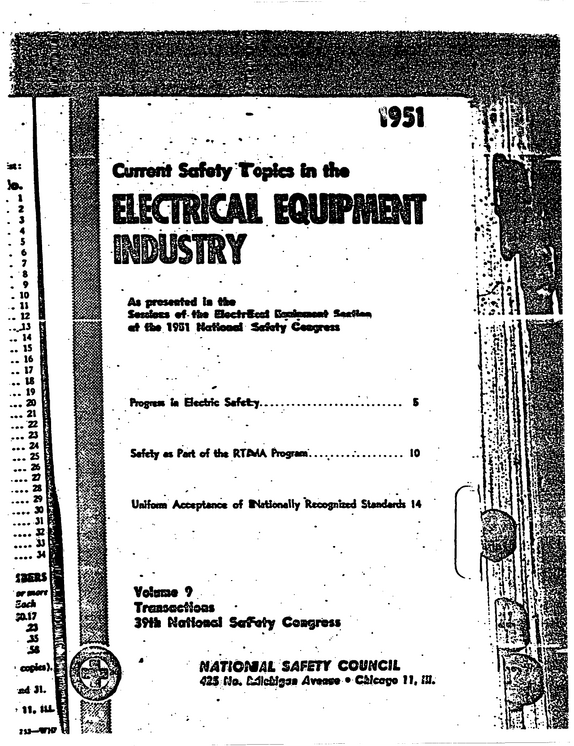
f fte 1951 NoHoosI SoSsty Cwyin ftoyw la Dtcfatc Safety.................................... .......... 5 Safety at Part of tin RTMA Pwyaa. 10 Untfooa Acceptance of frtrtionelty Rtcognad Standards 14 VolfiSM 9 Traufldoat 391k Nofioaol SoMy Coagreti *' N4TtOM4L SAFETY COUNCIL 43S Hfc CMga 4mac* C&lcog* II. 19.
refid# rx4ekZepXzepd1n13gMXBDe8J1 page
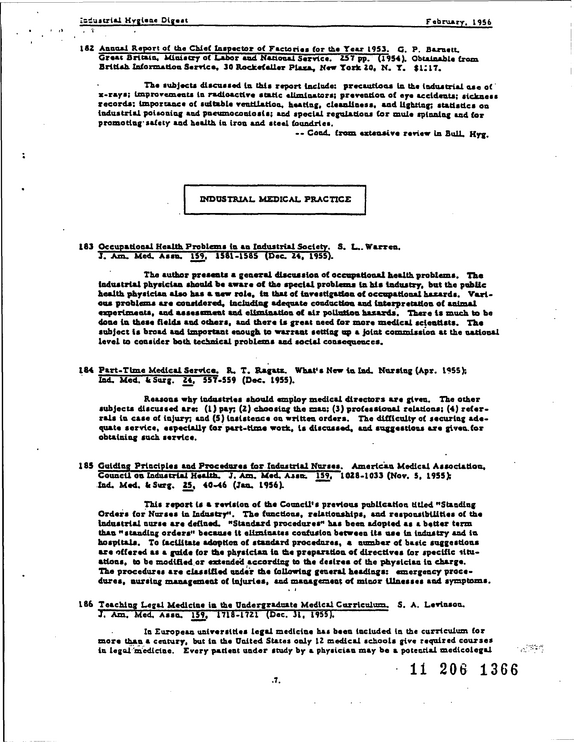
Zc-UJ trial Hygiene Digest February. 1956 1*2 Annual Report of the Chief Inspector ot Factories tor the Tear 1953.
refid# peyjxZNRaY9Lb8d27gOgkkMx61 page
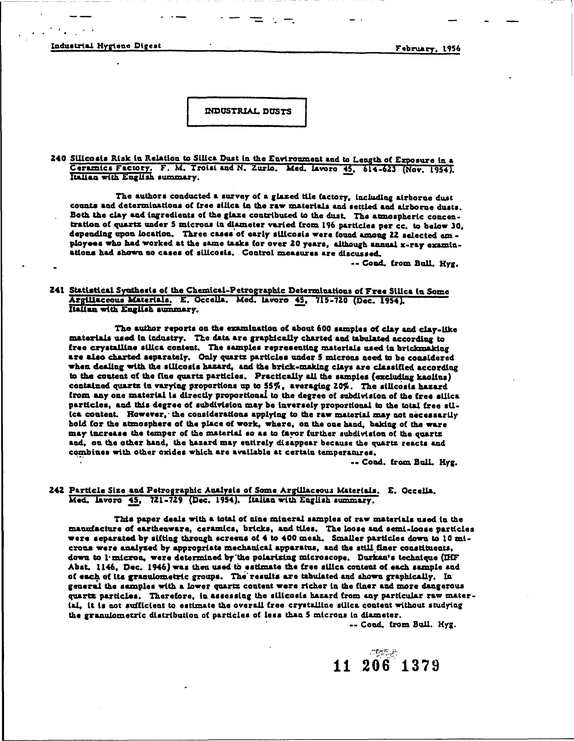
Industrial Hygiene Digest Februarr, 19S6 INDUSTRIAL DUSTS 240 Silicosis Rlak in Relation to Silica Doit la the Environment and to Length of Exposure tq a Ceramic* Factory.
refid# EvaN40w6XYVBOonggpE1ZQm1V1 page
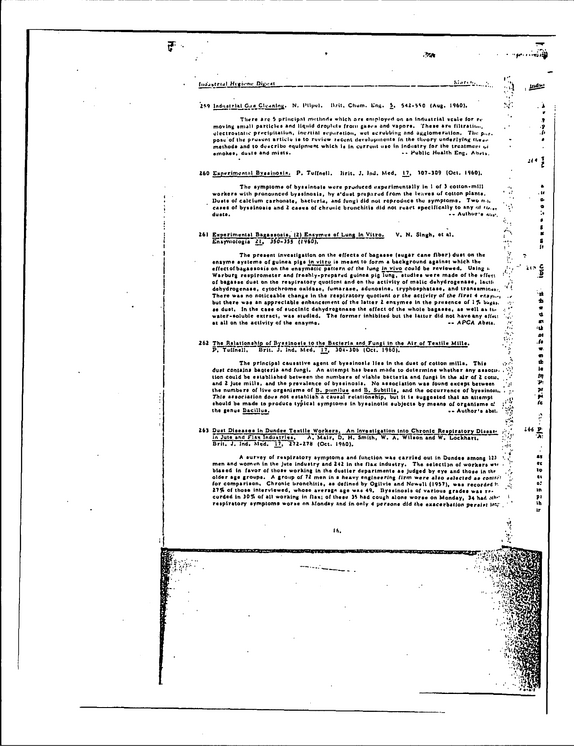
fiMJj*trial Hvti*nc 4M.r rnd*!
refid# gDYNoozVr9LpZ18pzLOqgQwL1 page
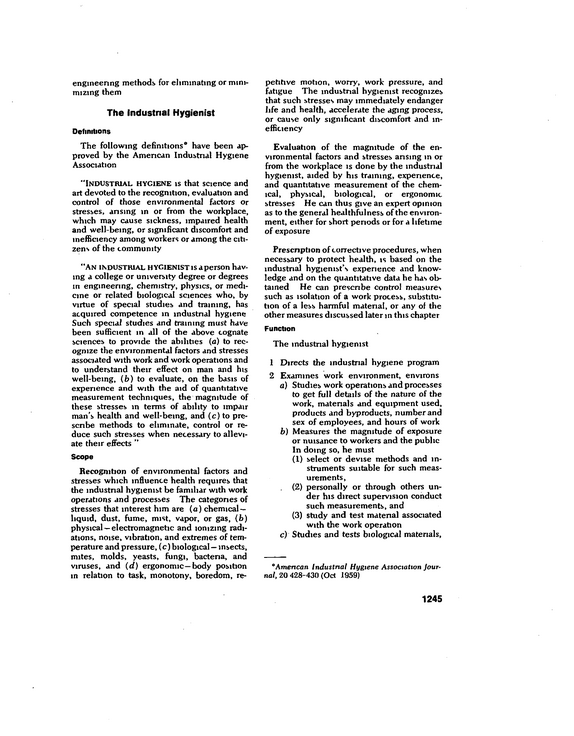
engineenng methods for eliminating or mini mizing them The Industrial Hygienist Definitions The following definitions have been ap proved by the Amencan Industrial Hygiene Association "Industrial hygiene is that science and art devoted to the recognition, evaluation and control of those environmental factors or stresses, arising in or from the workplace, which may cause sickness, impaired health and well-being, or significant discomfort and inefficiency among workers or among the citi zens of the community "An industrial hygienist is a person hav ing a college or university degree or degrees in engineering, chemistry, physics, or medi cine or related biological sciences who, by virtue of special studies and training, has acquired competence in industrial hygiene Such special studies and training must have been sufficient in all of the above cognate sciences to provide the abilities (a) to rec ognize the environmental factors and stresses associated with work and work operations and to understand their effect on man and his well-being, (b) to evaluate, on the basis of experience and with the aid of quantitative measurement techniques, the magnitude of these stresses m terms of ability to impair man's health and well-being, and (c) to pre scribe methods to eliminate, control or re duce such stresses when necessary to allevi ate their effects " Scope Recognition of environmental factors and stresses which influence health requires that the industrial hygienist be familiar with work operations and processes The categories of stresses that interest him are (a) chemical -- liquid, dust, fume, mist, vapor, or gas, (b) physical --electromagnetic and ionizing radi ations, noise, vibration, and extremes of tem perature and pressure, (c) biological --insects, mites, molds, yeasts, fungi, bacteria, and viruses, and (d) ergonomic--body position in relation to task, monotony, boredom, re petitive motion, worry, work pressure, and fatigue The industrial hygienist recognizes that such stresses may immediately endanger life and health, accelerate the aging process, or cause only significant discomfort and in efficiency Evaluation of the magnitude of the en vironmental factors and stresses arising in or from the workplace is done by the industrial hygienist, aided by his training, experience, and quantitative measurement of the chem ical, physical, biological, or ergonomic stresses He can thus give an expert opinion as to the general healthfulness of the environ ment, either for short periods or for a lifetime of exposure Prescription of corrective procedures, when necessary to protect health, is based on the industrial hygienist's experience and know ledge and on the quantitative data he has ob tained He can prescribe control measures such as isolation of a work process, substitu tion of a less harmful material, or any of the other measures discussed later m this chapter Function The industrial hygienist 1 Directs the industrial hygiene program 2 Examines work environment, environs a) Studies work operations and processes to get full details of the nature of the work, materials and equipment used, products and byproducts, number and sex of employees, and hours of work b) Measures the magnitude of exposure or nuisance to workers and the public In doing so, he must (1) select or devise methods and in struments suitable for such meas urements, (2) personally or through others un der his direct supervision conduct such measurements, and (3) study and test material associated with the work operation c) Studies and tests biological materials, Amencan Industrial Hygiene Association Jour nal, 20 428-430 (Oct 1959) 1245
refid# 44m0dmEp273XDOnq8JL3gaa0x1 page