Refine
Estimated Years 1940-1949Clear
11,527 results foundRefine Search
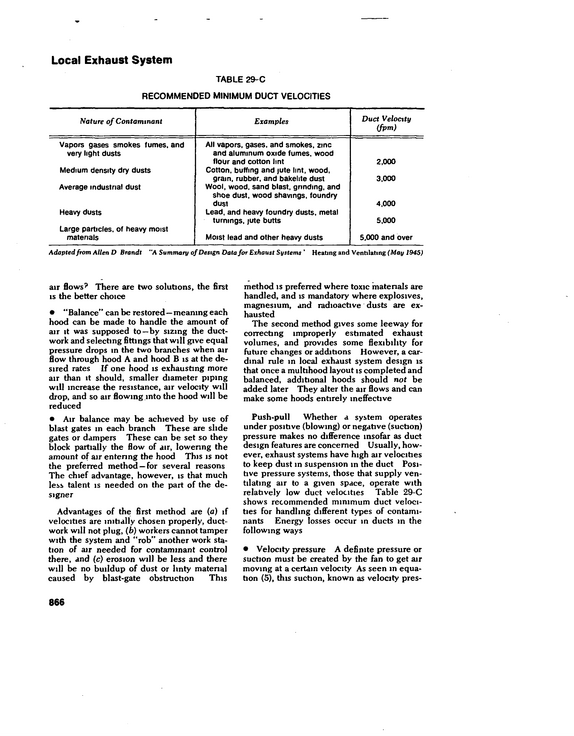
Local Exhaust System TABLE 29-C RECOMMENDED MINIMUM DUCT VELOCITIES Nature of Contaminant Examples Duct Velocity (fpm) Vapors gases smokes fumes, and very light dusts Medium density dry dusts Average industrial dust Heavy dusts Large particles, of heavy moist matenals All vapors, gases, and smokes, zinc and aluminum oxide fumes, wood flour and cotton lint Cotton, buffing and jute lint, wood, grain, rubber, and bakelite dust Wool, wood, sand blast, gnnding, and shoe dust, wood shavings, foundry dust Lead, and heavy foundry dusts, metal turnings, jute butts Moist lead and other heavy dusts 2,000 3,000 4,000 5,000 5.000 and over Adaptedfrom Allen D Brandt "A Summary ofDesign Data for Exhaust Systems ' Heating and Ventilating (May 1945) air flows'* There are two solutions, the first is the better choice "Balance" can be restored--meaning each hood can be made to handle the amount of air it was supposed to--by sizing the duct work and selecting fittings that will give equal pressure drops in the two branches when air flow through hood A and hood B is at the de sired rates If one hood is exhausting more air than it should, smaller diameter piping will increase the resistance, air velocity will drop, and so air flowing into the hood will be reduced Air balance may be achieved by use of blast gates m each branch These are slide gates or dampers These can be set so they block partially the flow of air, lowering the amount of air entering the hood This is not the preferred method --for several reasons The chief advantage, however, is that much less talent is needed on the part of the de signer Advantages of the first method are (a) if velocities are initially chosen properly, duct work will not plug, (b) workers cannot tamper with the system and "rob" another work sta tion of air needed for contaminant control there, and (c) erosion will be less and there will be no buildup of dust or linty material caused by blast-gate obstruction This method is preferred where toxic materials are handled, and is mandatory where explosives, magnesium, and radioactive dusts are ex hausted The second method gives some leeway for correcting improperly estimated exhaust volumes, and provides some flexibility for future changes or additions However, a car dinal rule in local exhaust system design is that once a multihood layout is completed and balanced, additional hoods should not be added later They alter the air flows and can make some hoods entirely ineffective Push-pull Whether a system operates under positive (blowing) or negative (suction) pressure makes no difference insofar as duct design features are concerned Usually, how ever, exhaust systems have high air velocities to keep dust in suspension m the duct Posi tive pressure systems, those that supply ven tilating air to a given space, operate with relabvely low duct velocities Table 29-C shows recommended minimum duct veloci ties for handling different types of contami nants Energy losses occur in ducts m the following ways Velocity pressure A definite pressure or suction must be created by the fan to get air moving at a certain velocity As seen in equa tion (5), this suction, known as velocity pres- 866
refid# omNyVDdwQbZkNLQD4GrXdew1X1 page
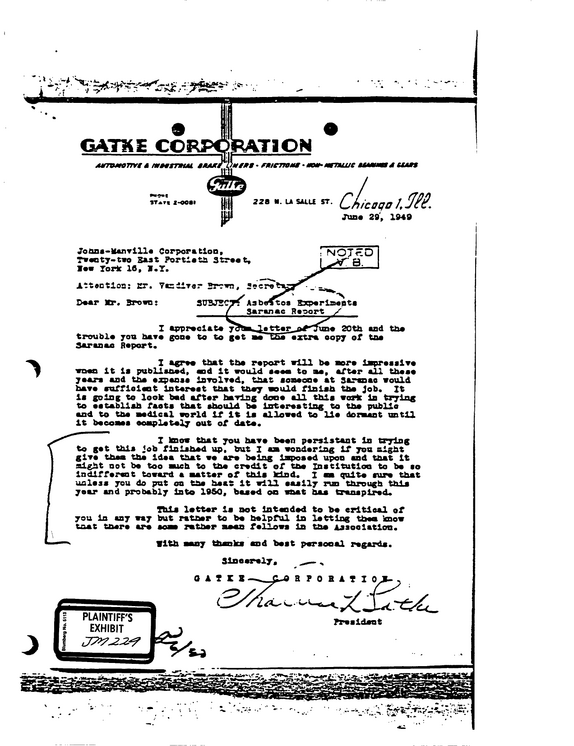
i GATKE CO TION Mmmonvt s rmmmsrmuu. atuutt umtrna- ratcrm** -mom-rnmui/e uamma* ssjun *" ITr| i-ooii M.
refid# JNykbJrRkmm7RYRke5vyo1G4v1 page
\ v. v \ Vauk a!
refid# DDbg3ny80Kyq19rN9novz1OZ41 page
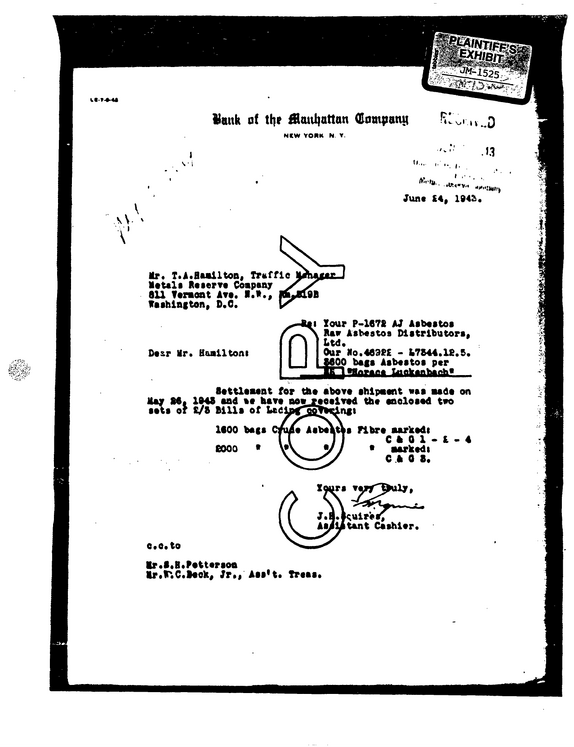
DR.
refid# O3EMzZ4ye0DE02qaKj403kYBM2 pages
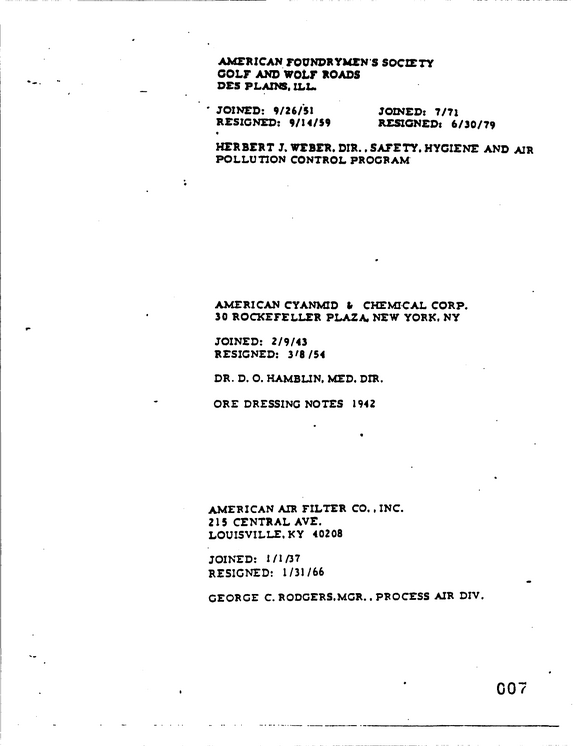
AMERICAN FOUNDRYMENS SOCIETY GOLF AND VOLF ROADS DES PLAINS, ILL
refid# 5LXZLbNmNVRymQVy6Y3gv8Z601 page
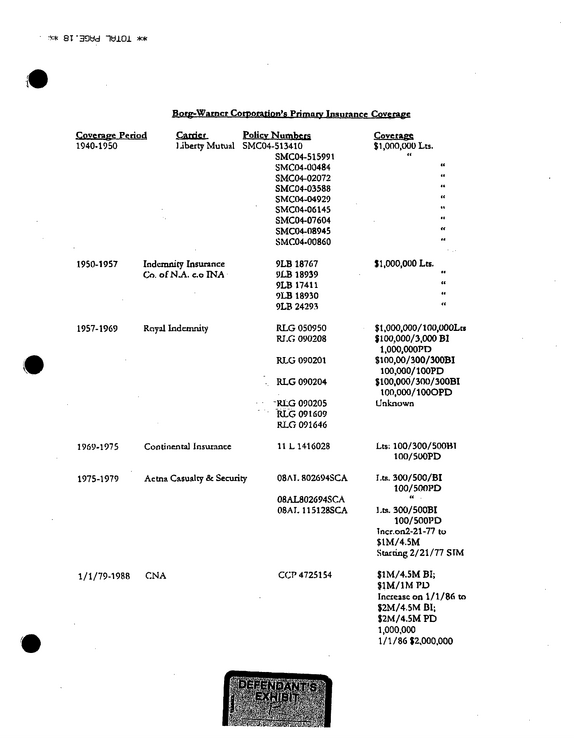
X* 8T ' 39bd "1U101 ** Bprg-Warncr Corporaiion's Primary Insurance Coverage Coverage Period 1940*1950 Cairifitliberty Mutual Policy Numbers SMC04-513410 SMC04-515991 SMC04-00484 SMC04-02072 SMC04-03588 SMC04-04929 SMC04-06145 SMC04-07604 SMC04-08945 SMC04-00860 Coverage $1,000,000 Lts. 1950-1957 Indemnity Insurance Co. of N.A. c.o INA 9LB 18767 9LB 18939 9LB 17411 9LB 18930 9LB 24293 $1,000,000 Lts. 1957-1969 Royal Indemnity RLG 050950 RJ.G 090208 RLG 090201 RLG 090204 RLG 090205 RLG 091609 RLG 091646 fl.000,000/100,OOOLcs $100,000/3,000 BI 1,000,000PD $100,00/300/300BI 100,000/100PD $100,000/300/300BI 100.000/1000PD Unknown 1969-1975 Continental Insurance 11L1416028 Lts: 100/300/500B1 100/500PD 1975-1979 Aetna Casualty & Security 08AI. 802694SCA 08AL802694SCA 08A1.115128SCA I.ts. 300/500/BI 100/500PD it Lts. 300/500BI 100/500PD Tncr.on2-21-77 to $1M/4.5M Starting 2/21/77 STM 1/1/79-1988 CNA CCP 4725154 S1M/4.5M BI; $1M/1M PD Increase on 1/1/86 to $2M/4.5M BI; S2M/4.5M PD 1,000,000 1/1/86 $2,000,000
refid# NN0R4nKp62zKk0g97B2aopaMD1 page
Balkamp ALPHABETICAL LISTINGS Yeir Model Part No.
refid# QXa9QJka8DzJgpNR94LE06pzk1 page
102 INDUSTRIAL HYGIENE AND OCCUPATIONAL MEDICINE hospital admission film in 1948.
refid# Oz1LEZG9v62xOYqpKqBwNKV8w1 page
AHLBORG--HYDROGEN SULFIDE POISONING IN SHALE OIL INDUSTRY 259 Comment The primary symptoms of acute poisoning due to inhalation of hydrogen sulfide in relatively high concentrations, the subsequent signs of damage to the central nervous system and the gradual disappearance of symptoms after t-he patients have been removed from the surroundings containing hydrogen sulfide make the diagnosis "sequelae of acute hydrogen sulfide poisoning" probable for all these cases.
refid# 1gKO2nmxOLJX21yrmgw10q7jZ1 page
DE NARDI--PULMONARY GRANULOMATOSIS 545 The initial examination was made on May 17, 1949.
refid# 50bM5Qx2mg8ZB28nxMKmzer8z1 page
566 INDUSTRIAL HYGIENE AND OCCUPATIONAL MEDICINE March 1946, which increased appreciably until March 1947 and has remained quite stationary since.
refid# 0Jm4a34G0OZq1Qgnq8LrQjGxO1 page
32 RUTH B.
refid# ZnoQMm12aNxjrawp5Xednz4MV1 page
90 ROSS A.
refid# RJxpGbw4GrjyGJxORpGjKq1bV1 page
l~- 416 GEORGE D.
refid# N2agaanEGy9wrY6dGxydj09aQ1 page
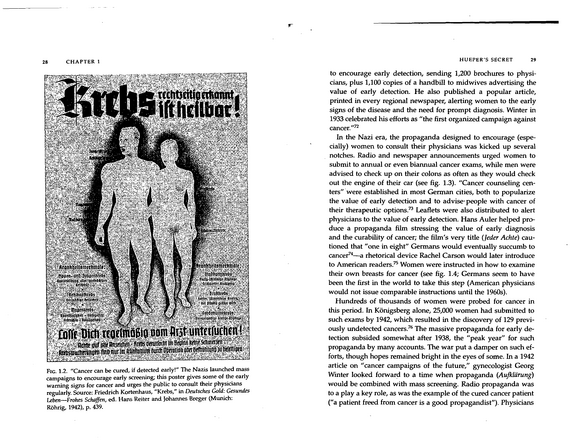
28 CHAPTER 1 Fig. 1.2.
refid# nb4YzbDX4B1rZDVG4QNGm7Xm1 page