Refine
Estimated Years 1940-1949Clear
11,527 results foundRefine Search
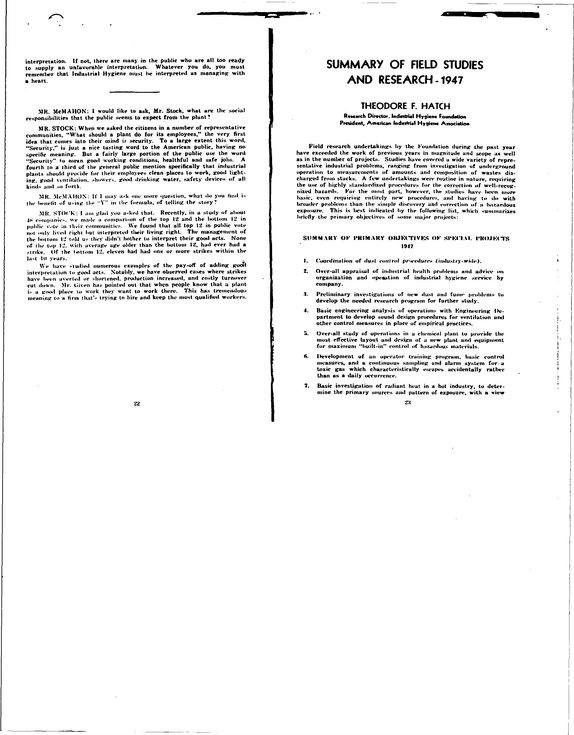
interpretation.
refid# Rp9kL6dJ01rdYpnXdG6J0GoZv1 page
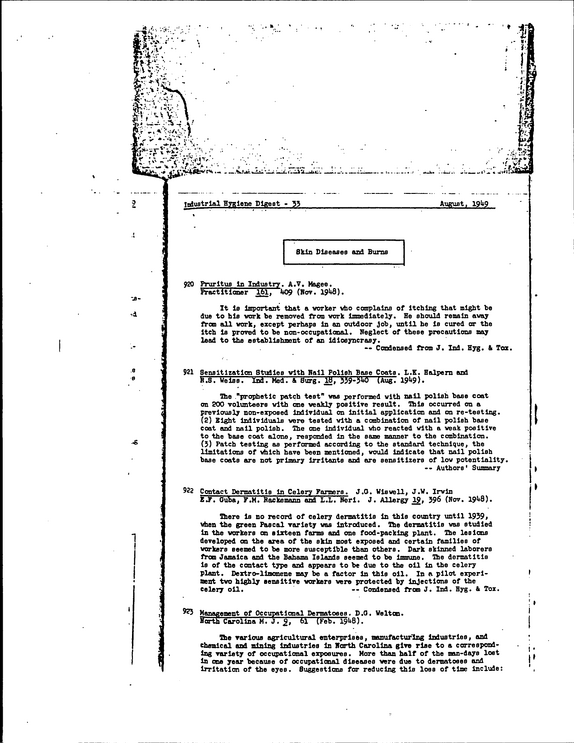
*W Vv,,r; Tnluatrlal Hygiene Digest - 33 August, 19U9 Skin Diseases and Burns J20 Pruritus In Industry.
refid# 15pY6DraLOVzpv2eVGvL84yYo1 page
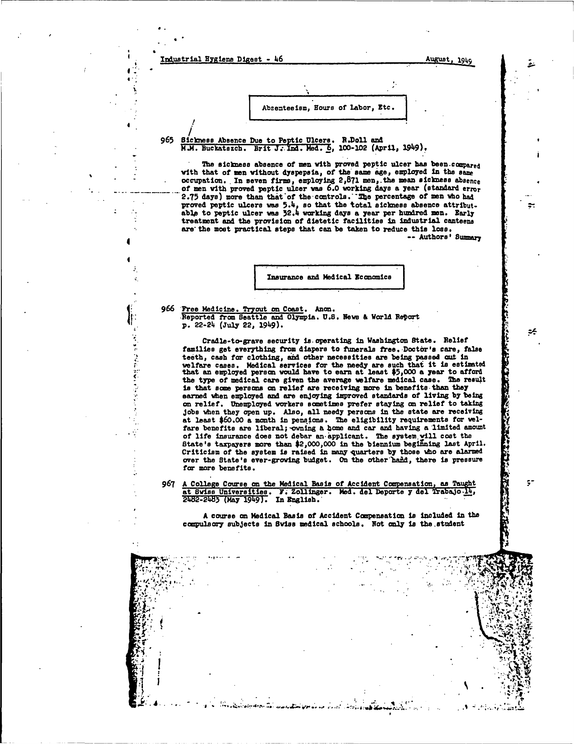
' , Industrial Hygiene Digest - 1*6 r:'- * 4; V \ Absenteeism, Hours of labor, Etc.
refid# M4Z0VVjQKBr6Nvka0yKnE1ZEy1 page
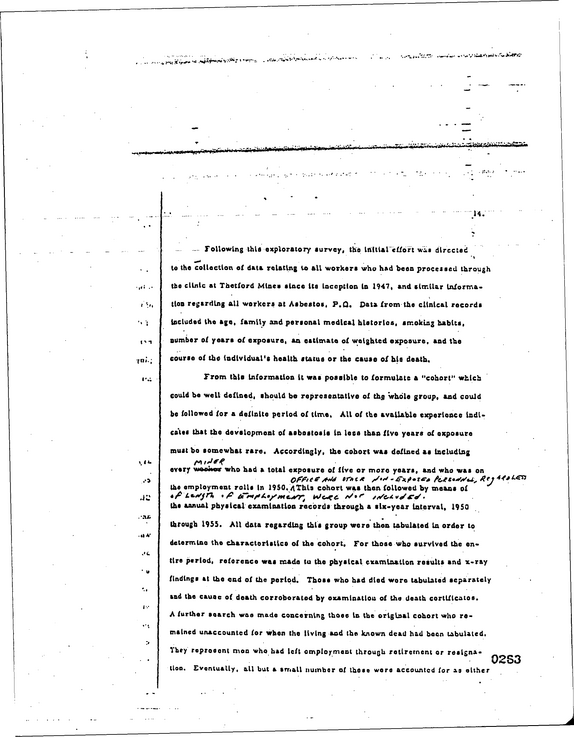
**$* m+* 14.
refid# 91NmV8KyR8n4qZa6KaV5NXzJV1 page
greatest possible extent and at the earliest possible time that place m the productive stream of society which they are potentially capable of assuming Medical rehabilitation generally is consid ered a part of medical treatment For an em ployee to be entitled to vocational rehabilita tion benefits, the law, as a general rule, must contain specific provisions covering such benefits State laws vary widely on the spe cific benefits allowed Time and training are required for an injured man to become used to artificial limbs and to be restored to happy and useful citizenship Most state laws do not specify how much money should be spent on equipment or on rehabilitation service Provisions m compensation laws for physi cal rehabilitation of occupationally injured persons have increased rapidly Twentyseven states, Puerto Rico, Washington, D C , the Federal Employees' Compensation Act, and the Federal Longshoremen's and Harbor Workers' Compensation Act, m addition to accepting provisions of the Federal Voca tional Rehabilitation Act, have made specific provisions by law for the establishment of funds for the rehabilitation of industrially disabled persons, or have provided main tenance allowances for such persons while they are m training, or have made other pro visions for rehabilitation The Federal Government reimburses the states for 50 per cent of the monies spent by them for rehabilitation purposes In the case of civil service workers, maritime employees, and civil defense workers, the Federal Act provides for complete reimbursement to the states for amounts expended The Canadian provinces of Alberta, British Columbia, Manitoba, New Brunswick, New foundland, Nova Scotia, Ontario, Pnnce Edward Island, Quebec, and Saskatchewan have made similar provisions Under these laws, rehabilitation centers are set up for totally disabled workers Here they are taught new trades or new skills and knowledge so that thev can return to society as job holders and not as burdens Rehabili tation prevents persons from being cast aside and pensioned off, or being paid total per manent disability awards, or becoming sub jects of charity Often, rehabilitated workers eam more from their new trades than they did previously Systems for Rating In the early days of workmen's compen sation insurance, the need for a central or ganization to collect nationwide statistics and to develop standard rate-making methods and manual classifications became apparent Such an organization could operate as a clear inghouse for future exchange of views among the states This was the genesis of the Na tional Council on Compensation Insurance The manual rates determined by this or ganization are generally used as a basis for compensation rates charged by all casualty insurance companies States with independ ent bureaus often cooperate with the NCCI in making their rates The general objectives of the council are to make rates for workmen's compensation insurance, to collect and tabulate injury, com pensation, and medical cost statistics, to develop rating plans or systems which not only measure the hazard of each nsk, but also contribute as much as possible to accident prevention, and to administer such rates and systems in the interest of everyone involved The experience statistics form a basis for standard nationwide rate-making approved by the National Association of Insurance Com missioners All states provide for regulation by state authority, and public hearings are usually held before rates are revised Rates are established on the basis of a charge per $100 of payroll per job classification There are two general types of rating used in workmen's compensation insurance man ual rating and merit rating Manual rating The manual classification system classifies occupations on the basis of certain selected characteristics and then assigns a manual rate to each classification A manual rate is a rate for a specific type of industry or operation, designed to provide the premium necessary * Quotation used with permission, and discussion in several following paragraphs adapted in part from American College of Surgeons, "Essential Features of Workmen's Compensation Laws and Insurance Systems and Comments," Medical Service in Industry and Workmen's Compensation Laws, 1946, Chapter IX 301
refid# RjjrB5qGrE9650Vj2DRDb8d071 page
metals Reserve company WASHINGTON 23.
refid# qmjJ4MK2j4Xqqx13GqOpqex1n1 page
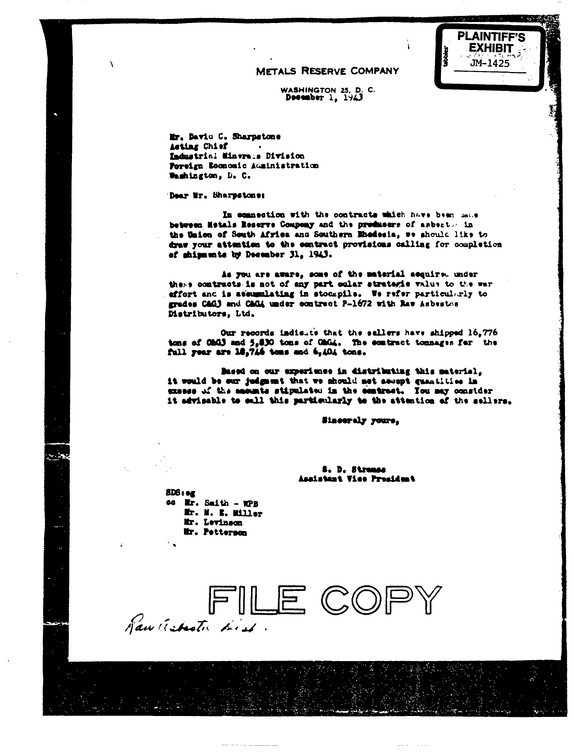
iT"" * 1 m dcs/bqp. 0.
refid# 3edMqGGX3wpnwzOx0LOaqZzq31 page
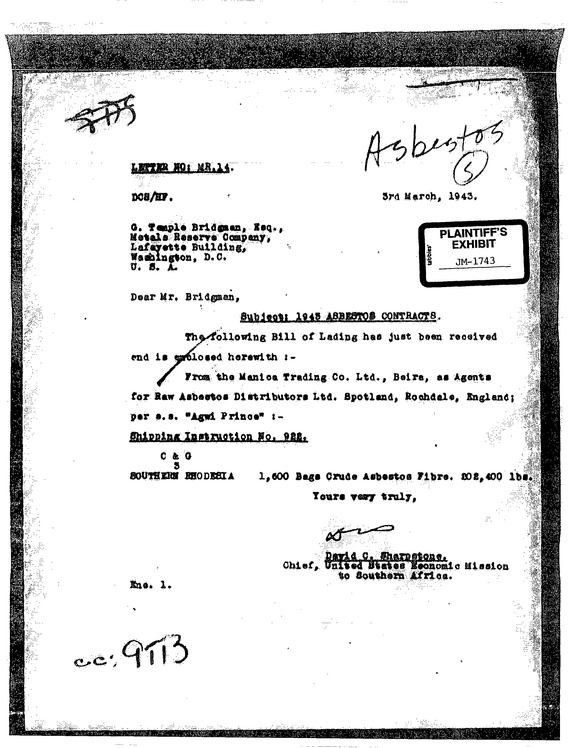
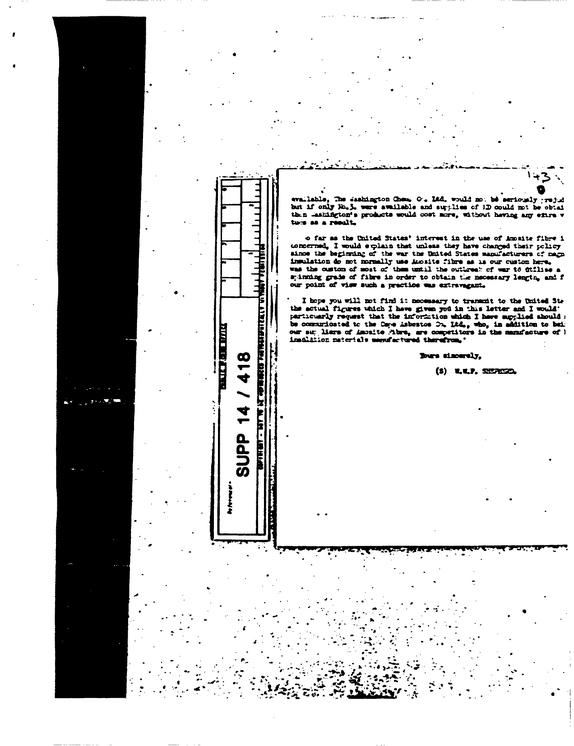
i2.a-urC TK/OOPT. , Twr Prevail US.
refid# zzaLeEq1EMxkbDq6X6Dnyp20z2 pages
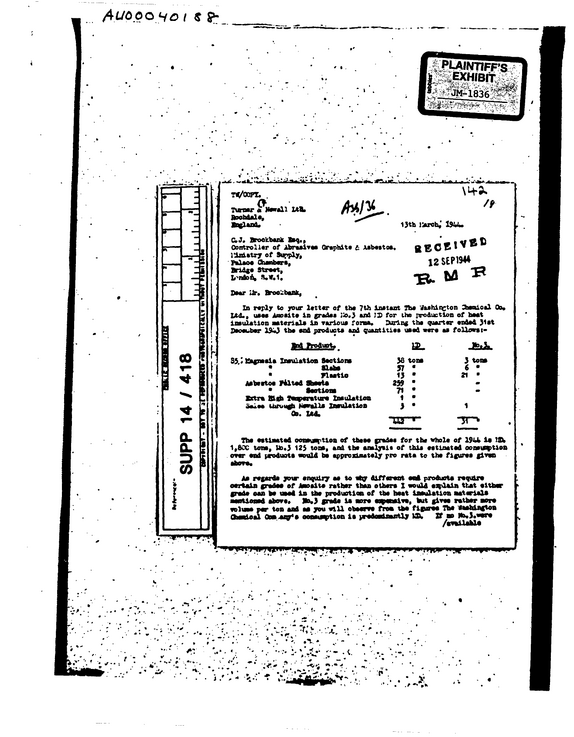
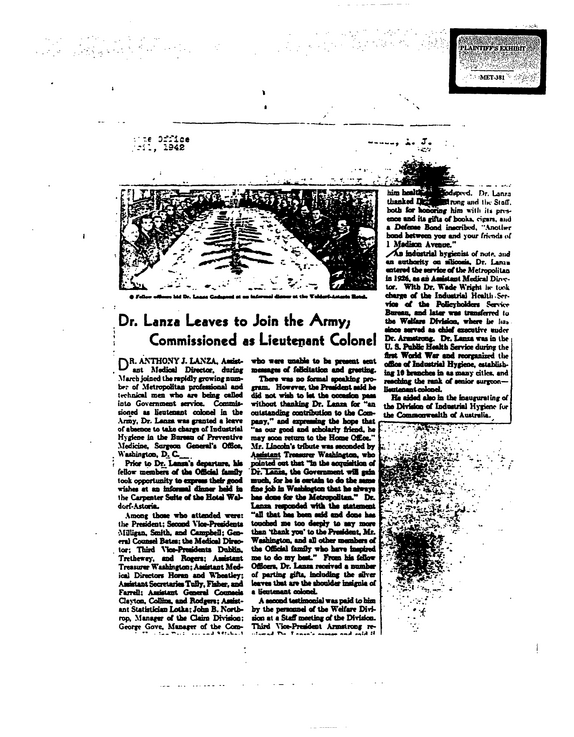
i Office 1942 \ ft J. cv FmOmm i -- i ima Uri On.

refid# 1yy1w36a4a0r3JkXLNVRp0LYZ3 pages
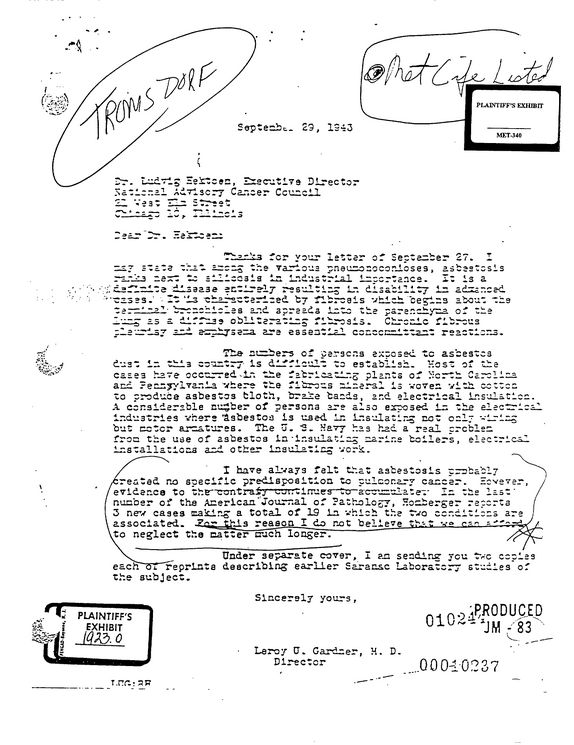
did > Tin- HNCAA.Ic jm * '' j Septenbc- 29, 1943 Dr.
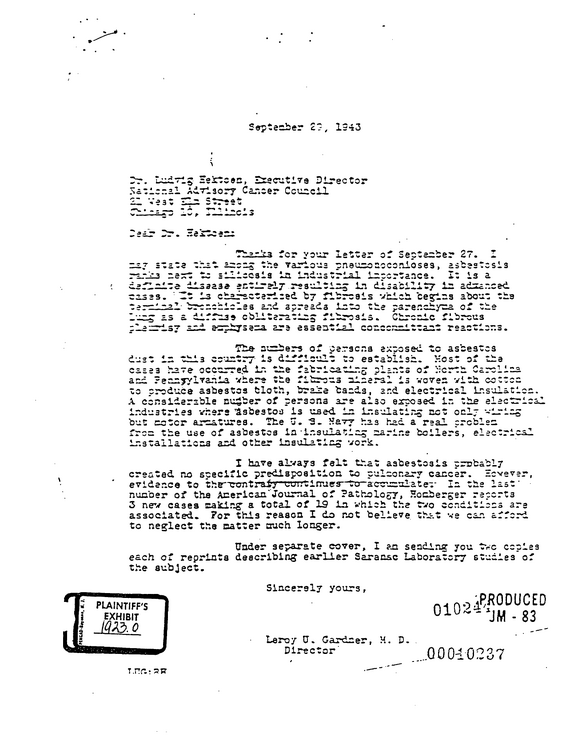
refid# 3QRvrQQ8VZGG6wDnZa4aYG9zn2 pages
(COPI) ITDi S1BOQBIK Adtoeat* Uontroal May 14, 1945 K. 1.
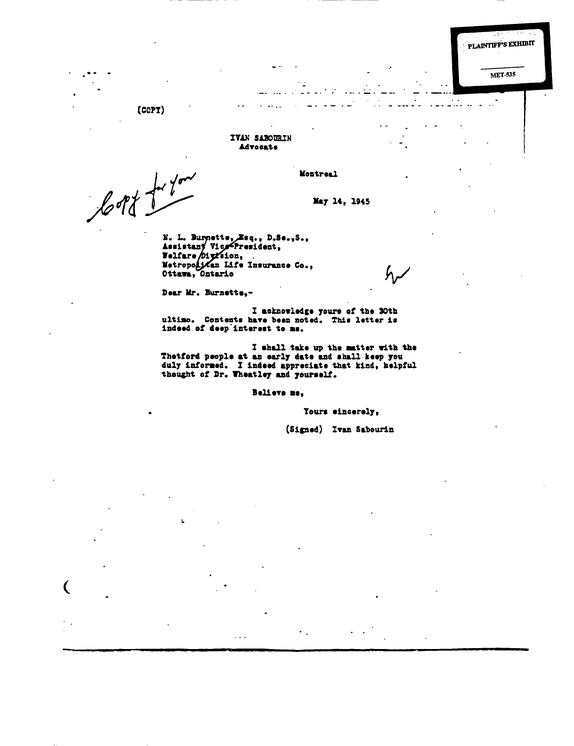
refid# XRJmye7EXXNK8VnX1pOyrmgGd2 pages
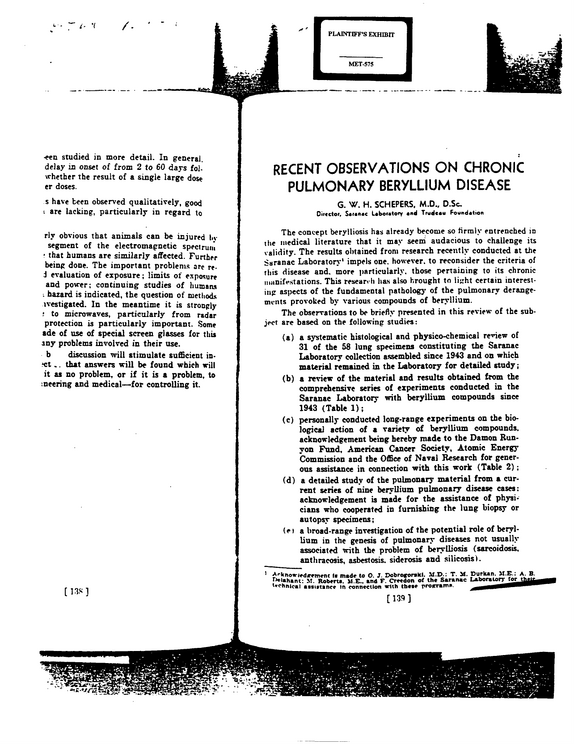
C - - t. ( /. ` PLAINTIFF'S EXHIBIT een studied in more detail.
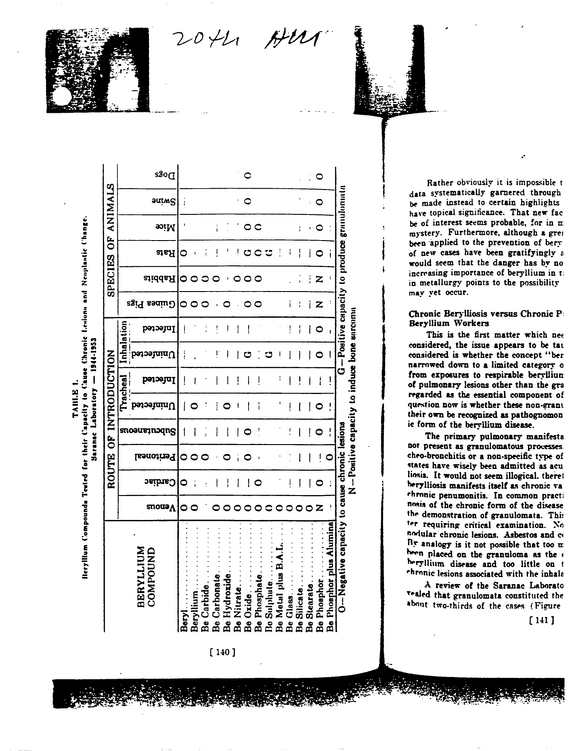
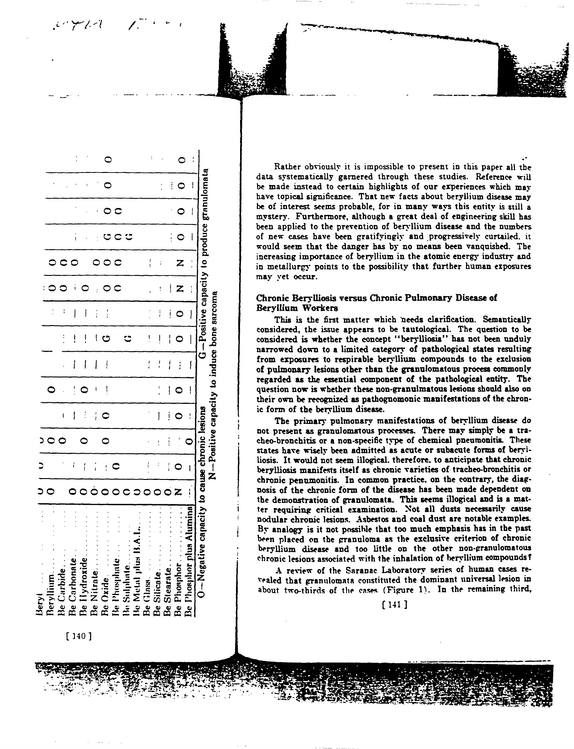
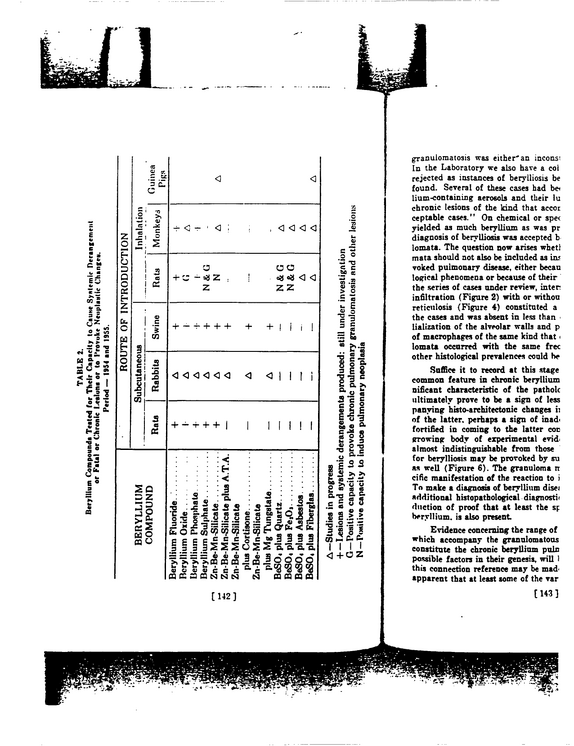
refid# MM2d65xom5qLdz2ydmo2xeGQM18 pages
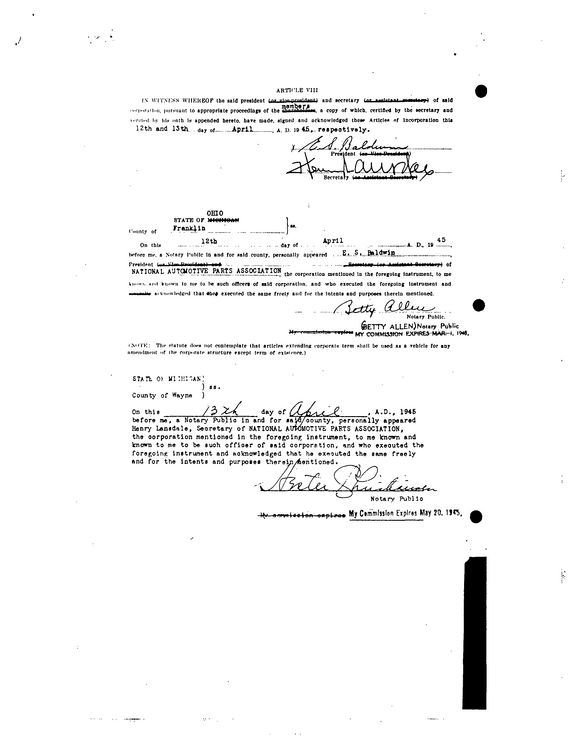
J ARTin.E VIII IN UTI'NKSS WHEREOF tbe said president fA } and secretary UkE^aiiat*AL>MMftM|p4 of said SStffiSSIdias, -Ik'imir;i11ii. pursnaiit to appropriate proceedings of tbe a copy of wbtcb, certified by tbe secretary and f-nfin!
refid# nkEe0BbNQ8gmwr64VDMjw5Y5X1 page
I &o A <La fttrfU-rcs " (h/ui SCF-NAPA-0475 The matter of replies to letter of February 27, 1948 from the Spicer Division of the 3fe,na Corporation, notifying us that

refid# By6yaJDNqrN1YEexDkXgzpo9J1 page
/{ Vg?
refid# JQxBeLYGabOw550pDx5yBQa43 pages