Refine
Estimated Years 1930-1939Clear
8,921 results foundRefine Search
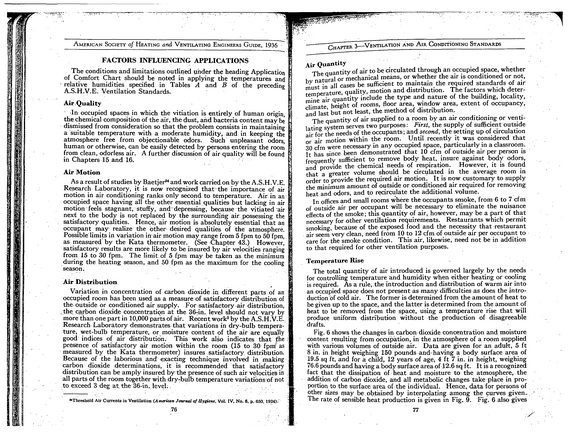
American Society of Heating and Ventilating Engineers Guide, 1936 FACTORS INFLUENCING APPLICATIONS The conditions and limitations outlined under the heading Application of Comfort Chart should be noted in applying the temperatures and - relative humidities specified in Tables A and B of the preceding A.S.H.V.E.
refid# p2r6aYd717E6VKvq5pBRNQkBa1 page
.
refid# Zn70YvxEdrgyL5vxwaKG784RY1 page
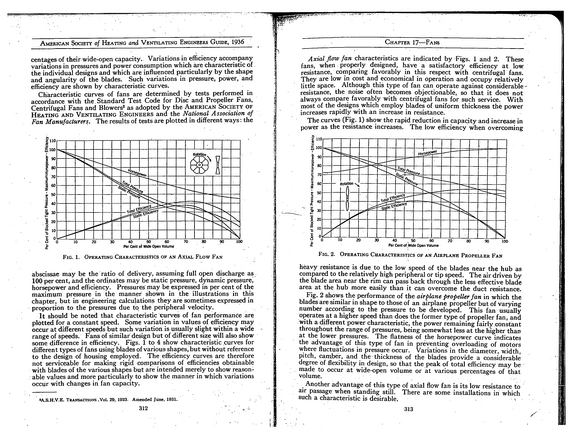
American Society of Heating and Ventilating Engineers Guide, 1936 centages of their wide-open capacity.- Variations in efficiency accompany variations in pressures and power consumption which are characteristic of the individual designs and which are influenced particularly by the shape and angularity of the blades.
refid# O3MGkeOX546GJdKgbXQJjN0Z11 page
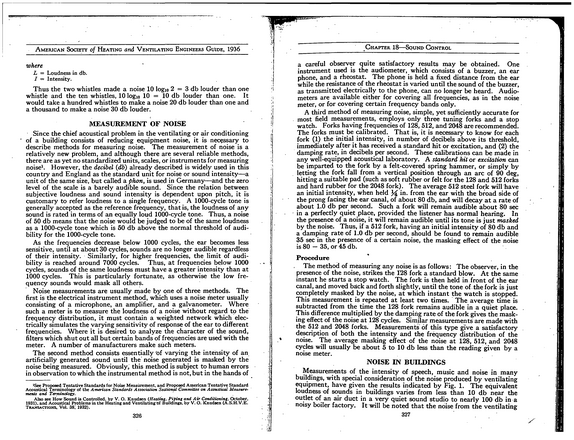
of and 1936American Society Heating Ventilating Engineers Guide, where L = Loudness in db.
refid# eMJJqa8Dmrmx5kgBx9Db3yq91 page
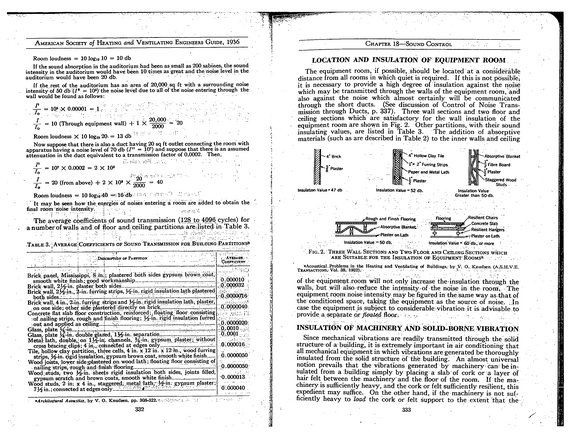
American Society of Heating and Ventilating Engineers Guide, 1936 Room loudness = 10 logic 10 = 10 db If the sound absorption in the auditorium had been as small as 200 sabines, the sound intensity in the auditorium would have been 10 times as great and the noise level in the auditorium would have been 20 db.
refid# eNRddGQvro91MxVnZj0mye3m1 page
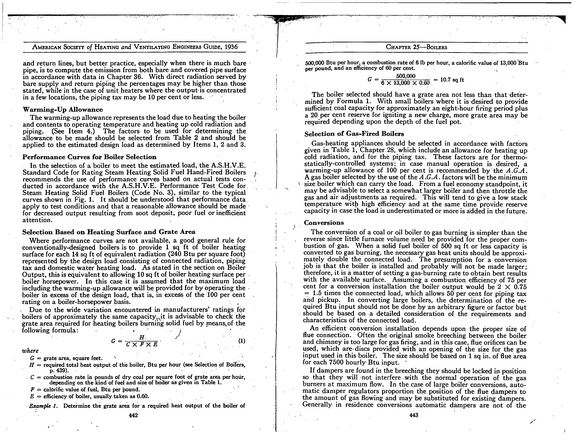
American Society of Heating and Ventilating Engineers Guide, 1936 and return lines, but better practice, especially when there is much bare pipe, is to compute the emission from both bare and covered pipe surface in accordance with data in Chapter 36.
refid# 4JRv7BL3ZzLqN23r8O1kd32dG1 page
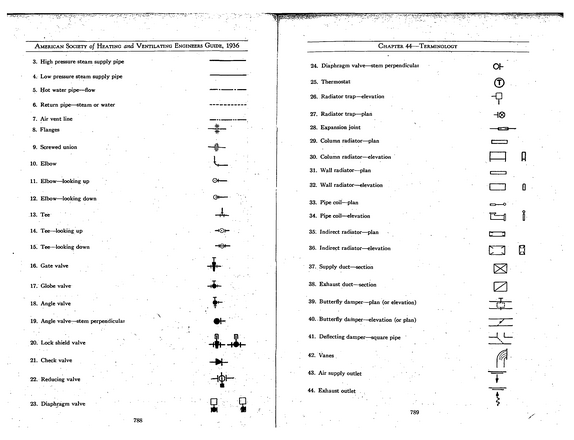
American Society of Heating and Ventilating Engineers Guide, 1936 3.
refid# NGJzy86DYym4wj3qY08JLK5XV1 page
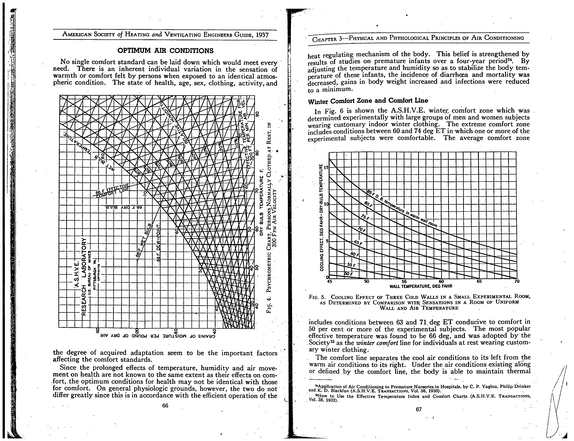
American Society of Heating and Ventilating Engineers Guide, 1937 OPTIMUM AIR CONDITIONS No single comfort standard can be laid down which would meet every need.
refid# wgJ3qVR791nYyyzz2QaKLp5Qd1 page
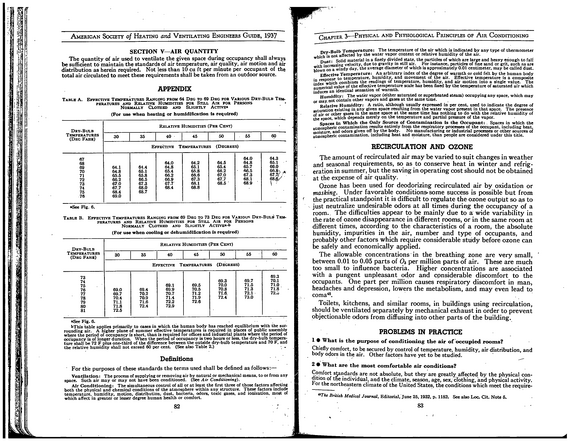
of and 1937American Society Heating Ventilating Engineers Guide, SECTION V--AIR QUANTITY The quantity of air used to ventilate the given space during occupancy shall always be sufficient to maintain the standards of air temperature, air quality, air motion and air distribution as herein required.
refid# 44dG7X1MnRZxRZORLQJVjKd6Q1 page
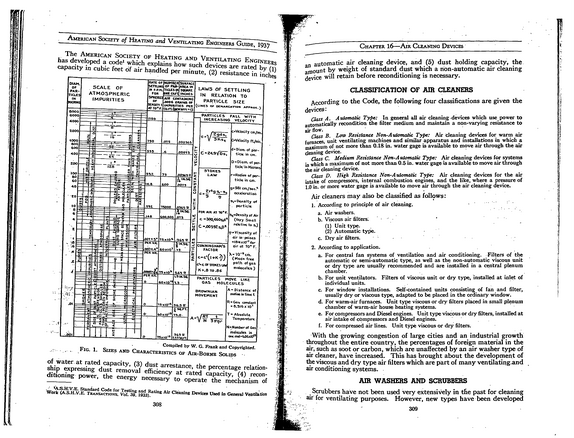
American Society of Heating and Ventilating Engineers Guide, 1937 The American Society of Heating and Ventilating Engineers has developed a code1 which explains how such devices are rated by (l) capacity in cubic feet of air handled per minute, (2) resistance in inches 1---------->----------------------------------------------------- Compiled by W.
refid# b52OkyZBBL8jBJE0NOX06Y5Jk1 page
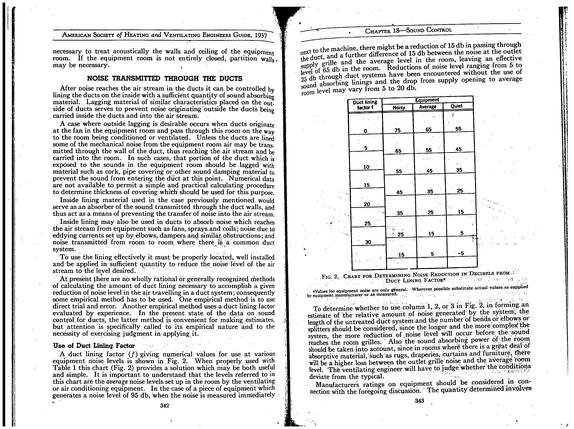
of andAmerican Society Heating Ventilating Engineers Guide, 1937 necessary to treat acoustically the walls and ceiling of the equipment room.
refid# ypDrkJ2bgaXJomo1mVggQG3N21 page
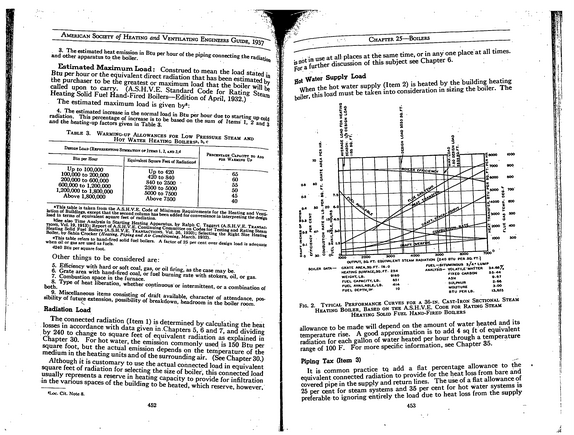
25Chapter --Boilers 3.
refid# LQeQzRDMpGQLzEa7pxGv541X1 page
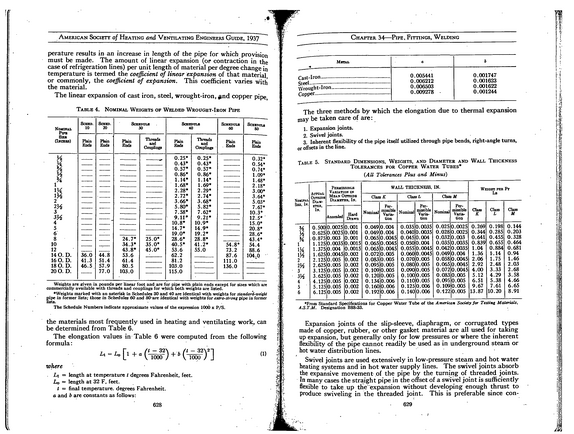
American Society of Heating and Ventilating Engineers Guide, 1937 Chapter 34--Pipe, Fittings, Welding perature results in an increase in length of the pipe for which provision must be made.
refid# ypykB2a90EByQVpo3pwNNbpj31 page
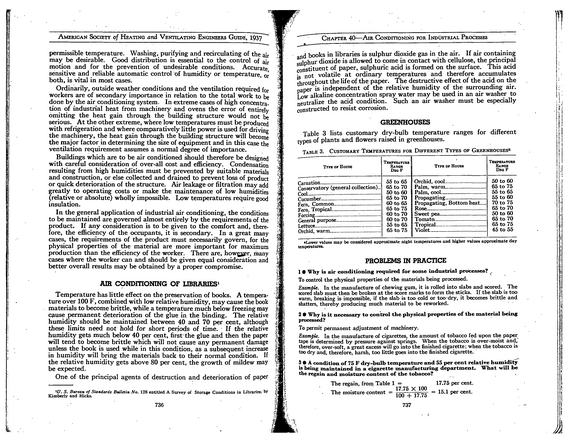
American Society of Heating and Ventilating Engineers Guide, 1937 Chapter 40--Air Conditioning for Industrial Processes permissible temperature.
refid# g86LYZVYy0BRoQw6dB3amxXe1 page
American Society of Heating and Ventilating Engineers Guide, 1937 Ridgewood-- Fitts.
refid# YOwZraV8rgVgxRXo5XkLZXKy1 page