Refine
Estimated Years 1930-1939Clear
14,210 results foundRefine Search
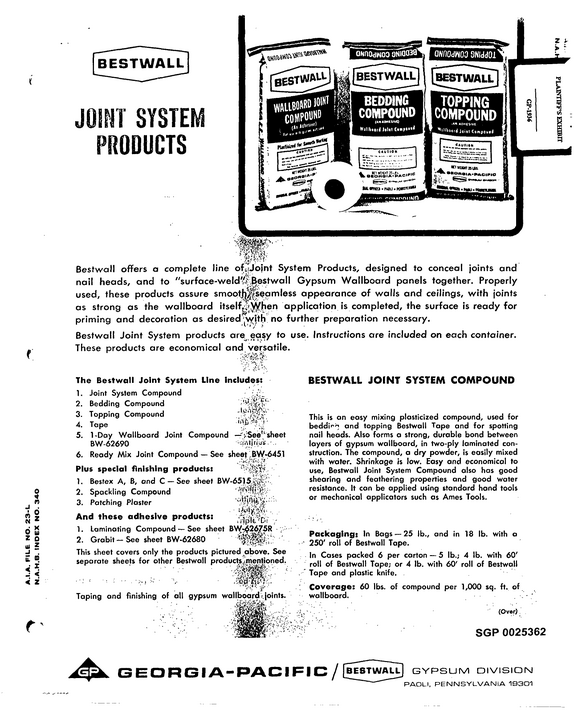
GP-1936 BESTWALL < JOINT SYSTEM PRODUCTS f t' Bestwall offers a complete line of^Jojnt System Products, designed to conceal joints and nail heads, and to "surface-weld"|:JJestwall Gypsum Wallboard panels together.
refid# DG3ow2pa85GDdjRM9eZM44X2a1 page
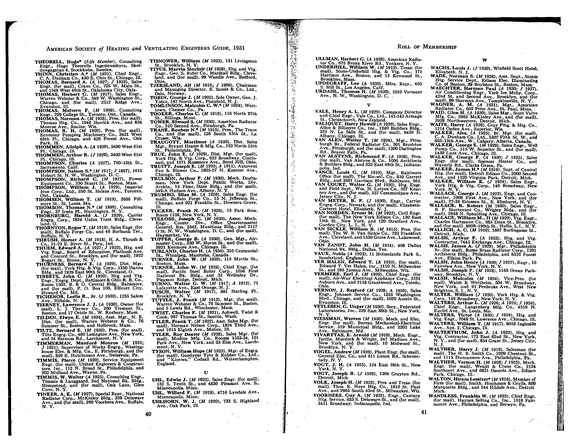
American Society of Heating and Ventilating Engineers Guide, 1931 THEORELL, Hugo* (Life Member), Consulting Engr.f Hugo Theorells Ingenieussbyra, Skoldungagatan 4, Stockholm, Sweden.
refid# O5qB7R2Qnz1e5N7RdJnjeM5Q1 page
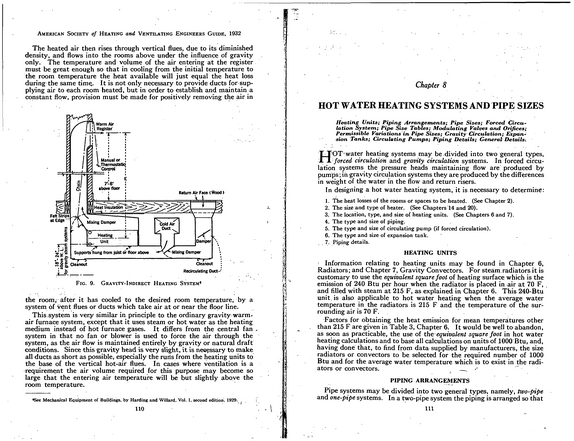
American Society of Heating and Ventilating Engineers Guide, 1932 The heated air then rises through vertical flues, due to its diminished density, and flows into the rooms above under the influence of gravity only.
refid# e5wQRw79noeJwLJwggVozgMmG1 page
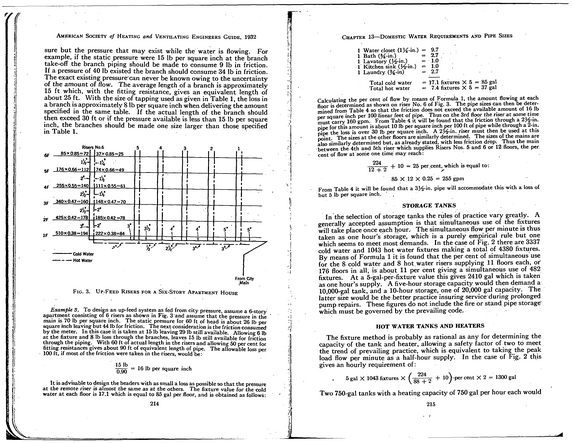
American Society of Heating and Ventilating Engineers Guide, 1932 sure but the pressure that may exist while the water is flowing.
refid# mBe7yokjeJoo33k3bzBD2Mx2Z1 page
; IF American Society of Heating and Ventilating Engineers Guide, 1932 2.
refid# pBEozXa3QwOmGOerbg9RGDzpD1 page
American Society of Heating and Ventilating Engineers Guide, 1932 Description and Operation Unit air conditioners are manufactured in horizontal and vertical types and are thus adjustable to varying space requirements, being floor mounted or suspended.
refid# Ev7ddybX7jbZwMRZ0GEveZw1R1 page
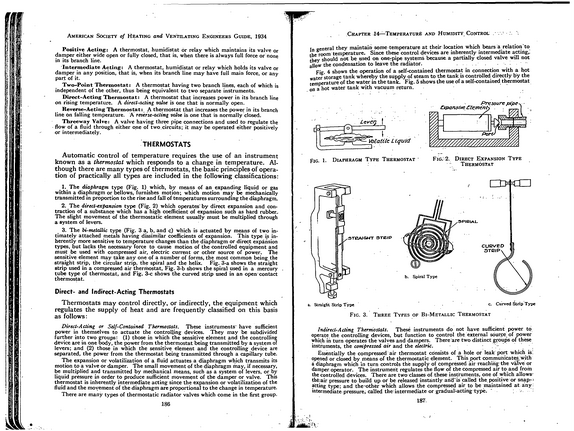
American Society of Heating and Ventilating Engineers Guide, 1934 Positive Acting: A thermostat, humidistat or relay which maintains its valve or damper either wide open or fully closed, that is, when there is always full force or none in its branch line.
refid# D0264pDk4Je9Xer6maro30qn1 page
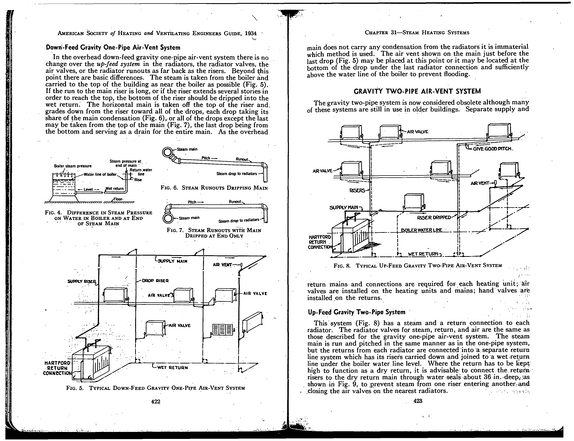
\ American Society of Heating and Ventilating Engineers Guide, 1934 Down-Feed Gravity One-Pipe Air-Vent System In the overhead down-feed gravity one-pipe air-vent system there is no change over the up-feed system in the radiators, the radiator valves, the air valves, or the radiator runouts as far back as the risers.
refid# zd0k297bJzKLyOZR1z2zOBeBn1 page
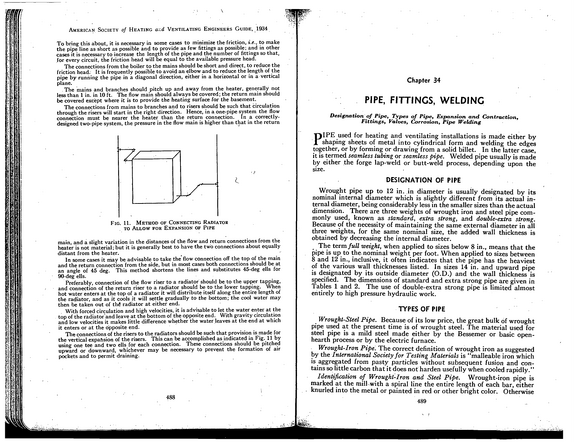
\ American Society of Heating ar.d Ventilating Engineers Guide, 1934 To bring this about, it is necessary in some cases to minimize the friction, i.e., to make the pipe line as short as possible and to provide as few fittings as possible; and in other cases it is necessary to increase the length of the pipe and the number of fittings so that, for every circuit, the friction head will be equal to the available pressure head.
refid# 3YbD46RdnyoJVBwqan1k29jD1 page
American Society of Heating and Ventilating Engineers Guide, 1934 Carrier 620-625 Grinnell Co., Inc. 700-703, 745 W.
refid# KJOxrxVq6b4GQ4RGr69xxExN1 page
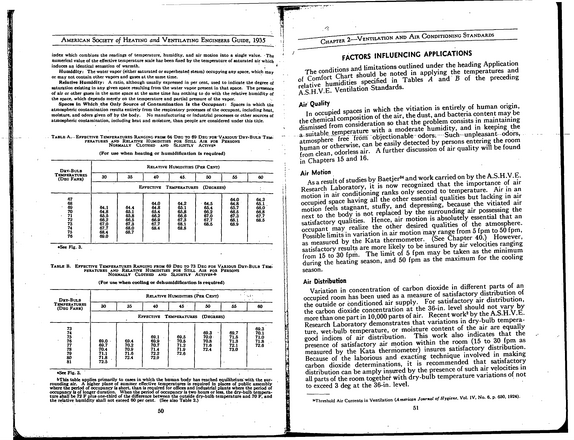
of andAmerican Society Heating Ventilating Engineers Guide, 1935 index which combines the readings of temperature, humidity, and air motion into a single value.
refid# k64qjRQnoGYYR8xmEnD6gNLGB1 page
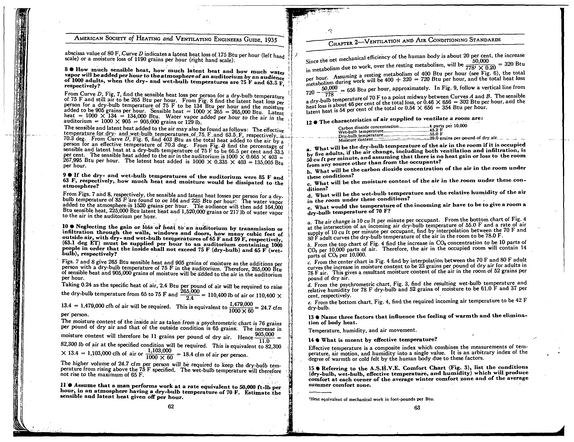
American Society of Heating and Ventilating Engineers Guide, 1935 abscissa value of 80 F, Curve D indicates a latent heat loss of. 175 Btu per hour (left hand scale) or a moisture loss of 1190 grains per hour (right hand scale): 8 How much sensible heat, how much latent heat and how much water vapor will be added per hour to the atmosphere of an auditorium by an audience of 1000 adults, when the dry- and wet-bulb temperatures are 75 F and 63.5 F, respectively?
refid# GmZK0NO666xgE9y9qq6OR7MVn1 page
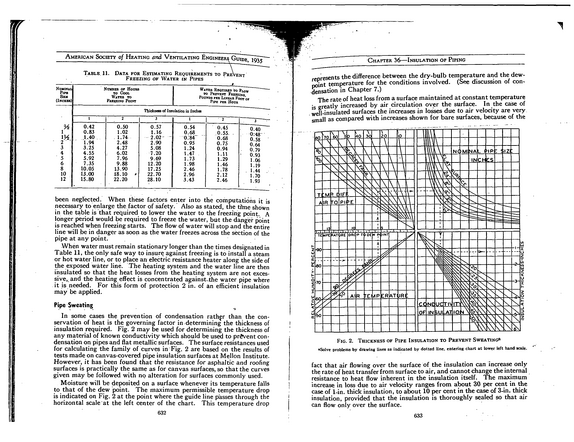
American Society of Heating and Ventilating Enginee Guide, 1935 Nominal!
refid# by4b05aXZ6oQX2dezn96kqR961 page
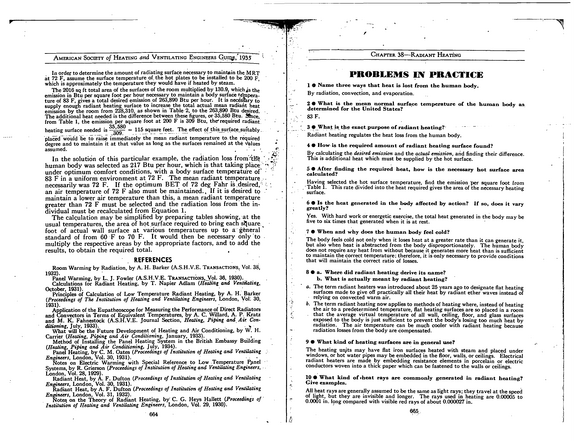
American Society 0/Heating and Ventilating Engineers Qun^,'l935 In order to determine the amount of radiating surface necessary to maintain the MRT at 72 F, assume the surface temperature of. the hot plates to be installed to be 200 F, which is approximately the temperature they would have if heated by steam.
refid# vV13gnorXg4JyK8BJQOVkp6881 page
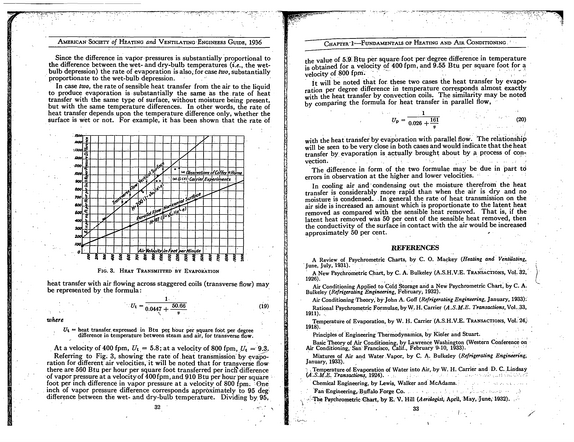
American Society of Heating and Ventilating Engineers Guide, 1936 Since the difference in vapor pressures is substantially proportional to the difference between the wet- and dry-bulb temperatures the wet- bulb depression) the rate of evaporation is also, for case two, substantially proportionate to the wet-bulb depression.
refid# b5Q2zwEYVv5jnDL6gGXLXE0JO1 page