Refine
Estimated Years 1930-1939Clear
8,921 results foundRefine Search
American Society of Heating and.
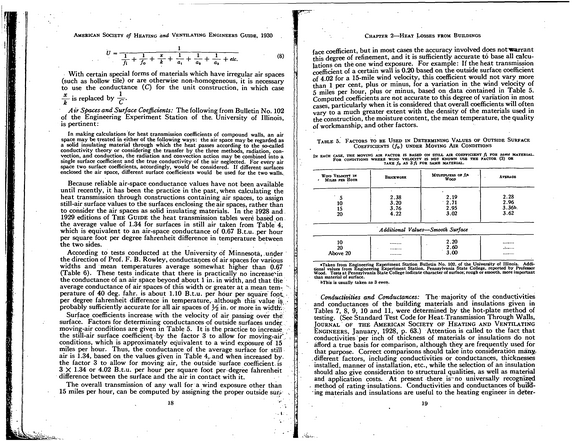
refid# 6B2wQ6GMk36zj2QvDKkJJe4E1 page
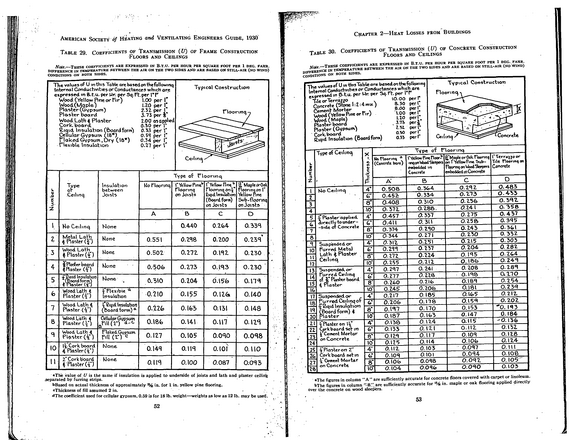
American Society 6} Heating and Ventilating Engineers Guide, 1930' Table 29 Coefficients of Transmission (U) of Frame Construction Floors and Ceilings Holt__These coefficients are expressed in B.t.u. per hour per square foot per 1 dec. fahr. difference in temperature between the air on the two sides and are based on stiu^air (no wind) conditions on both sides.
refid# RJgEN4nBrRaOwvR4yQ2w8gn1z1 page
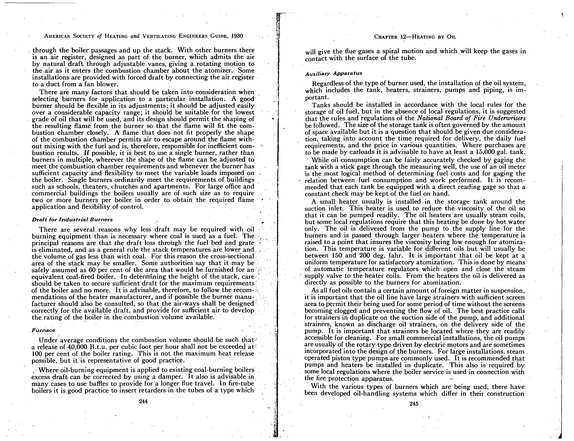
American Society of Heating and Ventilating' Engineers Guide, 1930 through the boiler passages and up the stack.
refid# NGX1D6roVZxLmOMzryvgv2d8b1 page
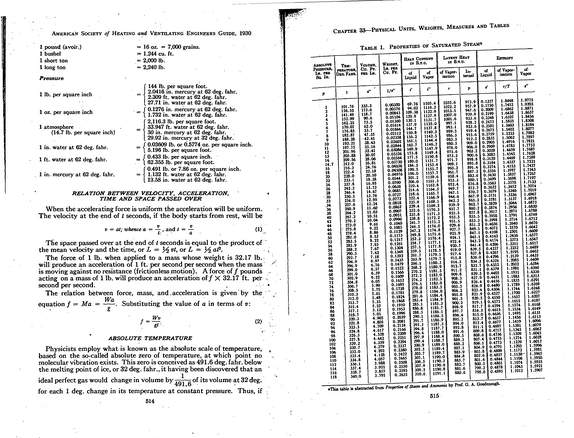
American Society of Heating and Ventilating Engineers Guide, 1930 1 pound (avoir.) 1 bushel 1 short ton 1 long ton 16 oz. = 7,000 grains. 1.244 cu. ft. 2,000 lb. 2,240 lb.
refid# OzeVn5azb63e3y2anNg4p2YzM1 page
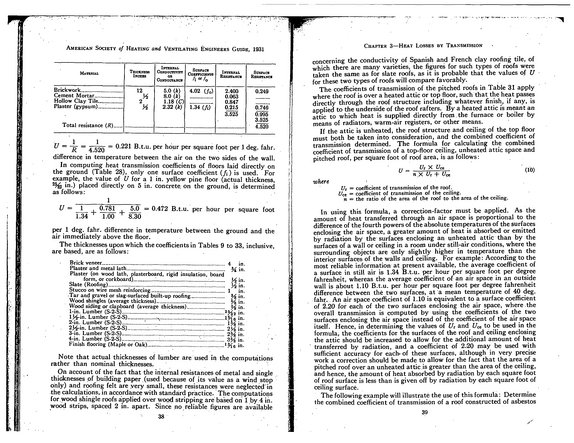
American Society of Heating and Ventilating Engineers Guide, 1931 Material Thickness Inches Internal CoNDUCTiViTT OB Conductance Surface Coefficients * h "/o Internal Resistance Brickwork. ...........................
refid# 6w0o7p3M0Yoj7RwwKMpK1Znym1 page
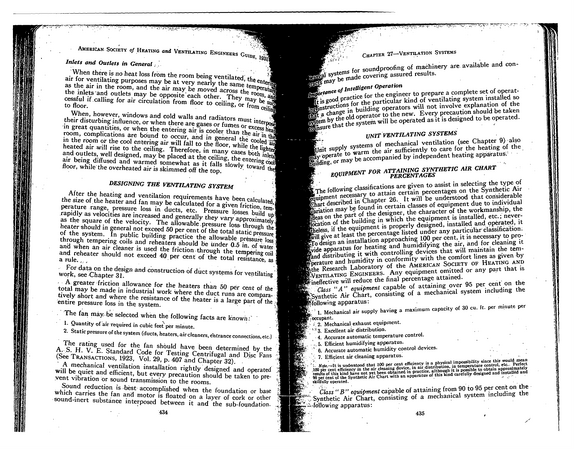
of andAmerican Society Heating Ventilating Engineers Guide m Inlets and Outlets in General *1931 When there is no heat loss from the room being ventilated, the em* air for ventilating purposes may be at very nearly the same temper ' as the air in the room, and the air may be moved across the room1 * the inlets and outlets may be opposite each other.
refid# g2nLNG7R8R6xxpLB6er3KXkVV1 page
American Society of Heating.and Ventilating Engineers Guide, 1931 Burton, C.
refid# 9JVYEegwzkK2qRzOOmKvd2eD71 page
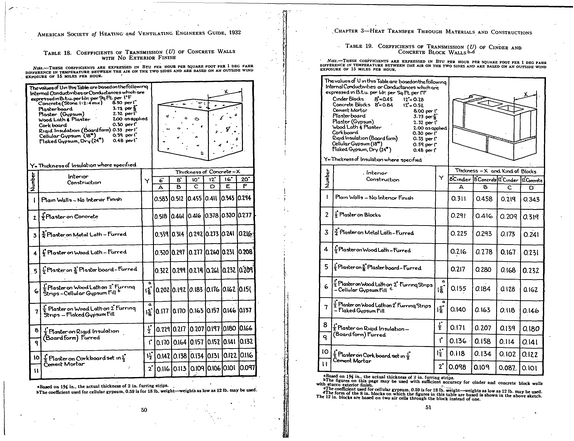
American Society of Heating' and Ventilating Engineers Guide, 1932 Table 18.
refid# KzG9n16D7oX3X5KzVB9r9mQXr1 page
American Society of Heating and Ventilating Engineers Guide, 1932 to Case D except that a portion of the air is recirculated.
refid# MGKng2RwQp7Xdze4dz6n8jRnz1 page
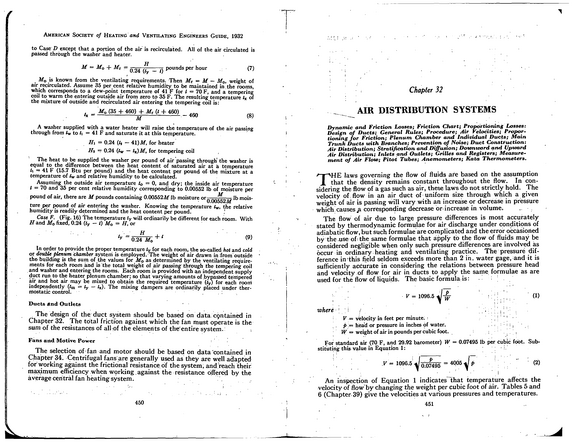
American Society of Heating anrf Ventilating Engineers Guide, 1932 454 Chapter 32--tAir Distribution Systems mill exhaust systems = 50 for heating and ventilating ducts = 45 for smooth and 40 for rough conduits of tile, brick or concrete.
refid# 2q11QJZ1jQxegjJ9NJ9OGmgMp1 page
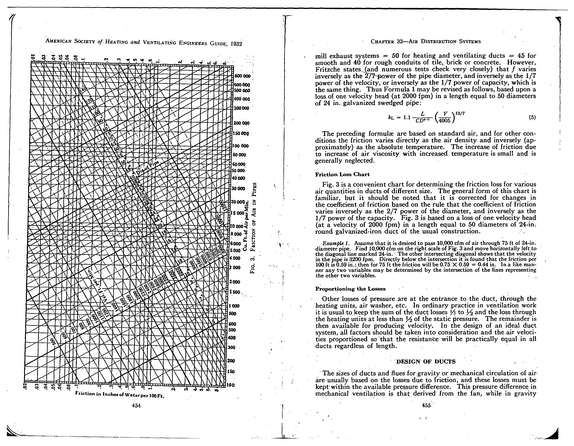
American Society of Heating and Ventilating Engineers Guide, 1932 motion since any probable error in recording the time of fall will only amount to a small fraction of the total period.
refid# ZB6n15NJkBp8jpLZXGoOa50GV1 page
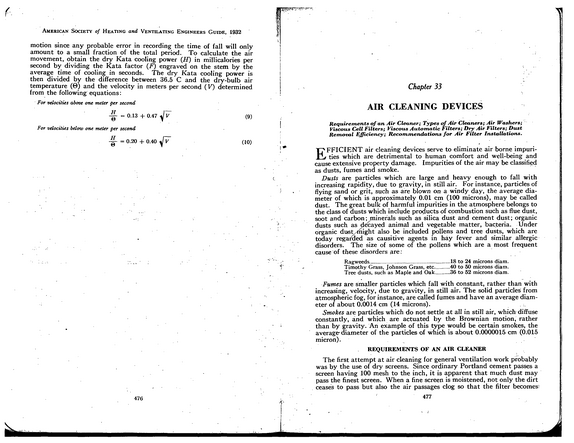
American Society of Heating and Ventilating Engineers Guide, 1934 respect to the building and should be designed for a maximum of natural light.
refid# By7GL7np3kexJExgQXQR9BQOm1 page
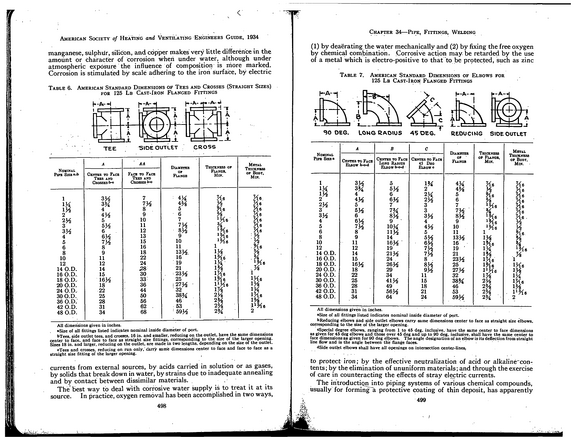
American Society of Heating and Ventilating Engineers Guide, 1934 manganese, sulphilr, silicon, and copper makes very little difference in the amount or character of corrosion when under water, although under atmospheric exposure the influence of composition is more marked.
refid# vBJX756oEbmB4Be5KoB25mjXY1 page
American Society of Heating and Ventilating Engineers Guide, 1934 White Plains--.
refid# pGDy9kyR060zGazZaDx8Q9NE1 page
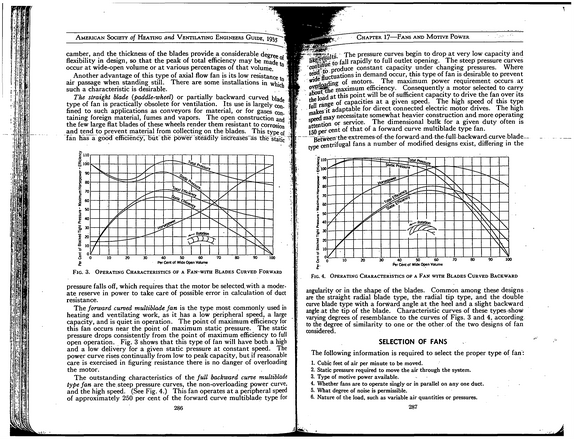
American Society of Heating and Ventilating Engineers Guide, 1935 camber, and the thickness of the blades provide a considerable degree f flexibility in design, so that the peak of total efficiency may be made t occur at wide-open volume or at various percentages of that volume. 10 Another advantage of this type of axial flow fan is its low resistance t air passage when standing still.
refid# XzdaEwjjOwE5e7aY90LjB1EmB1 page