Refine
Estimated Years 1930-1939Clear
8,921 results foundRefine Search
American Society of Heating and Ventilating Engineers Guide, 1934 show that this newly-developed scale of thermo-equivalent conditions not only indicates the sensation of warmth, but also determines the physio logical effects on the body induced by heat and cold.
refid# 9KK7Zd6R5gvL7Kq5oRjkQV931 page
American Society of Heating and Ventilating Engineers Guide, 1934 low speeds and located in the lower part of the cabinet, the back of the cabinet being connected to the outside through rust-proof louvers and screens.
refid# mqa5QGOd36070Q8mygKJOgy1k1 page
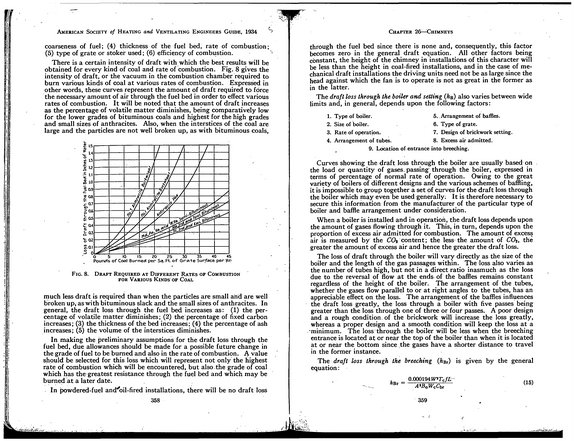
American Society of Heating and Ventilating Engineers Guide, 1934 coarseness of fuel; (4) thickness of the fuel bed, rate of combustion; (5) type of grate or stoker used; (6) efficiency of combustion.
refid# gR0QL2X7BaoaQvax2RQ74Mrq1 page
American Society of Heating and Ventilating Engineers Guide, 1934 drips are provided on this type of runout except a very small one which is sometimes installed on the boiler side of the stop valve.
refid# gD6LgqMoMkyGrEO6Q5j7ar0R91 page
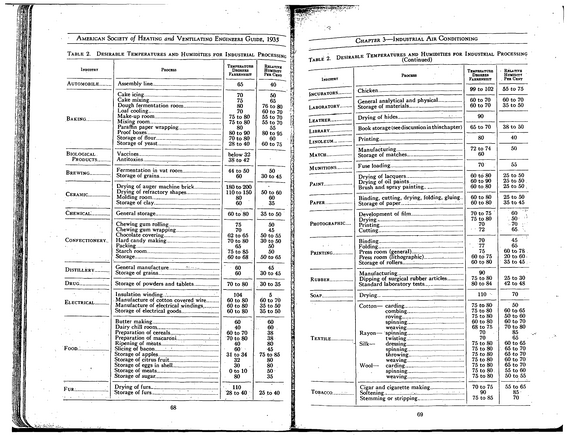
American Society of Heating and Ventilating Engineers Guide, 1935 Table 2.
refid# 7RbQkB3rJYZa3V2pQbJqwQxGe1 page
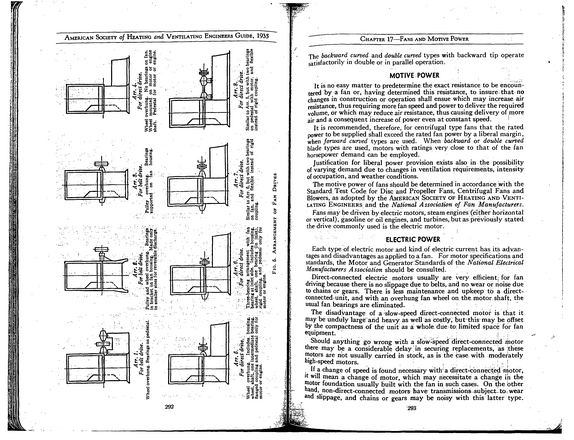
American Society of Heating and Ventilating Engineers Guide, 1935 So!
refid# aX8VwMjbgevQDOoLap6wLrMe1 page
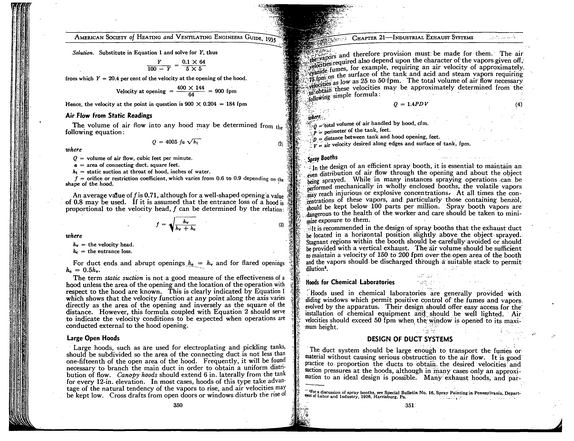
American Society of Heating and Ventilating Engineers Guide, 1935"^ Chapter 21--Industrial Exhaust Systems Solution.
refid# 17mxGK4rN49zqOK1Ez76L1zd1 page
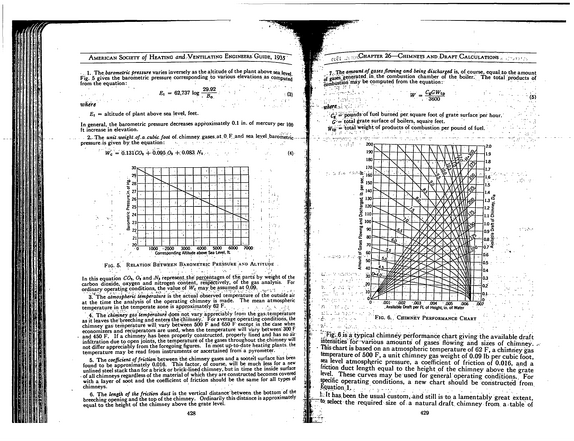
American Society of Heating and,Ventilating Engineers.
refid# G6wkRNz3BwR66z1yrOYya4Lmv1 page
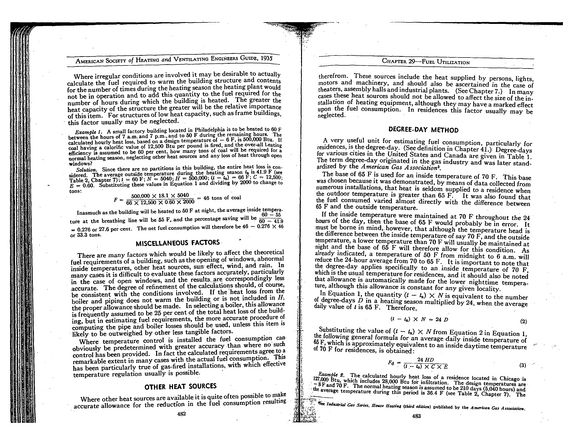
American Society of Heating and Ventilating Engineers Guide, 1935 Where irregular conditions are involved it may be desirable to actually calculate the fuel required to warm the building structure and contents for the number of times during the heating season the heating plant would not be in operation and to add this quantity to the fuel required for the number of hours during which the building is heated.
refid# KJg0nQ73oX6Q3aL4090rd8RZN1 page
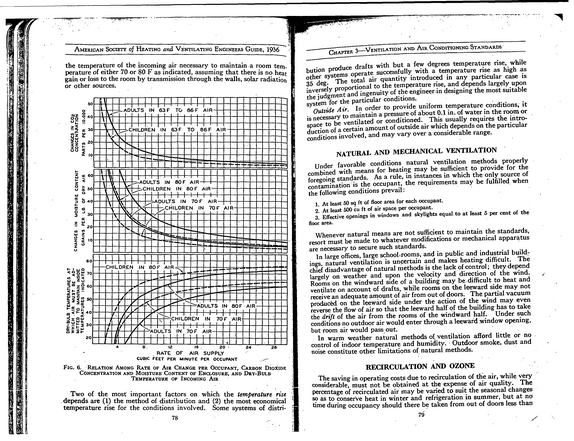
American Society of Heating and Ventilating Engineers Guide, 1936 the temperature of the incoming air necessary to maintain a room tem perature of either 70 or 80 F as indicated, assuming that there is no. heat gain or loss to the room by transmission through the walls, solar radiation or other sources.
refid# weD09BoaxbVaw5Ex7zRMJbZ41 page
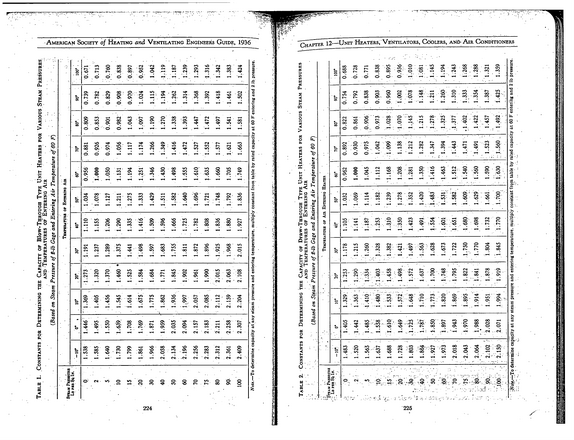
American Society of Heating and Ventilating Engineers Guide, 1936 224 Note.-- T o determ ine capacity a t.a n y steam pressure and entering tem perature, m u ltip ly constant fro m table b y rated capacity a t 60 F entering and 2.1b, pressure.
refid# bB2kBG5bJZXj9BoB9qn6Lzb2y1 page
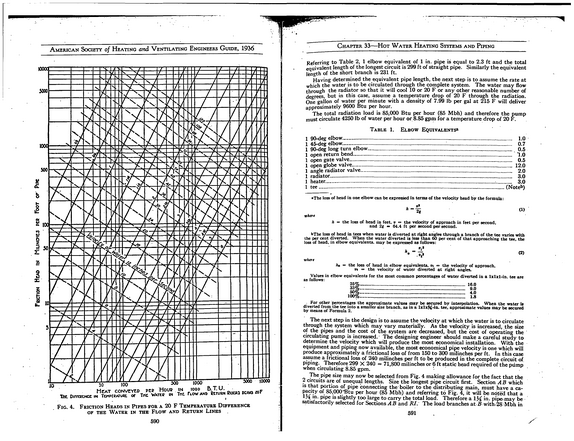
rictionF Head in Miuncneo per Foot o r Pipe American Society of Heating and Ventilating Engineers Guide, 1936 590 Chapter 33--Hot Water Heating Systems and Piping Referring to Table 2, 1 elbow equivalent of 1 in. pipe is equal to 2.3 ft and the total equivalent length of the longest circuit is 299 ft of straight pipe.
refid# 1g1NbO7GG651GZmJepoL4nkR51 page
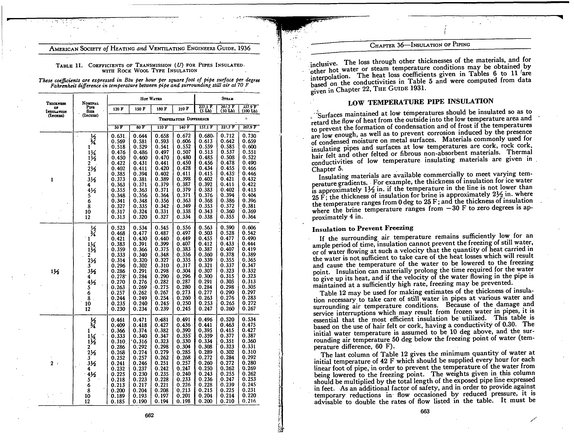
1936American Society of Heating and Ventilating Engineers Guide, Table 11.
refid# 10VERNO2R7q5k065qzk3NjeOq1 page
American Society of Heating and Ventilating Engineers Guide, 1936 sistance.
refid# 3epmpjV88MaE3qqxbapJZyKeJ1 page
American Society of Heating and Ventilating Engineers Guide, 1936 oil, so the amount of displacement of the liquid indicates the pressure being exerted on the instrument.
refid# YYjzQE6ynp1vydBnJmmkyoLk1 page