Refine
Estimated Years 1930-1939Clear
8,921 results foundRefine Search
American Society of Heating and Ventilating Engineers Guide, 1936 2.
refid# oMQzxJozBY8B52qE27zXxXEwr1 page
American Society of Heating and Ventilating Engineers Guide, 1936 Chapter 17--Fans increased supply of air in summer over that needed for winter is demanded.
refid# zVBmmbBZG1M1XBrm1XaoDpZz1 page
' American Society of Heating and Ventilating Engineers Guide, 1936 In exhaust ventilating systems where the air column moves toward the fan, noise due to the higher tip speeds and outlet velocities will not be so readily transmitted back through the air column to the building as when the air column is moving toward the rooms.
refid# omo4qpDpr5vbyz2pn5Qz0pkr1 page
American Society of Heating and Ventilating Engineers Guide, 1936 proportioning type but close the flue during the off periods of the gas burners.
refid# zaBvQ3jnEgod6ax5Q7Gp8BOR1 page
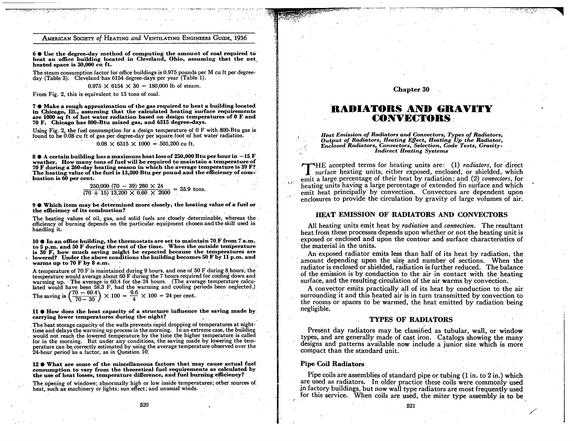
American Society of Heating and Ventilating Engineers Guide, 1936 6 Use the degree-day method of computing the amount of coal required to ' heat an office building located in Cleveland, Ohio, assuming that the net, heated space is 30,000 cu ft.
refid# ZnEqQjVJynZy2Rxwy2j31rzQJ1 page
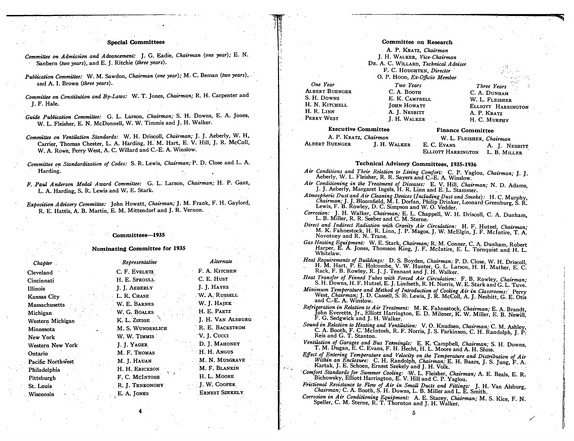
Special Committees Committee on Admission and Advancement: J.
refid# gaQpqOR2z8nMDnK7yE7wv5yKN1 page
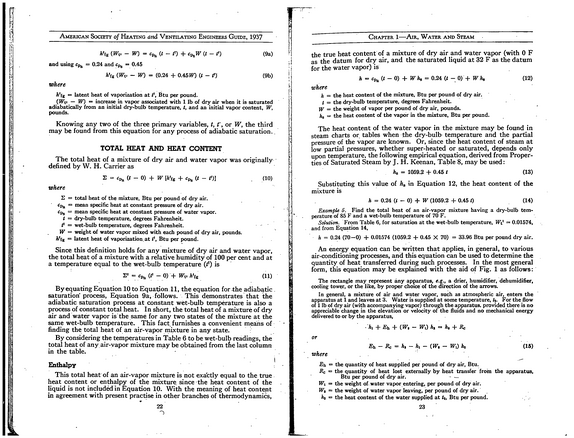
American Society of Heating and Ventilating Engineers Guide, 1937 h'lg {Wt. -- W) = Cpa - <') + CpSW (I - <') (9a) and using = 0.24 and cPa = 0.45 where A'fg (IFt. - WO = (0.24 + 0.45HO - <') (9b) h'fg = latent heat of vaporization at <', Btu per pound.
refid# 5kvry4anByOm0XGBbwZzjRDKJ1 page
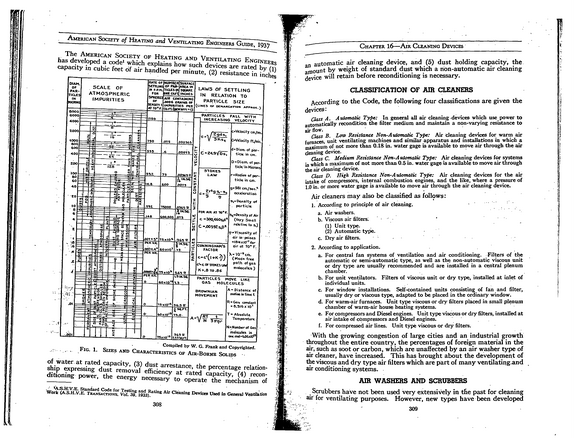
American Society of Heating and Ventilating Engineers Guide, 1937 The American Society of Heating and Ventilating Engineers has developed a code1 which explains how such devices are rated by (l) capacity in cubic feet of air handled per minute, (2) resistance in inches 1---------->----------------------------------------------------- Compiled by W.
refid# b52OkyZBBL8jBJE0NOX06Y5Jk1 page
American Society of Heating and Ventilating Engineers Guide, 1937 Gas-Fired Boilers Information on gas-fired boilers will be found in Chapter 25.
refid# E1jzDaGxy5ZMVOEgLz5aggDj1 page
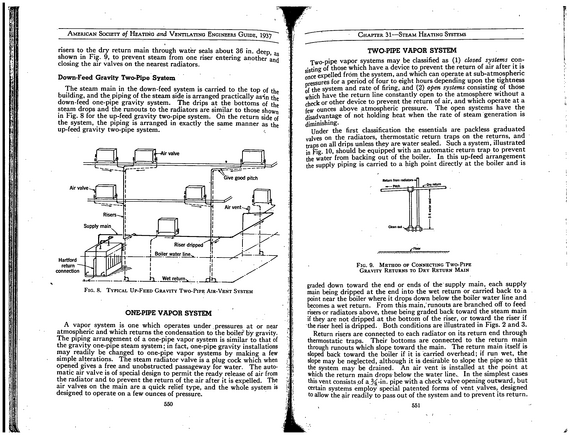
American Society of Heating and Ventilating Engineers Guide, 1937 ' risers to the dry return main through water seals about 36 in. deep, ^ shown in Fig. 9, to prevent steam from one riser entering another and closing the air valves on the nearest radiators.
refid# QJ0NpGVnyogpk0ZzXm21aabjo1 page
r --' Heating Ventilating Air Conditioning Guide 1938 2 f What are the principal differences between a radiator and a convector?
refid# GmX43EN11vZ2ezMgGEkrRNE9x1 page
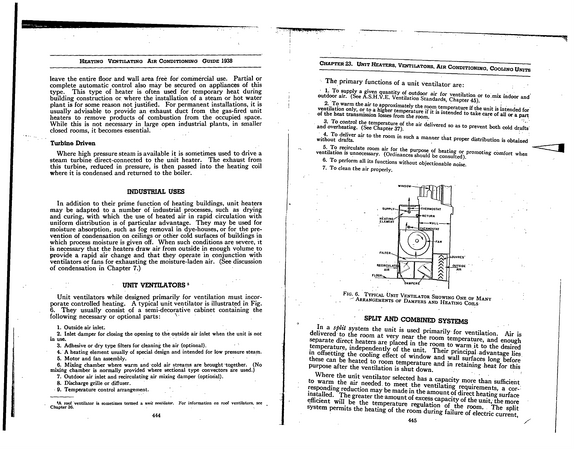
Heating Ventilating Air Conditioning Guide 1938 leave the entire floor and wall area free for commercial use.
refid# byN1k6bzV1kDX7B9rEd1qj6b01 page
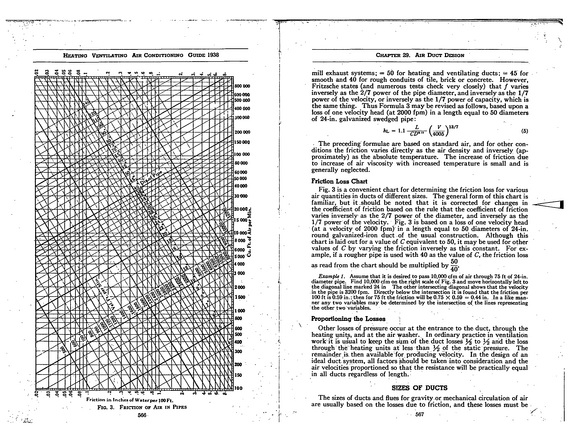
Heating Ventilating Air Conditioning Guide 1938 n' M Tf Ifl qO 800 000 Friction in Inches of Waterper 100 Ft.
refid# jqZz3v702kxqk8q70DeNzxr91 page
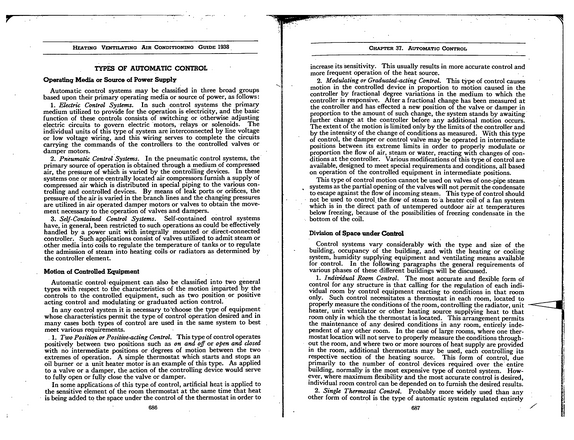
r Heating Ventilating Air Conditioning Guide 1938 TYPES OF AUTOMATIC CONTROL Operating Media or Source oi Power Supply Automatic control systems may be classified in three broad groups based upon their primary operating media or source of power, as follows: 1.
refid# GKdXv48Km559EBLLegEa6q0Rr1 page
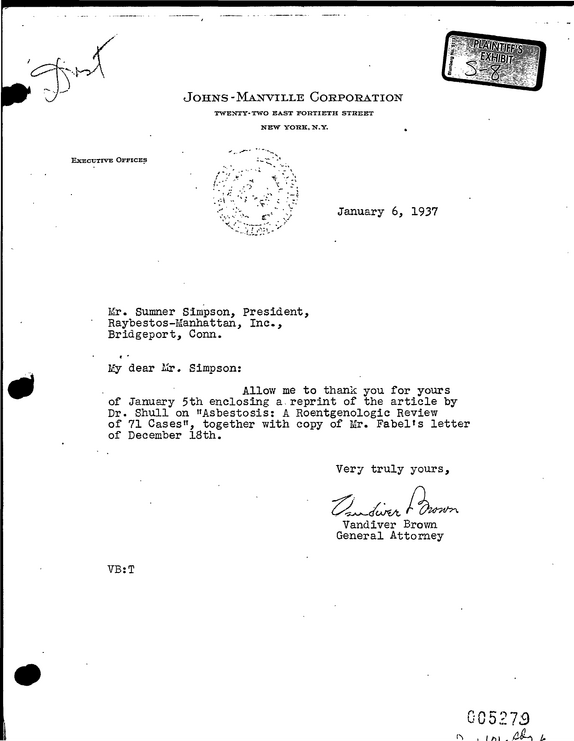
Executive Offices TWENTY-TWO EAST EOKTIETH STHEET NEW YOIiK, N.Y.
refid# 4JadE2pM8ZQ8gLGDV55z0RnMj1 page