Refine
Estimated Years 1930-1939Clear
8,921 results foundRefine Search
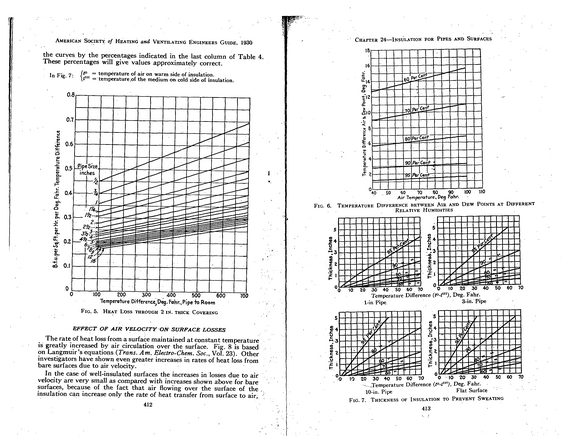
American Society of Heating and Ventilating Engineers Guide, 1930 the curves by the percentages indicated in the last column of Table 4.
refid# gajyBEYMXpYZwaw4rDR5d2Jb91 page
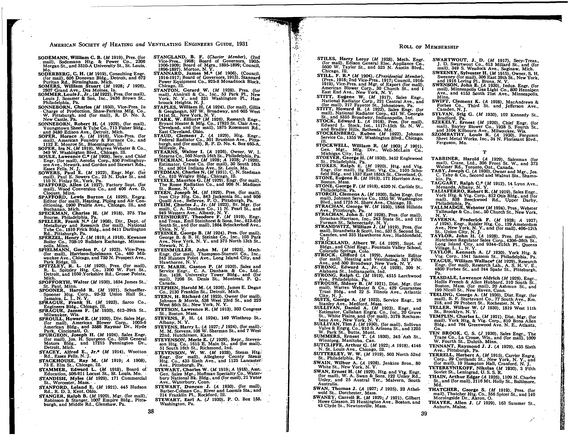
American Society of Heating and Ventilating Engineers Guide, 1931 SODEMANN, William C.
refid# 0EV1qox6QmoykM46aZ8M27Gd1 page
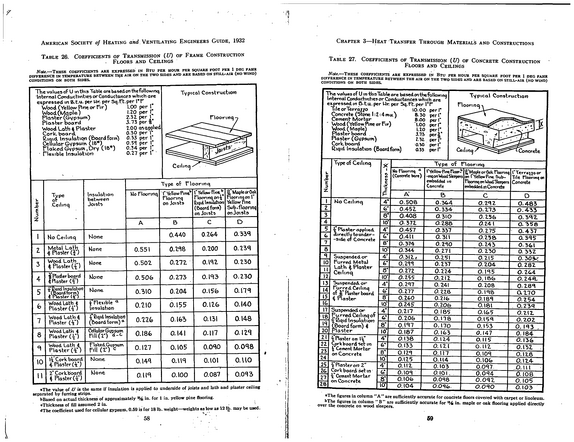
American Society of Heating and Ventilating Engineers Guide, 1932 Table 26.
refid# jy6xBQxpVyK9Lj6ZD5bd6QEpZ1 page
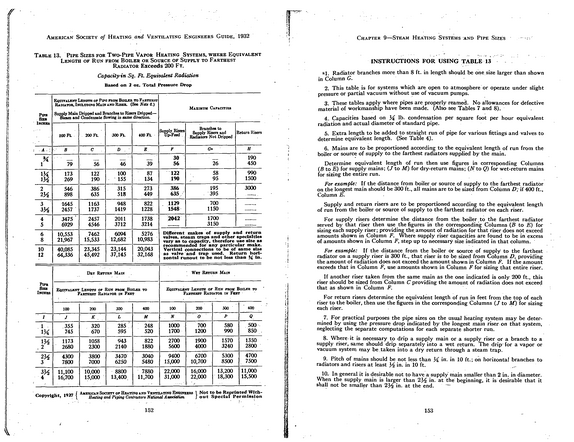
American Society of Heating and Ventilating Engineers Guide, 1932 Table 13.
refid# B8n1mnKrb8DN43qrd4pb9O4eE1 page
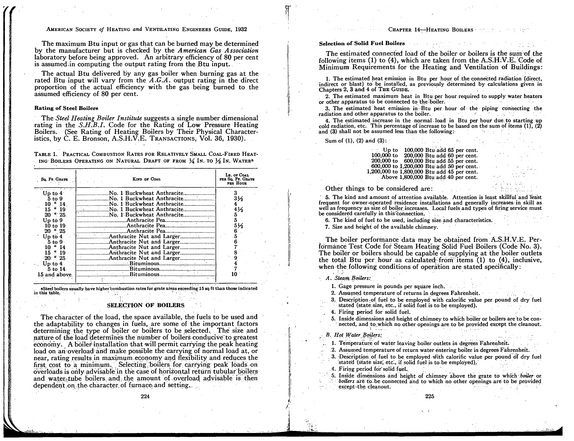
American Society of Heating and Ventilating Engineers Guide, 1932 The maximum Btu input or gas that can be burned may be determined by the manufacturer but is checked by the American Gas Association laboratory before being approved.
refid# VKjpQVNvzDgQMJyG66voZr63g1 page
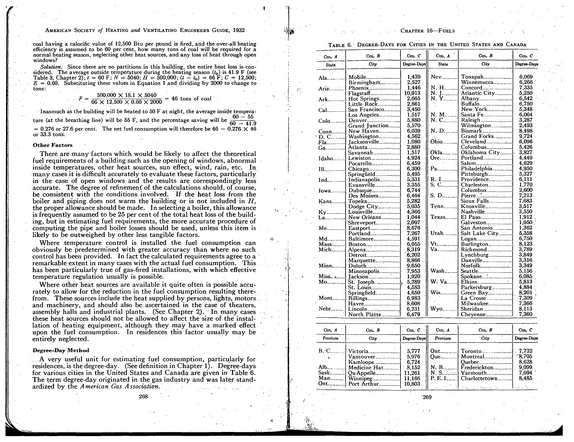
American Society of Heating and Ventilating Engineers Guide, 1932 coal having a calorific value of 12,500 Btu per pound is fired, arid the over-all heating efficiency is assumed to be 60 per cent, how many tons of coal will be required for a normal heating season, neglecting other heat sources, and any loss of heat through open windows?
refid# 6b78zdV3X1w0R3pr52XNrO14R1 page
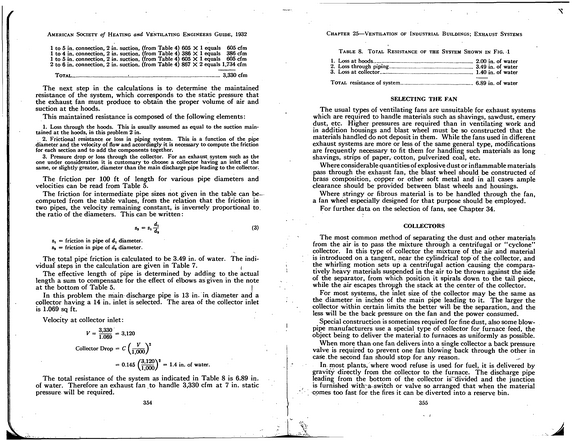
American Society of Heating and Ventilating Engineers Guide, 1932 1 to 5 in.connection, 2 in. suction, (from Table 4) 605 X 1 equals 605 cfm 1 to 4 in.connection, 2 in. suction, (from Table 4) 386 X 1 equals 386 cfm 1 to 5 in.connection, 2 in. suction, (from Table 4) 605 X 1 equals 605 cfm 2 to 6 in.connection, 2 in. suction, (from Table 4) 867 X 2equals 1,734 cfm Total......... ................................:.............................................................. -- 3,330 cfm The next step in the calculations is to determine the maintained resistance of the system, which corresponds to the static pressure that the exhaust fan must produce to obtain the proper volume of air and suction at the hoods.
refid# 2j193XOnV0MgeZo53QR335evN1 page
American Society of Heating and Ventilating Engineers Guide, 1932 RHEA, Chester A.
refid# MMoKGwRXy8mLxppMnX1orpKj71 page
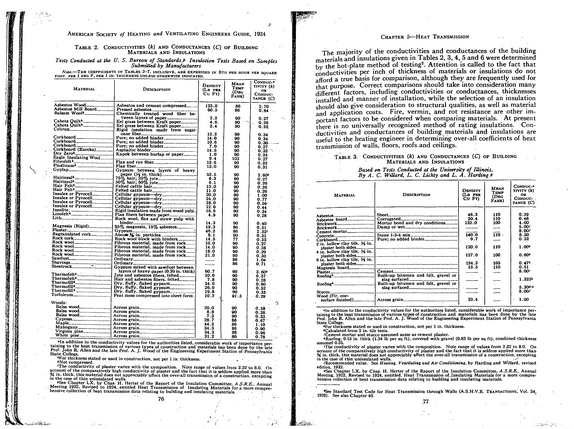
ir American Society of Heating and Ventilating Engineers Guide, 1934 Table 2.
refid# 8R4vOVpKodeMrkxBGY0jpBbZm1 page
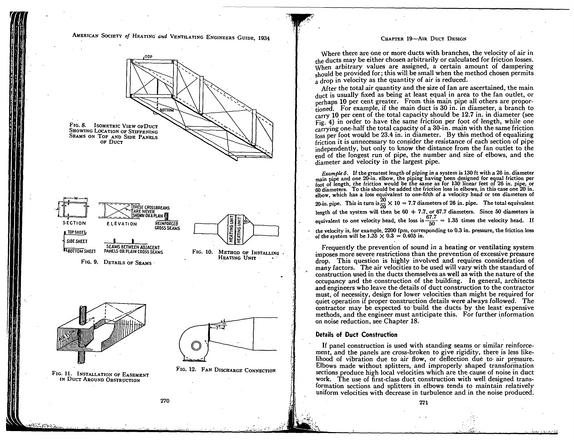
of andAmerican Society Heating Ventilating Engineers Guide, 1934 SECTION I TOP SHELL ' SIDE SHEET Bottom sheet these crossbreaks ' ARE NEVER = .
refid# Em0XznXxZ7BzkOzn4aKV0X2pV1 page
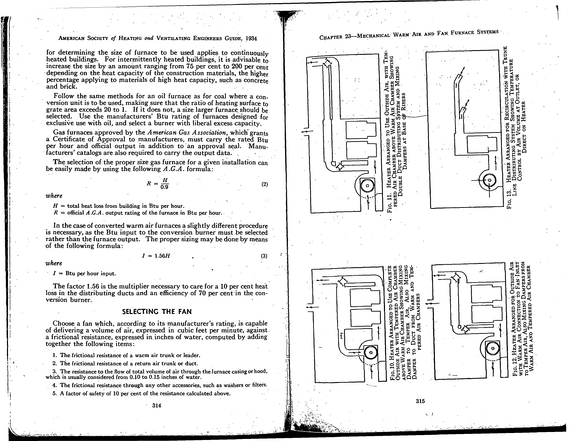
American Society of Heating ond Ventilating Engineers Guide, 1934 for determining the size of furnace to be used applies to continuously heated buildings.
refid# MGzVVvK1vZdzeKov1kE23JB0j1 page
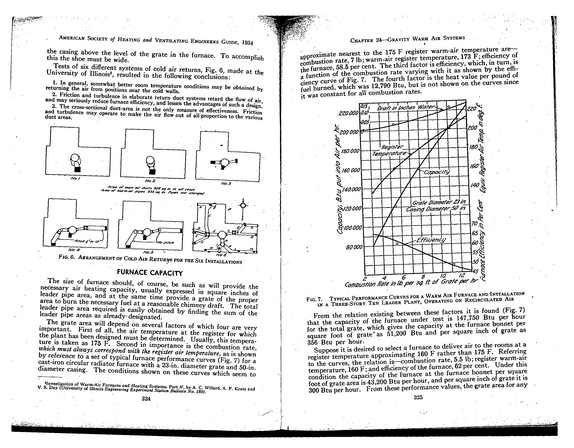
, American Society of Heating and Ventilating Engineers Guide, 1934 the casing above the level of the grate in the furnace.
refid# 0J72RVB1LMyMJbY586RvkN0zn1 page
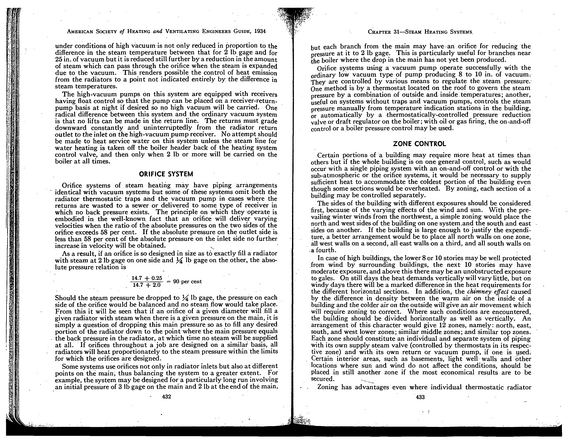
American Society of Heating and Ventilating Engineers Guide, 1934 under conditions of high vacuum is not only reduced in proportion to the difference in the steam temperature between that for 2 lb gage and for 25 in. of vacuum but it is reduced still further by a reduction in the amount of steam which can pass through the orifice when the steam is expanded due to the vacuum.
refid# a69OLEzxE1n1mrqX650Rp4NR1 page
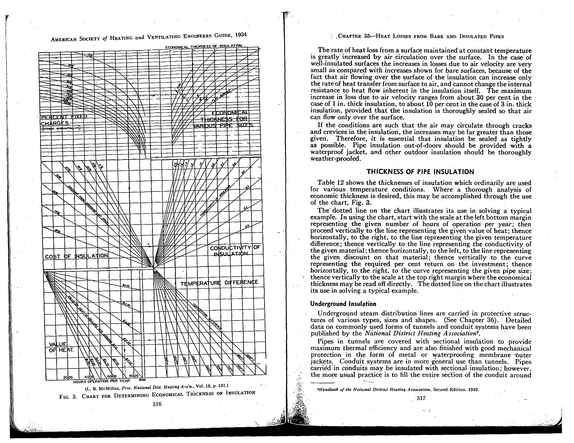
American Society of Heating and Ventilating Engineers Guide, 1934 (L.
refid# O14zqXL86aGbz0kpm9KMBYee1 page
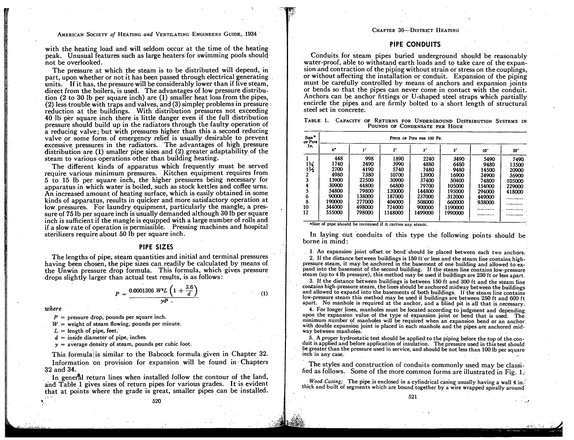
American Society of Heating and Ventilating Engineers Guide, 1934 with the heating load and will seldom occur at the time of the heating peak.
refid# 3NK6Z7MZoeg8aany9EaO6oB3a1 page