Refine
Estimated Years 1930-1939Clear
8,921 results foundRefine Search
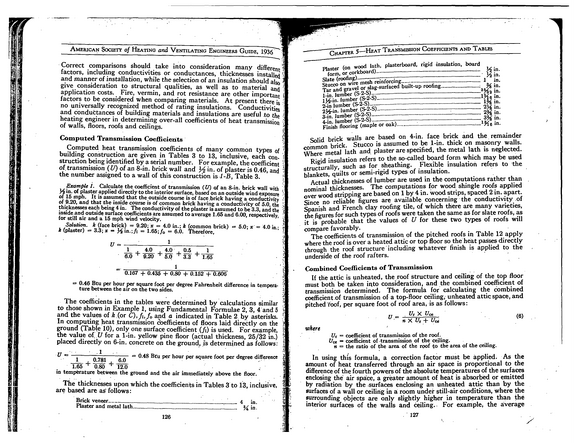
American Society of Heating and Ventilating Engineers Guide, 1936 Correct comparisons should take into consideration many different factors, including conductivities or conductances, thicknesses installed and manner of installation, while the selection of an insulation should also give consideration to structural qualities, as well as to material and application costs.
refid# NG27O3Zqd91ep1NJMkBB0LkdD1 page
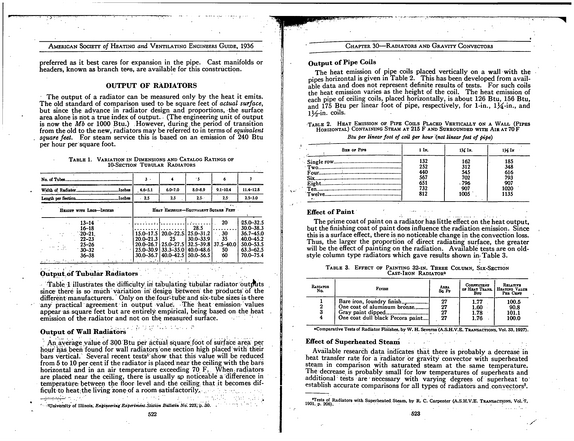
American Society of Heating and Ventilating Engineers Guide, 1936 preferred as it best cares for expansion in the pipe.
refid# qd0enZzd8E8JN2wjG1b0mgBjR1 page
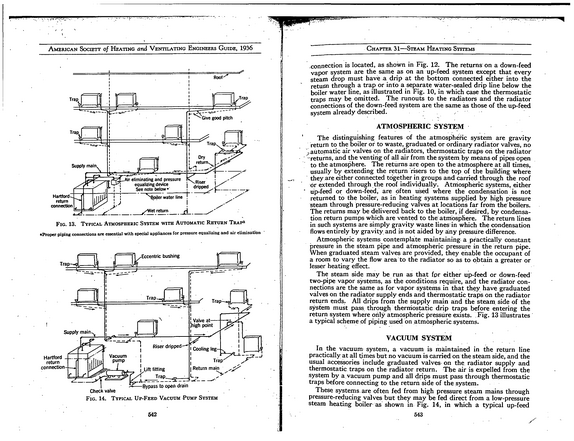
American Society of Heating and Ventilating Engineers Guide, 1936 Fig. 13.
refid# gDJx9Lr5Xe3KYG9Mzj6BB7Bna1 page
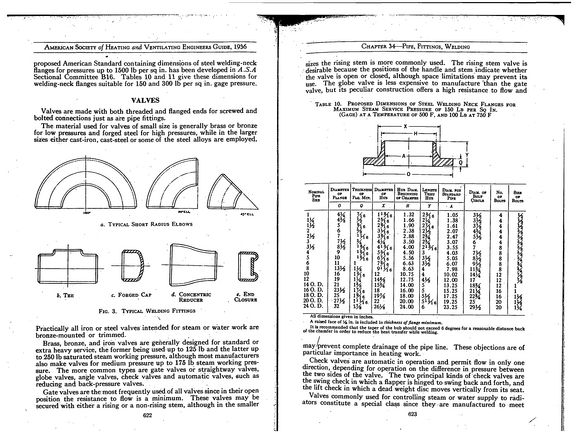
American Society of Heating and Ventilating Engineers Guide, 1936 proposed American Standard containing dimensions of steel welding-neck flanges for pressures up to 1500 lb per sq in. has been developed in A.S.A Sectional Committee B16.
refid# MGxR9mGQw4xYNO6Qa8DxgRaqk1 page
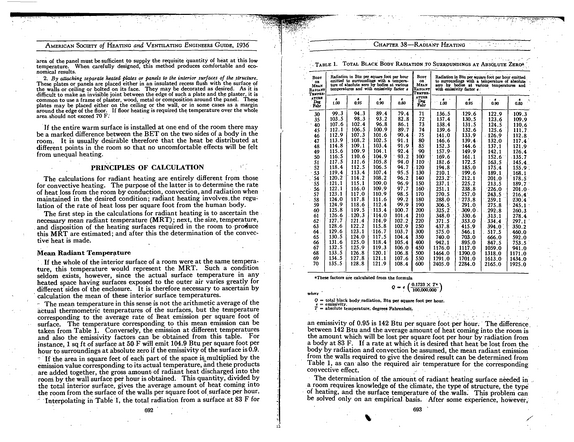
1936American Society of Heating and Ventilating Engineers Guide, area of the panel must be sufficient to supply the requisite quantity of heat at this low temperature.
refid# nmeJYzLLrpdGpwDEMBbkbOY4R1 page
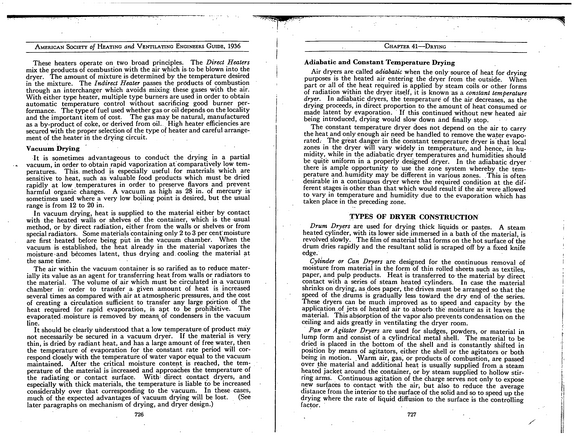
American Society of Heating and Ventilating Engineers Guide, 1936 These heaters operate on two broad principles.
refid# O3apmqnVLkB80gx2jXMzEQnML1 page
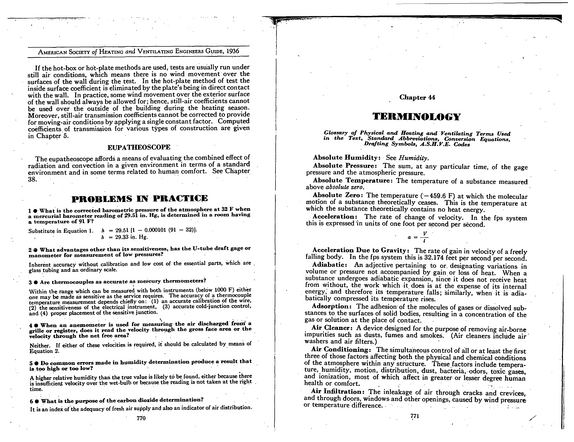
American Society of Heating and Ventilating Engineers Guide, 1936 If the hot-box or hbt-plate methods are used, tests are usually run under still air conditions, which means there is no wind movement over the surfaces of the wall during the test.
refid# Vjwo07zKxX3q7nRe33mvGRmGq1 page
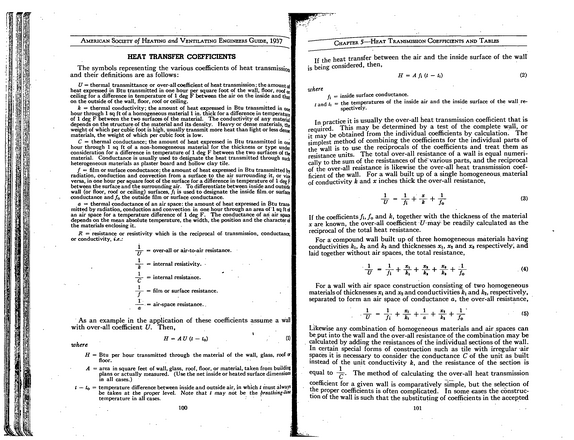
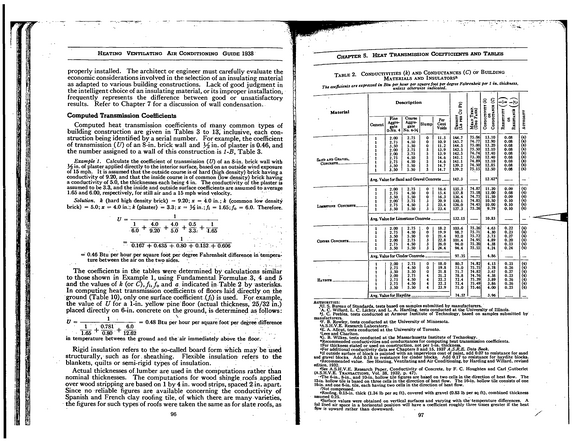
1 American Society of Heating and Ventilating Engineers Guide, 1937 HEAT TRANSFER COEFFICIENTS The symbols representing the various coefficients of heat transmission and their definitions are as follows: U = thermal transmittance or over-all coefficient of heat transmission; the amount o| heat expressed in Btu transmitted in one hour per square foot of the wall, floor, roof or ceiling for a difference in temperature of 1 deg F between the air on the inside and that on the outside of the wall, floor, roof or ceiling. k <= thermal conductivity; the amount of heat expressed in Btu transmitted in one hour through 1 sq ft of a homogeneous material 1 in. thick for a difference in temperature of 1 deg F between the two surfaces of the material.
refid# zdG5pqyg3pDwRG0652J5Ve0Yg1 page
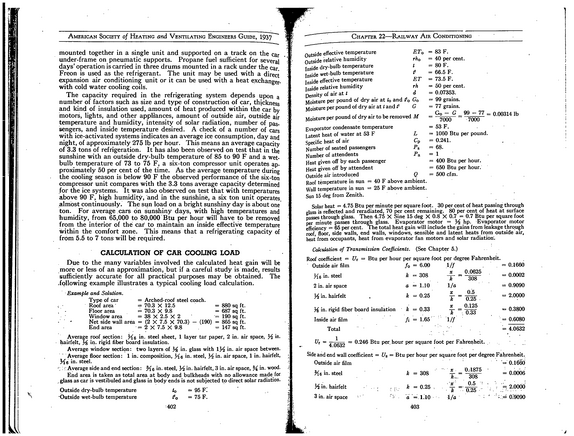
American Society of Heating and Ventilating Engineers Guide, 1937 mounted together in a single unit and supported on a track on the car under-frame on pneumatic supports.
refid# zdpyjDQNXq4eqLJrnx9pqV0n61 page
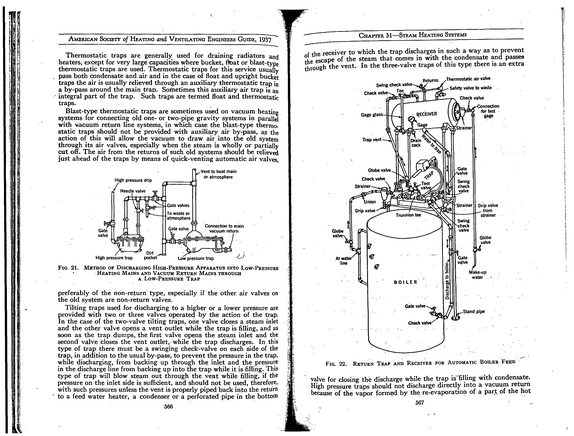
American Society of Heating and Ventilating Engineers Guide, 1937 Thermostatic traps are generally used for draining radiators and heaters, except for very large capacities where bucket, flbat or blast-type thermostatic traps are used.
refid# RjdnpX3Yea9zyN2BMdN02E7xX1 page
Heating Ventilating Air Conditioning Guide 1938 OPTIMUM AIR CONDITIONS No single comfort standard can be laid down which would meet every heed.

refid# v12v2zBJBO11kodRjEb84yOgE1 page
Heating Ventilating Air Conditioning Guide 1938 properly installed.
refid# K5Qp0jekQbMbwwqvYdbnK3N1 page
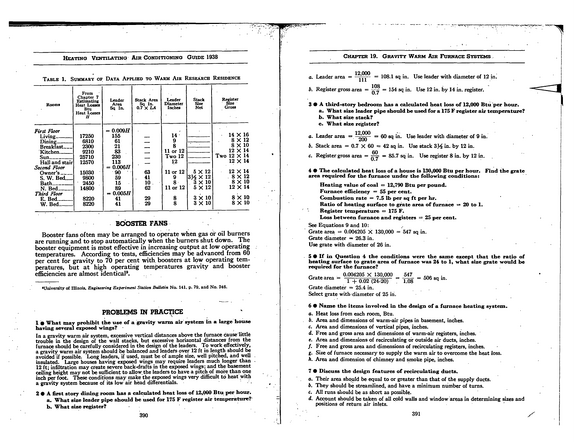
Heating Ventilating Air Conditioning Guide 1938 Table 1.
refid# R2jB1Gn4D6Kj2G1jK6mr7bwz1 page
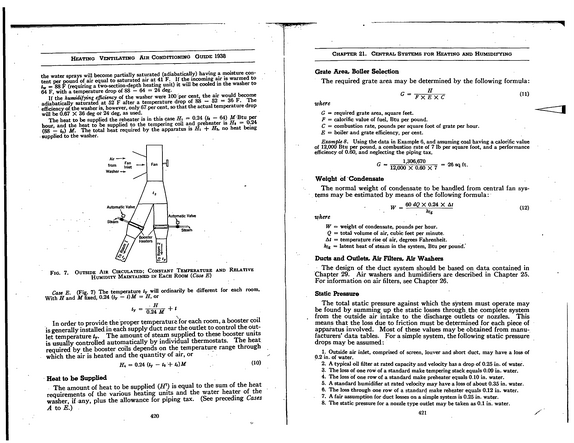
Heating Ventilating Air Conditioning Guide 1938 the water sprays will become partially saturated (adiabatically) having a moisture con tent per pound of air equal to saturated air at 41 F.
refid# XRJ9a7byZdExVE1xEn8JbZJOg1 page
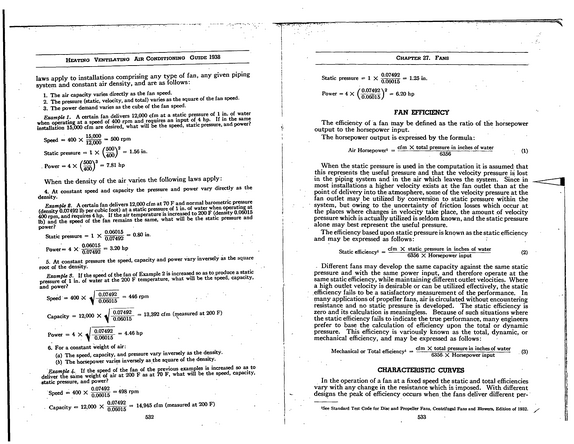
Heating Ventilating Air Conditioning Guide 1938 laws apply to installations comprising any type of fan, any given piping system and constant air density, and are as follows: 1.
refid# ymaj3grMKZL0JQw9nqNmxJwNr1 page