Refine
Estimated Years 1930-1939Clear
8,921 results foundRefine Search
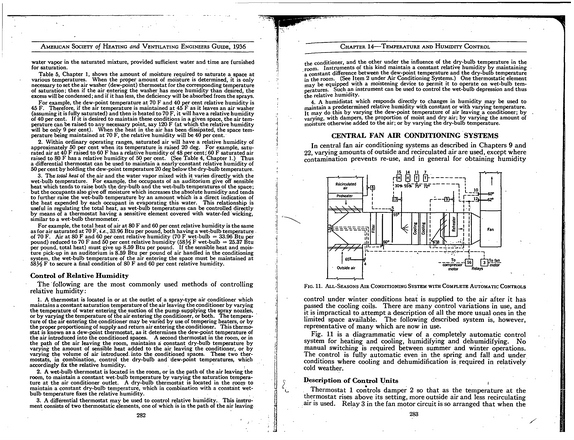
American Society of Heating and Ventilating Engineers Guide, 1936 water vapor in the saturated mixture, provided sufficient water and time are furnished for saturation.
refid# 1QezXr4pK3DjzMoqL4Qgd14ME1 page
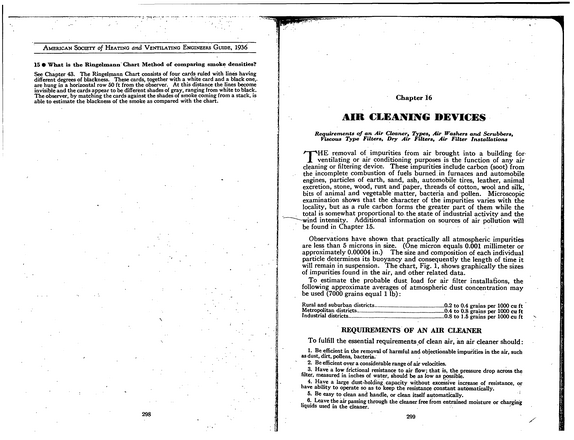
American Society of Heating and Ventilating Engineers Guide, 1936 15 What is the Ringelmann Chart Method of comparing smoke densities?
refid# g2zR0bwDjpk0xqZpYZkozxxdL1 page
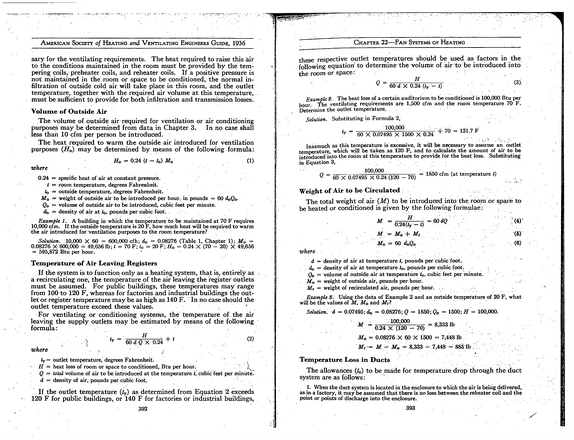
American Society of Heating and Ventilating Engineers Guide, 1936 sary for the ventilating requirements.
refid# 1y1v755j9Z07p5D2z4VJLnv9a1 page
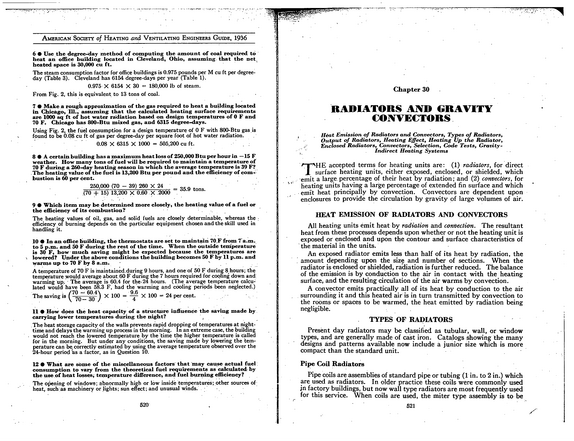
American Society of Heating and Ventilating Engineers Guide, 1936 6 Use the degree-day method of computing the amount of coal required to ' heat an office building located in Cleveland, Ohio, assuming that the net, heated space is 30,000 cu ft.
refid# ZnEqQjVJynZy2Rxwy2j31rzQJ1 page
American Society of Heating and Ventilating Engineers Guide, 1936 SWANSON, Rolf G. (5 1935), 324 Walnut St.
refid# OJ47xe3qD0gpR9mYz72zqVBye1 page
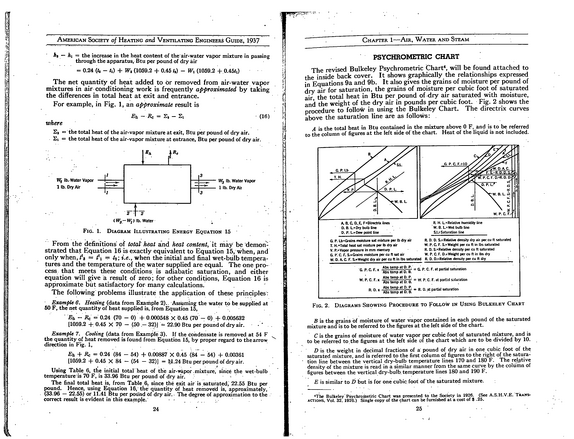
American Society of Heating and Ventilating Engineers Guide, 1937 ht -- hi = the increase in the heat content of the air-water vapor mixture in passing through the apparatus, Btu per pound of dry air = 0.24 (<, - ti) + W, (1059.2 + 0.45 /,) - Wi (1059.2 + 0.45/,) The net quantity of heat added to or removed from air-water vapor mixtures in air conditioning work is frequently approximated by taking the differences in total heat at exit and entrance.
refid# GKLbee41V8ymbnpqLVyZBXL9v1 page
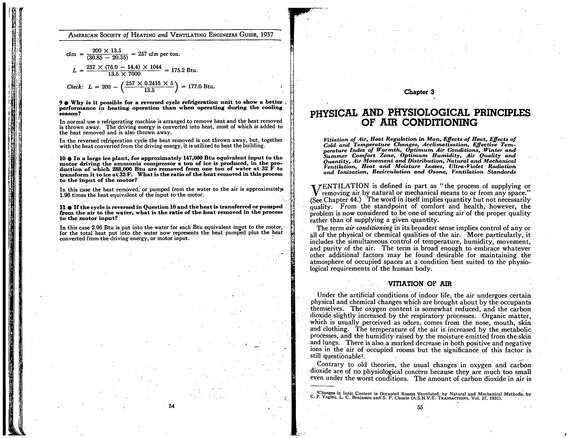
American Society of Heating and Ventilating- Engineers Guide, 1937 cfm 200 X 13.5 (30.85 - 20.35) 257 cfm per ton. 257 X (76.0 - 14.4) X 1044 175.2 Btu. 13.5 X 7000 )Check: L = 200 - / 257 \ X 0.2415 13.5 X 5 177.0 Btu. 9 Why is it possible for a reversed cycle refrigeration unit to show a better . performance in heating operation than when operating during the cooling season?
refid# OJ1eOnEM85Yj706L7OyxbebNK1 page
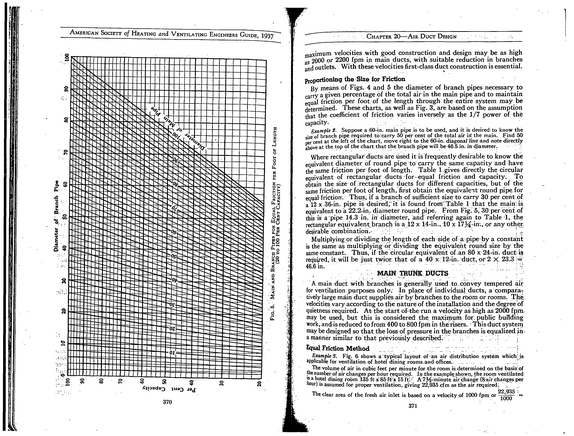
D iam eter ,s>f ' Branch Pipe M a in a n d B ranch Pipes for E q u a l F r ic tio n per F oot of L en g th (20 to 100 Per Ce n t Ca p a c ity ) American Society of Heating and Ventilating Engineers Guide, 1937 8S $ 370 ,id d Chapter 20-^Air Duct Design maximum velocities with good construction and design may be as high as 2000 or 2200 fpm in main ducts, with suitable reduction in branches and outlets.
refid# 50bLGpk54o4vMpN6bdqqOwg41 page
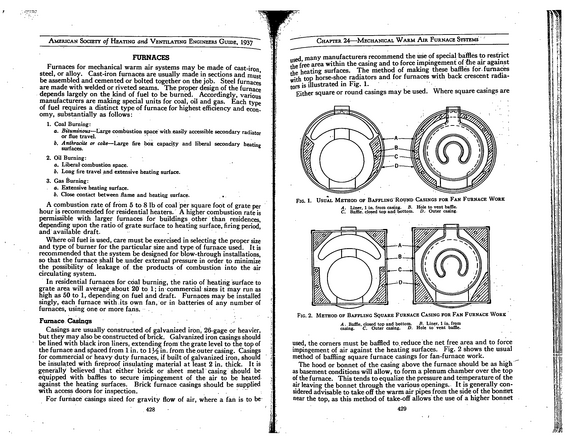
American Society of Heating and Ventilating Engineers Guide, 1937 FURNACES Furnaces for mechanical warm air systems may be made of cast-iron steel, or alloy.
refid# 5Q5zVQRbRz5b6bvx5pMbemx51 page
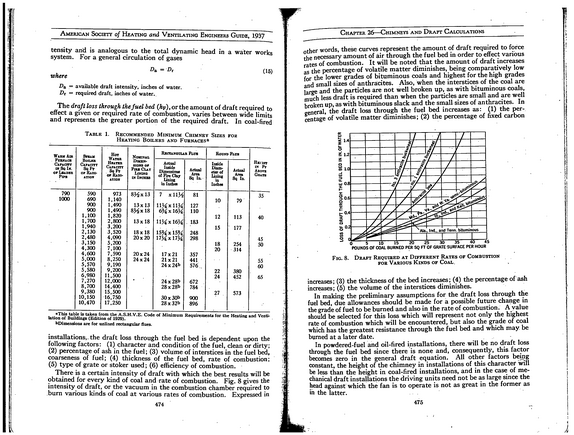
American Society of Heating and Ventilating Engineers Guide, 1937 tensity and is analogous to the total dynamic head in a water works system.
refid# 9YLaN3wEeJZejo5KZmmGdRr51 page
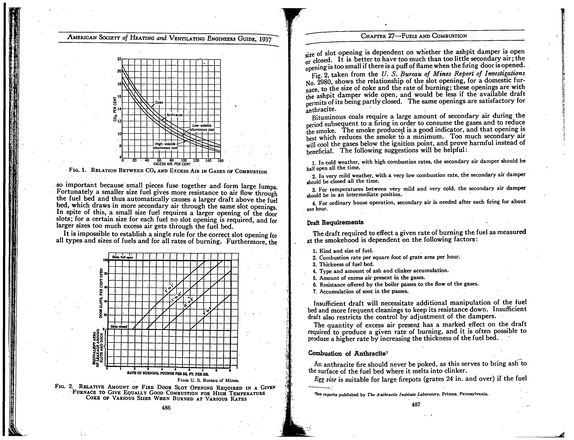
American Society of Heating and Ventilating Engineers Guide, 1937 Fig. 1.
refid# 82kr1eBXdxX64BrmXeyzwrn3e1 page
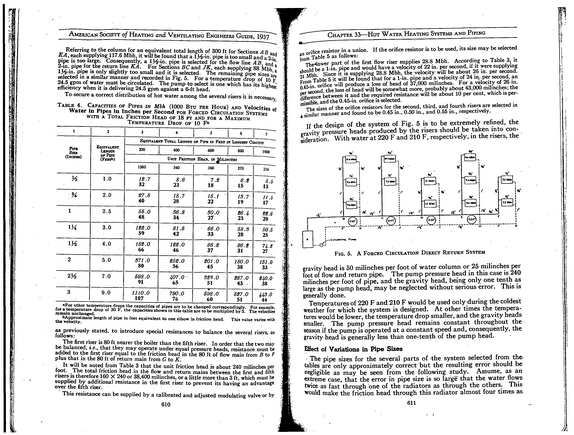
American Society of Heating and Ventilating Engineers Guide, 1937 Referring to the column for an equivalent total length of 300 ft for Sections AB and KA, each supplying 117.6 Mbh, it will be found that a lj^-in. pipe is too small and a2-in pipe is too large.
refid# vVN2p8gXGZMwLgMvb6Kodyy3R1 page
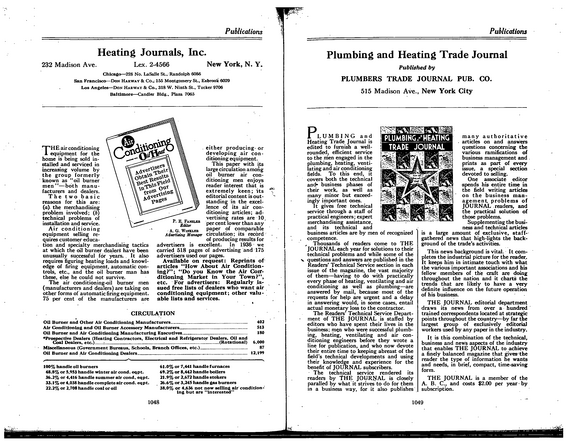
Publications Heating Journals, Inc. 232 Madison Ave.
refid# 8VYxk24VkmLymmj1pqzn1gYy1 page
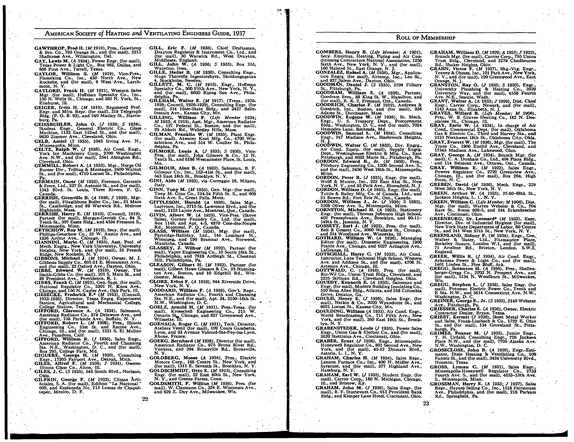
American.
refid# 9300R7kK39LjGm21JG2ygG8bD1 page
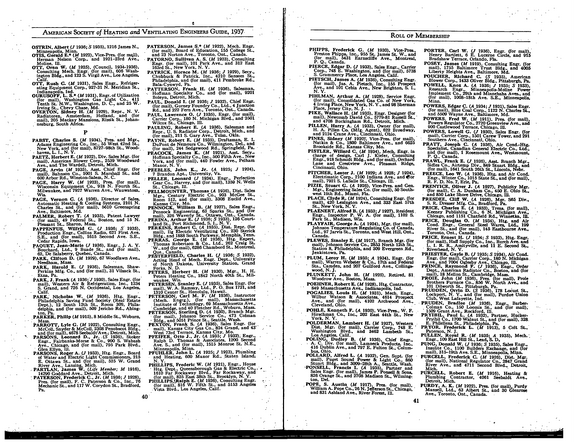
t American Society o/ Heating and Ventilating Engineers Guide, 1937 OSTRIN, Albert (J 1936; S 1935). 1216 James N..
refid# zzXJOxrv1N6BNLvo20daYvL0R1 page