Refine
Estimated Years 1930-1939Clear
14,210 results foundRefine Search
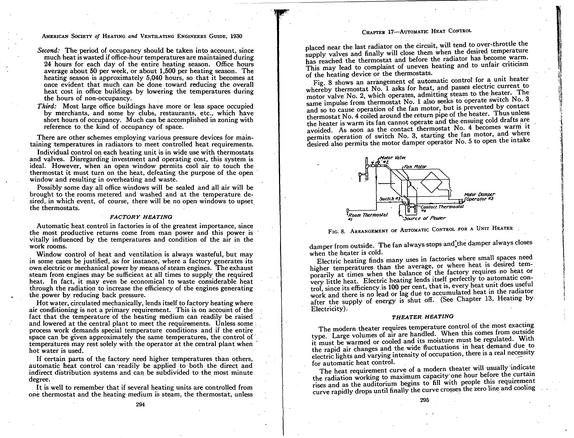
American Society of Heating and Ventilating Engineers Guide, 1930 Second: The- period of occupancy should be taken into account, since much heat is wasted if office-hour temperatures are maintained during. 24 hours for each day of the entire heating season.
refid# 91Xm18kM1VpmkQ2wxpz9Vq7x31 page
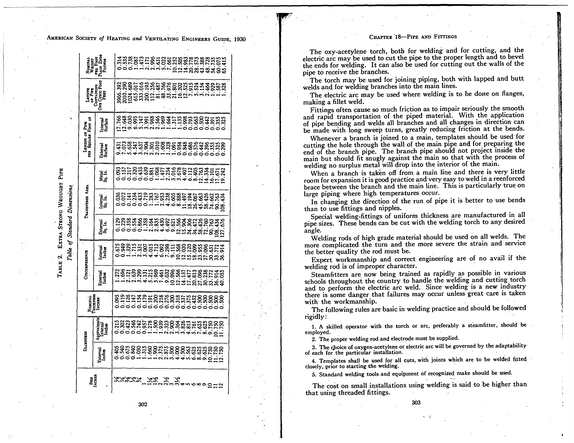
American Society of Heating and Ventilating Engineers Guide, 1930 T a b le 2.
refid# zd59QkBa4KzxDQZ72xB5Ewyj31 page
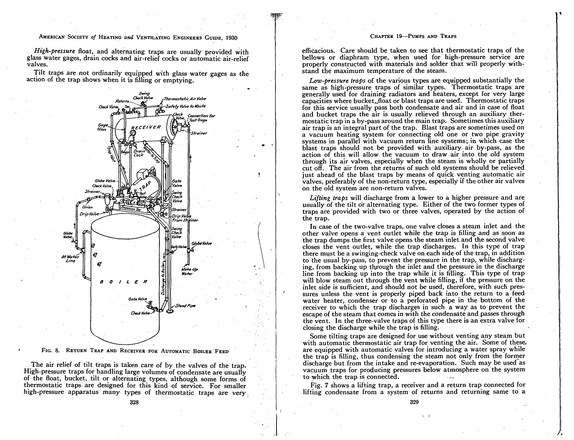
American Society of Heating and Ventilating Engineers Guide, 1930 High-pressure float, and alternating traps are usually provided with glass water gages, drain cocks and air-relief cocks or automatic air-relief valves.
refid# MM4zznJDmYgoqrxyemQM7ko1V1 page
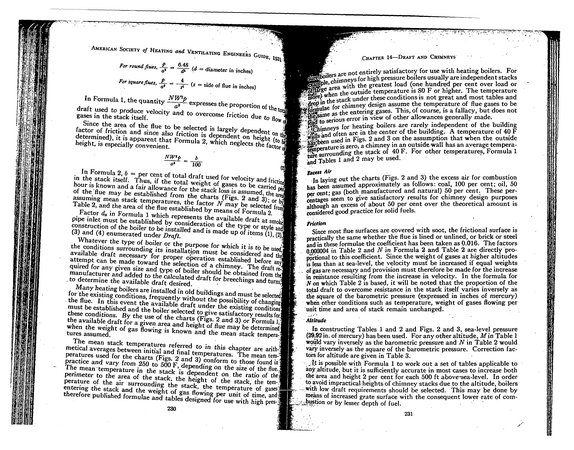
American Society of Heating and Ventilating Engineers Guide 4For round flues. - - ds (d - diameter in inches) 1931 For squareflues, (.s = side of flue in inches) In Formula 1, the quantity --NW--2*- expresses the proportion of the to draft used to produce velocity and to overcome friction due to fl0w gases in the stack itself.
refid# 932vrdnno3bjxx4q077JZYrRp1 page
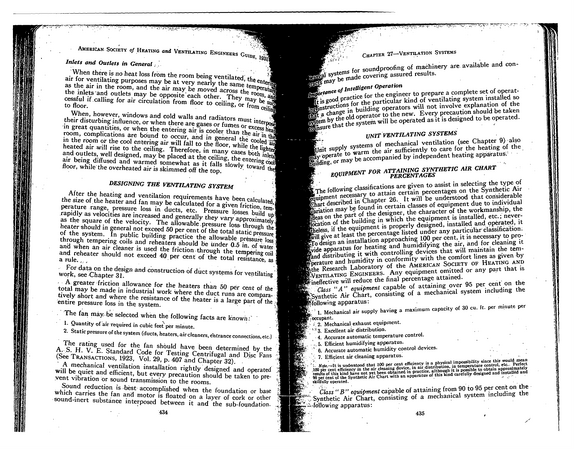
of andAmerican Society Heating Ventilating Engineers Guide m Inlets and Outlets in General *1931 When there is no heat loss from the room being ventilated, the em* air for ventilating purposes may be at very nearly the same temper ' as the air in the room, and the air may be moved across the room1 * the inlets and outlets may be opposite each other.
refid# g2nLNG7R8R6xxpLB6er3KXkVV1 page
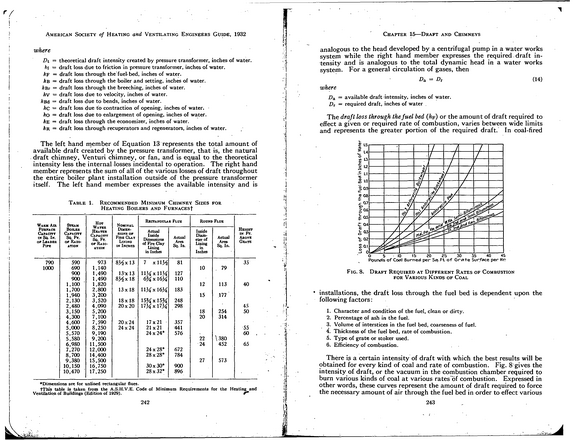
American Society of Heating and Ventilating Engineers Guide, 1932 where Dt -- theoretical draft intensity created by pressure transformer, inches of water. hi = draft loss due to friction in pressure transformer, inches of water. hF = draft loss through the fuel- bed, inches of water. hB = draft loss through the boiler and setting, inches of water. hBr = draft loss through the breeching, inches of water. hv = draft loss due to velocity, inches of water.
refid# aB4pDb4v2reOQMMJb1vXaeDRM1 page
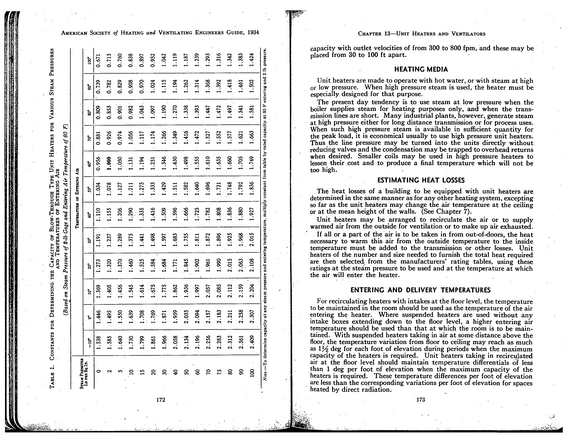
American Society of Heating and Ventilating Engineers Guide, 1934 Note.-- T o determ ine capacity a t any steam pressure and entering tem perature, m u ltip ly constant fro m table by rated capacity a t 00 F entering and 2 lb pressure.
refid# 6BZbDOBz6R99ve3v9EwRXMLYE1 page
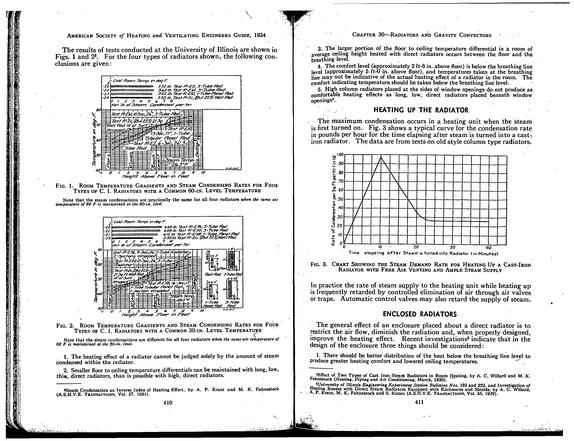
\ American Society of Heating and Ventilating Engineers Guide, 1934 The results of tests conducted at the University of Illinois are shown in Figs. 1 and 2s.
refid# XORe0LK1xqGZQmgmqzKb76orR1 page
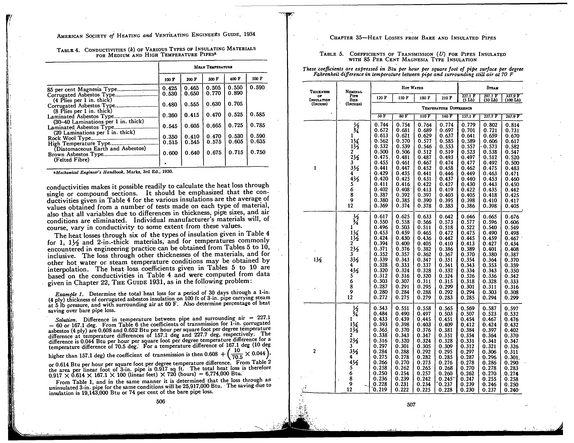
American Society of Heating and Ventilating Engineers Guide, 1934 Table 4.
refid# 0gm31oQ90wdvykXRkoVv5nDzb1 page
American Society of Heating and Ventilating Engineers Guide, 1935 So!
refid# aX8VwMjbgevQDOoLap6wLrMe1 page
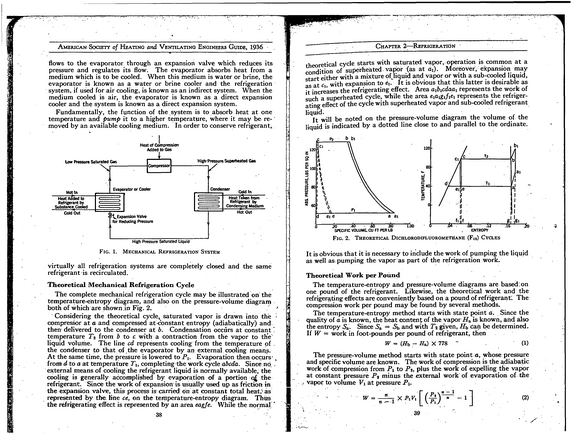
American Society of Heating and Ventilating Engineers Guide, 1936 flows to the evaporator through an expansion valve which reduces its pressure arid regulates its flow.
refid# 7OLbRgZ29m9R8wRLkNw3RGaGa1 page
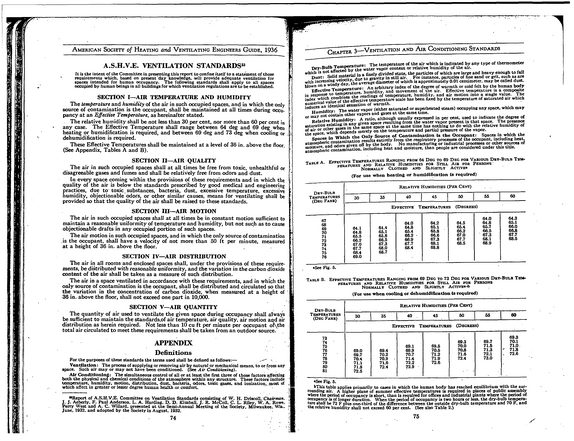
American Society of Heating and Ventilating Engineers Guide, 1936 A.S.H.V.E.
refid# zQmpYBg0OR5OQ9DR1zGakJb3m1 page
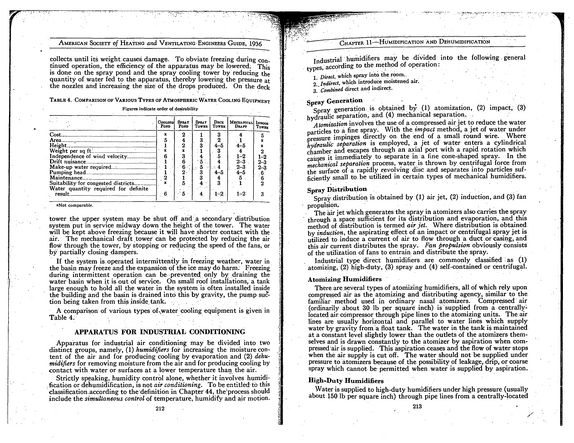
American Society of Heating and Ventilating Engineers Guide, 1936 collects until its weight, causes damage.
refid# zzEmpQG4OxRn3EG3bv7b67boB1 page
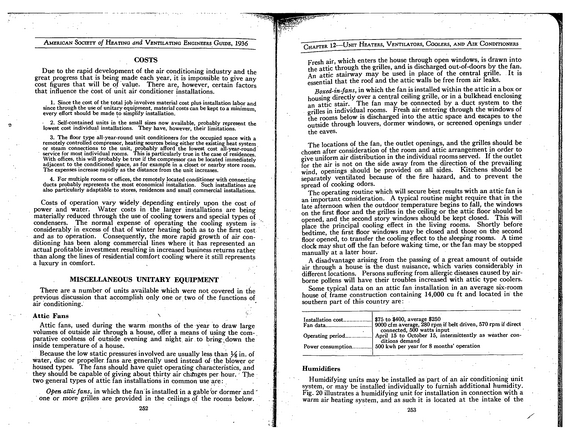
American Society of Heating and Ventilating Engineers Guide, 1936 COSTS Due to the rapid development of the air conditioning industry and the great progress that is being made each year, it is impossible to give any cost figures that will be of value.
refid# DvXvRoeknp6GZg3box1demNqM1 page
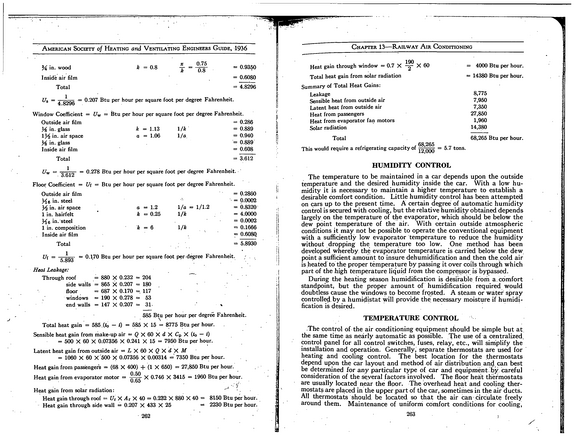
American Society of Heating and Ventilating Engineers Guide, 1936 % in. wood k = 0.8 = 0.9350 Inside air film Total = 0.6080 = 4.8296 Us = v oLa's = 0.207 Btu per hour per square foot per degree Fahrenheit. 4.8296 Window Coefficient = Uv = Btu per hour per square foot per degree Fahrenheit.
refid# GKJw4yL64DymkL2aKe5YqKRQm1 page