Refine
Estimated Years 1930-1939Clear
8,921 results foundRefine Search
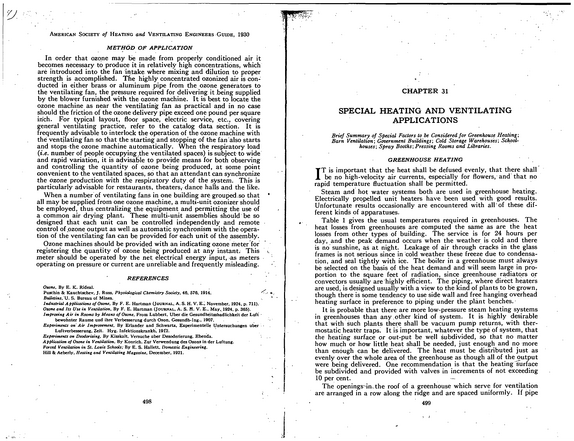
u American Society of Heating and Ventilating Engineers Guide, 1930 METHOD OF APPLICATION In order that ozone may be made from properly conditioned air it becomes necessary to produce it in relatively high concentrations, which are introduced into the fan intake where mixing and dilution to proper strength is accomplished.
refid# a47Bjd8kj11vrg9ao9pNmK4va1 page
American Society of Heating and Ventilating Engineers Guide, 1930 AMMERMAN, Charles R.
refid# 714QqdnkvK2BXnOLkngdv107B1 page
7 American Society of Heating and Ventilating Engineers Guide, 1931 has prepared data.
refid# RaaLL6ydKmk74E9a8xnwY767X1 page
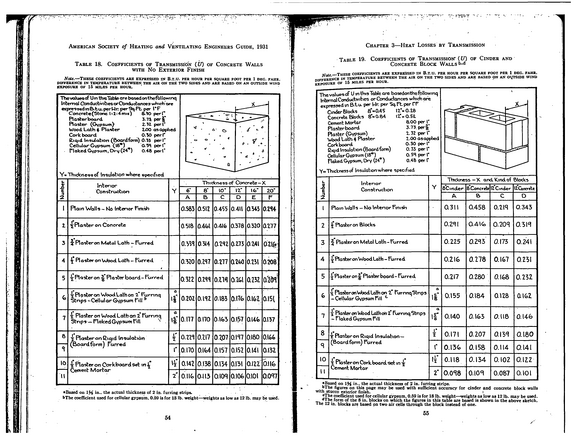
7`- r 77-7 T ' Number Number American Society 0/ Heating and Ventilating Engineers Guide, 1931 Table 18.
refid# X7V9105JbEwnnDdxppabkxjBG1 page
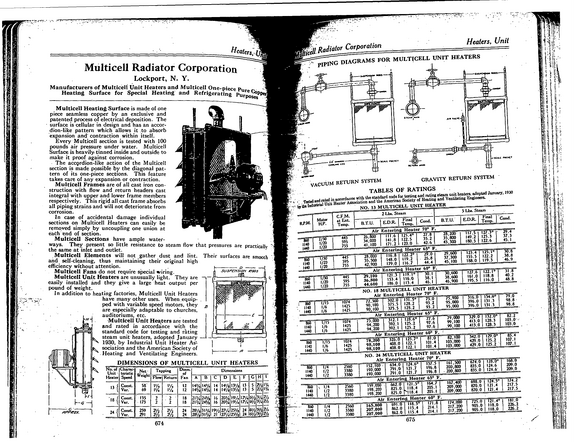
Multicell Radiator Corporation Lockport, N.
refid# dnYNmpR6e05XxEmGM8kYkRJL01 page
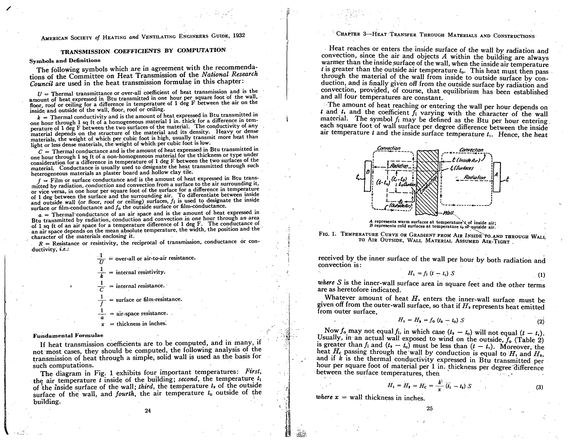
f American Society of Heating and Ventilating Engineers Guide, 1932 TRANSMISSION COEFFICIENTS BY COMPUTATION Symbols and Definitions The following symbols which are in agreement with the recommenda tions of the Committee on Heat Transmission of the National Research Council are used in the heat transmission formulae in this chapter: U = Thermal transmittance or over-all coefficient of heat transmission and is the amount of heat expressed in Btu transmitted in one hour per square foot of the wall, floor, roof or ceiling for a difference in temperature of 1 deg F between the air on the inside, and outside of the wall, floor, roof or ceiling. k = Thermal conductivity and is the amount of heat expressed in Btu transmitted in one hour through 1 sq ft of a homogeneous material 1 in. thick for a difference in tem perature of 1 deg F between the two surfaces of the material.
refid# RrZ7KgGeryMvewN6MkxYE1O71 page
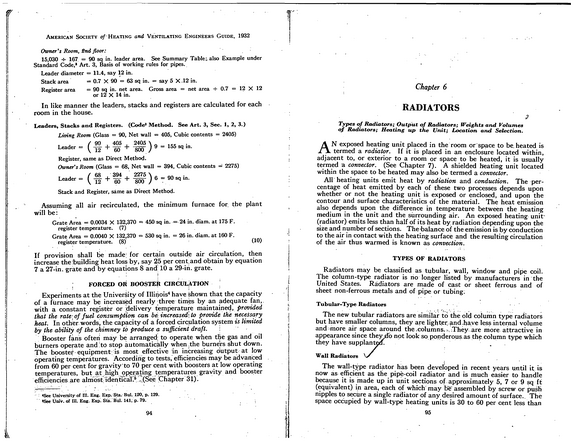
American Society of- Heating and Ventilating Engineers Guide, 1932 Owner's Room, 8nd floor: 15,030 167 = 90 sq in. leader area.
refid# 6w9QE7waywz91o64o0dXa3NL31 page
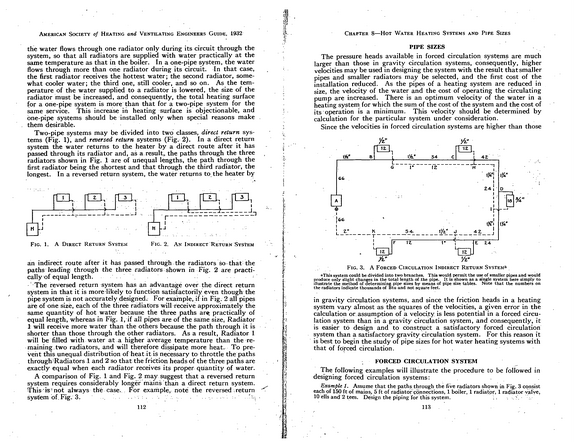
American Society of Heating and Ventilating Engineers Guide, 1932 the water flows through one radiator only during its circuit through the system, so that all radiators are supplied with water practically at the same temperature as that in the boiler.
refid# 3e7JrGaBBRO6q3YBknZYRjzMD1 page
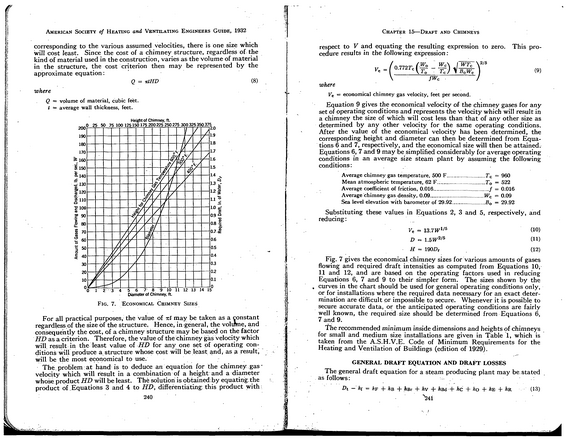
American Society of Heating and Ventilating Engineers Guide, 1932 corresponding to the various assumed velocities, there is one size which will cost least.
refid# 3MQL2rBz4NxnxZoK62LLeonJ1 page
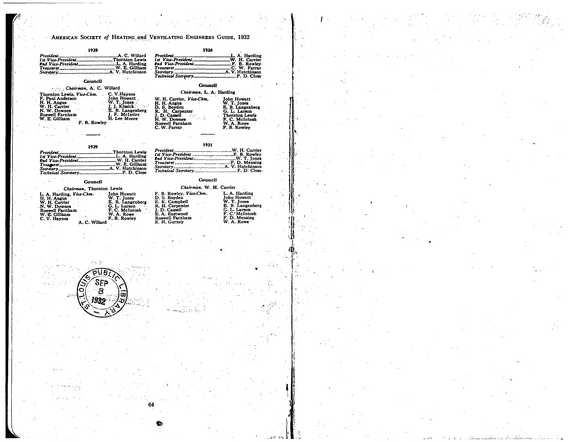
American Society of Heating . and Ventilating Engineers Guide, 1932 1928 Presidents,:A.
refid# 2RjkV5NGznLayMzyb2mwmdmzR1 page
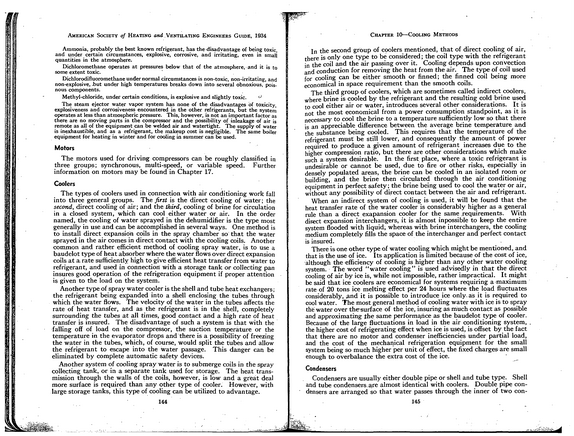
American Society of Heating and Ventilating Engineers Guide, 1934 Ammonia, probably the best known refrigerant, has the disadvantage of being toxic, and under certain circumstances, explosive, corrosive, and irritating, even in smali quantities in the atmosphere.
refid# jmnQkjDaBegKbnv5eLmRJz3NZ1 page
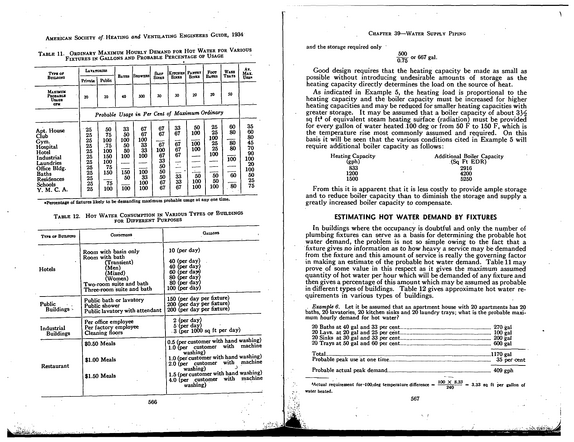
American Society of.
refid# re9exbZp0pwBXd1mRMD983LXv1 page
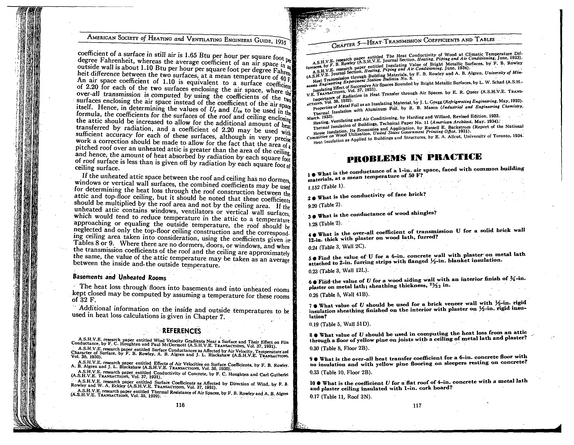
American Society of Heating and Ventilating Engineers Guide, 1935 coefficient of a surface in still air is 1.65 Btu per hour per square foot jw degree Fahrenheit, whereas the average coefficient of an air space in a. outside wall is about 1.10 Btu per hour per square foot per degree Fahrei) heit difference between the two surfaces, at a mean temperature of 4o p An air space coefficient of 1.10 is equivalent to a surface coefficient of 2.20 for each of the two surfaces enclosing the air space, where thj' over-all transmission is computed by using the coefficients of the tvr<> surfaces enclosing the air space instead of the coefficient of the airspa^ itself.
refid# zzYjx7YLNzkBYmXRJoRNg9mxR1 page
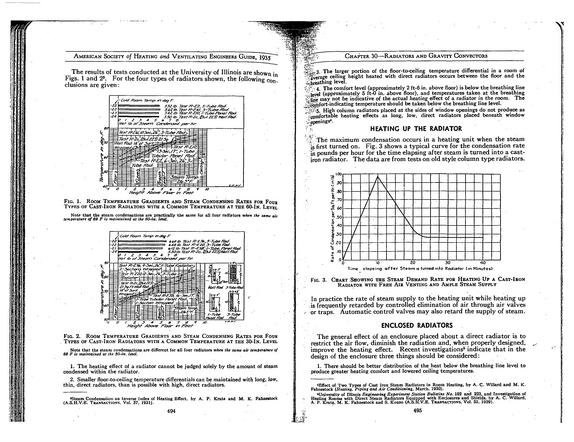
American Society of Heating and Ventilating Engineers Guide, 1935 The results of tests conducted at the University of Illinois are shown in Figs. 1 and 2s.
refid# LpjrLGBmOq9XRG445R3vajqeb1 page
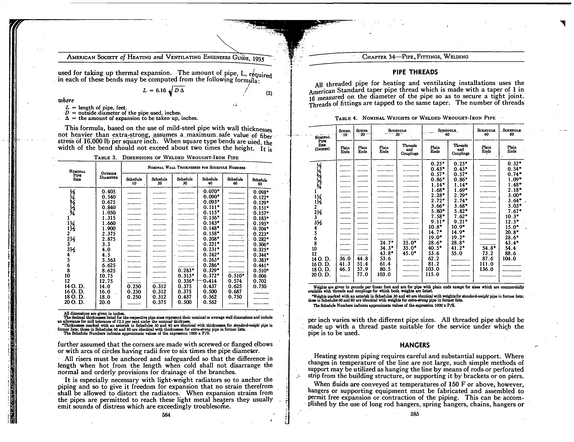
American Society of Heating and Ventilating Engineers Guide, 1935 where L = length of pipe, feet.
refid# xjgQNNNbVY4y5KG9OkDDJREOE1 page