Refine
Estimated Years 1930-1939Clear
8,921 results foundRefine Search
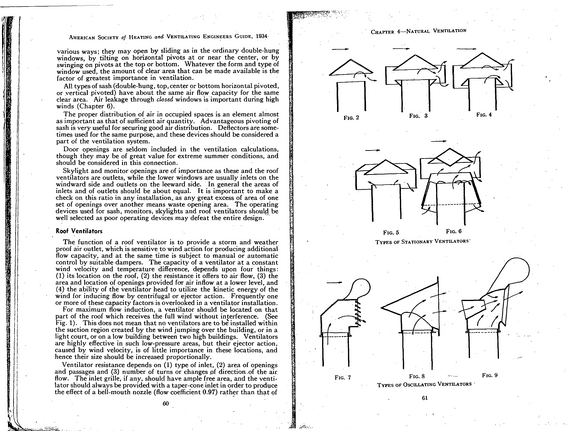
American Society of Heating and Ventilating Engineers Guide, 1934' various ways; they may open by sliding as in the ordinary double-hung windows, by tilting on horizontal pivots at or near the center, or by swinging on pivots at the top or bottom.
refid# OzXdoGKeeOJLo5RYapXwDvzqe1 page
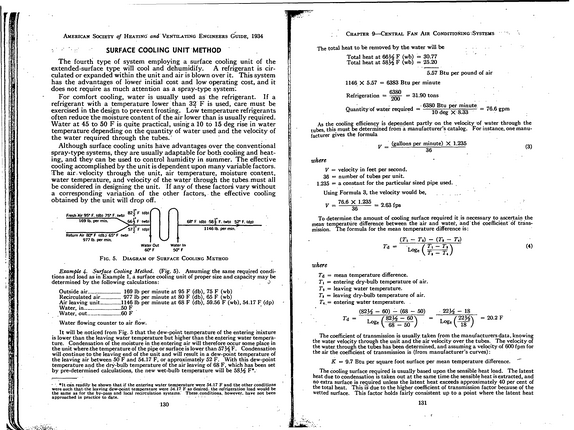
American Society of Heating and Ventilating Engineers Guide, 1934 SURFACE COOLING UNIT METHOD The fourth type of system employing a surface cooling unit of the extended-surface type will cool and dehumidify.
refid# 7q332KKBRDKzmGwnKvBKDOwE1 page
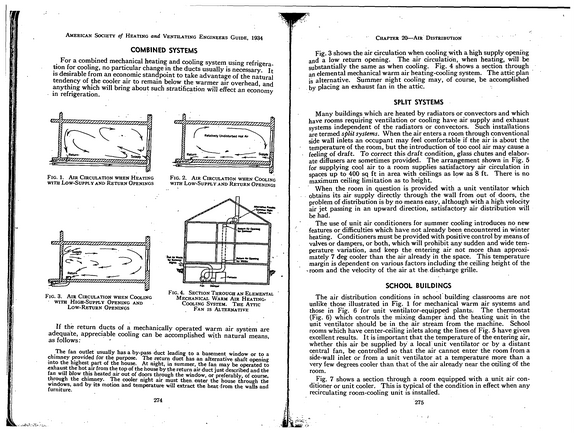
American Society of Heating and Ventilating Engineers Guide, 1934 COMBINED SYSTEMS For a combined mechanical heating and cooling system using refrigera tion for cooling, no particular change in the ducts usually is necessary.
refid# KR0z6483eR5OdjzzaepBD1NNx1 page
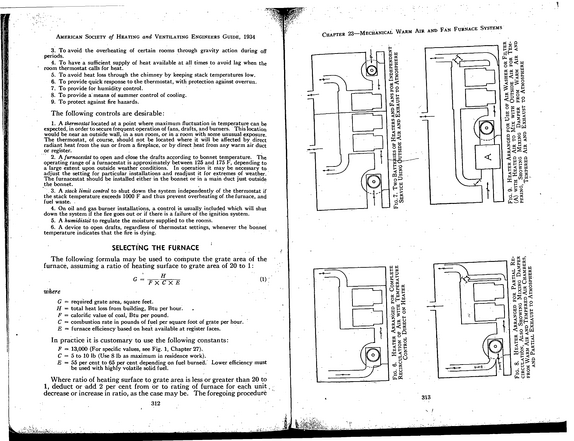
American Society of Heating and Ventilating Engineers Guide, 1934 3.
refid# ykgxzZLD1bm01BNkR5vkxOzbr1 page
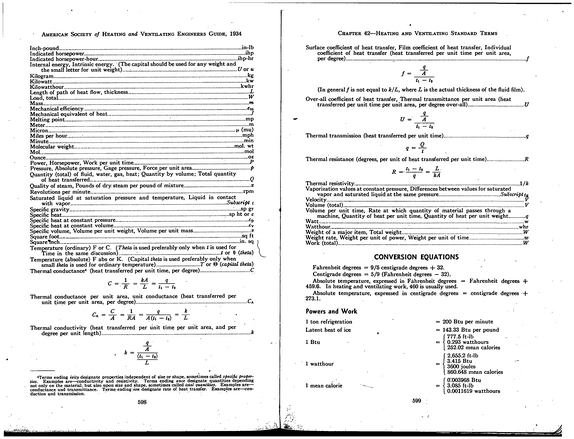
American Society of Heating and Ventilating Engineers Guide, 1934 I nch-pound........ -.................................................................................................................in-lb Indicated horsepower--............................................................................................. -.... ihp Indicated horsepower-hour.--------------- :.........................................................-............. ihp-hr Internal energy, Intrinsic energy.
refid# dQr3mpYngXK9kZBXQO9RLEGVe1 page
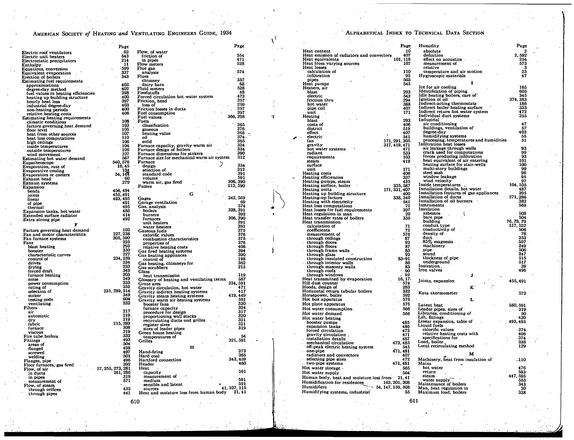
American Society of Heating and Ventilating Engineers Guide, 1934 Page Electric roof ventilators Electric unit heaters Electrostatic precipitators Enthalpy Equations, conversion Equivalent evaporation Erection of boilers Estimating fuel requirements approximations degree-day method fuel values in heating efficiencies heating up building structure hourly heat loss industrial degree-day non-heating periods relative heating costs Estimating heating requirements climatic conditions factors governing, heat .demand floor level ' heat from other sources heat loss computations high ceilings inside temperatures outside temperatures wind movement Estimating hot water demand Eu patheoscope Evaporation, rate of Evaporative cooling Evaporators or coolers Exhaust head Exhaust systems ' Expansion bends joints linear of pipe thermal Expansion tanks, hot'water Extended surface radiator Extra strong pipe . 62 543 214 11 599 337 343 403 402 398 400 397 403 400 406 108 103 105 107 110 106 106 107 567 540. 676 16,45 54.1& 60 279 456.494 455,491 493.495 491 495 486 414 492 F Factors governing heat demand Fan and motor characteristics Fan furnace systems Fans blast heating booster . characteristic curves control of drives drying forced draft furnace heating noise power consumption rating of selection of stoker testing code ventilating Filters air automatic ' furnace viscous Fire tube boilers Fittings areas of flanged screwed welding Flanges, pipe Floor furnaces,-gas fired Flow, of air in ducts in pipes measurement of Flow, of steam through orifices through pipes 103 227,238 305, 590 225 293 330 227 234, 239 234 233 349 305 249 235 252 231,289,314 349 604 232 217 219. 219 215, 289 - 308 219 332 493 504 498 497 501 496 392 57.255, 273,281. 261. 286 319 571 432 441 Page Flow, of water friction of in pipes 554 471 Flow meters 528 Flue gas analysis .574 Flues .
refid# 3Jz08801KB1j1BvbQ4oxBJEzO1 page
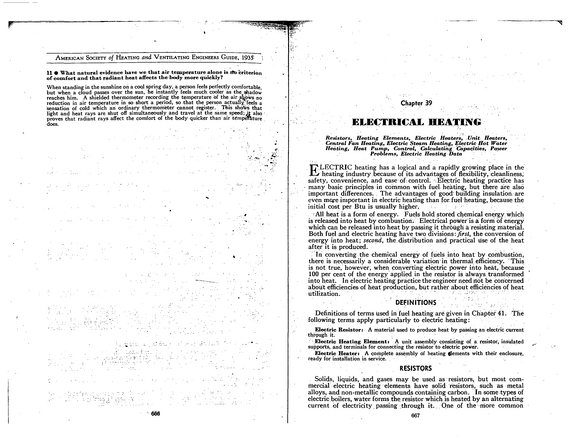
r American Society of Heating and Ventilating Engineers Guide, 1935 11 What natural evidence have we that air temperature alone is rit criterion of comfort and that radiant heat affects thebody more quickly?
refid# zQKgY9Z5kKM25M0rgEvdoYNNg1 page
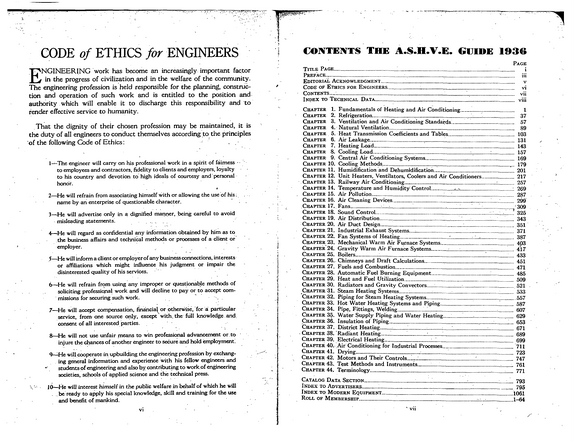
CODE of ETHICS for ENGINEERS NGINEERING work has become an increasingly important factor E in the progress of civilization and in the welfare of the community.
refid# Nepa6OgrKDKOYBo9mOmRO6EBb1 page
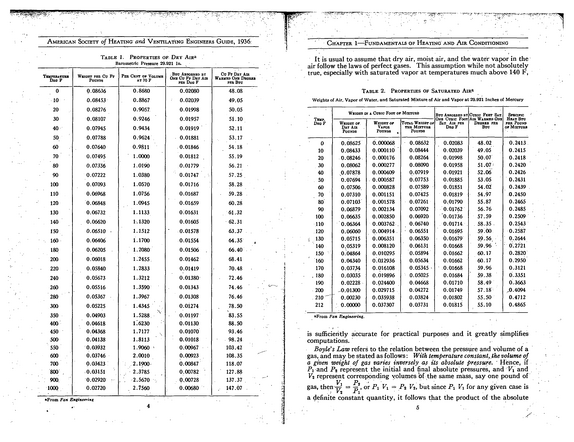
American Society of Heating and Ventilating Engineers Guide, 1936.
refid# 67rnkDB7QX0Oq29q5p3Ryw1E1 page
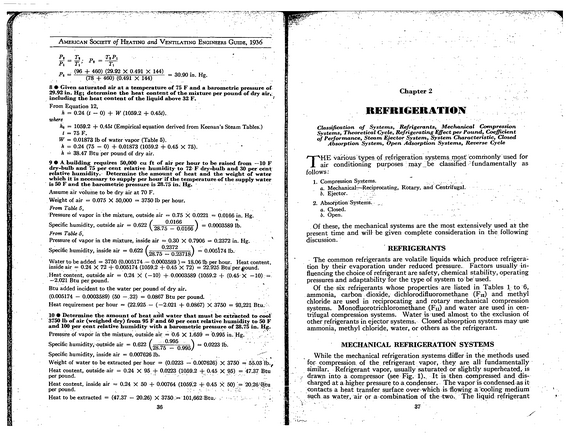
American Society of Heating and Ventilating Engineers Guide, 1936 P, = J\ Pi Ti' ' TtPj.
refid# N2z1MNdJeyz51VxdRRRVxMYgR1 page
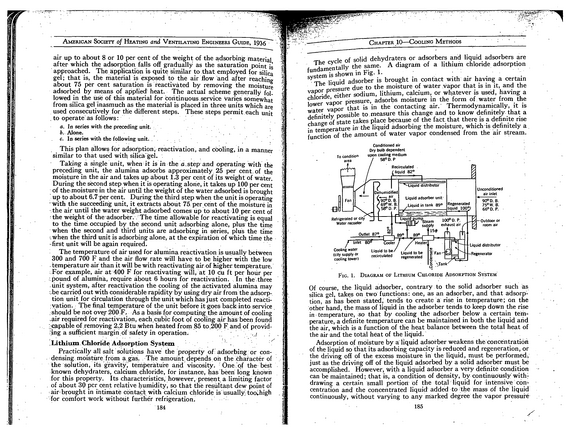
American Society of Heating and Ventilating Engineers Guide, 1936 i air up to about 8 or 10 per cent of the weight of the adsorbing material after which the adsorption falls off gradually as the saturation point is approached.
refid# zd0BvdKrGzeGyEX5vVoe3EOL71 page
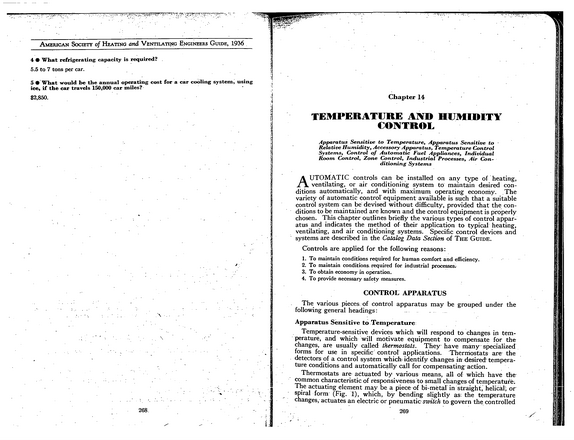
American Society of Heating and Ventilating Engineers Guide, 1936 4 What refrigerating capacity is required?
refid# zow0VbpBVeqoXOE89JZDLvZ7n1 page
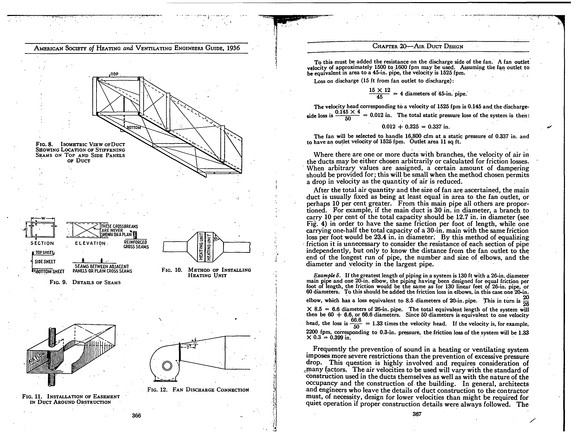
American Society of Heating and Ventilating Engineers Guide, 1936 l*7~w f. ,.4.
refid# 3J5v5NjkpRGr2MovBJ3JXrZ331 page
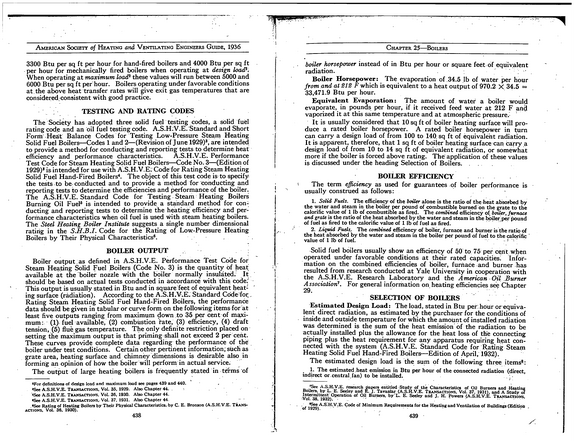
of and 1936American Society Heating Ventilating Engineers Guide, 3300 Btu per sq ft per hour for hand-fired boilers and 4000 Btu per sq ft per hour for mechanically fired boilers when operating at design load When operating at maximum load2 these values will run between 5000 and 6000 Btu per sq ft per hour.
refid# baY15VBJQr3VDd8mQyw6bDayO1 page
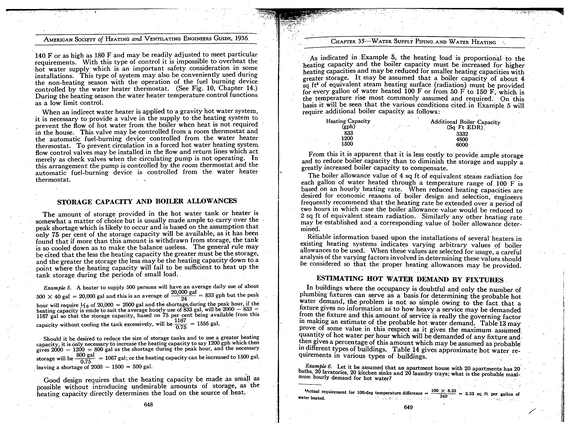
American Society of Heating and Ventilating Engineers Guide, 1936 140 F or as high as 180 F and may be readily adjusted to meet particular requirements.
refid# wqge9zamMNBnq9zDyk5yr15KE1 page