Refine
Estimated Years 1930-1939Clear
8,921 results foundRefine Search
1930American Society of Heating and Ventilating Engineers Guide, HUGH, A.
refid# Lo57Y6QvEyRd264nR81Y2DGrQ1 page
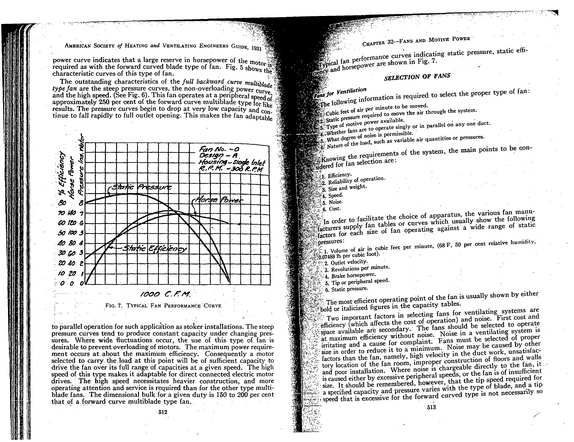
American Society of Heating and Ventilating Engineers Guide, 1931 power curve indicates that a large reserve in horsepower of the motn required as with the forward curved blade type of fan.
refid# wgjGEeLE7w6xMVEr1naZwO7y61 page
f American Society of Heating and Ventilating Engineers Guide, 1932 2.
refid# GKm5yJr9kQXNzZdqXaO5woGVn1 page
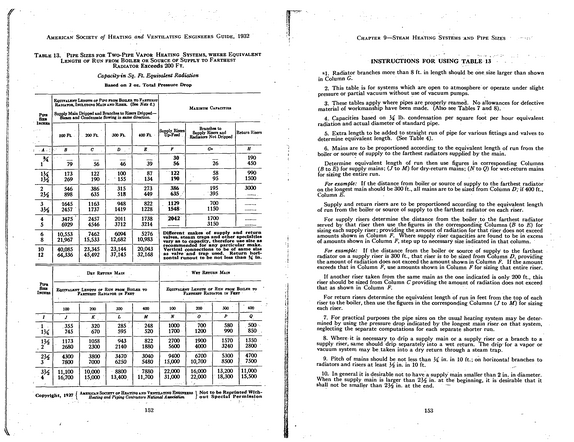
American Society of Heating and Ventilating Engineers Guide, 1932 Table 13.
refid# B8n1mnKrb8DN43qrd4pb9O4eE1 page
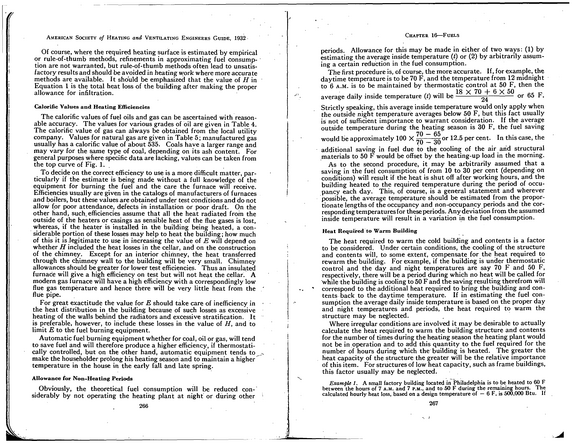
American Society of Heating and Ventilating Engineers Guide, 1932 Of course, where the required heating surface is estimated by empirical or rule-of-thumb methods, refinements in approximating fuel consump tion are not warranted, but rule-of-thumb methods often lead to unsatis factory results and should be avoided in heating work where more accurate methods are available.
refid# yrOQXbE33XGRymgoER8moE5Jn1 page
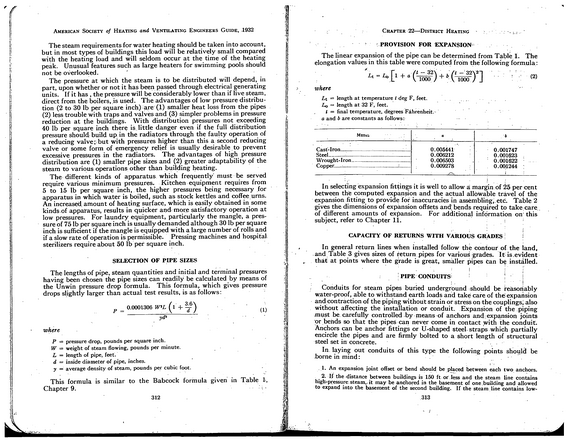
American Society of Heating and Ventilating Engineers Guide, .1932 The steam requirements for water heating should be taken into account, but in most types of buildings this load will be relatively small compared with the heating load and will seldom occur at the time of the heating peak.
refid# 37Qyqvy4QQ6rKqZMgKJ1Q3kR61 page
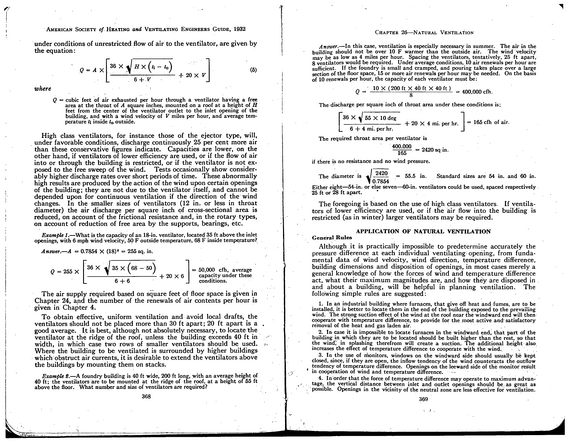
American Society of Heating and Ventilating Engineers Guide, 1932 under conditions of unrestricted flow of air to the ventilator, are given by the equation: where Q=A x 36 X ^ H X (ft - <o) 6+ V + 20 X V (S) Q = cubic feet of air exhausted per hour through a ventilator having a free area at the throat of A square inches, mounted on a roof at a height of H feet from the center of the ventilator outlet to the inlet opening of the building, and with a wind velocity of V miles per hour, and average tem perature <1 inside ta outside.
refid# GKRezovYBr0wz9NL0Yx0VG03v1 page
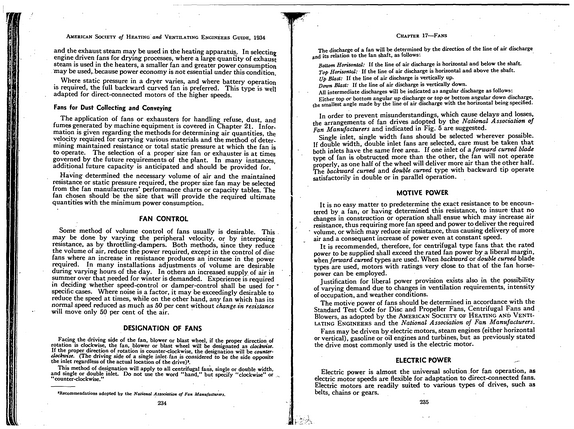
American Society of Heating and Ventilating Engineers Guide, 1934 and the exhaust steam may be used in the heating apparatus.
refid# Y2Kv1mX5Y0X9YxzK05no60VO1 page
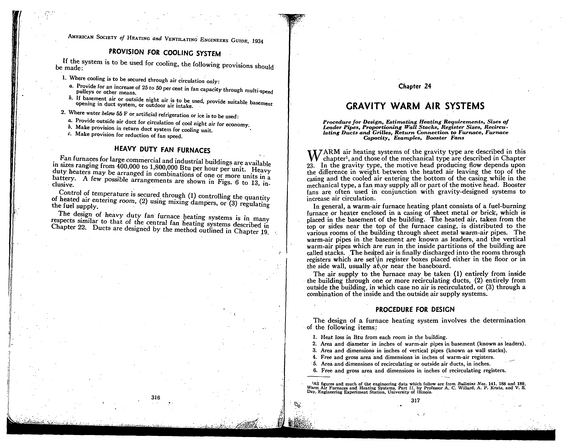
of andAmerican Society Heating Ventilating Engineers Guide, 1934 PROVISION FOR COOLING SYSTEM If the system is to be used for cooling, the following provisions should be made: 1.
refid# zJ7jba5Y8GpOO09yMdx450ZR1 page
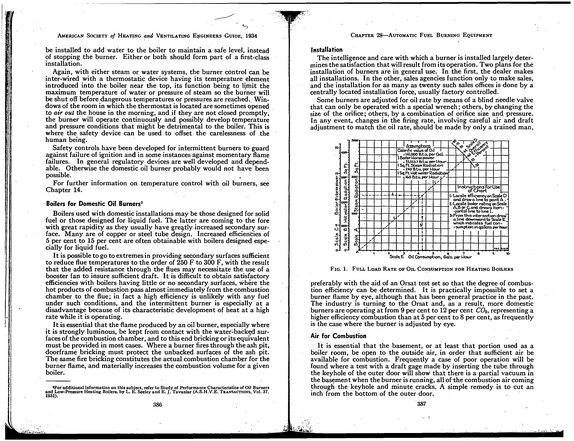
American Society of Heating and Ventilating Engineers Guide, 1934 be installed to add water to the boiler to maintain a safe level, instead of stopping the burner.
refid# Ev9XpG1D5vNQEV4w0V4JQ3NXN1 page
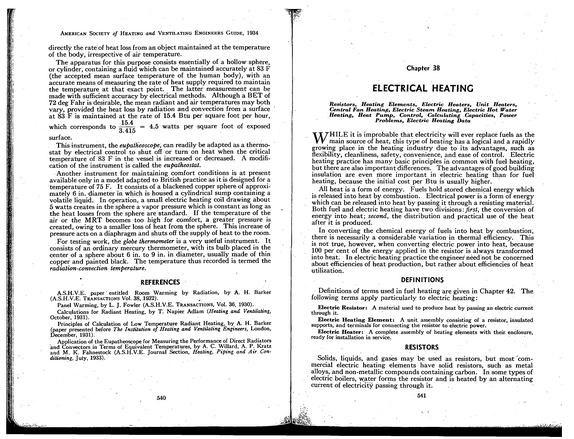
American Society of Heating and Ventilating Engineers Guide, 1934 directly the rate of heat loss from an object maintained at the temperature of the body, irrespective of air temperature.
refid# 8RpXN01Mk1n9J0K9wk2pNnRyy1 page
American Society of Heating and Ventilating Engineers Guide, 1934 MILLER, Robert A * (Af 1931), Tech.
refid# OO9JKbK7OzNL0w19YLrjXVyK1 page
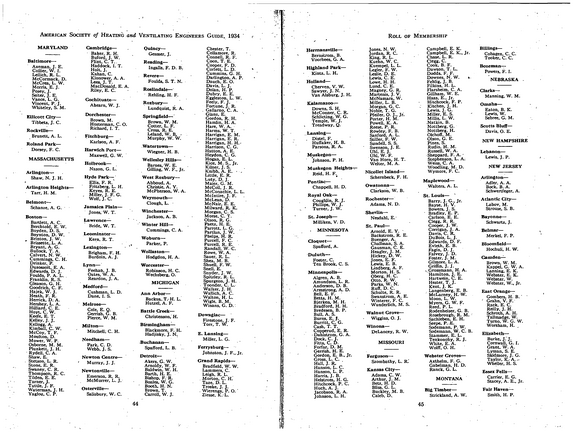
American Society of Heating and Ventilating Engineers Guide, 1934 ' MARYLAND Baltimore-- Axeman, J.
refid# rpjX50n5ggy2p1Lz6BM6MZGDq1 page
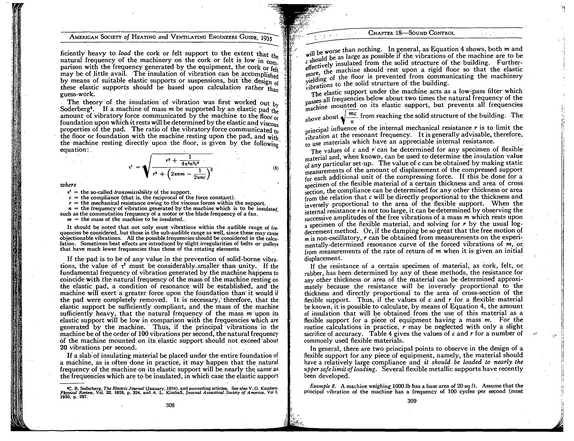
American Society of Heating and Ventilating Engineers Guide, 1935 ficiently heavy to load the cork or felt support to the extent that th natural frequency of the machinery on the cork or felt is low in con]6 parison with the frequency generated by the equipment, the cork or fe|, may be of little avail.
refid# wjKe5OQ5423LKrGqX2QYD1V61 page
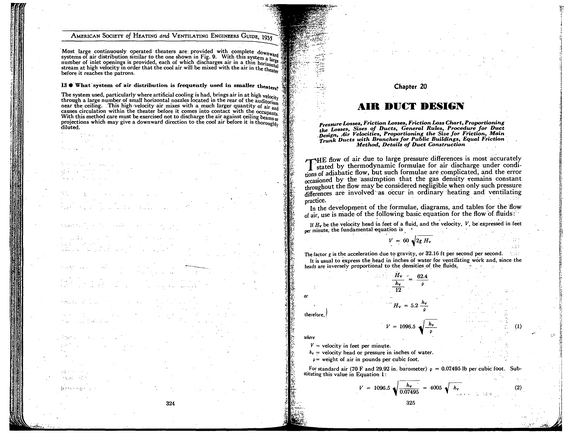
American Society of Heating and Ventilating Engineers Guide, 1935 Most large continuously operated theaters are; provided with complete downwa systems of air distribution similar to the one shown in Fig. 9.
refid# YMg2Ne6VOR6rojzNq3RZzo1D1 page