Refine
Estimated Years 1930-1939Clear
8,921 results foundRefine Search
*.JV, American Society of Heating and Ventilating Engineers Guide, i93j 7.
refid# oQ1bO7Z8G750kO6KZpLpnMME1 page
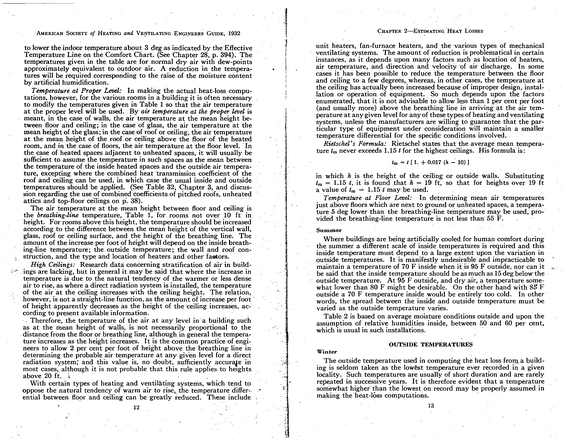
American Society of Heating and Ventilating Engineers Guide, 1932 to lower the indoor temperature about 3 deg as indicated by the Effective Temperature Line on the Comfort Chart.
refid# ZJZnrEO8ojYVgjj6drbvQdbEp1 page
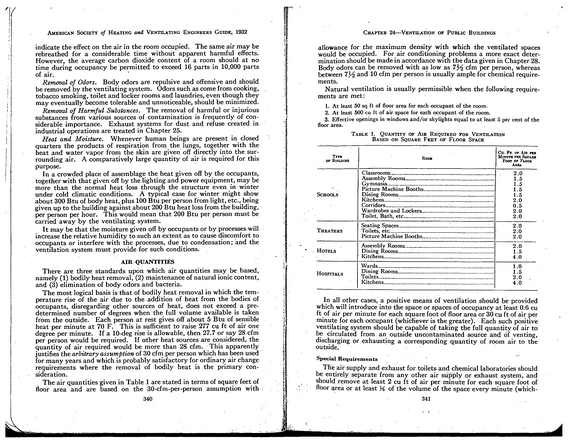
American Society of Heating and Ventilating Engineers Guide, 1932 indicate the effect on the air in the room occupied.
refid# dQk4edaLY117mo74Q7kykmJjb1 page
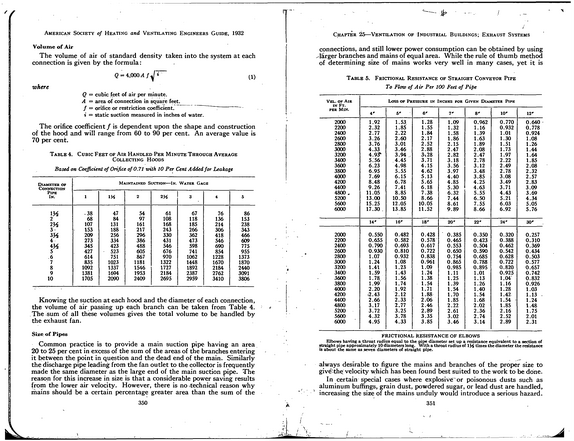
American Society of Heating and Ventilating Engineers Guide, 1932 Volume of Air The volume of air of standard density taken into the system at each connection is given by the formula: Q = 4,000 A(1) where Q = cubic feet of air per minute.
refid# 0J4GKQz1ZMXwwa4d1JpnyBqkb1 page
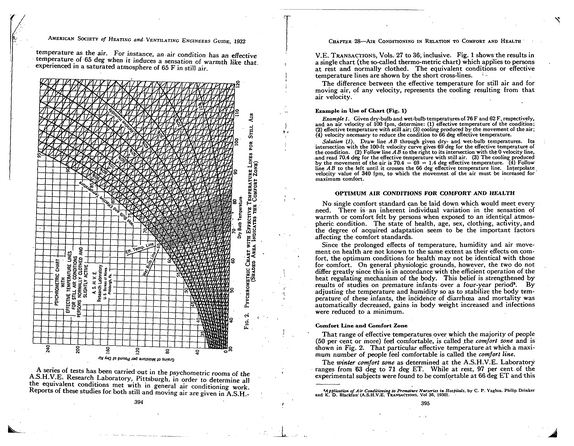
American Society of Heating and Ventilating Engineers Guide, 1932 temperature as the air.
refid# 7OzdE0ebQmvJjqke0eE4D02Va1 page
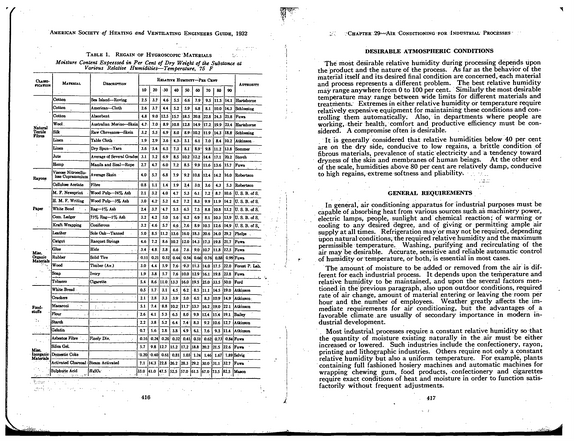
/ American Society of Heating and Ventilating Engineers Guide, 1932 Table 1.
refid# dYodkrORGyg8Ozrx8NYg1aJKR1 page
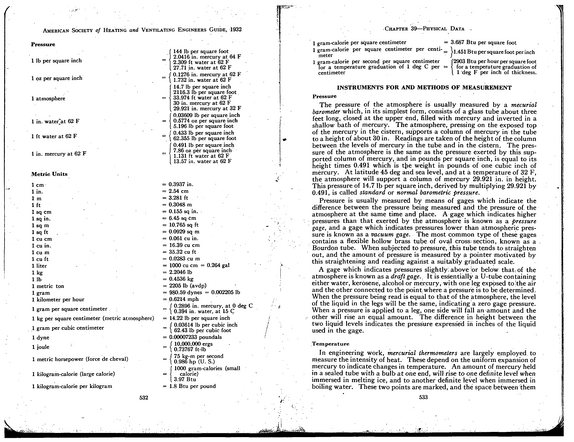
American Society of Heating and Ventilating Engineers Guide, 1932 Pressure 1 lb per square inch 1 oz per square inch 1 atmosphere 1 in. water'at 62 F 1 ft water at 62 F 1 in. mercury at 62 F Metric Units 1 cm 1 in. 1m 1 ft 1 sq cm 1 sq in. 1 sq m 1 sq ft 1 cu cm 1 cu in. 1 cu m 1 cu ft 1 liter 1 kg 1 lb 1 metric ton 1 gram 1 kilometer per hour 1 gram per square centimeter . 1 kg per square centimeter (metric atmosphere) 1 gram per cubic centimeter 1 dyne 1 joule 1 metric horsepower (force de cheval) 1 kilogram-calorie (large calorie) 1 kilogram-calorie per kilogram 532 144 lb per square foot 12.0416 in. mercury at 64 F 2.309 ft water at 62 F 27.71 in. water at 62 F j 0.1276 in. mercury at 62 F ( 1.732 in. water at 62 F 14.7 lb per square inch 2116.3 lb per square foot 33.974 ft water at 62 F 30 in. mercury at 62 F 29.921 in. mercury at 32 F 0.03609 lb per square inch 0.5774 oz per square inch 5.196 lb per square foot / 0.433 lb per square inch \ 62.355 lb per square foot 0.491 lb per square inch 17.86 oz per square inch 1.131 ft water at 62 F 13.57 in. water at 62 F = 0.3937 in
refid# pdO9KbDX5kJ0dwLE0YdmmdJk1 page
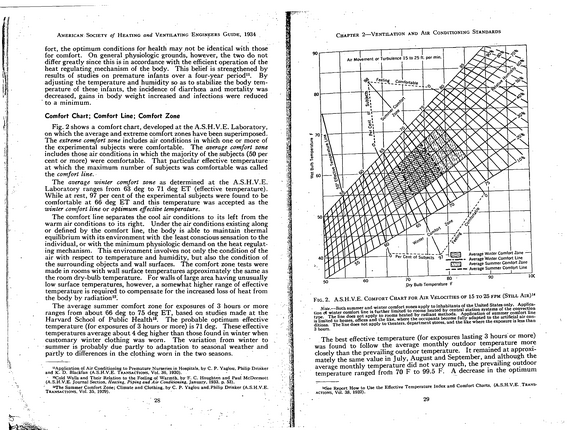
American Society of Heating and Ventilating Engineers Guide, 1934 fort, the optimum conditions for health may not be identical with those for comfort.
refid# B5xpyYLdx4bxr77oMYZ5pD9bL1 page
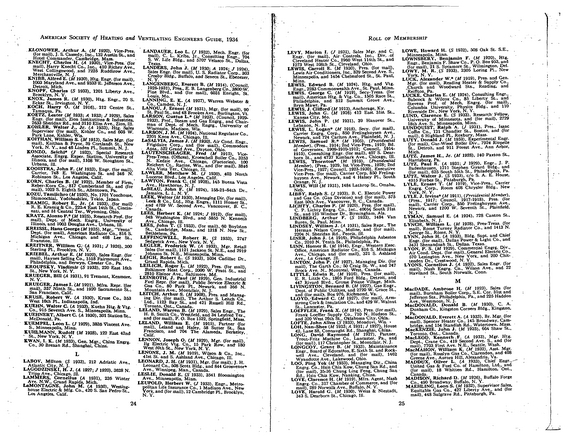
American Society of Heating and Ventilating Engineers Guide, 1934 KLONOWEK, Arthur A.
refid# xpwJ7eVvpXG10MXVmDJm2aoy1 page
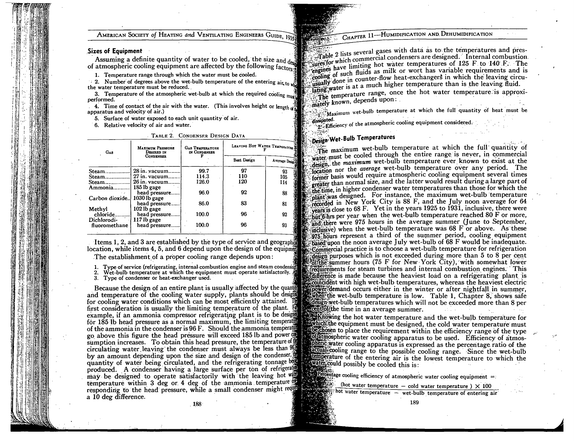
American Society of Heating and Ventilating Engineers Guide, 1935: Sizes of Equipment Assuming a definite quantity of water to be cooled, the size and d- ' of atmospheric cooling equipment are affected by the following factors 1.
refid# ZJVmE8xX2B68vkvKnzXM5GXO81 page
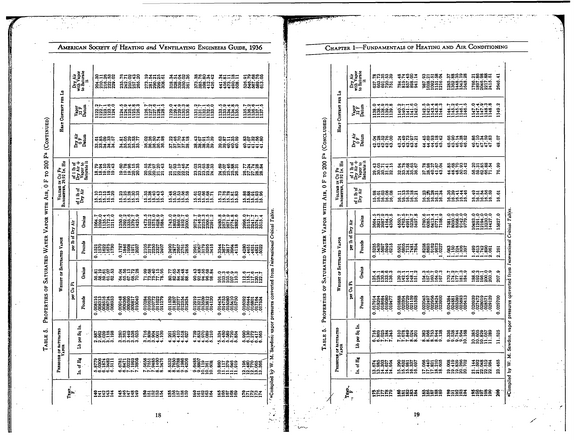
T American Society, of Heating and Ventilating Engineers Guide, 1936 r 18 T a b le 5.
refid# 44xp44kGrL1rnJ76YX6wB2JLN1 page
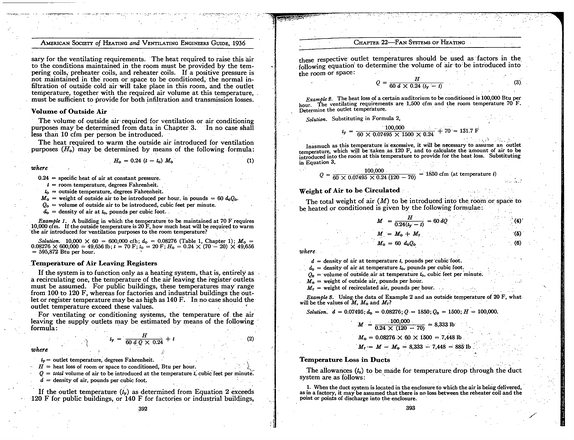
American Society of Heating and Ventilating Engineers Guide, 1936 sary for the ventilating requirements.
refid# 1y1v755j9Z07p5D2z4VJLnv9a1 page
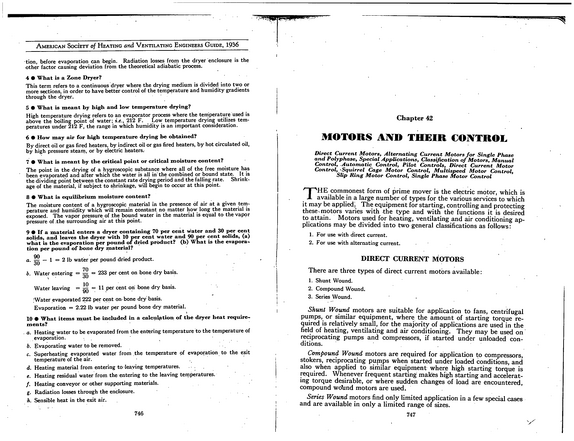
American Society of Heating and Ventilating Engineers Guide, 1936 tion, before evaporation can begin.
refid# Xm8xKKjbjX9L7dv5bmob250g1 page
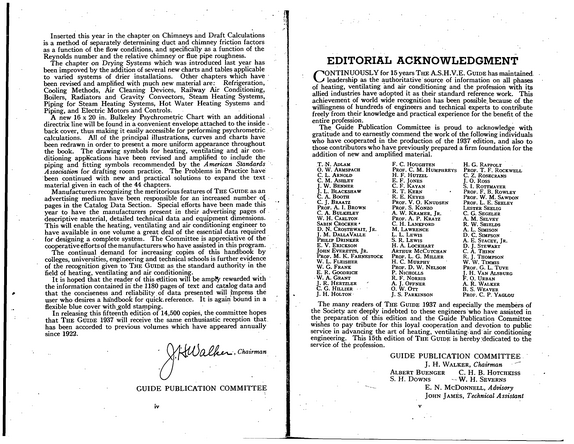
Inserted this year in the chapter on Chimneys and Draft Calculations is a method of separately determining duct and chimney friction factors as a function of the flow conditions, and specifically as a function of the Reynolds number and the relative chimney or flue pipe roughness.
refid# rBZG5Y51D43LGZg8Vj7GDZLqa1 page
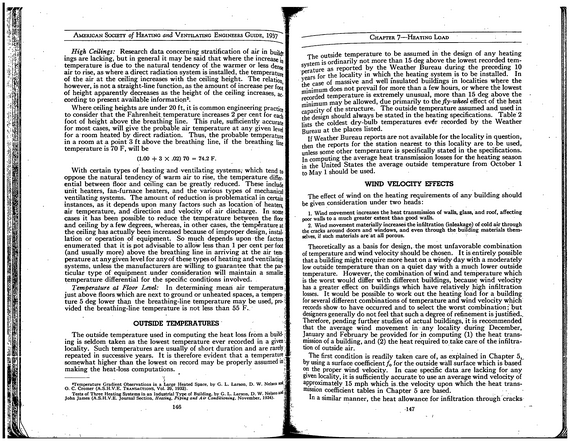
American Society of Heating and Ventilating Engineers Guide, 1937 High Ceilings: Research data concerning stratification of air in buil# ings are lacking, but in general it may be said that where the increase i0 temperature is due to the natural tendency of the warmer or less dense air to rise, as where a direct radiation system is installed, the temperature of the air at the ceiling increases with the ceiling height.
refid# KGpD54Y0V9Xye4q4MjNaBag8x1 page