Refine
Estimated Years 1930-1939Clear
8,921 results foundRefine Search
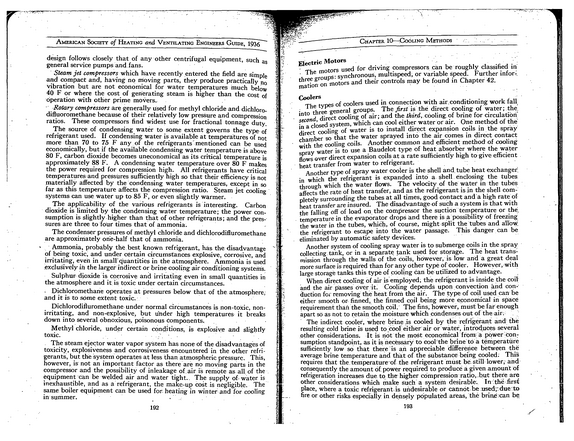
American Society of Heating and Ventilating Engineers Guide, 1936 design follows closely that of any other centrifugal equipment, such as general service pumps and fans.
refid# yrDbBJV1ORedp32mVNzo7r6Nr1 page
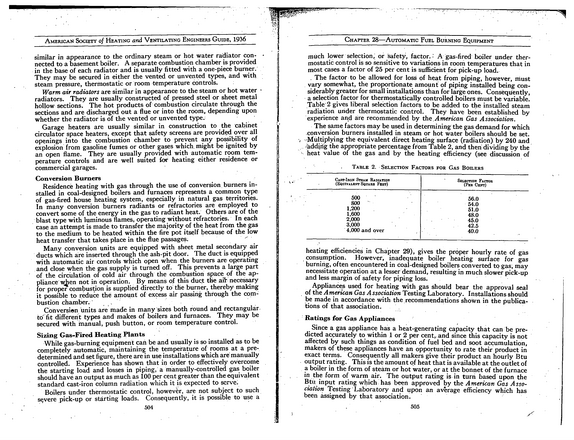
American Society of Heating and Ventilating Engineers Guide, 1936 similar in appearance to the ordinary steam or hot water radiator con nected to a basement boiler.
refid# omayRDpgRY6wOKVzq7RYK36a31 page
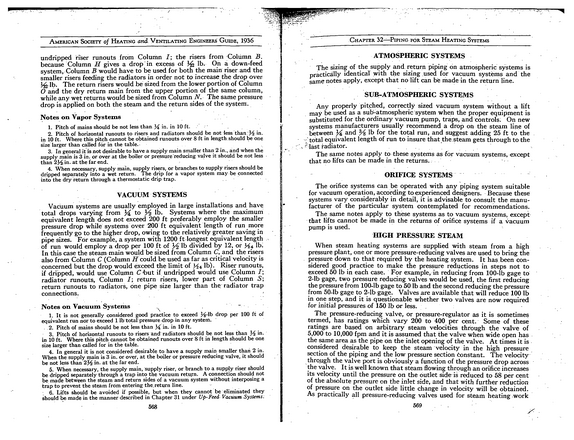
American Society of Heating and Ventilating Engineers Guide, 1936 undripped riser runouts from Column I; the risers from Column B. because Column H gives a drop in excess of \4i lb.
refid# oeOVLBkmkYqza16rBykao9YbX1 page
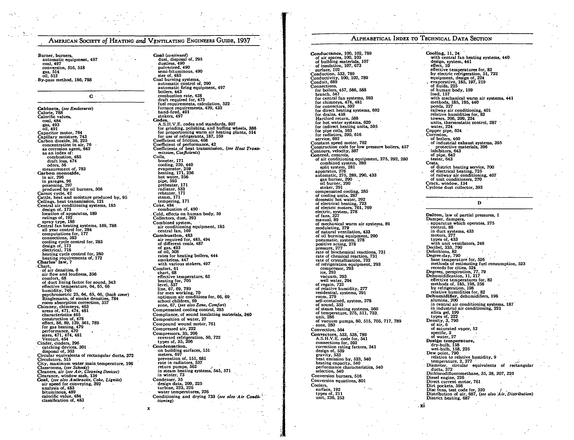
American Society of Heating and Ventilating Engineers Guide, 1937 Alphabetical Index to Technical Data Section Burner, burners, automatic equipment, 497 coal. 497 conversion, 516, 518 gas, 514 oil, 512 By-pass method, 186; 788 C Cabinets, (see Enclosures) Calorie, 788 Calorific values, coal. 484 gas. 493 oil, 491 Capacitor motor, 764 Capillary moisture, 743 Carbon dioxide, 36, 225 concentration in air, 76 as corrosion agent, 642 , as an index of: combustion, 485 draft loss, 474 odors, 56 measurement of, 783 Carbon monoxide, in air, 296 in garages, 96 poisoning, 297 produced by oil burners, 508 Carnot cycle. 42 Cattle, heat and moisture produced by, 95 Ceilings, heat transmission, 121 Central air conditioning systems, 185 design of, 173 ' ' location of apparatus, 189 ratings of, 192 spray type, 186 Central fan heating systems, 169, 788 all year control for, 284 ` computations for, 177 connections, 593 cooling cycle control for, 283 design of, 173 . electrical, 718 heating cycle control for, 280 heating requirements of, 172 Charles* law, 7 -- Chart, of air densities, 6 air flow and loudness, 356 comfort, 68 of duct lining factor for sound, 343 effective temperature, 64, 65, 66 humidity, 746 psychrometric 25, 64, 65, 66, (back cover) Ringlemann, of smoke densities, 784 room absorption correction, 357 Chimney, chimneys, 463 areas of. 471, 474. 481 characteristics 465 construction of, 478 effect, 86. 89. 139. 561, 789 for gas heating, 479 performance, 470 sizes. 471, 474, 481 Venturi, 464 Cinder, cinders, 296 catching devices, 301 disposal of, 303 Circular equivalents of rectangular ducts, 372 Circulators, 515 City, maximum water main.temperature, 196 Classrooms, (see Schools) Cleaners, air (see Air, Cleaning Devices) Clearance, window sash, 134 Coal, (see also Anthracite, Coke, Lignite) air speed for conveying, 392 analysis of, 483 bituminous. 489 calorific value, 484 classification of, 483 Coal (continued) dust, disposal of, 295 dustless, 490 ~ pulverized, 490 semi-bituminous, 490 size of, 485 Coal burning systems, automatic control of. 290 automatic firing equipment, 497 boilers, 443 combustion rate, 428 draft required for, 475 fuel requirements, calculation, 522 furnace requirements, 429, 433 hand-fired, 491 . stokers, 497 Codes, A.S.H.V.E. codes and standards, 807 for grinding,.polishing, and buffing wheels, 386 for proportioning warm air heating plants, 514 for use of refrigerants, 187, 259 Coefficient of friction, 468 Coefficient of performance, 42 Coefficients of heat transmission,, (see Heat Trans mission, Coefficients) Coils, booster, 171 cooling, 259, 440 evaporator. 259 heating, 171, 256 hot water, 256 pipe, 593 preheater, 171 radiator, 533 reheater, 17l steam, 171 tempering, 171 Coke, 484 combustion of, 490 - .
refid# 6BrjZ7N3p8ggq0qz67D5LkjE11 page
American Society of Heating and Ventilating Engineers Guide, 1937 Ventilation (continued) natural, 79 advantages of, 79 air changes per hour, 137 control of, 89 disadvantages of, 79 general rules for, 93 heat to be removed by, 91 requirements for, 79 openings, doors, 87 ^ formula to determine size of, 85 location of, 91 skylights, 87 types of, 86 windows, 87 * for public buildings, 371 .
refid# qa01ra6MDVLdz9ZXKjp66mQmR1 page
American Society of Heating and Ventilating Engineers Guide, 1937 Chapter 11--Cooling Methods spray in which the water is being continually recirculated.
refid# RpZ7EErNE3JD9V8pmDmYNwy1X1 page
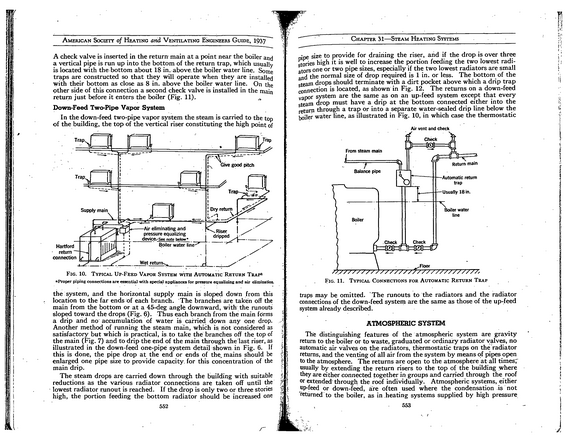
American Society of Heating and Ventilating Engineers Guide, 1937 A check valve is inserted in the return main at a point near the boiler and a vertical pipe is run up into the bottom of the return trap, which usually is located with the bottom about 18 in. above, the boiler water line.
refid# 1mrZVR9XwjQ5D2DkBrYpd79a1 page
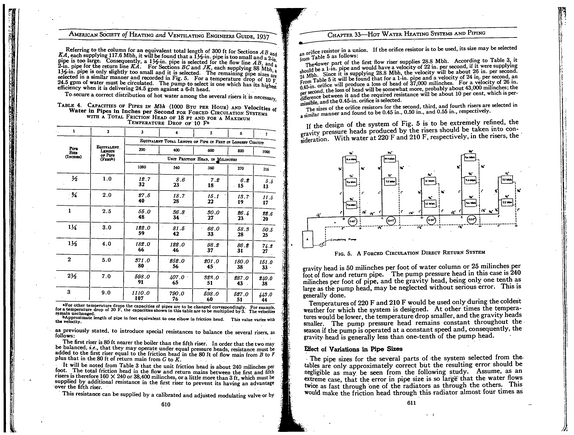
American Society of Heating and Ventilating Engineers Guide, 1937 Referring to the column for an equivalent total length of 300 ft for Sections AB and KA, each supplying 117.6 Mbh, it will be found that a lj^-in. pipe is too small and a2-in pipe is too large.
refid# vVN2p8gXGZMwLgMvb6Kodyy3R1 page
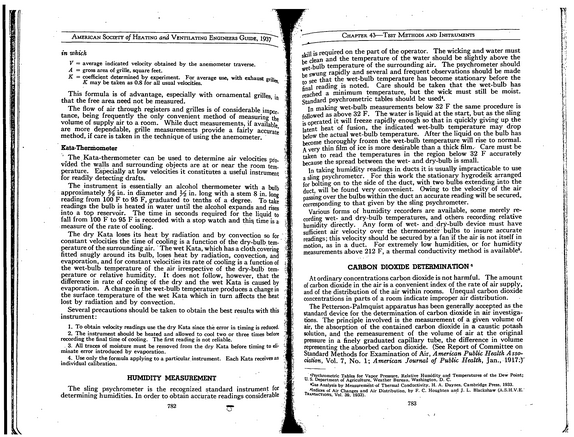
American Society of Heating arid Ventilating Engineers Guide, 1937 in which V = average indicated velocity obtained by the anemometer traverse.
refid# MJMZ8N55grz0Vr9BzeDoa30az1 page
Ameiucak Society of Heating and Ventilating Engineers Guide, 1937 PIPE, Steel PLASTER BASE, Sound Curtis Refrigerating Machine Com American Rolling Mill Co:, -The', 1067 Crane Co., 904-905 Jones & Laughlin Steel Corpora tion, 1036 Deadening Agasote Millboard Co., The, 996 Armstrong Cork Products Com pany, 994-995 Celotex Corporation.
refid# bn5qRJ0DE0gQ2397DQzrgMZk1 page
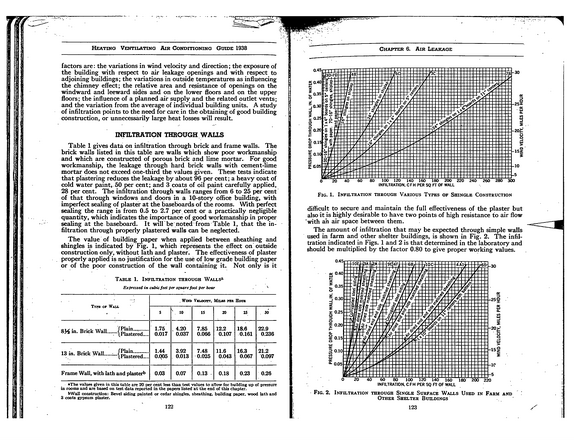
Heating Ventilating Air Conditioning Guide 1938 factors are: the variations in wind velocity and direction; the exposure of the building with respect to air leakage openings and with respect to adjoining buildings; the variations in outside temperatures as influencing the chimney effect; the relative area and resistance of openings on the windward and leeward sides and on the lower floors and on the upper floors; the influence of a planned air supply and the related outlet vents; and the variation from the average of individual building units.
refid# VJBkjqYdrZ1n63EJR2x16Ropq1 page
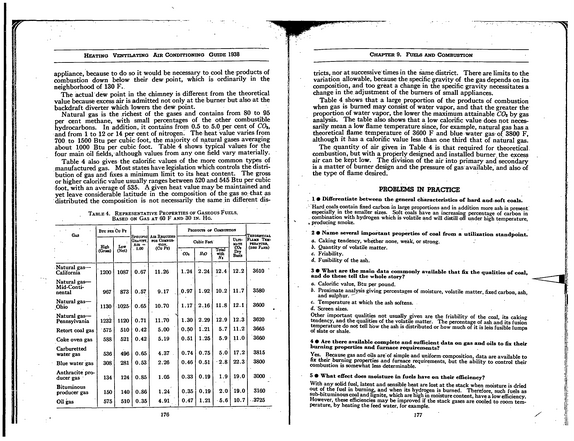
Heating VentiixAting Air Conditioning Guide 1938 appliance, because to do so it would be necessary to cool the products of combustion down below their dew point, which is ordinarily in the neighborhood of 130 F..
refid# mnZ0Q8DQZ111b83R4OVxwDE41 page
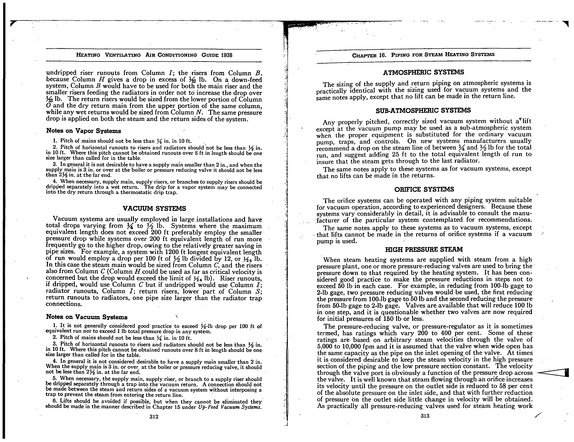
T Heating Ventilating Air Conditioning Guide 1938 undripped riser runouts from Column I; the risers from Column B, because Column H gives a drop in excess of ^ lb.
refid# vBpQ6brwM08evZeDN3Q1RQMDY1 page
Heating . .Ventilating Air Conditioning.
refid# B8zLe29x1O3vOrgqx0k8GOBz41 page
Heating Ventilating Air Conditioning Guide 1938 1.
refid# oeMavXjNg2VVzEBVkM7rV44y81 page