Refine
Estimated Years 1930-1939Clear
8,921 results foundRefine Search
American Society of Heating and Ventilating Engineers Guide, 1931 . .
refid# BKjDB2oV9JKv4kz4enzZVMyE1 page
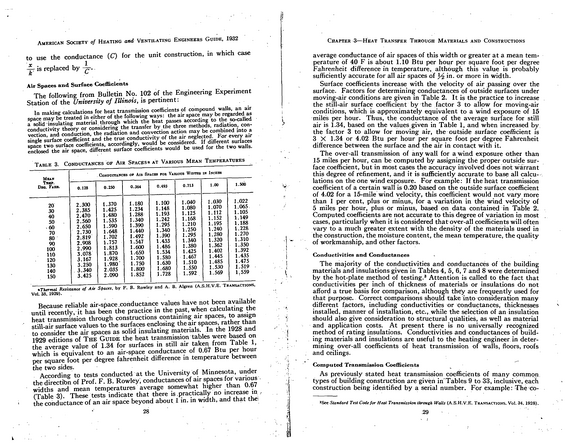
American Society of Heating and Ventilating Engineers Guide, 1932 to use the conductance (C) for the unit construction, in which case is replaced by ^r. ko Air Spaces and Surface Coefficients The following from Bulletin No. 102 of the Engineering Experiment Station of the University of Illinois, is pertinent: In making calculations for heat transmission coefficients of compound walls, an air space may be treated in either of the following ways: the air space may be regarded as a solid insulating material, through which the heat passes according to the so-called conductivity theory or considering the transfer by the three methods, radiation, con vection, and conduction, the radiation and convection action may be combined into a single surface coefficient and the true conductivity of the air neglected.
refid# 8xGJvZknrGxDeKmLn7bpqgyZ1 page
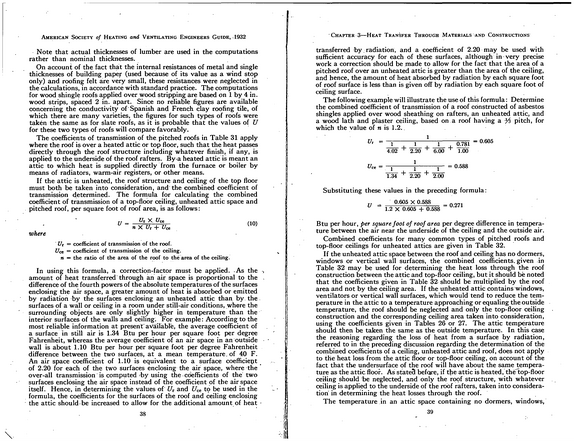
American Society of Heating and Ventilating Engineers Guide, .1932 Note that actual thicknesses of lumber are used in the computations rather than nominal thicknesses.
refid# q7BKRNp9wJYNnMLaznBbv9E1 page
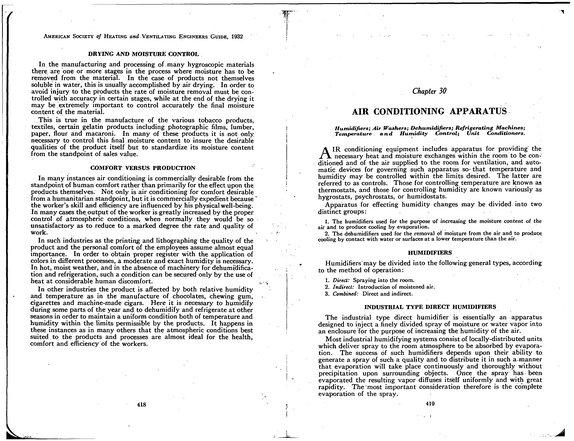
American Society of Heating and Ventilating Engineers Guide, 1932 DRYING AND MOISTURE CONTROL In the manufacturing and processing of many hygroscopic materials there are one or more stages in the process where moisture has to be removed from the material.
refid# e12gRjG1nVKxwe3RajR98Kqa91 page
American Society of Heating and Ventilating Engineers Guide, 1932 BRIGHAM, Frederick H.
refid# 2R8Ek7RpkZ8RJbkaMb5XDYwNg1 page
American Society of Heating and Ventilating Engineers Guide, 1932 HERTZLER, John R. (/ 1928), (for mall).
refid# np1npJErepmE971GZ5QDZOZZ81 page
American Society of Heating and Ventilating Engineers Guide, 1934 6.'
refid# LJX0zOR6Bkbx1B0ewDZ8g35ab1 page
American Soceity of Heating and Ventilating Engineers Guide, 1934 .
refid# OJJjqDdyQrN6vBaVjyEK2V2MX1 page
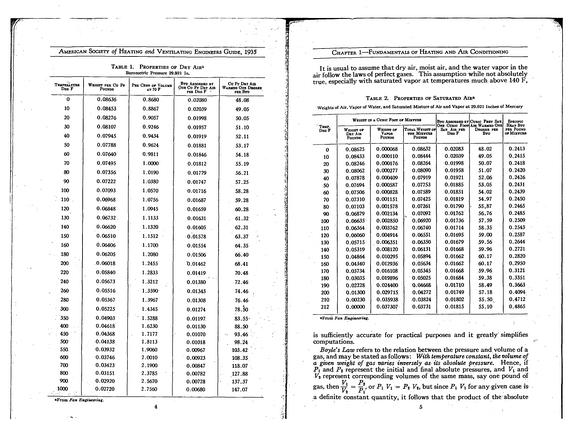
American Society of Heating and Ventilating Engineers Guide, 1935 Table 1.
refid# 0gYKY7bkZe2jz3Z22N2d9JOXb1 page
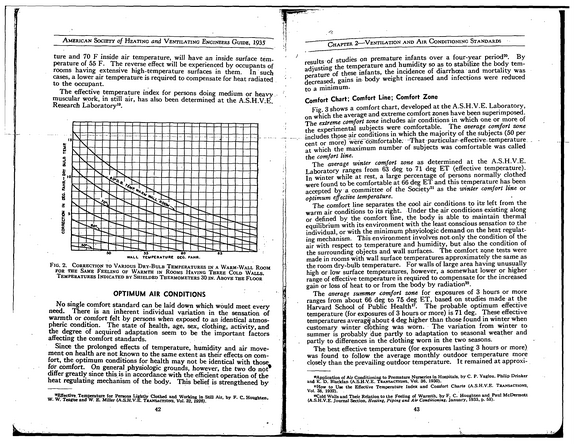
American Society of Heating and Ventilating Engineers Guide, 1935 ture and 70 F inside air temperature, will have an inside surface tem perature of 55 F.
refid# XOvQQYeQmedQEjK3oxwDYbObG1 page
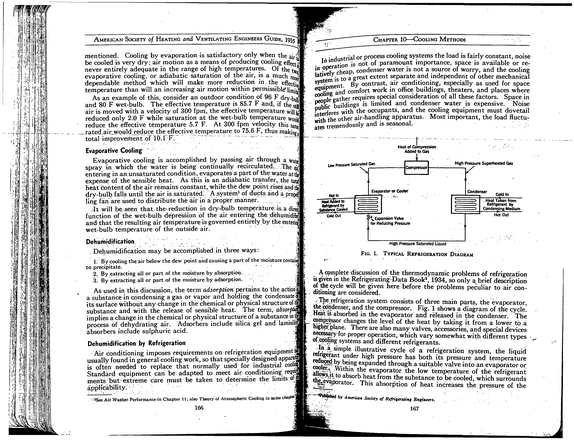
American Society of Heating and Ventilating Engineers Guide,19jj^ mentioned.
refid# 8Vqq028Mm0524yBGxQEkKbaxm1 page
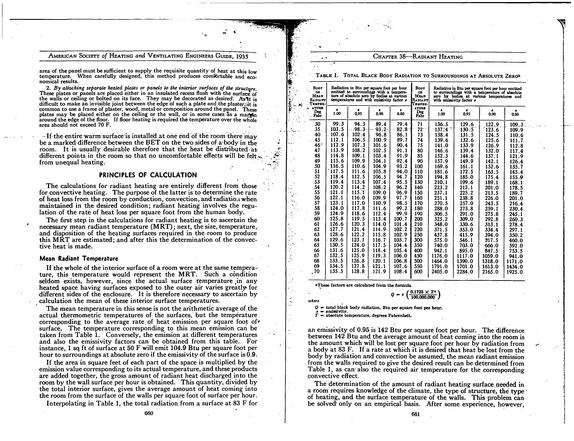
of andAmerican Society Heating Ventilating Engineers Guide, 1935 area of the panel must be sufficient to supply the requisite quantity of heat at this low temperature.
refid# 6M96vkKLoZYojGrpnGV4Ea4R1 page
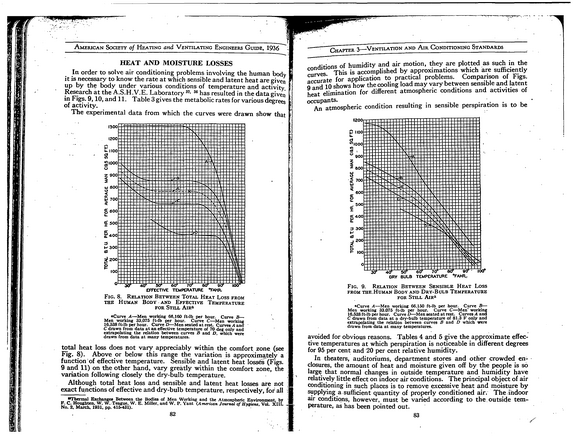
American Society of Heating and Ventilating Engineers Guide, 1936 HEAT AND MOISTURE LOSSES In order to solve air conditioning problems involving the human body it is necessary to know the rate at which sensible and latent heat are given up by the body under various conditions of temperature and activity Research at the A.S.H.V.E, Laboratory32' 36 has resulted in the data given in Figs. 9,10,andll.
refid# LopoD3zQjzE0Mvg3p9xY3y2k31 page
American Society of Heating and Ventilating Engineers Guide, 1936 3i fc OJ g go ?
refid# anVmdQJE0kQqVpaXVQ5NvYJy1 page
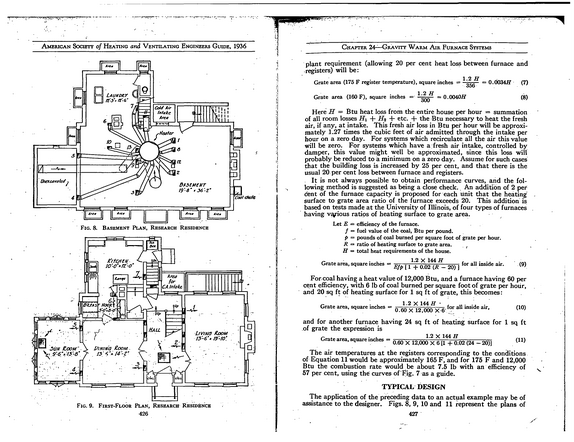
American Society of Heating and Ventilating Engineers Guide, 1936 Chapter 24--Gravity Warm Air Furnace Systems plant requirement (allowing 20 per cent heat loss between furnace and registers) will be: 1 2U Grate area (175 F register temperature), square inches = ^5(. = 0.0034/7 (7) Grate area (160 F), square inches = = 0.0040H (8) Here H = Btu heat loss from the entire house per hour = summation of all room losses Hi + Hz + etc. + the Btu necessary to heat the fresh air, if any, at intake.
refid# QJ6e17612arXzYYyamd98EZ3k1 page