Refine
Estimated Years 1920-1929Clear
2,678 results foundRefine Search
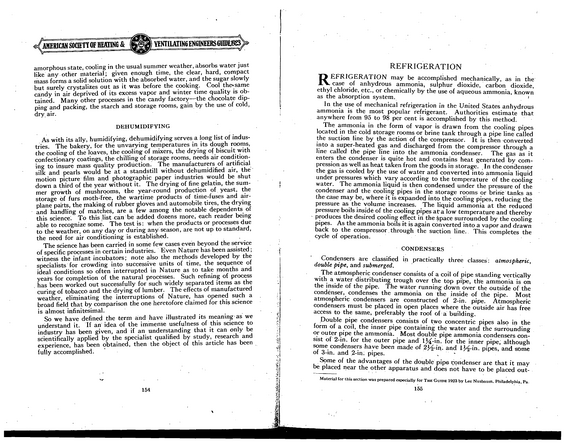
VENTILATING ENGINEERS 6BIDE823 amorphous state, cooling in the usual summer weather, absorbs water just like any other material; given enough time, the clear, hard, compact mass forms a solid solution with the absorbed water, and the sugar slowly but surely crystalizes out as it was before the cooking.
refid# By5NbM8XK3qZpL4NbVKGDEZ8J1 page
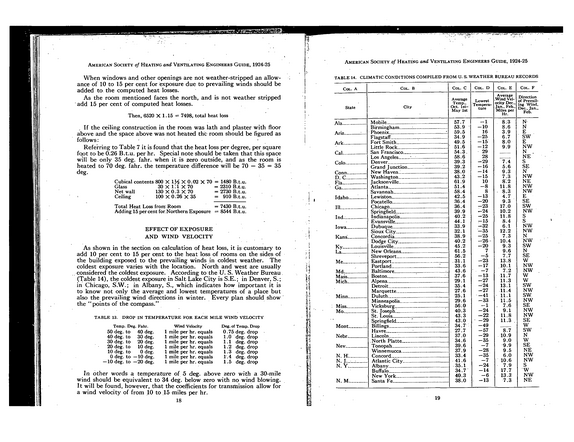
American Society of Heating and Ventilating Engineers Guide, 1924-25 When windows and other openings are not weather-stripped an allow ance of 10 to 15 per cent for exposure due to prevailing winds should be added to the computed heat losses.
refid# BN1Qrk520km4rBDVaNMd27YX1 page
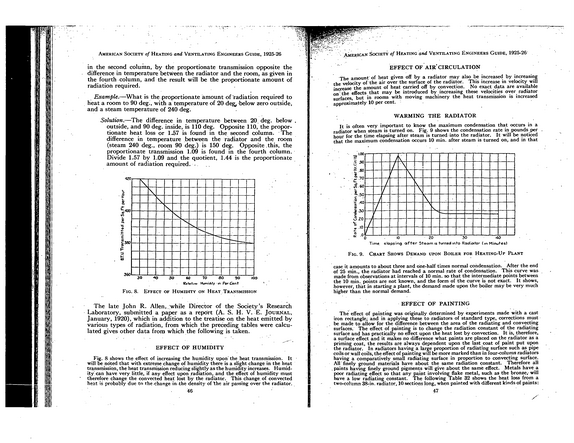
American Society of Heating and Ventilating Engineers Guide, 1925-26 in the second column, by the proportionate transmission opposite the difference in temperature between the radiator and the room, as given in the fourth column, and the result will be the proportionate amount of radiation required.
refid# wqLdgdGZKNGnq9eoo5p13e2o41 page
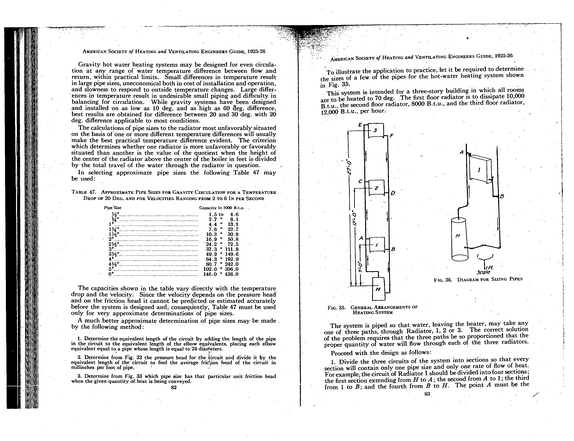
American Society of Heating and Ventilating Engineers Guide, 1925-26 Gravity hot water heating systems may be.designed for even circula-. tion at any range of water temperature difference between flow and return, within practical limits.
refid# LJRmmBNp7y5vBXdJGr9zjm9Bq1 page
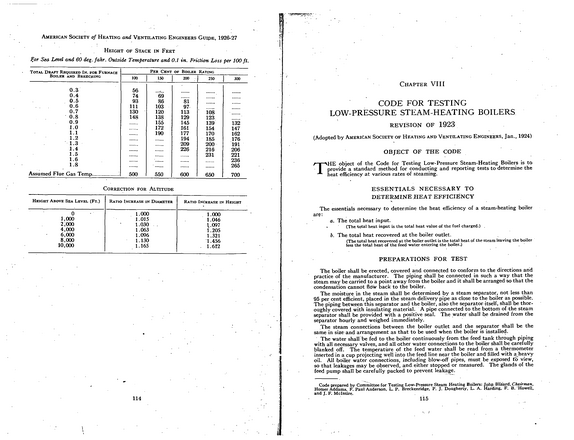
American Society of Heating and Ventilating Engineers Guipe, 1926-27 Height of Stack in Feet F.or Sea Level and 60 deg. fahr.
refid# Ne4jOZo2YdGp1k8DJNrLyzay81 page
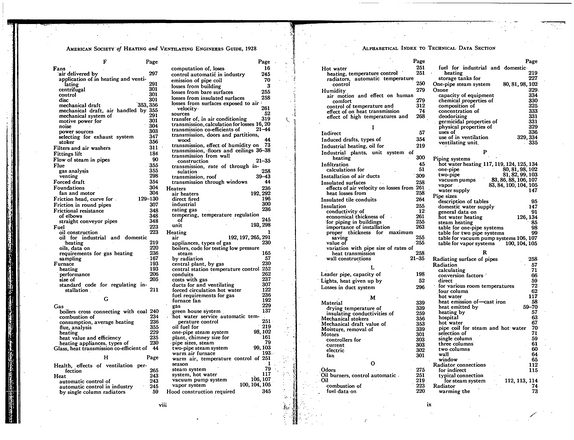
American Society of Heating and Ventilating Engineers Guide, 1928 F Page Fans air delivered by 297 application of in heating and venti- lating 291 centrifugal 301 control 301 disc 301 mechanical draft 353,356 mechanical draft, air handled by 355 mechanical system of 291 motive power for 301 noise 304 power sources 303 selecting for exhaust system 347 stoker 356 Filters and air washers Fittings lift 311 184 Flow of steam in pipes 90 Flue gas analysis venting 355 355 298 Forced draft Foundations fan and motor 354 304 304 Friction head, curve for 129-130 Friction in round pipes 307 Frictional resistance of elbows straight conveyor pipes 348 348 348 Fuel 223 oil construction 223 oil for industrial and domestic heating 219 oils, data on 220 requirements for gas heating 236 sampling 167 Furnace 193 heating 193 performance 206 size of 205 standard code for regulating in- stallation . 211 boilers cross connecting with coal 240 combustion of 234 consumption, average heating 236 flue, analysis 355 heating 229 heat value and efficiency 235 heating appliances, types of 230 Glass, heat transmission co-efficient of 44 H Page Health, effects of ventilation per fection 265 Heat 243 automatic control of 243 automatic control in industry 245 by single column radiators 59 Page computation of, loses 16 control automatic in industry 245 emission of pipe coil 70 losses from building 3 losses from bare surfaces 255 losses from insulated surfaces 258 losses from surfaces exposed to air : velocity 261 sources . 52 transfer of, in air conditioning 319 transmission, calculation for losses 16,20 transmission co-efficients of 21-44 transmission, doors and partitions, wood 44 transmission, effect of humidity on 73 transmission, floors and ceilings 36-38 transmission from wall construction 21-35 transmission, rate of through in sulation 258 transmission, roof 39--43 transmission through windows 44 Heaters 236 air heaters 192,292 direct fired 196 industrial 300 rating gas 236 tempering, temperature regulation of 245 unit 193,298 Heating 1 air 192,197,265,291 appliances, types of gas 230 boilers, code for testing low pressure steam 165 by radiation 57 central plant, by gas 230 central station temperature control 252 conduits 262 costs with gas 237 ducts for and ventilating 307 forced circulation hot water 122 fuel requirements for gas 236 furnace fan 192 gas 229 green house system . 137 hot water service automatic tem perature control 251 oil fuel for 219 one-pipe steam system 98,102 plant, chimney size for 161 pipe sizes, steam 79 two-pipe steam system 99,103 warm air furnace 193 warm air, temperature control of 251 season 1 steam system 79 system, hot water , 117 vacuum pump system 106,107 vapor system 100,104,105 Hood construction required 345 Vlll Alphabetical Index to Technical Data Section Page Hot water 251 heating, temperature control ` 251 radiators, automatic temperature control 250 Humidity 279 air motion and effect on human comfort 279 control of temperature and 312 effect of on heat transmission 74 effect of high temperatures and 268 I Indirect 57 Induced drafts, types of 354 Industrial heating, oil for 219 Industrial plants, unit system of heating 300 Infiltration calculations for 45 51 Installation of air ducts 309 Insulated surfaces 258 effects of air velocity on losses from 261 heat losses from 258 Insulated tile conduits 264 Insulation conductivity of economical thickness of for piping in buildings importance of installation 255 12 261 255 263 proper thickness for maximum saving 255 value of 255 variation with pipe size of rates of heat transmission 258 wall constructions 21-35 L Leader pipe, capacity of Lights, heat given up by Losses in duct system 198 52 296 M Material drying temperature of insulating conductivities of Mechanical stokers Mechanical draft value of Moisture, removal of Motors controllers for current electric fan O Odors Oil burners, control automatic Oil combustion of . fuel data on 339 339 259 356 353 339 301 303 303 302 301 275 251 219 223 220 Page fuel for industrial and domestic heating 219 storage tanks for 227 One-pipe steam system 80,81,98,102 Ozone 329.
refid# 105zG6mX9Bed0bR3q65r2RzX51 page
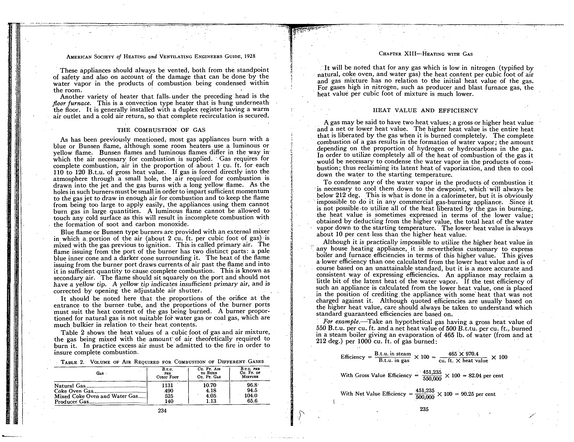
American Society of Heating and Ventilating Engineers Guide, 1928 These appliances should always be vented, both from the standpoint of safety and also on account of the damage that can be done by the water vapor in the products of combustion being condensed within the room.
refid# 5bB4NG0QBa7Moz7o05GaqOq941 page
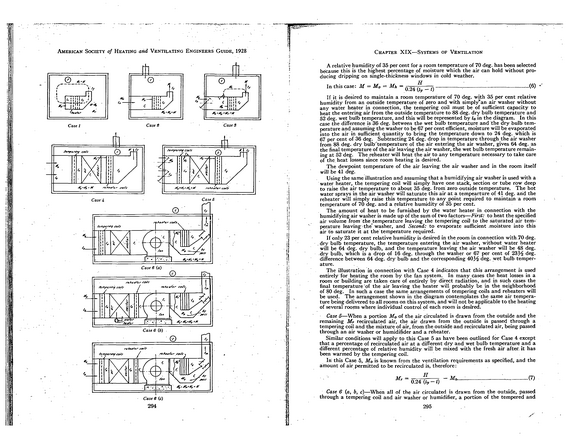
American Society of Heating and Ventilating Engineers Guide, 1928 Case 1 Case 8 Case 8 Case 6 (c) Chapter XIX--Systems of Ventilation A relative humidity of 35 per cent for a room temperature of 70 deg. has been selected because this is the highest percentage of moisture which the air can hold without pro ducing dripping on single-thickness windows in cold weather.
refid# jNeZxNbQmGEJOMjBxrJVMx8rZ1 page
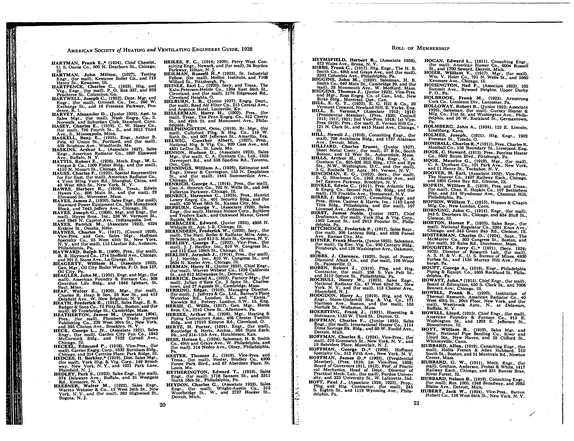
American Society of Heating and Ventilating Engineers Guide, 1928 HARTMAN, Frank E. * (1924).
refid# vBa35vBwQZg25jjOD0d9kReX81 page
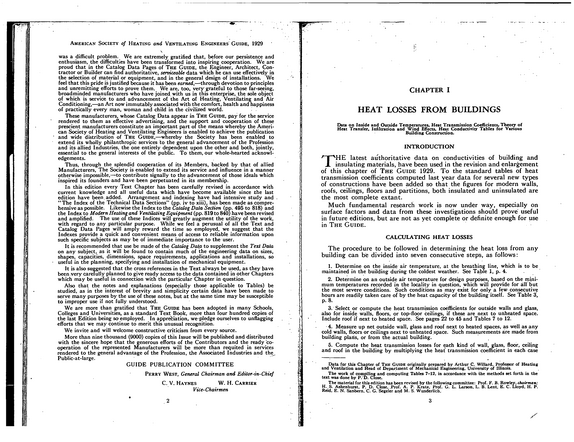
American Society of Heating and Ventilating Engineers Guide, 1929 \ was a difficult problem.
refid# ZJo5dKgvqqq5EO75axeJ68d4O1 page
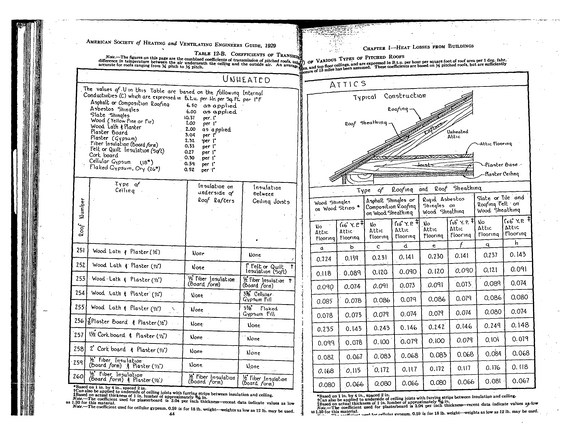
American Society of Heating and Ventilating Engineers Guide, 1929 Table 12-B.
refid# Qkzq9qEKEd1vzOEVX7k1owqYk1 page
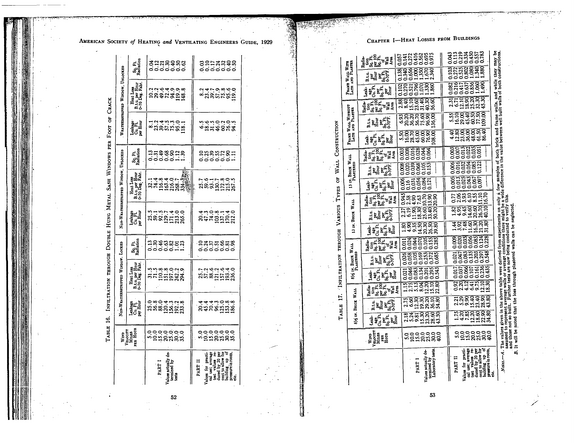
American Society of Heating and Ventilating Engineers Guide, 1929 Chapter I--Heat Losses from Buildings T a b l e 16. n f il t r a t io n through D o u b le H ung M e t a l Sash W indow s per F oot of C rackI 52 53
refid# q7jVk6mQ2XDRDeZxd6KR6YRG1 page
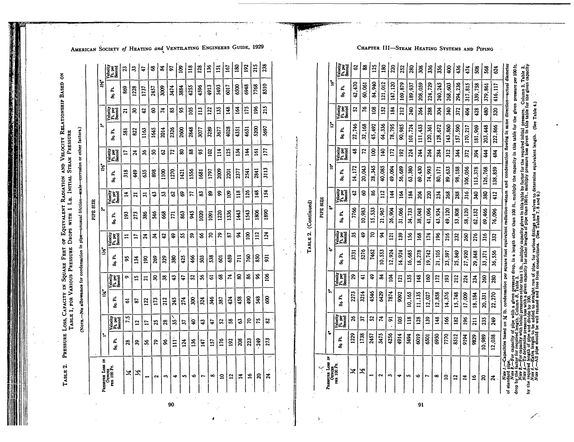
American Society of Heating and Ventilating Engineers Guide, 1929 T able 2.
refid# ZBoVkQ2DkddvbjbkLaDbrg07Y1 page
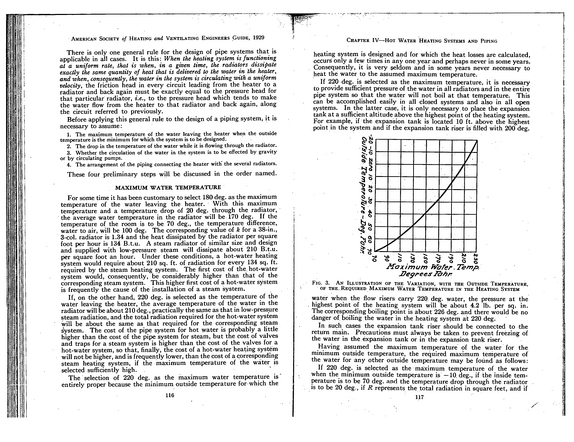
American Society of Heating and Ventilating Engineers Guide, 1929 There is only one general rule for the design of pipe systems that is applicable in all cases.
refid# YrpMKY3MXyzy2QbYNeOka03YE1 page
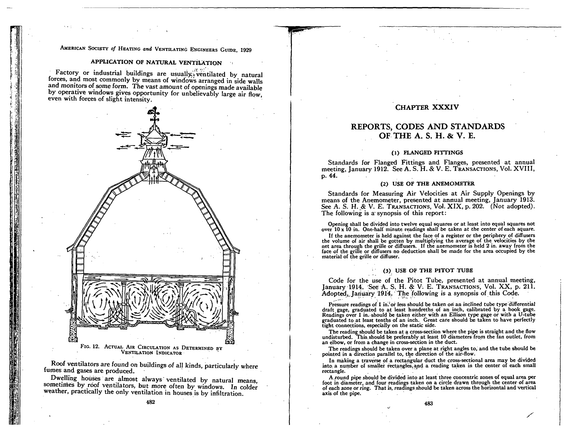
American Society of Heating and Ventilating Engineers Guide, 1929 APPLICATION OF NATURAL VENTILATION Factory or industrial buildings are usually, ventilated by natural forces, and most commonly by means of windows arranged in side walls and monitors of some form.
refid# pBeLoJ9YkQ5YZa56q3eKJpNjd1 page