Refine
Estimated Years 1920-1929Clear
2,678 results foundRefine Search
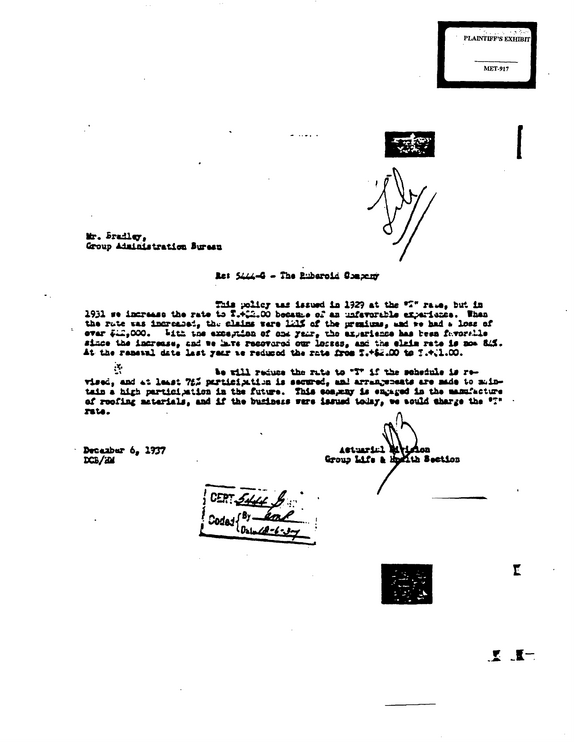
PLAINTIFF'S EXHIBITI MET-917 ttr.
refid# BvRD0B3LYBbx7qn6oojbKeGpE1 page
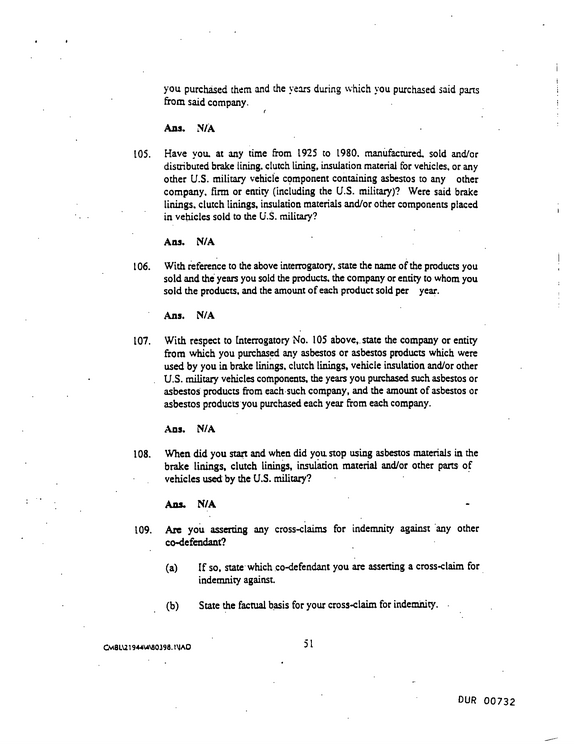
you purchased them and the years during which you purchased said pans from said company. < Ana.
refid# g20xxjd9yZoyg3N6eEx5K111G1 page
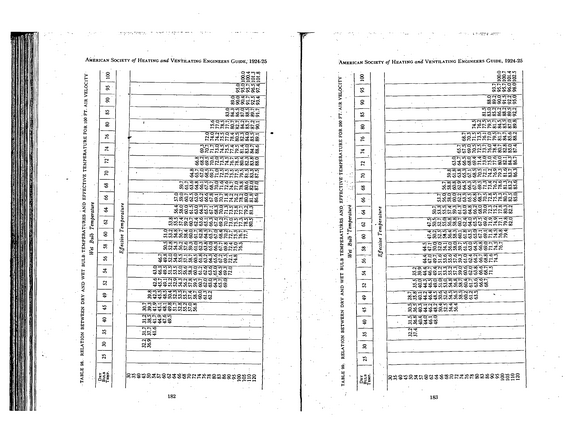
American Society of Heating and Ventilating Engineers Guide, 1924-: w > < 2 Id ft D H 2 Id ' Id tUu,. td Q 2 < cIdo rf D H 2 Id a, S Id.
refid# Ed4VvNzjyMGEd8KazBmQxbzpj1 page
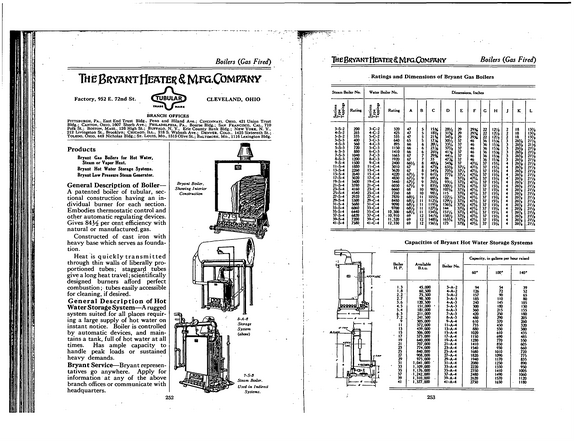
Boilers (Gas Fired) TH e BryantHeater & Mfg.Co^^ny Factory, 952 E. 72nd St.
refid# pmvXY6Vx2G54rvvL224wpN7bd1 page
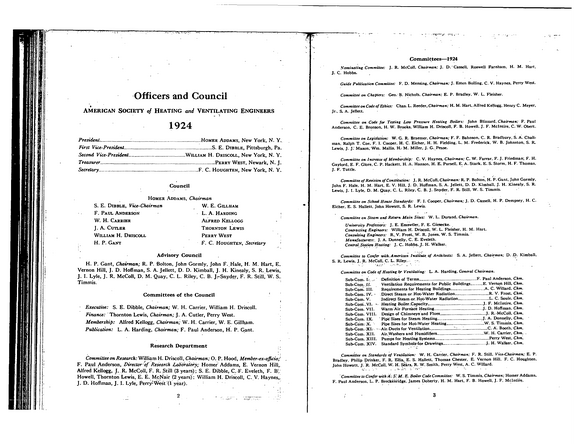
Officers and Council AMERICAN SOCIETY of HEATING and VENTILATING ENGINEERS .^ 1924 President,.................................................... ...................
refid# avny03x8Dzwq2oxebXVQKRZR1 page
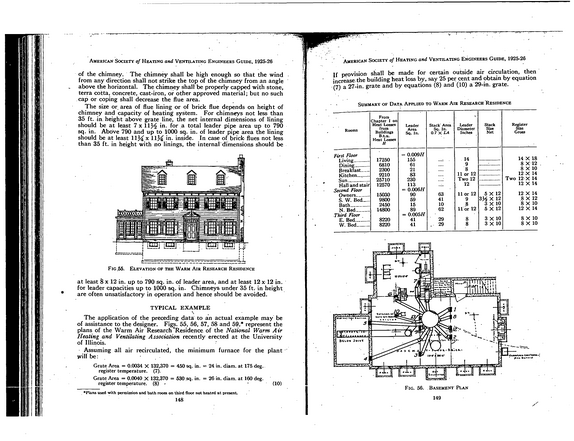
American Society of Heating and Ventilating Engineers Guide, 1925-26 of the chimney.
refid# BRpO8wDO630BbQ9N8ad1DQ07L1 page
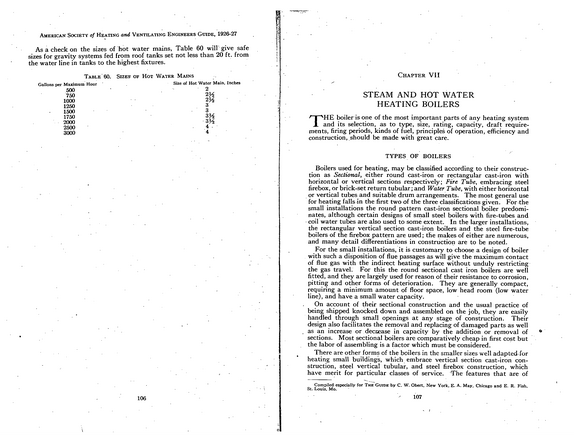
American Society of Heating and Ventilating Engineers Guide, 1926-27 As a check on the sizes of hot water mains, Table 60 will'-give safe sizes for gravity systems fed from roof tanks set not less than 20 ft. from the water line in tanks to the highest fixtures.
refid# zomnkjKdp54dE8REp1R4eMKMR1 page
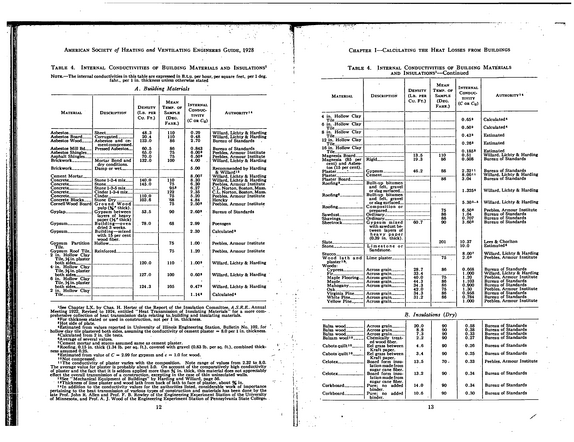
American Society of Heating and Ventilating Engineers Guide, 1928 Table 4.
refid# rBa9w3rR9o4N3yM6nRDw2oMKE1 page
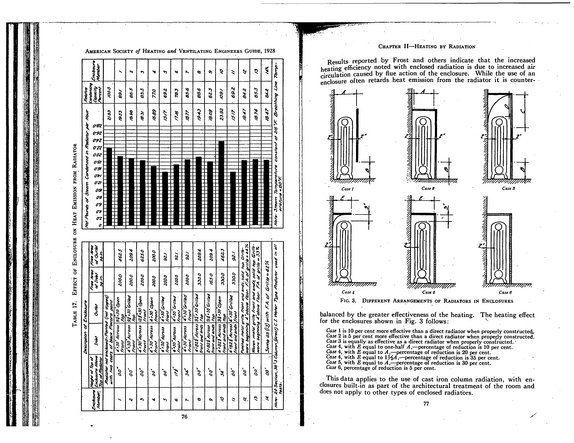
_____________________________________________ American Society of Heating and Ventilating Engineers Guide, 1928 Chapter II--Heating by Radiation Results reported by Frost and others indicate that the increased heating efficiency noted with enclosed radiation is due to increased air circulation caused by flue action of the enclosure.
refid# n96aQXZ2xwv1DQeaNNEK8Z3B11 page
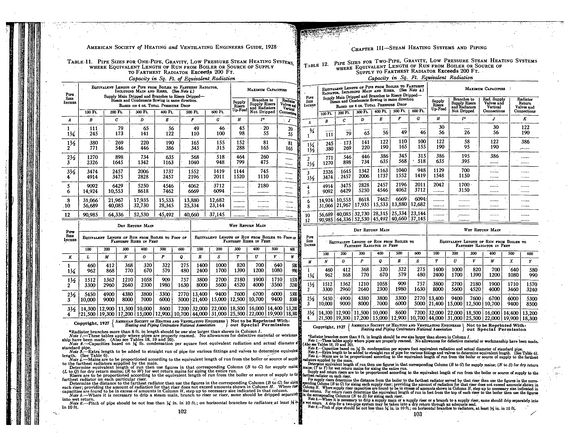
American Society of Heating and Ventilating Engineers Guide, 1928 IIIChapter --Steam Heating Systems and Piping Table 11.
refid# bymJE78B7GXL0VejJ8Y0LK8py1 page
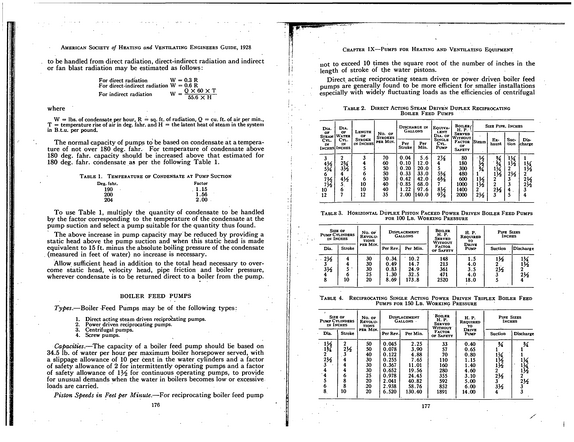
American Society of Heating and Ventilating Engineers Guide, 1928 to be handled from direct radiation, direct-indirect radiation and indirect or fan blast radiation may be estimated as follows: For direct radiation W = 0.3 R For direct-indirect radiation W = 0.6 R For indirect radiation W= where W = lbs. of condensate per hour, R = sq. ft. of radiation, Q = cu. ft. of air per min., T = temperature rise of air in deg. fahr. and H = the latent heat of steam in the system in B.t.u. per pound.
refid# QJyJwZaXEppoXQ5D56oRvkKwo1 page
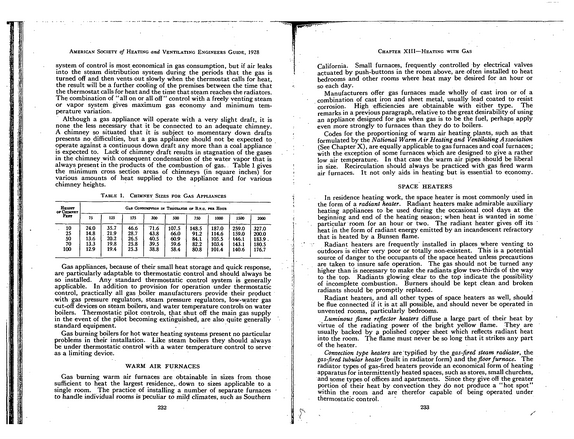
American Society of Heating and Ventilating Engineers Guide, 1928 system of control is most economical in gas consumption, but if air leaks into the steam distribution system during the periods that the gas is turned off and then vents out slowly when the thermostat calls for heat, the result will be a further cooling of the premises between the time that the thermostat calls for heat and the time that steam reaches the radiators.
refid# N258rKz41XQrr05L3Zm4jbJKg1 page
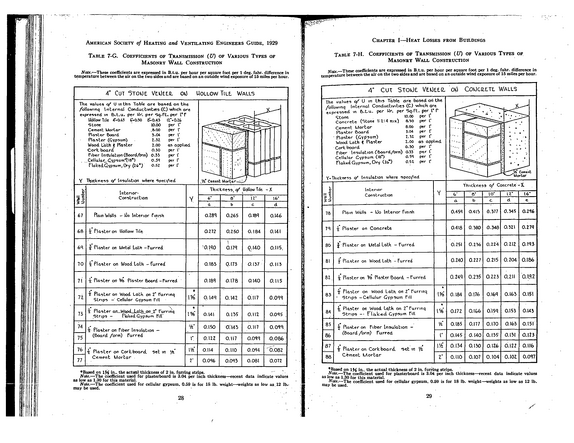
American Society of Heating and Ventilating Engineers Guide, 1929 Table 7-G.
refid# ZMvaNEm4jkdDg1MXpBaL4g301 page
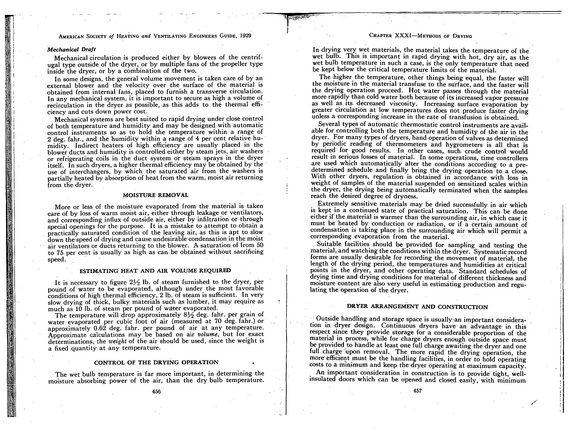
American Society of Heating and Ventilating Engineers Guide, 1929 Mechanical Draft Mechanical circulation is produced either by blowers of the centrif ugal type outside of the dryer, or by multiple fans of the propeller type inside the dryer, or by a combination of the two.
refid# oe0mQY71Ezzkmn4NpLxGK2GXo1 page
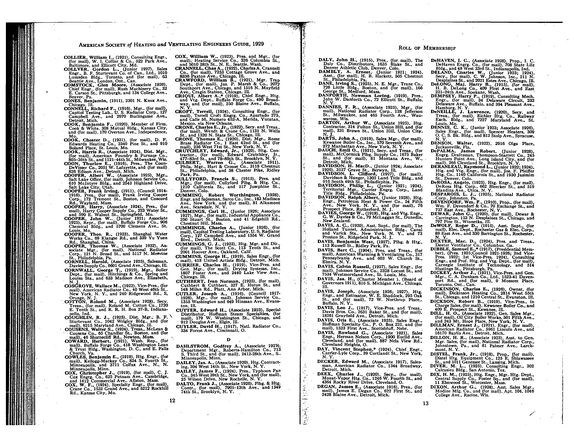
American Society.0/ Heating and Ventilating Engineers Guide, 1929 COLLIER, William I., (1921).
refid# aJ4rO35mawpV1Djg1pNnnaKOy1 page